
Q
Where does the Subaru Crosstrek rank?
 DriverOct 22, 2025, 04:05 PM
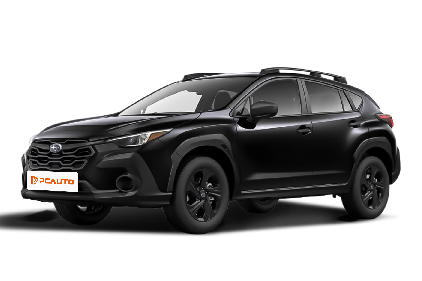
The Subaru Crosstrek has carved out a solid niche in the global compact SUV market, earning serious props for its top-notch safety and full-time all-wheel drive performance. Over in Malaysia, it's been turning heads too – drivers love its reliable handling and go-anywhere attitude that fits our local lifestyle. From what I've seen in international reviews, it consistently sits near the top of its class, especially when it comes to active safety tech and off-road capability. Perfect for Malaysia's rainy conditions and those occasional light off-road adventures we Malaysians love.
Digging a bit deeper, the Crosstrek's Symmetrical AWD system is a game-changer on slippery roads, keeping things stable when the monsoon hits. Then there's the EyeSight driver assist suite – it's like having an extra set of eyes on the road, which really adds peace of mind for daily drives. No wonder it's a hit with families and outdoor enthusiasts who prioritize practicality and safety.
In Malaysia, it's up against heavyweights like the Honda HR-V and Toyota Corolla Cross, but Subaru's got that unique brand appeal and technical edge that helps it stand out from the crowd.
Special Disclaimer: This content is published by users and does not represent the views or position of PCauto.
Related Q&A
Q
What is the resale value of a 2023 Crosstrek?
The resale value of a 2023 Subaru Crosstrek in Malaysia depends on several factors, including its condition, mileage, service history, and market demand. Generally speaking, this model holds its value pretty well in the used car market thanks to its reliable performance, full-time all-wheel drive system, and strong safety ratings. Low-mileage examples with a solid maintenance record typically retain around 60% to 70% of their original price, though actual figures will vary based on local market trends.
While Subaru remains a relatively niche brand in Malaysia, it boasts a dedicated following – especially among outdoor enthusiasts and off-road driving fans. This loyal customer base definitely helps support the Crosstrek's residual value. If you're planning to sell or buy a used Crosstrek, I'd recommend checking local classifieds platforms or consulting with professional valuers to get a more precise estimate. And remember, keeping up with regular servicing and maintaining complete repair records can significantly boost your vehicle's resale price down the line.
 JoyfulMelodyOct 22, 2025
Q
Is the 2023 Crosstrek good in snow?
The 2023 Subaru Crosstrek really delivers when it comes to snowy conditions, and that's largely thanks to its standard Symmetrical All-Wheel Drive system. This setup automatically shuffles torque to the wheels with the most grip, and when paired with X-MODE (available on select trims), it further dials in traction for snow or slick surfaces. The 8.7-inch ground clearance also helps with getting through, making it solid for light snow cover. Now, Malaysia might not see snow, but that AWD tech still boosts stability on rainy, slippery roads. And if you're planning a winter road trip abroad, the Crosstrek's active torque vectoring and hill descent control will definitely have your back.
But here's the thing about snow performance—tires matter. The stock all-season rubber can struggle once the snow piles up, so swapping in winter tires or throwing on chains depending on your destination's climate is a smart move. For Malaysian drivers dealing with year-round heat, you're better off focusing on how the Crosstrek's EyeSight driver assist system handles heavy rain—features like automatic emergency braking and adaptive cruise control are way more practical day-to-day here.
 SkaterRinkGlideOct 22, 2025
Q
Where is the 2023 Crosstrek made?
The 2023 Subaru Crosstrek is primarily built at the company's Gunma plant in Japan, a facility renowned for its high manufacturing standards that ensure the vehicles meet global quality demands. For Malaysian buyers, this crossover will likely arrive via import channels. Its Japanese heritage means it carries over Subaru's signature boxer engine and Symmetrical AWD system – features that really shine in our local climate with frequent rain and those sometimes tricky road conditions we encounter.
A heads-up for potential owners: imported vehicles here often get tweaks for our tropical environment, things like upgraded cooling systems and more powerful air conditioning setups. Definitely worth checking those specifics with authorized dealers before signing on the dotted line.
Also, knowing where a car's made gives you a good idea of how it might hold up. Japanese-built models typically have solid reputations for durability and better resale value down the line. But keep in mind, import duties can affect the final sticker price, so that's something to factor into your budget.
Got more questions? Your best bet is to hit up Subaru Malaysia's official website or drop by your nearest dealership – they'll have the latest details to help you make the right call.
 JoggerPaceEnduranceOct 22, 2025
Q
What is the safest Subaru in 2023?
If you're after Subaru's safest ride in Malaysia for 2023, the Outback takes the crown. It's kitted out with the latest EyeSight Driver Assist Technology, packing features like adaptive cruise control, lane keep assist, and pre-collision braking. Then there's the high-tensile ring-shaped frame and a bunch of airbags working overtime. No surprise it aced those top safety picks from big names like ANCAP and IIHS.
Malaysian drivers will also appreciate Subaru's Symmetrical All-Wheel Drive – that thing really helps keep you planted when the monsoon hits and the roads turn slippery. Don't get me wrong, the XV and Forester are no slouches in the safety department either, but the Outback edges them out with its bigger body and that extra layer of safety gear.
A quick heads-up though: Malaysia's tropical heat can be tough on a car's electronics. Do yourself a favor and swing by an authorized service center regularly to make sure all those safety systems are ticking along nicely. And while Subaru's generous ground clearance is great for clambering over rough stuff, it does take a tiny bit of edge off the cornering stability. Just keep an eye on your speed when you're carving up those bends, that's all.
 JourneyHomeWarmthOct 22, 2025
Q
Is the Subaru Crosstrek a good choice?
The Subaru Crosstrek is a compact SUV that fits the Malaysian market well. Its signature Symmetrical AWD system is a big plus for our rainy, wet roads – it really helps with grip during the monsoon season or when you're on those rural backroads. The 2.0L boxer engine strikes a nice balance between fuel economy and that low-center-of-gravity handling, making it equally at home in city traffic or for some light off-roading trips.
Inside, the Crosstrek comes standard with Subaru's EyeSight driver assistance suite, which includes adaptive cruise control and pre-collision braking. That's definitely a draw for safety-conscious families. One thing to note though, the rear legroom is a bit tighter compared to some rival Japanese models in its class.
Pitting it against popular choices here like the Honda HR-V or Mazda CX-30, the Crosstrek's trump cards are that standard AWD and a healthy 220mm of ground clearance. That makes it a solid pick if you occasionally need to tackle some unpaved paths, though it does mean you'll burn a tiny bit more fuel than a front-wheel-drive competitor.
Something to keep in mind: Subaru's dealer network in Malaysia isn't the most extensive. If you're considering one, it's wise to check where the service centers are located beforehand. If your budget stretches that far, the e-Boxer hybrid variant is worth a look – it'll give you better fuel efficiency around town. Just be aware that the battery pack does eat into some boot space, so you'll need to weigh that up.
 SailorAdventureOceanOct 22, 2025
Q
What is the battery problem in the Subaru Crosstrek 2023?
The 2023 Subaru Crosstrek has been reported to have battery-related issues in some markets, primarily manifesting as difficulty starting in cold weather or premature battery drain. This might be linked to the higher battery demands of the vehicle's start-stop system, and notably, Malaysia's year-round hot and humid climate could also accelerate battery aging. We advise owners to regularly check their battery's condition and ensure the terminals are clean and free of corrosion. If frequent starting problems occur, consider upgrading to a higher-spec AGM (Absorbent Glass Mat) battery for improved durability. It's important to note that modern cars come with more electronic devices (like 24/7 dashcams and connected car modules) that draw extra power. For those who mainly do short trips, we recommend driving for at least 30 minutes once a week to give the battery a full charge. For vehicles equipped with auto start-stop, if you're mostly driving in congested city traffic, you can temporarily disable this feature to reduce battery load. Also, avoid using the stereo or air conditioning for extended periods after the engine is turned off. If the problem persists, promptly contact an authorized service center for professional diagnosis, as abnormal battery behavior can sometimes indicate issues with the charging system or the need for a vehicle software update.
 ExplorerOct 22, 2025
Q
What is the best selling Subaru model 2023?
As of 2023, Subaru's top-seller in Malaysia is the Subaru XV. This compact SUV has won over Malaysian buyers with its signature Symmetrical AWD system, generous ground clearance for solid go-anywhere ability, and the safety boost from EyeSight driver assist—perfect for the country's rainy weather and the mix of city and suburban roads. Under the hood, the 2.0-liter boxer engine strikes a nice balance between fuel efficiency and the agile handling that comes with a low center of gravity. The 2023 facelift stepped things up even more, packing an updated 8-inch infotainment screen and tweaked suspension that really sharpen its appeal.
It’s worth noting Subaru distributes through the Motor Image group here, and all models come with a 5-year unlimited mileage warranty—big plus for shoppers watching long-term ownership costs. Looking at other crowd-pleasers, the Forester pulls in families with its roomier cabin, while the Outback caters to niche buyers with its crossover wagon vibe. But the XV remains the brand’s sales backbone; its approachable price tag and just-right size make it a natural fit for Malaysia’s urban driving scene.
 StrongOct 22, 2025
Q
What engine is in the 2023 Subaru Crosstrek?
The 2023 Subaru Crosstrek hits Malaysian shores with two boxer engine options: a 2.0-liter naturally aspirated four-cylinder (FB20) and a 2.5-liter naturally aspirated four-cylinder (FB25). The 2.0L puts out 154 horsepower and 196 Nm of torque, while the 2.5L steps things up to 182 hp and 239 Nm. Both mills come standard with Subaru's Symmetrical AWD system paired to a Lineartronic CVT gearbox.
What really sets this apart is that boxer engine layout – that low center of gravity does wonders for cornering stability, a signature Subaru tech trait. And let's not forget EyeSight driver assist comes standard across the range, giving that extra peace of mind on the road.
For Malaysian buyers, the Crosstrek's engine choices strike a solid balance between daily commuting fuel efficiency and light off-road capability. The 2.5L variant is especially worth considering if you regularly tackle mountain roads or just crave a bit more grunt when you put your foot down. Plus, having that full-time AWD as standard? It's a game-changer for those slippery wet season conditions, delivering way better traction than most in its class. All in all, this powertrain combo gives the Crosstrek some real technical edge in the crowded crossover segment.
 WittyOct 22, 2025
Q
Why did Subaru discontinue Crosstrek?
Subaru's decision to discontinue the Crosstrek in select global markets is primarily a strategic move aimed at optimizing their product lineup and refining regional focus, not a reflection of any issues with the vehicle itself. Take Malaysia, for example – Subaru might be shifting gears to double down on models like the Forester or XV, SUVs that resonate more strongly with local buyers. These kinds of calls usually tie back to market demand, aligning with emissions regulations, or boosting production line efficiency.
Let’s be clear: the Crosstrek, as a crossover SUV, packs Subaru’s legendary Symmetrical AWD and Boxer engine tech – features that actually make a ton of sense for Southeast Asia’s rainy and often tricky terrain. But automakers constantly tweak their offerings based on local sales figures, the costs of adapting to right-hand-drive markets, or how quickly they’re pivoting to new energy vehicles.
If Malaysian shoppers are jonesing for something similar, keep an eye on the Subaru XV. It shares the Crosstrek’s core platform and tech but gets a cooling system dialed in for tropical climates. Plus, with local CKD (completely knocked down) assembly, it might just come with a more wallet-friendly price tag. And let’s not forget – these discontinuation moves often clear the path for new generations. Down the line, Subaru could very well revive the Crosstrek nameplate with hybrid power or a full EV setup.
 PrettyOct 22, 2025
Q
Is the 2023 Subaru Crosstrek a good car?
The 2023 Subaru Crosstrek is a compact SUV that Malaysian buyers should definitely have on their radar. It comes with Subaru's legendary Symmetrical AWD system, which really shines here – perfect for Malaysia's rainy, slippery roads, giving you that extra grip and stability when you need it most. Under the hood, there's a 2.0-liter boxer engine that strikes a nice balance between fuel efficiency and that low-center-of-gravity handling Subarus are known for, making it just as at home in the city as it is on a bit of light off-roading.
Inside, Subaru has stepped things up with better quality soft-touch materials, and the standard EyeSight driver assist suite is a big plus – think adaptive cruise control and pre-collision braking, all adding to that peace of mind behind the wheel. Speaking of the boxer engine, that's a tech highlight too; it does a great job of keeping vibrations down, making for a smoother ride. And let's not forget that AWD system again – in Southeast Asia, especially during monsoon season, that extra traction is a real lifesaver. Just something to note though: AWD systems like this can be a touch pricier to maintain compared to front-wheel-drive setups.
For Malaysian drivers, the Crosstrek's decent ground clearance is handy for those rougher rural roads you might encounter. But here's the thing – when you stack it up against other Japanese competitors in its class, it's worth doing your homework on things like how extensive the after-sales service network is and how quickly you can get replacement parts.
All in all, the Crosstrek is a solid pick if you're someone who values driving feel and safety, and you're after something a bit more individual in the crowded compact SUV market.
 KindlyOct 22, 2025
Popular Cars
Model Year
Car Compare
Car Photo
Related Models
 Cars
CarsLatest Q&A
Q
Is AMT similar to automatic?
There are significant differences between AMT transmissions and automatic transmissions (AT) in terms of core structure and driving experience. AMT is essentially an electronically automated version of a manual transmission, simulating manual clutch operation and gear shifting through a computerized control system while retaining the gear set structure of manual transmissions. As a result, it offers higher transmission efficiency, with fuel consumption approximately 8%-12% lower than AT, making it particularly suitable for highway or long-distance driving. However, it may exhibit jerking similar to manual transmissions during low-speed gear shifts, especially noticeable in congested traffic conditions.
AT transmissions rely on torque converters for power transfer, delivering smooth and seamless gear shifts that appeal to comfort-oriented users. However, their complex structure (incorporating planetary gear sets, hydraulic systems, etc.) results in higher maintenance costs. A single service may cost between 800 to 1,500 ringgit, whereas AMT only requires gear oil replacement at approximately 400 ringgit.
From a market perspective, AMT is predominantly used in budget vehicles or commercial models priced below 80,000 ringgit, while AT is typically featured in mid-to-high-end vehicles. Consumers should select based on actual needs: AMT suits those prioritizing fuel efficiency and low maintenance costs, while AT better serves those valuing comfort. Notably, recent advancements in AMT electronic control technology have significantly mitigated jerking issues, though test drives should still emphasize low-speed performance evaluation.
 AriaMar 26, 2026
Q
Which is better, DCT or AT?
DCT (Dual-Clutch Transmission) and AT (Automatic Transmission) each have their own advantages and disadvantages, and the choice should be based on personal driving needs. AT transmissions transfer power through a torque converter, offering excellent shift smoothness, making them suitable for urban commuting or novice drivers. However, they tend to have higher fuel consumption, and vehicles equipped with them are usually more expensive. DCT transmissions utilize a dual-clutch structure, featuring fast shift speeds and high power transmission efficiency, which provides a more direct driving experience—particularly suitable for users seeking a sporty feel. However, they may exhibit jerking at low speeds and have relatively high maintenance costs. If durability and comfort are priorities, AT is the more reliable choice; if power responsiveness and driving pleasure are preferred, wet DCT (such as Volkswagen DSG) performs better, though dry DCT models should be avoided in prolonged stop-and-go traffic conditions. Additionally, CVT transmissions excel in smoothness and fuel efficiency, making them ideal for daily commuting, but they lack driving excitement. It is recommended to test-drive before purchasing, as tuning varies significantly across brands, and real-world experience is more important than theoretical specifications.
 FlutteringMar 26, 2026
Q
Is Amt good or bad?
AMT gearboxes have a significant cost advantage in the local market, typically being around 5,000 Ringgit cheaper than models equipped with conventional automatic transmissions. Their fuel efficiency is comparable to manual transmissions, resulting in long-term fuel savings. Featuring a straightforward design, they achieve transmission efficiency exceeding 90% with relatively low maintenance costs, making them ideal for practicality-oriented consumers. However, their shifting logic contains inherent limitations: gear changes between 1st and 2nd cause 0.3-0.5 second power interruptions, while unintended upshifts on inclines may reduce engine speed by 15%-20%, compromising driving smoothness. For urban commuters or budget-conscious buyers, AMT offers excellent value, though those prioritizing premium driving dynamics should consider alternative transmission types. Some domestic models like the Perodua Axia employ enhanced AMT systems, where optimized shift programming has reduced gearshift shock by approximately 30%.
 RainbowsMar 26, 2026
Q
Which gives better mileage, CVT or AMT?
From the perspective of fuel economy, CVT transmissions generally perform better under urban driving conditions. Their continuously variable design allows the engine to consistently operate within the optimal speed range, significantly reducing fuel consumption during frequent starts and stops. Test data shows that their fuel consumption in urban driving conditions is 10% to 15% lower than that of comparable models. AMT transmissions, on the other hand, inherit the high transmission efficiency of manual transmissions, delivering fuel efficiency close to manual transmissions during high-speed cruising. This makes them particularly suitable for long-distance driving in large-displacement vehicles. However, due to power interruption during gear shifts, their overall fuel consumption may be 5% to 8% higher than CVTs.
The difference in fuel-saving characteristics between the two transmissions stems from their technical principles: CVTs achieve continuous variability through steel belts and pulleys, eliminating the fixed gear ratio limitations of traditional transmissions; AMTs simulate manual gear changes via electronic control systems while maintaining the mechanical efficiency of gear transmission. Notably, actual fuel consumption is also influenced by driving habits. Smooth acceleration and anticipatory deceleration can maximize the transmissions' fuel-saving potential. If the vehicle budget permits and urban commuting is the primary use, CVTs offer a more economical choice. For frequent highway driving with an emphasis on cost-effectiveness, AMTs are equally worth considering.
 RubyBlazeMar 26, 2026
Q
Which is cheaper, AMT or CVT?
In terms of gearbox cost, AMT is usually more economical than CVT. Essentially, AMT is a manual transmission equipped with an electronic control unit, featuring a simple structure and low maintenance costs. The unit price ranges from approximately 5,000 to 8,000 ringgit, making it suitable for budget-conscious consumers or those who prioritize long-term operating costs. CVT incurs higher manufacturing costs due to its precision steel belt transmission system and continuous variable transmission technology, with a unit price of about 7,000 to 10,000 ringgit. However, it delivers a smoother driving experience and superior fuel efficiency. The primary differences between the two lie in technical complexity: AMT retains the gear-shifting mechanism, resulting in noticeable shift shock; CVT achieves linear power output through stepless speed variation but requires periodic belt inspection and incurs higher maintenance expenses. For those prioritizing initial cost and basic transportation needs, AMT offers better value; if comfort and long-term fuel economy are priorities, CVT represents a more worthwhile investment. Note that actual prices may vary based on vehicle model, brand, and local supply chain factors.
 ShadowProwlMar 26, 2026
Related News
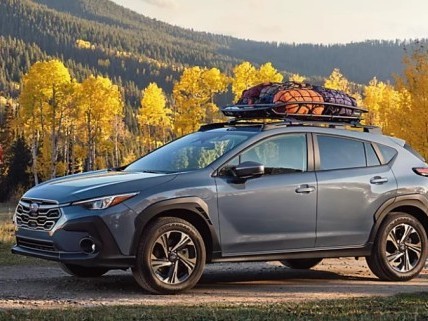
Brand new hybrid system, range over 1000km! New model Subaru Crosstrek coming in December!
RobertOct 22, 2024

Subaru XV Common Problems: These 5 Major Issues You Should Know About
RobertMar 23, 2026

Subaru plans to launch a new Forester in 2026, adding a 1.8L Turbo power version
Kevin WongFeb 11, 2026

Subaru switched to a CBU strategy, CX-5 prices dropped significantly, who is the ultimate choice for handling performance?
RobertDec 30, 2025

Does STI still have a future? Subaru gives the most ambiguous answer with two concept cars
Kevin WongDec 15, 2025
View More
Pros
Cons