
Subaru XV Common Problems: These 5 Major Issues You Should Know About
 RobertMar 23, 2026, 02:47 PM
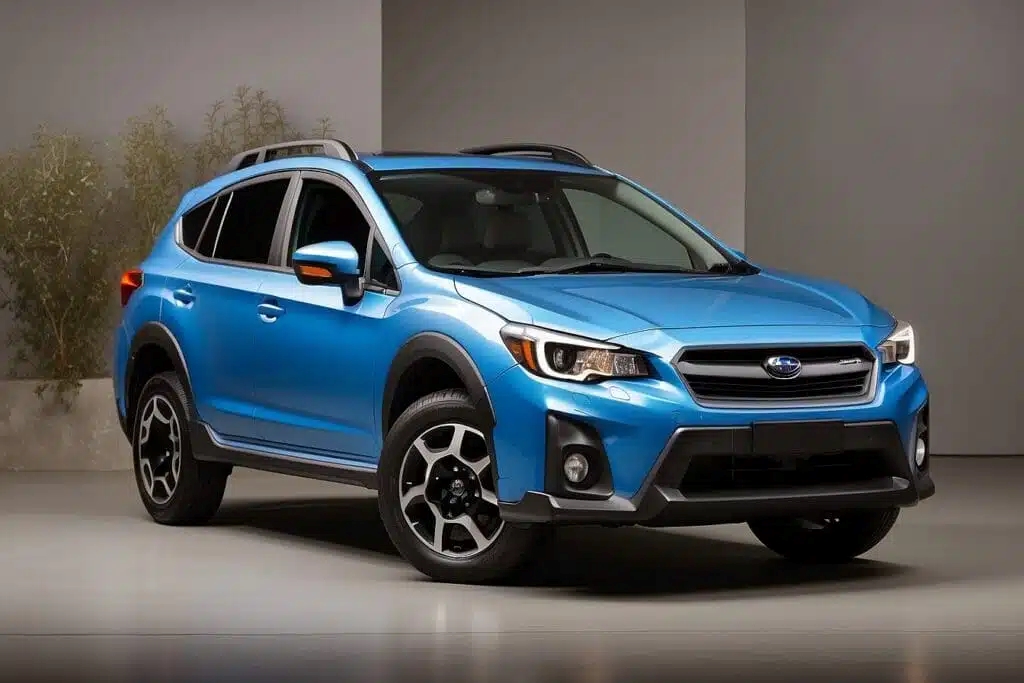
[PCauto] Subaru XV has always been a unique presence. It does not prioritize exceptional space versatility like the Honda HR-V, nor does it take the modest, steady route of the Toyota Corolla Cross. Equipped with the Symmetrical AWD and the low-center-of-gravity Boxer horizontally opposed engine, the XV attracts a group of drivers who are obsessed with handling and refuse to follow the crowd.
But choosing a car affects your ownership experience for years to come. Recently, we have sorted out a large number of owner community feedback and repair cases, and found that the durability of certain mechanical components of the XV does become a frequently discussed topic among car owners after driving a certain mileage.
If you are considering finding a good deal in the used car market, or if your XV is nearing the end of its warranty period, the following analysis based on real feedback may help you calculate the costs in advance.
Transmission Reports P2764 Fault Code
Among the mechanical complaints against the XV, one of the most frequently discussed issues is the failure of the transmission valve body (Solenoid Valve Body).
Since Subaru is equipped with the Lineartronic CVT transmission, its operating logic heavily relies on the precise control of the internal solenoid valves.
Many car owners have reported that, without warning, multiple fault warning lights suddenly light up on the instrument panel.
Once the lights are on, the vehicle often enters protection mode, usually accompanied by noticeable shifting jerks or delayed power response. Through OBD diagnostics, the P2764 fault code is a typical indication of this type of issue.
CVT transmission is extremely sensitive to fluid. In long-term high-temperature environments, failure to strictly follow temperature standards when filling or replacing fluid during maintenance may accelerate solenoid valve failure.
Due to the high repair cost, many car owners choose to go to third-party workshops to replace the solenoid valves individually. While this can save costs, durability varies.
Wheel Bearing Noise
Another issue troubling XV owners is the wheel bearing noise.
According to some owners' experiences, a low-frequency "humming" sound that increases with vehicle speed may occur between 60,000 km and 100,000 km. This noise seems more likely to occur in the rear wheels.
Although there is significant variation in the noise among different cars, its impact on driving quality is very apparent.
For a family car that focuses on quietness and handling, this persistent noise is indeed nerve-wracking.
When replacing parts, factory-packed bearings are often more expensive.
Currently, many car owners are turning to the OEM market to look for products from brands like NTN, which act as suppliers for manufacturers. While wheel bearings are considered consumables, the replacement frequency of XV bearings has drawn significant attention among the owner community. This perhaps suggests that the original parts' redundancy for handling complex road conditions might need further improvement.
Air-Conditioning Compressor Failure
The air conditioning system is not a luxury in Southeast Asia, but a survival necessity. However, some owners report that the XV's air-conditioning compressor fails shortly after the warranty period ends, with symptoms including a insufficient cooling or noticeable metallic scraping noises at idle.
Although there is no concrete statistical evidence that this is a common issue, it does reflect the pressure placed on the original compressor in long-term high-load, high-temperature environments.
Replacing a compressor is a potential expense that must be budgeted for.
To extend its lifespan, some XV owners regularly clean the condenser's cooling mesh to ensure heat exchange efficiency, avoiding prolonged overloading of the compressor.
Chassis Parts and Engine Accessories
Apart from the large components mentioned above, the XV's chassis bushings also deserve attention.
The bushings may develop cracks in under 100,000 kilometers of driving, resulting in reduced cornering support or producing noises when passing speed bumps.
Of course, this largely depends on the owner's usage environment. Frequent driving on unpaved roads will obviously accelerate the wear of rubber components.
Higher Maintenance Costs for Replacing Ignition Coils
Additionally, failure of the ignition coil is one of the occasional issues.
Due to the layout characteristics of the horizontally opposed engine, the ignition coil is positioned low and the space is cramped. Once it fails, causing the engine to shake or misfire, the labor costs for replacement are often higher than those for ordinary inline engines.
This is precisely what Subaru owners have to accept; for the driving pleasure brought by the low center of gravity, you have to pay higher maintenance costs.

In summary, the Subaru XV is a car with very obvious pros and cons.
It is not the kind of car you can just pick blindly and expect it to have an extremely high reliability rate like some mainstream brands. It feels more like a distinctively characterized partner that requires special care.
For second-hand buyers, we recommend focusing inspection efforts on the transmission history, bearing condition, and compressor operation noise.
If the previous owner has already carried out preventive maintenance or replaced parts for these pain points, then the value for money of this car will significantly increase.
If any infringement occurs, please contact us for deletion








Popular Cars
Model Year
Car Compare
Car Photo