

2024 Honda City Hatchback RS e:HEV Review

 Share
Share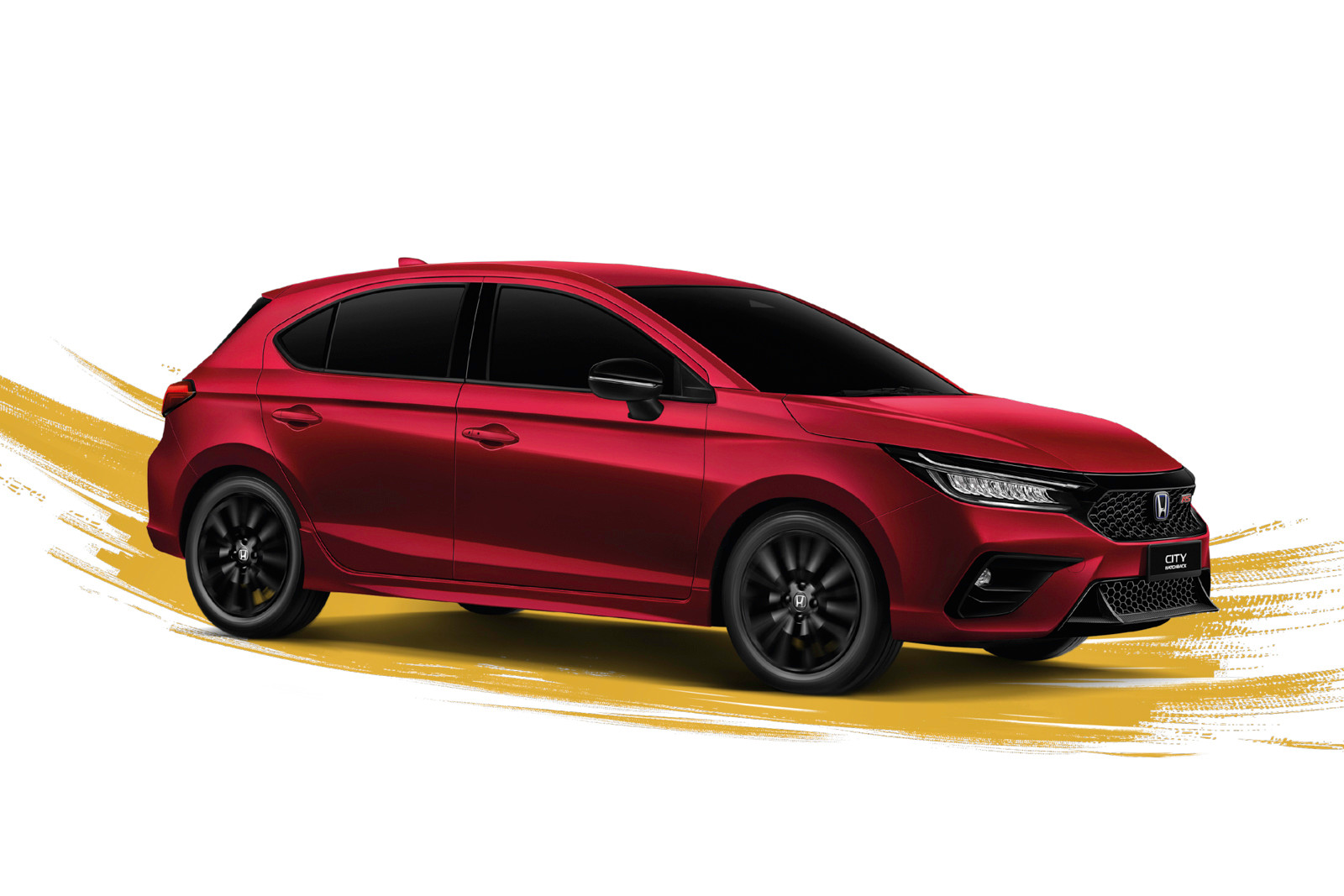
 Segment
 Body Type
 Capacity(L)
 Engine Power(PS)
 Engine Torque(Nm)
 Transmission
In Malaysia's B-Segment hatchback market, fuel efficiency, practicality, and high specifications have always been core demands for consumers. The Honda City Hatchback series has consistently occupied a popular position due to its balanced performance. As the hybrid flagship version of the series, the 2024 City Hatchback RS e:HEV not only continues the space advantages of the fuel version but also emphasizes lower fuel consumption and more responsive power, making it highly anticipated by users who value economy and driving experience. The main purpose of this test drive is to evaluate the actual performance of this hybrid model in daily commuting, highway cruising, and short trips to see if it can become a "well-rounded player" in its class.
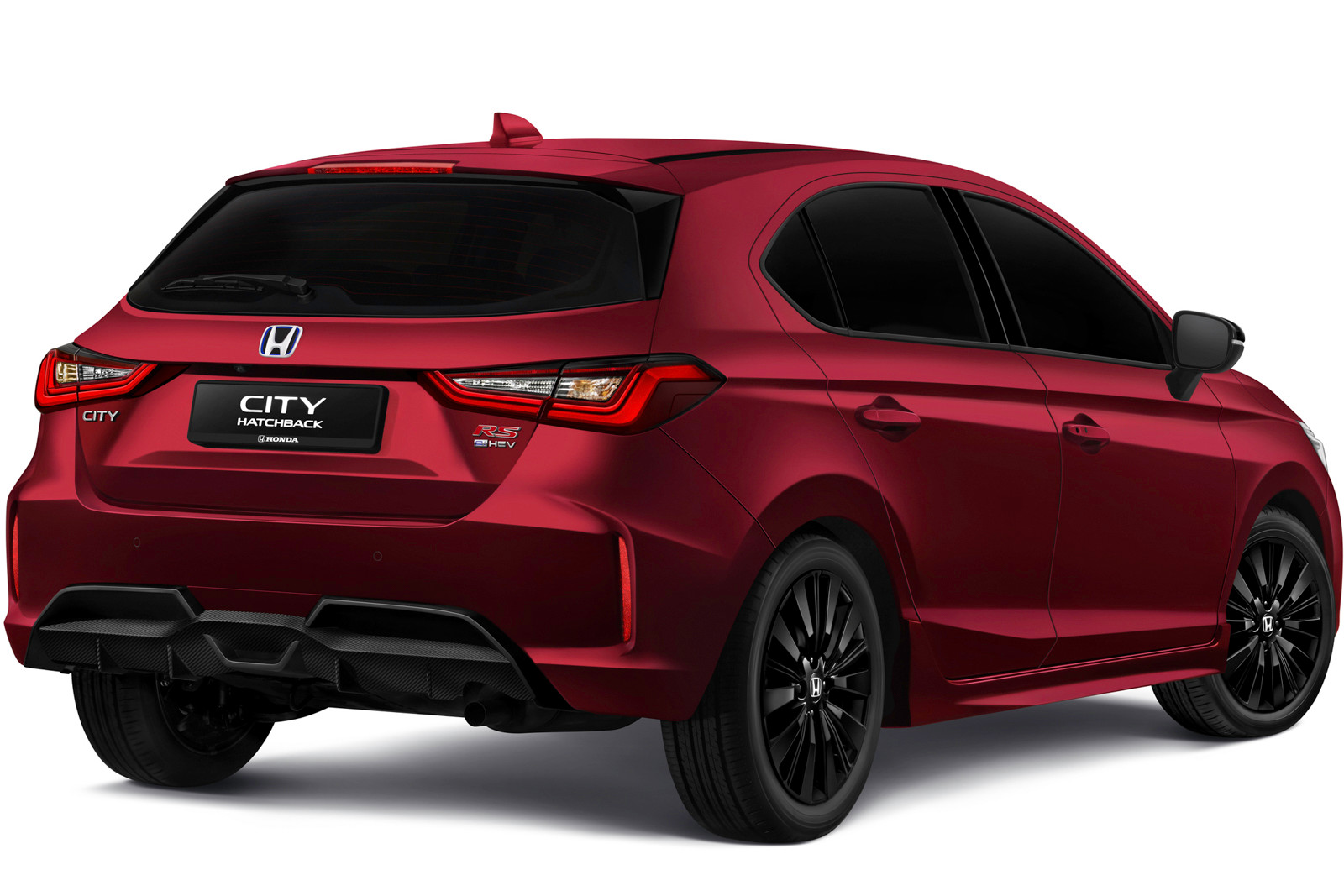
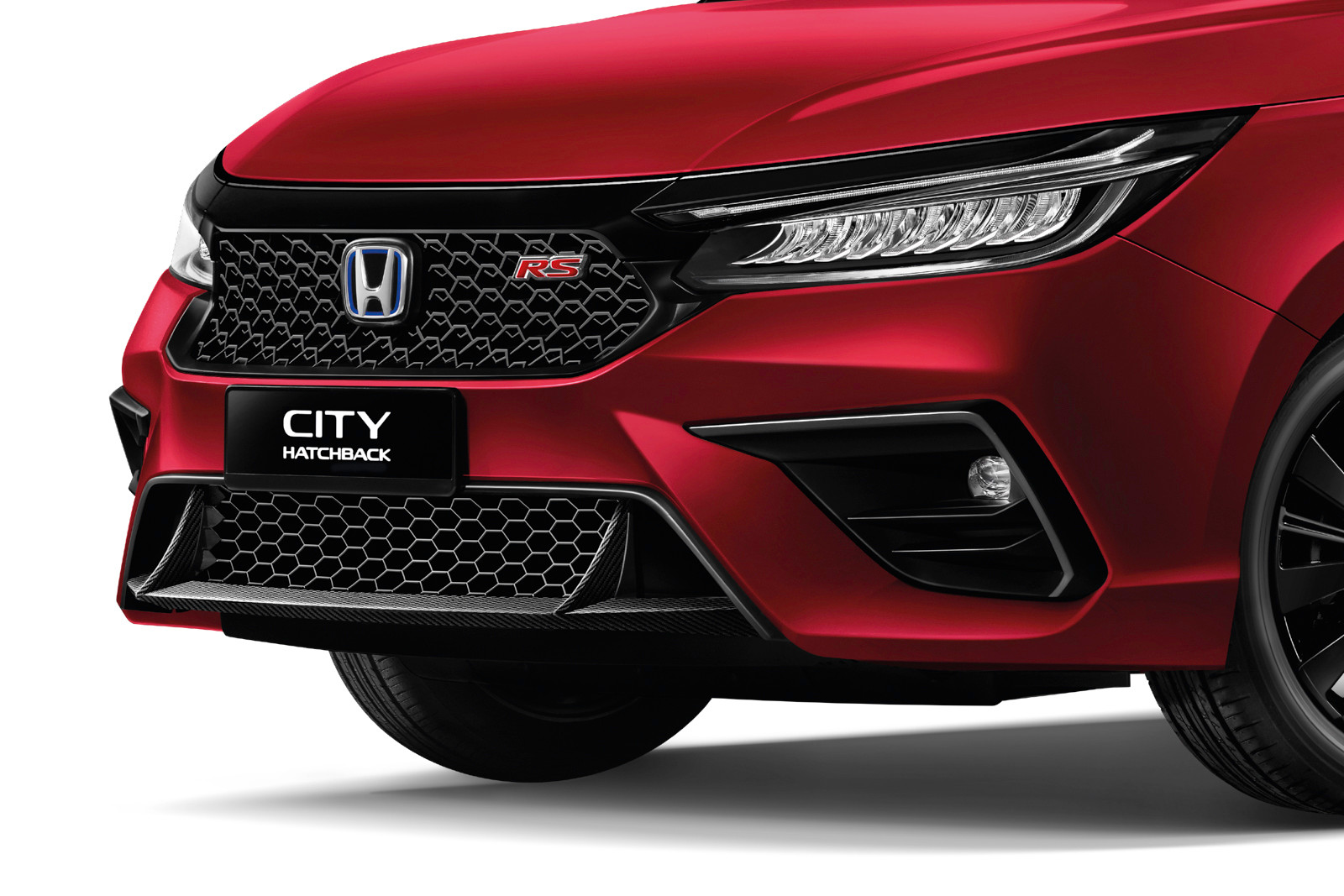
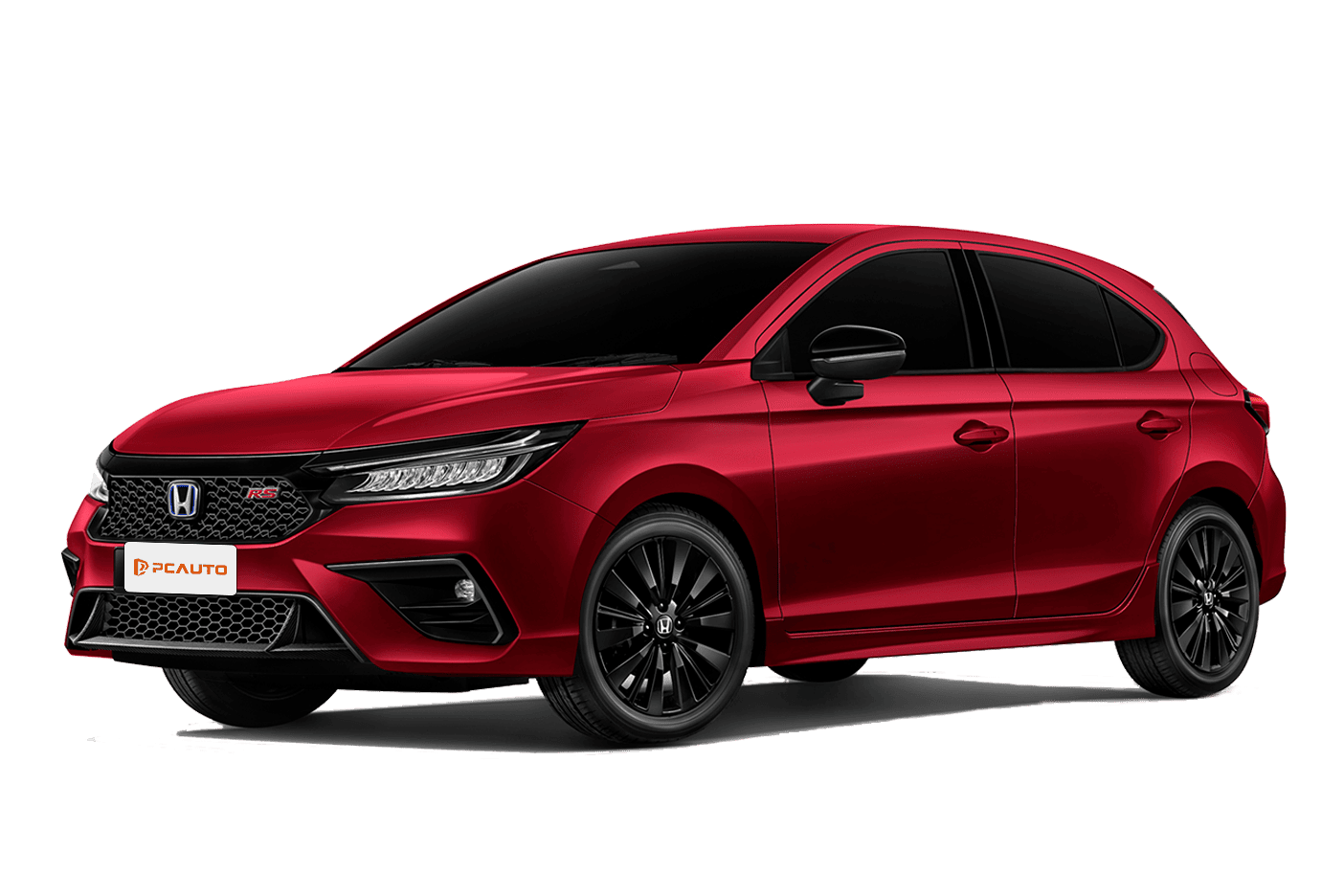
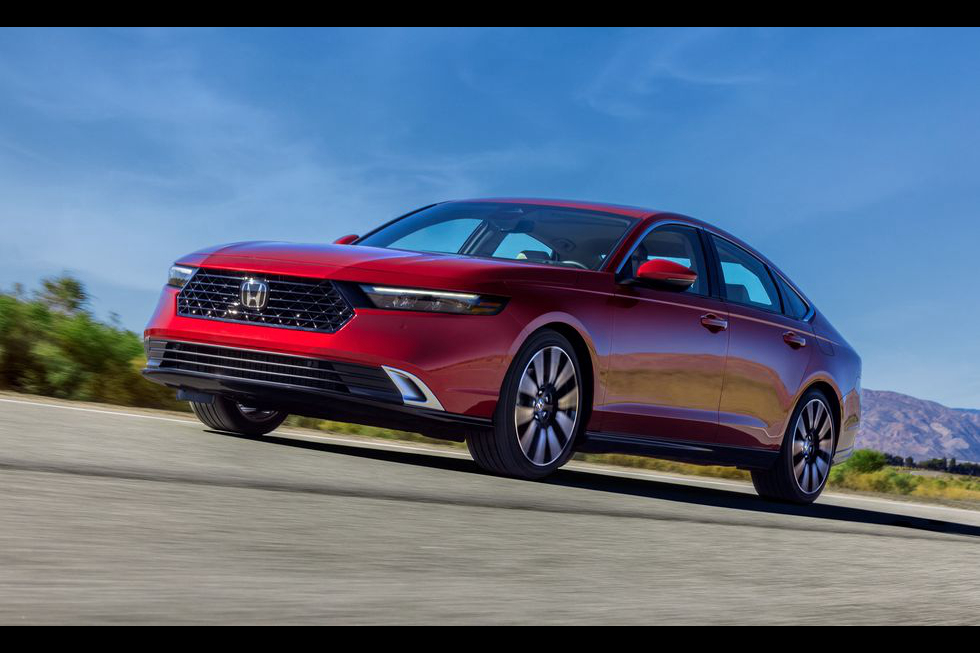
The exterior of the 2024 City Hatchback RS e:HEV continues the sporty style of the RS version, with compact and smooth overall lines, fitting the agile positioning of a hatchback. The front features Honda's signature large black honeycomb grille, paired with the RS-exclusive red "RS" badge, which is highly recognizable; the sharp-shaped LED headlights on both sides are integrated with the grille, enhancing the visual width and come standard with automatic headlights and daytime running lights, offering excellent practicality. On the sides, the 16-inch alloy wheels (tire size 185/55 R16) combined with the slightly upturned waistline that extends from the fender to the rear enhance the sporty vibe; the chrome trim under the doors and the black side skirts add a touch of sophistication. At the rear, the body-colored spoiler, LED taillights with a smoked finish, and the black diffuser-styled rear bumper combine to create a youthful and layered look.
Inside, the interior is predominantly black, accentuated with silver trim for a simple and neat layout. The dashboard is covered with soft-touch plastic materials, providing a decent tactile feel that matches the segment's positioning. The 8-inch central control screen is placed above the dashboard, supporting touch operation with a clear interface and smooth response, although the speaker system only includes four speakers, resulting in mediocre audio quality. In terms of features, the entire lineup comes standard with keyless entry, push-button start, a multifunction steering wheel (with paddle shifters), ECON mode, and automatic air conditioning. The front seats are manually adjustable, and the rear seats come standard with air-conditioning vents, ensuring rear passenger comfort. The instrument panel is an electronic analogue display, providing rich information, including battery level, power flow, and other hybrid-specific data, which helps the driver monitor the vehicle's status in real-time.
Space performance is a traditional advantage of the City Hatchback. The 2024 RS e:HEV has a wheelbase of 2600mm, a length of 4369mm, a width of 1748mm, and a height of 1488mm. The front row offers ample space, with a 175cm passenger enjoying more than a fist of headroom and legroom. The rear row is equally excellent, with knee room up to two fists and headroom one fist, ensuring comfort even for three adults sitting together. As for storage capacity, the trunk offers a volume of 289L, enough to easily fit two 20-inch suitcases. The rear seats can be folded down in a 60:40 ratio, creating a larger cargo space for short-distance moves or placing large items. Additionally, the car features multiple storage compartments, including a central armrest box, door panel storage slots, and front cup holders, offering generous practicality.
Powertrain-wise, the new car is equipped with a hybrid system combining a 1.5L naturally aspirated engine and an electric motor. The engine delivers a maximum power of 98PS (72kW) and a maximum torque of 127N·m, while the electric motor provides a maximum power of 109PS (80kW) and a maximum torque of 253N·m, paired with an E-CVT transmission. During actual driving, the initial acceleration is powered solely by the electric motor, offering a quick response. A gentle press on the accelerator pedal delivers a noticeable pushback sensation, and the 0-60km/h acceleration feels light and agile, making it suitable for urban commuting. During medium and high-speed cruising, the engine integrates smoothly without noticeable vibrations or noise. The acceleration to 100km/h is linear and fluid, with an official 0-100km/h acceleration time of 9.7 seconds, making it competitive among models in the same hybrid category. Driving modes include ECO, Normal, and Sport. In Sport mode, the throttle response is more aggressive, suitable for scenarios requiring rapid acceleration.
The handling and chassis performance align with the positioning of a family car, featuring a combination of front MacPherson independent suspension and rear torsion beam semi-independent suspension, tuned for comfort. During daily driving on smooth roads, the chassis performs adequately in filtering fine vibrations. When encountering speed bumps or uneven road surfaces, the suspension quickly absorbs shocks; however, the rear suspension may bounce slightly more than desired but remains within an acceptable range. The steering response is precise with minimal slack, the body roll is well controlled during cornering, ensuring good stability, and the steering remains steady during high-speed cruising. The braking system consists of front ventilated discs and rear solid discs, providing linear braking response and moderate pedal force, instilling confidence.
Fuel efficiency is a core advantage of hybrid models. The official combined fuel consumption is 3.7L/100km. During this test drive, which included urban traffic, highway cruising, and suburban roads, the total mileage was approximately 200km, with an average fuel consumption of 4.1L/100km, which is close to the official figure and demonstrates excellent performance. Regarding noise control, the electric motor is quiet at low speeds, while engine and wind noise become slightly noticeable at high speeds. However, when driving below 60km/h on city roads, the in-cabin noise is well controlled and does not affect conversations among passengers. As for seat comfort, the front seats provide moderate wrapping support and sufficient support to prevent fatigue during extended drives, while the rear seats offer a reasonable backrest angle and adequate cushion length, ensuring good comfort for passengers.
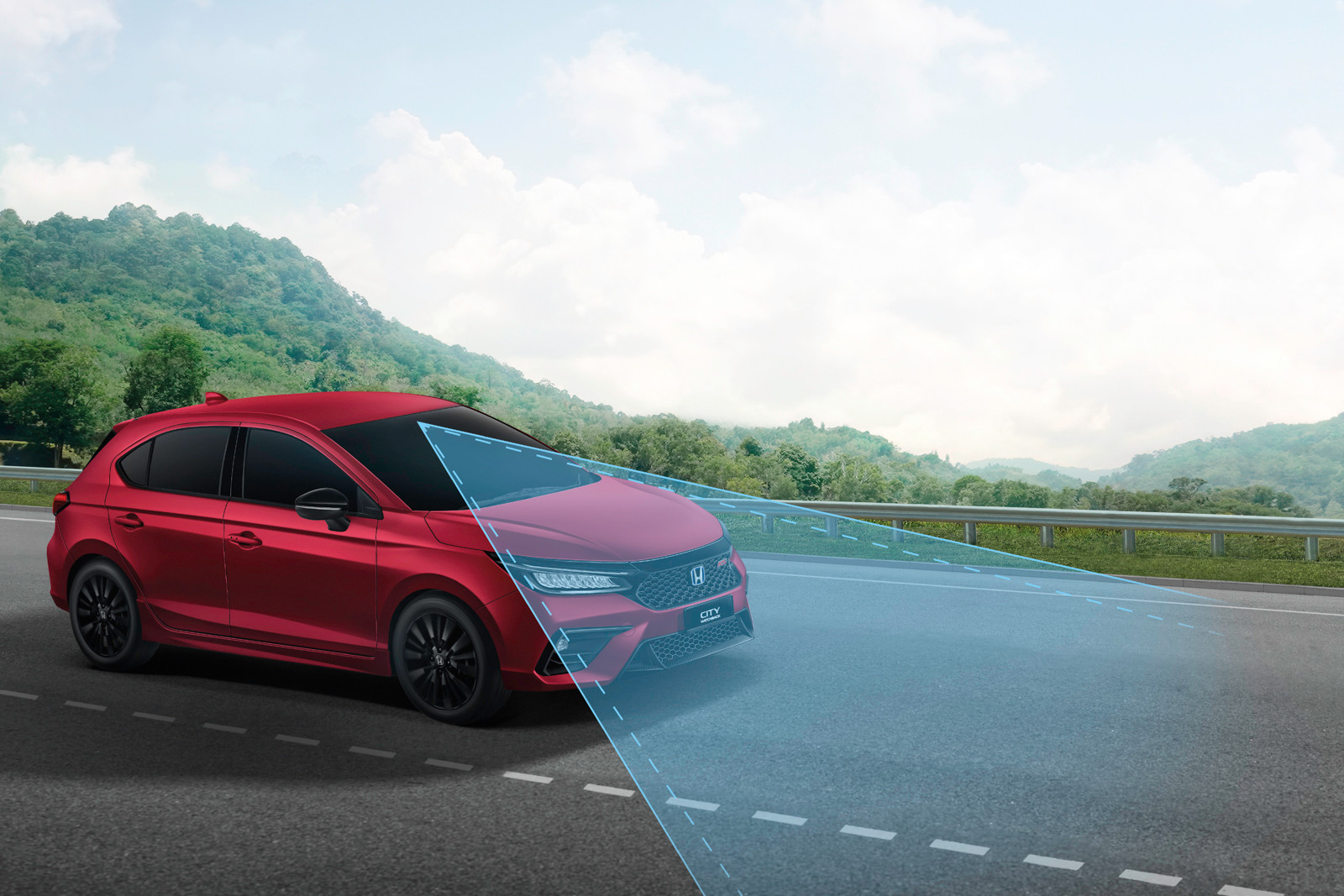
Overall, the 2024 Honda City Hatchback RS e:HEV has clear advantages: the hybrid system is fuel-efficient with quick power response, the interior space is class-leading, the configuration is rich (standard features such as 6 airbags, ACC adaptive cruise control, lane departure warning, autonomous emergency braking, etc.), and the vehicle comes with a comprehensive 5-year/unlimited mileage warranty, ensuring reliability. Compared to competitors in the same segment, such as the Toyota YARiS Cross Hybrid, the City Hatchback RS e:HEV offers more space and a better price advantage (priced at RM 112,900). Compared with its own fuel version, the hybrid version has lower fuel consumption and stronger performance, making it suitable for users who value both cost efficiency and driving experience.
This car suits a wide range of people. First, for family users, its spacious interior, low fuel consumption, and comprehensive safety features can meet the needs of daily commuting and family trips. Second, for young consumers, its sporty exterior and agile driving feel cater to the aesthetics of the younger generation. Finally, for office workers who often drive in urban areas, the hybrid system's low fuel consumption can effectively reduce the cost of car usage.
Overall, the 2024 Honda City Hatchback RS e:HEV is a very well-balanced hybrid hatchback. It strikes a great balance between fuel economy, space, features, and power, with no significant weaknesses. It is a model worth serious consideration in the B-segment market.
Honda City Hatchback Car Compare
Honda City Hatchback Loan Calculator
Cars With Similar Price And Features
4
Rank in Hatchback
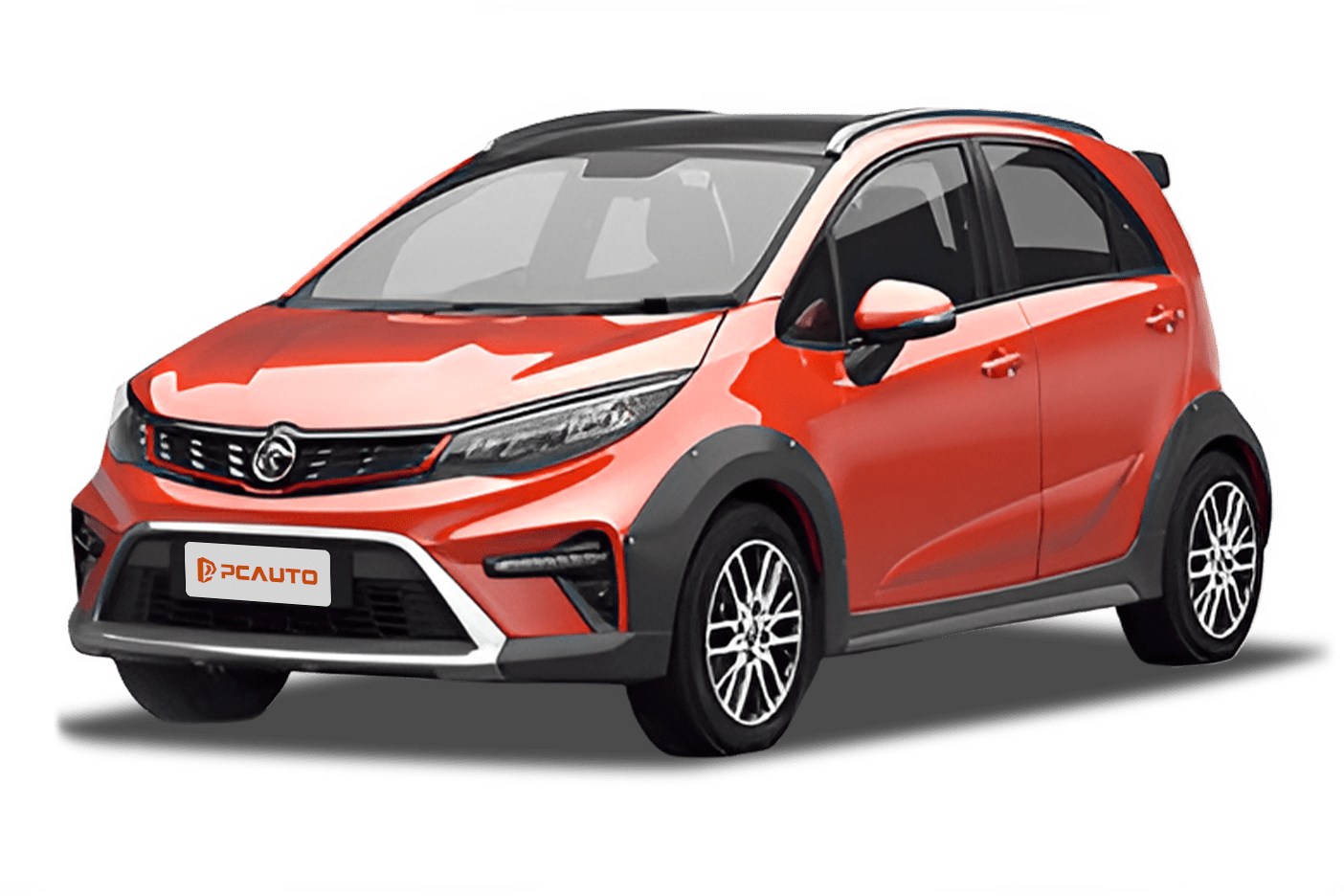
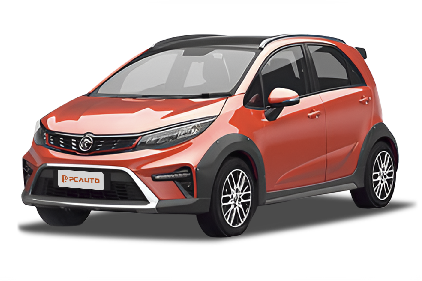
2023 Proton Iriz 1.3 Standard CVT is an affordable, well-balanced entry-level B-segment hatchback with safety features, suitable for budget-conscious families focusing on safety and practicality for daily commuting.
2
Rank in Hatchback

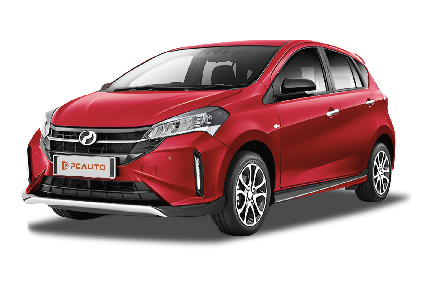
2023 Perodua Myvi 1.3 G with PSDA is an affordable B-segment hatchback, combining practical space, basic features, and PSDA safety assistance, suitable for family commuting.

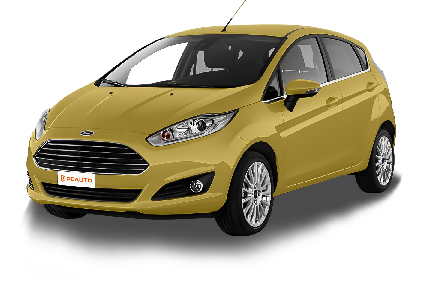
2022 Ford Fiesta public is a B-Segment model with responsive power, economical fuel consumption, and rich safety features, suitable for young families or individual users who prioritize driving experience and safety.
3
Rank in Hatchback
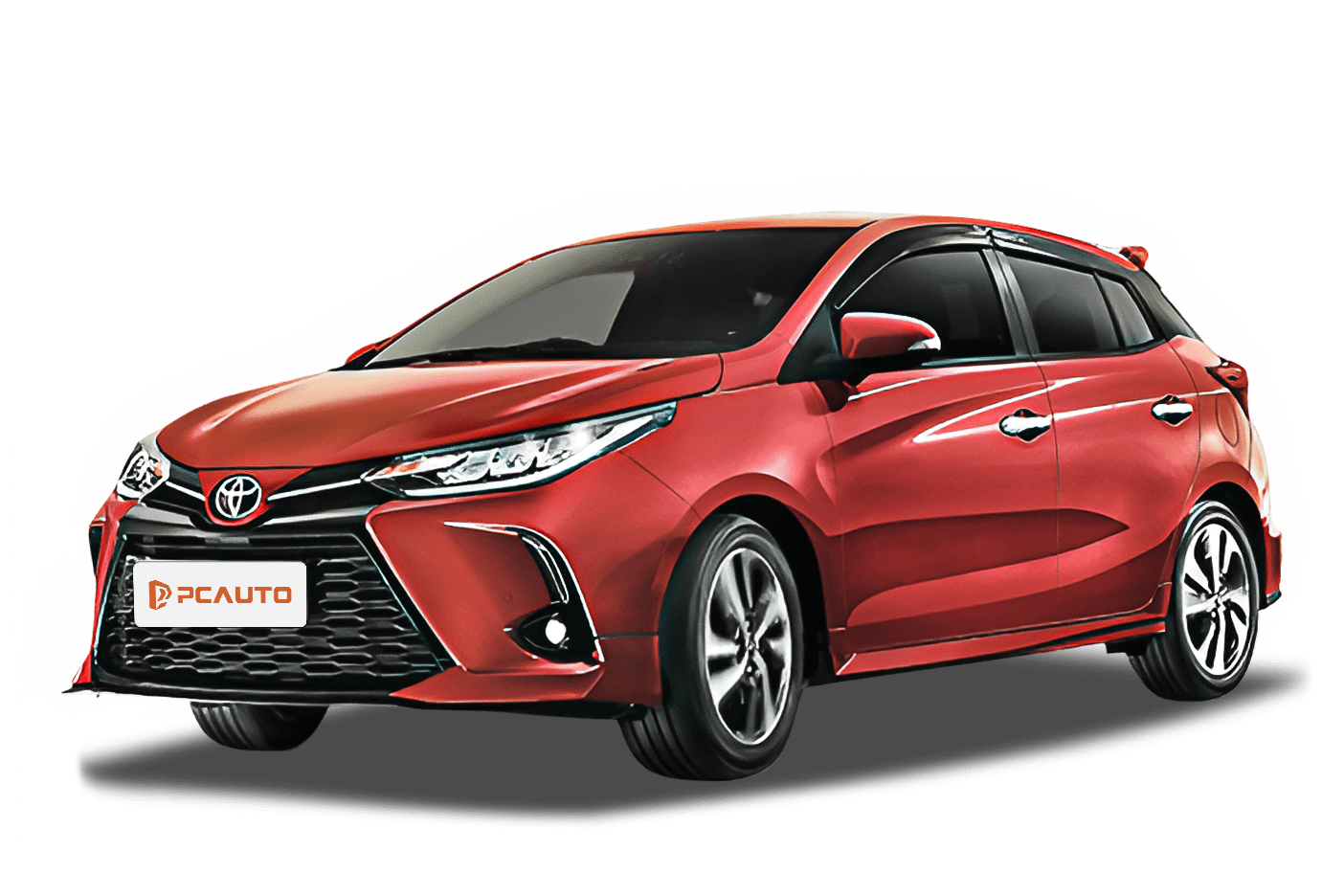
2024 Toyota Yaris 1.5E serves as the main entry-level household model, emphasizing durability, upgraded with a 360-degree parking camera and Optitron instrument panel. Its practical space, smooth power delivery, and high cost-performance ratio align well with family commuting needs.