
2024 McLaren Artura Spider Review

 Share
Share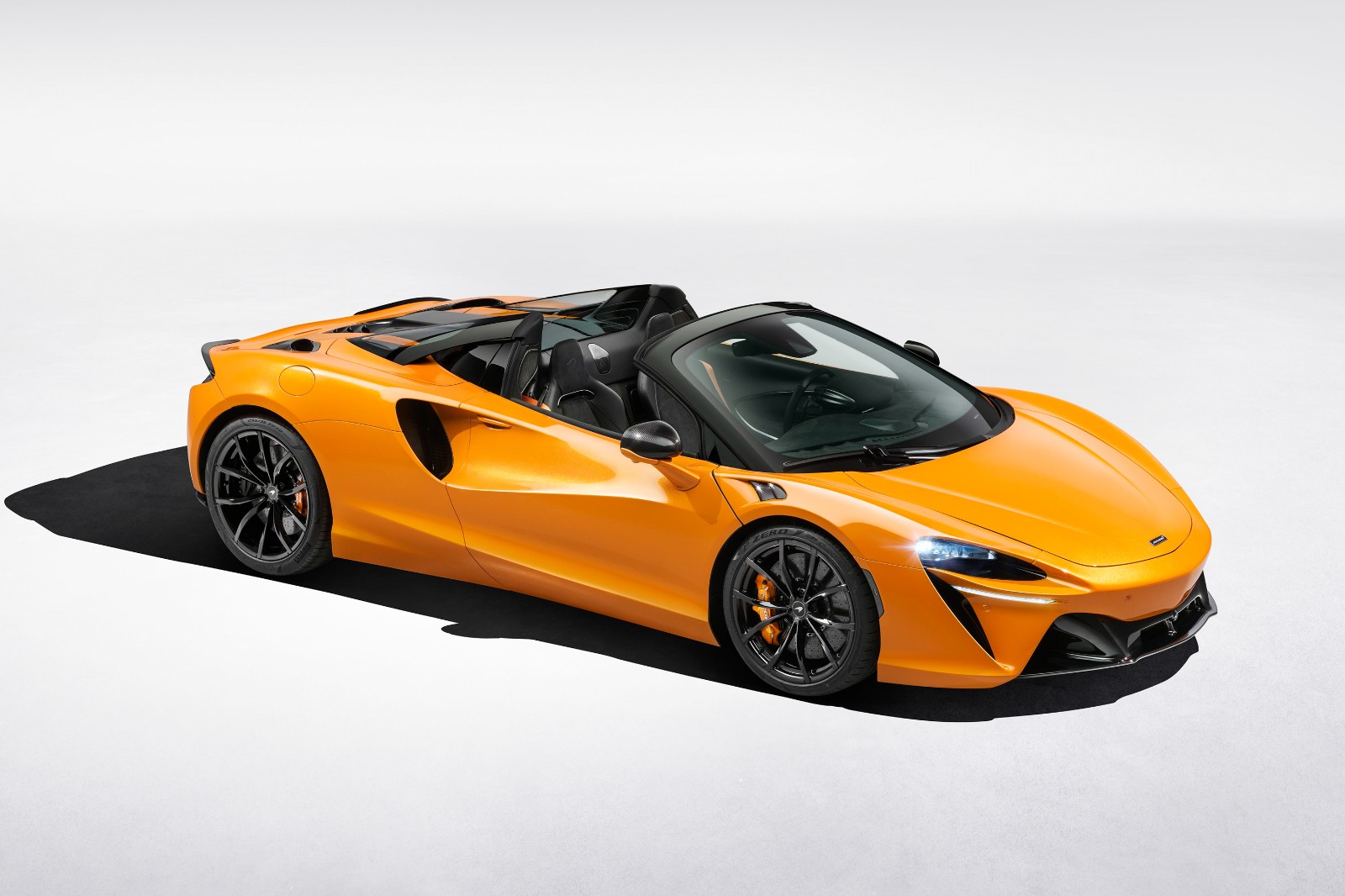
 Segment
 Body Type
 Capacity(L)
 Combined System Output(PS)
 EV Range(km)
 Driven Wheels
In the supercar market, PHEV models are gradually becoming a new choice that balances performance and everyday practicality—after all, no one wants to endure the high fuel consumption of a large-displacement fuel supercar in the city every day, nor do they want the range anxiety that comes with pure electric supercars. The 2024 McLaren Artura Spider, as the brand's first mass-produced PHEV convertible supercar, directly targets the niche demand for being both a "track beast and city commuter." Its core selling points are clear: a strong performance of 700 combined horsepower, 33 kilometers of pure electric range for urban convenience, and the driving pleasure brought by the convertible design. In this test drive, we focus on its convertible experience, the actual performance of the hybrid system, and its practicality for daily use, to see if it truly balances the passion of a supercar with the rationality of daily life.
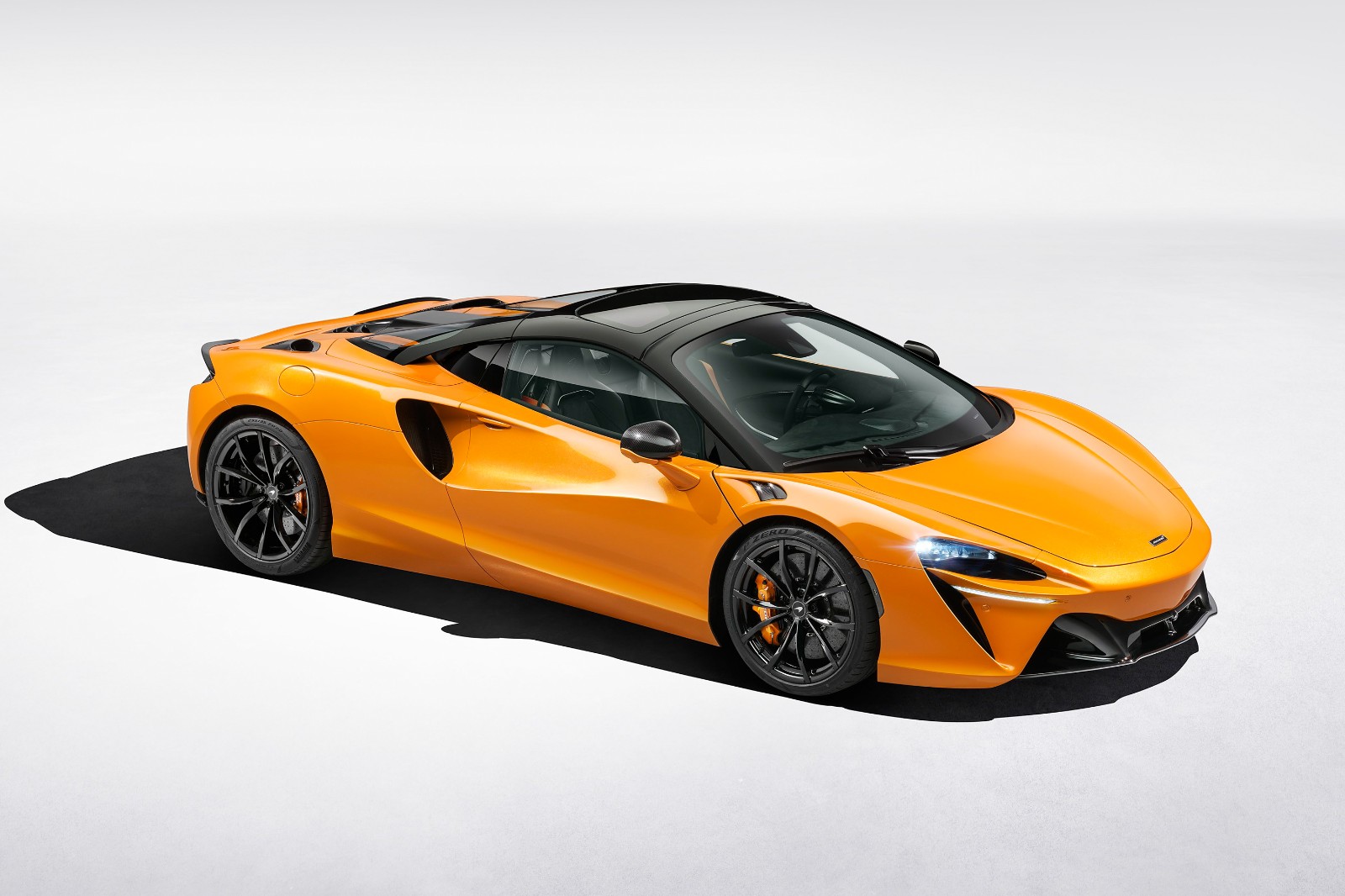
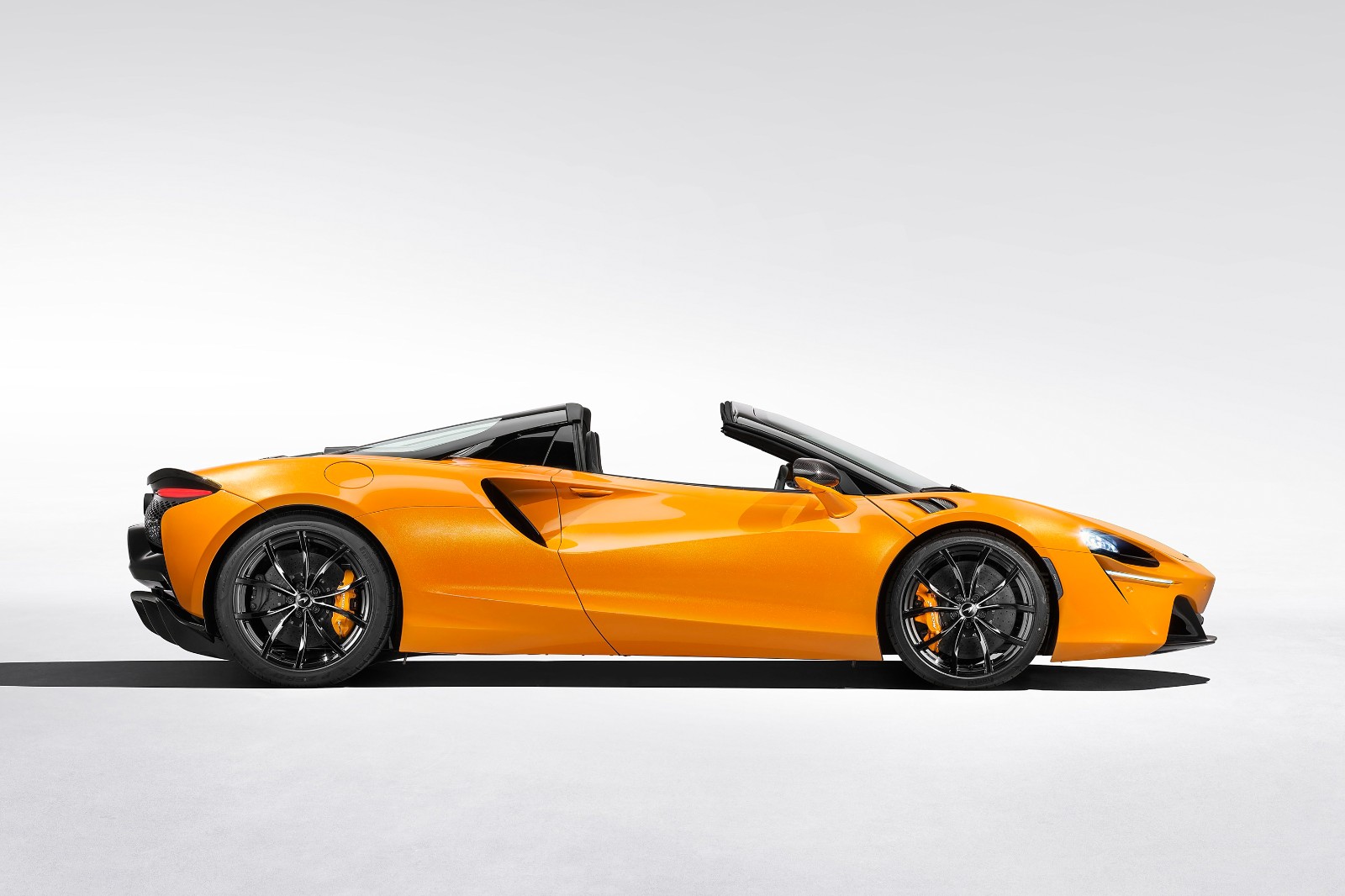
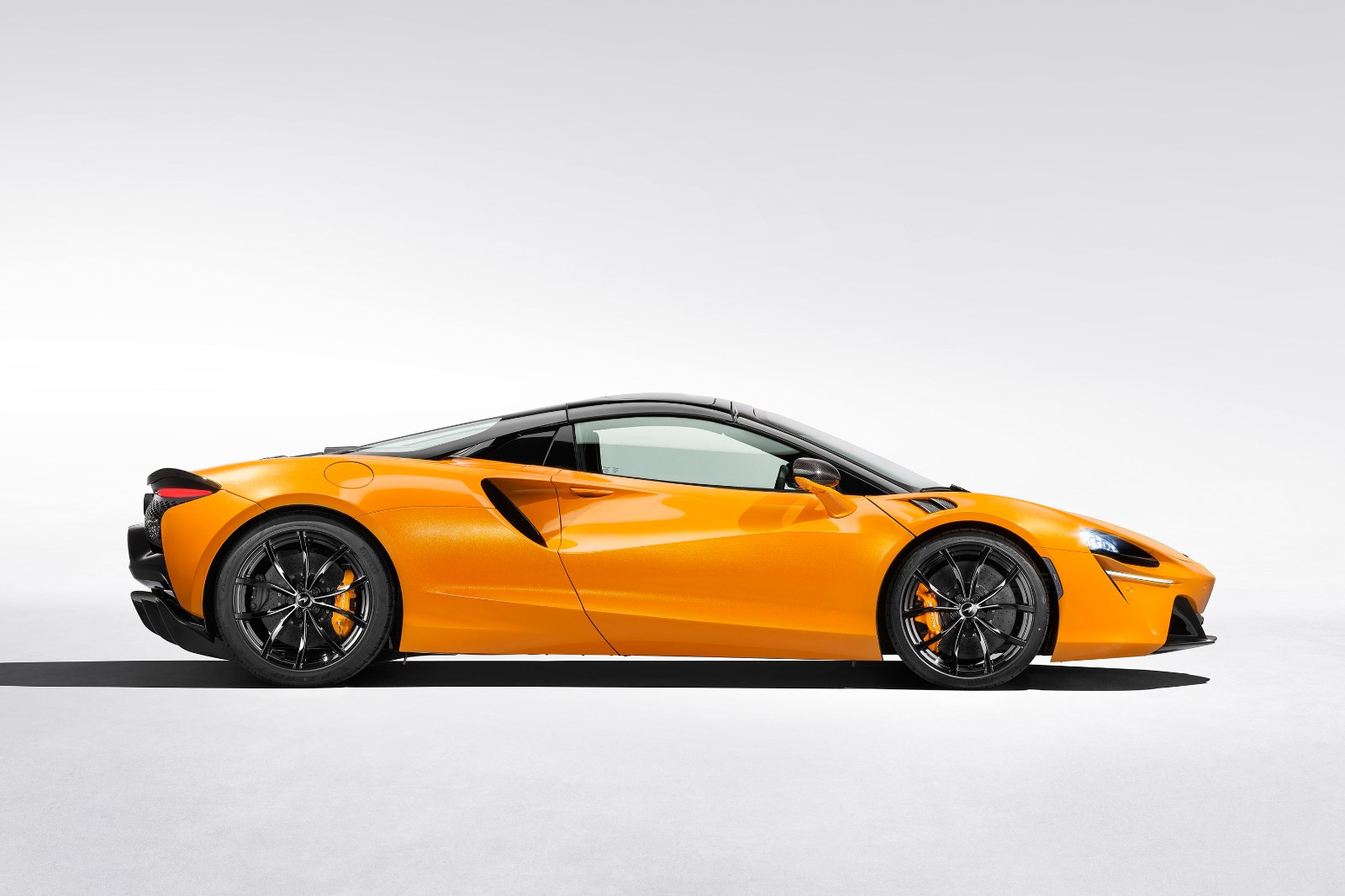
The Artura Spider's exterior continues McLaren's minimalist supercar style, featuring smooth and low-slung lines with excellent aerodynamic efficiency. The front end still showcases the signature "hammerhead" design, with sharp LED headlights connected to large side air intakes on the front bumper, which not only enhance aerodynamic performance but also give the front a highly distinctive look. On the side, 19-inch front wheels and 20-inch rear wheels are paired with Pirelli P-Zero tires, while the wide-body rear wheel arches highlight the rear-wheel-drive supercar's sense of power. The lines of the soft-top convertible storage compartment seamlessly connect with the rear, ensuring a cohesive look even when the top is closed. At the rear, the full-length LED taillights are positioned above a compact diffuser. Though it lacks an exaggerated rear wing, the aerodynamic downforce at high speeds is still sufficient. The lighting system uses LED technology throughout, with automatic headlights and daytime running lights as standard, ensuring high practicality.
Sitting inside, the Artura Spider's interior is driver-centric, with a simple overall layout and no excessive design elements. An 8-inch touchscreen sits atop the center console with a decent interface smoothness, supporting CarPlay and Android Auto. Below it are some retained physical buttons, such as the air conditioning adjustment knobs, making it convenient for blind operation while driving. In terms of materials, the seats and door panels are wrapped in Alcantara, while the center console features carbon fiber trim, striking a fine balance between luxury and sportiness. For features, the multifunction steering wheel comes with paddle shifters, and the electric adjustment function enables drivers to quickly find a suitable seating position. Automatic air conditioning, rain-sensing wipers, and keyless entry/start are all standard. However, the front seats are manually adjustable, which is somewhat surprising for a supercar priced at 3.4 million MYR.
In terms of space performance, as a two-door, two-seat supercar, the Artura Spider offers adequate seating space—an occupant of 180 cm can sit in the front with about one fist of headroom and legroom to spare, avoiding any sense of claustrophobia. For storage capabilities, the front trunk offers a capacity of 160 liters, enough to fit two carry-on suitcases, making it suitable for short trips. There are also small storage compartments inside the door panels and below the center console, ideal for holding phones, wallets, and other personal items. For comfort configurations, the front row has independent air conditioning vents, and a USB-C power port is located below the center console, making it convenient to charge electronic devices.
The power system is the core highlight of the Artura Spider. It is equipped with a 3.0T V6 twin-turbo engine and an axial flux electric motor hybrid combination, with a combined system power of 700 hp and a torque of 720 N·m. During daily commutes, the 33-kilometer range in pure electric mode can basically cover urban short-distance travel. The 225 N·m torque of the electric motor provides very brisk starts, completely eliminating the low-speed lag of fuel supercars. Switching to sport mode, the engine intervenes with extremely rapid power response, the 7-speed DCT gearbox shifts smoothly and quickly, with an official 0-100 km/h acceleration time of 3 seconds. During actual test drives, the push-back feeling is intense, and when you step on the accelerator for overtaking, the power comes instantly, fully delivering a supercar-level performance.
In terms of handling, the chassis of the Artura Spider uses front double wishbones and rear multi-link independent suspension, with a tuning bias toward sportiness while retaining a certain level of comfort. The steering wheel is precise with minimal play, the car's posture is stable when cornering, and body roll is well controlled. Even on bumpy road surfaces, the suspension quickly filters out fine vibrations, preventing passengers from feeling overly jarring. The braking system adopts carbon-ceramic ventilated discs, with linear pedal feedback, sufficient braking force, and a strong sense of confidence during high-speed braking.
In the special testing section, we focused on pure electric range and fuel consumption. In pure electric mode, driving in congested city areas achieves a range of about 30 kilometers, reaching around 90% of the expected performance. It meets expectations and takes 2.5 hours to fully charge with slow charging, making it convenient for use with a home charging station. In hybrid mode, the combined fuel consumption is approximately 5.2L/100km, which is exceptionally good for a supercar. Regarding the convertible experience, the soft-top roof can open or close within 11 seconds at speeds below 50 km/h, and it doesn't take up much storage space when stowed. When the convertible is open, wind noise is well controlled, and even at speeds up to 100 km/h, normal conversations inside the car are not impacted.
In terms of driving comfort, the Artura Spider exceeds expectations. Regarding sound insulation, with the roof closed, the cabin remains quiet, and wind and tire noise at high speeds are kept within a reasonable range. With the roof open, the wind deflector at the headrest reduces direct airflow, enhancing the passenger experience. Although the seats are manually adjustable, the Alcantara material provides excellent support and wrapping, ensuring long driving sessions do not cause fatigue. The regenerative braking is adjustable in three levels, and at the weakest setting, the coasting feel is nearly the same as a fuel car, without any noticeable drag, making daily driving very user-friendly.
In conclusion, the 2024 McLaren Artura Spider has standout advantages: a strong 700-hp hybrid powertrain, a practical 33-kilometer pure electric range for urban use, a convenient soft-top convertible experience, and relatively friendly fuel consumption. Compared to its class peer, the Ferrari 296 GTS, the Artura Spider is more affordable, and the hybrid system offers lower daily running costs. While the brand premium might be slightly inferior to Ferrari, its performance shows no compromises. Its balanced overall performance makes it suitable not only for enthusiasts who want to enjoy open-top driving fun on weekends but also for those who need a vehicle for everyday short commutes in the city — especially those who prefer not to drive a fuel-powered supercar in traffic jams but still desire the performance of a supercar.
Overall, the Artura Spider is a "supercar you can drive daily." It balances passion and rationality, without the high fuel consumption and inconvenience of traditional supercars, while retaining the performance and fun a supercar should have. If you're looking for a supercar that can be wild on the track and also used for daily commutes, the Artura Spider is definitely worth considering.
McLaren Artura Car Compare
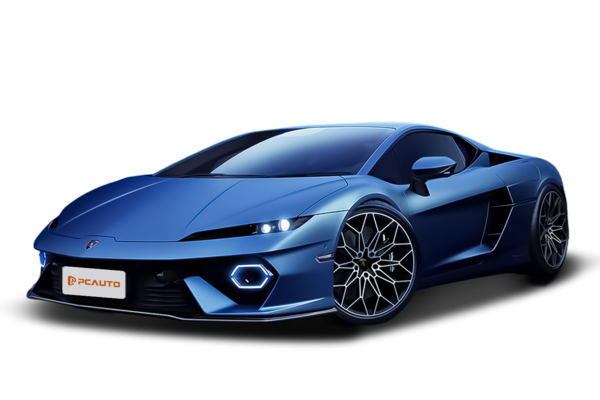
McLaren Artura Loan Calculator
More McLaren Reviews
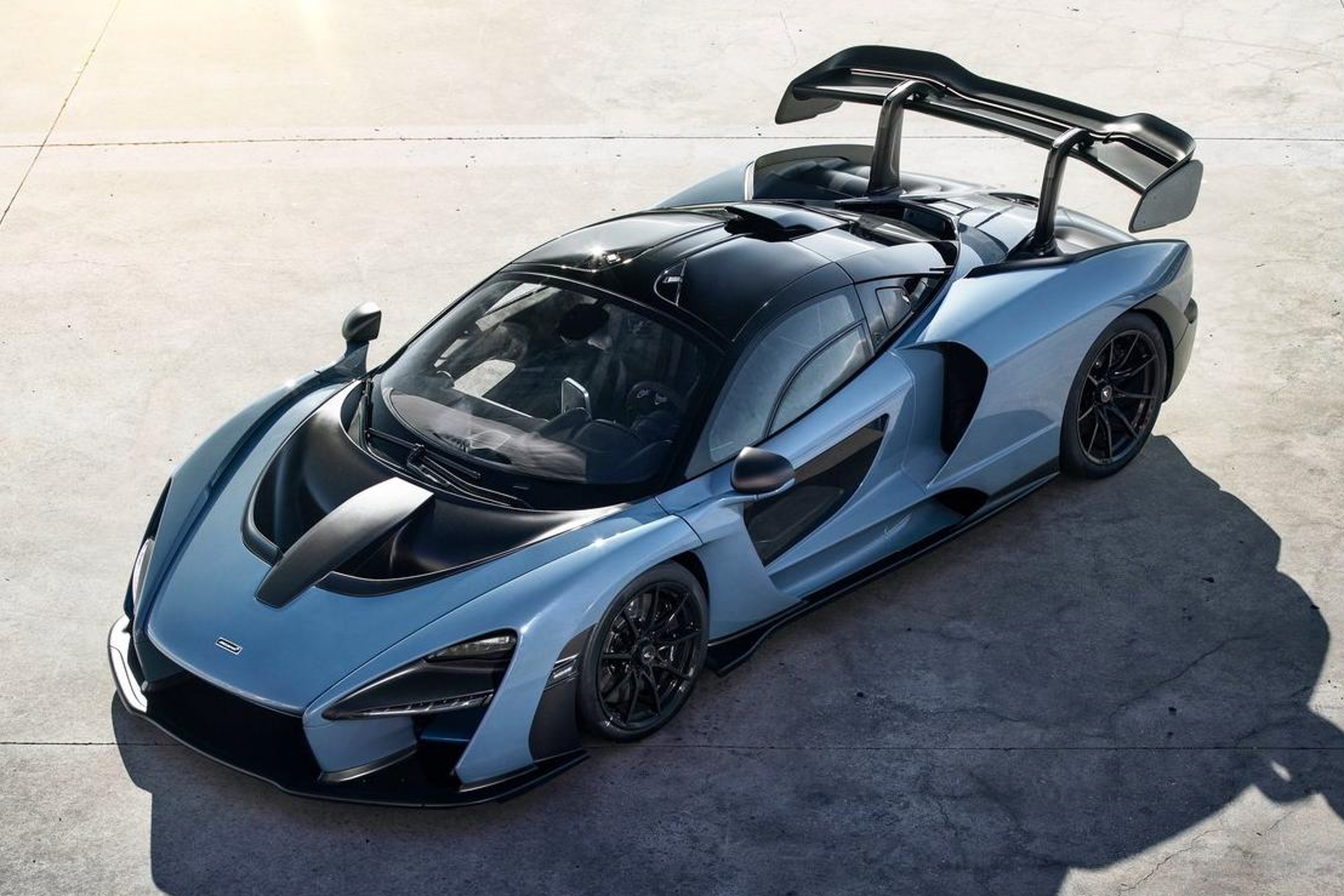
Cars With Similar Price And Features

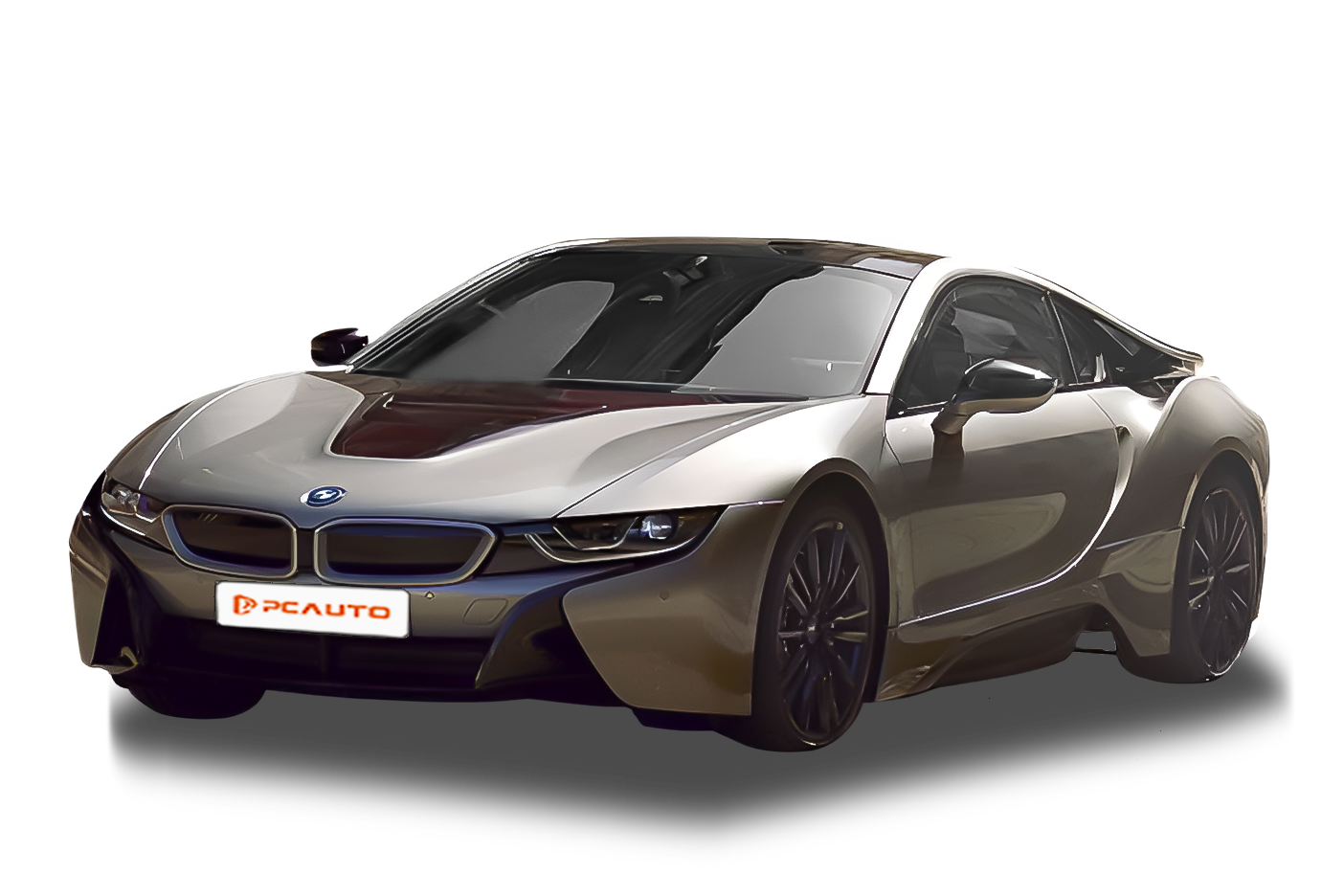
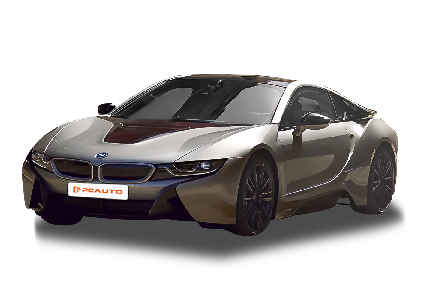
2019 BMW i8 Coupe eDrive is a luxury sports car with futuristic design and plug-in hybrid performance, meeting personalized and eco-friendly travel needs with technological features and agile handling.

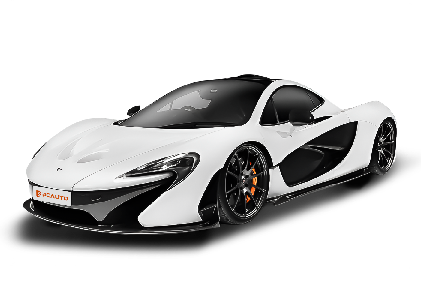
2023 McLaren P1 3.8L V8, as a representative of hybrid supercars, combines 916PS total horsepower, 2.8-second 0-100 km/h performance, handling pleasure, and daily practicality, making it an ideal choice for performance enthusiasts.
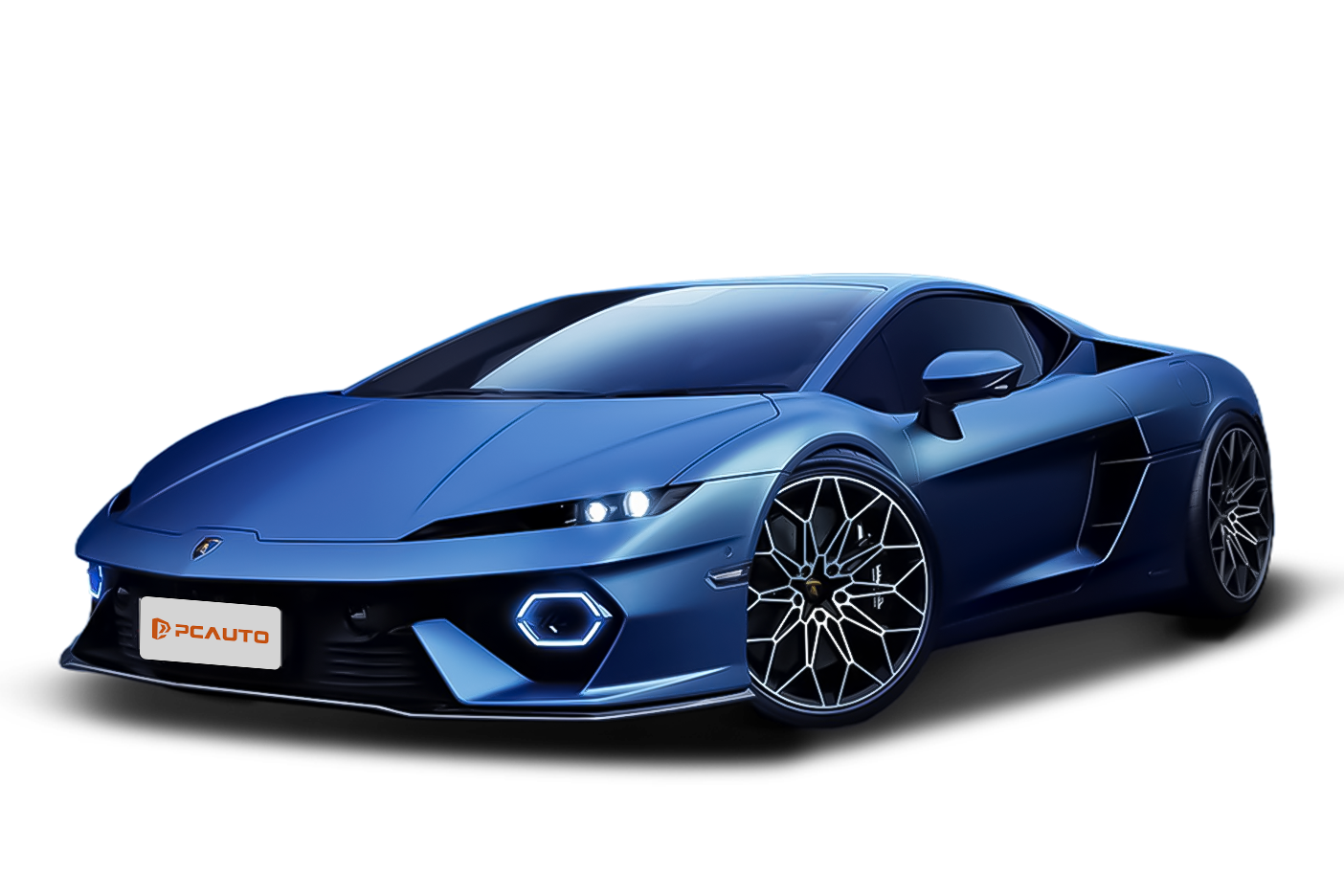
2025 Lamborghini Temerario is a mid-engine rear-wheel-drive hybrid supercar that combines extreme performance with everyday versatility, 920Ps combined power + 2.7 seconds to accelerate from 0 to 100 km/h, and also offers 3.5 kilometers of pure electric range.