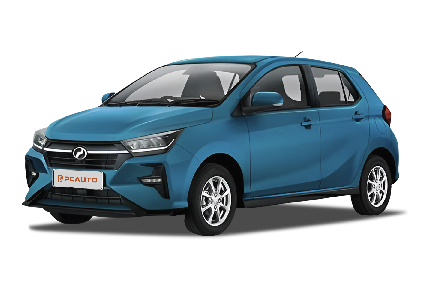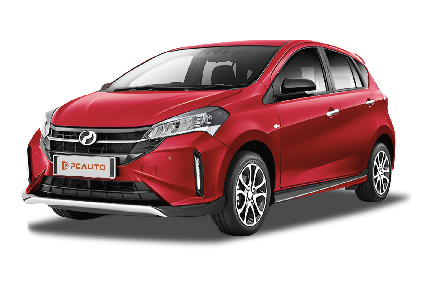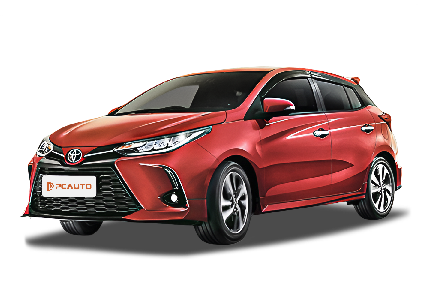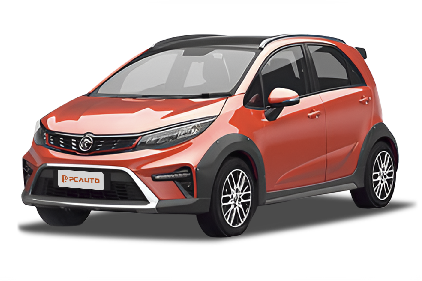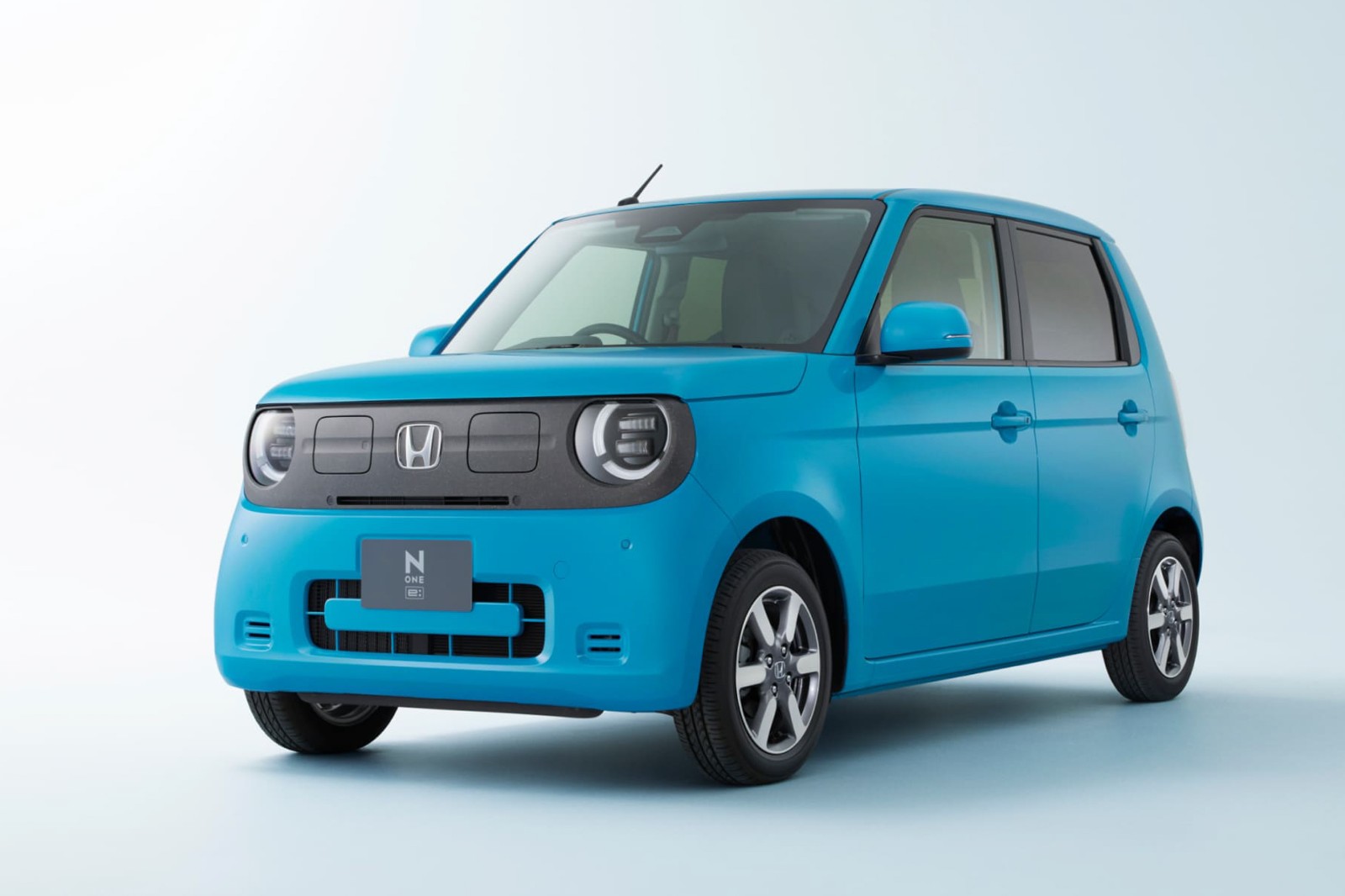
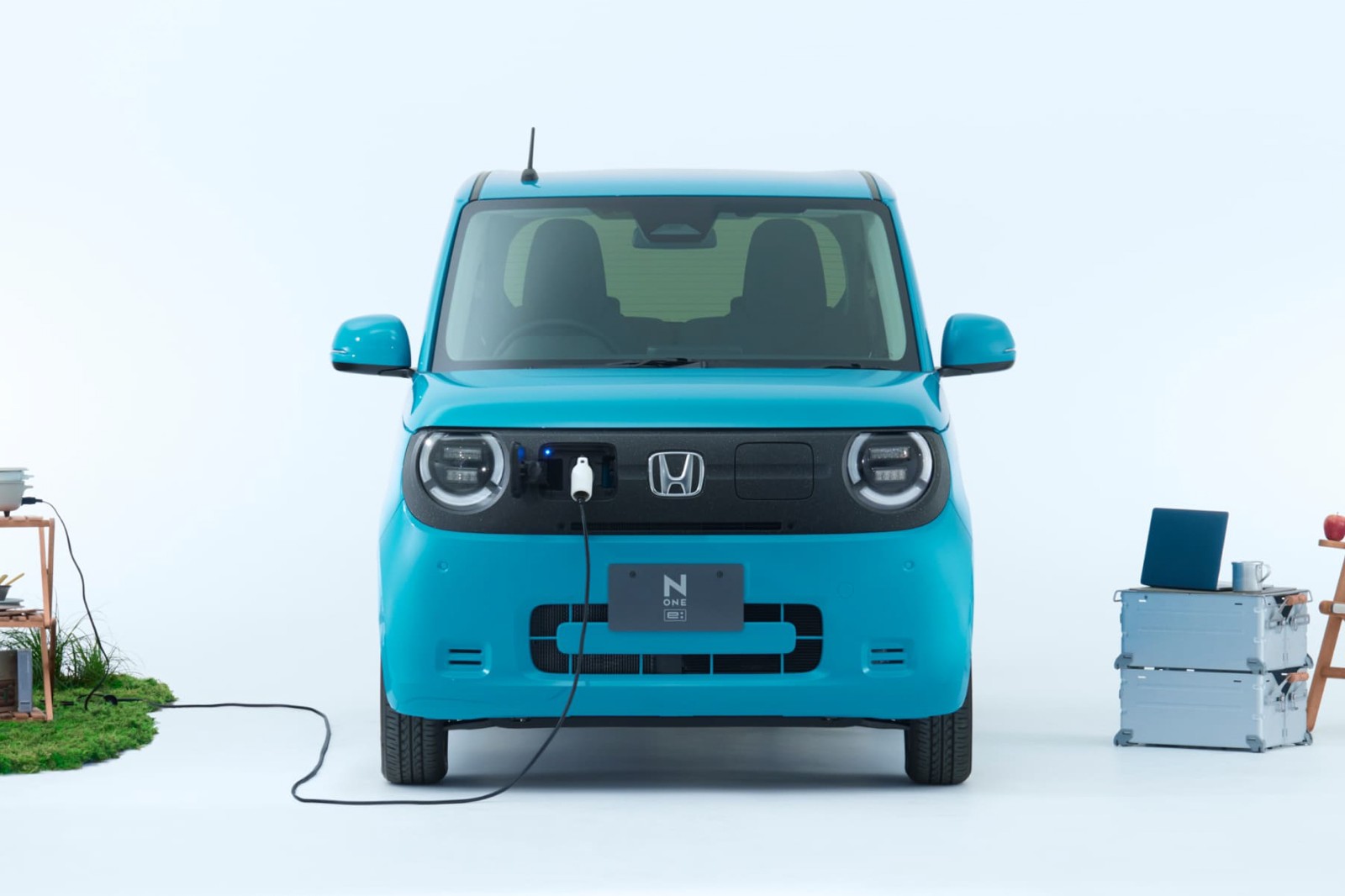
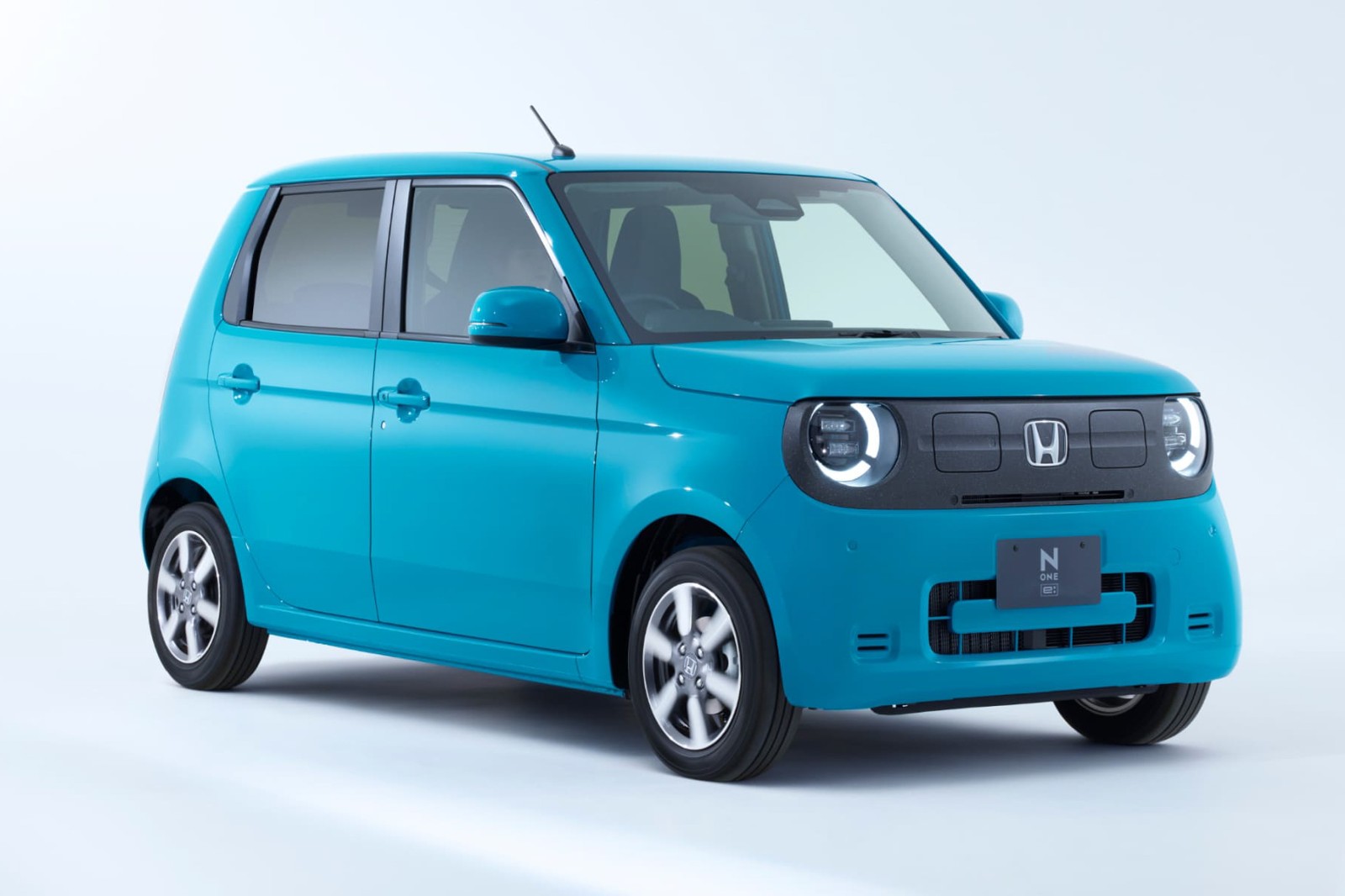
2025 Honda N-One-e
Price
TBC
Select a Vehicle Variant
2025 Honda N-One-e TBC
Summary
Launched in 2025, the 2025 Honda N-One-e is a standout A-Segment Hatchback that combines practicality and performance at an attractive price of TBC. With seating for - passengers, it’s ideal for families or those who prioritize cabin space. Its dimensions (-mm long, -mm wide, and -mm tall) ensure a comfortable ride with ample legroom and headroom, while still being agile enough for city driving.
Under the hood, the 2025 Honda N-One-e delivers a spirited drive with a top speed of -km/h, making highway cruising effortless. The generous -cc engine capacity ensures strong acceleration and fuel efficiency, striking a great balance for daily commutes and longer trips. Whether you’re looking for a spacious family car or a reliable daily driver, the 2025 Honda N-One-e offers a compelling package with modern styling, solid performance, and smart value—all in one well-rounded vehicle.
Under the hood, the 2025 Honda N-One-e delivers a spirited drive with a top speed of -km/h, making highway cruising effortless. The generous -cc engine capacity ensures strong acceleration and fuel efficiency, striking a great balance for daily commutes and longer trips. Whether you’re looking for a spacious family car or a reliable daily driver, the 2025 Honda N-One-e offers a compelling package with modern styling, solid performance, and smart value—all in one well-rounded vehicle.
Core Specs

Segment
A-Segment

Engine Capacity(cc)
-

Transmission
-

Fuel Comsumption (L/100km)
-

Fuel Tank(litres)
-

Top Speed(km/h)
-

Seats
-

Length(mm)
-

Width(mm)
-

Height(mm)
-

Wheelbase(mm)
-

Boot Volume(L)
-
Honda N-One-e Dealers
Related Q&A
View More >Q
What is my 2023 Honda Civic worth?
The resale value of a 2023 Honda Civic in Malaysia depends on multiple factors, including the vehicle's age, mileage, overall condition, trim level, and current market demand. Based on current market data, a well-maintained 2023 Civic in the 1.5L Turbo or 1.5L RS trim, with approximately 10,000 to 20,000 kilometers on the odometer, is typically priced between RM 110,000 and RM 130,000. The final price is also influenced by specifics such as the exterior color, a complete maintenance history, and whether the original factory warranty is still valid. The Honda Civic maintains strong demand in Malaysia's used car market. These vehicles are valued for their fuel efficiency and proven reliability, which contribute to their strong value retention. Furthermore, the 1.5-liter turbocharged engine and the Honda Sensing safety suite are key factors supporting its high resale value. If you are considering selling or trading in your vehicle, it is advisable to obtain an initial appraisal through local used car platforms or authorized dealers. Maintaining complete service records can significantly enhance the vehicle's resale value. Understanding the logic behind used car pricing can lead to more informed decisions during transactions. For instance, new vehicles typically experience the highest depreciation in the first year, while low-mileage cars with remaining factory warranty usually receive more favorable offers.
 WriterPageFeb 19, 2026
Q
Which Civic is VTEC?
In Malaysia, Honda Civics packing VTEC tech are mostly found in the naturally aspirated models, especially the eighth-gen (FD) and ninth-gen (FB) cars from before 2016. Think engines like the 1.8L (R18A) and 2.0L (K20Z) in the FD1/FD2, or the 1.8L (R18Z) and 2.0L (R20A) in the FB chassis – those all rock the proper VTEC system that smartly adjusts valve lift to boost both fuel efficiency and power delivery.
Now, starting with the tenth-gen (FC) and moving forward, the turbocharged models (like the 1.5T L15B engine) still carry the "VTEC" badge, but it's only used on the exhaust side these days. The tech here is more about sharpening turbo response rather than that classic high-rpm punch we all know and love.
If you're after that iconic VTEC scream and those wild top-end thrills, your best bet is scouring the used market for a Type R (like the FK8) or an older SiR variant. Just keep in mind, the new Civic models you'll find in Malaysian showrooms these days are all about turbo power.
VTEC has always been Honda's calling card, and its evolution really shows how the brand's been juggling environmental concerns with performance over the years. For fellow enthusiasts, I'd definitely recommend test-driving different Civic generations to feel how the tuning has shifted – it's a cool way to appreciate how far things have come.
 ReaderNookFeb 19, 2026
Q
How much cc is a Civic?
The Honda Civic offers a range of engine options in the Malaysian market, with specific displacements (cc) varying by model and generation. The current 11th-gen Civic primarily features a 1.5-liter turbocharged engine (1498cc), while the previous generation included 1.8-liter naturally aspirated (1799cc) and 2.0-liter naturally aspirated (1997cc) variants. Additionally, some markets may offer a 1.6-liter diesel engine or the high-performance Type R model with its 2.0-liter turbo (1996cc).
Engine displacement directly impacts power delivery characteristics. Smaller-displacement turbo engines strike a balance between fuel efficiency and performance, making them well-suited for urban driving. On the other hand, larger naturally aspirated engines provide smoother, more linear power output.
Malaysian buyers should also factor in the road tax system, where higher displacements result in higher annual taxes. Furthermore, different engine pairings with transmissions like CVT or 6-speed manual will affect the driving experience. It's advisable to consider your daily needs and budget comprehensively. Before making a purchase, check Honda Malaysia's official website for the latest specifications or book a test drive to feel the differences firsthand.
 WalkerPathFeb 19, 2026
Q
What Honda Civic models to stay away from?
In the Malaysian market, the Honda Civic generally holds a solid reputation, but there are some common issues to watch out for in certain model years or variants. For instance, the initial releases of the tenth-generation Civic, launched in 2016, faced attention due to oil dilution concerns with their 1.5T turbocharged engines. While Honda later addressed this through a software update, pre-fix used examples might need extra checks. Additionally, some eighth-generation Civics produced between 2006 and 2011 can develop transmission hesitation or electronic power steering system faults after prolonged use. It's advisable to prioritize units with complete service records when buying. For Malaysian consumers, the humid climate can accelerate body rust, so pay special attention to the underbody rust protection condition of models older than 2012. Whether opting for a new or used Civic, regular maintenance at authorized service centers is crucial – this is especially true for turbocharged models, which demand strict adherence to service intervals. If considering a used Civic, purchasing through the Honda Certified Used Car program is recommended. Focus closely on the transmission, electronic systems, and body rust protection history; these steps will effectively reduce your purchasing risks.
 JoggerPaceFeb 19, 2026
Q
Why are Honda Civics so hot?
So, why is the Honda Civic such a big deal in Malaysia? Let me break it down. First off, its design hits that sweet spot between sporty vibes and everyday practicality. That sleek, aerodynamic body and those sharp-looking front end lines? Total catnip for younger buyers. But it’s not all show – the interior’s actually roomy enough to handle family duties too.
Then there’s what’s under the hood: that 1.5L VTEC turbo engine. It’s got plenty of pep when you want to have a little fun, but it’s also surprisingly fuel-efficient for daily commuting. So whether you’re just cruising around town or feeling like hitting the gas a bit, it delivers.
Honda’s reputation in Malaysia helps too – they’ve built up a solid name for reliability, and their after-sales network is everywhere. That peace of mind? Priceless for owners.
Tech-wise, the Civic doesn’t skimp either. Stuff like the Honda Sensing safety suite and that snazzy digital instrument cluster really step up the driving experience.
Oh, and let’s not forget resale value. These things hold their worth pretty well in the used car market, so over the long haul, it’s a smart financial pick.
Bonus points for the modding scene! Malaysia’s got a huge community of car enthusiasts who love tweaking the Civic’s looks and performance to make it their own. That cult following just adds to its appeal.
If you’re in the market for a sedan that blends sportiness with real-world usability, the Civic’s definitely one you should have at the top of your list.
 DiverDepthFeb 19, 2026
Q
Do Honda Civics run hot?
The Honda Civic isn't typically prone to overheating under normal driving conditions. Its cooling system is engineered to do a solid job of keeping the engine at the right operating temperature, even in Malaysia's sweltering heat. The factory-fitted radiator fan and coolant tank are already set up to handle those hot weather demands. But, as a Civic owner, you've still got to stay on top of checking your coolant levels regularly and making sure the radiator stays clean. Letting dust build up over time or letting the coolant go bad can really put a dent in how well the system dissipates heat.
It's worth keeping in mind that if you're pushing the car hard for a long stretch – think climbing steep hills or some spirited driving – or if components like the water pump or thermostat start to wear out with age, you might notice the temperature creep up a bit. That's pretty standard across most car models, not just the Civic.
For Civic drivers here in Malaysia, I'd recommend sticking to the manufacturer's maintenance schedule. That means swapping out the coolant every 2 years or 40,000 kilometers, whichever comes first. And definitely keep an eye on that temperature warning light on the dash – if it's lighting up frequently, don't delay getting it checked out.
On a side note, if you've got the turbocharged Civic, since those engines run a bit hotter by design, you might want to think about upgrading to a high-performance coolant for that extra layer of protection. Also, making sure the engine bay has good airflow can help with cooling too. These are all handy tips that apply to any car living and breathing in a tropical climate like ours.
 RiderJourneyFeb 19, 2026
Q
Is the 2023 Civic turbo?
The 2023 Honda Civic does come with a turbocharged option here in Malaysia, specifically the 1.5-liter VTEC Turbo four-cylinder. This engine pushes out a solid 182 horsepower and 240 Nm of torque, paired with a CVT gearbox. It's a setup that strikes a nice balance between fuel efficiency and sporty performance, perfectly catering to local drivers who want power without sacrificing economy.
Turbo tech is pretty much the go-to for small-displacement engines worldwide these days, right? Forced induction helps boost combustion efficiency, meaning you get more torque at lower revs compared to a traditional naturally aspirated engine—makes city driving feel way more lively. And Honda's VTEC Turbo really smooths out that turbo lag issue too.
Malaysian buyers can also opt for the non-turbo 2.0-liter naturally aspirated variant, but the turbo model is the crowd favorite. Why? Better throttle response, for one, and let's not forget the tax perks—a 1.5-liter engine means lower road tax, which is a big plus. If you're all about driving fun, keep an eye on the RS trim. It throws in paddle shifters, a sport-tuned suspension, and unique exterior bits that definitely up the handling game.
 MoonlitDreamyPathFeb 19, 2026
Q
How long do Honda Civics hold their value?
Market data indicates that the Honda Civic maintains its value remarkably well in Malaysia. Typically, after five years of use, it can retain approximately 60% to 70% of its original value. The exact figure, however, depends on factors such as the vehicle's overall condition, mileage, maintenance history, and trim level.
The Civic's strong value retention is primarily attributed to its reliable powertrain, low failure rate, and the robust reputation of the Honda brand in the Malaysian market. Its sporty design and fuel efficiency are particularly appealing to younger consumers. Furthermore, the widespread availability of parts and relatively reasonable maintenance costs enhance its attractiveness in the used car market.
It should be noted that the resale value can vary slightly across different model years. For example, the tenth-generation models (post-2016) equipped with turbocharged engines, benefiting from newer technology, tend to have a slightly higher resale value compared to the earlier naturally aspirated versions.
For buyers who prioritize long-term value retention, it is advisable to choose popular trim levels, adhere to regular maintenance schedules at authorized service centers, and maintain complete service records. These practices are crucial for achieving a better price when reselling the vehicle.
 JoyfulMelodyHeartbeatFeb 19, 2026
Q
What is the resale value of a 2023 Honda Civic?
The resale value of a 2023 Honda Civic in Malaysia hinges on factors like condition, mileage, specs, and market demand. Generally speaking, a well-maintained 1.5L Turbo variant tends to hold around 60-70% of its value after three years, while the naturally aspirated versions might depreciate a tad more. Thanks to its solid reliability, fuel efficiency, and strong brand reputation, the Civic has always been a steady performer in Malaysia's used car scene – especially models equipped with the Honda Sensing safety suite, which are even more sought-after. On top of that, the Civic's modification potential and widespread aftermarket support give its resale value an extra boost. It’s worth noting that used car prices can also be swayed by the economic climate, new car promotional offers, and competition from rival models. So, if you’re a owner, keeping up with regular maintenance and holding onto complete service records is key to maximizing that residual value. If you’re in the market for a used Civic, I’d recommend going through reputable channels to check the vehicle’s history report and comparing prices with similar models on the market to ensure a fair deal.
 StarryDreamsFeb 19, 2026
Q
Is the 2023 Civic a quiet ride?
The 2023 Honda Civic steps up its game big time when it comes to sound insulation, with special tweaks that should resonate well with Malaysian drivers in their day-to-day grind. Honda's thrown in more sound-deadening materials and fine-tuned the aerodynamics, which does a solid job of keeping wind and road noise in check. The 1.5L turbo engine also feels smoother than before, with less vibration making its way into the cabin. Now, don't get me wrong, you'll still hear a bit of tire noise when cruising at highway speeds, but overall, it's quieter than most of its Japanese rivals in the same class.
If you're really chasing that library-quiet ride, swapping in some premium quiet tires or adding extra weatherstripping around the doors are solid moves. And hey, in Malaysia's hot and rainy climate, those upgrades might even give your car a little extra protection from the elements – bonus! Something to keep in mind though: different road surfaces around Malaysia can make a big difference. That smooth tarmac on some highways versus the rougher concrete on others? They kick up different kinds of racket. The Civic's ANC (Active Noise Cancellation) system – that's on the higher-spec trims, by the way – does a decent job of squelching those low-frequency booms. It's a tech you'd usually find in fancier cars, so seeing it in the Civic shows Honda's really upped their comfort game.
My two cents? Always take it for a test drive, and try to hit different types of roads if you can. Sound insulation is super personal – what bugs one person might not faze another. So you gotta feel it for yourself.
 NatureBeautyAllAroundFeb 19, 2026
Popular Cars
Model Year
Car Compare
Car Photo
Model List
Honda N-One-e is a A-Segment Hatchback car launched by Honda. PCauto has cataloged various variants of this car produced from - to -.You can compare differences in detail at the parameter table.
Among the 0 variants of Honda N-One-e, prices range from the affordable TBC to the most expensive TBC.You can find different horsepower versions ranging from - to -.
Honda N-One-e offers - engines and - transmission. Check the spec sheet for more details.
0 Model on Sale
2025