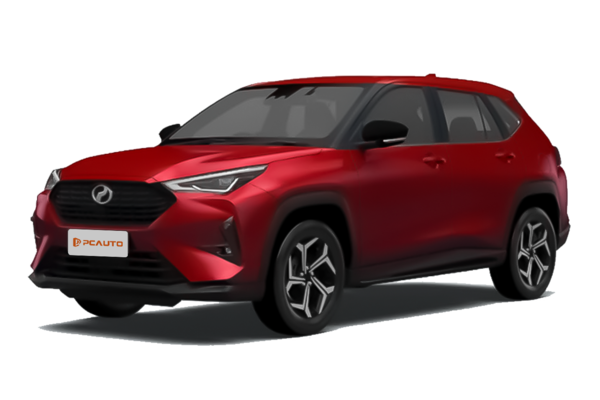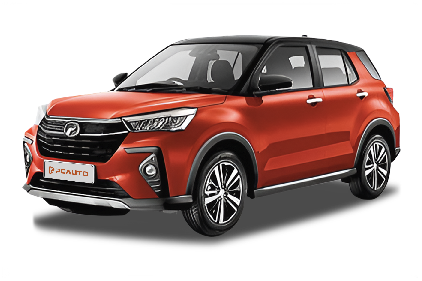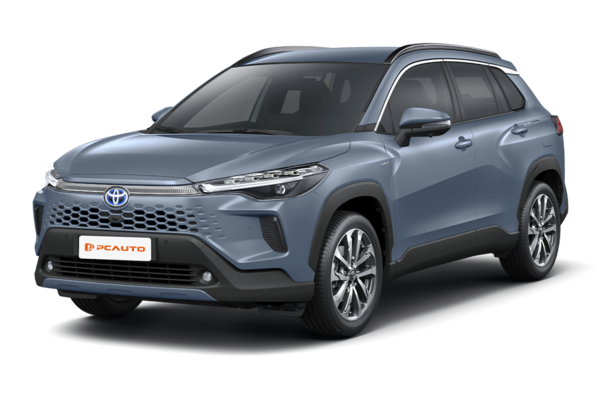



2025 iCaur V23 iWD
Price
RM 132,800
Select a Vehicle Variant
2025 iCaur V23 2WD RM 119,800
Summary
The 2025 iCaur V23 iWD, launched in 2025-11-27, is a C-Segment SUV starting at RM 132,800. It seats 5 comfortably with generous cabin space – measuring 4220 mm long, 1915 mm wide, and 1845 mm tall. Perfect for families or daily commutes, it balances urban agility with highway capability thanks to an acceleration speed of 7.5s to 100km/h. The standout feature? Its 430 km range on a single charge, easing range anxiety for longer trips.
Power comes from a 81.76 kWh Lithium iron phosphate battery, designed for efficiency and longevity. Need a quick top-up? Fast charging takes just - hours (10-80%), while a full charge at home requires - hours. This 2025 iCaur V23 iWDcombines cutting-edge tech with everyday usability – whether zipping through city traffic or cruising on weekends. It’s a smart, future-ready choice for eco-conscious drivers who refuse to compromise on space or performance.
Power comes from a 81.76 kWh Lithium iron phosphate battery, designed for efficiency and longevity. Need a quick top-up? Fast charging takes just - hours (10-80%), while a full charge at home requires - hours. This 2025 iCaur V23 iWDcombines cutting-edge tech with everyday usability – whether zipping through city traffic or cruising on weekends. It’s a smart, future-ready choice for eco-conscious drivers who refuse to compromise on space or performance.
Core Specs

Segment
C-Segment

EV Range(km)
430

Battery Type
Lithium iron phosphate battery

100 Kilometers(kWh)
7.5

Motor Arrangement
Front+Rear

Battery Capacity(kWh)
81.76

Seats
5

Length(mm)
4220

Width(mm)
1915

Height(mm)
1845

Wheelbase(mm)
2735

Boot Volume(L)
234-744
Other Variants

Price
RM 132,800
Body
4220×1915×1845
Motor Output(PS)
211
Motor Output(kW)
155
Battery Capacity
81.76
EV Range
430
Power Consumption
-
Related Q&A
View More >Q
the meaning of a ckd car
CKD stands for "Completely Knocked Down," referring to a production model where cars are imported into Malaysia as individual components and then assembled at local factories. This stands in contrast to CBU (Completely Built Up) vehicles, which are imported as fully assembled cars from overseas.
The Malaysian government uses the CKD policy to boost the local automotive industry. By slashing import duties and consumption taxes, it makes car prices more competitive, creates jobs, and stimulates related industrial chains. Many international brands like Toyota, Honda, and Nissan have set up CKD plants in Malaysia, churning out popular models such as the Proton X50 and Perodua Myvi.
CKD vehicles typically come with a lower price tag than their CBU counterparts, though configurations and specifications might be tweaked to suit local market demands. Some parts may also be sourced from local suppliers to comply with policy requirements. Importantly, the CKD approach doesn't equate to lower quality – assembly still adheres to the brand's global standards. What's more, local production allows for quicker responses to market needs and more convenient after-sales service.
For consumers, opting for a CKD model means getting better value for money while supporting the local automotive sector. However, some buyers who prioritize genuine imported vehicles might still lean toward CBU options.
 ActorStageSep 25, 2025
Q
Is a Dodge Charger a good family car?
As an American muscle car, the Dodge Charger is beloved by car enthusiasts for its powerful performance and sporty appearance. However, Malaysian family users need to comprehensively consider its practicality. This model offers a spacious five-seat layout and a relatively large trunk space (about 467 liters), which meets the family's cargo-carrying needs. Yet, the relatively stiff suspension tuning may affect long-distance comfort. Moreover, with the 3.6L V6 or 5.7L HEMI V8 engine, its fuel economy is just average in the Malaysian fuel-price environment. It's worth noting that its all-wheel-drive version can handle slippery roads during the rainy season. However, as an imported vehicle, its maintenance cost may be higher than that of locally assembled models. If a family values driving pleasure more and has a sufficient budget, the Charger is a good choice. But if fuel efficiency and maintenance convenience are the top priorities, Japanese or Korean sedans in the same class may be more suitable for Malaysian road conditions. It is recommended that potential buyers experience the rear-seat space and suspension performance in person and compare the differences in warranty terms between parallel-imported and official-channel vehicles.
 TedAug 13, 2025
Q
How often does a 2019 Kia Optima need an oil change?
According to the official maintenance guidelines for the 2019 Kia Optima, under normal driving conditions in Malaysia, an oil change is recommended every 10,000 kilometers or 12 months, whichever comes first. If your vehicle is frequently subjected to high temperatures, dusty environments, or stop-and-go city traffic, you might need to shorten that interval to every 7,500 kilometers or 6 months to ensure your engine gets the best possible protection.
Choosing the right oil type matters too. The factory recommends using fully synthetic 5W-30 oil with an API SN rating or higher. This stuff holds up better under Malaysia's tropical heat, offering superior high-temperature stability and lubrication. Sticking to regular oil changes doesn't just help extend your engine's lifespan; it also keeps fuel economy in check. You can keep tabs on when it's due through the maintenance reminder on your dashboard or by flipping through your owner's manual.
It's worth noting that Optimas from different model years or trim levels might have slightly different maintenance requirements, so it's a good idea to swing by an authorized service center for regular professional check-ups to keep your ride running in top shape.
 DuskOct 23, 2025
Q
Where was the 2018 Honda Accord made?
The 2018 Honda Accord was primarily built at Honda's Marysville Auto Plant in Ohio, USA – a key North American production hub renowned for its top-notch manufacturing standards. Some units might also have rolled off the lines at Honda's寄居 (Yorii) Plant in Saitama, Japan, to meet global supply demands. For the Malaysian market, the 2018 Accord was mainly brought in via imports, giving customers access to the same global-quality specs and tech, like the Earth Dreams turbocharged engine and Honda SENSING safety suite. It's worth keeping in mind that Malaysia's import policies and tax structures do play a role in the final sticker price. But even so, the Accord holds its own in the local mid-to-large sedan segment thanks to its legendary reliability, roomy interior, and solid fuel efficiency. If you're eyeing a used 2018 Accord, we'd recommend checking the import documents to confirm its production origin and, whenever possible, going through Honda's official certified pre-owned channels for that added peace of mind with warranty coverage.
 HappyGoatFeb 18, 2026
Q
What is the top speed of the Land Cruiser 2020?
The 2020 Toyota Land Cruiser has a top speed of around 210 km/h, though actual performance may vary slightly depending on the model configuration and local road conditions. Under the hood, it packs a powerful 5.7-liter V8 naturally aspirated engine that cranks out 381 horsepower and 544 Nm of torque, mated to an 8-speed automatic transmission. This setup not only delivers strong highway performance but also handles Malaysia's diverse terrain needs, from city roads to rough rural tracks. The Land Cruiser is a hit with Malaysian consumers thanks to its legendary reliability and off-road prowess, making it perfect for long road trips and family use. Its tough body structure, full-time 4WD system, and multiple driving modes ensure stability and safety in all kinds of road conditions, while the luxurious interior comes loaded with tech like a multi-info display and premium sound system, boosting driving comfort. For Malaysian buyers who value practicality and durability, the Land Cruiser is definitely worth considering.
 QuirkyOct 30, 2025
Q
How much oil does a 2020 Lexus LC 500 take?
The 2020 Lexus LC 500 has an oil capacity of approximately 8.2 liters, including the oil filter. It's recommended to use fully synthetic oil with a viscosity grade of 0W-20. This low-viscosity oil performs better in high-temperature climates and also helps improve fuel efficiency. Regular oil changes are crucial for maintaining the performance of that V8 naturally aspirated engine – typically every 10,000 kilometers or 12 months, but you should check the owner's manual for the exact interval. Keep in mind, if you often drive aggressively or in dusty conditions, you might want to shorten that oil change period a bit. When picking oil, aim for products with API SN or ILSAC GF-5 certifications; they offer more comprehensive engine protection. Also, it's a good idea to replace the oil filter when changing the oil to ensure proper filtration. The LC 500's oil filter is positioned for easy access, but if you're doing it yourself, watch the torque specs – over-tightening can damage the oil pan threads. If you're not familiar with the maintenance process, it's best to head to an authorized service center. They'll also check the condition of other key fluids like coolant and brake fluid while they're at it.
 SiaNov 11, 2025
Q
How much is S70 2024 in Malaysia?
Pricing details for the 2024 Volvo S70 haven't been officially announced yet, but looking at the current S60's price range (around RM250,000 to RM300,000) and the brand's recent pricing strategies, we can expect the S70 to start at roughly RM280,000, with higher-spec variants possibly approaching RM350,000. The new model is set to carry forward Volvo's family design language and will likely feature an upgraded plug-in hybrid system – the T8 Recharge version, for instance, might deliver over 400 horsepower combined. Standard tech should include the City Safety active safety suite and Pilot Assist semi-autonomous driving aids. It's worth noting that rivals like the BMW 3 Series and Mercedes-Benz C-Class have also rolled out mild-hybrid models lately. When comparing options, shoppers should pay attention to differences in hybrid tech approaches (like 48V mild hybrids versus plug-in hybrids) and after-sales warranty policies (some brands offer 5-year/unlimited mileage coverage). If you're interested, keep an eye on the upcoming Kuala Lumpur International Motor Show or reach out to authorized dealers directly to schedule a test drive – get hands-on with the Nordic luxury sedan's driving feel and signature features like those ergonomic seats.
 QonNov 19, 2025
Q
Why is my 2017 Chevy Colorado not starting?
The inability to start the 2017 Chevy Colorado may be caused by various reasons, with the most common being battery issues such as aging or low battery, especially in hot weather. You can try using a multimeter to check the voltage, which should be around 12.6V normally. If it is below 12V, it may not start. Secondly, there is a malfunction in the starting system, such as a damaged starter motor or relay. If you hear a "click" sound when turning the key but the engine does not respond, it may be a motor problem. The fuel system may also have problems, such as damaged fuel pumps or clogged fuel filters. You can listen to the buzzing sound of the fuel pump near the fuel tank to determine if it is working. In addition, ignition system failures such as spark plugs or ignition coils can also result in inability to start, especially for vehicles with high mileage. If it is an automatic transmission model, it is also necessary to check whether the gear is in P or N, as some models cannot start in other gears. Regular maintenance is crucial, such as replacing the battery every 2-3 years, checking the spark plug every 50000 kilometers, and replacing the fuel filter every 30000 kilometers, all of which can reduce sudden failures. If the problem is complex, it is recommended to use a professional diagnostic tool to read the fault code, which can more accurately locate the problem.
 NonDec 11, 2025
Q
Do all bikes have front suspension?
Not all motorcycles come with front suspension systems—it really depends on the bike's design and intended use. Your typical street bikes, sport bikes, and adventure bikes usually have telescopic front forks to soak up road vibrations and improve handling. But some budget-friendly commuter models or retro-style underbone bikes (like the Cub series) might skip the suspension altogether, using rigid forks or simple fixed setups to keep costs down. For dirt bikes, inverted front forks are more common since they offer better impact resistance. These suspension differences directly affect the ride: on local twisty roads or unpaved trails, a good front suspension makes a huge difference in comfort and safety. If you're thinking about upgrading, make sure the shock's travel and damping characteristics match your bike, and don't forget to regularly check the fork seals and oil condition to keep things working right. Every brand tunes their suspension differently too—some are stiffer for sporty riding, others are softer for better bump absorption. Definitely test ride before you decide.
 CheerysmJan 20, 2026
Q
How often should you change the AC air filter in a car?
The replacement cycle of car air conditioner filters needs to be flexibly adjusted based on factors such as driving environment, filter type, and frequency of use. Under normal circumstances, it is recommended to replace them every 12 months or 10,000 to 20,000 kilometers. If the vehicle is operated in dusty, hazy, or humid environments for extended periods (such as coastal areas), the replacement interval should be reduced to 3 to 6 months or 5,000 to 8,000 kilometers. Activated carbon composite filters require replacement 1 to 2 months earlier due to their adsorption function, whereas HEPA high-efficiency filters, despite their superior filtration performance, should be replaced every 8 to 10 months to prevent excessive airflow resistance. High-usage vehicles like taxis need replacement every 2 to 3 months, and immediate replacement is necessary when experiencing a 30% reduction in airflow, musty odors, or allergic reactions. During replacement, pay attention to the airflow direction indicator. Seasonal inspections during spring and autumn can effectively address variations in pollutant concentrations. The cost of DIY replacement is approximately 30 to 50 Malaysian Ringgit, while 4S shop service fees typically range from 100 to 150 Malaysian Ringgit. Regular maintenance not only ensures in-vehicle air quality but also prolongs the air conditioning system's service life. Car owners are advised to develop a customized replacement schedule by consulting the maintenance manual and assessing actual vehicle conditions.
 FunkyMonkeyMar 9, 2026
Popular Cars
Model Year
Car Compare
Car Photo
Model List
iCaur V23 is a C-Segment SUV EV launched by iCaur. PCauto has cataloged various variants of this car produced from 2025 to 2025.You can compare differences in detail at the parameter table.
Among the 2 variants of iCaur V23, prices range from the affordable RM 119,800 to the most expensive RM 132,800.You can find different horsepower versions ranging from 136PS to 211PS.
iCaur V23 offers 100 Permanent Magnet Synchronous Motor, 155 Permanent Magnet Synchronous Motor Motor and 59.93kWh, 81.76kWh battery. Check the spec sheet for more details.
2 Models on Sale
2025