
Q
how long is a Toyota Alphard
 BlueyOct 09, 2025, 05:31 PM
The Toyota Alphard's length varies slightly across different trims and model years, but here in Malaysia, the common third-gen models (2015 onwards) typically measure around 4,945mm for the standard version. The hybrid variant stretches a bit longer to about 4,950mm, thanks to those subtly different front and rear bumper designs. This luxury MPV has become a hit with Malaysian families and business folks alike, and it's easy to see why—its nearly 5-meter length paired with that 3,000mm wheelbase means genuinely usable legroom across all three rows. That said, you still need to keep an eye on maneuverability when navigating tight Malaysian backstreets or older parking lots.
One thing worth highlighting is how Toyota optimized the Alphard's body for aerodynamics, clocking in at around 0.33Cd. That's not just a number— it actually helps with high-speed stability, which matters a lot if you're often cruising the North-South Highway, especially for those cross-border trips to Singapore. In the same segment, the Nissan Elgrand is roughly similar in length but sits on a slightly shorter wheelbase, while the Lexus LM takes things up a notch by stretching the Alphard's platform to a full 5,040mm. Pro tip for buyers: always measure your regular parking spot before committing—just to make sure it fits like a glove.
Special Disclaimer: This content is published by users and does not represent the views or position of PCauto.
Related Q&A
Q
Is the 2023 Alphard fuel efficient?
The 2023 Toyota Alphard delivers pretty average fuel economy. Its 2.5-liter hybrid setup returns around 6.5 to 7.2 liters per 100km in mixed Malaysian city driving, and can dip to 5.8-6.3 liters/100km on the highway. For a luxury seven-seat MPV, that's totally reasonable – and honestly, it's way more efficient than a comparable pure gasoline model. But here's the thing: hybrid efficiency really depends on how you drive and the roads you're on. Take it easy on the accelerator and brake predictively, and you'll squeeze even more km out of each liter.
Malaysian buyers should think hard about their actual needs. If you're often hauling a full load on long trips, the Alphard's spacious cabin and comfort might matter more than eking out every last drop of fuel. But if you're mostly stuck in stop-and-go city traffic, the hybrid system's electric-drive advantage at low speeds will shine.
Before you sign on the dotted line, check out the Malaysian Energy Efficiency Vehicle (EEV) certification data. More importantly, take it for a proper test drive to see how it actually performs in different road conditions. And don't forget, regular maintenance is key to keeping that fuel economy in check – stuff like changing the air filter on time and using the right viscosity oil.
 GracefulOct 24, 2025
Q
What is the fuel consumption of Toyota Alphard 2023?
The 2023 Toyota Alphard's fuel economy in the Malaysian market varies depending on the powertrain. The 2.5-liter hybrid variant delivers around 5.4 to 5.8 liters per 100 kilometers in combined driving, while the 3.5-liter V6 petrol version consumes approximately 9.5 to 10.5 liters per 100 kilometers. Actual figures may fluctuate slightly based on driving habits, road conditions, and vehicle load. For Malaysian buyers, the hybrid makes more sense for city commutes where stop-and-go traffic really eats into fuel efficiency, whereas the V6 suits those who frequently hit the highway for longer drives. It's worth noting that the hybrid system uses electric motor assistance to cut fuel use during idling and low-speed cruising – a big reason it stays efficient even in Southeast Asia's hot, tropical weather. To squeeze even better mileage, stick to regular maintenance like fresh air filters, keep tires properly inflated, and avoid aggressive acceleration or hard braking. As a luxury MPV, the Alphard strikes a solid balance between fuel economy and comfort, putting its efficiency right in the mainstream for its class.
 OceanblueOct 24, 2025
Q
Is the 2023 Alphard good for families?
The 2023 Toyota Alphard stands out as a top-tier luxury MPV tailor-made for family life, and it's absolutely killing it in the Malaysian market. Let's face it, when families shop for an MPV, space and comfort are king – and the Alphard delivers big time on both fronts.
Inside, you've got a versatile three-row setup. The real star here is the second-row Ottoman seats; they're like first-class airplane seats, with multiple adjustments to dial in that perfect position, which is a total lifesaver on those long road trips to keep fatigue at bay. And unlike some MPVs where the third row is just an afterthought for kids, the Alphard's back row actually has enough room for adults too. That makes it a no-brainer for larger families or anyone who regularly hauls a crew around.
Keeping the little ones (and let's be honest, the big ones too) entertained is a breeze, thanks to the snazzy rear-seat entertainment screens and that crisp JBL sound system. Road trips just got a whole lot quieter – trust me, that's priceless.
Safety? Toyota's got you covered with their Safety Sense suite. We're talking pre-collision warning, lane keep assist, adaptive cruise control – all the good stuff that adds an extra layer of protection when you've got your most precious cargo on board.
Under the hood, the 2.5L hybrid powertrain you'll commonly find in Malaysia strikes a really nice balance. It's smooth as butter to drive and doesn't guzzle fuel, whether you're navigating city streets or cruising down the highway.
Add to that the Alphard's impressive cabin quietness and the high-quality materials used throughout the interior, and you've got a ride that feels properly premium. Yeah, it's not the cheapest option out there, but if your family values top-notch comfort and luxury, it's a solid investment.
If the Alphard's price tag makes you wince, there are other MPVs in the same class worth checking out, for sure. But when it comes to brand reputation and holding its value over time, the Alphard definitely has the edge.
 PeachesrOct 24, 2025
Q
Is the 2023 Alphard a luxury vehicle?
The 2023 Toyota Alphard is truly a luxury MPV that's earned a solid reputation in Malaysia. Its popularity boils down to that premium spec sheet, super comfy ride, and a really well-finished interior. You're looking at leather seats, top-notch infotainment, zoned climate control, and a bunch of driver assists as standard – all the stuff luxury buyers crave for comfort and tech. It's a hit for family trips or when you need to impress clients.
In Malaysia's luxury MPV scene, the Alphard is a big player. That spacious cabin and how quiet it is on the move really cement its high-end vibe. And let's not forget the hybrid version – it's a greener pick, which lines up with what folks want these days in terms of fuel efficiency.
For Malaysian buyers, going for an Alphard isn't just about wanting luxury and practicality; it's also about trusting a brand that delivers. Toyota's after-sales network here is rock-solid, so you know you're covered long-term. If you're in the market for an MPV that blends luxury and usability, the 2023 Alphard is definitely one to check out seriously.
 CherryblOct 24, 2025
Q
Is Alphard better than Vellfire?
The Toyota Alphard and Vellfire are essentially two sides of the same coin—different styling takes on the same core vehicle. Mechanically, they're nearly identical, sharing the same performance, interior space, and key tech. The real differences lie in their exterior design and target audience. The Alphard goes for that luxury stable vibe with its big chrome grille up front, making it a solid pick for buyers after a more business-oriented look. The Vellfire, though, leans sportier with those split headlights and sharper lines, which tends to appeal more to younger families.
Here in Malaysia, both models pack the same 2.5L hybrid system (there's also the 3.5L V6 petrol option for those who want it), so you're looking at pretty much identical fuel economy and power delivery. Inside, the 2+2+3 seven-seat layout is standard across the board, and those second-row "captain chairs"? Total class leaders when it comes to comfort.
One thing Malaysian buyers really care about is after-sales support, and Toyota's got a strong edge there—their service network is widespread, and parts availability is generally good. If you're torn between the two, it really comes down to personal taste. If you're doing a lot of businessmeetings or client pickups, the Alphard's more understated elegance might be the way to go. But if it's mainly for family use and you want something with a bit more personality, the Vellfire should be right up your alley.
Oh, and a quick heads-up: both models are available here through parallel imports and official channels. Just make sure you check the warranty terms carefully before you buy—they can vary between the two.
 ButterflyOct 24, 2025
Q
How much is Alphard 2023 in Malaysia?
The 2023 Toyota Alphard's pricing in Malaysia varies depending on the trim and specifications. The entry-level 2.5L model starts at around RM 400,000, while the top-spec 3.5L variant can push past RM 500,000. For the exact figures, you'll want to check with local dealerships and keep an eye out for any ongoing promotions they might have.
As a luxury MPV, the Alphard has always been a hit in Malaysia, loved by families and business folks alike for its spacious cabin, plush ride, and premium interior touches. It's got that perfect blend of comfort and upscale feel that keeps it in high demand here.
Of course, if you're shopping for a luxury people-carrier in Malaysia, the Alphard isn't your only option. The Honda Odyssey and Nissan Elgrand are also in the mix, each bringing their own unique strengths to the table. It really comes down to your personal needs and budget.
When you're ready to take the plunge, I'd recommend heading to an authorized dealership to get the full lowdown on specs, after-sales service, and financing options. That way, you can be sure you're getting the best possible deal and a smooth buying experience.
PetalsoftOct 24, 2025Q
Is 2024 Alphard comfortable?
The 2024 Toyota Alphard has become a highly-regarded premium MPV in the Malaysian market for its outstanding comfort. Its seats are made of high-quality leather and come with electric adjustment, heating, and ventilation functions. In particular, the second-row Ottoman airline seats support multi-angle adjustment, providing passengers with a first-class-like seating experience.
The vehicle is equipped with sound-insulation technology and an adaptive suspension system, which effectively filter out road vibrations and noise. Coupled with the spacious legroom and three-zone independent air-conditioning, it ensures comfort even on long-distance trips. It's worth noting that as Toyota's flagship MPV, the Alphard's comfort design takes into account the needs of tropical climates. For example, the rapid cooling system and anti-UV glass are especially practical for Malaysian users.
Among vehicles in the same class, the Alphard often serves as a vehicle for business receptions or family outings, thanks to its advantages in quietness and seat ergonomic design. However, it is recommended to take a test drive before purchasing, as the perception of comfort may vary slightly depending on individual body types and road conditions.
 ThinkSep 3, 2025
Q
What type of suspension does Alphard 2024 have?
The 2024 Toyota Alphard features a combination of front MacPherson independent suspension and rear multi - link independent suspension. This suspension configuration not only provides a comfortable riding experience but also ensures a certain level of handling stability, making it highly suitable for Malaysia's diverse urban roads and long - distance driving needs. The MacPherson suspension has a simple structure and takes up less space, which helps to improve the utilization of interior space. On the other hand, the multi - link rear suspension can better filter road vibrations, ensuring the comfort of rear - seat passengers.
In addition, the 2024 Alphard may also be equipped with an adaptive suspension system (such as AVS), which can automatically adjust the damping force according to road conditions and driving modes, further optimizing the driving and riding experience. For Malaysian consumers, this suspension design can not only handle the common road unevenness issues in the local area but also offer a more premium riding quality during family outings or business receptions.
It's worth noting that MPVs in the same class, such as the Honda Stepwgn or the Nissan Elgrand, also adopt a similar suspension layout. However, Toyota leans more towards comfort in the suspension tuning, which is one of the reasons why the Alphard is highly favored in the high - end MPV market in Malaysia.
 XipOct 8, 2025
Q
Does 2024 Alphard have GPS?
The 2024 Toyota Alphard in the Malaysian market is indeed equipped with a GPS navigation system. As one of the standard features of this luxury MPV model, the system is usually integrated into the touchscreen display on the center console. It supports real - time traffic updates and voice command operations, which makes it convenient for drivers to plan their routes.
It's worth noting that the Malaysian version of the Alphard may offer multimedia systems of different specifications according to specific configuration levels (such as the 2.5L or hybrid version). However, GPS navigation is commonly available in high - end models. Some models may also support Apple CarPlay and Android Auto smartphone connectivity to enhance navigation flexibility.
For Malaysian users, the local terrain is complex and urban roads are dense. The original GPS usually comes pre - installed with Southeast Asian map data. However, it is recommended to confirm with the dealer before purchasing whether it includes detailed maps of Malaysia and subsequent update services.
In addition, if owners have higher requirements for navigation accuracy, they can also install a third - party navigation module through the dealer or use the smartphone mapping function. But be aware that this may affect the original factory warranty terms.
For reference, MPVs in the same class, such as the Honda Stepwgn or the Nissan Elgrand, also offer similar navigation configurations. However, it is recommended to experience and compare the specific functional differences during a test drive.
 UlaSep 3, 2025
Q
Is Alphard 2024 a 4WD?
The 2024 Toyota Alphard doesn't offer a four - wheel drive (4WD) version in the Malaysian market. All models in the lineup come with a front - wheel drive (FF) configuration, which is different from what some consumers might expect for a luxury MPV to be equipped with a four - wheel drive system. As a high - end model focusing on comfort and business reception, the Alphard's design emphasizes quietness, space utilization, and a smooth on - road driving experience. Therefore, the front - wheel drive layout can better meet these requirements while reducing mechanical complexity and fuel consumption.
If you need a four - wheel drive MPV, you can consider other models from the same class, such as the Mitsubishi Delica D:5 or the Nissan Elgrand (which offers four - wheel drive options in some markets). However, note that the visibility of these models in Malaysia is relatively low. A four - wheel drive system is usually suitable for users who often encounter slippery roads or engage in light off - road driving. But for most urban road conditions in Malaysia, the handling and stability of the front - wheel drive Alphard are more than enough. Its V6 engine and hybrid version also have sufficient power output for daily use.
It is recommended to weigh your options according to your actual needs before purchasing a car. If you prefer the Toyota brand and need four - wheel drive, you can pay attention to SUV models like the Land Cruiser or the Fortuner.
 NatureBeautyOct 8, 2025
Popular Cars
Model Year
Car Compare
Car Photo
Related Models

 Cars
CarsLatest Q&A
Q
Do spark plugs degrade over time?
Spark plugs do age gradually over time, and their performance degradation is mainly influenced by a combination of material, engine operating conditions, and usage environment. As a basic type, nickel alloy spark plugs are recommended to be inspected and replaced every 20,000 kilometers. Platinum and iridium spark plugs, due to their excellent corrosion resistance, can last 50,000 to 80,000 kilometers, while ruthenium spark plugs can even reach 150,000 kilometers. Turbocharged engines, due to their high-temperature and high-pressure environment, accelerate electrode wear, requiring the replacement interval to be shortened to about 60% of that for ordinary models. If the vehicle experiences difficulty starting in cold conditions, lacks acceleration power, or shows abnormally increased fuel consumption, it may be caused by enlarged electrode gaps or carbon deposits on the spark plug insulators, necessitating immediate inspection and repair. It is worth noting that even if the mileage threshold is not reached, spark plugs will exhibit decreased ignition efficiency due to metal oxidation after three years of installation. It is recommended to dynamically adjust the maintenance plan based on the service manual and actual vehicle conditions. Regularly using a specialized gap gauge to check the electrode gap (typically 0.7-1.1mm) and avoiding low-quality fuel can effectively extend spark plug service life.
 ChromeCrusherFeb 14, 2026
Q
Will my car run better with new spark plugs?
Replacing spark plugs can indeed make a vehicle run more smoothly and improve overall performance. New spark plugs ensure more complete ignition, increasing fuel combustion efficiency, thereby enhancing power output and reducing fuel consumption—typically saving about 5% to 10% of fuel. Worn spark plugs can cause difficulty in starting, reduced power, and increased exhaust emissions, while new ones improve cold-start performance, reduce engine vibration, protect the three-way catalytic converter, and extend engine life.
It is recommended to determine the replacement interval based on the material: ordinary nickel alloy spark plugs should be replaced every 20,000 kilometers, platinum spark plugs approximately every 40,000 kilometers, and iridium spark plugs can last 60,000 to 80,000 kilometers. Specific intervals should be referenced from the vehicle manual. Additionally, matching the OEM heat range specification is crucial: high-compression-ratio engines require cold-type spark plugs (high heat range), while low-compression-ratio engines are suitable for hot-type spark plugs (low heat range). Incorrect selection may lead to knocking or carbon buildup.
When replacing spark plugs yourself, ensure the spark plug holes are cleaned to prevent debris from entering the cylinders, and tighten them to the specified torque—over-tightening may damage the cylinder head threads. If the vehicle exhibits symptoms like sluggish acceleration, rough idling, or abnormally high fuel consumption, the spark plug condition should be inspected promptly.
 WalkerPathLeisureFeb 14, 2026
Q
What are the signs of bad spark plugs?
Spark plug malfunctions can affect vehicle performance through various obvious symptoms, mainly manifesting as difficulty starting (multiple attempts required for both hot and cold starts), abnormal engine vibration at idle and during driving, a noticeable reduction in power output, an abnormal increase in fuel consumption, and unexplained stalling while driving. The core causes of these issues include electrode carbon deposits leading to short-circuit and spark failure, improper spark plug gaps (too small limits spark intensity, too large results in insufficient voltage), insulator cracks causing leakage, or electrode detachment due to long-term electrical erosion. When the insulation resistance value of the spark plug decreases, the ignition voltage will be weakened or even completely fail. In addition, short-circuiting of high-voltage lines or erosion of platinum contacts may also cause single-cylinder or multi-cylinder misfires. It is recommended to replace spark plugs regularly every 40,000 to 60,000 kilometers, but the specific interval should refer to the vehicle manual, as material differences (such as nickel alloy for 20,000 kilometers, iridium for 60,000-80,000 kilometers) will also affect their lifespan. If excessive exhaust emissions (such as black smoke) or acceleration hesitation are detected, the spark plug condition should be checked immediately to avoid derivative problems such as three-way catalytic converter damage caused by prolonged malfunctions. During replacement, ensure debris is cleaned from the installation holes and high-voltage lines are correctly connected according to the ignition sequence to maintain cylinder balance.
 ActorStagePerformanceFeb 14, 2026
Q
Can spark plugs affect gas mileage?
Spark plugs do have a significant impact on fuel economy, and their performance status is directly related to the combustion efficiency of the engine. When the spark plug electrodes are worn or carbon-fouled due to long-term use, the ignition energy will weaken, leading to incomplete combustion of the air-fuel mixture. At this point, the ECU will compensate for the power loss by increasing the fuel injection volume, and fuel consumption may rise by 15% to 20%. The spark plug gap is also a key factor; the standard gap is typically 0.8-1.1 millimeters. A gap that is too large will result in insufficient ignition voltage, while a gap that is too small will impede flame kernel propagation. Both scenarios will reduce thermal efficiency. The replacement intervals for spark plugs made of different materials vary significantly: nickel alloy spark plugs are recommended to be replaced every 30,000 kilometers, platinum ones can last up to 60,000 kilometers, and iridium spark plugs can maintain performance for 80,000-100,000 kilometers due to their higher melting point. It is worth noting that heat range matching is equally important. If a cold-type spark plug with excessive heat dissipation is used, it is prone to carbon buildup under low-temperature conditions; conversely, hot-type spark plugs may cause pre-ignition in high-temperature environments. It is recommended that vehicle owners adhere to the manufacturer's maintenance schedule and select premium spark plugs that meet the heat range specifications and carry MS 828 certification. This approach not only optimizes fuel efficiency but also extends the oxygen sensor's lifespan, achieving overall fuel cost savings of approximately 5%-8%.
 MonFeb 14, 2026
Q
How do I know if my spark plugs need replacing?
To determine whether spark plugs need replacement, the following signs and criteria can be used: When a vehicle experiences difficulty starting, rough idling, weak acceleration, or an abnormal increase in fuel consumption, it may be due to aging spark plugs causing reduced ignition efficiency. During disassembly and inspection, the electrode condition should be observed; if the tip shows severe erosion, carbon buildup, or the electrode gap exceeds 0.8mm (the standard value for ordinary nickel alloy spark plugs), immediate replacement is required. Spark plugs of different materials have significantly different lifespans: nickel alloy spark plugs are recommended to be replaced every 20,000 kilometers, while platinum and iridium spark plugs can last 40,000 kilometers and 60,000-80,000 kilometers respectively. It is worth noting that prolonged short-distance driving or frequent start-stop cycles will accelerate spark plug wear, and in such cases, replacement should be performed 20% earlier than the recommended mileage. When selecting replacement parts, the original equipment manufacturer's heat range specifications must be strictly matched. Common brands such as NGK or Bosch provide vehicle-specific cross-reference tables in their product catalogs; incorrect heat ranges can lead to engine knocking or carbon buildup issues. During installation, a torque wrench should be used to tighten to the specification of 15-20N·m; over-tightening may damage the cylinder head threads, resulting in repair costs as high as 300-500 Malaysian Ringgit.
 NonFeb 14, 2026
Related News

In Malaysia, which sliding door MPVs are available?
MichaelOct 30, 2025
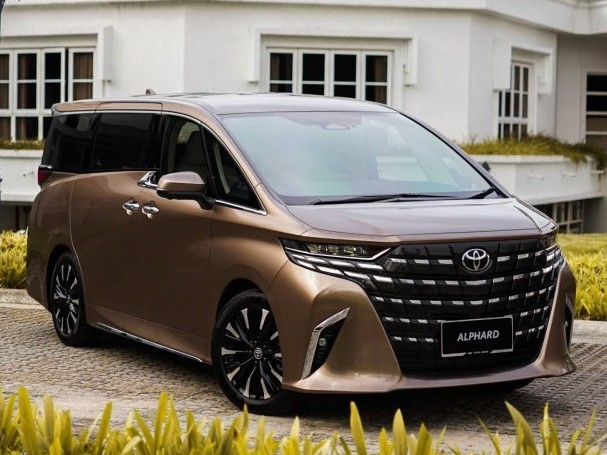
How Much Is the Toyota Alphard? Luxury MPV Buying Guide & Cost Explained!
JohnApr 11, 2025
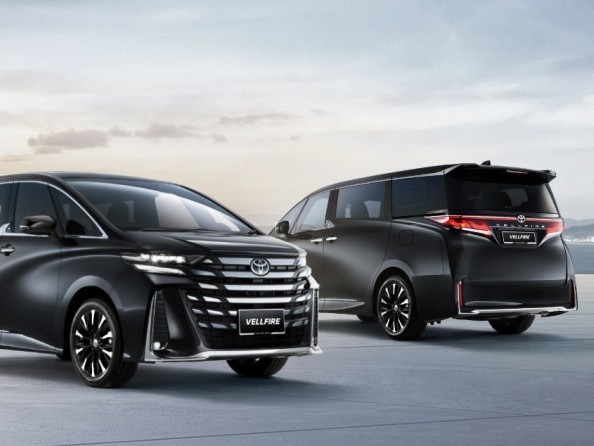
Difference between Alphard and Vellfire, Who is actually better?
RobertMar 4, 2025

It is possible that ZEEKR 009 will be introduced in the future, will this affect the sales volume of Toyota Alphard?
MichaelSep 25, 2024

2026 Toyota Estima latest specifications: GA-K platform + PHEV, will it become the mid-to-large MPV that the Malaysian market truly needs?
LienFeb 13, 2026
View More
Pros
Cons