
Q
Is the Ferrari 488 easy to drive?
 SwimmerStrokeGraceAug 12, 2025, 11:42 AM
As a high-performance supercar, the Ferrari 488 does present a certain level of challenge in the driving experience compared to ordinary family cars. However, it's not difficult to handle for Malaysian drivers who are familiar with high-performance vehicles. The 488 is equipped with advanced electronic assistance systems, such as F1-Trac traction control and E-Diff electronic differential. These technologies can effectively help drivers control the vehicle, especially under Malaysia's rainy weather conditions.
The car is powered by a 3.9-liter V8 twin-turbocharged engine, which offers linear and controllable power output. The 7-speed dual-clutch transmission shifts smoothly and quickly. The steering wheel provides precise steering, and the chassis tuning strikes a balance between daily driving comfort.
However, it should be noted that the 488 has a low seating position and a narrow field of view. Extra caution is needed when driving on Malaysia's narrow city roads and in congested traffic. Supercars usually have a relatively high threshold height, so drivers need to get used to getting in and out of the vehicle. For Malaysian drivers who are new to supercars, it is recommended to first get familiar with the vehicle's characteristics in a safe area. If considering long-term use in Malaysia, attention should also be paid to the vehicle's ability to pass over speed bumps and ramps, as well as the impact of the hot climate on the high-performance car's cooling system.
Overall, the 488 is a relatively easy-to-handle model among supercars, but it still requires drivers to have certain driving skills and an understanding of high-performance vehicles.
Special Disclaimer: This content is published by users and does not represent the views or position of PCauto.
Related Q&A
Q
What is the top model of Ferrari 488?
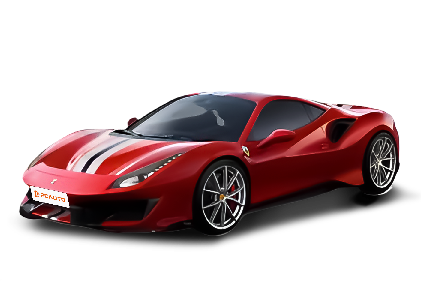
The top model of the Ferrari 488 series is the 488 Pista. This model was launched in 2018. As a high - performance version of the 488 GTB, its name "Pista" means "track" in Italian, fully reflecting its track - oriented design concept.
The 488 Pista is equipped with a 3.9 - liter V8 twin - turbocharged engine. The maximum output power reaches 720 horsepower, and the peak torque is 770 N·m. It can accelerate from 0 to 100 km/h in just 2.85 seconds, and the top speed can reach 340 km/h. Its performance is extremely strong.
This car has been significantly optimized in terms of aerodynamics and lightweight. For example, it adopts a more aggressive front and rear bumper design, makes extensive use of carbon fiber materials, and simplifies the interior. As a result, the overall weight of the vehicle is about 90 kg lighter than that of the 488 GTB.
For car enthusiasts in Malaysia, the 488 Pista is a very rare super - car. Its limited - production status and ultimate performance make it a dream car for collectors and performance enthusiasts. It's worth mentioning that the Ferrari 488 series was replaced by the F8 Tributo in 2019, but the 488 Pista is still regarded as a classic among Ferrari's mid - engined V8 models. Its technology and design concept have also influenced the development of subsequent models.
 CascadingWaterAug 12, 2025
Q
Why are Ferrari 458 so expensive?
There are mainly several reasons why the Ferrari 458 is so expensive. First of all, it's the brand value. As a top - notch sports car brand, Ferrari has a long history and a strong racing heritage. This endows its models with extremely high collectible value and room for price premiums.
Secondly, the 458 incorporates a large number of cutting - edge technologies. For example, its 4.5 - liter V8 naturally aspirated engine can deliver 570 horsepower. Paired with a 7 - speed dual - clutch transmission, it can accelerate from 0 to 100 km/h in just 3.4 seconds. Such performance is still remarkable even today.
Moreover, the 458 was designed by Pininfarina. Its appearance is highly recognizable and full of Italian aesthetic style. The interior materials and workmanship are of the top - level standard.
In addition, Ferrari's production volume is limited. During its production from 2010 to 2015, only about 30,000 units of the 458 were produced globally. This scarcity further drives up the price. For car enthusiasts in Malaysia, factors such as import duties and luxury taxes also need to be taken into account, which will significantly increase the final selling price.
It's worth mentioning that the 458, as the last mid - engined V8 Ferrari with a naturally aspirated engine, holds a special place in the hearts of car enthusiasts. This is also an important reason for its good resale value. With the trend of electrification, this kind of high - performance pure - fuel sports cars may become even more precious in the future.
 ActorStageAug 12, 2025
Q
When was the Ferrari 488 discontinued?
The Ferrari 488 officially ceased production in 2020. As a classic model in Ferrari's mid - engined V8 sports car series, it made its debut in 2015, replacing the previous 458 Italia. Its successor, the F8 Tributo, was launched in 2019 and gradually took over its market position. The 488 series includes the 488 GTB, 488 Spider, and the high - performance version 488 Pista. It is equipped with a 3.9 - liter twin - turbocharged V8 engine, with a maximum output power of up to 720 horsepower (in the Pista version), making it one of Ferrari's important representative works in turbocharging technology. For car enthusiasts in Malaysia, there is still a certain number of 488s in the local market. Some used cars or display cars may still be available for purchase through authorized dealers or professional channels. In addition, the discontinuation of the 488 also marks that Ferrari's V8 models have entered a new stage. Subsequent models such as the F8 Tributo and SF90 Stradale further integrate hybrid technology and aerodynamic innovations, continuing the brand's leading position in performance and technology.
 SilentReflectAug 12, 2025
Q
Who is the rival of the Ferrari 488?
The main competitors of the Ferrari 488 include supercars such as the Lamborghini Huracán, McLaren 720S, and Porsche 911 Turbo S. These models are on the same level as the 488 in terms of performance, design, and brand influence. The Lamborghini Huracán is well - known for its aggressive appearance and V10 engine. The McLaren 720S has become a strong competitor to the 488 with its lightweight carbon - fiber structure and powerful performance. The Porsche 911 Turbo S is famous for its excellent daily driving comfort and all - wheel drive system.
In the Malaysian market, these models are also highly sought after by high - performance car enthusiasts. The local hot climate and diverse road conditions pose higher requirements for the cooling systems and suspension tuning of supercars. Therefore, special attention should be paid to their adaptability when choosing such models. Additionally, the high automotive taxes in Malaysia will significantly increase the selling prices of these imported supercars. However, their rarity and outstanding performance still attract many collectors and car fans.
 SunnyRadianceAug 12, 2025
Q
Which is faster, Ferrari 488 or Lamborghini Huracan?
Both the Ferrari 488 and the Lamborghini Huracán are top - notch supercars, but their performance varies slightly. The Ferrari 488 is equipped with a 3.9 - liter V8 twin - turbocharged engine. It has a maximum horsepower of 670, can accelerate from 0 to 100 km/h in just 3 seconds, and has a top speed of 330 km/h. The Lamborghini Huracán, on the other hand, features a 5.2 - liter V10 naturally aspirated engine. The standard version has 610 horsepower, can accelerate from 0 to 100 km/h in 3.2 seconds, and has a top speed of 325 km/h. Based on the data, the Ferrari 488 has a slight edge in acceleration and top speed. However, the actual driving experience also depends on factors such as the vehicle's tuning, weight distribution, and driving environment. In the tropical climate of Malaysia, turbocharged engines might be affected by high temperatures, while the linear power output of naturally aspirated engines could be more suitable for some drivers. Both cars represent the pinnacle of Italian supercar craftsmanship. The choice between them largely depends on personal preference, whether it's the pursuit of ultimate speed or a unique driving experience. It's worth noting that Malaysia's road conditions and tax policies for high - performance cars also impact the actual usage experience of car owners.
 BoarderWaveRideAug 12, 2025
Q
How much does it cost to maintain a Ferrari 488?
In Malaysia, the average annual cost of maintaining a Ferrari 488 is approximately between RM50,000 and RM100,000. The specific cost depends on the vehicle's usage frequency and maintenance items. Routine maintenance such as oil changes and filter replacements typically costs around RM5,000 to RM8,000 each time. More complex services like gearbox inspections or brake system maintenance can cost as much as RM15,000 to RM30,000. Tire replacement is also a significant expense. A set of high - performance tires usually costs around RM20,000 to RM40,000.
In addition, as a high - end brand, Ferrari recommends that owners go to the official authorized service centers for maintenance to ensure professionalism and the use of original parts. Although the cost is relatively high, it can guarantee the long - term performance and resale value of the vehicle. For potential buyers, insurance costs also need to be considered. The annual insurance premium for such supercars may exceed RM30,000, depending on the driving record and insurance coverage.
After understanding these costs, owners can better plan their budgets. It is also advisable to conduct regular maintenance to avoid higher repair costs. After all, a well - maintained Ferrari not only provides an excellent driving experience but also retains a high value when resold.
 DiverAug 12, 2025
Q
Is the Ferrari 488 reliable?
As a high-performance sports car, the Ferrari 488 generally meets its positioning in terms of reliability. However, attention should be paid to the impact of maintenance costs and the usage environment on the vehicle. The 3.9-liter V8 twin-turbocharged engine installed in the 488 is powerful and the technology is mature. But the precise structure of the high-performance engine means that maintenance must be carried out strictly in accordance with the manufacturer's recommendations, especially the regular inspection of the turbo system and the gearbox. In the hot and humid climate of Malaysia, it is recommended to replace the coolant and engine oil more frequently, and pay attention to the moisture-proof treatment of the electronic system to avoid potential problems caused by high temperature and humidity. Compared with ordinary family cars, the replacement cost of high-performance components such as the suspension system and carbon-ceramic brake discs of supercars is relatively high, which is a factor to be considered before purchase. If the car is used on urban roads in Malaysia for a long time, frequent low-speed stops and starts may increase the wear and tear of the clutch. It is recommended to conduct regular computer diagnostics. Among models in the same class, the reliability of the 488 is at the mainstream level. However, the design of supercars focuses more on performance rather than durability, so owners need to have reasonable expectations. For owners who pursue the ultimate driving experience, the 488 is still a worthy option. It is recommended to purchase through official channels and strictly follow the maintenance plan to ensure the best condition.
 ClimberAug 12, 2025
Q
When did they stop making the Ferrari 488?
The production of the Ferrari 488 officially ended in 2019, and it was then succeeded by the Ferrari F8 Tributo, which serves as the new - generation model in the brand's mid - engine V8 sports car series. The 488 made its debut in 2015, equipped with a 3.9 - liter twin - turbocharged V8 engine with a maximum power of 670 horsepower. It became one of the top - performing models in its class at that time and was deeply loved by car enthusiasts in Malaysia.
Its successor, the F8 Tributo, is further optimized in terms of power and aerodynamics. The maximum power has been increased to 720 horsepower, while retaining the classic design elements of the 488. For Malaysian consumers, the 488 is still highly sought after in the second - hand market, especially for its excellent driving experience and the iconic Ferrari engine sound. The launch of the F8 Tributo provides more options for car enthusiasts who pursue the latest technology.
Both the 488 and the F8 Tributo reflect Ferrari's outstanding pursuit of performance and craftsmanship, meeting the needs of Malaysian high - performance car enthusiasts.
 SwimmerAug 12, 2025
Q
How to put a Ferrari 488 in park?
To put the Ferrari 488 into Park, first make sure the vehicle has come to a complete stop. Then, press and hold the brake pedal. Next, press the "P" button on the center console to activate the electronic parking system. At this time, the transmission will lock, and the "P" gear indicator will appear on the dashboard. It should be noted that the Ferrari 488 is equipped with a dual - clutch transmission (F1 DCT) and doesn't have the traditional mechanical gear lever of an automatic transmission. All gear - shifting operations are done through electronic buttons or paddles. Therefore, when parking, there's no need to shift gears like in traditional models; just press the "P" button.
For Malaysian owners, when parking a super - car for a long time in the hot and rainy climate, it is recommended to activate the electronic handbrake (if available) on a flat surface and avoid long - term exposure to the sun to protect the transmission and electronic systems. In addition, the transmission of high - performance models like Ferrari is designed to focus more on track performance. During daily driving, it is advisable to come to a complete stop before shifting into Park to avoid unnecessary load on the transmission system. If you encounter a situation where you can't shift gears, it may be that the electronic system needs to be restarted or checked. In this case, you can try turning off the vehicle and restarting it.
 PeachBlossomAug 12, 2025
Q
What's better, Ferrari 458 or 488?
Both the Ferrari 458 and 488 are outstanding supercars, yet they are designed for different driving needs and eras. The 458 is equipped with a 4.5 - liter naturally - aspirated V8 engine, offering more direct throttle response and a classic high - revving engine sound, which is perfect for car enthusiasts who pursue pure driving pleasure. On the other hand, the 488 features a 3.9 - liter twin - turbocharged V8 engine. It has stronger power and earlier torque delivery, with a 0 - 100km/h acceleration time of just 3 seconds, making it more suitable for buyers who seek ultimate performance.
In the hot climate of Malaysia, the turbo system of the 488 may be more adaptable to low - speed driving, but the naturally - aspirated engine of the 458 is more charming at high revs. Both cars are equipped with Ferrari's top - notch chassis tuning. The 458 has more mechanical and direct steering feedback, while the 488 focuses more on daily driving comfort. Considering the road conditions in Malaysia, the 488 might be more suitable for daily use, but the 458 has a higher collectible value.
These two cars represent the pinnacle of Ferrari's mid - mounted V8 engines. The choice depends on whether you prefer the classic naturally - aspirated experience or the modern turbocharged one.
 PilotAug 12, 2025
Popular Cars
Model Year
Car Compare
Car Photo
Related Models
 Cars
CarsLatest Q&A
Q
Who has the best self-driving car?
At present, the autonomous driving technology sector exhibits a multi-player competitive landscape. Huawei's Qiankun Intelligent Driving ADS 3.0 system, leveraging its full-stack in-house R&D, ASIL-D (the highest safety certification), and mapless urban NOA capabilities covering 200 cities, has become the domestic benchmark for both safety and scenario coverage. Its hardware configuration featuring four lidars and Ascend chips delivers exceptional performance in extreme conditions. Momenta stands out with its data-driven approach, achieving a 60.1% market share in urban NOA through end-to-end large models, with over 130 mass-production cooperative models, showcasing robust commercialization capabilities. Xpeng's XNGP maintains a pure vision strategy, with its nationwide mapless coverage system supported by 2250 TOPS computing power achieving 98% zero-intervention in complex road conditions and reducing algorithm iteration cycles to just five days. Baidu Apollo capitalizes on its vehicle-infrastructure coordination advantage; its Apollo Go Robotaxi service has achieved single-city profitability in 30 cities, while its V2X technology enhances intersection efficiency by 30%. Technologically, Huawei's WA world model and VLA visual-language model approaches each offer distinct advantages, while end-to-end architecture is emerging as an industry consensus, with integrated hardware-software solutions, data scale, and capital investment forming the core competitive barriers. Currently, L3 autonomous driving is transitioning from pilot programs to individual user access. Consumers should evaluate manufacturers based on mass-production experience, data closed-loop capabilities, and real-road adaptability. The premium market prioritizes full-scenario coverage, whereas the household segment emphasizes cost-effectiveness and functional maturity.
 VoidWalkerFeb 4, 2026
Q
Who makes autonomous vehicles?
Currently, the research and development of autonomous vehicles in Malaysia is primarily driven by collaborations between local and international enterprises. For instance, 9Sight Intelligence recently launched its first autonomous driving test project in partnership with Pos Malaysia and ALS, focusing on commercial applications in the logistics sector. Meanwhile, the Automotive Design and Innovation Center (ADIC), established as a joint venture between Altair and local enterprises, also plans to conduct research on autonomous driving technology, integrating electric vehicle manufacturing to develop future smart mobility solutions. International brands such as Xpeng Motors have introduced the X9 electric MPV in Malaysia, equipped with an advanced intelligent driving system that further expands the selection of high-level autonomous driving models. Although local automaker Proton has not directly ventured into autonomous driving, its enhanced R&D capabilities following the collaboration with Geely have laid the groundwork for technological reserves. Notably, the hydrogen-powered ART (Autonomous Rail Rapid Transit) has achieved GOA3-level full-scenario autonomous operation, representing a breakthrough in public transportation. Overall, Malaysia's autonomous driving industry remains in the testing and initial commercialization phase, but is progressively building a comprehensive ecosystem through public-private partnerships and technology adoption.
 ApexPredatorFeb 4, 2026
Q
How much do autonomous cars cost?
Currently, the prices of fully autonomous vehicles vary significantly. Entry-level models such as the Changan electric new energy Benben E-Star start at approximately 49,800 Malaysian Ringgit after subsidies, while mid-to-high-end models like the WM Motor W6 are priced between 189,800 and 259,800 Malaysian Ringgit. Luxury brands such as the Tesla Model X can reach up to 1,189,000 Malaysian Ringgit.
Price differences are mainly influenced by brand positioning, sensor configurations (e.g., the number of LiDAR units), computing platform performance, and the maturity of autonomous driving systems. For example, the cost of Baidu's "Apollo Go" driverless cars is controlled at around 120,000 Malaysian Ringgit, as its lightweight sensor solution and localized supply chain have significantly reduced hardware expenditures.
Notably, locally produced models usually have greater price advantages than imported ones. For instance, the body of Perodua's electric model starts at only 80,000 Malaysian Ringgit after adopting the battery-as-a-service (BaaS) model.
With more automakers achieving mass production of L4-level autonomous driving technology by 2026, prices are expected to gradually drop to the 200,000 Malaysian Ringgit range. However, high-level autonomous driving systems will still be concentrated in high-end models in the short term, so consumers need to weigh technical premiums against actual needs.
 CrystalFangFeb 4, 2026
Q
What is another name for autonomous vehicle?
Other common names for autonomous vehicles include driverless cars, intelligent driving vehicles, self-driving cars, computer-driven cars, or wheeled mobile robots. These terms all refer to intelligent transportation systems that achieve autonomous operation through artificial intelligence, sensor networks, and positioning systems. According to the classification standards of the Society of Automotive Engineers (SAE), such vehicles must achieve Level 4 or Level 5 automation. Their core technologies encompass radar, lidar, computer vision, and real-time path planning systems. Currently, there are no mass-produced Level 5 vehicles that operate entirely without human intervention on the market, but some Level 4 test vehicles have already provided services like autonomous taxis in designated areas. Autonomous driving technology theoretically enhances road safety and optimizes traffic efficiency by minimizing human operational errors, though its widespread adoption still faces challenges including regulatory frameworks, infrastructure compatibility, and handling extreme scenarios.
 LaserBeamFeb 4, 2026
Q
What is Tesla's autonomous driving?
Tesla's Full Self-Driving (FSD) system is a benchmark technology in the current intelligent driving field. Adopting a pure visual perception architecture, it collects real-time road data through 8 high-definition cameras, and collaborates with self-developed FSD chips and neural network algorithms to realize advanced functions such as traffic light recognition, automatic lane changing, and unprotected turns. The V14 version launched in 2025 can already demonstrate decision-making capabilities close to human driving in scenarios such as urban roads and highways, supporting end-to-end autonomous driving from parking lots to destinations with a maximum speed of 115 km/h. Its core advantage lies in data-driven self-learning capabilities. Relying on real road data collected by millions of Tesla vehicles worldwide, the algorithm is continuously optimized through the Dojo supercomputer. Statistics in 2025 show that vehicles with FSD enabled have only one accident every 6.69 million miles, which is far safer than human driving. Currently, FSD has removed the "beta" label, entered the quasi-commercial stage, and launched the "Mad Max" and "Sloth" dual modes to adapt to different driving preferences. However, the system is still an L2-level assisted driving system, requiring drivers to stay attentive, and the pure visual solution may have limitations in extreme weather or complex road conditions. Tesla plans to fully switch to a subscription service in 2026 and promote the commercialization of Robotaxi, aiming to reduce travel costs to $0.2 per mile. Despite facing regulatory and localization adaptation challenges, FSD continues to reshape the intelligent mobility ecosystem with its massive data accumulation and rapid iteration capabilities.
 ShadowSneakFeb 4, 2026
Related News

Ferrari unveils the chassis and core components of its first all-electric model, Elettrica
LienOct 10, 2025

Ferrari 849 Testarossa officially released, succeeding the SF90 Stradale with more powerful performance
RobertSep 12, 2025
Ferrari Unveils 296 Speciale Plug-in Hybrid Supercar, Accelerating from 0-100 km/h in Just 2.8s
JohnApr 30, 2025
Meet Ferrari's New Track Beast: 296 VS Debuts on April 29
RobertApr 3, 2025
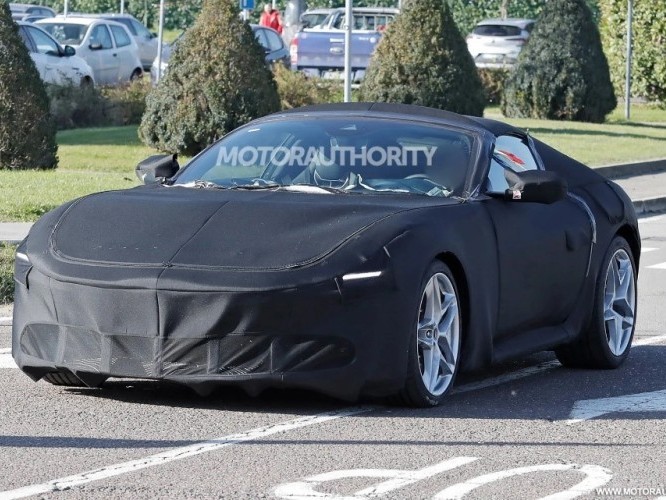
Spy shots of the Ferrari Roma successor revealed! May be released by the end of 2025, Hybrid system could be the highlight
WilliamNov 19, 2024
View More
Pros
Cons