
Q
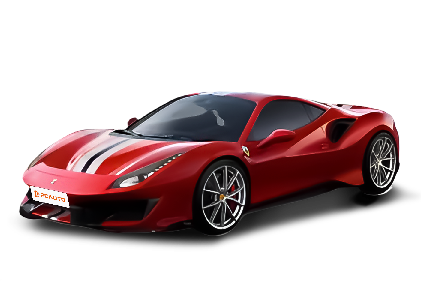
Is the Ferrari 488 Pista a good investment?
 CherryBlossomAug 12, 2025, 11:49 AM
As a limited - edition high - performance sports car, the Ferrari 488 Pista does have a certain investment potential, especially in a market like Malaysia, where rare models are often more favored by collectors. The 488 Pista is equipped with a 3.9 - liter V8 twin - turbocharged engine, boasting a powerful performance of 720 horsepower. Coupled with its lightweight design and track - oriented tuning, it excels in driving experience and mechanical qualities. These characteristics provide a foundation for its value retention.
In recent years, the performance of classic Ferrari models in the global auction market has been continuously on the rise. As a high - performance version of modern Ferraris, the value of the 488 Pista may increase steadily over time. However, investing in such models also requires considering factors such as maintenance costs, storage conditions, and market demand fluctuations. The climate in Malaysia has relatively high requirements for vehicle maintenance. Special attention should be paid to moisture prevention and regular maintenance during long - term storage.
In addition, the Ferrari brand has a stable fan base in Southeast Asia. The scarcity of the 488 Pista may further drive up its price in the second - hand market. However, its specific performance needs to be comprehensively judged in combination with the global economic environment and local luxury car market trends. For interested buyers, besides paying attention to the vehicle's condition and historical records, they can also refer to the transaction prices of similar models in Southeast Asia in recent years to make a more informed investment decision.
Special Disclaimer: This content is published by users and does not represent the views or position of PCauto.
Related Q&A
Q
What is the top model of Ferrari 488?
The top model of the Ferrari 488 series is the 488 Pista. This model was launched in 2018. As a high - performance version of the 488 GTB, its name "Pista" means "track" in Italian, fully reflecting its track - oriented design concept.
The 488 Pista is equipped with a 3.9 - liter V8 twin - turbocharged engine. The maximum output power reaches 720 horsepower, and the peak torque is 770 N·m. It can accelerate from 0 to 100 km/h in just 2.85 seconds, and the top speed can reach 340 km/h. Its performance is extremely strong.
This car has been significantly optimized in terms of aerodynamics and lightweight. For example, it adopts a more aggressive front and rear bumper design, makes extensive use of carbon fiber materials, and simplifies the interior. As a result, the overall weight of the vehicle is about 90 kg lighter than that of the 488 GTB.
For car enthusiasts in Malaysia, the 488 Pista is a very rare super - car. Its limited - production status and ultimate performance make it a dream car for collectors and performance enthusiasts. It's worth mentioning that the Ferrari 488 series was replaced by the F8 Tributo in 2019, but the 488 Pista is still regarded as a classic among Ferrari's mid - engined V8 models. Its technology and design concept have also influenced the development of subsequent models.
 CascadingWaterAug 12, 2025
Q
Why are Ferrari 458 so expensive?
There are mainly several reasons why the Ferrari 458 is so expensive. First of all, it's the brand value. As a top - notch sports car brand, Ferrari has a long history and a strong racing heritage. This endows its models with extremely high collectible value and room for price premiums.
Secondly, the 458 incorporates a large number of cutting - edge technologies. For example, its 4.5 - liter V8 naturally aspirated engine can deliver 570 horsepower. Paired with a 7 - speed dual - clutch transmission, it can accelerate from 0 to 100 km/h in just 3.4 seconds. Such performance is still remarkable even today.
Moreover, the 458 was designed by Pininfarina. Its appearance is highly recognizable and full of Italian aesthetic style. The interior materials and workmanship are of the top - level standard.
In addition, Ferrari's production volume is limited. During its production from 2010 to 2015, only about 30,000 units of the 458 were produced globally. This scarcity further drives up the price. For car enthusiasts in Malaysia, factors such as import duties and luxury taxes also need to be taken into account, which will significantly increase the final selling price.
It's worth mentioning that the 458, as the last mid - engined V8 Ferrari with a naturally aspirated engine, holds a special place in the hearts of car enthusiasts. This is also an important reason for its good resale value. With the trend of electrification, this kind of high - performance pure - fuel sports cars may become even more precious in the future.
 ActorStageAug 12, 2025
Q
When was the Ferrari 488 discontinued?
The Ferrari 488 officially ceased production in 2020. As a classic model in Ferrari's mid - engined V8 sports car series, it made its debut in 2015, replacing the previous 458 Italia. Its successor, the F8 Tributo, was launched in 2019 and gradually took over its market position. The 488 series includes the 488 GTB, 488 Spider, and the high - performance version 488 Pista. It is equipped with a 3.9 - liter twin - turbocharged V8 engine, with a maximum output power of up to 720 horsepower (in the Pista version), making it one of Ferrari's important representative works in turbocharging technology. For car enthusiasts in Malaysia, there is still a certain number of 488s in the local market. Some used cars or display cars may still be available for purchase through authorized dealers or professional channels. In addition, the discontinuation of the 488 also marks that Ferrari's V8 models have entered a new stage. Subsequent models such as the F8 Tributo and SF90 Stradale further integrate hybrid technology and aerodynamic innovations, continuing the brand's leading position in performance and technology.
 SilentReflectAug 12, 2025
Q
Who is the rival of the Ferrari 488?
The main competitors of the Ferrari 488 include supercars such as the Lamborghini Huracán, McLaren 720S, and Porsche 911 Turbo S. These models are on the same level as the 488 in terms of performance, design, and brand influence. The Lamborghini Huracán is well - known for its aggressive appearance and V10 engine. The McLaren 720S has become a strong competitor to the 488 with its lightweight carbon - fiber structure and powerful performance. The Porsche 911 Turbo S is famous for its excellent daily driving comfort and all - wheel drive system.
In the Malaysian market, these models are also highly sought after by high - performance car enthusiasts. The local hot climate and diverse road conditions pose higher requirements for the cooling systems and suspension tuning of supercars. Therefore, special attention should be paid to their adaptability when choosing such models. Additionally, the high automotive taxes in Malaysia will significantly increase the selling prices of these imported supercars. However, their rarity and outstanding performance still attract many collectors and car fans.
 SunnyRadianceAug 12, 2025
Q
Which is faster, Ferrari 488 or Lamborghini Huracan?
Both the Ferrari 488 and the Lamborghini Huracán are top - notch supercars, but their performance varies slightly. The Ferrari 488 is equipped with a 3.9 - liter V8 twin - turbocharged engine. It has a maximum horsepower of 670, can accelerate from 0 to 100 km/h in just 3 seconds, and has a top speed of 330 km/h. The Lamborghini Huracán, on the other hand, features a 5.2 - liter V10 naturally aspirated engine. The standard version has 610 horsepower, can accelerate from 0 to 100 km/h in 3.2 seconds, and has a top speed of 325 km/h. Based on the data, the Ferrari 488 has a slight edge in acceleration and top speed. However, the actual driving experience also depends on factors such as the vehicle's tuning, weight distribution, and driving environment. In the tropical climate of Malaysia, turbocharged engines might be affected by high temperatures, while the linear power output of naturally aspirated engines could be more suitable for some drivers. Both cars represent the pinnacle of Italian supercar craftsmanship. The choice between them largely depends on personal preference, whether it's the pursuit of ultimate speed or a unique driving experience. It's worth noting that Malaysia's road conditions and tax policies for high - performance cars also impact the actual usage experience of car owners.
 BoarderWaveRideAug 12, 2025
Q
How much does it cost to maintain a Ferrari 488?
In Malaysia, the average annual cost of maintaining a Ferrari 488 is approximately between RM50,000 and RM100,000. The specific cost depends on the vehicle's usage frequency and maintenance items. Routine maintenance such as oil changes and filter replacements typically costs around RM5,000 to RM8,000 each time. More complex services like gearbox inspections or brake system maintenance can cost as much as RM15,000 to RM30,000. Tire replacement is also a significant expense. A set of high - performance tires usually costs around RM20,000 to RM40,000.
In addition, as a high - end brand, Ferrari recommends that owners go to the official authorized service centers for maintenance to ensure professionalism and the use of original parts. Although the cost is relatively high, it can guarantee the long - term performance and resale value of the vehicle. For potential buyers, insurance costs also need to be considered. The annual insurance premium for such supercars may exceed RM30,000, depending on the driving record and insurance coverage.
After understanding these costs, owners can better plan their budgets. It is also advisable to conduct regular maintenance to avoid higher repair costs. After all, a well - maintained Ferrari not only provides an excellent driving experience but also retains a high value when resold.
 DiverAug 12, 2025
Q
Is the Ferrari 488 reliable?
As a high-performance sports car, the Ferrari 488 generally meets its positioning in terms of reliability. However, attention should be paid to the impact of maintenance costs and the usage environment on the vehicle. The 3.9-liter V8 twin-turbocharged engine installed in the 488 is powerful and the technology is mature. But the precise structure of the high-performance engine means that maintenance must be carried out strictly in accordance with the manufacturer's recommendations, especially the regular inspection of the turbo system and the gearbox. In the hot and humid climate of Malaysia, it is recommended to replace the coolant and engine oil more frequently, and pay attention to the moisture-proof treatment of the electronic system to avoid potential problems caused by high temperature and humidity. Compared with ordinary family cars, the replacement cost of high-performance components such as the suspension system and carbon-ceramic brake discs of supercars is relatively high, which is a factor to be considered before purchase. If the car is used on urban roads in Malaysia for a long time, frequent low-speed stops and starts may increase the wear and tear of the clutch. It is recommended to conduct regular computer diagnostics. Among models in the same class, the reliability of the 488 is at the mainstream level. However, the design of supercars focuses more on performance rather than durability, so owners need to have reasonable expectations. For owners who pursue the ultimate driving experience, the 488 is still a worthy option. It is recommended to purchase through official channels and strictly follow the maintenance plan to ensure the best condition.
 ClimberAug 12, 2025
Q
When did they stop making the Ferrari 488?
The production of the Ferrari 488 officially ended in 2019, and it was then succeeded by the Ferrari F8 Tributo, which serves as the new - generation model in the brand's mid - engine V8 sports car series. The 488 made its debut in 2015, equipped with a 3.9 - liter twin - turbocharged V8 engine with a maximum power of 670 horsepower. It became one of the top - performing models in its class at that time and was deeply loved by car enthusiasts in Malaysia.
Its successor, the F8 Tributo, is further optimized in terms of power and aerodynamics. The maximum power has been increased to 720 horsepower, while retaining the classic design elements of the 488. For Malaysian consumers, the 488 is still highly sought after in the second - hand market, especially for its excellent driving experience and the iconic Ferrari engine sound. The launch of the F8 Tributo provides more options for car enthusiasts who pursue the latest technology.
Both the 488 and the F8 Tributo reflect Ferrari's outstanding pursuit of performance and craftsmanship, meeting the needs of Malaysian high - performance car enthusiasts.
 SwimmerAug 12, 2025
Q
How to put a Ferrari 488 in park?
To put the Ferrari 488 into Park, first make sure the vehicle has come to a complete stop. Then, press and hold the brake pedal. Next, press the "P" button on the center console to activate the electronic parking system. At this time, the transmission will lock, and the "P" gear indicator will appear on the dashboard. It should be noted that the Ferrari 488 is equipped with a dual - clutch transmission (F1 DCT) and doesn't have the traditional mechanical gear lever of an automatic transmission. All gear - shifting operations are done through electronic buttons or paddles. Therefore, when parking, there's no need to shift gears like in traditional models; just press the "P" button.
For Malaysian owners, when parking a super - car for a long time in the hot and rainy climate, it is recommended to activate the electronic handbrake (if available) on a flat surface and avoid long - term exposure to the sun to protect the transmission and electronic systems. In addition, the transmission of high - performance models like Ferrari is designed to focus more on track performance. During daily driving, it is advisable to come to a complete stop before shifting into Park to avoid unnecessary load on the transmission system. If you encounter a situation where you can't shift gears, it may be that the electronic system needs to be restarted or checked. In this case, you can try turning off the vehicle and restarting it.
 PeachBlossomAug 12, 2025
Q
What's better, Ferrari 458 or 488?
Both the Ferrari 458 and 488 are outstanding supercars, yet they are designed for different driving needs and eras. The 458 is equipped with a 4.5 - liter naturally - aspirated V8 engine, offering more direct throttle response and a classic high - revving engine sound, which is perfect for car enthusiasts who pursue pure driving pleasure. On the other hand, the 488 features a 3.9 - liter twin - turbocharged V8 engine. It has stronger power and earlier torque delivery, with a 0 - 100km/h acceleration time of just 3 seconds, making it more suitable for buyers who seek ultimate performance.
In the hot climate of Malaysia, the turbo system of the 488 may be more adaptable to low - speed driving, but the naturally - aspirated engine of the 458 is more charming at high revs. Both cars are equipped with Ferrari's top - notch chassis tuning. The 458 has more mechanical and direct steering feedback, while the 488 focuses more on daily driving comfort. Considering the road conditions in Malaysia, the 488 might be more suitable for daily use, but the 458 has a higher collectible value.
These two cars represent the pinnacle of Ferrari's mid - mounted V8 engines. The choice depends on whether you prefer the classic naturally - aspirated experience or the modern turbocharged one.
 PilotAug 12, 2025
Popular Cars
Model Year
Car Compare
Car Photo
Related Models
 Cars
CarsLatest Q&A
Q
Is AMT similar to automatic?
There are significant differences between AMT transmissions and automatic transmissions (AT) in terms of core structure and driving experience. AMT is essentially an electronically automated version of a manual transmission, simulating manual clutch operation and gear shifting through a computerized control system while retaining the gear set structure of manual transmissions. As a result, it offers higher transmission efficiency, with fuel consumption approximately 8%-12% lower than AT, making it particularly suitable for highway or long-distance driving. However, it may exhibit jerking similar to manual transmissions during low-speed gear shifts, especially noticeable in congested traffic conditions.
AT transmissions rely on torque converters for power transfer, delivering smooth and seamless gear shifts that appeal to comfort-oriented users. However, their complex structure (incorporating planetary gear sets, hydraulic systems, etc.) results in higher maintenance costs. A single service may cost between 800 to 1,500 ringgit, whereas AMT only requires gear oil replacement at approximately 400 ringgit.
From a market perspective, AMT is predominantly used in budget vehicles or commercial models priced below 80,000 ringgit, while AT is typically featured in mid-to-high-end vehicles. Consumers should select based on actual needs: AMT suits those prioritizing fuel efficiency and low maintenance costs, while AT better serves those valuing comfort. Notably, recent advancements in AMT electronic control technology have significantly mitigated jerking issues, though test drives should still emphasize low-speed performance evaluation.
 AriaMar 26, 2026
Q
Which is better, DCT or AT?
DCT (Dual-Clutch Transmission) and AT (Automatic Transmission) each have their own advantages and disadvantages, and the choice should be based on personal driving needs. AT transmissions transfer power through a torque converter, offering excellent shift smoothness, making them suitable for urban commuting or novice drivers. However, they tend to have higher fuel consumption, and vehicles equipped with them are usually more expensive. DCT transmissions utilize a dual-clutch structure, featuring fast shift speeds and high power transmission efficiency, which provides a more direct driving experience—particularly suitable for users seeking a sporty feel. However, they may exhibit jerking at low speeds and have relatively high maintenance costs. If durability and comfort are priorities, AT is the more reliable choice; if power responsiveness and driving pleasure are preferred, wet DCT (such as Volkswagen DSG) performs better, though dry DCT models should be avoided in prolonged stop-and-go traffic conditions. Additionally, CVT transmissions excel in smoothness and fuel efficiency, making them ideal for daily commuting, but they lack driving excitement. It is recommended to test-drive before purchasing, as tuning varies significantly across brands, and real-world experience is more important than theoretical specifications.
FlutteringMar 26, 2026Q
Is Amt good or bad?
AMT gearboxes have a significant cost advantage in the local market, typically being around 5,000 Ringgit cheaper than models equipped with conventional automatic transmissions. Their fuel efficiency is comparable to manual transmissions, resulting in long-term fuel savings. Featuring a straightforward design, they achieve transmission efficiency exceeding 90% with relatively low maintenance costs, making them ideal for practicality-oriented consumers. However, their shifting logic contains inherent limitations: gear changes between 1st and 2nd cause 0.3-0.5 second power interruptions, while unintended upshifts on inclines may reduce engine speed by 15%-20%, compromising driving smoothness. For urban commuters or budget-conscious buyers, AMT offers excellent value, though those prioritizing premium driving dynamics should consider alternative transmission types. Some domestic models like the Perodua Axia employ enhanced AMT systems, where optimized shift programming has reduced gearshift shock by approximately 30%.
 RainbowsMar 26, 2026
Q
Which gives better mileage, CVT or AMT?
From the perspective of fuel economy, CVT transmissions generally perform better under urban driving conditions. Their continuously variable design allows the engine to consistently operate within the optimal speed range, significantly reducing fuel consumption during frequent starts and stops. Test data shows that their fuel consumption in urban driving conditions is 10% to 15% lower than that of comparable models. AMT transmissions, on the other hand, inherit the high transmission efficiency of manual transmissions, delivering fuel efficiency close to manual transmissions during high-speed cruising. This makes them particularly suitable for long-distance driving in large-displacement vehicles. However, due to power interruption during gear shifts, their overall fuel consumption may be 5% to 8% higher than CVTs.
The difference in fuel-saving characteristics between the two transmissions stems from their technical principles: CVTs achieve continuous variability through steel belts and pulleys, eliminating the fixed gear ratio limitations of traditional transmissions; AMTs simulate manual gear changes via electronic control systems while maintaining the mechanical efficiency of gear transmission. Notably, actual fuel consumption is also influenced by driving habits. Smooth acceleration and anticipatory deceleration can maximize the transmissions' fuel-saving potential. If the vehicle budget permits and urban commuting is the primary use, CVTs offer a more economical choice. For frequent highway driving with an emphasis on cost-effectiveness, AMTs are equally worth considering.
 RubyBlazeMar 26, 2026
Q
Which is cheaper, AMT or CVT?
In terms of gearbox cost, AMT is usually more economical than CVT. Essentially, AMT is a manual transmission equipped with an electronic control unit, featuring a simple structure and low maintenance costs. The unit price ranges from approximately 5,000 to 8,000 ringgit, making it suitable for budget-conscious consumers or those who prioritize long-term operating costs. CVT incurs higher manufacturing costs due to its precision steel belt transmission system and continuous variable transmission technology, with a unit price of about 7,000 to 10,000 ringgit. However, it delivers a smoother driving experience and superior fuel efficiency. The primary differences between the two lie in technical complexity: AMT retains the gear-shifting mechanism, resulting in noticeable shift shock; CVT achieves linear power output through stepless speed variation but requires periodic belt inspection and incurs higher maintenance expenses. For those prioritizing initial cost and basic transportation needs, AMT offers better value; if comfort and long-term fuel economy are priorities, CVT represents a more worthwhile investment. Note that actual prices may vary based on vehicle model, brand, and local supply chain factors.
 ShadowProwlMar 26, 2026
Related News

Ferrari unveils the chassis and core components of its first all-electric model, Elettrica
LienOct 10, 2025

Ferrari 849 Testarossa officially released, succeeding the SF90 Stradale with more powerful performance
RobertSep 12, 2025
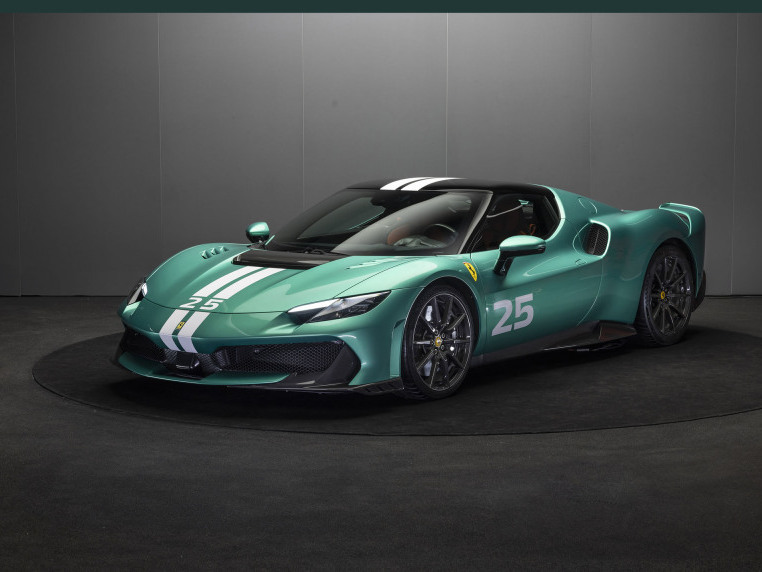
Ferrari Unveils 296 Speciale Plug-in Hybrid Supercar, Accelerating from 0-100 km/h in Just 2.8s
JohnApr 30, 2025
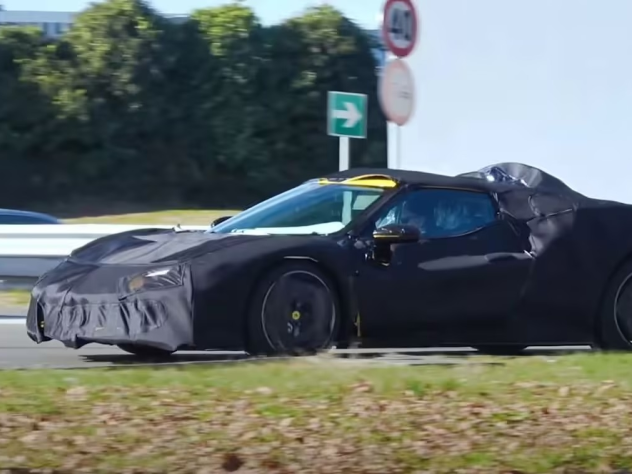
Meet Ferrari's New Track Beast: 296 VS Debuts on April 29
RobertApr 3, 2025
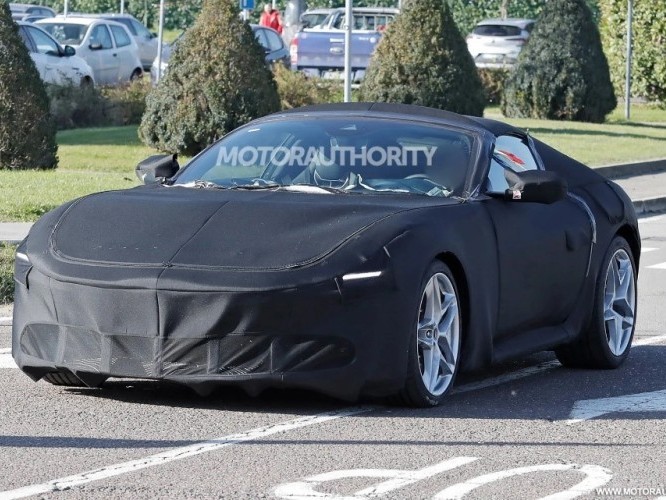
Spy shots of the Ferrari Roma successor revealed! May be released by the end of 2025, Hybrid system could be the highlight
WilliamNov 19, 2024
View More
Pros
Cons