
Q
What is the name of the world's fastest car in 2024?
 BearOct 22, 2025, 05:23 PM
As of 2024, the world's fastest production car is the Bugatti Chiron Super Sport 300+, clocking in at a mind-blowing top speed of 490.48 km/h. That record isn't just a number—it's the current pinnacle of what the automotive industry can achieve. Under the hood, this beast packs an 8.0-liter quad-turbocharged W16 engine cranking out 1600 horsepower, a true showcase of Bugatti's technical mastery in the supercar realm.
For Malaysian petrolheads, sure, these hypercars can barely stretch their legs on local roads, but they represent the absolute limits of automotive engineering—glimpses into what future car tech might hold. And Malaysia's car culture is booming these days. More high-performance machines and EVs are hitting the market, like locally-assembled BMW M models and Mercedes-AMG cars, giving enthusiasts a shot at experiencing top-tier driving thrills.
Plus, with electric vehicle tech advancing, contenders like the Tesla Roadster are gearing up to join the speed race. Who knows? The title of "fastest production car" might soon start swapping between fuel burners and electric monsters. Either way, whether it's a petrol-fueled supercar or an electric beast, they're all pushing automotive innovation forward—and that's something car fans worldwide can get excited about.
Special Disclaimer: This content is published by users and does not represent the views or position of PCauto.
Related Q&A
Q
Are Mitsubishi cars reliable in 2024?
In 2024, Mitsubishi Motors has maintained a steady performance in terms of reliability, making it particularly suitable for Malaysian consumers. Its key models like the Xpander and Triton have built a solid reputation in the local market, thanks to their proven powertrains and well-tuned chassis. Mitsubishi's MIVEC engine technology and 4WD systems, validated over the years, strike a good balance between fuel efficiency and durability, perfectly suited for Malaysia's diverse terrain conditions.
Notably, Mitsubishi boasts a well-established after-sales service network across Southeast Asia, with relatively sufficient parts supply – a crucial factor for controlling long-term ownership costs. When it comes to used car value retention, Mitsubishi pickups and SUVs hold their value above the average level in Malaysia.
If you're in the market, I'd recommend checking the ASEAN NCAP safety ratings first. Opting for locally-assembled models is a smart move for more competitive pricing. And remember, regular maintenance is especially key to keeping those Japanese reliability standards intact over the years.
 LeafOct 22, 2025
Q
What is the best selling Mitsubishi car in 2024?
Mitsubishi's top-seller in Malaysia for 2024 is the Xpander. This 7-seater MPV keeps winning over local buyers thanks to its spacious, practical interior, fuel-sipping 1.5L MIVEC engine, and family-friendly design – a perfect fit for Malaysia's larger households. With a 210mm ground clearance, the Xpander handles the country's varied road conditions with ease, while kit like LED headlights and an 8-inch touchscreen help it stand out as a great value in its class. Notably, Mitsubishi has also rolled out a hybrid version of the Xpander in Malaysia, tapping into the growing demand for more fuel-efficient rides.
Beyond the Xpander, the Mitsubishi Triton pickup maintains steady sales. Its rugged off-road capability and strong cargo-lugging ability make it a hit with business users and outdoor enthusiasts alike. Malaysian car buyers typically prioritize durability, fuel economy, and versatility – areas where Mitsubishi has solid strengths in the local market. As demand for new energy vehicles rises, Mitsubishi could likely bring more electrified models to Malaysia in the future to cater to diverse consumer needs.
 ModelPoseOct 22, 2025
Q
How much is the Mitsubishi hybrid in 2024?
Mitsubishi hasn't officially spilled the beans on the exact pricing for its 2024 hybrid models in Malaysia just yet. But if we take a look at the 2023 Mitsubishi Xpander HEV, which retails roughly between RM 120,000 and RM 140,000, we can expect the new 2024 hybrid variants to hover around that ballpark. Of course, the final sticker price will hinge on things like updated specs and currency exchange rates.
Mitsubishi's hybrid tech is all about blending fuel efficiency with eco-friendly driving. Take the Xpander HEV, for example – its e-Smart Hybrid system uses regenerative braking to recoup energy and cut down on fuel use. That's a solid fit for Malaysian drivers who are grappling with high pump prices while also wanting to keep their carbon footprint in check.
If you're shopping around for a hybrid, it's worth checking out rivals like the Toyota Corolla Cross Hybrid or Honda City Hybrid. Each has its own pricing sweet spot and tech highlights, so I'd recommend hitting up an authorized dealer for a test drive and to scope out the latest promotions. Oh, and don't forget – Malaysia's tax incentives for Energy Efficient Vehicles (EEVs) could also play a role in bringing down the final on-the-road cost.
 ActorStageOct 22, 2025
Q
What is the fastest Mitsubishi car in 2024?
Mitsubishi's quickest ride for 2024 is the limited-run **Mitsubishi Lancer Evolution X Final Edition**. Under the hood, you'll find a 2.0-liter turbocharged four-cylinder engine cranking out 303 horsepower. Pair that with the advanced S-AWC all-wheel-drive system and a dual-clutch gearbox, and this thing rockets from 0-100 km/h in just 4.1 seconds, topping out at an electronically limited 250 km/h.
Sure, Mitsubishi's been focusing more on SUVs and EVs lately, but the Evolution X Final Edition still holds a special place in Malaysian petrolheads' hearts as the brand's performance flagship—especially in the tuning scene, where its potential is huge.
One thing to note: Malaysia's hot and rainy climate really puts pressure on a high-performance car's cooling and tire grip. If you're an owner, it's smart to regularly check the cooling system and slap on some high-performance tires to keep this beast running at its best.
And if you're all about that extreme speed, keep an eye on Mitsubishi—they might just trickle down some Dakar Rally tech into future production models. Now *that* could be something to get excited about.
 DaisyMeadowOct 22, 2025
Q
How many seats are in the Mitsubishi XForce 2024?
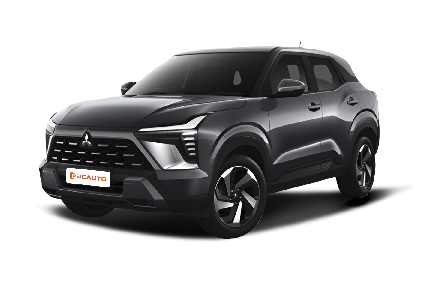
The 2024 Mitsubishi XForce is an all-new compact SUV offering a 5-seater layout, perfectly suited for most Malaysian families' daily commutes. Its seats strike a nice balance between comfort and support, and the 60:40 split-folding rear seats allow for flexible expansion of cargo space when needed. Under the hood, you'll find a 1.5L naturally aspirated engine paired with a CVT transmission, focusing on smooth city driving and fuel efficiency. With a generous 222mm ground clearance, it's ready to tackle Malaysia's diverse road conditions with ease.
Standout features include a crisp 10.25-inch infotainment touchscreen with wireless Apple CarPlay/Android Auto, plus Mitsubishi's trusted active safety suite – think Forward Collision Mitigation (FCM) braking and Lane Keep Assist. These are pretty competitive offerings for the segment. Malaysian buyers can likely expect Mitsubishi to stick to its value-for-money roots with the XForce's pricing, aiming to carve out a distinct position against Japanese rivals like the Honda HR-V and Toyota Raize. Its manageable dimensions also make it a smart fit for navigating the tight streets of cities like Kuala Lumpur.
 SilverStreamOct 22, 2025
Popular Cars
Model Year
Car Compare
Car Photo
Related Models
 Cars
CarsLatest Q&A
Q
Is AMT similar to automatic?
There are significant differences between AMT transmissions and automatic transmissions (AT) in terms of core structure and driving experience. AMT is essentially an electronically automated version of a manual transmission, simulating manual clutch operation and gear shifting through a computerized control system while retaining the gear set structure of manual transmissions. As a result, it offers higher transmission efficiency, with fuel consumption approximately 8%-12% lower than AT, making it particularly suitable for highway or long-distance driving. However, it may exhibit jerking similar to manual transmissions during low-speed gear shifts, especially noticeable in congested traffic conditions.
AT transmissions rely on torque converters for power transfer, delivering smooth and seamless gear shifts that appeal to comfort-oriented users. However, their complex structure (incorporating planetary gear sets, hydraulic systems, etc.) results in higher maintenance costs. A single service may cost between 800 to 1,500 ringgit, whereas AMT only requires gear oil replacement at approximately 400 ringgit.
From a market perspective, AMT is predominantly used in budget vehicles or commercial models priced below 80,000 ringgit, while AT is typically featured in mid-to-high-end vehicles. Consumers should select based on actual needs: AMT suits those prioritizing fuel efficiency and low maintenance costs, while AT better serves those valuing comfort. Notably, recent advancements in AMT electronic control technology have significantly mitigated jerking issues, though test drives should still emphasize low-speed performance evaluation.
 AriaMar 26, 2026
Q
Which is better, DCT or AT?
DCT (Dual-Clutch Transmission) and AT (Automatic Transmission) each have their own advantages and disadvantages, and the choice should be based on personal driving needs. AT transmissions transfer power through a torque converter, offering excellent shift smoothness, making them suitable for urban commuting or novice drivers. However, they tend to have higher fuel consumption, and vehicles equipped with them are usually more expensive. DCT transmissions utilize a dual-clutch structure, featuring fast shift speeds and high power transmission efficiency, which provides a more direct driving experience—particularly suitable for users seeking a sporty feel. However, they may exhibit jerking at low speeds and have relatively high maintenance costs. If durability and comfort are priorities, AT is the more reliable choice; if power responsiveness and driving pleasure are preferred, wet DCT (such as Volkswagen DSG) performs better, though dry DCT models should be avoided in prolonged stop-and-go traffic conditions. Additionally, CVT transmissions excel in smoothness and fuel efficiency, making them ideal for daily commuting, but they lack driving excitement. It is recommended to test-drive before purchasing, as tuning varies significantly across brands, and real-world experience is more important than theoretical specifications.
FlutteringMar 26, 2026Q
Is Amt good or bad?
AMT gearboxes have a significant cost advantage in the local market, typically being around 5,000 Ringgit cheaper than models equipped with conventional automatic transmissions. Their fuel efficiency is comparable to manual transmissions, resulting in long-term fuel savings. Featuring a straightforward design, they achieve transmission efficiency exceeding 90% with relatively low maintenance costs, making them ideal for practicality-oriented consumers. However, their shifting logic contains inherent limitations: gear changes between 1st and 2nd cause 0.3-0.5 second power interruptions, while unintended upshifts on inclines may reduce engine speed by 15%-20%, compromising driving smoothness. For urban commuters or budget-conscious buyers, AMT offers excellent value, though those prioritizing premium driving dynamics should consider alternative transmission types. Some domestic models like the Perodua Axia employ enhanced AMT systems, where optimized shift programming has reduced gearshift shock by approximately 30%.
 RainbowsMar 26, 2026
Q
Which gives better mileage, CVT or AMT?
From the perspective of fuel economy, CVT transmissions generally perform better under urban driving conditions. Their continuously variable design allows the engine to consistently operate within the optimal speed range, significantly reducing fuel consumption during frequent starts and stops. Test data shows that their fuel consumption in urban driving conditions is 10% to 15% lower than that of comparable models. AMT transmissions, on the other hand, inherit the high transmission efficiency of manual transmissions, delivering fuel efficiency close to manual transmissions during high-speed cruising. This makes them particularly suitable for long-distance driving in large-displacement vehicles. However, due to power interruption during gear shifts, their overall fuel consumption may be 5% to 8% higher than CVTs.
The difference in fuel-saving characteristics between the two transmissions stems from their technical principles: CVTs achieve continuous variability through steel belts and pulleys, eliminating the fixed gear ratio limitations of traditional transmissions; AMTs simulate manual gear changes via electronic control systems while maintaining the mechanical efficiency of gear transmission. Notably, actual fuel consumption is also influenced by driving habits. Smooth acceleration and anticipatory deceleration can maximize the transmissions' fuel-saving potential. If the vehicle budget permits and urban commuting is the primary use, CVTs offer a more economical choice. For frequent highway driving with an emphasis on cost-effectiveness, AMTs are equally worth considering.
 RubyBlazeMar 26, 2026
Q
Which is cheaper, AMT or CVT?
In terms of gearbox cost, AMT is usually more economical than CVT. Essentially, AMT is a manual transmission equipped with an electronic control unit, featuring a simple structure and low maintenance costs. The unit price ranges from approximately 5,000 to 8,000 ringgit, making it suitable for budget-conscious consumers or those who prioritize long-term operating costs. CVT incurs higher manufacturing costs due to its precision steel belt transmission system and continuous variable transmission technology, with a unit price of about 7,000 to 10,000 ringgit. However, it delivers a smoother driving experience and superior fuel efficiency. The primary differences between the two lie in technical complexity: AMT retains the gear-shifting mechanism, resulting in noticeable shift shock; CVT achieves linear power output through stepless speed variation but requires periodic belt inspection and incurs higher maintenance expenses. For those prioritizing initial cost and basic transportation needs, AMT offers better value; if comfort and long-term fuel economy are priorities, CVT represents a more worthwhile investment. Note that actual prices may vary based on vehicle model, brand, and local supply chain factors.
 ShadowProwlMar 26, 2026
Related News

What is the official price of the 2026 Mitsubishi Xforce? Will it be cheaper than the Proton X50 and Honda HR-V?
JohnMar 9, 2026

Before buying a Mitsubishi Xpander, you must know these 5 common issues
AshleyMar 25, 2026

2026 Mitsubishi Outlander PHEV launched in North America, with increased power and price
MichaelMar 18, 2026

Stronger than Xpander? Analysis of the 7-Seater Mitsubishi Destinator SUV
AshleyFeb 22, 2026

Mitsubishi Destinator vs Xforce: Choose 5-seater or 7-seater?
Kevin WongFeb 16, 2026
View More
Pros
Cons