
Q
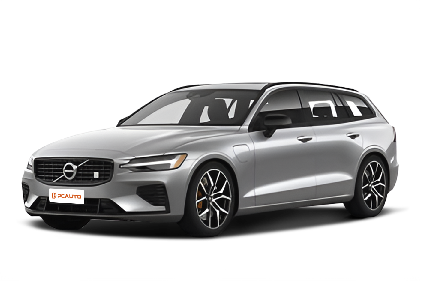
What is the range of the Volvo V60 2022?
 BeeOct 22, 2025, 05:26 PM
The all-electric range of the 2022 Volvo V60 in Malaysia depends on the specific powertrain. If you're looking at the plug-in hybrid variants (like the T6/T8 Recharge), you're typically looking at an electric-only range between 50-90 kilometers under the WLTP cycle. The exact figure can vary based on the battery capacity, which ranges from 11.6kWh to 18.8kWh, and of course, your driving style and conditions. On the flip side, the conventional petrol models' range hinges on the fuel tank size (around 60 liters) and combined fuel consumption (approximately 6-7L/100km), translating to a theoretical maximum range of 850-1000 kilometers on a full tank.
It's worth keeping in mind that Malaysia's warm climate might have a slight impact on battery efficiency, so regular maintenance is a good idea to keep things running at their best. Volvo's plug-in hybrid tech does a solid job balancing eco-friendliness with performance, and their battery packs undergo rigorous testing to handle tropical environments. If you're considering a new energy vehicle, it's also smart to check out the Malaysian government's tax incentives for plug-in hybrids – these can definitely influence your overall ownership costs.
For those longer road trips, planning your route around charging infrastructure is advisable. Fortunately, Volvo's dealer network in major Malaysian cities should be able to provide comprehensive technical support when you need it.
Special Disclaimer: This content is published by users and does not represent the views or position of PCauto.
Related Q&A
Q
What engine is in the 2022 V60 T6?
The 2022 Volvo V60 T6 packs a 2.0-liter four-cylinder engine with both turbocharging and supercharging – a twin-charged gasoline setup paired with a plug-in hybrid system (PHEV). This powertrain cranks out a solid 340 horsepower and 400 Nm of peak torque, mated to an 8-speed automatic transmission, striking a nice balance between strong performance and efficient fuel economy. It’s built on Volvo’s clever Drive-E technology, where the twin-charged design eliminates that annoying power lag you sometimes get with smaller engines at higher revs. Plus, the plug-in hybrid system lets you zip around on pure electric power for short trips, which is perfect for Malaysians who mix city commuting with longer drives. What’s really cool is that this powertrain sits at the higher end of the spec sheet in Malaysia – it satisfies those craving performance while also qualifying for the government’s tax incentives on eco-friendly vehicles. For Malaysian buyers, the V60 T6’s powertrain makes it a strong contender in the luxury wagon segment. It keeps Volvo’s usual focus on safety and comfort but adds better fuel efficiency, which is a big plus with Malaysia’s unpredictable fuel prices – the hybrid system’s cost-saving benefits really shine here.
 NovaOct 22, 2025
Q
What is the battery capacity of the Volvo V60 2022?
The 2022 Volvo V60 is available in Malaysia with a plug-in hybrid powertrain (the T8 Recharge variant). It packs an 11.6kWh battery, delivering an all-electric range of approximately 55 kilometers under the WLTP cycle – perfect for those daily short commutes around town. This model uses a lithium-ion battery pack that supports both fast charging and regular home charging, striking a nice balance between eco-friendliness and practicality. For Malaysian buyers, the plug-in hybrid system really helps cut down on fuel usage, especially noticeable during those stop-start, congested city drives. It's worth keeping in mind, though, that actual battery capacity and range can vary depending on your driving style, how much you use the air conditioning, and the terrain you're tackling. If you're considering going electric, the Malaysian government currently offers incentives like import tax exemptions for PHEVs and BEVs. I'd definitely recommend checking out the latest policy details before making a purchase. Volvo's battery tech is big on safety and durability too; the battery pack comes with a multi-layered protection system, which is good news for our tropical climate here.
 FayeOct 22, 2025
Q
How much horsepower does the Volvo V60 2022 have?
The 2022 Volvo V60 offers Malaysian buyers a range of powertrain options to suit different needs. The T5 petrol variant packs a 2.0-litre turbocharged four-cylinder engine churning out 250 horsepower, while the plug-in hybrid T6 and T8 versions take things up a notch by pairing that same 2.0L turbo engine with an electric motor. This setup delivers a healthy 340hp for the T6 and a robust 390hp for the T8, really showcasing Volvo's knack for innovative electrified tech.
For Malaysian drivers, the V60 isn't just about power—it strikes a solid balance with eco-friendliness too. The T8, in particular, can eke out around 50km on pure electric power, which is perfect for those daily short commutes around town. And of course, Volvo's legendary focus on safety shines through in the V60. You get standard features like the City Safety system, adding that extra layer of confidence when navigating our tropical, rain-soaked roads.
If you're someone who values a premium driving experience without compromising on environmental responsibility, do yourself a favour and head to your nearest authorized Volvo dealer for a test drive. It's the best way to feel the distinct, refined character that makes this Scandinavian luxury wagon stand out.
 RubyOct 22, 2025
Q
Is a Volvo V60 a good car?
The Volvo V60 is a solid all-around luxury wagon that fits perfectly with Malaysian drivers who value practicality and safety. Its City Safety system is a real standout for reducing collision risks, which makes it ideal for navigating Malaysia's busy urban roads. Under the hood, the 2.0L turbocharged engine offers a nice range of 196 to 250 horsepower—enough pep for enjoyable drives while still keeping fuel economy in check. And with that generous 2872mm wheelbase, rear passengers get plenty of legroom to stretch out comfortably.
One feature I really appreciate for long highway hauls is the standard Pilot Assist semi-autonomous driving system—it takes a lot of the stress out of those extended journeys. Plus, Volvo has a well-established network of authorized dealers here, so you can feel confident about after-sales support.
Now, wagons are still a bit of a niche choice in Malaysia, but the V60 manages to stand out with its Scandinavian design flair and super flexible cargo space—you can expand it from 529 liters up to a massive 1441 liters. That makes it a great pick for families who love that minimalist Nordic vibe but still need to haul gear. The only thing to note is that, like most wagons here, its resale value tends to be a touch lower than comparable SUVs. Before you buy, I'd recommend checking Volvo Malaysia's official website for the latest promotions and definitely booking a test drive to experience its uniquely tuned chassis—it's got that characteristic Volvo balance of comfort and control.
 KitOct 22, 2025
Q
Why is the Volvo V60 discontinued?
The main reasons behind the discontinuation of the Volvo V60 in the Malaysian market boil down to the global auto industry's strategic shift towards electrification and the declining demand for wagons as consumer preferences swing increasingly towards SUVs. As a brand deeply committed to sustainability, Volvo is channeling its resources into developing pure electric models – take the upcoming EX60, for example. Meanwhile, the Malaysian market has traditionally shown lower acceptance for wagons, with SUVs and crossovers dominating buyer choices, which inevitably impacted the V60's sales performance. It's worth noting that wagons still enjoy strong popularity in European markets, which explains why Volvo continues to offer plug-in hybrid variants of the V60 in select regions. For Malaysian consumers who love Volvo's wagon design ethos, keeping an eye out for potential future electric wagon introductions from the brand would be wise, or considering SUV alternatives like the XC60. These models share similar design language and tech features; they just come in a different body style. As the automotive landscape keeps evolving, shifting consumer tastes and stricter environmental regulations are pushing automakers to constantly adapt their product lineups to meet the demands of the new era.
 FoxOct 22, 2025
Popular Cars
Model Year
Car Compare
Car Photo
Related Models
 Cars
CarsLatest Q&A
Q
Is AMT similar to automatic?
There are significant differences between AMT transmissions and automatic transmissions (AT) in terms of core structure and driving experience. AMT is essentially an electronically automated version of a manual transmission, simulating manual clutch operation and gear shifting through a computerized control system while retaining the gear set structure of manual transmissions. As a result, it offers higher transmission efficiency, with fuel consumption approximately 8%-12% lower than AT, making it particularly suitable for highway or long-distance driving. However, it may exhibit jerking similar to manual transmissions during low-speed gear shifts, especially noticeable in congested traffic conditions.
AT transmissions rely on torque converters for power transfer, delivering smooth and seamless gear shifts that appeal to comfort-oriented users. However, their complex structure (incorporating planetary gear sets, hydraulic systems, etc.) results in higher maintenance costs. A single service may cost between 800 to 1,500 ringgit, whereas AMT only requires gear oil replacement at approximately 400 ringgit.
From a market perspective, AMT is predominantly used in budget vehicles or commercial models priced below 80,000 ringgit, while AT is typically featured in mid-to-high-end vehicles. Consumers should select based on actual needs: AMT suits those prioritizing fuel efficiency and low maintenance costs, while AT better serves those valuing comfort. Notably, recent advancements in AMT electronic control technology have significantly mitigated jerking issues, though test drives should still emphasize low-speed performance evaluation.
 AriaMar 26, 2026
Q
Which is better, DCT or AT?
DCT (Dual-Clutch Transmission) and AT (Automatic Transmission) each have their own advantages and disadvantages, and the choice should be based on personal driving needs. AT transmissions transfer power through a torque converter, offering excellent shift smoothness, making them suitable for urban commuting or novice drivers. However, they tend to have higher fuel consumption, and vehicles equipped with them are usually more expensive. DCT transmissions utilize a dual-clutch structure, featuring fast shift speeds and high power transmission efficiency, which provides a more direct driving experience—particularly suitable for users seeking a sporty feel. However, they may exhibit jerking at low speeds and have relatively high maintenance costs. If durability and comfort are priorities, AT is the more reliable choice; if power responsiveness and driving pleasure are preferred, wet DCT (such as Volkswagen DSG) performs better, though dry DCT models should be avoided in prolonged stop-and-go traffic conditions. Additionally, CVT transmissions excel in smoothness and fuel efficiency, making them ideal for daily commuting, but they lack driving excitement. It is recommended to test-drive before purchasing, as tuning varies significantly across brands, and real-world experience is more important than theoretical specifications.
FlutteringMar 26, 2026Q
Is Amt good or bad?
AMT gearboxes have a significant cost advantage in the local market, typically being around 5,000 Ringgit cheaper than models equipped with conventional automatic transmissions. Their fuel efficiency is comparable to manual transmissions, resulting in long-term fuel savings. Featuring a straightforward design, they achieve transmission efficiency exceeding 90% with relatively low maintenance costs, making them ideal for practicality-oriented consumers. However, their shifting logic contains inherent limitations: gear changes between 1st and 2nd cause 0.3-0.5 second power interruptions, while unintended upshifts on inclines may reduce engine speed by 15%-20%, compromising driving smoothness. For urban commuters or budget-conscious buyers, AMT offers excellent value, though those prioritizing premium driving dynamics should consider alternative transmission types. Some domestic models like the Perodua Axia employ enhanced AMT systems, where optimized shift programming has reduced gearshift shock by approximately 30%.
 RainbowsMar 26, 2026
Q
Which gives better mileage, CVT or AMT?
From the perspective of fuel economy, CVT transmissions generally perform better under urban driving conditions. Their continuously variable design allows the engine to consistently operate within the optimal speed range, significantly reducing fuel consumption during frequent starts and stops. Test data shows that their fuel consumption in urban driving conditions is 10% to 15% lower than that of comparable models. AMT transmissions, on the other hand, inherit the high transmission efficiency of manual transmissions, delivering fuel efficiency close to manual transmissions during high-speed cruising. This makes them particularly suitable for long-distance driving in large-displacement vehicles. However, due to power interruption during gear shifts, their overall fuel consumption may be 5% to 8% higher than CVTs.
The difference in fuel-saving characteristics between the two transmissions stems from their technical principles: CVTs achieve continuous variability through steel belts and pulleys, eliminating the fixed gear ratio limitations of traditional transmissions; AMTs simulate manual gear changes via electronic control systems while maintaining the mechanical efficiency of gear transmission. Notably, actual fuel consumption is also influenced by driving habits. Smooth acceleration and anticipatory deceleration can maximize the transmissions' fuel-saving potential. If the vehicle budget permits and urban commuting is the primary use, CVTs offer a more economical choice. For frequent highway driving with an emphasis on cost-effectiveness, AMTs are equally worth considering.
 RubyBlazeMar 26, 2026
Q
Which is cheaper, AMT or CVT?
In terms of gearbox cost, AMT is usually more economical than CVT. Essentially, AMT is a manual transmission equipped with an electronic control unit, featuring a simple structure and low maintenance costs. The unit price ranges from approximately 5,000 to 8,000 ringgit, making it suitable for budget-conscious consumers or those who prioritize long-term operating costs. CVT incurs higher manufacturing costs due to its precision steel belt transmission system and continuous variable transmission technology, with a unit price of about 7,000 to 10,000 ringgit. However, it delivers a smoother driving experience and superior fuel efficiency. The primary differences between the two lie in technical complexity: AMT retains the gear-shifting mechanism, resulting in noticeable shift shock; CVT achieves linear power output through stepless speed variation but requires periodic belt inspection and incurs higher maintenance expenses. For those prioritizing initial cost and basic transportation needs, AMT offers better value; if comfort and long-term fuel economy are priorities, CVT represents a more worthwhile investment. Note that actual prices may vary based on vehicle model, brand, and local supply chain factors.
 ShadowProwlMar 26, 2026
Related News

Volvo EX60 as the electric successor to the XC60, embodies the pragmatic approach of the brand’s transformation
MichaelJan 23, 2026

Will the Volvo EX60, equipped with Google Gemini AI, make Volvo's electric cars more popular?
AshleyJan 15, 2026

Volvo ES90 will be officially launched in Malaysia in the first quarter of 2026
JohnJan 5, 2026
Warning: Vehicle LiDAR Can Damage Your Phone Camera!
AshleyMay 19, 2025

Well-Planned Space: The Exceptional Practicality of the Volvo XC60
Kevin WongMay 16, 2025
View More
Pros
Cons