
Q
What type of charger is the Ioniq 5 2024?
 ArtistBrushDec 04, 2025, 11:54 AM
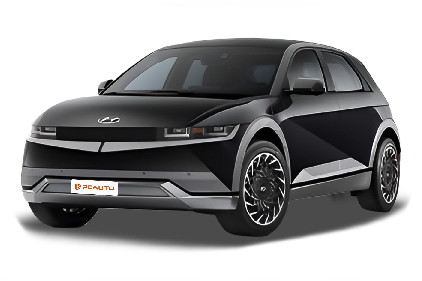
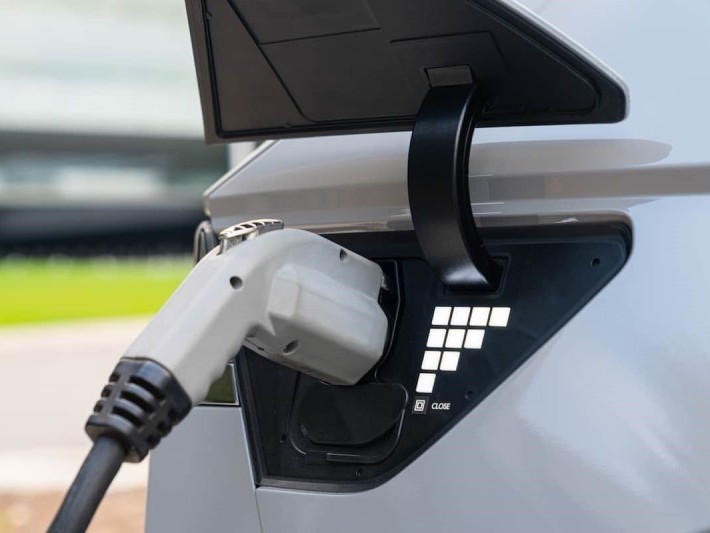
The 2024 Hyundai Ioniq 5 comes standard with both a Type 2 (Mennekes) AC charging port and a CCS2 DC fast-charging port, making it compatible with most local charging standards. On AC power, it supports up to 11kW—ideal for home or public slow chargers—while DC fast charging can hit a peak of 350kW, juicing the battery from 10% to 80% in just 18 minutes. This ultra-fast capability is thanks to its 800V high-voltage architecture. Keep in mind, though, real-world charging speeds vary based on factors like the charger’s output and battery temperature.
With EVs becoming more common, an increasing number of public stations now offer 350kW fast charging. Before plugging in, it’s worth checking the charger’s compatibility via your navigation system or the charging operator’s app. The Ioniq 5 also features V2L (vehicle-to-load) functionality, allowing you to use the charging port to power external devices or even another EV in a pinch—handy for outdoor trips or power outages.
When picking a charger, opt for certified equipment to ensure safety, and periodically inspect cables and ports for wear to maintain optimal charging performance.
Special Disclaimer: This content is published by users and does not represent the views or position of PCauto.
Related Q&A
Q
Can I charge a 2024 IONIQ 5 at a Tesla supercharger?
**2024 IONIQ 5 & Tesla Supercharger Compatibility**
Right now, the 2024 IONIQ 5 isn’t directly compatible with Tesla Superchargers due to different charging standards. Tesla uses its proprietary plug, while the IONIQ 5 comes with a CCS2 port—the common standard for most non-Tesla EVs.
That said, Tesla has started opening up its charging network, so future compatibility (via adapters or hardware updates) might be possible. Keep an eye on official updates.
In the meantime, the IONIQ 5’s 800V ultra-fast charging can top up from 10% to 80% in just 18 minutes at compatible stations. For now, stick to CCS2 fast chargers like ChargeEV or Shell Recharge.
**Pro tip for road trips:** Plan your route ahead using apps like PlugShare to check real-time charger availability and avoid range anxiety.
 RayDec 4, 2025
Q
Does the 2024 IONIQ 5 have battery preconditioning?
Yes, the 2024 IONIQ 5 does come with battery preconditioning. This feature automatically adjusts the battery temperature to an optimal state before charging or driving, improving charging efficiency and extending battery life—especially during fast charging, where it significantly cuts down charging time. The system smartly detects if your destination is a charging station via the built-in navigation and kicks off preconditioning in advance, ensuring the battery hits its ideal operating temperature upon arrival.
To expand a bit, battery preconditioning is one of those key EV technologies that refine the user experience. It tackles slow charging in cold weather while reducing battery wear, making it super practical for frequent fast-charging users or those living in regions with big temperature swings. As an E-GMP-based model, the IONIQ 5 integrates this tech into its thermal management system, pairing it with an 800V architecture to boost charging performance and range stability. Designs like this highlight how EV tech is evolving—smarter and more efficient.
 BikerRideFreedomDec 4, 2025
Q
What is the battery warranty on the 2024 Hyundai Ioniq 5?
**2024 Hyundai Ioniq 5 Battery Warranty: 8 Years or 160,000km (Whichever Comes First)**
The warranty covers battery capacity degradation below 70% of its original capacity, which is pretty standard in the EV industry. Beyond the battery, other components often have different warranty terms—like the motor and electric control system, which might come with similar long-term coverage. The general vehicle warranty, though, is usually shorter, typically around 5 years or 100,000km.
For EV owners, understanding the warranty is key. Since the battery is the heart of an electric vehicle, repair or replacement costs can be steep, and a solid warranty helps cut long-term ownership expenses. Pro tips: Regular maintenance and smart charging habits (like avoiding frequent fast charging and keeping the battery between 20% and 80%) can also extend its life.
Got questions? Reach out to an official Hyundai dealer for the latest details—they’ll give you the full breakdown and after-sales support.
 ShadowChaserDec 4, 2025
Q
How much is the Hyundai IONIQ 5 in 2024?
The 2024 Hyundai IONIQ 5 is expected to be priced between RM180,000 and RM250,000, with variations depending on trim levels and configurations—for instance, the standard range model and high-performance version will have a noticeable price gap. As one of Hyundai’s most popular EVs, it rides on the advanced E-GMP platform, featuring ultra-fast charging that takes just 18 minutes to go from 10% to 80% battery, plus a range of over 400 km—perfect for daily commutes or road trips.
With its futuristic design, the IONIQ 5 sports a sustainable interior, dual 12.3-inch screens, and a suite of smart driving aids like adaptive cruise control and lane-keeping assist. The electric vehicle market is heating up, but the IONIQ 5 stands out with its head-turning looks and solid performance. If you’re curious, we’d recommend booking a test drive to experience its tech and handling firsthand.
 InventorMindInventionDec 4, 2025
Q
What is the battery life of Ioniq 5 2024?
**2024 Hyundai Ioniq 5 Battery Life: What You Need to Know**
The lifespan of the 2024 Ioniq 5’s battery pack depends on driving habits and maintenance. Under normal use, its lithium-ion battery should deliver peak performance for roughly 8 to 10 years—or until hitting 160,000 to 200,000 kilometers—while retaining over 80% of its original capacity.
Thanks to its 800V ultra-fast charging tech, the Ioniq 5 can juice up from 10% to 80% in just 18 minutes. But be aware: relying too much on fast charging *might* nudge the battery’s longevity down a bit. For optimal health, mix in slower charging when possible.
A few pro tips: Try not to keep the battery at extreme lows (below 20%) or highs (above 90%) for long periods. Parking in the shade helps, too—heat’s a killer for EV batteries. The car’s built-in battery management system actively monitors temperature and charging patterns to squeeze out every extra mile.
If you notice your range dropping faster than usual, swing by a Hyundai service center for a checkup. The battery’s backed by an 8-year/160,000-km warranty, which should cover most owners.
One last thing: Battery tech keeps improving, and Hyundai’s occasional software updates can fine-tune efficiency. Keep an eye out for those—they’re worth the install.
 DiverDepthMysteryDec 4, 2025
Q
Does the 2024 IONIQ 5 come with free charging?
The 2024 IONIQ 5 now comes with free charging perks in select markets—though you’ll want to check with local dealers or official announcements for the fine print. Typically, these offers might include limited-time free access to public chargers or discounts at partner stations.
Built on Hyundai’s E-GMP platform, the IONIQ 5 supports ultra-fast charging, juicing up from 10% to 80% in just 18 minutes. That’s a game-changer for cutting down wait times.
To save even more, keep an eye on your local charging scene: some malls and offices now offer free or discounted charging spots. Pro tip: Download popular charging apps to track nearby stations and real-time pricing.
Long-term, charging an EV like the IONIQ 5 is still way cheaper than fueling up a gas car, not to mention lower maintenance costs. Plus, its Vehicle-to-Load (V2L) feature doubles as a mobile power bank for camping or emergencies—pretty handy, right?
 RunnerSpeedPaceDec 4, 2025
Q
Is the 2024 Ioniq 5 a good car?
The 2024 Ioniq 5 is a well-rounded EV that truly stands out. Built on Hyundai’s dedicated E-GMP platform, it offers ultra-fast charging—juicing up from 10% to 80% in just 18 minutes, making it perfect for daily commutes and road trips.
Inside, you’ll find generous space thanks to its 3,000mm wheelbase, with especially impressive rear legroom. The flexible seating layout adds to its practicality. Tech-wise, it’s loaded with a 12.3-inch dual-screen setup, AR-HUD, and advanced driver assists like Highway Driving Assist and Remote Smart Parking—all elevating the driving experience.
Performance? You’ve got options. The single-motor version keeps things efficient, while the dual-motor variant delivers a punchy 5.2-second 0-100km/h sprint for those who want more thrill. On range, the long-range model clocks up to 507km (WLTP), covering most needs without a sweat.
Design-wise, it’s a head-turner—pixel-style LED lights and eco-friendly interior materials give it a distinct, futuristic edge. For EV shoppers, the Ioniq 5 nails the essentials: charging convenience, space, and tech. Plus, its strong resale value and Hyundai’s reliability make it a solid pick. Definitely worth a closer look.
 HikerTrailDec 4, 2025
Q
How long does it take to charge a 2024 IONIQ 5?
The charging time for the 2024 IONIQ 5 varies depending on the charging equipment and battery capacity. Using a 350kW DC fast charger, it takes just around 18 minutes to go from 10% to 80%. With an 11kW AC home charger, a full charge takes about 6 hours and 30 minutes. Thanks to its 800V ultra-fast charging tech, the IONIQ 5 significantly cuts down charging time, making it more efficient than most traditional EVs.
Another cool feature is its V2L (Vehicle-to-Load) capability, which lets you power other devices—perfect for camping trips or emergencies. For daily use, a mix of fast and slow charging is recommended to balance battery health and convenience. Always double-check your charger’s compatibility for optimal performance.
Keep in mind, charging speed can be affected by extreme temperatures, so it’s best to juice up in moderate conditions for the fastest results.
 LiaDec 4, 2025
Q
How much horsepower does the Ioniq 5 have in 2024?
The 2024 Hyundai Ioniq 5 offers two powertrain options. The standard rear-wheel-drive version features a single motor delivering 168 kW (225 hp), while the dual-motor all-wheel-drive variant bumps output to 239 kW (320 hp). Both configurations come with a 77.4-kWh battery pack, though range and acceleration vary by drivetrain.
Built on the E-GMP dedicated EV platform, it supports 800V ultra-fast charging—juicing up to 80% in just 18 minutes. Here’s the thing: electric motors hit peak torque instantly, so the Ioniq 5 feels quicker off the line than a gas-powered car with similar horsepower, especially in city driving or overtaking.
Worth noting? Over 500 local DC fast chargers are already compatible, making charging pretty hassle-free.
 SwimmerStrokeGraceDec 4, 2025
Q
What is the difference between Ioniq 5 2024 and 2025?
The key differences between the 2024 and 2025 Hyundai Ioniq 5 mainly come down to tech upgrades and refinements. The 2025 model is expected to feature a more efficient battery management system, potentially offering a slight bump in range, along with faster charging times thanks to optimized fast-charging capabilities.
Inside, the 2025 Ioniq 5 will likely get an updated infotainment system with smoother performance and more features—think wireless Apple CarPlay and Android Auto. While the 2024 model already packs solid tech, the 2025 version should deliver a more polished user experience.
Exterior changes are minimal, but the newer model might offer fresh wheel designs or color options. On the safety front, the 2025 Ioniq 5 could come standard with more advanced driver-assist features, like upgraded smart cruise control or lane-keeping systems.
Both models keep the handy V2L (vehicle-to-load) function, but the 2025 version might improve power delivery efficiency, making it even more practical.
If you’re not in a rush and budget isn’t a concern, waiting for the 2025 model could mean a more refined package. That said, the 2024 Ioniq 5 is the better value right now—especially if dealers are running promotions. With EV tech evolving quickly, it’s worth weighing your needs and budget before deciding.
 BlazingDec 4, 2025
Popular Cars
Model Year
Car Compare
Car Photo
Related Models
 Cars
CarsLatest Q&A
Q
Is AMT similar to automatic?
There are significant differences between AMT transmissions and automatic transmissions (AT) in terms of core structure and driving experience. AMT is essentially an electronically automated version of a manual transmission, simulating manual clutch operation and gear shifting through a computerized control system while retaining the gear set structure of manual transmissions. As a result, it offers higher transmission efficiency, with fuel consumption approximately 8%-12% lower than AT, making it particularly suitable for highway or long-distance driving. However, it may exhibit jerking similar to manual transmissions during low-speed gear shifts, especially noticeable in congested traffic conditions.
AT transmissions rely on torque converters for power transfer, delivering smooth and seamless gear shifts that appeal to comfort-oriented users. However, their complex structure (incorporating planetary gear sets, hydraulic systems, etc.) results in higher maintenance costs. A single service may cost between 800 to 1,500 ringgit, whereas AMT only requires gear oil replacement at approximately 400 ringgit.
From a market perspective, AMT is predominantly used in budget vehicles or commercial models priced below 80,000 ringgit, while AT is typically featured in mid-to-high-end vehicles. Consumers should select based on actual needs: AMT suits those prioritizing fuel efficiency and low maintenance costs, while AT better serves those valuing comfort. Notably, recent advancements in AMT electronic control technology have significantly mitigated jerking issues, though test drives should still emphasize low-speed performance evaluation.
 AriaMar 26, 2026
Q
Which is better, DCT or AT?
DCT (Dual-Clutch Transmission) and AT (Automatic Transmission) each have their own advantages and disadvantages, and the choice should be based on personal driving needs. AT transmissions transfer power through a torque converter, offering excellent shift smoothness, making them suitable for urban commuting or novice drivers. However, they tend to have higher fuel consumption, and vehicles equipped with them are usually more expensive. DCT transmissions utilize a dual-clutch structure, featuring fast shift speeds and high power transmission efficiency, which provides a more direct driving experience—particularly suitable for users seeking a sporty feel. However, they may exhibit jerking at low speeds and have relatively high maintenance costs. If durability and comfort are priorities, AT is the more reliable choice; if power responsiveness and driving pleasure are preferred, wet DCT (such as Volkswagen DSG) performs better, though dry DCT models should be avoided in prolonged stop-and-go traffic conditions. Additionally, CVT transmissions excel in smoothness and fuel efficiency, making them ideal for daily commuting, but they lack driving excitement. It is recommended to test-drive before purchasing, as tuning varies significantly across brands, and real-world experience is more important than theoretical specifications.
 FlutteringMar 26, 2026
Q
Is Amt good or bad?
AMT gearboxes have a significant cost advantage in the local market, typically being around 5,000 Ringgit cheaper than models equipped with conventional automatic transmissions. Their fuel efficiency is comparable to manual transmissions, resulting in long-term fuel savings. Featuring a straightforward design, they achieve transmission efficiency exceeding 90% with relatively low maintenance costs, making them ideal for practicality-oriented consumers. However, their shifting logic contains inherent limitations: gear changes between 1st and 2nd cause 0.3-0.5 second power interruptions, while unintended upshifts on inclines may reduce engine speed by 15%-20%, compromising driving smoothness. For urban commuters or budget-conscious buyers, AMT offers excellent value, though those prioritizing premium driving dynamics should consider alternative transmission types. Some domestic models like the Perodua Axia employ enhanced AMT systems, where optimized shift programming has reduced gearshift shock by approximately 30%.
 RainbowsMar 26, 2026
Q
Which gives better mileage, CVT or AMT?
From the perspective of fuel economy, CVT transmissions generally perform better under urban driving conditions. Their continuously variable design allows the engine to consistently operate within the optimal speed range, significantly reducing fuel consumption during frequent starts and stops. Test data shows that their fuel consumption in urban driving conditions is 10% to 15% lower than that of comparable models. AMT transmissions, on the other hand, inherit the high transmission efficiency of manual transmissions, delivering fuel efficiency close to manual transmissions during high-speed cruising. This makes them particularly suitable for long-distance driving in large-displacement vehicles. However, due to power interruption during gear shifts, their overall fuel consumption may be 5% to 8% higher than CVTs.
The difference in fuel-saving characteristics between the two transmissions stems from their technical principles: CVTs achieve continuous variability through steel belts and pulleys, eliminating the fixed gear ratio limitations of traditional transmissions; AMTs simulate manual gear changes via electronic control systems while maintaining the mechanical efficiency of gear transmission. Notably, actual fuel consumption is also influenced by driving habits. Smooth acceleration and anticipatory deceleration can maximize the transmissions' fuel-saving potential. If the vehicle budget permits and urban commuting is the primary use, CVTs offer a more economical choice. For frequent highway driving with an emphasis on cost-effectiveness, AMTs are equally worth considering.
 RubyBlazeMar 26, 2026
Q
Which is cheaper, AMT or CVT?
In terms of gearbox cost, AMT is usually more economical than CVT. Essentially, AMT is a manual transmission equipped with an electronic control unit, featuring a simple structure and low maintenance costs. The unit price ranges from approximately 5,000 to 8,000 ringgit, making it suitable for budget-conscious consumers or those who prioritize long-term operating costs. CVT incurs higher manufacturing costs due to its precision steel belt transmission system and continuous variable transmission technology, with a unit price of about 7,000 to 10,000 ringgit. However, it delivers a smoother driving experience and superior fuel efficiency. The primary differences between the two lie in technical complexity: AMT retains the gear-shifting mechanism, resulting in noticeable shift shock; CVT achieves linear power output through stepless speed variation but requires periodic belt inspection and incurs higher maintenance expenses. For those prioritizing initial cost and basic transportation needs, AMT offers better value; if comfort and long-term fuel economy are priorities, CVT represents a more worthwhile investment. Note that actual prices may vary based on vehicle model, brand, and local supply chain factors.
 ShadowProwlMar 26, 2026
Related News

Modern Ioniq 5 N Lands in Malaysia: Track-Level Performance Electric Vehicle is Here, Priced Possibly Below RM 400,000?
JohnSep 10, 2025
580,000 km & 87.7% Battery Health: Ioniq 5’s Incredible Durability
MichaelMay 6, 2025

Malaysia Hyundai Staria 2026 model optimized 10-seater layout, central console upgraded
Kevin WongJan 28, 2026

Hyundai STARIA Electric Version Unveiled: Spacious MPV, Southeast Asian Families Should Look Forward to it!
WilliamJan 12, 2026

2026 Toyota HiLux receives five-star ANCAP safety rating in ANCAP
MichaelDec 12, 2025
View More
Pros
Cons