
Q
Where is Mercedes E-class made?
 IronFistJun 03, 2025, 09:38 AM
The Mercedes E-Class is produced in Bremen, Germany. Mercedes-Benz is a German brand with its headquarters in Stuttgart, Germany. The Bremen plant in Germany has approximately 12,500 employees and is responsible for manufacturing models such as the Mercedes-Benz C-Class and E-Class. In addition, Mercedes-Benz has factories in multiple locations around the world. The models produced in different regions may vary in terms of power configuration and other aspects due to market demands. For example, the Mercedes E-Class in the Malaysian market is equipped with a 2.0T turbocharged engine paired with a 9G Tronic automatic transmission, and also comes with either a 48V mild hybrid system or a PHEV plug-in hybrid system.
Special Disclaimer: This content is published by users and does not represent the views or position of PCauto.
Related Q&A
Q
How much will 2024 E class cost?
The anticipated price range for the 2024 Mercedes-Benz E-Class is expected to be between RM450,000 and RM650,000, depending on trim levels and powertrain options. For instance, the base E 200 model will likely sit at the lower end, while higher-spec variants like the E 350e with AMG styling or plug-in hybrid tech could approach the upper limit.
The new E-Class will retain its current luxury design DNA but pack upgrades like the latest MBUX infotainment and semi-autonomous driving aids. It may also offer mild-hybrid or plug-in hybrid choices to align with local eco trends.
A quick tip if you’re shopping in this segment: Don’t just fixate on the sticker price. Long-term costs—think maintenance, insurance, and even dealer service coverage—can make or break the ownership experience. Rivals like the BMW 5 Series or Audi A6 hover in a similar price bracket, but their tech and driving dynamics differ. A proper test-drive comparison is the best way to gauge which suits your priorities.
 RubyRedFlameDec 18, 2025
Q
How big is the Mercedes E-Class sedan 2024?
The 2024 Mercedes-Benz E-Class sedan measures 4,949 mm in length, 1,880 mm in width, and 1,468 mm in height, with a wheelbase stretching to 2,961 mm. Slightly longer than its predecessor with an extended wheelbase, it delivers more legroom and headroom for passengers. The trunk offers around 540 liters of space, making it practical for both family trips and business needs.
Sporting Mercedes’ latest design language, the E-Class features sleeker lines and an improved drag coefficient for better fuel efficiency and high-speed stability. Inside, it’s equipped with the newest MBUX infotainment system, supporting voice commands and over-the-air updates, plus advanced driver-assistance tech like adaptive cruise control and lane-keeping assist.
Known for its plush interiors and ride comfort, the 2024 model steps it up with upgraded materials, enhanced sound insulation, and more sustainable components—blending luxury with eco-friendliness. Under the hood, buyers can choose between efficient 2.0L four-cylinder and 3.0L six-cylinder engines, with select variants featuring a 48V mild-hybrid system for a balance of power and efficiency.
A local favorite, the E-Class remains a top pick for daily commutes and long hauls alike, delivering a polished driving experience.
 WildernessDec 18, 2025
Q
How much is the new E-Class in 2024?
The 2024 Mercedes-Benz E-Class is expected to start at around RM400,000 in Malaysia, with final pricing varying by trim—think the E 200 Avantgarde, E 300 AMG Line, and hybrid variants. The range-topping model could hit close to RM600,000.
Under the hood, you’ll find the latest M254 turbocharged engine paired with an ISG mild-hybrid system, while the cabin gets the MBUX Hyperscreen and DRIVE PILOT as standard—serious tech upgrades. The E-Class has always nailed the balance between luxury comfort and sporty handling, and this new gen takes it further with improved rear-axle steering, perfect for our twisty roads.
If you’re cross-shopping, the BMW 5 Series and Audi A6 are solid alternatives, though Mercs usually hold their value better in the used market. Pro tip: Head to an authorized dealer for a test drive and check for promos—some might throw in free service packages or low-interest financing.
 EonDec 18, 2025
Q
How fast is the Mercedes E-class in 2024?
The 2024 Mercedes-Benz E-Class delivers impressive performance, with acceleration varying by powertrain. The range-topping E 63 S 4MATIC+ steals the show with its 4.0-liter V8 biturbo pumping out 612 horsepower and 850 Nm of torque. This beast rockets from 0-100 km/h in just 3.4 seconds – seriously quick for a luxury executive sedan. Top speed is electronically limited to 250 km/h, though the optional AMG Driver's Package bumps that to 300 km/h.
Beyond the fire-breathing AMG model, the E-Class lineup offers sensible choices: 2.0-liter four-pots, 3.0-liter inline-six turbos, and plug-in hybrid variants to suit different needs. On real-world roads, even the base models feel adequately powered. The silky 9-speed automatic and 4MATIC all-wheel drive (where equipped) make for confident progress.
As a benchmark in its class, the E-Class nails that classic Mercedes balance – coddling passengers in typical luxury sedan fashion while the AMG-tuned versions prove this chassis can play when provoked. This spread of personalities keeps the E-Class competitive against rivals trying to be either too soft or too aggressive.
 GonDec 18, 2025
Q
What is the range of the 2024 E-Class?
The 2024 Mercedes-Benz E-Class offers varying range figures depending on the powertrain. The plug-in hybrid variant (E 300 e) delivers an estimated 100-120 km of pure electric range under WLTP standards—ideal for daily short commutes. Meanwhile, conventional fuel models rely on tank capacity, with combined fuel consumption around 6-7L/100km, enabling a full-tank range of roughly 800-900 km.
Equipped with fourth-gen plug-in hybrid tech, the E-Class supports fast charging, reaching 80% in about 30 minutes while retaining the long-distance convenience of a combustion engine. Keep in mind that real-world range depends on driving habits, road conditions, and climate—frequent stop-and-go or high-speed driving can reduce electric mileage.
For those eyeing electrified options, rivals like the BMW 5 Series PHEV or Audi A6 TFSI e offer similar performance-efficiency trade-offs. Mercedes’ electrification roadmap is clear (think future EQE sedan), but for now, the E-Class PHEV remains a pragmatic balance of usability and sustainability.
 YipDec 18, 2025
Q
What engine is in the 2024 E-class?
The 2024 E-Class delivers a versatile range of powertrain options, including an efficient 2.0-liter turbocharged four-cylinder and a robust 3.0-liter inline-six turbo, with select models featuring a 48V mild-hybrid system for improved fuel economy and throttle response. These engines pack advanced tech like direct injection and variable valve timing to balance performance with emissions compliance. For those craving more excitement, AMG variants will likely offer a 4.0-liter V8 biturbo—guaranteed to deliver serious driving thrills. Whether you prioritize daily-driving refinement or sportier dynamics, the E-Class has you covered. Mercedes has also fine-tuned these powerplants for buttery-smooth operation and hushed acoustics, living up to that premium driving experience. Curious about specific output figures or configurations? Your local dealer would be happy to arrange a test drive.
 QipDec 18, 2025
Q
How much is a 2024 E-class?
The 2024 Mercedes-Benz E-Class pricing varies depending on trim levels and configurations. The entry-level E 200 starts at around RM 350,000, while higher-spec models like the E 300 or AMG variants can exceed RM 500,000—check with your local dealer for exact figures.
This generation packs the latest MBUX infotainment system, advanced driver aids, and premium interior materials. Buyers can choose between pure combustion engines or plug-in hybrid powertrains to suit their needs.
A segment leader among luxury midsize sedans, the E-Class outshines rivals like the BMW 5 Series and Audi A6 with its superior comfort and tech offerings. Mercedes’ brand prestige and attention to detail give it an edge here.
Pro tip: Explore financing options or seasonal promotions—some dealers throw in free maintenance packages. Always compare multiple showrooms to snag the best deal.
 RipDec 18, 2025
Q
How much will 2024 E-class cost?
The anticipated price range for the 2024 E-Class is expected to fall between RM350,000 and RM500,000, depending on trim levels, powertrain options, and additional packages. The entry-level variant will likely feature a 2.0L turbocharged engine, while higher-spec AMG Line or plug-in hybrid models will command a premium.
The new E-Class is set to come equipped with the latest MBUX infotainment system, a fully digital cockpit, and upgraded driver-assistance features like enhanced adaptive cruise control and lane-keeping assist. If you're considering a purchase, keep an eye on the locally confirmed specs—some overseas features might not make it to our market. Also, check with dealers for promotions, such as low-interest financing or complimentary service packages.
As a benchmark in the executive luxury sedan segment, the E-Class has always stood out for its comfort and cutting-edge tech. It faces stiff competition from other German and Japanese rivals, but Mercedes' brand prestige and stronger resale value could make it a smarter long-term investment.
 OpeDec 18, 2025
Q
What is special about E-Class?
The Mercedes-Benz E-Class has many special features. In terms of appearance, it inherits the brand's sense of elegance and luxury. The newly designed front face is more aggressive, paired with delicate LED headlights. The increased body size optimizes the interior space, and the rear - seat legroom is more spacious.
In terms of power, there are various options, such as traditional turbocharged engines and plug - in hybrid systems. For example, the E200 offers 204 Hp + 320 Nm (the electric motor provides 23 Hp + 205 Nm), and the E350e offers 313 Hp+550 Nm (the electric motor provides 129 Hp+440 Nm), which can meet the needs of different consumers.
The interior maintains a high standard and is equipped with a large number of high - tech features. For instance, the new MBUX infotainment system is both convenient and practical.
The safety and assistance configurations are also very rich. It comes standard with a series of systems such as ABS anti - lock braking, vehicle stability control, and active braking, as well as practical functions like automatic parking, which enhance driving convenience and safety.
 NovaBurstJun 3, 2025
Q
Which model of E-Class is fastest?
Among the E-Class models availlable, the top speeds of three models - the 2021 Mercedes-Benz E-Class E300 AMG Line, the 2019 Mercedes-Benz E-Class E 300 Exclusive Line, and the 2019 Mercedes-Benz E-Class E 350 AMG Line - all reach 250 km/h, making them the fastest. The 2024 Mercedes-Benz E-Class E200 has a top speed of 240 km/h, the 2024 Mercedes-Benz E-Class E350e has a top speed of 236 km/h, the 2021 Mercedes-Benz E-Class E200 Avantgarde has a top speed of 240 km/h, and the 2019 Mercedes-Benz E-Class E 200 SportStyle Avantgarde also has a top speed of 240 km/h. The top speed doesn't solely depend on power factors such as engine power, it also
depends on vehicle's aerodynamic design, tire grip, suspension tuning, etc., . These fastest models usually achieve a good balance in power output and overall vehicle tuning, enabling them to reach a relatively high top speed.
 CyberHawkJun 3, 2025
Popular Cars
Model Year
Car Compare
Car Photo
Related Models

 Cars
CarsLatest Q&A
Q
Is AMT similar to automatic?
There are significant differences between AMT transmissions and automatic transmissions (AT) in terms of core structure and driving experience. AMT is essentially an electronically automated version of a manual transmission, simulating manual clutch operation and gear shifting through a computerized control system while retaining the gear set structure of manual transmissions. As a result, it offers higher transmission efficiency, with fuel consumption approximately 8%-12% lower than AT, making it particularly suitable for highway or long-distance driving. However, it may exhibit jerking similar to manual transmissions during low-speed gear shifts, especially noticeable in congested traffic conditions.
AT transmissions rely on torque converters for power transfer, delivering smooth and seamless gear shifts that appeal to comfort-oriented users. However, their complex structure (incorporating planetary gear sets, hydraulic systems, etc.) results in higher maintenance costs. A single service may cost between 800 to 1,500 ringgit, whereas AMT only requires gear oil replacement at approximately 400 ringgit.
From a market perspective, AMT is predominantly used in budget vehicles or commercial models priced below 80,000 ringgit, while AT is typically featured in mid-to-high-end vehicles. Consumers should select based on actual needs: AMT suits those prioritizing fuel efficiency and low maintenance costs, while AT better serves those valuing comfort. Notably, recent advancements in AMT electronic control technology have significantly mitigated jerking issues, though test drives should still emphasize low-speed performance evaluation.
 AriaMar 26, 2026
Q
Which is better, DCT or AT?
DCT (Dual-Clutch Transmission) and AT (Automatic Transmission) each have their own advantages and disadvantages, and the choice should be based on personal driving needs. AT transmissions transfer power through a torque converter, offering excellent shift smoothness, making them suitable for urban commuting or novice drivers. However, they tend to have higher fuel consumption, and vehicles equipped with them are usually more expensive. DCT transmissions utilize a dual-clutch structure, featuring fast shift speeds and high power transmission efficiency, which provides a more direct driving experience—particularly suitable for users seeking a sporty feel. However, they may exhibit jerking at low speeds and have relatively high maintenance costs. If durability and comfort are priorities, AT is the more reliable choice; if power responsiveness and driving pleasure are preferred, wet DCT (such as Volkswagen DSG) performs better, though dry DCT models should be avoided in prolonged stop-and-go traffic conditions. Additionally, CVT transmissions excel in smoothness and fuel efficiency, making them ideal for daily commuting, but they lack driving excitement. It is recommended to test-drive before purchasing, as tuning varies significantly across brands, and real-world experience is more important than theoretical specifications.
FlutteringMar 26, 2026Q
Is Amt good or bad?
AMT gearboxes have a significant cost advantage in the local market, typically being around 5,000 Ringgit cheaper than models equipped with conventional automatic transmissions. Their fuel efficiency is comparable to manual transmissions, resulting in long-term fuel savings. Featuring a straightforward design, they achieve transmission efficiency exceeding 90% with relatively low maintenance costs, making them ideal for practicality-oriented consumers. However, their shifting logic contains inherent limitations: gear changes between 1st and 2nd cause 0.3-0.5 second power interruptions, while unintended upshifts on inclines may reduce engine speed by 15%-20%, compromising driving smoothness. For urban commuters or budget-conscious buyers, AMT offers excellent value, though those prioritizing premium driving dynamics should consider alternative transmission types. Some domestic models like the Perodua Axia employ enhanced AMT systems, where optimized shift programming has reduced gearshift shock by approximately 30%.
 RainbowsMar 26, 2026
Q
Which gives better mileage, CVT or AMT?
From the perspective of fuel economy, CVT transmissions generally perform better under urban driving conditions. Their continuously variable design allows the engine to consistently operate within the optimal speed range, significantly reducing fuel consumption during frequent starts and stops. Test data shows that their fuel consumption in urban driving conditions is 10% to 15% lower than that of comparable models. AMT transmissions, on the other hand, inherit the high transmission efficiency of manual transmissions, delivering fuel efficiency close to manual transmissions during high-speed cruising. This makes them particularly suitable for long-distance driving in large-displacement vehicles. However, due to power interruption during gear shifts, their overall fuel consumption may be 5% to 8% higher than CVTs.
The difference in fuel-saving characteristics between the two transmissions stems from their technical principles: CVTs achieve continuous variability through steel belts and pulleys, eliminating the fixed gear ratio limitations of traditional transmissions; AMTs simulate manual gear changes via electronic control systems while maintaining the mechanical efficiency of gear transmission. Notably, actual fuel consumption is also influenced by driving habits. Smooth acceleration and anticipatory deceleration can maximize the transmissions' fuel-saving potential. If the vehicle budget permits and urban commuting is the primary use, CVTs offer a more economical choice. For frequent highway driving with an emphasis on cost-effectiveness, AMTs are equally worth considering.
 RubyBlazeMar 26, 2026
Q
Which is cheaper, AMT or CVT?
In terms of gearbox cost, AMT is usually more economical than CVT. Essentially, AMT is a manual transmission equipped with an electronic control unit, featuring a simple structure and low maintenance costs. The unit price ranges from approximately 5,000 to 8,000 ringgit, making it suitable for budget-conscious consumers or those who prioritize long-term operating costs. CVT incurs higher manufacturing costs due to its precision steel belt transmission system and continuous variable transmission technology, with a unit price of about 7,000 to 10,000 ringgit. However, it delivers a smoother driving experience and superior fuel efficiency. The primary differences between the two lie in technical complexity: AMT retains the gear-shifting mechanism, resulting in noticeable shift shock; CVT achieves linear power output through stepless speed variation but requires periodic belt inspection and incurs higher maintenance expenses. For those prioritizing initial cost and basic transportation needs, AMT offers better value; if comfort and long-term fuel economy are priorities, CVT represents a more worthwhile investment. Note that actual prices may vary based on vehicle model, brand, and local supply chain factors.
 ShadowProwlMar 26, 2026
Related News

What is the difference between the Mercedes-Benz E300 and E350?
MichaelMar 24, 2026
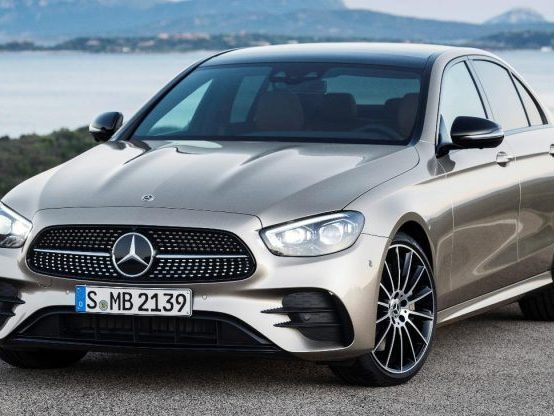
Mercedes-Benz E-Class: Timeless Exterior That Radiates Elegance
Kevin WongMay 12, 2025
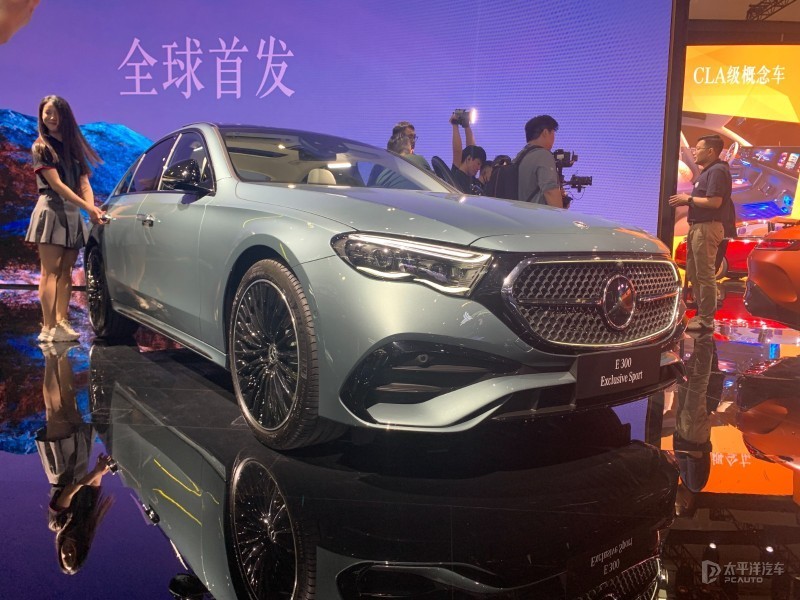
2024 Beijing Auto Show: Mercedes-Benz E-Class Standard Wheelbase Version Priced from 459,200 RMB
AshleyApr 28, 2024
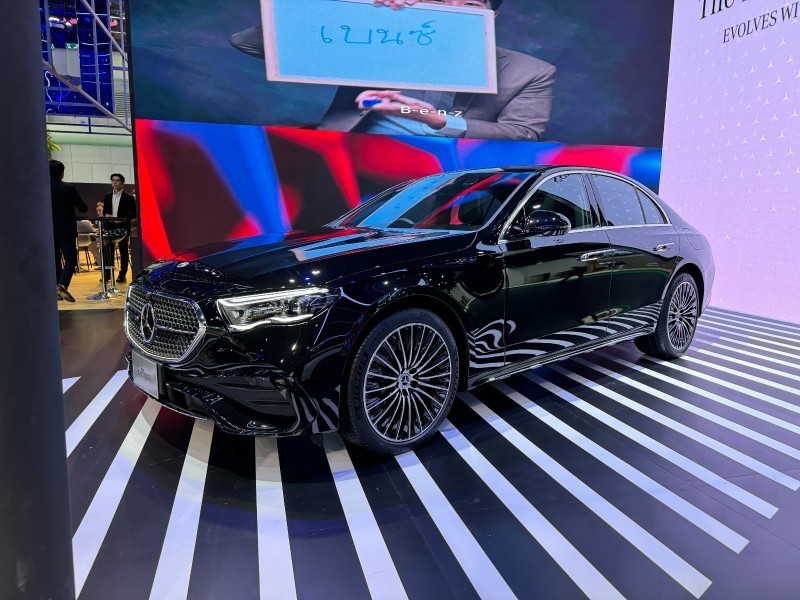
Bangkok Motor Show 2024: New Mercedes-Benz E-Class launched, priced at 3,990,000-4,250,000 Thai Baht
Kevin WongMar 27, 2024

Mercedes-Benz halts the launch of L3-level autonomous driving, reverting to L2+ level
LienJan 16, 2026
View More
Pros
Cons