
2025 Toyota Camry Test Drive: Quieter Cabin, More Enjoyable Driving!
 JohnJun 20, 2025, 12:00 PM
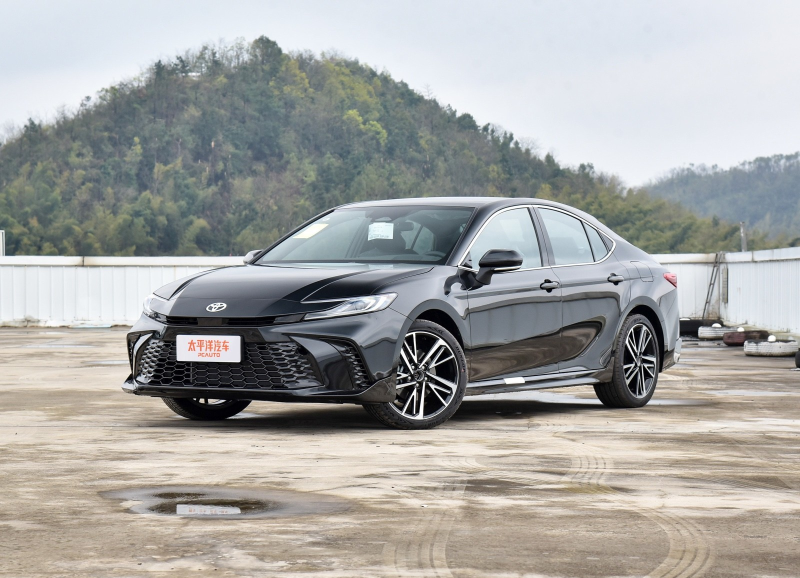
【PCauto】Although the 2025 Camry may appear similar in profile to its eighth-generation predecessor, its internal improvements are substantial. Take the 2025 Camry equipped with the 2.5L Dynamic Force engine as an example: its NVH (Noise, Vibration, and Harshness) performance has been improved, its chassis feels more like a German car, full of driving pleasure.
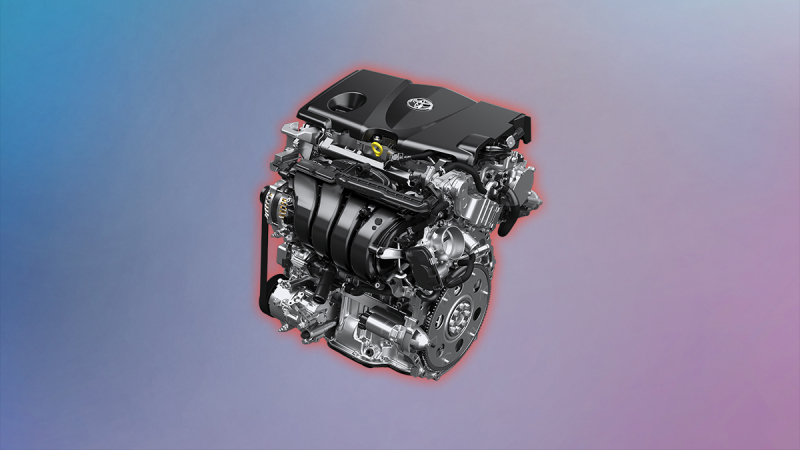
A25A-FKS 2.5L Engine Delivers Exceptional Smoothness
The powertrain delivers its maximum output of 150kW/204PS at 6,600rpm, with a torque plateau of 246N·m spanning 4,200-5,000rpm. What impresses most about its powertrain is not its explosiveness but smoothness. During the initial acceleration phase, the throttle responds promptly but without being jerky, while as the RPM climbs, the power is released in a predictable and linear manner.
The Direct Shift 8AT transmission shifts gears seamlessly, especially in medium- and low-speed ranges where gear changes are almost imperceptible. While downshifts under hard acceleration lack the immediacy of performance cars, the steering-wheel-mounted paddles still provide adequate control.
Real-world test reveals excellent figures for a family sedan: 0-100km/h in 8.9 seconds and a top speed of 210km/h. The most notable difference between 2025 Camry and hybrid version lies in its high-speed acceleration capabilities: when the speed exceeds 90km/h, the engine still provides ample power, eliminating the need for forced downshifts when overtaking. However, such performance is achieved at the cost of fuel economy: the official 6.6L/100km is difficult to be achieved in urban driving, with real-world combined consumption around 9L/100km (with the air conditioner running).
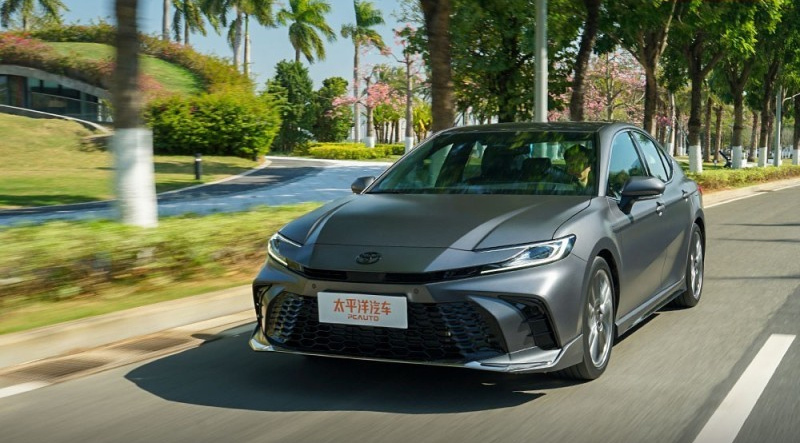
Quieter Cabin, German Cars-like Driving Experience
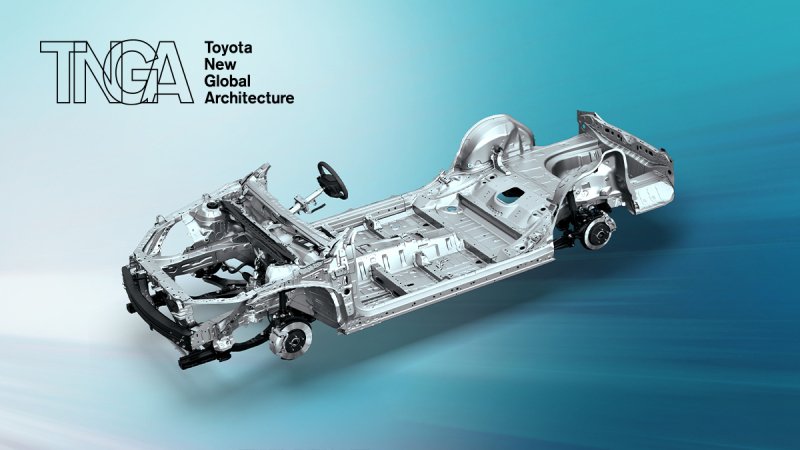
The chassis retains the TNGA-K platform's MacPherson strut front and double-wishbone rear configuration, but the 2025 Camry introduces several refinements over its predecessor. These include retuned front MacPherson struts and a improved multi-link rear suspension that deliver more excellent vibration absorption, particularly on rough roads. Engineers also enhanced chassis rigidity through increased use of high-strength steel and optimized welding techniques, contributing to greater torsional stiffness for improved high-speed stability and reduced body roll during cornering. Additionally, the electric power steering (EPS) system's responsiveness has been upgraded, offering more precise and linear steering feedback—light at low speeds and weighted at high speeds—elevating the driving experience to near-luxury standards.
On the road, the suspension proves remarkably capable of swiftly absorbing the impacts of speed bump efficiently. While moderate body lean appears during aggressive cornering, the chassis maintains stable, with stiff aligning torque. Particularly impressive is the suspension's sophisticated handling of undulating road, where the shock absorber damping effectively manages excessive bouncing.

2025 Camry adopts standard 18-inch wheels with 235/45 R18 tires (as opposed to the sport trim's 19-inch low-profile setup), which is a practical choice, delivering noticeably better road noise suppression than higher trims. Combined with insulation materials in the engine bay and front acoustic glass, the clarity of conversations inside the car at 80 km/h cruising speeds is significantly improved over the previous generation. 2025 Camry's resilient chassis and quiet cabin experience create a sense like driving a German car. Although the engine's pronounced high-RPM growl during hard acceleration remains noticeable—which remains within a reasonable range for a gasoline vehicle.
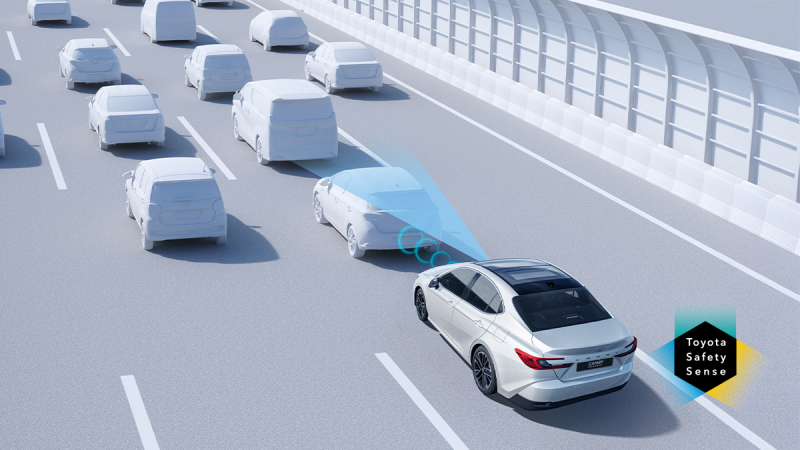
TSS 3.0 Standard Across 2025 Camry Lineup
Toyota's approach deserves high praise, as all its models are equipped with TSS (Toyota Safety Sense). The 2025 Camry features TSS 3.0, with the most significant upgrade from the previous generation being the addition of Emergency Steering Assist to the PCS (Pre-Collision System). When detecting obstacles ahead, it assists the driver by increasing steering force to help avoid the obstacle within the lane.
About the Price
Compared with the 2.5L hybrid variant (starting at approximately RM246,800), the 2.5L gasoline version (priced at RM221,800) saves buyers RM25,000—enough to cover four years of fuel costs. With recent trade-in subsidies from local dealers, the actual purchase price can drop below RM210,000, making this car an appropriate choice for buyers prioritizing reliability and maintenance costs.
If any infringement occurs, please contact us for deletion










Popular Cars
Model Year
Car Compare
Car Photo