
How to improve the power of Suzuki Jimny?
 AshleyNov 27, 2025, 11:02 AM

【PCauto】Suzuki Jimny's charm is undeniable. Lightweight, agile, short wheelbase, and simple structure make it a symbol of pure, unadulterated fun in the off-road world.
However, anyone who has truly driven a Jimny knows that its shortcomings are just as clear - the power of the 1.5L naturally aspirated engine is indeed limited.
The factory power data of the JB74 Jimny is very transparent:
Maximum power: 75 kW (102 hp) @ 6000 rpm
Maximum torque: 130 Nm @ 4000 rpm
While it's sufficient for urban roads or light off-road scenarios, the moment you fit larger tires, carry a load, climb steep slopes, or even when overtaking on the road, you’ll clearly feel that the Jimny has to be pushed to high RPMs to generate power. Torque delivery feels delayed and underwhelming; once engine speed drops, it lacks the low-end thrust to recover momentum promptly.

What changes does this supercharger kit bring to the Jimny?
Precisely because of this shortcoming of the Jimny, Australia's Harrop Engineering presents a highly targeted and engineering-driven solution: the TVS900 supercharger kit.
Compared to those market solutions that only slightly improve power by modifying the intake and exhaust, Harrop provides a complete engineering-level upgrade: including the supercharger itself, intercooler, intake, injectors, and ECU tuning.
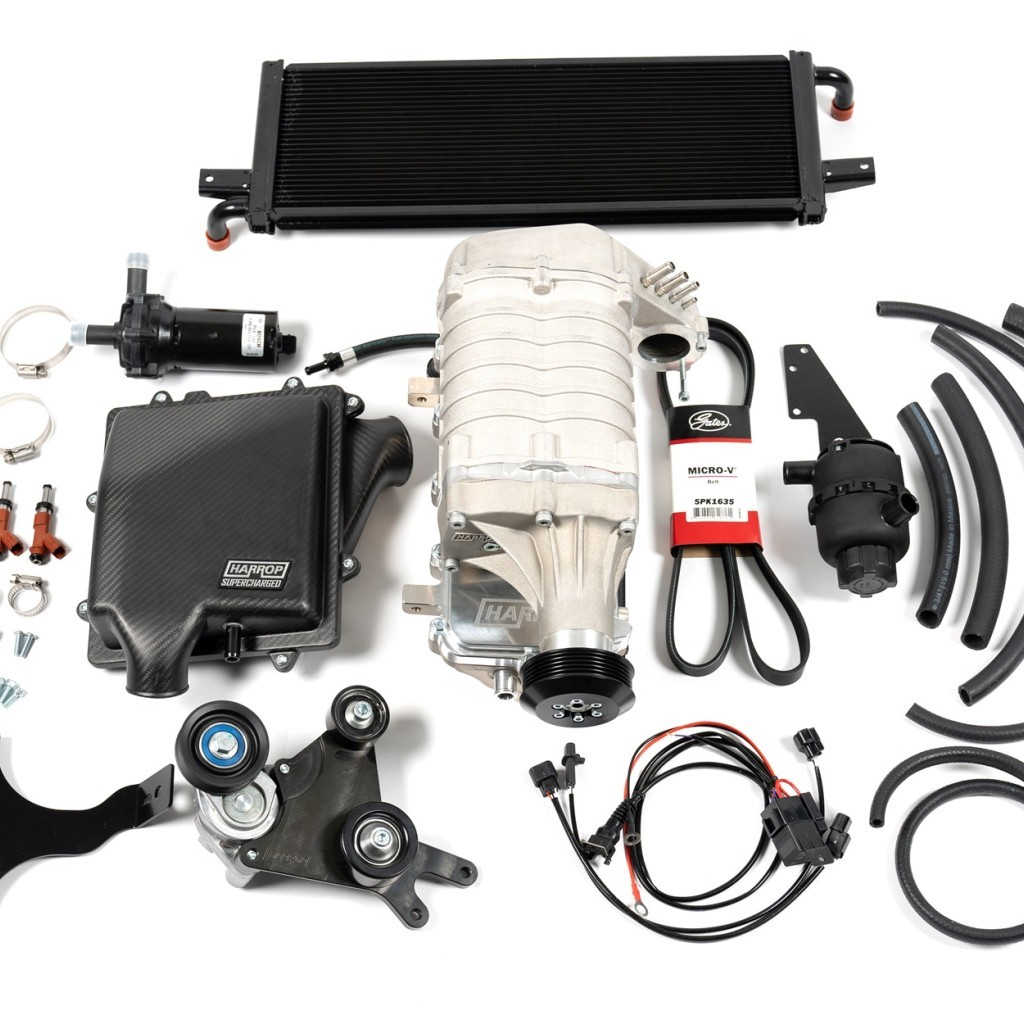
According to Harrop's official Dyno data and publicly available dealer test results, this system provides:
Power increase of up to 59%
Torque increase of up to 42%
Achieving 100–106 kW, 149–168 Nm
More importantly, power is no longer dependent on high RPMs; instead, it builds robustly within the 1500–3500 rpm range, the critical range for off-road driving. As a result, power delivery becomes robust, assertive, and readily on tap.
This translates to 'instant acceleration with a single press of the throttle,' 'particularly strong low-end torque,' and the confidence of 'no longer feeling underpowered after upgrading to larger tires.'
At this point, the Jimny is still the Jimny, but this time, it finally possesses the power to match its rugged appearance and ambitions.

The technology behind the TVS900 explains it all
If it were merely a matter of attaching a supercharger, it wouldn't be possible to achieve such a significant power increase. The real key is the TVS900’s design as a positive displacement supercharger, which perfectly addresses the Jimny’s power shortcomings.
Mechanically driven, no lag
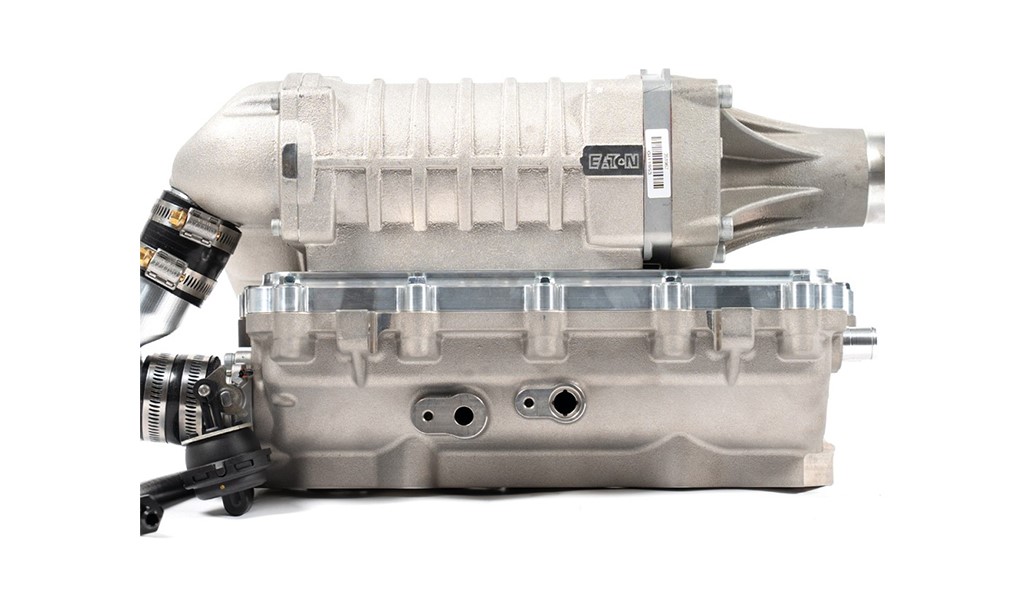
The TVS900 is directly driven by a crankshaft belt. As soon as the engine is running, the boost is generated. Unlike turbochargers that rely on exhaust gases, the TVS900 is mechanically driven by the crankshaft, delivering immediate boost with zero lag.
The result is power being boosted at low RPMs, making it especially suitable for off-road and large tire use cases.
Four-lobe rotors provide stable, high-density airflow
The core technology of the TVS series lies in Eaton’s “four-lobe + twisted” rotor design.
Its advantages include:
· The ability to compress a large volume of air even at low RPM
· High compression efficiency with minimal airflow pulsation
· A more linear and stable torque curve
This also explains why the Jimny becomes lighter and more powerful at low speeds.
Water-cooled intercooler ensures stable boosted air density
During compression, air temperature rises, which reduces its density and potential power output.
The Harrop system incorporates a water-to-air intercooler, an independent cooling radiator, and optimized piping design.
This not only enhances stability in high-temperature conditions but also ensures that the pressurized air maintains low temperature and high density, resulting in consistent and unfading power.
Bypass Valve Management: Fuel-efficient cruising with instant acceleration
When you don't need power (such as during cruising), the system automatically bypasses the compressed air, and the supercharger does not engage. However, as soon as you press the accelerator, the bypass valve quickly closes, and the boost engages immediately.
This operational logic masterfully balances everyday drivability, powerful torque for off-road situations, and long-term engine reliability.
This represents a truly integrated engineering achievement, far beyond merely bolting on a supercharger.
Who is Harrop Engineering?
The Harrop TVS900 supercharger kit is developed by Harrop Engineering, a long-established tuning company headquartered in Victoria, Australia.
Since the 1980s, it has been active in the local high-performance car tuning market. Harrop's track record spans Holden, HSV, Ford FPV, as well as the Australian motorsports and tuning markets.
Decades of experience have allowed Harrop to accumulate advanced engineering capabilities in power enhancement, airflow optimization, and boost and cooling system design.
Harrop operates on a clear design philosophy: even with extreme performance upgrades, the vehicle's original reliability must be preserved.
As a result, they not only pursue peak power but also emphasize a broad, linear, and usable torque curve, as well as overall vehicle reliability and durability.

The official base price for the Harrop TVS900 Supercharger Kit is AU $10,990 (approx. 29,400 MYR).
If you opt for the full-service package including installation and ECU tuning, the price is about AU $13,295, approximately 35,500 MYR.
If any infringement occurs, please contact us for deletion










Popular Cars
Model Year
Car Compare
Car Photo