
Tesla Cybertruck Self-Driving Hits a Street Lamp, Yet the Owner Wants to Thank Tesla
 AshleyFeb 14, 2025, 02:52 PM
【PCauto】Recently, a news story about the Tesla Cybertruck has sparked widespread attention. Jonathan Challinger from Florida shared a harrowing experience on social media: his Cybertruck, while using the Full Self-Driving (FSD) feature (version 13.2.4), crashed directly into a streetlight pole. The vehicle was severely damaged, with the right front wheel axle broken and nearly beyond repair.
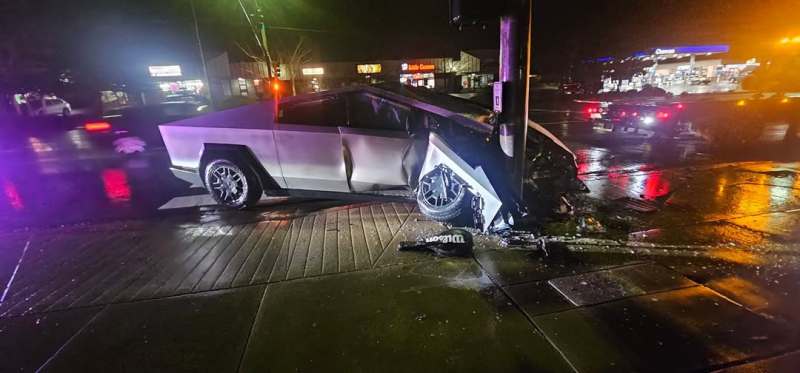
At the time of the accident, Challinger stated that he was driving on an empty road. The vehicle, in autonomous mode, failed to merge out of the lane that was about to end and did not slow down or steer before hitting the curb.
From the photos he shared, the accident occurred at night, and the streetlight pole was in an awkward position near a crosswalk. Although there were arrows on the road indicating that the lane was ending, even a fully attentive human driver might have struggled to merge smoothly before being forced to stop to avoid hitting the pole.
However, what was unexpected was that Challinger did not blame Tesla in his post. Instead, he expressed heartfelt gratitude for its passive safety system. He mentioned that despite the severe damage to the vehicle, he walked away unscathed, entirely thanks to what he called "the best passive safety system in the world" built by Tesla.
Challinger candidly admitted that he had placed too much trust in the autonomous driving feature and was not paying attention, which prevented him from intervening in time. He also revealed that this was not the first time he had let Tesla's autonomous driving take control. In a social media post in January, he had joked that sometimes, after activating autonomous driving, he would even forget where he was going until the car headed to places like Taco Bell, at which point he would realize his mistake. He deeply acknowledged that this accident was a "major error" and recognized his own fault in allowing the autonomous system to operate unsupervised.
The incident quickly sparked heated discussions online. Some found Challinger's attitude puzzling, thinking it was incredible that he thanked Tesla despite the extensive damage to his vehicle. Others questioned Tesla's autonomous driving technology, believing the system should have been able to detect the curb and streetlight pole and react accordingly. However, Challinger remained optimistic in response to the negative comments, stating that his safety was the most important thing and that Tesla's passive safety system had saved him.
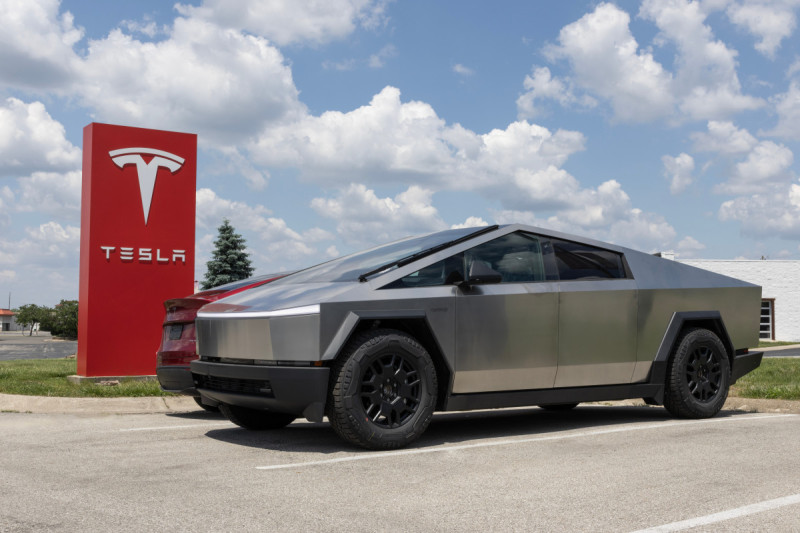
From this incident, several key takeaways emerge. On one hand, despite Tesla CEO Elon Musk's high hopes for FSD technology, claiming it is a significant step toward unsupervised autonomous driving, it is clear that unsupervised FSD is far from being realized.
Even with autonomous driving capabilities, drivers must remain vigilant, always monitoring the road and ready to take control of the vehicle. On the other hand, Tesla's passive safety system played a crucial role in this accident, protecting the driver's life, which has earned high praise from the owner.
This Tesla Cybertruck autonomous driving crash serves as a wake-up call for both users and developers of autonomous driving technology: while the technology is advancing, it is not yet fully reliable. The core of safe driving remains the driver's focus and responsibility.
If any infringement occurs, please contact us for deletion



Popular Cars
Model Year
Car Compare
Car Photo