
Tesla Disbands Dojo Team, Musk Confirms Dojo Technology Will Continue
 RobertAug 13, 2025, 11:28 AM
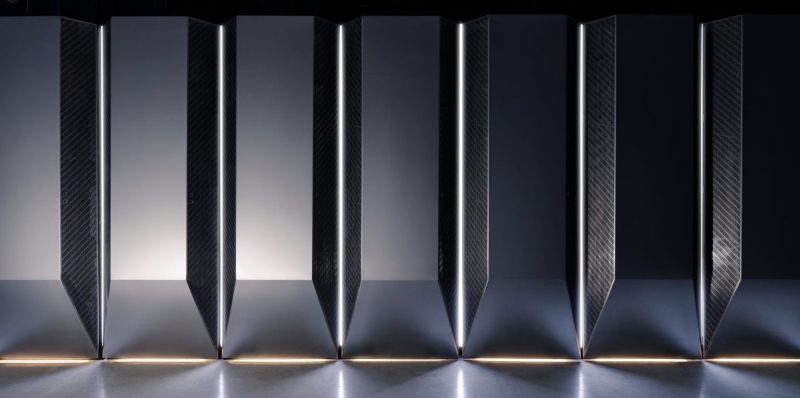
[PCauto]Dojo is Tesla’s in-house supercomputer system specifically designed for artificial intelligence training. However, the team responsible for the system was recently disbanded by Tesla, and the project leader Peter Bannon has also departed.
According to reports, around 20 core members of the Dojo team have joined a new company, DensityAI, founded by former project lead Ganesh Venkataramanan, while the remaining staff have been reassigned to other Tesla data center projects.
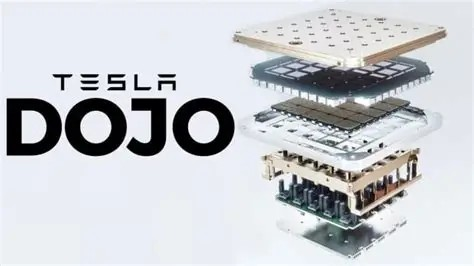
What is Dojo?
Dojo is designed to efficiently process the massive amounts of visual data generated by Tesla’s autonomous driving systems, accelerating the training iterations of neural network models.
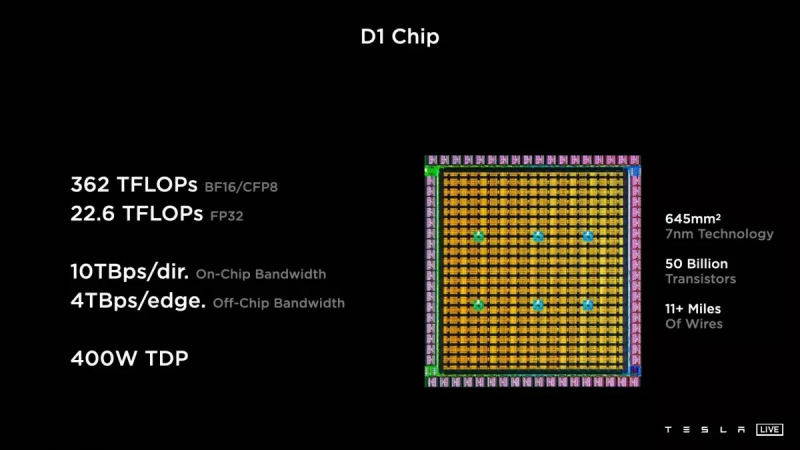
It uses Tesla’s custom-designed D1 chip as the computing unit. Each D1 chip is built from 354 training nodes, and 25 D1 chips are integrated into a single training tile using System-on-Wafer (SoW) technology, forming the basic computational module.
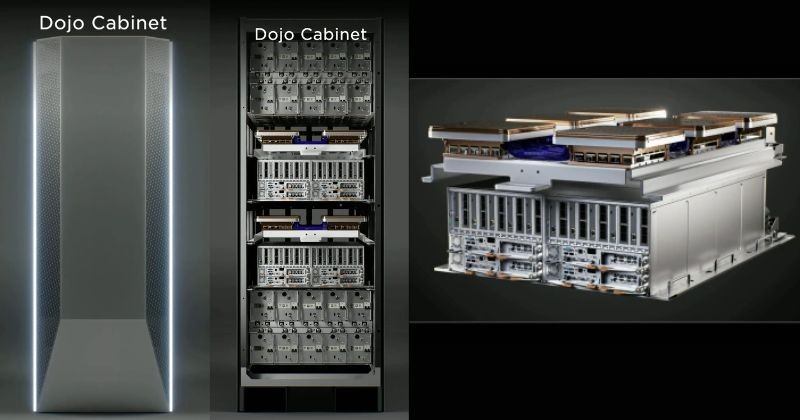
Compared with traditional GPU clusters, this innovative architecture delivers four times the performance at the same cost, achieves 1.3 times higher efficiency at the same power consumption, and reduces floor space requirements by 80%.
Dojo is specifically optimized for processing the video data required by autonomous driving. Through customized communication protocols and compiler technologies, it significantly reduces data transfer losses during multi-chip coordination, lowering the latency of 25-chip collaborative operations by a factor of 30 compared to conventional solutions.
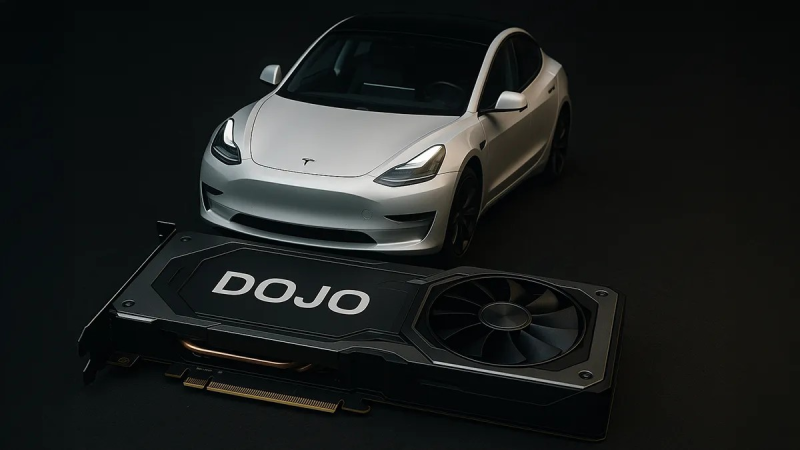
The system continues to drive the evolution of Tesla’s Full Self-Driving (FSD) technology toward Level 5 autonomy. Beyond the automotive sector, Dojo’s technological framework can be extended to AI applications that rely on visual inputs, such as robotics and medical imaging analysis. Morgan Stanley has estimated its potential commercial value could create an incremental market capitalization of up to $500 billion.
Musk Sees No Future for Dojo 2 Architecture
Tesla CEO Elon Musk stated on social media that, with all technological paths pointing toward the AI6 chip, continuing the development of the Dojo 2 architecture has become an “evolutionary dead end.” Rather than simultaneously developing two different AI chip architectures (the Dojo D2 chip and AI5/AI6 chips), he suggested it is better to concentrate resources on a single, more promising architecture.
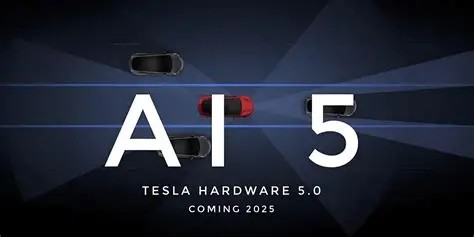
The termination of the Dojo project does not mean a complete abandonment of the related technology. Musk believes that integrating multiple AI6 chips onto a single board can be seen as a continuation of “Dojo 3.” The new-generation AI6 chip is designed to support both in-vehicle inference and large-scale AI training, and this integrated approach could deliver significant performance improvements.
However, even with Musk’s vision, the fate of the $500 million Dojo factory in New York has become uncertain. Originally intended to support Dojo supercomputer production, the facility’s future use will largely depend on Tesla’s ultimate technological path, and it could potentially be repurposed for manufacturing next-generation AI chips.
A Strategic Shift Amid Multiple Challenges
Tesla’s AI strategy will increasingly rely on the combination of its vehicle data collection capabilities and chip design expertise. Leveraging real-time data collected from millions of Tesla vehicles in operation, together with hardware architectures optimized for AI tasks, the company continues to maintain a unique advantage in the autonomous driving race.
At the same time, Tesla faces multiple challenges: slowing EV sales, recurring issues in its robotaxi pilot projects, and an intensifying battle for AI talent. These factors compel Tesla to allocate R&D resources more carefully. Concentrating AI talent on the most promising projects is clearly a strategic response to these pressures.
If any infringement occurs, please contact us for deletion









Popular Cars
Model Year
Car Compare
Car Photo