
Toyota IMV Origin is an unfinished vehicle, born for those who need it most around the world.
 JamesDec 09, 2025, 05:40 PM
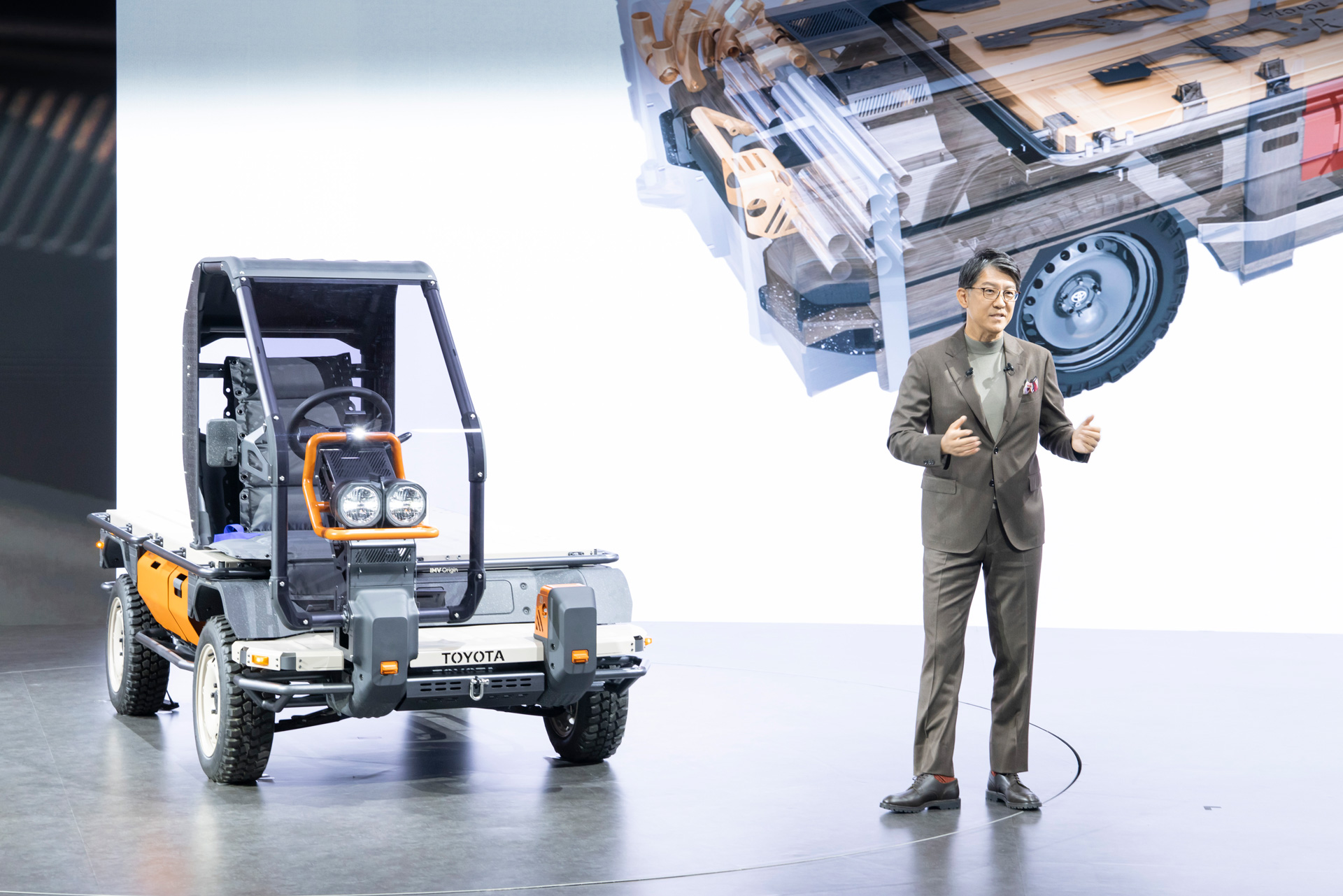
【PCauto】At this year's Japan Mobility Show (2025), Toyota quietly unveiled a product that appears simple but may have the most groundbreaking potential - the Toyota IMV Origin.
This small, extremely simplified flatbed multifunctional vehicle was designed specifically for rural Africa, as explicitly stated by Toyota’s president Koji Sato. Its value lies not in appearance or technology, but in its design philosophy of "deliberate incompleteness."
At the press conference, President Koji Sato explained that the IMV Origin concept stems from two core ideas. Firstly, this vehicle will leave the factory in an unfinished state, with the final assembly to be completed by local residents.
This approach not only reduces production and transportation complexity but also creates local job opportunities, integrating the vehicle into the development of community industries.
The second idea is even more revolutionary: the ultimate definition of the vehicle lies in the hands of the users, not the manufacturer. Toyota only provides the basic chassis and structure. From there, users can modify the vehicle based on their own work and life needs, making the car truly a tool "born for you."

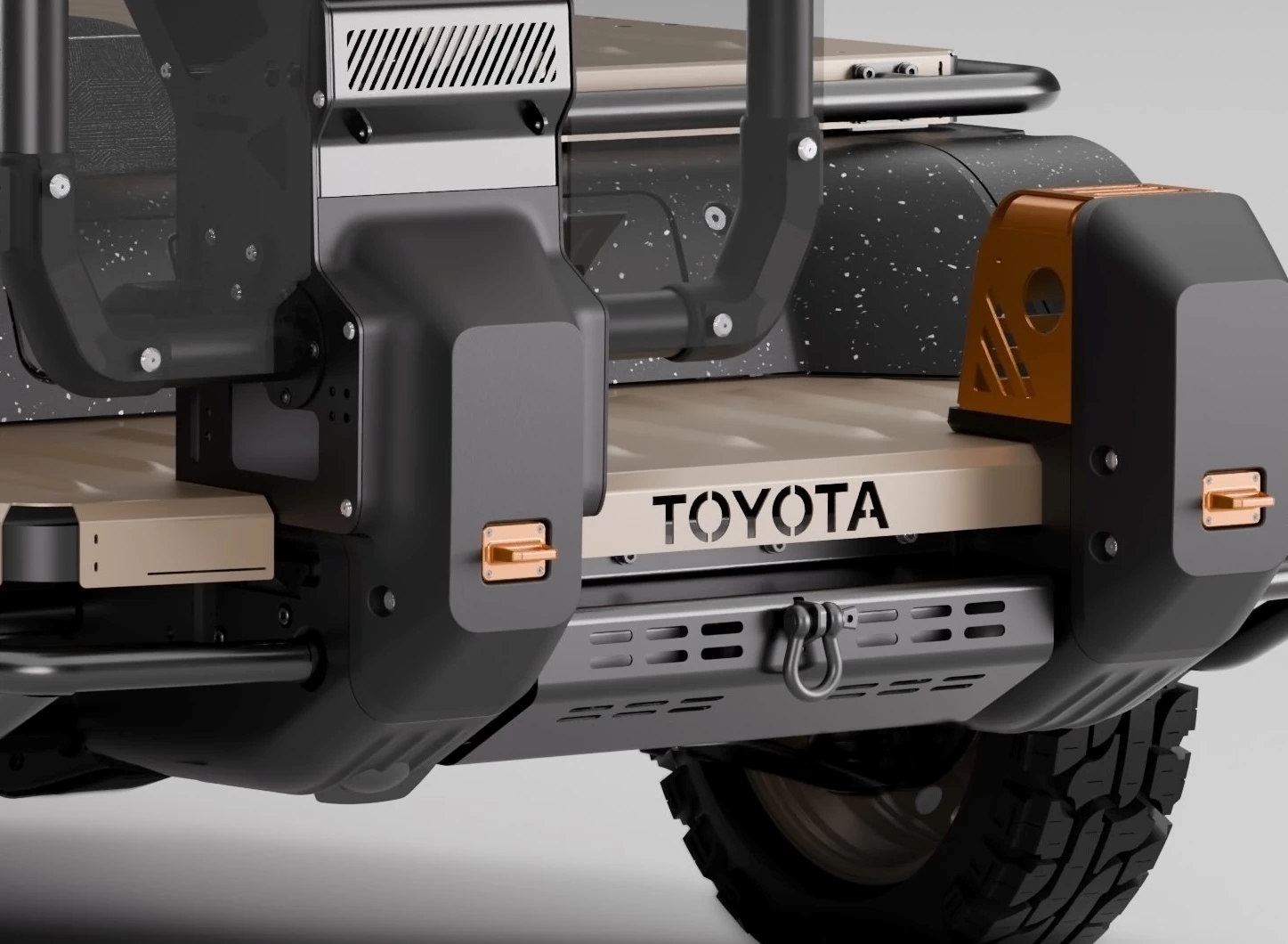
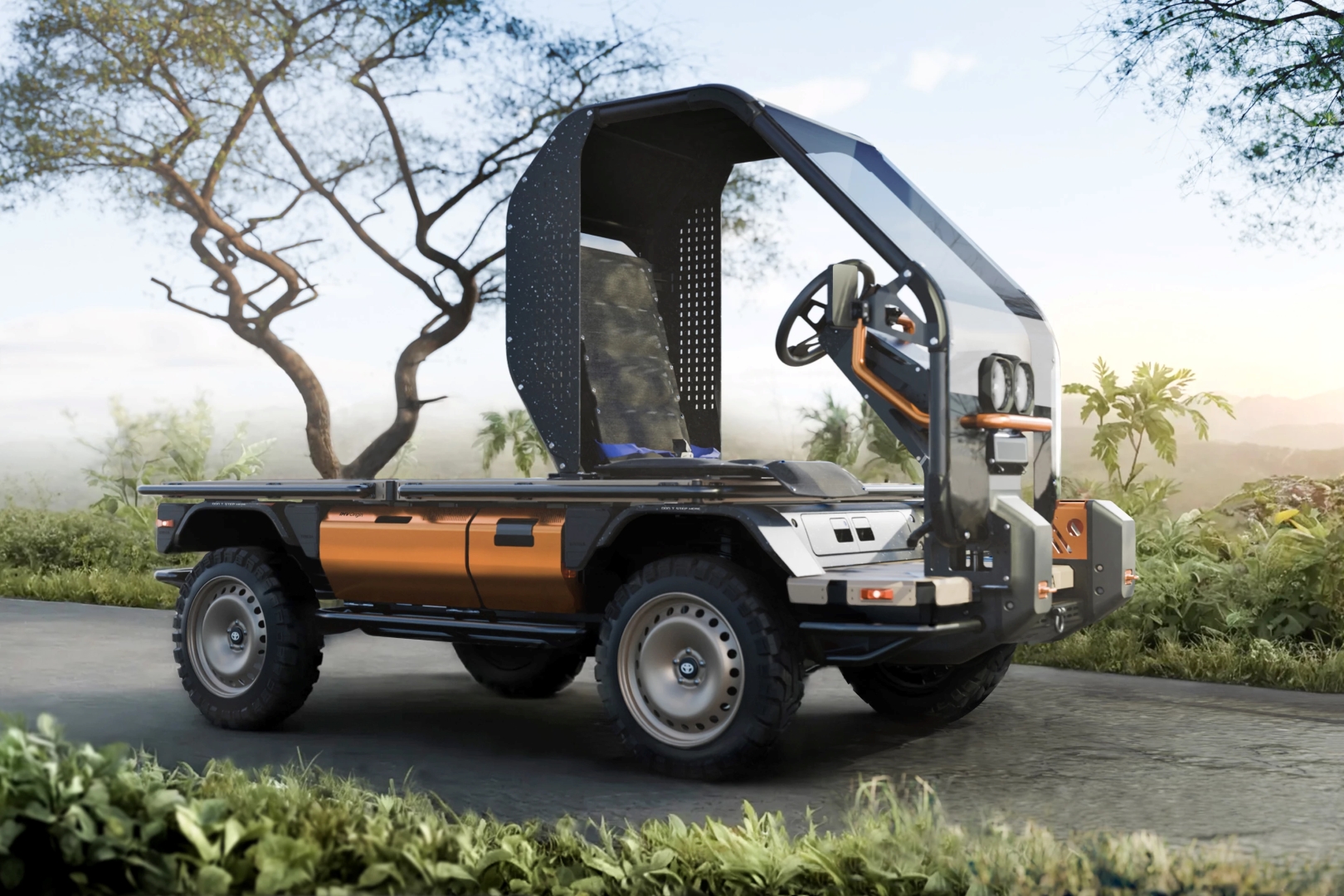
True to its "unfinished" concept, the IMV Origin doesn't resemble a traditional truck; it resembles more of an industrial transport vehicle made up of a bare frame.
Its design originates from Toyota's long-used IMV platform (Innovative International Multi-purpose Vehicle), but this time Toyota has gone a step further, simplifying the vehicle into a blank canvas capable of infinite expansion.
Like flat-pack furniture, the IMV Origin is shipped in a box to local areas, where users can assemble it themselves using manufacturer-provided tools and instructions. This process may even involve local craftsmen, thereby fostering local industry growth.

Compared to the 2022 IMV 0 concept, the IMV Origin can be seen as a step back — or a step further toward a purer modular canvas.
At the press conference, Toyota showcased several possibilities: adding a cargo box transforms it into an agricultural product transportation vehicle, while equipping it with logging tools turns it into a forestry truck.
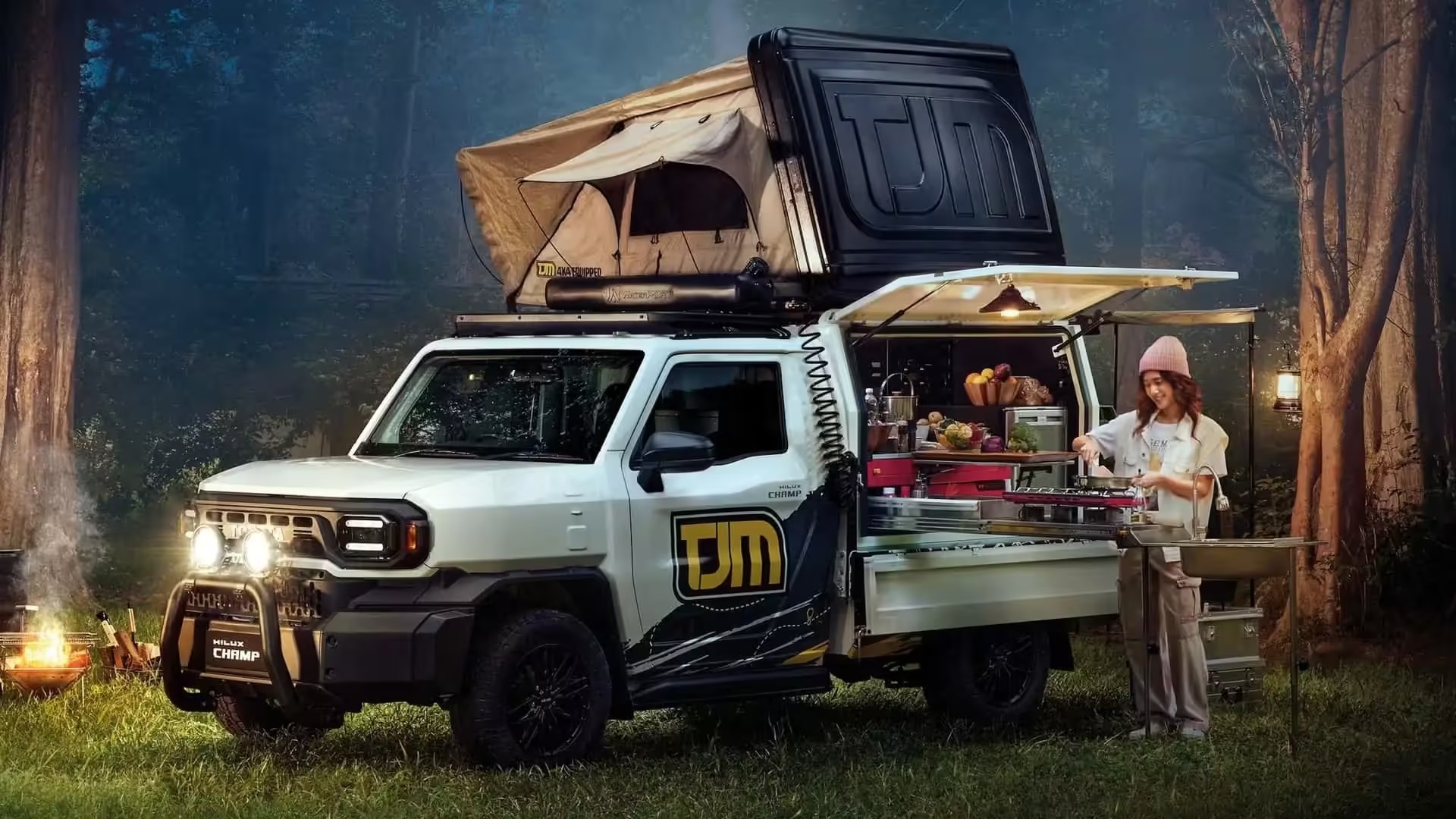
However, this is just the tip of the iceberg. When the IMV 0 evolved into the Hilux Champ in Thailand, local modification shops quickly developed into a variety of adaptations, including camper vans, food trucks, delivery vehicles, expandable cargo trucks, and more. In Indonesia, Toyota even hosted a design competition to inspire local industries to create fire trucks, tactical vehicles, agricultural transport, and even RVs. The open structure of the IMV Origin has the theoretical potential to stimulate an even broader market ecosystem.
If the IMV 0 is a highly modular small pickup truck, then the IMV Origin is an almost unrestricted creative platform.
It can be transformed into a two-seater cockpit or enclosed into a secure commercial vehicle; it can also be equipped with a high cargo bed, tailgate, and side panels to become a standard logistics vehicle.
It can even be built into a micro RV, an off-road camping vehicle, or a specialized vehicle tailored to local needs. From agriculture, forestry, and fishing to rural logistics and public services, the potential of IMV Origin is almost limitless.

Sato also acknowledged that, from a manufacturer's perspective, "not completing a vehicle" is highly unusual and even frustrating, but it is precisely this "incompleteness" that makes it a vehicle truly belonging to its users.
He stated, "People need different tools in their daily lives and work. What we need to do is return control of the vehicle to them."

The introduction of IMV Origin not only challenges the industry logic of cars being "fully manufactured," but it could also become a new strategic tool for Toyota to support transportation in developing regions.
If it progresses from concept to mass production, the IMV Origin will be more than a vehicle — it will be a platform and an ecosystem capable of creating jobs, strengthening local manufacturing, promoting SME growth, and providing low-cost transportation solutions.
If any infringement occurs, please contact us for deletion










Popular Cars
Model Year
Car Compare
Car Photo