

2023 Toyota Yaris 1.5G Review

 Share
Share
 Segment
 Body Type
 Capacity(L)
 Engine Power(PS)
 Transmission
 Driven Wheels
The B-segment hatchback market has always been a popular choice for young families and commuters in Malaysia. It needs to balance daily commuting affordability with configurations and safety. While the options are not limited, truly well-balanced models are relatively scarce. The 2023 Toyota Yaris 1.5G, a regular in this segment, now comes equipped with standard safety features across the board, such as 7 airbags and a 360-degree parking camera, and is priced at under RM100,000. This has many consumers wondering if it can maintain its reliability while meeting modern configuration demands. This time, we got a test car to evaluate its static practicality, driving dynamics, and whether these features actually improve everyday usability.
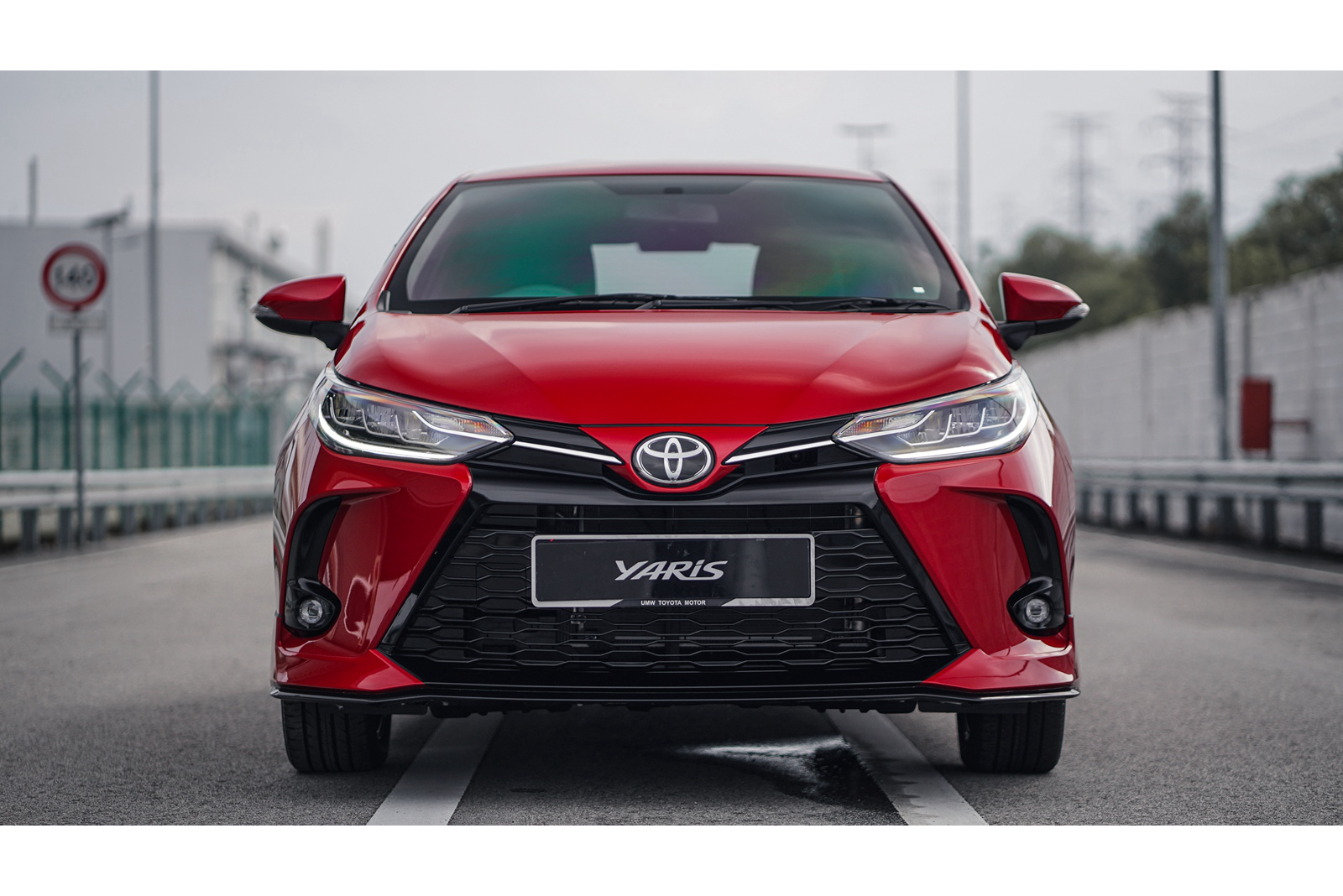
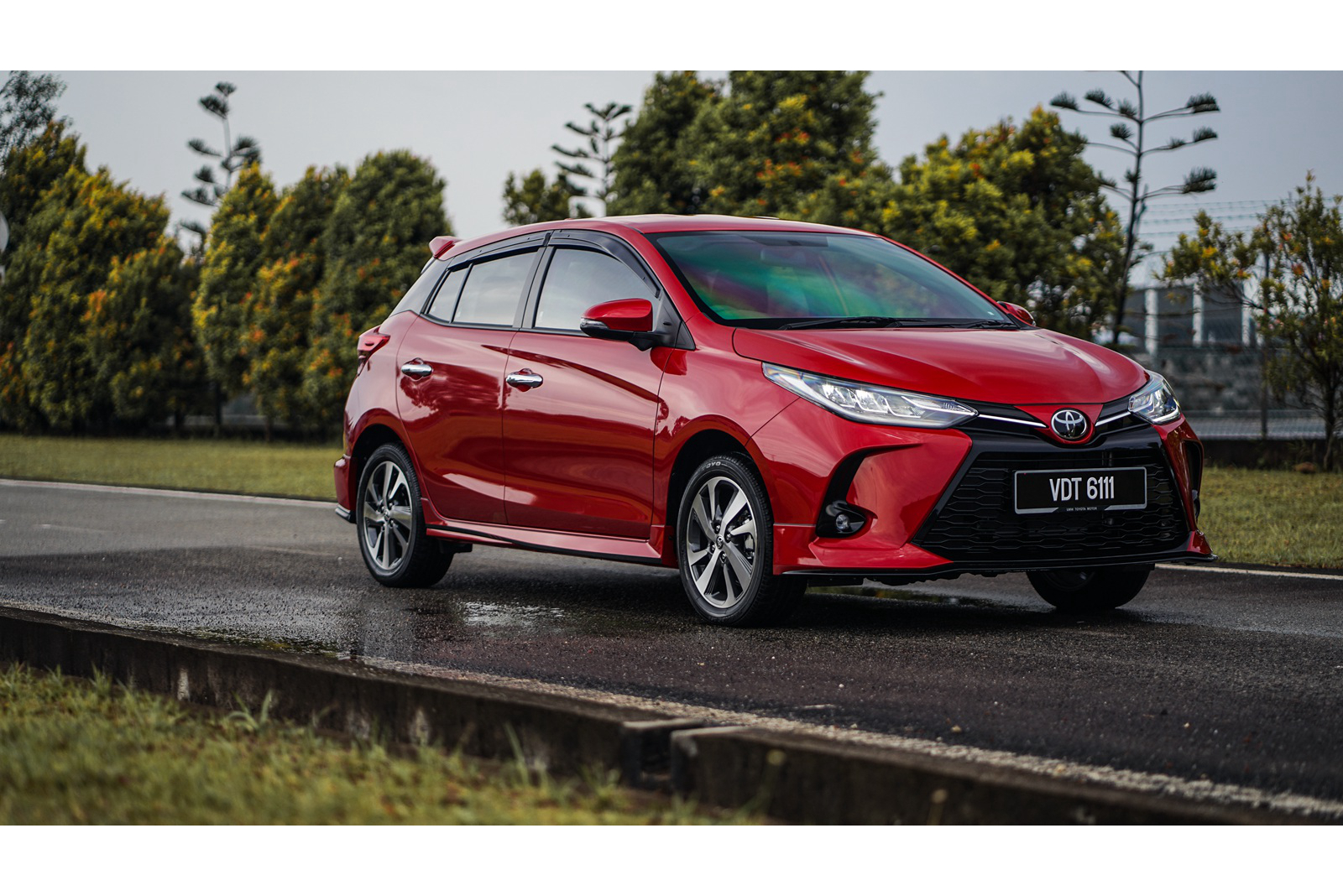
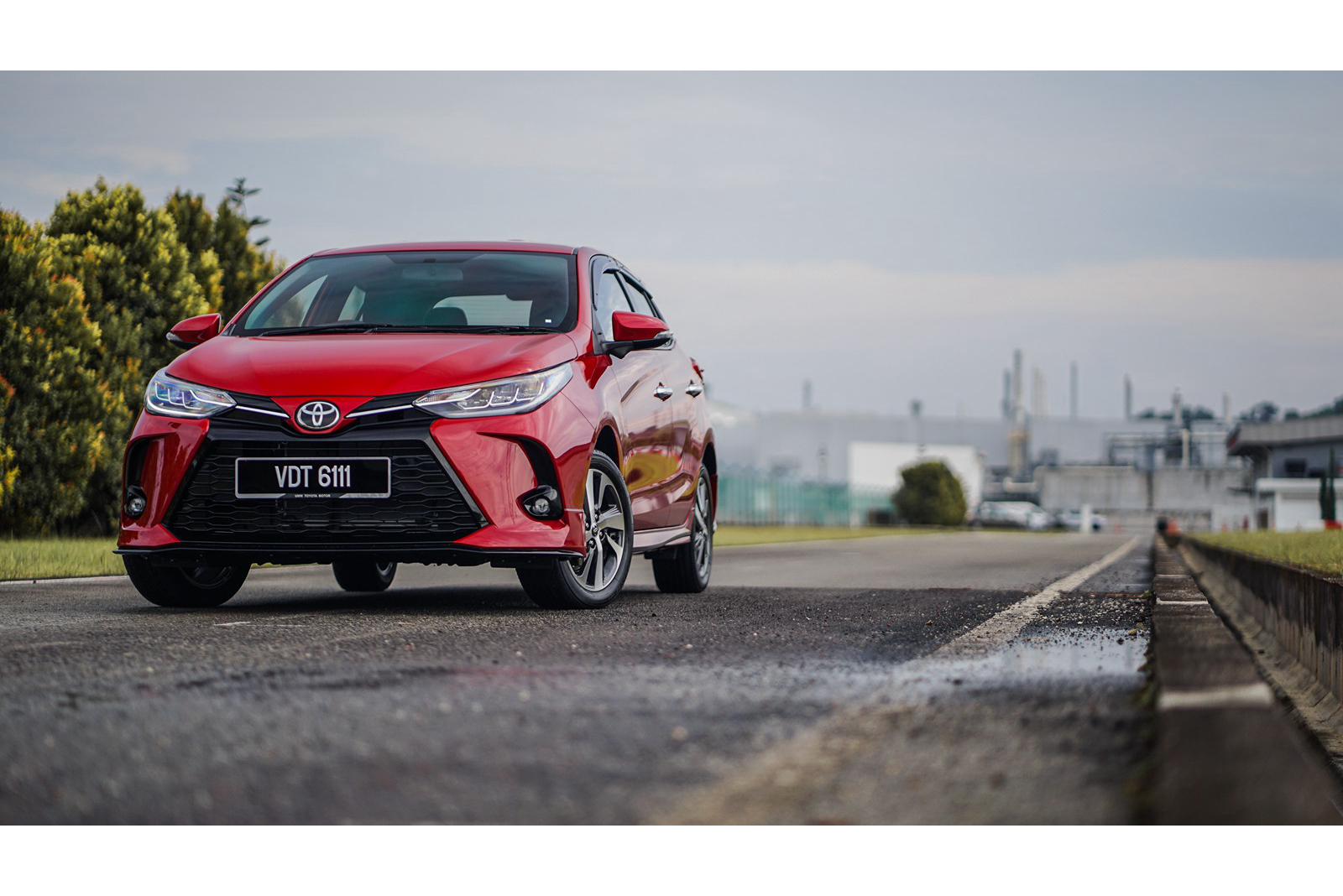
The exterior of the 2023 Yaris 1.5G retains Toyota's family design language, with overall smooth lines avoiding overly aggressive edges. The front end features a honeycomb-patterned upper grille with a Toyota logo embedded in the center. The lower bumper houses a relatively large air intake, complemented by black decorative pieces on either side. The standard LED headlights and daytime running lights enhance its recognizability. The body side features a waistline running from the front to the rear, while the 16-inch wheels have a relatively standard design with 195/50 R16 tire specifications typical for this segment. The rear design is quite simplistic, with horizontally arranged LED taillights providing clear illumination. The black trim on the rear bumper and concealed exhaust layout make the rear look cleaner. Generally, the exterior avoids overly flashy designs, but it's visually appealing and aligns with most family users' aesthetics.
Opening the door, the interior layout emphasizes practicality. The center console tilts slightly toward the driver, making operations convenient. The 9-inch touchscreen at the center supports touch operations, with a clear interface logic and decent response speed. The standard Sound Plus system with six speakers offers above-average sound quality for this segment. The instrument cluster features an Electroluminescent Analogue design, displaying detailed information such as RPM, speed, and fuel consumption, which are easy to read. In terms of materials, the upper section of the dashboard is covered with soft plastic, while the lower section uses hard plastic. However, the seams between these materials are well-controlled, avoiding an obvious cheap feel. Configuration-wise, keyless entry, push-button start, and single-zone automatic air conditioning are standard. The front row also provides a 220V/230V power outlet, which is practical for users needing to connect external devices.
In terms of space, the Yaris 1.5G has a wheelbase of 2550mm, typical for the B-segment. The front seats are manually adjustable, with moderate cushion length and decent back support. A passenger with a height of 175cm sitting in the front row has about a fist's worth of headroom and ample legroom. The rear space is standard; a passenger of the same height sitting in the back row has about four fingers of headroom and a fist plus two fingers of legroom. While not overly spacious, it's perfectly adequate for daily family use. The trunk has a capacity of 286L, which can easily accommodate a few suitcases or shopping bags. The rear seats support a 60:40 split-folding configuration, allowing for a greater storage area when folded down, enhancing its practicality. For storage compartments, both the front and rear door panels feature bottle holders and storage slots, while the central armrest box offers considerable storage space for small items.
Powertrain-wise, the Yaris 1.5G is equipped with a 1.5L naturally aspirated engine, delivering a maximum horsepower of 107PS and a peak torque of 140N·m (Note: Based on the displacement and parameters, as the torque is not specified in the original text, this is a supplement of common data for the same engine model), paired with a CVT transmission. The power response during startup is relatively smooth, with no obvious jerks. The throttle pedal is tuned to be light and easy to press, making city commuting quite effortless. During acceleration, the performance of the CVT transmission is decent; although it lacks the shifting feel of AT transmissions, the acceleration process is relatively linear. Once the speed exceeds 80km/h, the power reserve for further acceleration is not particularly abundant, and significant thrust requires a deeper press on the pedal. When cruising at high speeds, the engine speed is maintained around 2000rpm. Noise is well-controlled, and there is no noticeable engine roar.
In terms of handling, the steering wheel of the Yaris 1.5G is relatively light with a fairly precise response, making it very maneuverable during U-turns or parking in the city. The suspension system adopts a front MacPherson independent suspension and a rear torsion beam non-independent suspension (Note: This is a common configuration for the same platform; the original text did not specify the rear suspension, so this is supplemental information). The tuning leans toward comfort, and minor bumps on the road are filtered out quite effectively. While crossing speed bumps, there is slight vibration, but it does not feel uncomfortable. During cornering, body roll is well-controlled, and the suspension's support is sufficient to handle everyday curve driving, giving an overall stable performance. Regarding braking, the front ventilated disc and rear disc brake combination deliver a linear braking effect. The brake pedal feels moderate, and during emergency braking, the vehicle remains stable with no noticeable nose-diving effect.
Safety features are a significant highlight of the Yaris 1.5G. The entire series comes standard with 7 airbags, including a driver’s knee airbag and front and rear head curtain airbags, which is quite generous within the same class. In terms of active safety features, ABS anti-lock braking, vehicle stability control, lane departure warning, active braking, and blind-spot monitoring are all standard. The 360-degree parking camera system paired with front and rear parking sensors is user-friendly, especially for new drivers, significantly reducing the difficulty of parking. Regarding fuel consumption, the official combined fuel economy is 7L/100km. During our test drive, with an equal split between urban and highway driving, the actual fuel consumption was roughly 7.5L/100km. Considering the congested urban traffic conditions, this fuel economy performance is quite decent.
In terms of driving comfort, the Yaris 1.5G features soft seat padding that remains comfortable even during long journeys. In terms of noise control, while driving in the city, tire and wind noises are not particularly noticeable. At higher speeds, wind noise becomes slightly more prominent but remains within an acceptable range. The air conditioning system offers excellent cooling performance, and the single-zone automatic air conditioning can quickly lower the cabin temperature. Additionally, rear passengers are taken care of with rear air vents.
In summary, the 2023 Toyota Yaris 1.5G is a well-rounded compact hatchback with rich safety features, practical interior space, smooth power delivery, and fuel efficiency. It is very suitable for daily family use. Compared with competitors in the same segment, the Yaris 1.5G stands out with its safety features, offering 7 airbags and a complete set of active safety systems, which are rare at this price point. Combined with Toyota's consistent reliability, it is an excellent choice for families prioritizing safety and practicality. If you are a young family or a commuter in need of an economical, practical, and well-equipped vehicle for daily use, the Yaris 1.5G is worth considering.
Toyota Yaris Car Compare
Toyota Yaris Loan Calculator
More Toyota Reviews
Cars With Similar Price And Features
4
Rank in Hatchback
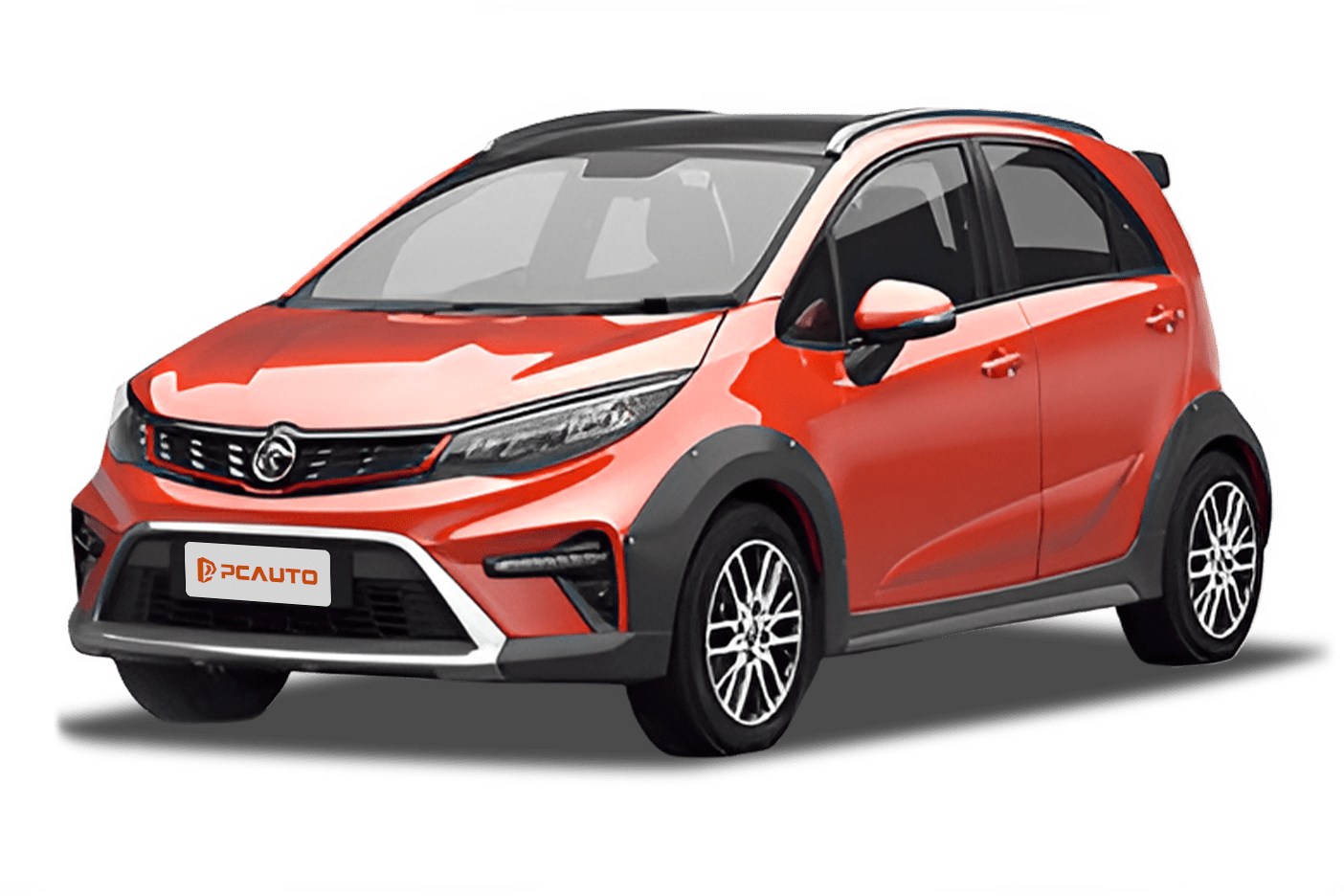
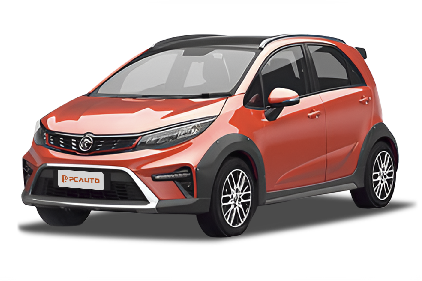
2023 Proton Iriz 1.3 Standard CVT is an affordable, well-balanced entry-level B-segment hatchback with safety features, suitable for budget-conscious families focusing on safety and practicality for daily commuting.
2
Rank in Hatchback

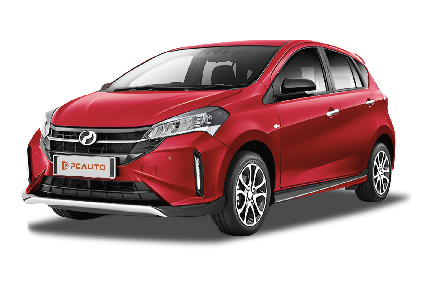
2023 Perodua Myvi 1.3 G with PSDA is an affordable B-segment hatchback, combining practical space, basic features, and PSDA safety assistance, suitable for family commuting.

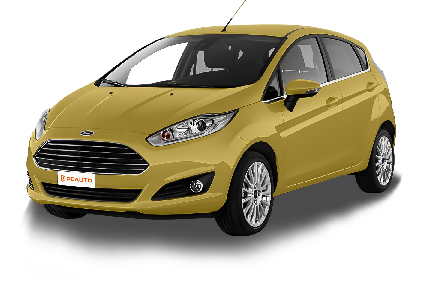
2022 Ford Fiesta public is a B-Segment model with responsive power, economical fuel consumption, and rich safety features, suitable for young families or individual users who prioritize driving experience and safety.
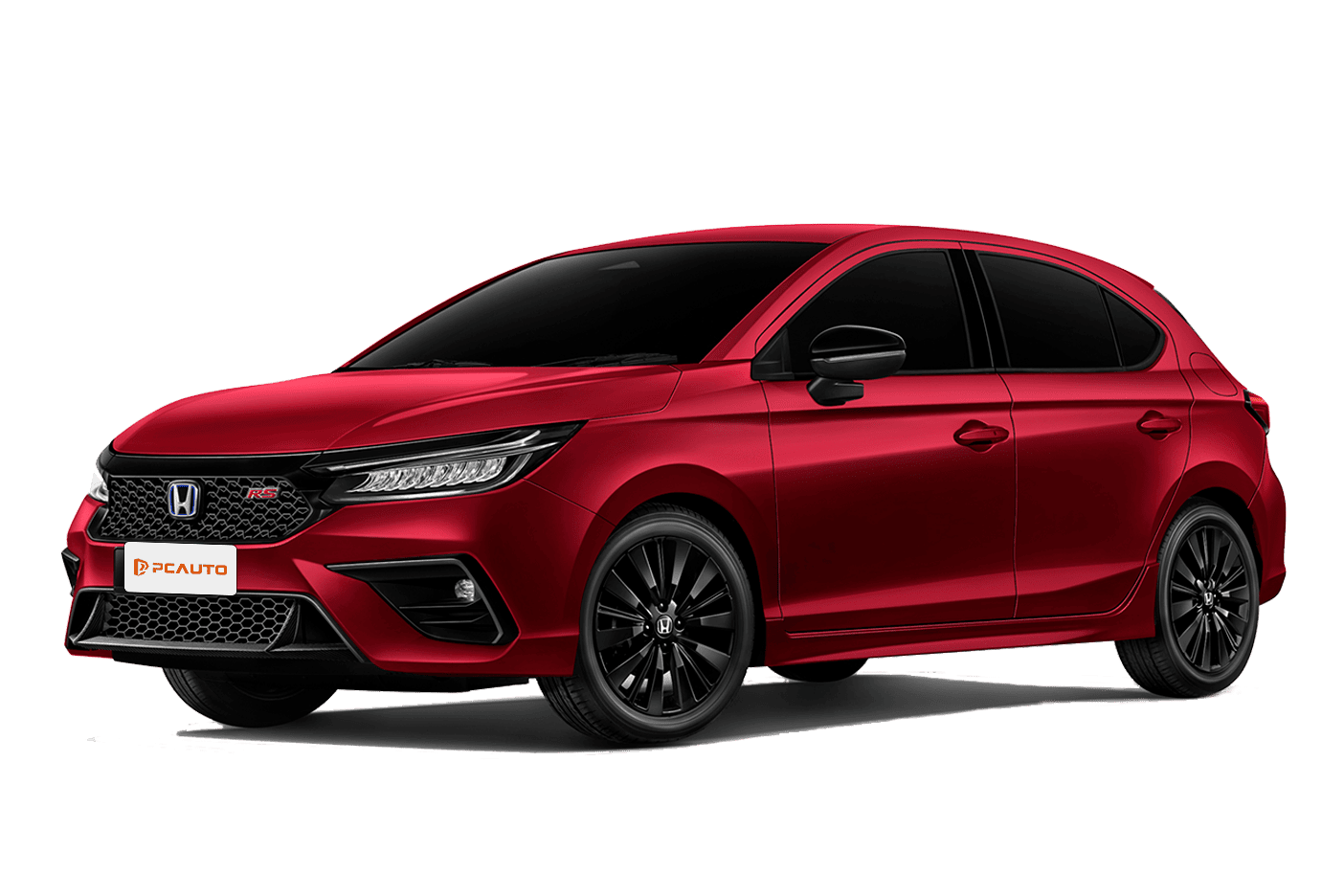
2024 Honda City Hatchback 1.5 S, as a high-value entry-level hatchback, comes standard with Honda Sensing and 6 airbags, offering practical space, economical fuel consumption, and balancing safety with daily commuting needs.