

Ferrari F8 Spider Review

 Share
Share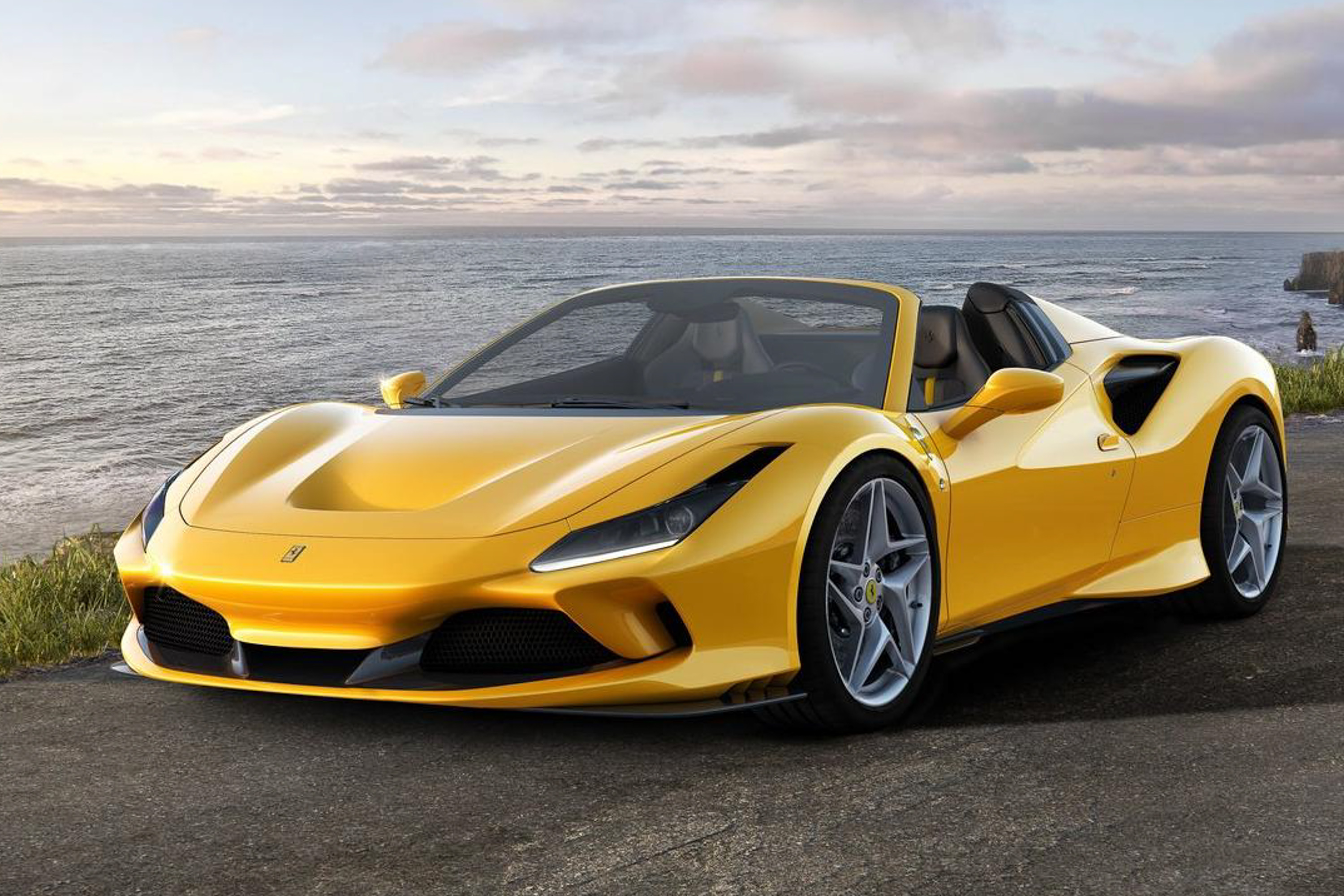
 Segment
 Body Type
 Capacity(L)
 Engine Power(PS)
 Transmission
 Engine Torque(Nm)
In the Malaysian supercar market, the options for convertible performance cars under 2 million Ringgit are not plenty, but there is always a demand from consumers for models that can serve as both daily drivers and adrenaline-filled track beasts — after all, the sunny climate is ideal for driving a convertible through cities or along coastal highways. The 2020 Ferrari F8 Spider aims at this particular market segment. It not only inherits the 720 horsepower of the F8 Tributo but also comes equipped with a hardtop convertible mechanism, focusing on being a "track-level convertible supercar suitable for daily use." This time, we got a test drive vehicle to verify whether it truly balances performance and daily practicality, rather than just being a "toy car" for occasional fun.
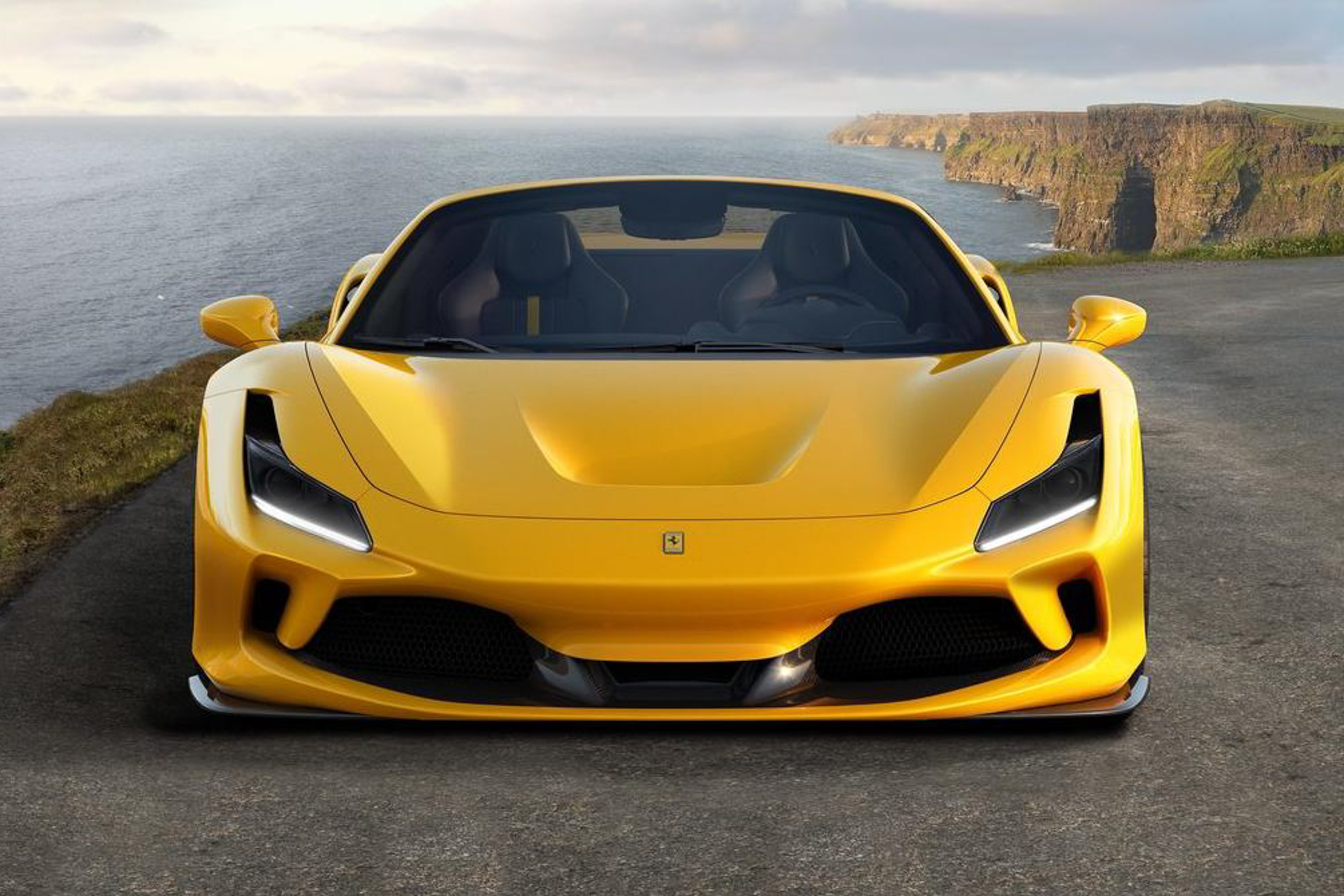
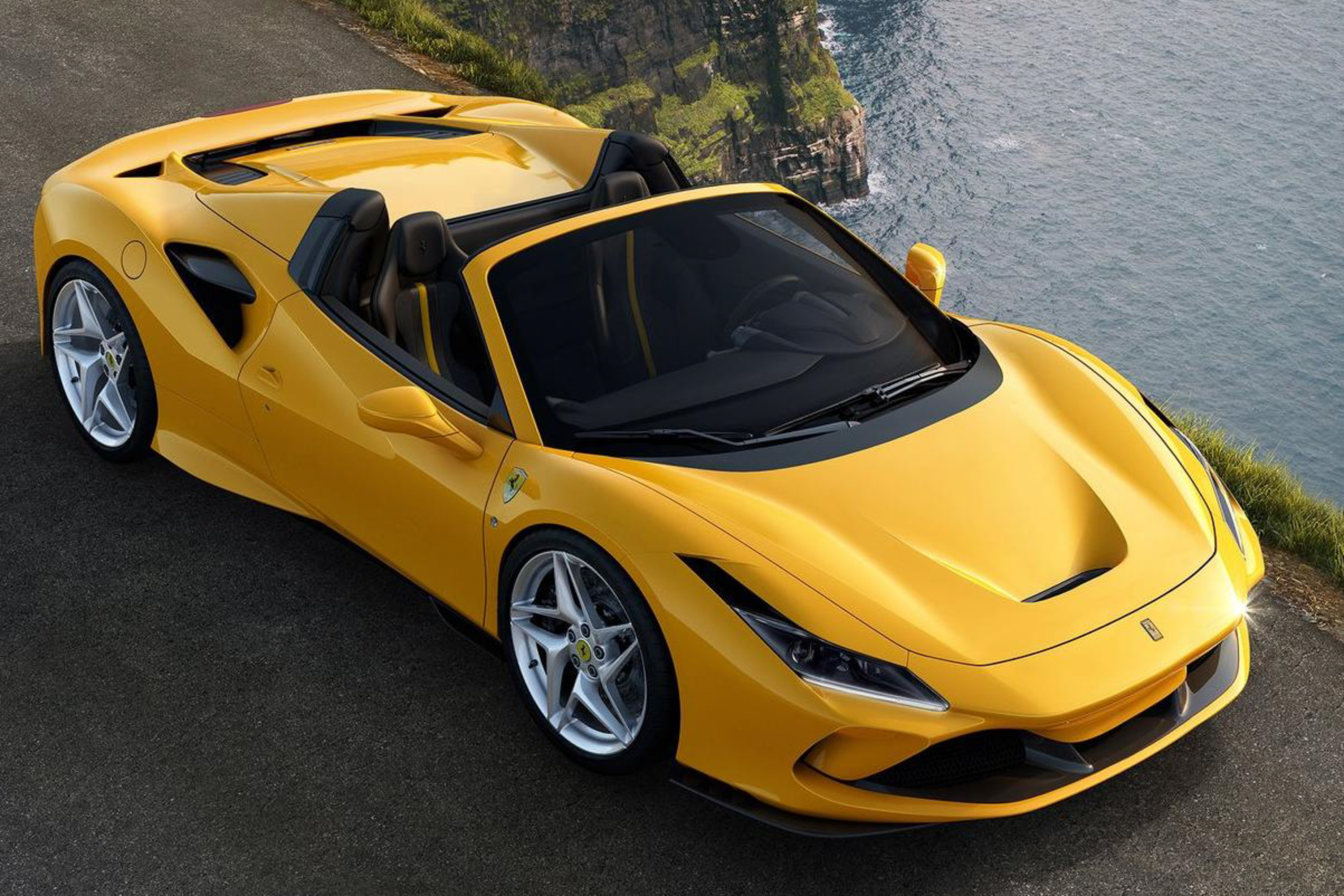
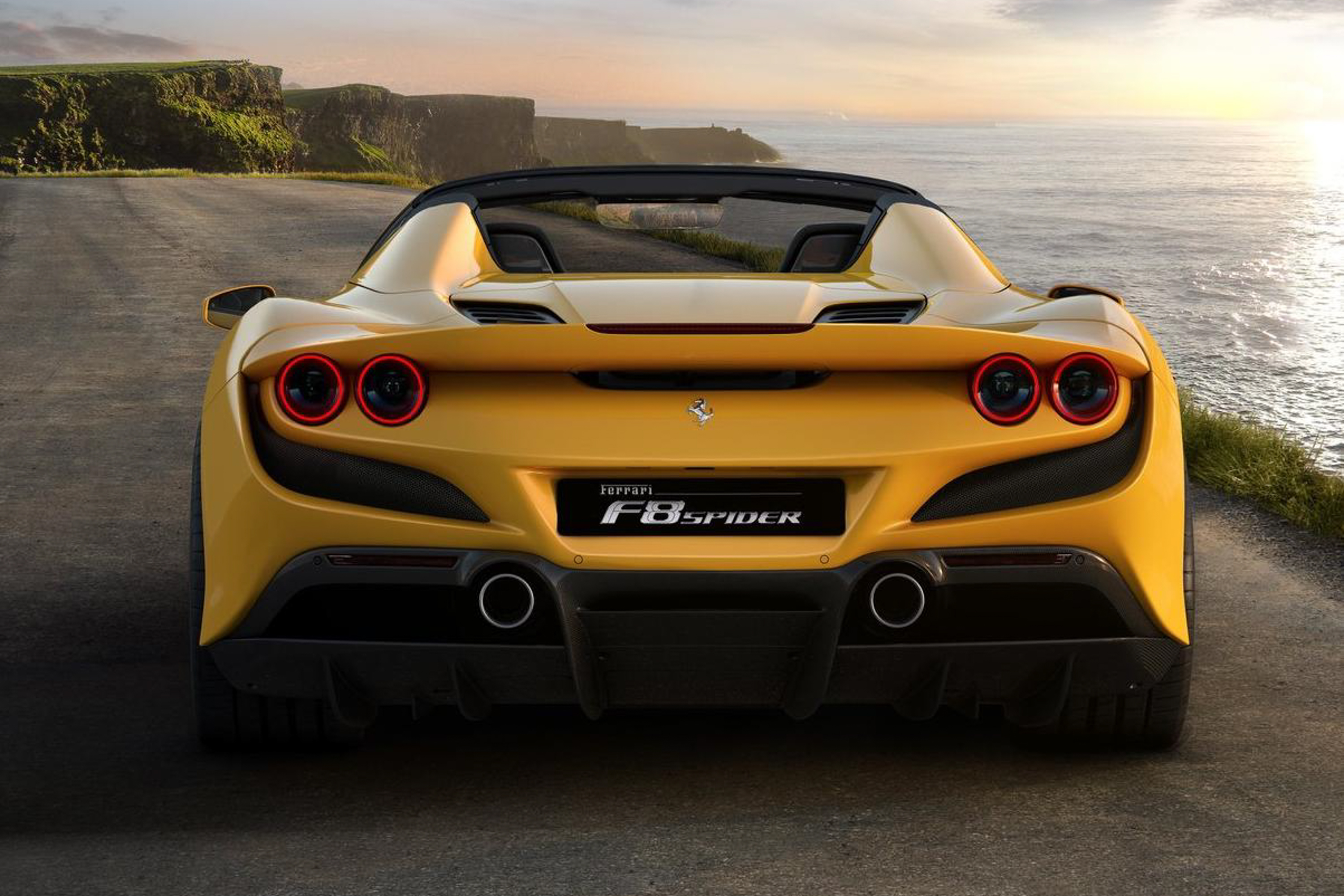
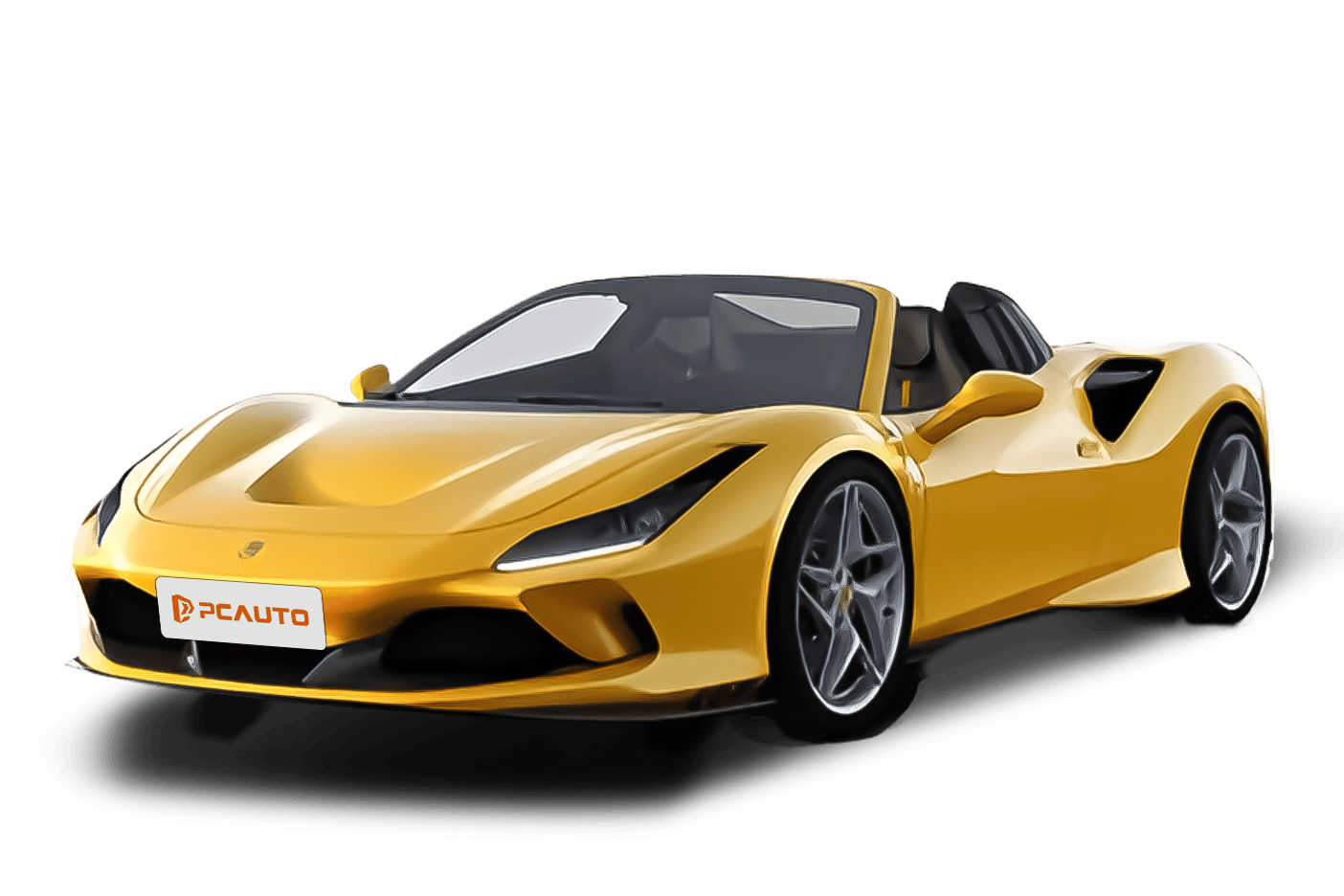
The exterior of the F8 Spider continues Ferrari's racing lineage, with overall lines appearing even smoother compared to the hardtop version. The front S-Duct air intake design is directly derived from F1 technology, visually lowering the center of gravity of the front and indeed optimizing aerodynamics at high speeds. The sharp-shaped LED headlights on both sides, with L-shaped daytime running lights inside, have high recognition and are immediately identifiable as a Ferrari when illuminated in traffic. On the vehicle's side, the waistline extends from the A-pillar to the rear in the open-top state, and without the roof of the hardtop version, the car looks more muscular. With a width of 1,979mm paired with 20-inch staggered tires (front 245/35 ZR20, rear 305/30 ZR20), the stance is incredibly low and aggressive. At the rear, the four circular taillights are classic elements, while the lower diffuser and quad exhaust layout emphasize its performance-oriented nature. The overall design avoids unnecessary embellishments, with every detail serving either aerodynamics or visual impact.
Sitting in the cockpit, the F8 Spider's interior layout is centered around the driver, with all key control buttons concentrated around the steering wheel and central touchscreen. The material palette combines carbon fiber trim, Alcantara, and genuine leather, presenting a sporty vibe. All touchpoints are covered with soft materials, and the level of luxury aligns with its supercar status. The 10.25-inch central touchscreen supports CarPlay connectivity, features a clear interface logic, and daily operation is relatively straightforward. The full digital instrument cluster changes its display style when switching driving modes — for example, Sport mode emphasizes RPM and power output, while Race mode displays more track-specific data. The seats are sporty bucket seats with excellent lateral support, and the wrapping around your waist and legs keeps your body securely in place during spirited driving. At the same time, the seats support electric adjustments and lumbar support, making long-distance driving less tiring. Notably, when the convertible mechanism is retracted, a small wind deflector automatically rises in the "roll bar" area at the rear, effectively reducing wind noise in an open-top state, which is very user-friendly for daily use.
In terms of space, as a two-seater supercar, the F8 Spider's cabin is only spacious enough for two adults. A 180cm passenger in the driver's seat will still have a fist's worth of headroom when the roof is closed, and there’s no restriction when the roof is open. Storage capacity is often a weakness for supercars, but the F8 Spider manages to be somewhat "practical": there is a small storage compartment under the center console for a phone or wallet; the trunk has a capacity of 200L, which can fit two carry-on suitcases when the roof is closed. When the roof is open, the capacity is slightly reduced, but it can still fit one carry-on suitcase, making it sufficient for short trips.
Dynamic performance is the core advantage of the F8 Spider. It is equipped with a 3.9T twin-turbo V8 engine, delivering a maximum power of 720PS/8000rpm and a maximum torque of 770N·m/3250rpm, paired with a 7-speed DCT dual-clutch transmission. In normal mode, the power output is relatively smooth, with no abruptness during starts or noticeable jerks at low speeds, making daily driving unexpectedly "gentle." When switched to Sport mode, throttle response becomes quicker, and the transmission adopts a more aggressive shifting logic. Pressing the accelerator deeply results in an instant burst of acceleration, and the official 0-100km/h acceleration time of 2.9 seconds feels very real — during actual testing, with ESC turned off and Race mode engaged, the wheels slightly slip at launch, but traction is quickly regained. The body is firmly pressed into the seat, and the acceleration remains strong even up to 200km/h.
In terms of handling, the F8 Spider's steering wheel offers high precision with almost no play. Turning the wheel provides clear feedback from the front tires. The suspension system in normal mode has some damping capability, handling speed bumps or minor bumps in urban environments without the stiff feeling typical of pure track cars. The body roll is also well-controlled. When switching to Sport or Race mode, the suspension becomes noticeably stiffer, and body roll during cornering is almost negligible. Coupled with the grip from wide tires, the vehicle remains very stable when taking high-speed corners. We also tested the braking performance on a closed track, achieving a braking distance of around 32 meters from 100-0km/h. The Brembo carbon-ceramic brakes offer a linear pedal feel, and they showed no significant thermal fade during consecutive braking tests.
The comfort of daily driving exceeds expectations. With the roof closed, noise control inside the car is excellent, and even at 120km/h, both wind noise and tire noise remain within an acceptable range. When the roof is open, as long as the speed doesn't exceed 100km/h, wind noise won't interfere with normal conversations. Regarding fuel consumption, the official combined fuel consumption is 13L/100km. During actual tests, it was about 18-20L/100km in city traffic conditions, and it could drop to around 10L/100km during highway cruising. For a supercar with 720 horsepower, this fuel efficiency is reasonable. Additionally, the "Wet" mode in the driving modes is very practical, as it optimizes power output and ESP intervention timing on rainy days, reducing the risk of losing control on slippery roads. This feature provides extra assurance during daily use.
Overall, the 2020 Ferrari F8 Spider stands out with several key highlights: 720 horsepower of strong performance, handling performance close to the coupe version, along with a hardtop convertible mechanism and relatively reasonable everyday usability. Unlike many supercars, it's not "delicate." Compared to competitors like the Lamborghini Huracán Evo Spyder, the F8 Spider offers better daily driving comfort and lower fuel consumption. And compared to the McLaren 720S Spider, it has the advantages of brand premium and resale value.
The target audience for this car is very clear: First, those with a budget of around 2 million ringgit seeking a convertible supercar that can be taken out for dates and occasionally track days. Second, consumers who are not satisfied with regular luxury convertibles and are in pursuit of extreme performance and brand prestige. It's not a car suitable for family use, but as a personal commuting vehicle or weekend toy, it has virtually no shortcomings.
Overall, the 2020 Ferrari F8 Spider is a convertible supercar with "no obvious weaknesses" - it carries Ferrari's racing DNA while also meeting the demands of daily commuting, and its convertible design makes it even more appealing in Malaysia's climate. If you are looking for an "all-rounder" convertible supercar, it is definitely one of the top choices at this price point.
Ferrari F8 Spider Car Compare

Ferrari F8 Spider Loan Calculator
More Ferrari Reviews
Cars With Similar Price And Features
1
Rank in Convertible
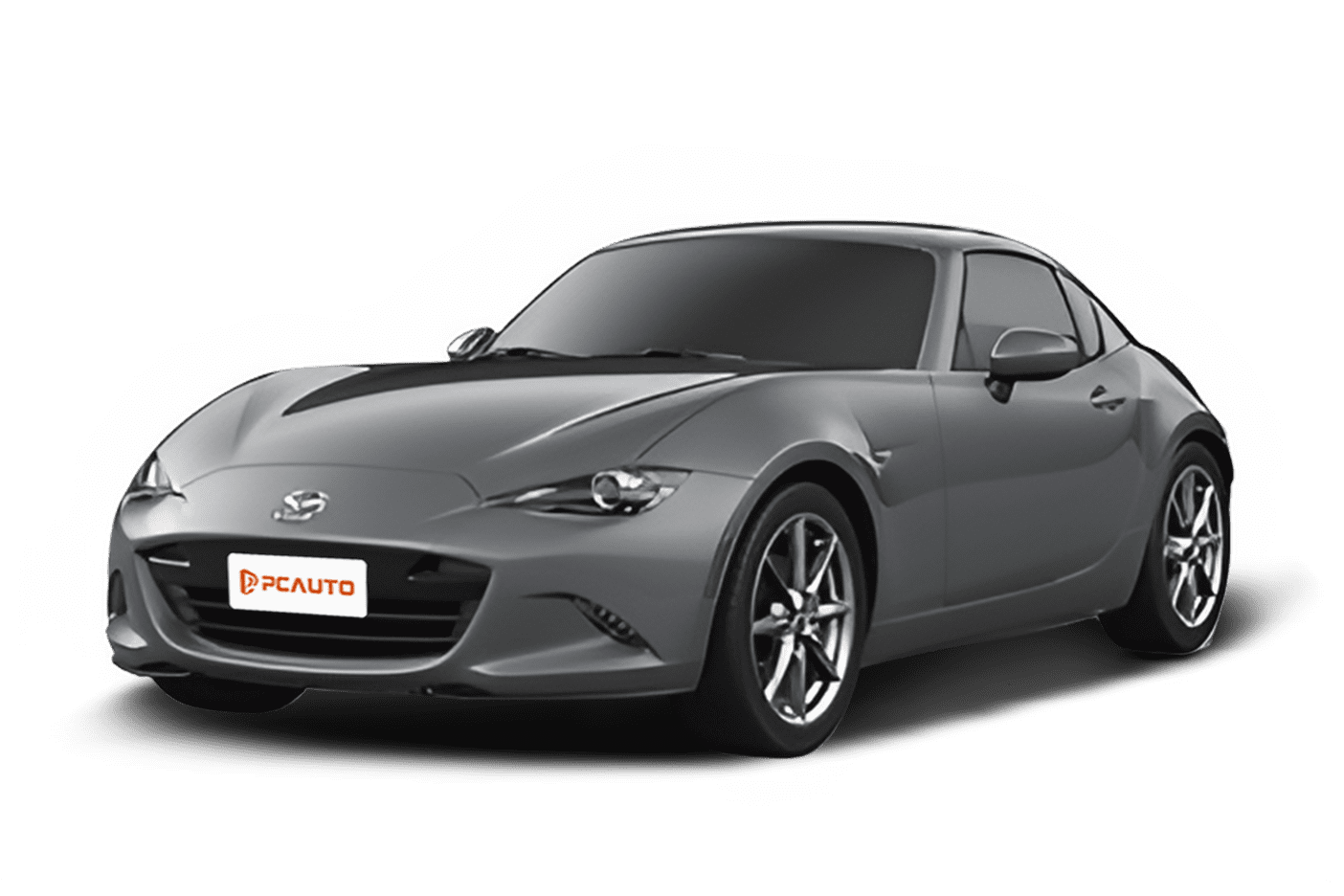
2025 Mazda MX-5 RF 2.0 MT is a hardtop manual sports car with precise handling and pure driving pleasure, balancing daily practicality with mountain road excitement, continuing the "Jinba Ittai" experience.
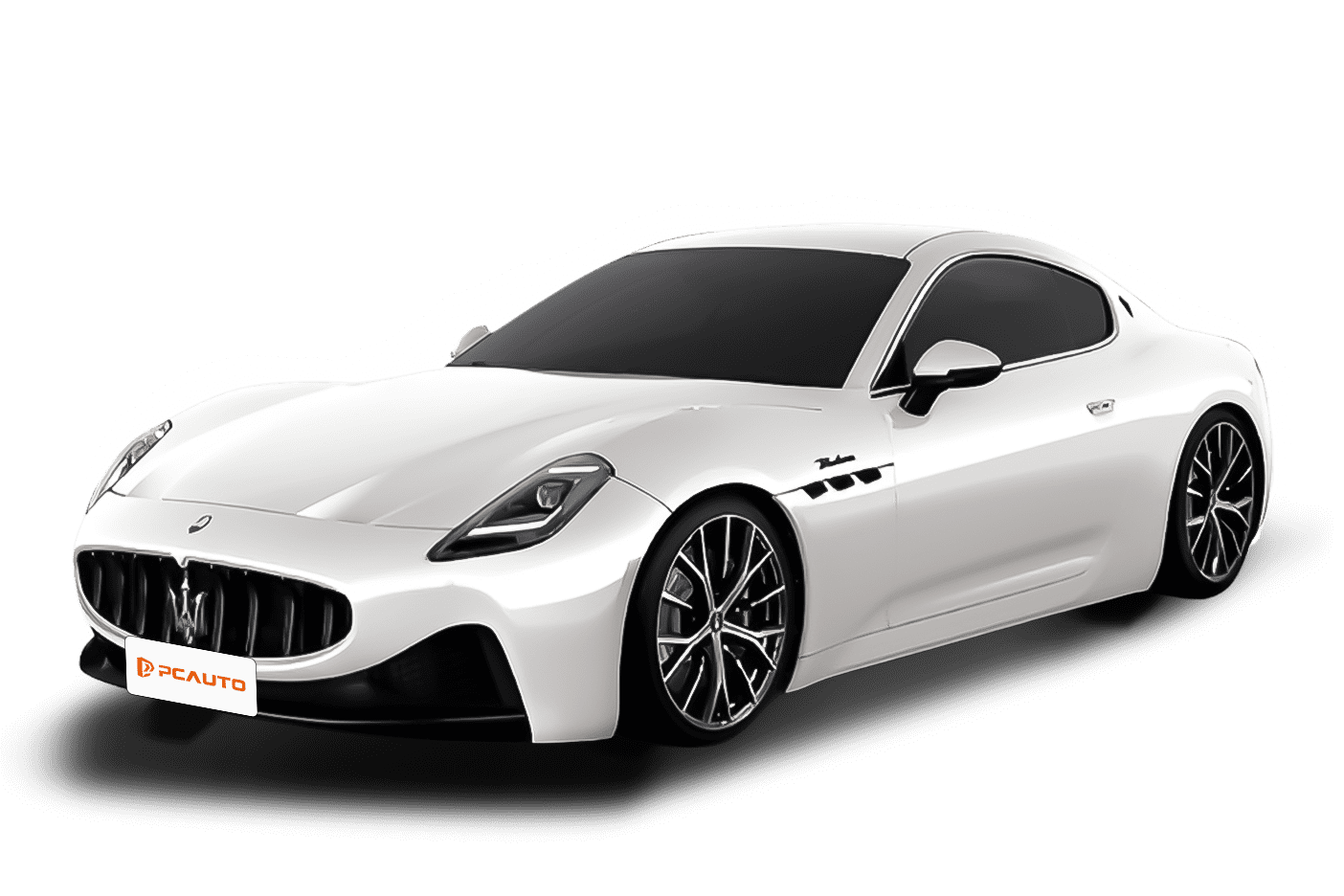
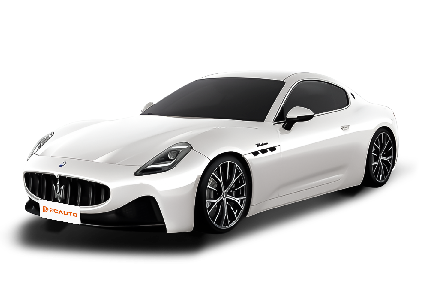
2024 Maserati GranTurismo Modena is a luxurious GT that combines 490PS performance, all-wheel drive, and practical space, defining a new experience for luxury two-door cars with a balanced performance suitable for daily driving.

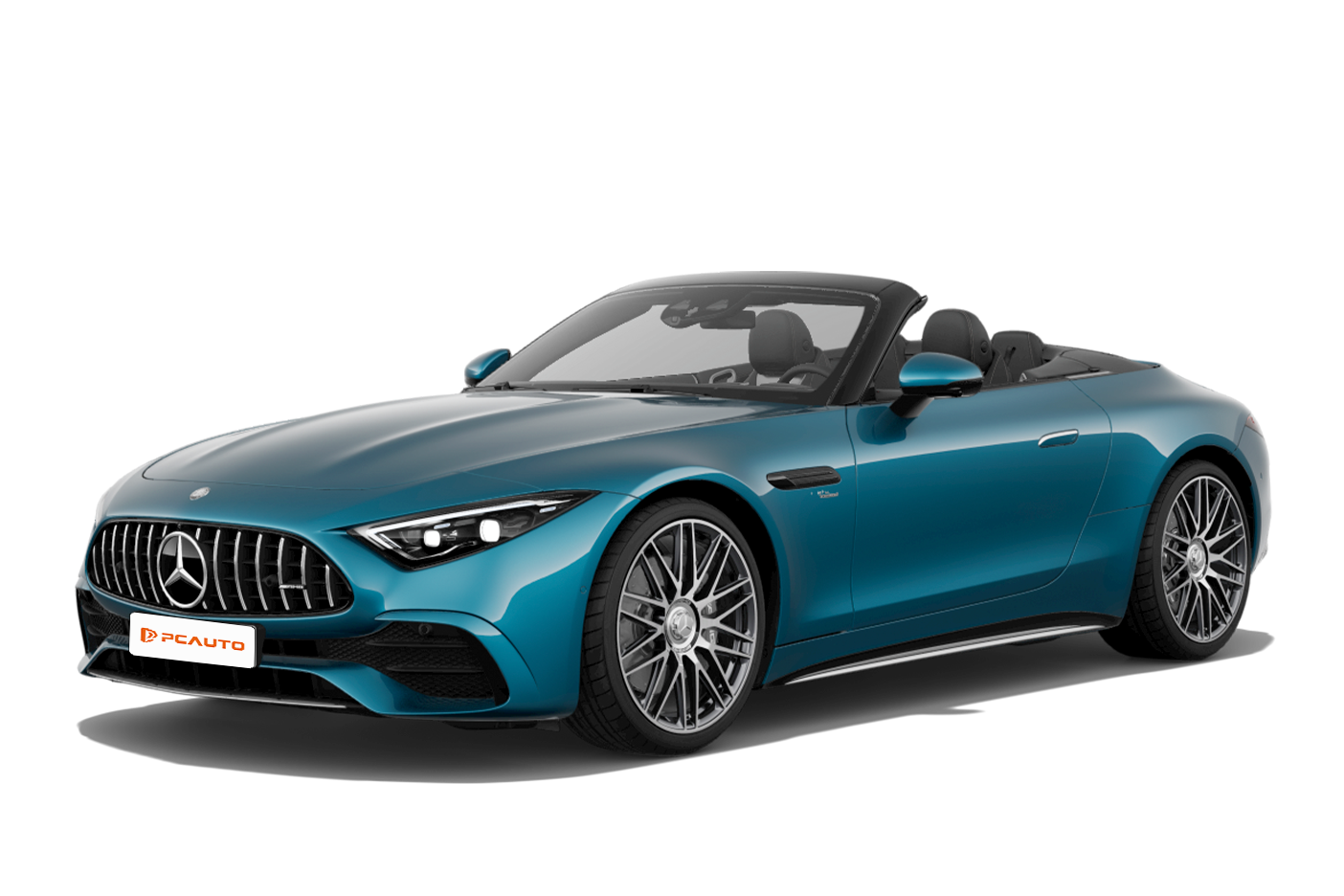
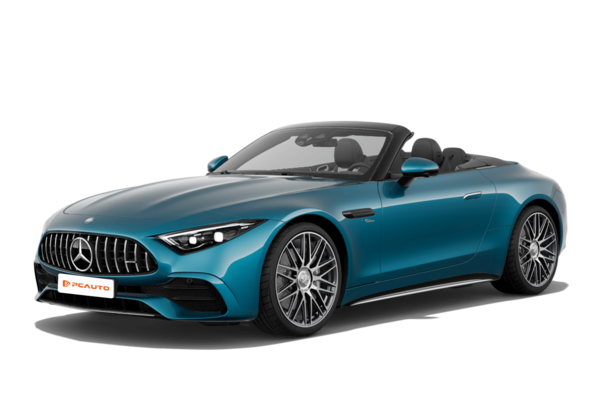
2025 Mercedes-Benz AMG SL-Class 63S E Performance achieves a super strong output of 816PS with a 4.0T V8 + plug-in hybrid system, balancing 2.9-second 0-100 km/h performance and short-distance pure electric commuting, setting a benchmark for luxury hybrid GT sports cars.
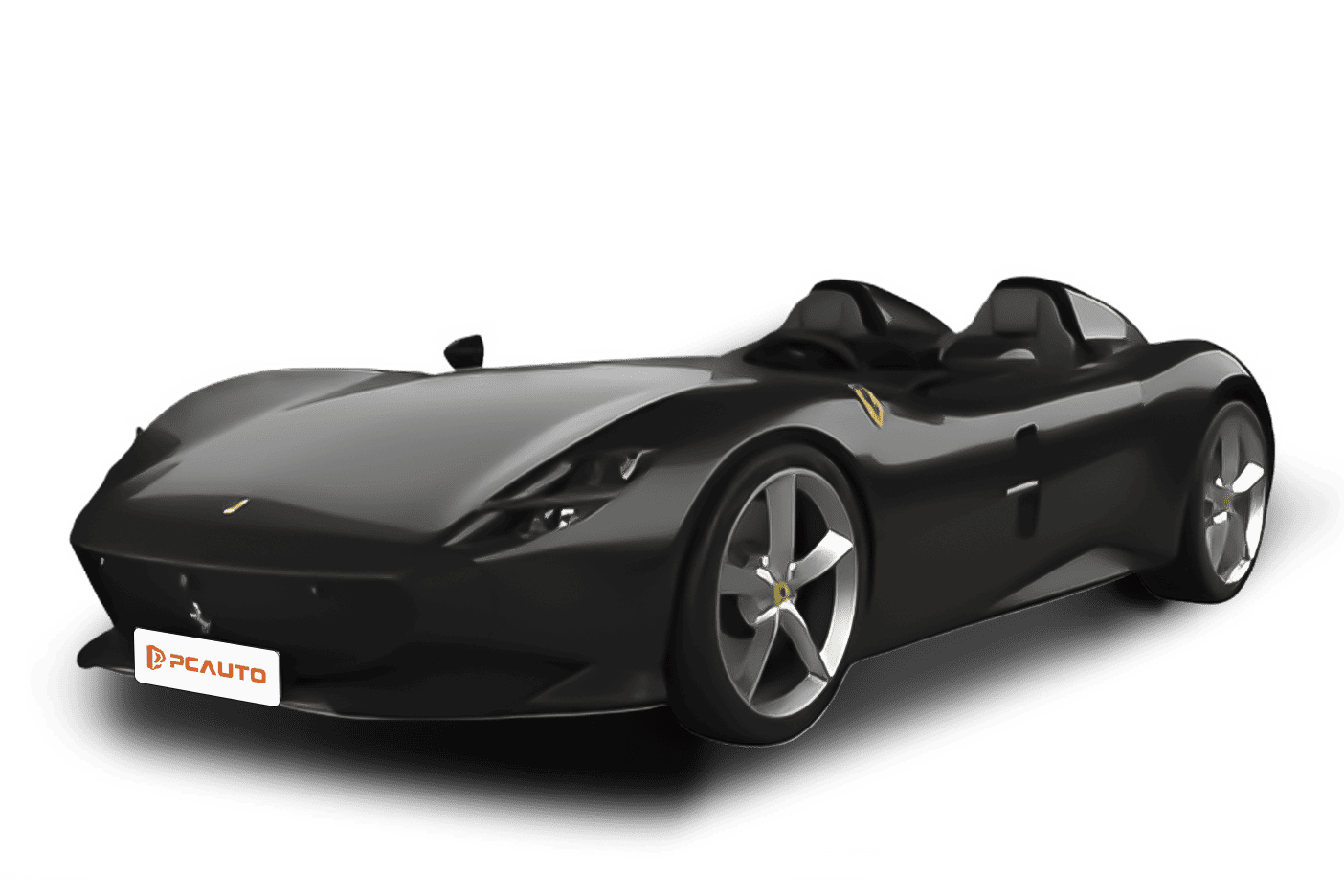
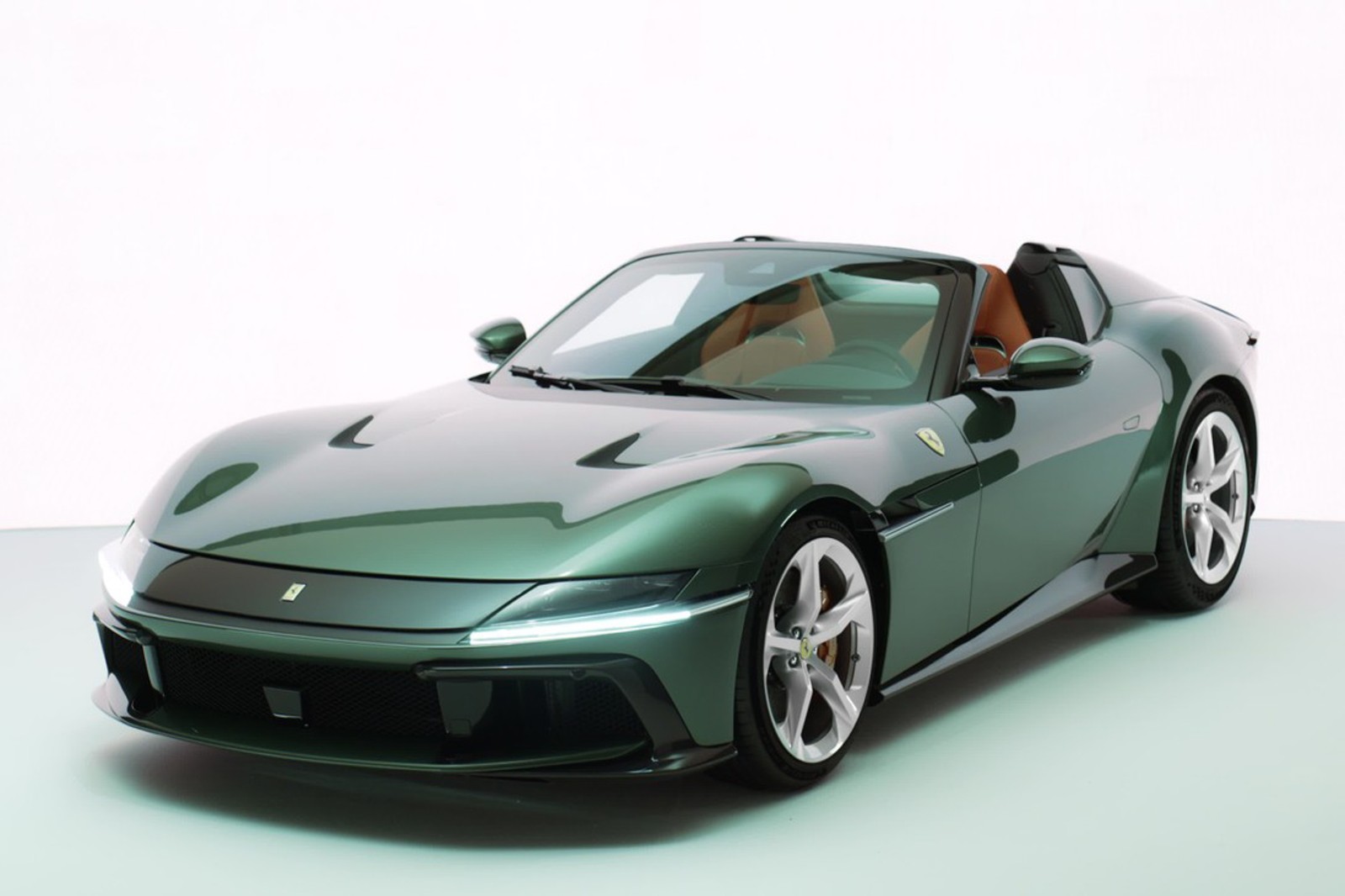
2019 Ferrari Monza SP2 V12 is an Icona series limited-edition convertible supercar, featuring a roofless Barchetta design + 810-horsepower V12 engine, embodying pure racing genes and retro aesthetics.