
Q
how long is Toyota Hiace
 BraveAdventurerCourageOct 13, 2025, 10:15 AM
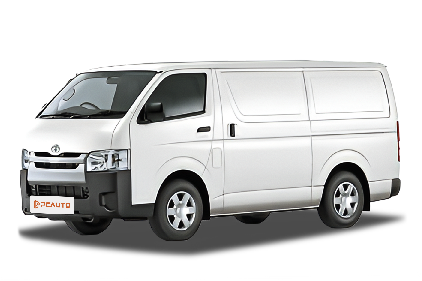
Toyota Hiace dimensions vary by model and generation, but here in Malaysia, the current fifth-gen version (around since 2019) is what you'll mostly see. The standard wheelbase clocks in at roughly 5,265mm, while the long wheelbase stretches out to 5,915mm. This sizing strikes a solid balance—nimble enough for zipping through city streets, yet roomy enough to handle both passengers and cargo.
It’s no wonder the Hiace is a top pick for Malaysian businesses and big families alike. That length directly impacts how much it can carry. The standard model, for example, can fit 12 to 14 seats, making it great for group transport. The long-wheelbase? Perfect for tour vans needing extra luggage space or logistics work where cargo capacity matters more.
But here’s the thing Malaysian buyers need to remember: our local roads. Tight city streets and parking garages with height limits can be tricky. Luckily, the Hiace’s compact height (around 1,990mm) handles those spots pretty well.
Oh, and if you’re looking at used models, the Hiace holds its value surprisingly well. Durability and easy maintenance are big reasons why. Just a pro tip: keep an eye on the suspension system if you’re hauling heavy loads regularly—staying on top of that will keep you safe on the road for years to come.
Special Disclaimer: This content is published by users and does not represent the views or position of PCauto.
Related Q&A
Q
how much is Toyota Hiace bus
The Toyota Hiace van's pricing in Malaysia can vary quite a bit depending on the trim level, model year, and market demand. Brand-new ones typically range from around RM200,000 to RM400,000. That all hinges on things like how many seats it has, the engine type—diesel or petrol—and extra features such as air conditioning and nicer seats.
For used Hiace vans, the price fluctuates even more based on age, mileage, and overall condition. You're looking at roughly RM80,000 to RM250,000 for a pre-owned model.
What makes the Hiace such a hit here? It's all about that tough-as-nails reliability, spacious interior, and low maintenance costs. Both businesses and families love it, especially for long road trips or shuttling groups around. The Malaysian market usually sees two main variants: the standard version and the high-roof variant. The high-roof option gives you better headroom, which is great if you're after a bit more comfort.
On top of that, the Hiace's fuel efficiency and solid dependability keep it pretty competitive in the local market. Toyota's got service centers all over the country, and parts are easy to come by, which helps keep those long-term running costs down too.
If you've got specific needs in mind, I'd recommend popping by your nearest Toyota dealership. They can hook you up with the latest prices and any ongoing promotions. And hey, take it for a test drive while you're there—get a feel for how it drives and really see if it fits what you're looking for.
 FearlessCourageHeartOct 13, 2025
Q
how much is a Toyota Hiace van
In Malaysia, the price of a Toyota Hiace van can vary quite a bit depending on the model, specs, year, and how the market's moving. New ones typically run between 150,000 to 250,000 Ringgit. It really hinges on the trim you go for—like the standard or the more decked-out luxury version—and whether you add extras such as air conditioning or advanced safety systems.
For used Hiaces, the price fluctuates based on condition, mileage, and how old the van is, usually landing in the 80,000 to 150,000 Ringgit range.
The Hiace has built a solid rep here for being tough as nails and offering serious cargo-hauling capability, making it a top pick for businesses—think logistics, deliveries, or even converting it into a passenger van. Its reliable engine and low maintenance costs are big reasons it’s such a hit in the Malaysian market. Plus, with its roomy interior and flexible seating/layout options, it’s also a solid choice for family trips or group outings.
If you’re looking to pick one up, I’d recommend chatting with your local dealer to get the latest quotes and any ongoing promotions. And don’t forget to factor in long-term costs and warranty coverage too—that stuff matters.
 GentleGraceSoftTouchOct 13, 2025
Q
how much is a Toyota Hiace?
In Malaysia, the Toyota Hiace comes with a range of price tags depending on the model, specs, and year. Brand-new ones typically go for between RM150,000 to RM250,000, and that all hinges on which variant you pick—like the Standard, Deluxe, or Commercial trim. As for used Hiaces, you're looking at anywhere from RM50,000 to RM150,000, with condition and mileage being the big factors there.
Malaysian buyers can't get enough of the Hiace, and it's easy to see why. It's built tough, offers loads of space, and doesn't guzzle fuel—perfect whether you're shuttling the family around or using it for business. Safety-wise, it's got your back with features like ABS and multiple airbags, so both driver and passengers stay protected.
On top of that, keeping a Hiace on the road won't break the bank. Maintenance costs are reasonable, parts are easy to find, and repairs are straightforward—all reasons it's been a mainstay in Malaysia for so long. If you're thinking about getting one, my advice is to figure out what you really need in terms of specs, then head to an authorized dealer for a test drive. That way, you can make sure it checks all your boxes before you commit.
 CuteySmileInnocenceOct 13, 2025
Q
For the commercial vehicle model, where is the fuse box located in the Toyota Hiace?
Hey there, fellow Hiace drivers! Let's talk about where to find the fuse box in your Toyota Hiace Commuter. This workhorse usually tucks its fuse box behind the side panel under the driver's seat. Some models might also have one in the engine bay, near the battery. But hey, it can vary a bit depending on the year and trim, so your best bet is to hit up the "Electrical System" section in your owner's manual – or just flip open the fuse box cover and check the diagram on the back.
That fuse box is like the gatekeeper for your van's electrical system. If your headlights, AC, or cigarette lighter suddenly call it quits, the first thing to do is check if the corresponding fuse has blown. And when replacing a fuse, stick to the same amperage rating – don't get creative there!
Day-to-day, keep that fuse box dry and clean to avoid any short circuits. If the same fuse keeps blowing, that's a red flag – you might have a wiring issue that needs a pro's touch, so don't delay getting it checked out.
The Toyota Hiace is a staple in Southeast Asia, and its electrical system is built to handle those tropical conditions, but regular checks are still part of good maintenance. For other common stuff like battery care or adjusting the lights, the owner's manual is your go-to guide. Keep rollin'!
 QuirkyStyleUniqueOct 13, 2025
Q
Toyota Hiace how many seats
The Toyota Hiace is a staple in Malaysia's commercial and family vehicle scene, with seating options that vary by trim. The standard models, like the Hiace Van, typically offer 12 to 15 seats—perfect for commercial shuttle services or group outings. On the flip side, the more upscale variants such as the Hiace Super Grandia trim down to 9 to 11 seats, prioritizing comfort with premium upholstery and rear air-conditioning, ideal for family trips or business reception. It is worth noting that some aftermarket shops also offer custom seating configurations, such as adjusting to 13 seats or reducing to 8 seats to flexibly adapt to different uses. For Malaysian buyers, the Hiace's biggest draws are its legendary durability, high ground clearance that handles local road conditions like a champ, and wallet-friendly maintenance costs. The diesel engine variants, in particular, stand out for their impressive fuel efficiency. For the most accurate specs, though, your best bet is to hit up a Toyota Malaysia authorized dealer. They can walk you through the latest model year details, including safety features like ABS and dual airbags—stuff that could definitely sway your final purchase call.
 FlutteringButterflyKissOct 11, 2025
Q
How many models does Toyota Hiace have
The Toyota Hiace is a total workhorse and family favorite here in Malaysia, killing it in both commercial and personal use. You’ll mainly find a few go-to variants cruising our roads: the standard Hiace Van, the Hiace Commuter (that’s the people-hauler), and the top-dog Hiace Super Grandia (the luxury liner). These aren’t just badge swaps—they’re built for different jobs. The Hiace Van? It’s all about getting cargo from A to B, no frills, just space. But the Commuter and Super Grandia? They’re where comfort takes the wheel, packing nicer seats, better air-con, and all that extra kit to keep passengers happy.
Under the hood, Toyota’s got you covered with diesel and petrol engine options, so whether you’re after torque for heavy loads or something smoother for daily drives, there’s a Hiace for that. Malaysians swear by this van for a reason—its legendary durability and rock-solid resale value are huge wins. Plus, that cavernous interior and flexible seating? Perfect for everything from running a business to shuttling the whole family (and then some).
If you’re thinking of adding a Hiace to your fleet or driveway, do yourself a favor: figure out what you’ll *really* use it for, then hit up your nearest authorized dealer for a test drive. Trust me, you’ve gotta feel that space and drive to get the full picture.
 PeachBlossomDelightOct 11, 2025
Q
toyota hiace how many seater
The Toyota Hiace is a total workhorse and family favorite here in Malaysia, killing it in both commercial and personal use. Seating? It varies by model and spec, but the standard versions typically roll with 12 to 15 seats—perfect for big families hitting the road or businesses shuttling folks around. Need more? The high-roof variants often up the ante on seating options to fit even bigger crews. What really makes the Hiace stand out is its roomy interior, rock-solid reliability, and comfy ride—ideal for those long Malaysian road trips or when you’re hauling passengers all day. Under the hood, you’ve got choices too: diesel or petrol engines, so you can pick what suits your driving style and fuel habits best. And for the cargo haulers? There’s a van version where you can fold or yank out the rear seats to free up tons of space. Let’s not forget its tough-as-nails build and low maintenance costs—no wonder it’s the go-to for so many Malaysian businesses and families. Whether it’s daily commutes or commercial runs, the Hiace just gets the job done, and done well.
 SolverProblemSolutionSep 28, 2025
Popular Cars
Model Year
Car Compare
Car Photo
Related Models
 Cars
CarsLatest Q&A
Q
Is AMT similar to automatic?
There are significant differences between AMT transmissions and automatic transmissions (AT) in terms of core structure and driving experience. AMT is essentially an electronically automated version of a manual transmission, simulating manual clutch operation and gear shifting through a computerized control system while retaining the gear set structure of manual transmissions. As a result, it offers higher transmission efficiency, with fuel consumption approximately 8%-12% lower than AT, making it particularly suitable for highway or long-distance driving. However, it may exhibit jerking similar to manual transmissions during low-speed gear shifts, especially noticeable in congested traffic conditions.
AT transmissions rely on torque converters for power transfer, delivering smooth and seamless gear shifts that appeal to comfort-oriented users. However, their complex structure (incorporating planetary gear sets, hydraulic systems, etc.) results in higher maintenance costs. A single service may cost between 800 to 1,500 ringgit, whereas AMT only requires gear oil replacement at approximately 400 ringgit.
From a market perspective, AMT is predominantly used in budget vehicles or commercial models priced below 80,000 ringgit, while AT is typically featured in mid-to-high-end vehicles. Consumers should select based on actual needs: AMT suits those prioritizing fuel efficiency and low maintenance costs, while AT better serves those valuing comfort. Notably, recent advancements in AMT electronic control technology have significantly mitigated jerking issues, though test drives should still emphasize low-speed performance evaluation.
 AriaMar 26, 2026
Q
Which is better, DCT or AT?
DCT (Dual-Clutch Transmission) and AT (Automatic Transmission) each have their own advantages and disadvantages, and the choice should be based on personal driving needs. AT transmissions transfer power through a torque converter, offering excellent shift smoothness, making them suitable for urban commuting or novice drivers. However, they tend to have higher fuel consumption, and vehicles equipped with them are usually more expensive. DCT transmissions utilize a dual-clutch structure, featuring fast shift speeds and high power transmission efficiency, which provides a more direct driving experience—particularly suitable for users seeking a sporty feel. However, they may exhibit jerking at low speeds and have relatively high maintenance costs. If durability and comfort are priorities, AT is the more reliable choice; if power responsiveness and driving pleasure are preferred, wet DCT (such as Volkswagen DSG) performs better, though dry DCT models should be avoided in prolonged stop-and-go traffic conditions. Additionally, CVT transmissions excel in smoothness and fuel efficiency, making them ideal for daily commuting, but they lack driving excitement. It is recommended to test-drive before purchasing, as tuning varies significantly across brands, and real-world experience is more important than theoretical specifications.
 FlutteringMar 26, 2026
Q
Is Amt good or bad?
AMT gearboxes have a significant cost advantage in the local market, typically being around 5,000 Ringgit cheaper than models equipped with conventional automatic transmissions. Their fuel efficiency is comparable to manual transmissions, resulting in long-term fuel savings. Featuring a straightforward design, they achieve transmission efficiency exceeding 90% with relatively low maintenance costs, making them ideal for practicality-oriented consumers. However, their shifting logic contains inherent limitations: gear changes between 1st and 2nd cause 0.3-0.5 second power interruptions, while unintended upshifts on inclines may reduce engine speed by 15%-20%, compromising driving smoothness. For urban commuters or budget-conscious buyers, AMT offers excellent value, though those prioritizing premium driving dynamics should consider alternative transmission types. Some domestic models like the Perodua Axia employ enhanced AMT systems, where optimized shift programming has reduced gearshift shock by approximately 30%.
 RainbowsMar 26, 2026
Q
Which gives better mileage, CVT or AMT?
From the perspective of fuel economy, CVT transmissions generally perform better under urban driving conditions. Their continuously variable design allows the engine to consistently operate within the optimal speed range, significantly reducing fuel consumption during frequent starts and stops. Test data shows that their fuel consumption in urban driving conditions is 10% to 15% lower than that of comparable models. AMT transmissions, on the other hand, inherit the high transmission efficiency of manual transmissions, delivering fuel efficiency close to manual transmissions during high-speed cruising. This makes them particularly suitable for long-distance driving in large-displacement vehicles. However, due to power interruption during gear shifts, their overall fuel consumption may be 5% to 8% higher than CVTs.
The difference in fuel-saving characteristics between the two transmissions stems from their technical principles: CVTs achieve continuous variability through steel belts and pulleys, eliminating the fixed gear ratio limitations of traditional transmissions; AMTs simulate manual gear changes via electronic control systems while maintaining the mechanical efficiency of gear transmission. Notably, actual fuel consumption is also influenced by driving habits. Smooth acceleration and anticipatory deceleration can maximize the transmissions' fuel-saving potential. If the vehicle budget permits and urban commuting is the primary use, CVTs offer a more economical choice. For frequent highway driving with an emphasis on cost-effectiveness, AMTs are equally worth considering.
 RubyBlazeMar 26, 2026
Q
Which is cheaper, AMT or CVT?
In terms of gearbox cost, AMT is usually more economical than CVT. Essentially, AMT is a manual transmission equipped with an electronic control unit, featuring a simple structure and low maintenance costs. The unit price ranges from approximately 5,000 to 8,000 ringgit, making it suitable for budget-conscious consumers or those who prioritize long-term operating costs. CVT incurs higher manufacturing costs due to its precision steel belt transmission system and continuous variable transmission technology, with a unit price of about 7,000 to 10,000 ringgit. However, it delivers a smoother driving experience and superior fuel efficiency. The primary differences between the two lie in technical complexity: AMT retains the gear-shifting mechanism, resulting in noticeable shift shock; CVT achieves linear power output through stepless speed variation but requires periodic belt inspection and incurs higher maintenance expenses. For those prioritizing initial cost and basic transportation needs, AMT offers better value; if comfort and long-term fuel economy are priorities, CVT represents a more worthwhile investment. Note that actual prices may vary based on vehicle model, brand, and local supply chain factors.
 ShadowProwlMar 26, 2026
Related News

Toyota HiAce and Mitsubishi Outlander upgraded to receive five-star safety rating
WilliamSep 24, 2025

Toyota may launch the Tundra TRD Hammer high-performance off-road pickup in the future
RobertMar 23, 2026

Toyota Land Cruiser Buying Guide: From LC300 to LC70, which versions are worth buying? Are the maintenance costs for used ones high?
JohnMar 17, 2026

Toyota Crown Sedan and Lexus ES price difference? What are their differences?
WilliamMar 13, 2026

Toyota Land Cruiser FJ confirmed to launch in Thailand on March 21, expected to start from RM137k
WilliamMar 12, 2026
View More
Pros
Cons