
Q
How much fuel does a Toyota Wish use per km?
 GentleRainJul 30, 2025, 09:50 AM
The fuel consumption of the Toyota Wish varies depending on the model year, engine displacement (such as 1.8L or 2.0L), and driving conditions. According to actual data, the combined fuel consumption of the 1.8L model is around 0.08 to 0.10 Malaysian Ringgit per kilometer (approximately 6.5 to 8.0 liters per 100 kilometers based on the current oil price). The 2.0L model has slightly higher consumption, about 0.10 to 0.12 Malaysian Ringgit per kilometer (8.0 to 9.5 liters per 100 kilometers).
The actual fuel consumption may be affected by road conditions, air - conditioning usage, and driving habits. For example, frequent rapid acceleration or traffic congestion in the city can significantly increase fuel consumption. It is recommended that car owners perform regular maintenance (such as replacing air filters and spark plugs) and maintain proper tire pressure to optimize fuel efficiency.
The oil price in Malaysia fluctuates greatly. You can refer to the fuel consumption test data published by MyJPJ or SPAD. Hybrid models are usually more fuel - efficient, but Toyota has not launched a hybrid version of the Wish. If you are considering energy - saving options, you can compare models in the same class, such as the Honda Jazz Hybrid or the Toyota Corolla Cross Hybrid.
Special Disclaimer: This content is published by users and does not represent the views or position of PCauto.
Related Q&A
Q
How many trims does the Toyota Wish have?
The Toyota Wish is available in three trim levels: the 2017 Toyota Wish 2.0L Z, the 2017 Toyota Wish 1.8L X, and the 2017 Toyota Wish 2.0L G. While these trims share many core features, there are some differences in specific details. For instance, the 2.0L Z weighs 1,420 kg, the 1.8L X weighs 1,340 kg, and the 2.0L G weighs 1,380 kg. In terms of seating capacity, the 2.0L Z offers six seats, whereas the 1.8L X and 2.0L G provide seating for seven. The body dimensions also vary slightly: the 2.0L Z measures 1,745 mm in width and 1,600 mm in height, while the 1.8L X and 2.0L G are 1,695 mm wide and 1,590 mm high.
Despite these differences, the three trims share several key specifications. All versions feature a CVT transmission, front-wheel drive, and an official combined fuel consumption of 6.9 L/100 km. Additionally, each model comes equipped with a comprehensive range of safety and convenience features.
 CleverOwlJul 30, 2025
Q
What is the maintenance schedule for Toyota Wish?
It is recommended that the Toyota Wish undergo regular maintenance every 6 months or every 10,000 kilometers, whichever comes first. This is the standard set by Toyota officially for the tropical climate and road conditions in Malaysia. Basic maintenance includes changing the engine oil and oil filter, inspecting the brake system, tire condition, and chassis components. Meanwhile, the air - conditioning filter needs to be cleaned or replaced regularly to cope with the hot and humid environment. The transmission fluid and brake fluid should be checked every 20,000 kilometers. It is advisable to replace the spark plugs and coolant at 40,000 kilometers, and special attention should be paid to the wear of the timing belt or chain at 60,000 kilometers. For Malaysian users, it is especially recommended to shorten the replacement cycle of the air filter, as the dusty environment will accelerate its clogging. It should be noted that the battery pack cooling system of the hybrid version of the Wish requires additional inspection, which is different from that of ordinary fuel - powered vehicles. Strictly following the maintenance manual can not only extend the vehicle's lifespan but also maintain fuel economy. Especially in the frequently congested road conditions in Malaysia, regular maintenance is particularly important for maintaining engine efficiency. If you often drive in coastal areas, you should also increase the frequency of chassis anti - rust inspections, as sea breezes can accelerate the corrosion of metal parts.
 ShinyPearlJul 30, 2025
Q
How much engine oil does a Toyota Wish require?
The oil capacity of the Toyota Wish depends on the specific year and engine model. Take the common second - generation models from 2009 to 2017 in Malaysia as an example. The version equipped with the 2.0L 3ZR - FE engine usually requires about 4.2 liters of oil (including oil filter replacement), while the 1.8L 2ZR - FE engine needs around 3.8 liters. When actually adding oil, you should refer to the oil dipstick scale. It is recommended to use 5W - 30 fully synthetic oil that meets the API SN standard or higher.
It's worth noting that in Malaysia's tropical climate, you can consider using oil with a slightly higher viscosity, such as 5W - 40, to enhance high - temperature protection. However, you need to follow the suggestions in the original factory manual. Regular oil changes are crucial for engine maintenance. Generally, the oil needs to be changed every 5,000 to 10,000 kilometers or every 6 months. If you often drive short distances or idle for long periods, you should shorten the maintenance cycle. At the same time, I'd like to remind car owners to look for the JASO or ILSAC certification marks when purchasing oil to ensure the quality.
 LovelyLilyJul 30, 2025
Q
What is the best engine oil for Toyota Wish?
For the Toyota Wish, the most suitable engine oils are 5W - 30 or 10W - 30 fully synthetic oils that meet Toyota's original factory standards. These two viscosities can provide excellent lubrication performance and fuel economy under Malaysia's climatic conditions. In particular, the high - temperature stability and oxidation resistance of fully synthetic oils are more suitable for tropical climates, and they can also extend the engine's service life. If the vehicle has high mileage (over 100,000 kilometers), you can consider using high - mileage oils such as 5W - 40 or 10W - 40 to provide better sealing. When choosing engine oil, make sure the product has API SN or SP certification and meets the ILSAC GF - 6 standard. These labels indicate that the oil has reached the current highest international performance standards.
It's worth noting that the oil change interval for the Toyota Wish is generally every 5,000 to 10,000 kilometers or 6 months, depending on driving conditions and the type of oil. Vehicles that often drive in congested urban traffic are recommended to shorten the change interval. Additionally, the quality of the original factory oil filter is more reliable, so it is recommended to replace it when changing the oil. Understanding this knowledge can not only help you better maintain your beloved car but also avoid engine wear problems caused by using improper oil.
 BraveBearJul 30, 2025
Q
What are the advantages of the Toyota Wish?
As a classic 7-seater MPV, the Toyota Wish is highly popular among family users in the Malaysian market. Its advantages mainly lie in practicality and reliability. The spacious and flexible cabin space, combined with the foldable third-row seats, can easily meet the needs of family outings or cargo transportation. The 1.8L and 2.0L Dual VVT-i engines strike a balance between fuel economy and power performance, making them suitable for Malaysia's diverse road conditions.
In addition, Toyota's well-established after-sales service network in the local area and the high resale value of its used cars have also reduced the long-term usage cost. It's worth mentioning that the air - conditioning cooling efficiency of MPV models is particularly important in Malaysia's hot climate, and the Wish's independent rear - row air - conditioning vents are designed with this in mind.
Although there are more new models emerging in the market today, the Wish, with its time - tested durability, remains a practical choice for budget - conscious families. It is especially suitable for users who need to pick up and drop off children frequently or run small businesses.
 PlayfulKittenJul 30, 2025
Q
What type of car is the Toyota Wish?
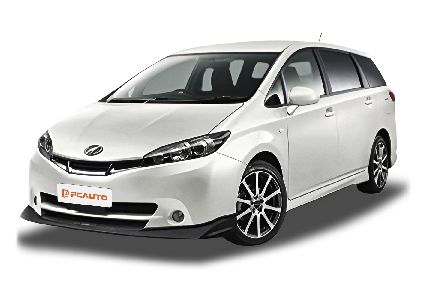
The Toyota Wish is a sporty MPV. This type of vehicle combines the spatial flexibility of an MPV with the driving experience of a sports car, offering users a unique driving option. The Toyota Wish has a length of 4,590mm, a width ranging from 1,695 to 1,745mm, a height between 1,590 and 1,600mm, and a wheelbase of up to 2,750mm. Its size design makes the interior space spacious and practical. It comes in a 5-door layout with either 6-seat or 7-seat configurations. The rear seats are split and foldable, meeting different needs for passenger-carrying and storage during travel. In terms of power, it offers a choice between 1.8L and 2.0L gasoline engines, paired with a CVT transmission and front-wheel drive, ensuring smooth power delivery during daily driving. Regarding safety features, it is standardly equipped with systems such as ABS anti-lock braking, lane departure warning, and active braking, along with 8 airbags, providing reliable safety protection for both drivers and passengers.
 QuietDoveJul 30, 2025
Q
What is the safety rating of the Toyota Wish?
The Toyota Wish performs averagely in safety ratings. According to past test records, this model has achieved above-average results in safety assessments in some regions. However, the specific ratings may vary depending on different testing agencies and model years. In the Malaysian market, the Toyota Wish is favored by many family users for its practical space and reliability. It should be noted, though, that earlier models may not be equipped with the latest active safety technologies, such as automatic emergency braking or lane-keeping assist. For safety-conscious consumers, it is recommended to thoroughly understand the safety equipment of the specific year and configuration before purchasing. You can also refer to the data of regional safety evaluation institutions like ASEAN NCAP. The road conditions in Malaysia are diverse. Whether you're driving in the city or on a long trip, it's extremely important to choose a vehicle with good safety performance. Besides paying attention to crash ratings, daily vehicle maintenance and safe driving habits should not be ignored either.
 WarmHugJul 30, 2025
Q
Does Toyota Wish have a timing belt or chain?
The models of the Toyota Wish launched in the Malaysian market are mainly equipped with 1.8 - liter and 2.0 - liter gasoline engines. Both of these two engines adopt the timing chain design instead of the timing belt. The advantage of the timing chain is that it has a longer lifespan. Usually, it can last for the entire life cycle of the engine without replacement, which reduces the long - term maintenance cost. On the other hand, the timing belt needs to be regularly inspected and replaced at around 60,000 to 100,000 kilometers to avoid the risk of breakage. For Malaysian car owners, the timing chain is more suitable for the local hot and rainy climate because it has better resistance to high temperatures and humidity. However, it is still recommended to regularly check whether the chain tensioner is working properly. It should be noted that although the chain is maintenance - free, if the engine makes abnormal noises (such as metal friction sounds), it should be repaired in time, which is the same for all models with chain - driven systems. In addition, car owners can further confirm the specific configuration through the vehicle manual or the markings in the engine compartment. There may be slight differences in the Wish models of different years.
 FreeBirdJul 30, 2025
Q
How fast is Toyota Wish?
The Toyota Wish is a popular 7-seater MPV in Malaysia. Its power performance depends on the specific model and engine configuration. The early models are equipped with 1.8-liter or 2.0-liter naturally aspirated engines. The 1.8-liter version has a maximum horsepower of about 132 hp, while the 2.0-liter version can reach about 141 hp. It takes about 10-12 seconds to accelerate from 0 to 100 km/h, and the top speed is about 180-190km/h. It's suitable for family use. Although it's not known for its sporty performance, the smooth CVT transmission and comfortable suspension tuning make it perform well in city driving and long-distance trips. It's worth noting that the design of this kind of MPV focuses more on space utility and fuel economy rather than ultimate speed. For Malaysian consumers, the reliability and low maintenance cost of the Wish are also important reasons for its popularity. If you have higher requirements for performance, you can consider the sporty models of the same brand. But as a family car, the Wish strikes a good balance between power and practicality.
 CharmingFoxJul 30, 2025
Q
Is Toyota a reliable brand?
Toyota cars truly enjoy a well-deserved reputation in the global market for their outstanding quality and reliability. Especially in Malaysia, Toyota models such as the Vios, Corolla, and Hilux are highly popular among consumers due to their durability, low failure rates, and high resale value. Toyota adheres to strict manufacturing standards and a top-notch quality management system to ensure that the performance and safety of each vehicle reach the leading level in the industry. Meanwhile, its hybrid technologies (like those in the Prius and Corolla Hybrid) also demonstrate the brand's innovative capabilities in environmental protection and fuel economy.
For Malaysian consumers, Toyota's extensive after-sales service network makes maintenance convenient, and the costs are relatively reasonable, which further enhances its market competitiveness. Moreover, the wide range of Toyota models, from economy sedans to practical pickups, can meet the needs of different users. Coupled with the long-standing good reputation, Toyota has become the top-choice brand for many families and businesses. If you're thinking about buying a cost-effective and hassle-free car, Toyota is definitely a trustworthy option.
 JollyBeeJul 30, 2025
Popular Cars
Model Year
Car Compare
Car Photo
Related Models
 Cars
CarsLatest Q&A
Q
Is AMT similar to automatic?
There are significant differences between AMT transmissions and automatic transmissions (AT) in terms of core structure and driving experience. AMT is essentially an electronically automated version of a manual transmission, simulating manual clutch operation and gear shifting through a computerized control system while retaining the gear set structure of manual transmissions. As a result, it offers higher transmission efficiency, with fuel consumption approximately 8%-12% lower than AT, making it particularly suitable for highway or long-distance driving. However, it may exhibit jerking similar to manual transmissions during low-speed gear shifts, especially noticeable in congested traffic conditions.
AT transmissions rely on torque converters for power transfer, delivering smooth and seamless gear shifts that appeal to comfort-oriented users. However, their complex structure (incorporating planetary gear sets, hydraulic systems, etc.) results in higher maintenance costs. A single service may cost between 800 to 1,500 ringgit, whereas AMT only requires gear oil replacement at approximately 400 ringgit.
From a market perspective, AMT is predominantly used in budget vehicles or commercial models priced below 80,000 ringgit, while AT is typically featured in mid-to-high-end vehicles. Consumers should select based on actual needs: AMT suits those prioritizing fuel efficiency and low maintenance costs, while AT better serves those valuing comfort. Notably, recent advancements in AMT electronic control technology have significantly mitigated jerking issues, though test drives should still emphasize low-speed performance evaluation.
 AriaMar 26, 2026
Q
Which is better, DCT or AT?
DCT (Dual-Clutch Transmission) and AT (Automatic Transmission) each have their own advantages and disadvantages, and the choice should be based on personal driving needs. AT transmissions transfer power through a torque converter, offering excellent shift smoothness, making them suitable for urban commuting or novice drivers. However, they tend to have higher fuel consumption, and vehicles equipped with them are usually more expensive. DCT transmissions utilize a dual-clutch structure, featuring fast shift speeds and high power transmission efficiency, which provides a more direct driving experience—particularly suitable for users seeking a sporty feel. However, they may exhibit jerking at low speeds and have relatively high maintenance costs. If durability and comfort are priorities, AT is the more reliable choice; if power responsiveness and driving pleasure are preferred, wet DCT (such as Volkswagen DSG) performs better, though dry DCT models should be avoided in prolonged stop-and-go traffic conditions. Additionally, CVT transmissions excel in smoothness and fuel efficiency, making them ideal for daily commuting, but they lack driving excitement. It is recommended to test-drive before purchasing, as tuning varies significantly across brands, and real-world experience is more important than theoretical specifications.
 FlutteringMar 26, 2026
Q
Is Amt good or bad?
AMT gearboxes have a significant cost advantage in the local market, typically being around 5,000 Ringgit cheaper than models equipped with conventional automatic transmissions. Their fuel efficiency is comparable to manual transmissions, resulting in long-term fuel savings. Featuring a straightforward design, they achieve transmission efficiency exceeding 90% with relatively low maintenance costs, making them ideal for practicality-oriented consumers. However, their shifting logic contains inherent limitations: gear changes between 1st and 2nd cause 0.3-0.5 second power interruptions, while unintended upshifts on inclines may reduce engine speed by 15%-20%, compromising driving smoothness. For urban commuters or budget-conscious buyers, AMT offers excellent value, though those prioritizing premium driving dynamics should consider alternative transmission types. Some domestic models like the Perodua Axia employ enhanced AMT systems, where optimized shift programming has reduced gearshift shock by approximately 30%.
 RainbowsMar 26, 2026
Q
Which gives better mileage, CVT or AMT?
From the perspective of fuel economy, CVT transmissions generally perform better under urban driving conditions. Their continuously variable design allows the engine to consistently operate within the optimal speed range, significantly reducing fuel consumption during frequent starts and stops. Test data shows that their fuel consumption in urban driving conditions is 10% to 15% lower than that of comparable models. AMT transmissions, on the other hand, inherit the high transmission efficiency of manual transmissions, delivering fuel efficiency close to manual transmissions during high-speed cruising. This makes them particularly suitable for long-distance driving in large-displacement vehicles. However, due to power interruption during gear shifts, their overall fuel consumption may be 5% to 8% higher than CVTs.
The difference in fuel-saving characteristics between the two transmissions stems from their technical principles: CVTs achieve continuous variability through steel belts and pulleys, eliminating the fixed gear ratio limitations of traditional transmissions; AMTs simulate manual gear changes via electronic control systems while maintaining the mechanical efficiency of gear transmission. Notably, actual fuel consumption is also influenced by driving habits. Smooth acceleration and anticipatory deceleration can maximize the transmissions' fuel-saving potential. If the vehicle budget permits and urban commuting is the primary use, CVTs offer a more economical choice. For frequent highway driving with an emphasis on cost-effectiveness, AMTs are equally worth considering.
 RubyBlazeMar 26, 2026
Q
Which is cheaper, AMT or CVT?
In terms of gearbox cost, AMT is usually more economical than CVT. Essentially, AMT is a manual transmission equipped with an electronic control unit, featuring a simple structure and low maintenance costs. The unit price ranges from approximately 5,000 to 8,000 ringgit, making it suitable for budget-conscious consumers or those who prioritize long-term operating costs. CVT incurs higher manufacturing costs due to its precision steel belt transmission system and continuous variable transmission technology, with a unit price of about 7,000 to 10,000 ringgit. However, it delivers a smoother driving experience and superior fuel efficiency. The primary differences between the two lie in technical complexity: AMT retains the gear-shifting mechanism, resulting in noticeable shift shock; CVT achieves linear power output through stepless speed variation but requires periodic belt inspection and incurs higher maintenance expenses. For those prioritizing initial cost and basic transportation needs, AMT offers better value; if comfort and long-term fuel economy are priorities, CVT represents a more worthwhile investment. Note that actual prices may vary based on vehicle model, brand, and local supply chain factors.
 ShadowProwlMar 26, 2026
Related News

Toyota may launch the Tundra TRD Hammer high-performance off-road pickup in the future
RobertMar 23, 2026

Toyota Land Cruiser Buying Guide: From LC300 to LC70, which versions are worth buying? Are the maintenance costs for used ones high?
JohnMar 17, 2026

Toyota Crown Sedan and Lexus ES price difference? What are their differences?
WilliamMar 13, 2026

Toyota Land Cruiser FJ confirmed to launch in Thailand on March 21, expected to start from RM137k
WilliamMar 12, 2026

Toyota Crown's evolution history from jzs175 to TNGA-L
LienMar 6, 2026
View More
Pros
Cons