
Toyota Crown's evolution history from jzs175 to TNGA-L
 LienMar 06, 2026, 03:31 PM
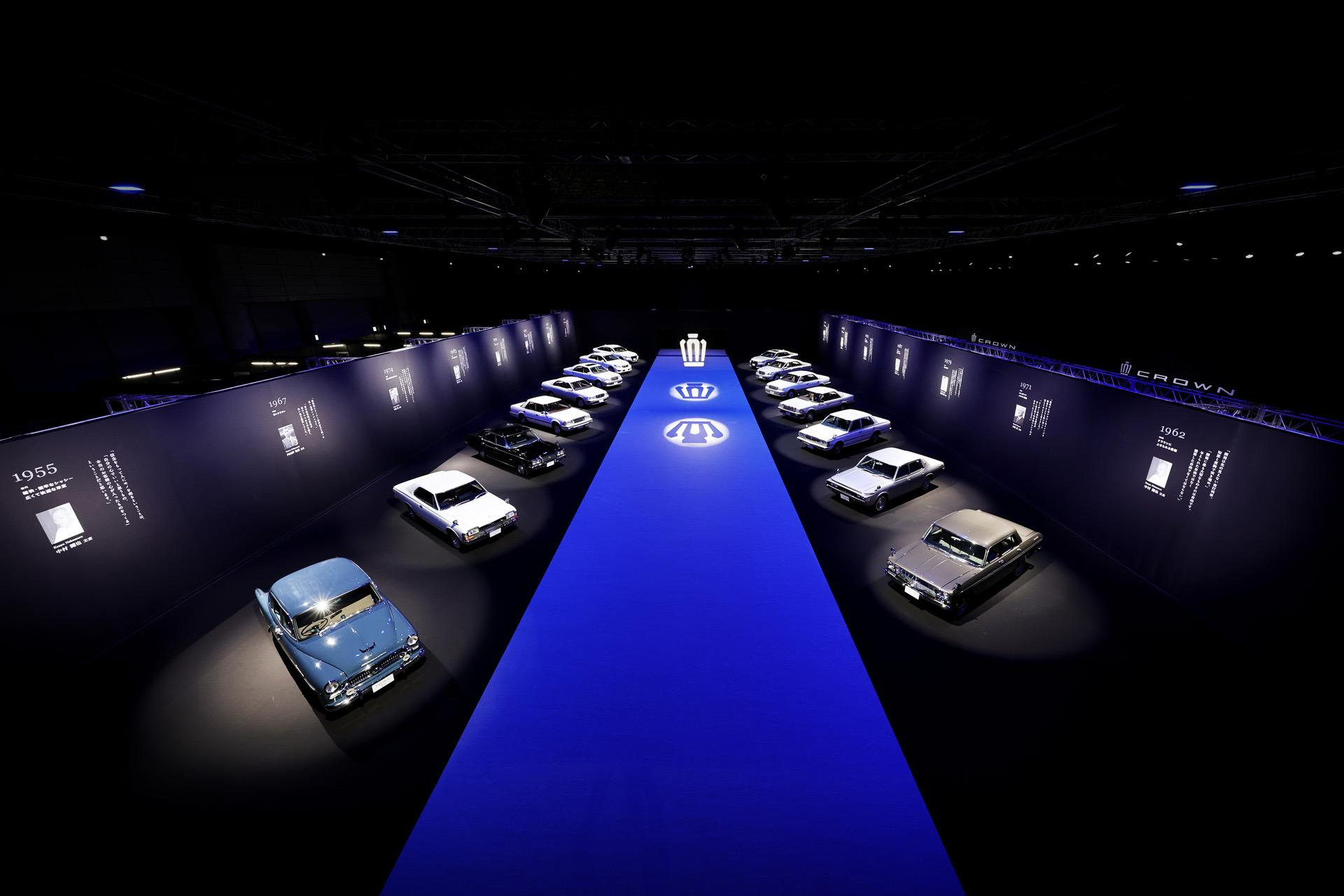
[PCauto] Toyota Crown model history began in 1955. It initiated the era of Japanese passenger cars and gradually became a symbol of success for the Asian elite. Looking back, every generation of the Crown carries distinct marks of its era.
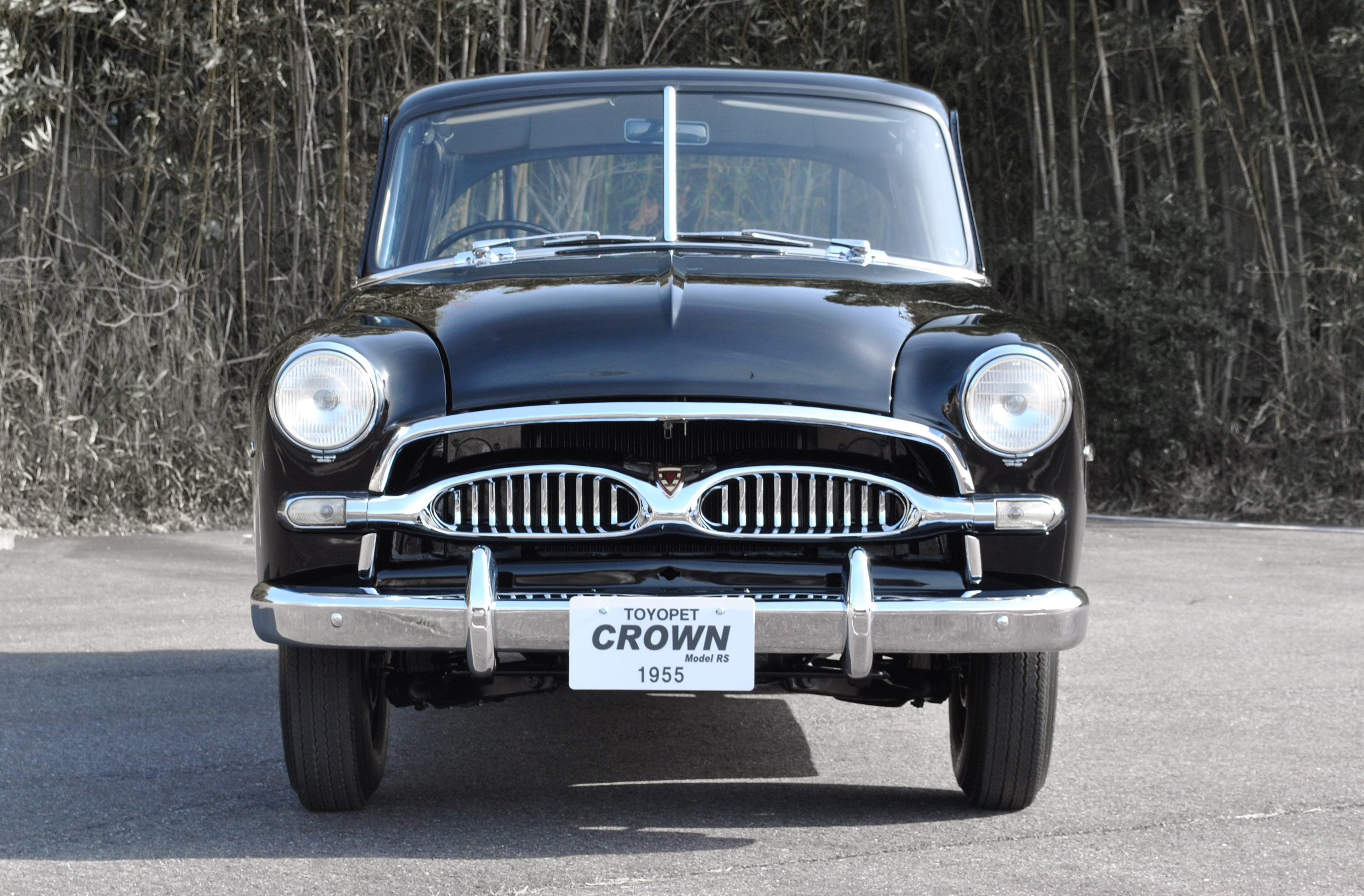
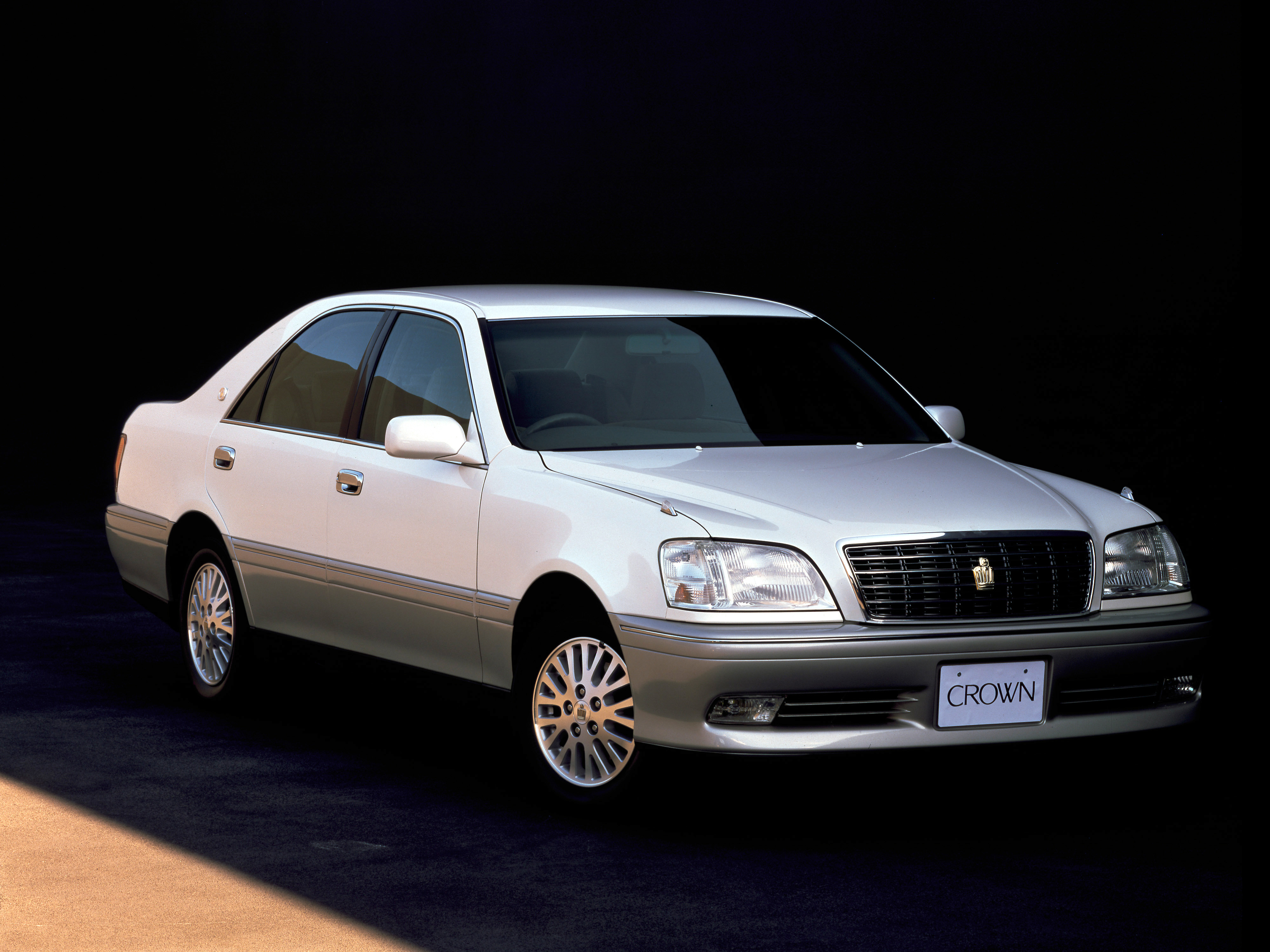
11th Generation S170 (1999-2003), the Crown’s Peak
At the end of the 20th century, following the burst of Japan's economic bubble, a trend of pragmatism swept through the automobile market. The previously extreme pursuit of luxury gradually gave way to rationality.
Under this circumstance, the 11th generation Crown (S170) emerged as the last bastion of traditional Japanese luxury, marking the peak of the Crown.
The Iconic Crown JZS175
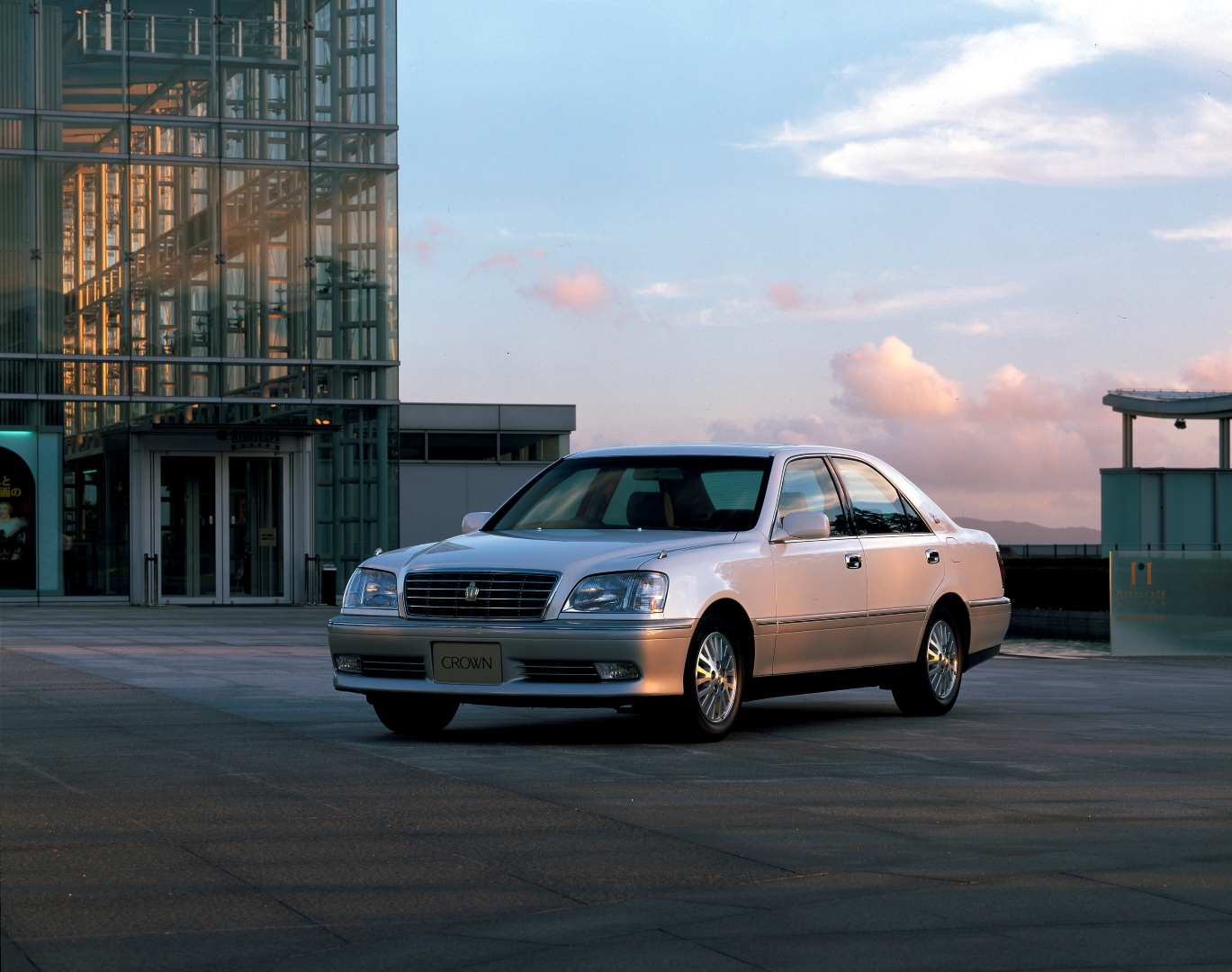
In the Toyota Crown model history, the 11th generation S170 holds a special position. It not only continued the administrative DNA of its predecessor models but also gave birth to the iconic derivative model, Toyota Crown JZS175.
At that time, the Crown had long evolved from its initial role as a taxi or official vehicle into the standard car for Japanese CEOs, embodying the pursuit of elegance and tranquility by Eastern elites. The mission of the S170 and JZS175 was to adapt to practical trends while preserving the brand's hard-earned essence.
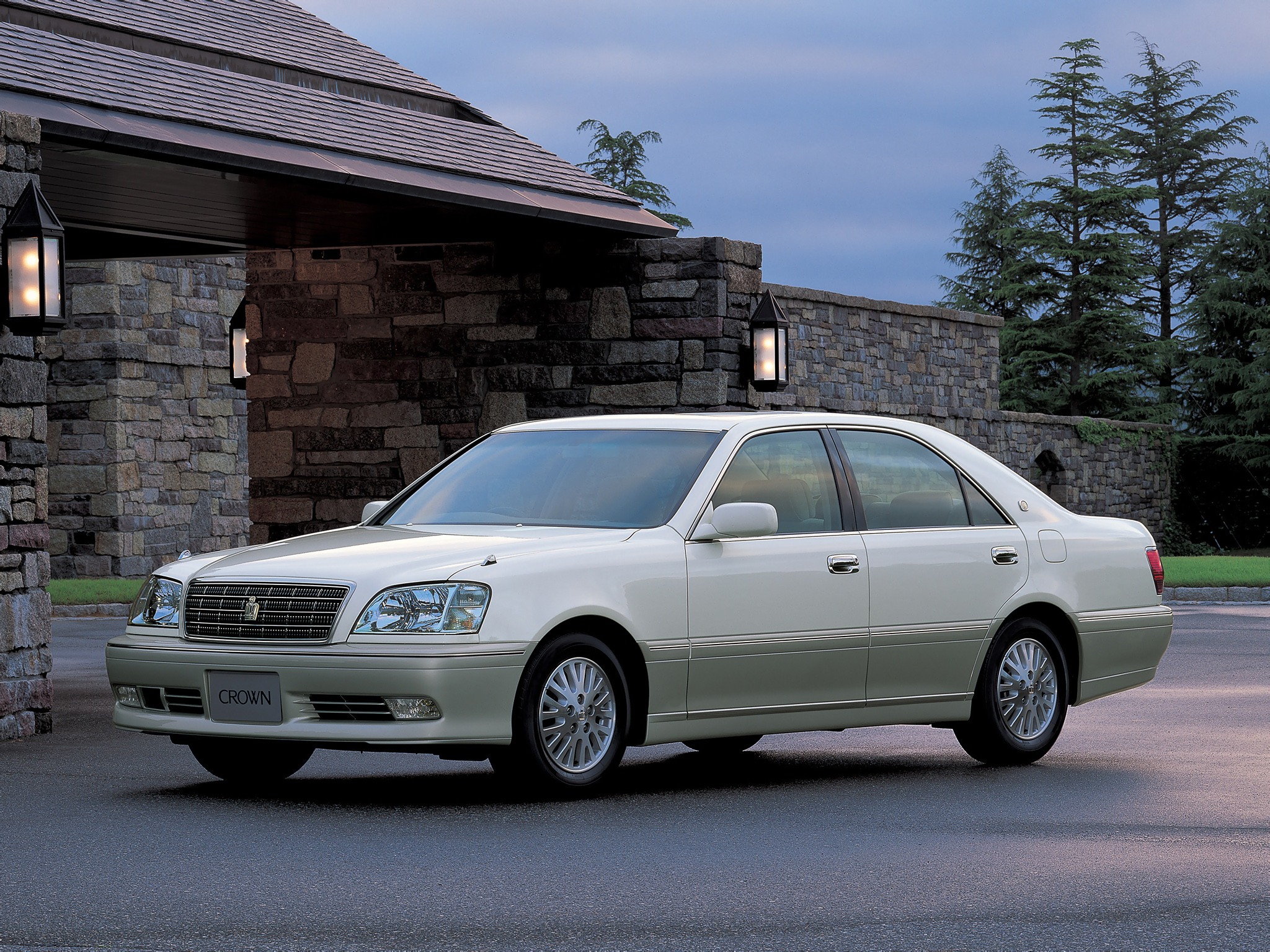
As the high-end version of the S170 series, the Toyota Crown JZS175 further enhanced its executive luxury attributes in terms of configuration and details. It also carried forward the smooth texture of the inline-six engine, standing as a benchmark of Japanese luxury at the time.
The JZS175's compromise on space
To meet the consumption changes during the economic downturn, the S170 and its derived model JZS175 made compromises: while retaining a sense of prestige, it increased interior space by shortening the front overhang design.
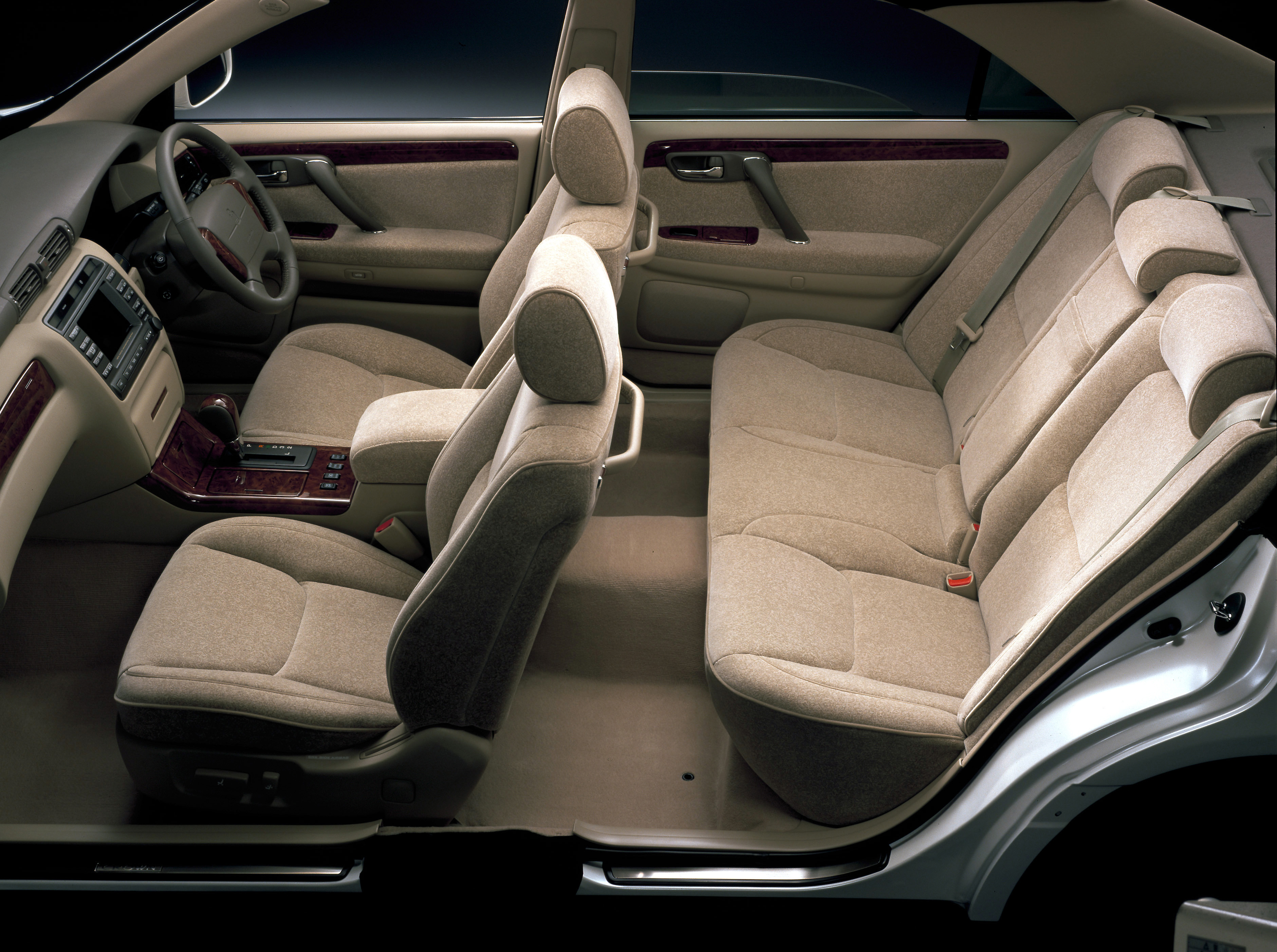
Although the Crown at that time still maintained dimensions of 4820/1765/1455 mm in length, width, and height, the 2780 mm wheelbase paired with a short front overhang layout significantly improved the interior space. This not only satisfied rear-row needs for business trips but also aligned with consumers' pursuit of practicality.
Toyota's classic engines: 1JZ and 2JZ
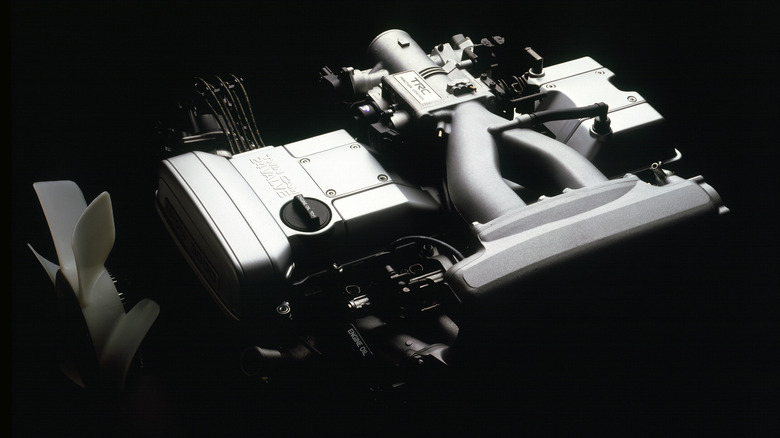
The Crown S170 series and JZS175 are all equipped with the last inline-six-cylinder engines in Crown's history, namely the 1JZ and 2JZ series.
These two engines not only maintained the Crown's smoothness and quietness but also gained fame in the modification circles due to their powerful performance.
The 2.5-liter 1JZ-GTE turbocharged engine could produce 280 horsepower (limited by Japan's "gentleman's agreement"), while the 3.0-liter 2JZ-FSE engine became a classic choice for performance enthusiasts.
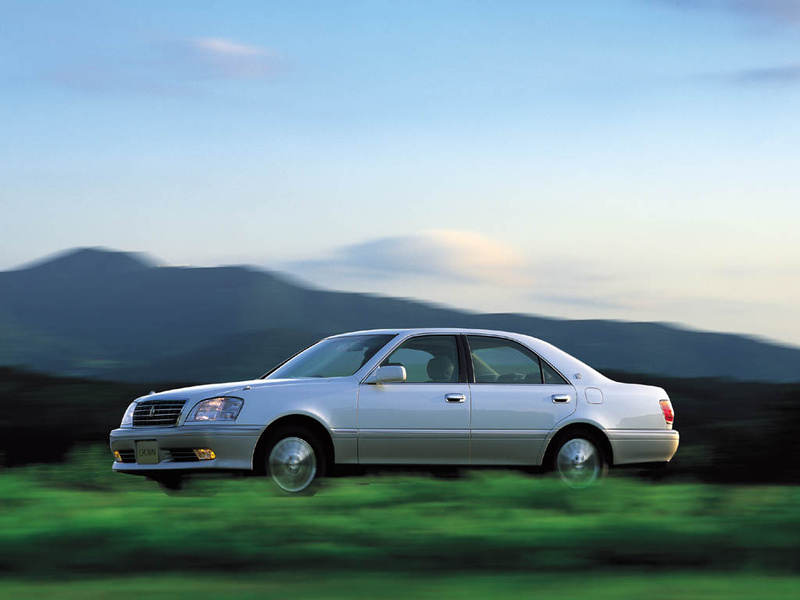
With its front double-wishbone and rear multi-link chassis structure, this generation of the Crown finds a subtle balance between comfort and performance.
Additionally, the Athlete sports version launched in 2001 and the world's first mild hybrid system marked new breakthroughs in both sportiness and environmental friendliness.
Meanwhile, Crown Majesta was separated from the series to become an independent high-end lineup, further strengthening the administrative positioning of the S170 and JZS175. The JZS175, with its exceptional quietness and luxurious configurations, became a swan song of traditional Japanese executive luxury vehicles.
"Old person's car"
The S170 and JZS175 spared no effort in preserving the quietness as their last stronghold. However, due to overly conservative designs and strong administrative vibes, they were labeled as "old person's cars."
Meanwhile, Lexus GS and other global luxury models, with their younger designs and more advanced technological features, increasingly squeezed Crown's market space. Younger consumers became more distant from this "fathers' car."
This generation of the Crown marked both its pinnacle and the seeds of its crisis. It proved that clinging to tradition alone could not withstand the tides of change.
12th Generation S180 (2003-2008), ZERO CROWN
As the "old person's car" label of the 11th generation Crown became increasingly entrenched, Toyota finally realized that older car owners were gradually aging, while the younger generation of consumers strongly rejected the boxy and staid design and dull image of the old Crown models.
If it failed to fundamentally reinvent itself, this nearly 50-year-old brand would eventually fade into oblivion.
Thus, the 12th generation Crown (Toyota Crown S180) came into existence, and true to its name, it was called "ZERO CROWN."
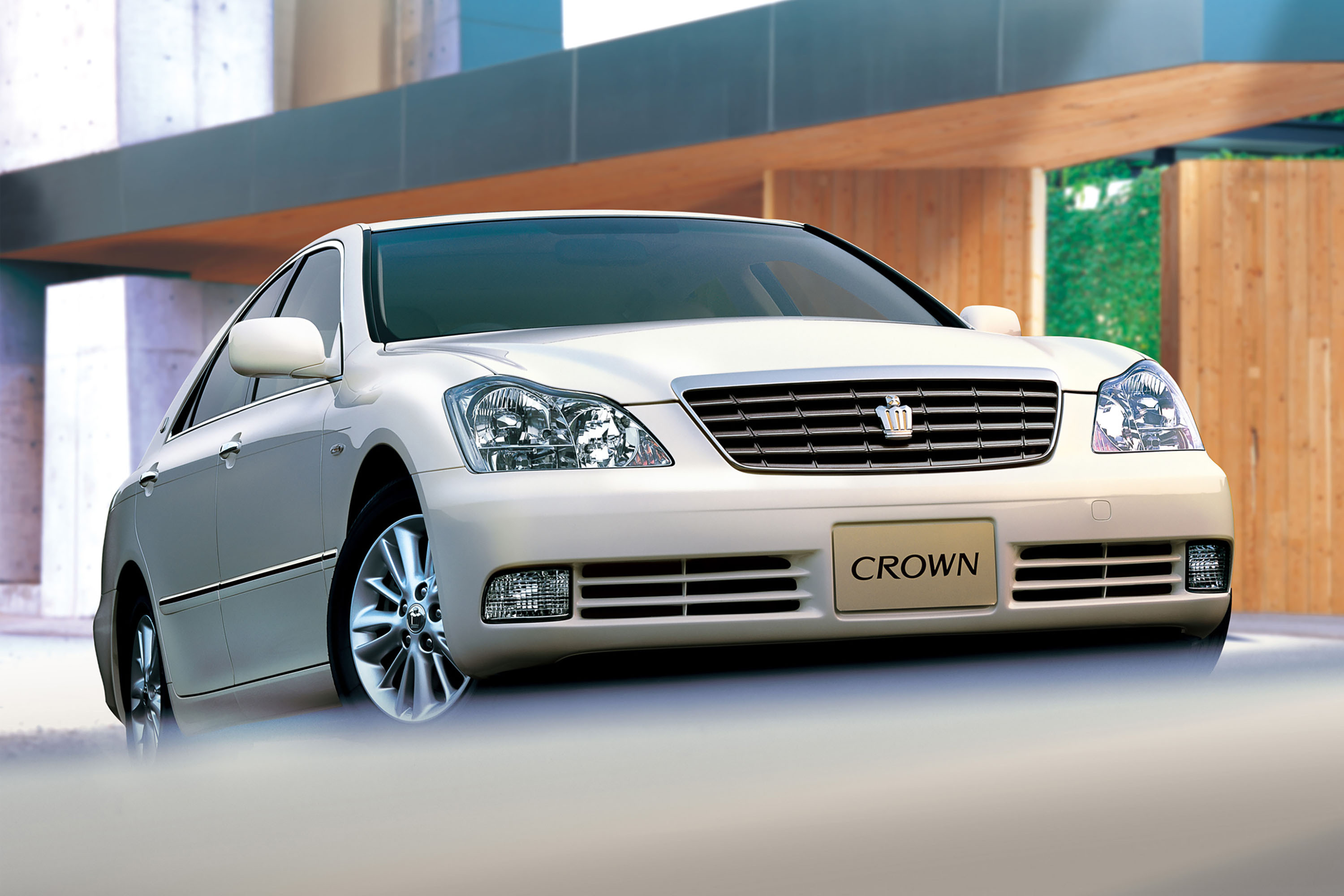
This signifies that the Crown faced a rebirth from scratch, a revolutionary step to "kill its past self," and it became the most defining transformation in Toyota Crown's model history.
The 12th Generation Crown Begins to Embrace Youthfulness
The birth of the Toyota Crown S180 shattered the design constraints of previous generations and marked the beginning of the Crown's journey towards a younger image.
The naming of "Zero Crown" demonstrates Toyota's determination to start anew: whether in terms of exterior, interior, or mechanical structure, the Toyota Crown S180 completely abandoned the design constraints of the older Crown models and was truly developed from scratch.
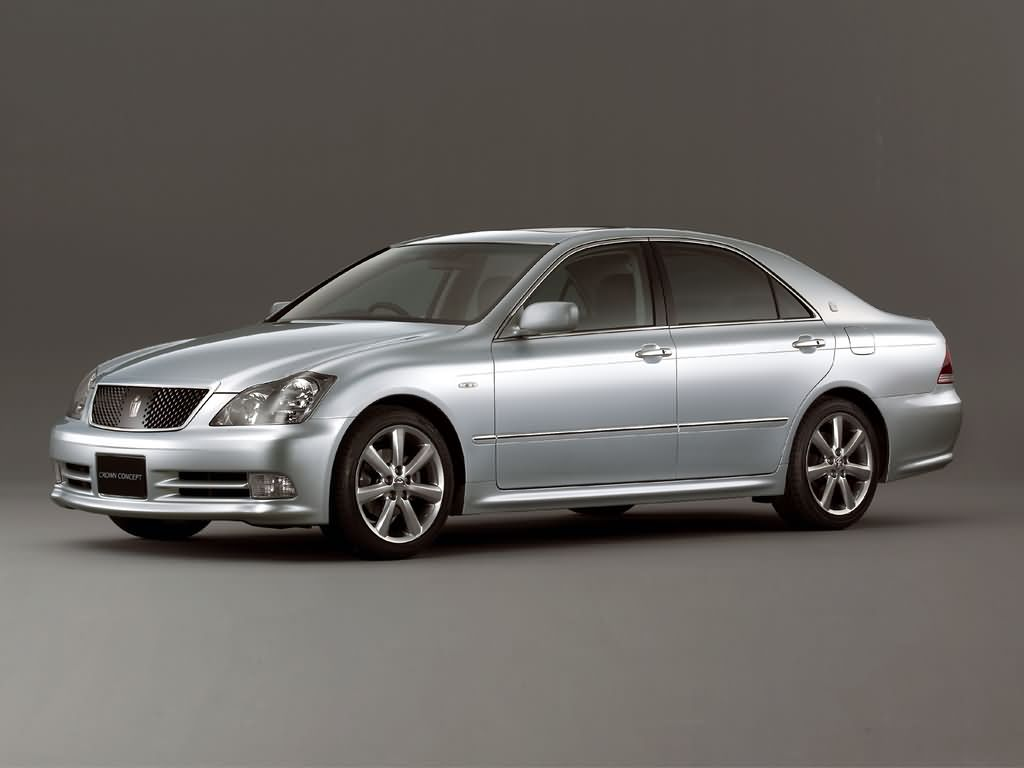
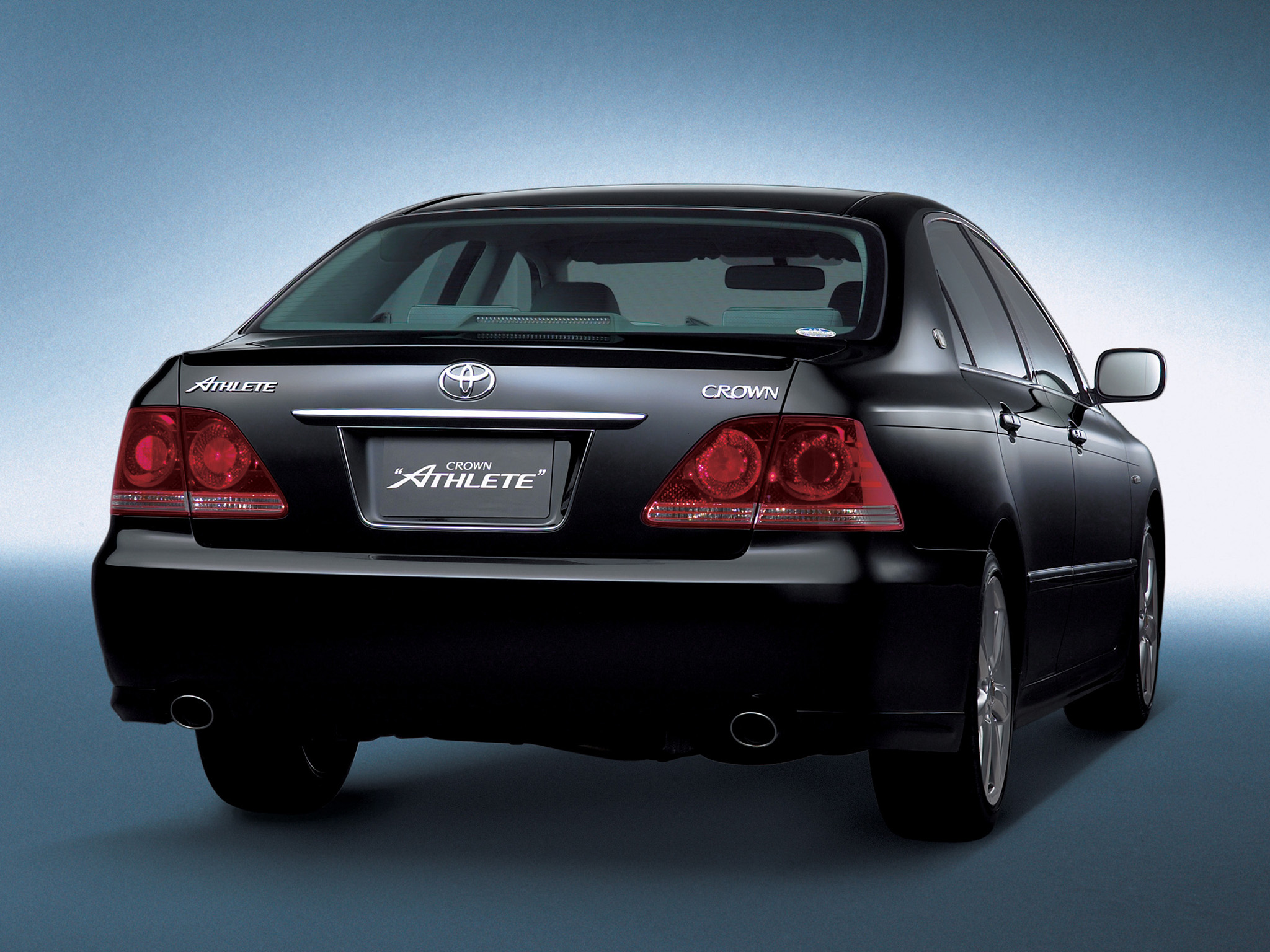
The S180 discarded the boxy and rigid appearance of the past, adopting a sleek and streamlined design with a drag coefficient as low as 0.27. The sharp headlights, robust C-pillars, and simple rear end made this executive sedan exude a youthful vibe for the very first time.
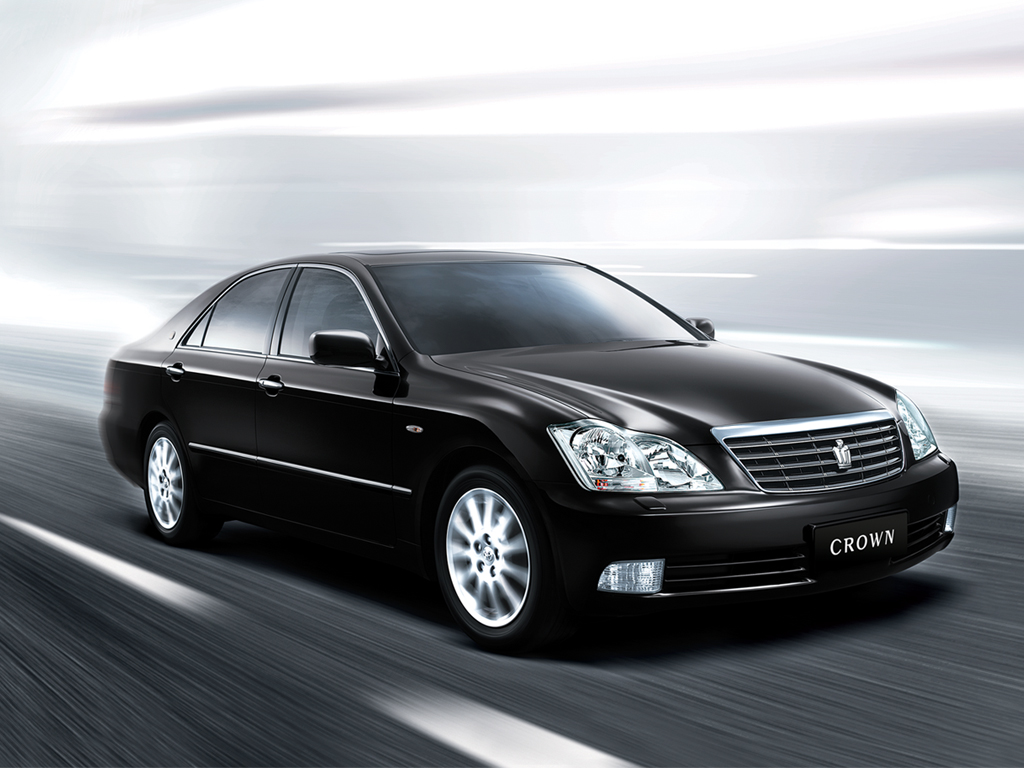
The dimensions of the car body have been further enlarged, with length, width, and height reaching 4840 mm/ 1780 mm/ 1470 mm. The wheelbase has increased by 70mm compared to the previous generation, reaching 2850 mm.
The short front and rear overhang design provides a more spacious interior, and the fully flat design of the passenger seatback further enhances the comfort of rear passengers.
Regarding the interior, the addition of a four-spoke multifunction steering wheel, 8-inch voice navigation system, keyless start system, and knee airbags enhances both luxury and a sense of technology. The G-BOOK in-car intelligent communication system introduced in 2006 further keeps it in line with the trend of the intelligent era.
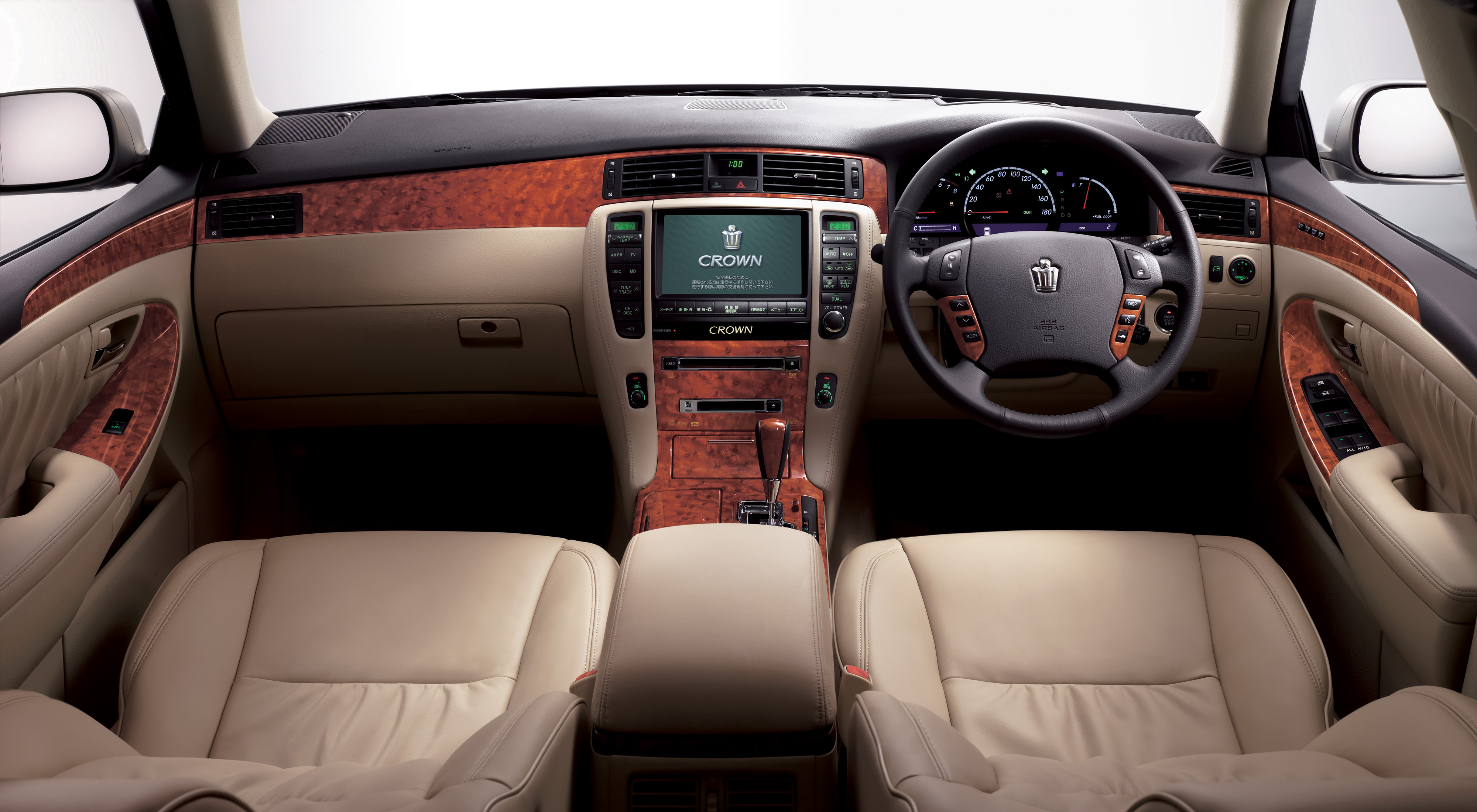
In the Toyota Crown model history, the S180 has become a symbolic model of the "rebirth" of the Crown brand with its revolutionary design and comprehensive upgrades.
V6 GR Series Engine
The technological leap is the core of the Toyota Crown S180's rebirth. Toyota boldly abandoned the traditional inline six-cylinder engine.
The twelfth-generation Crown is equipped with the V6 GR series engine, covering three displacement versions: 2.5 liters, 3.0 liters, and 3.5 liters. Combined with dual VVT-i and direct fuel injection technology, alongside a brand-new 6-speed automatic transmission, it achieves comprehensive improvements in power output and fuel economy.
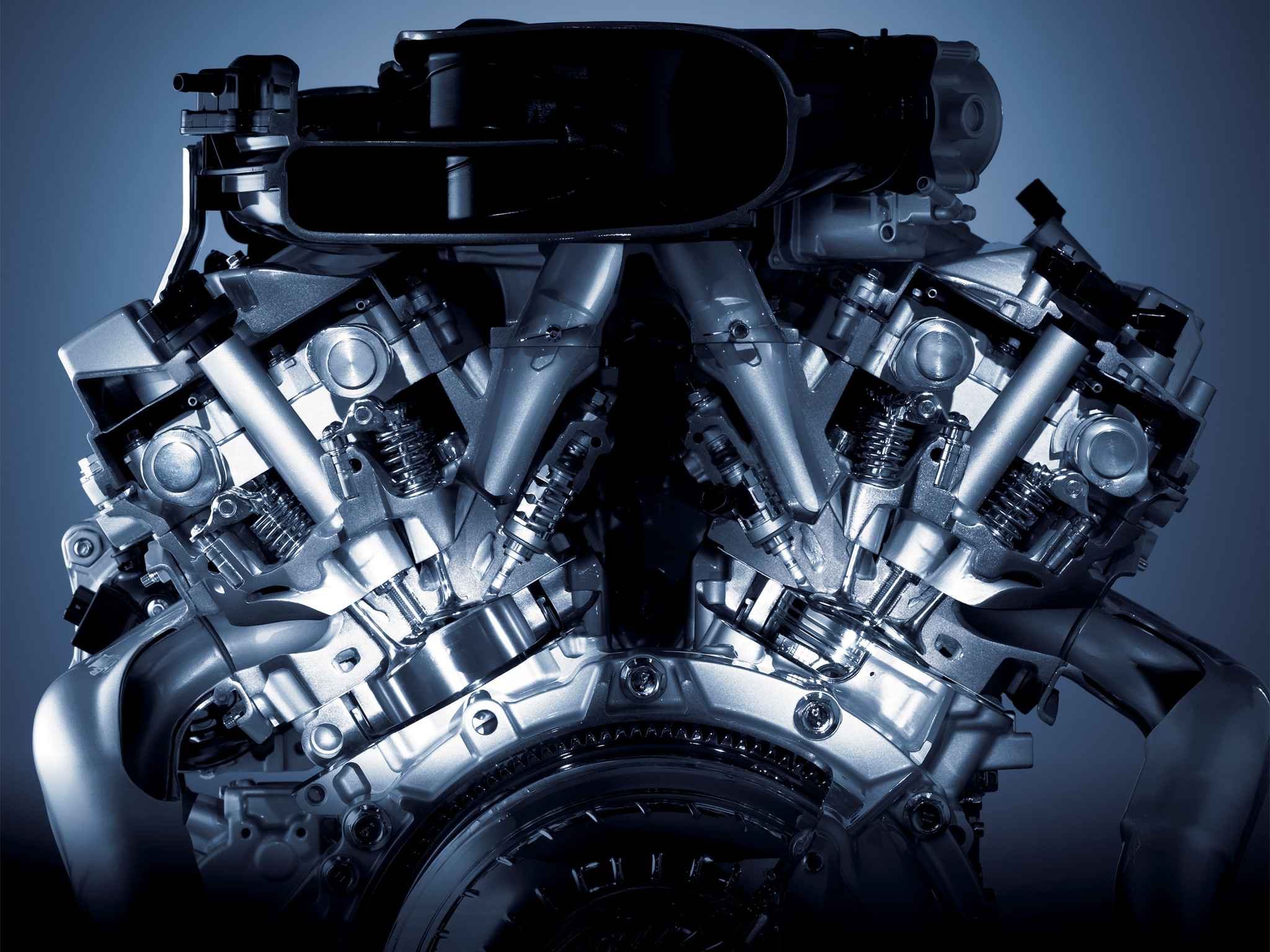
At the same time, the introduction of the brand-new N platform emphasizes better handling, completely getting rid of the previous label of "focused only on comfort, light on handling".
This rebirth from scratch successfully saved the Crown that was on the verge of decline and showed people the plasticity of this classic brand.
15th Generation S220 (2018-2022): The Sporty Crown
From the 12th generation Toyota Crown S180 to the 14th generation, the Crown had steadily evolved towards "youthfulness and better handling", but no matter how it adjusted, the label of "traditional executive car" always followed closely, making it difficult to completely shake off.
The market starts to favor SUVs, shrinking the executive sedan market
During this period, although the Crown underwent iterations, it was never able to break through the limitations of market perception. Meanwhile, the global automotive market underwent significant changes, with SUVs becoming the mainstream choice of consumers.
Preferences began shifting from traditional sedans to more practical crossover models and SUVs with better off-road capabilities.
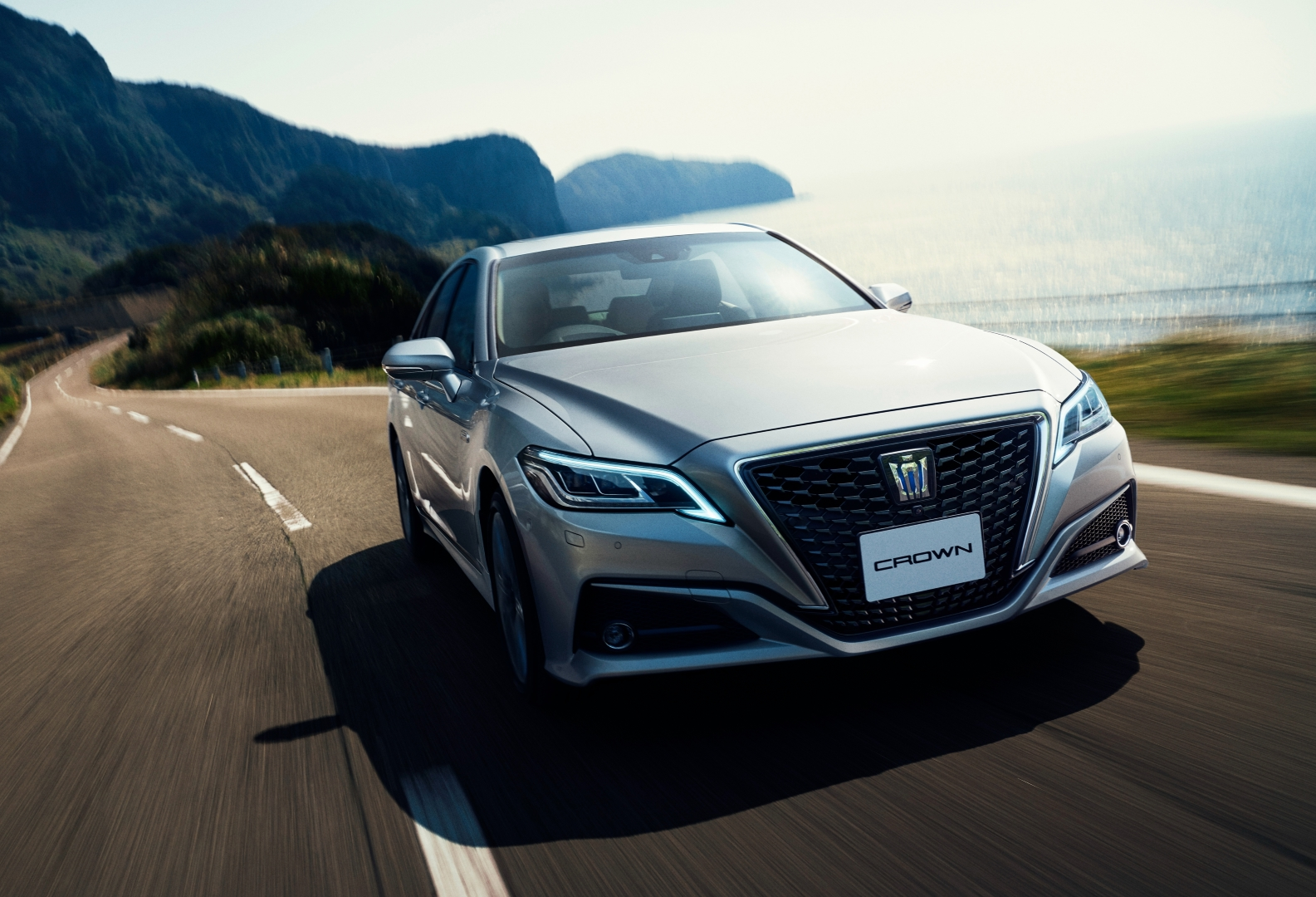
Under such circumstances, the 15th generation Crown (S220) took on the mission of "breaking the norm entirely". It debuted with an extremely sporty posture, becoming a "maverick forged at Nürburgring", aiming to seize the driving enthusiast market during the sedan recession and find a new survival path for the Crown.
Thorough Sporty Transformation of the Crown
To achieve a "thorough sporty transformation", the S220 made several bold design adjustments:
Extended wheelbase and adopted six-window design to make the car's lines more dynamic;
The chassis underwent repeated tuning on Nürburgring track, making suspension settings more rigid and steering feel more precise, completely shedding the previous label of being "comfort-oriented".
In terms of powertrain, it introduced a combination of a 2.0T engine and an 8-speed automatic transmission, further enhancing sporty performance.
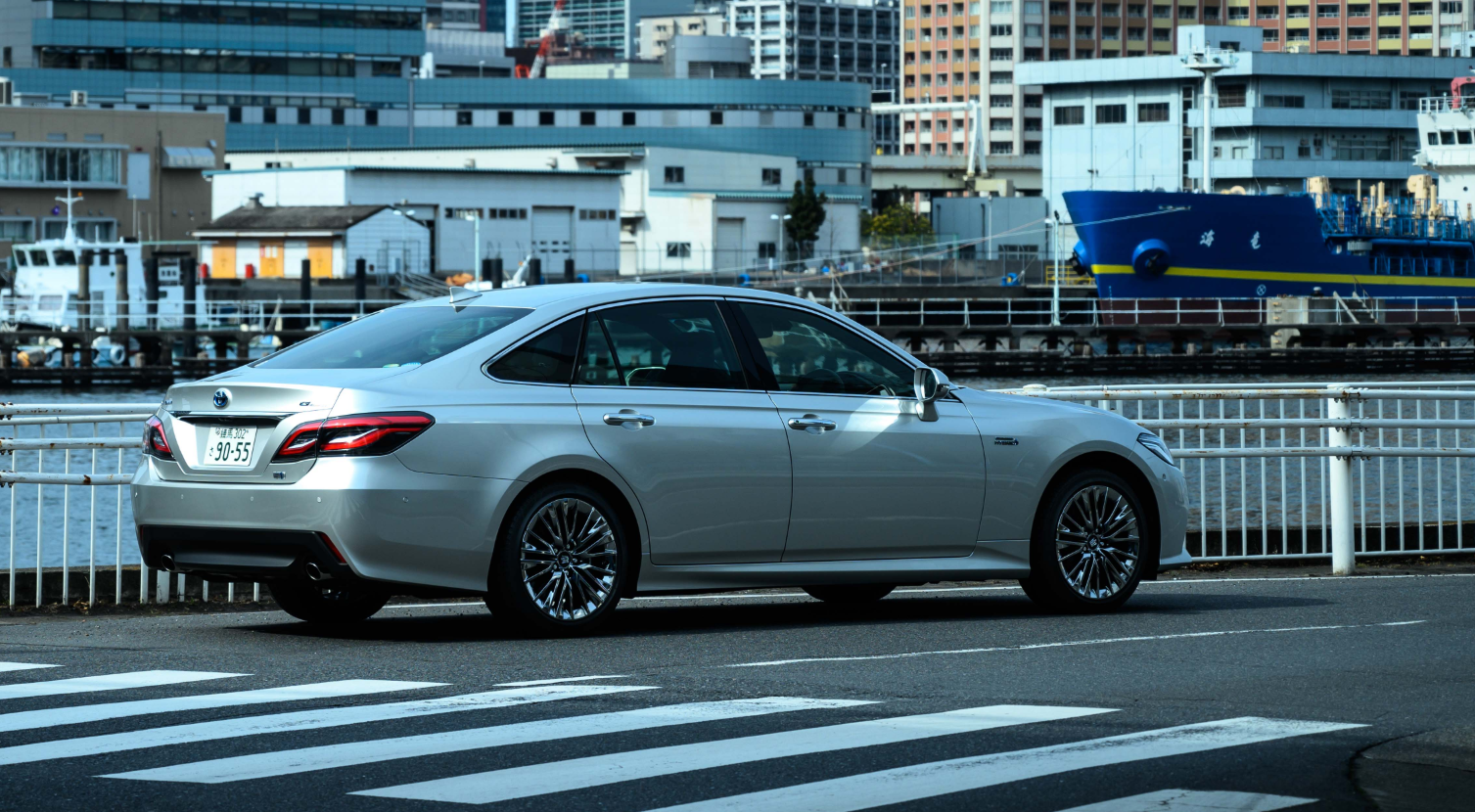
In addition, Toyota has made more efforts to attract younger audiences with this generation of the Crown, such as launching the "Reborn Pink" pink Crown Athlete version in cooperation with TV personality Terry Ito, aiming to capture the attention of young consumers.
Although most eventual buyers are male users, it still shows the determination to break stereotypes.
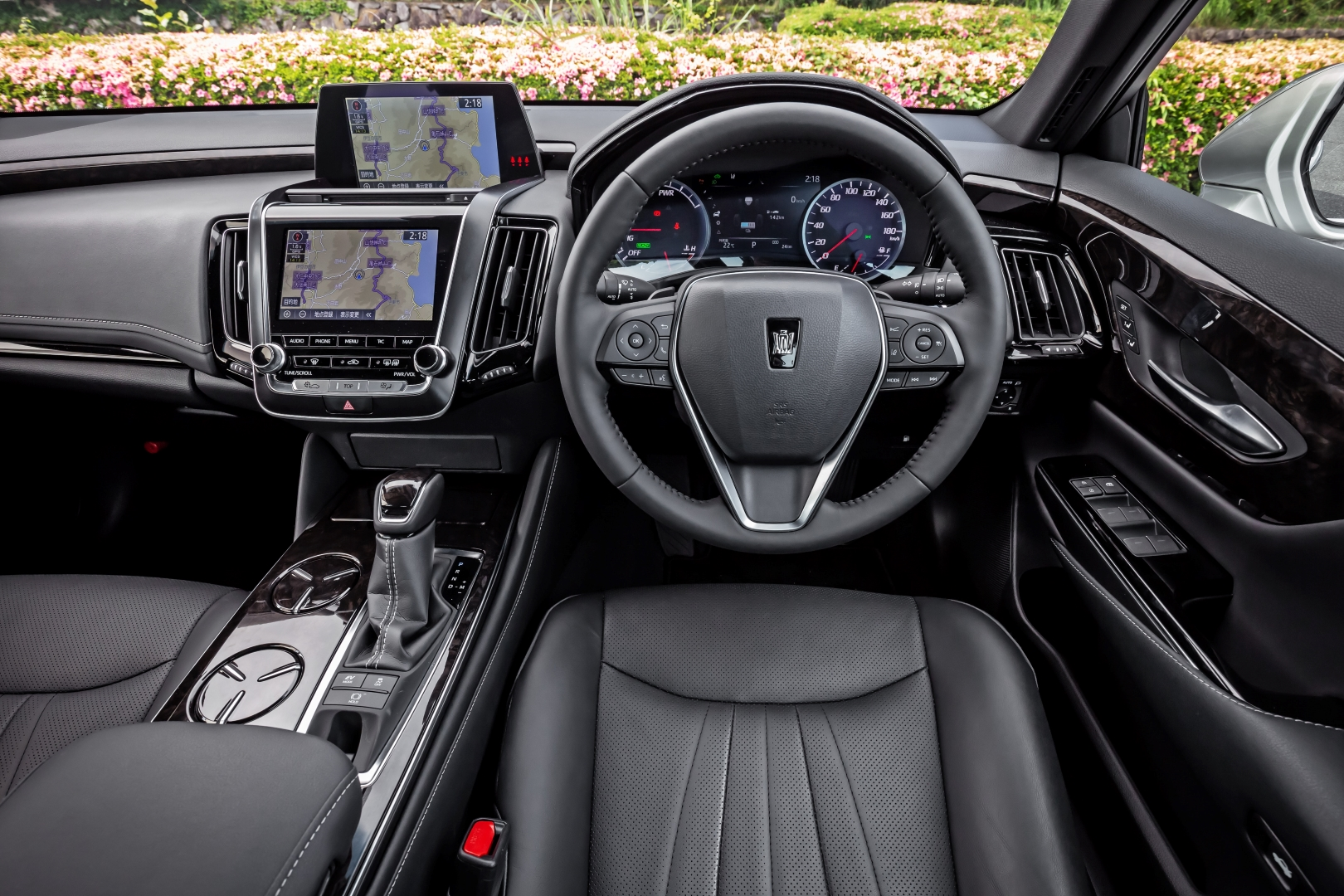
The 12th-generation Crown that ended in failure
This generation's attempts represent the most extreme exploration of "sportiness" in Toyota Crown model history, but the effort ultimately ended in failure.
While the S220's efforts made it shed its old-fashioned label, it also lost the Crown's core executive temperament.
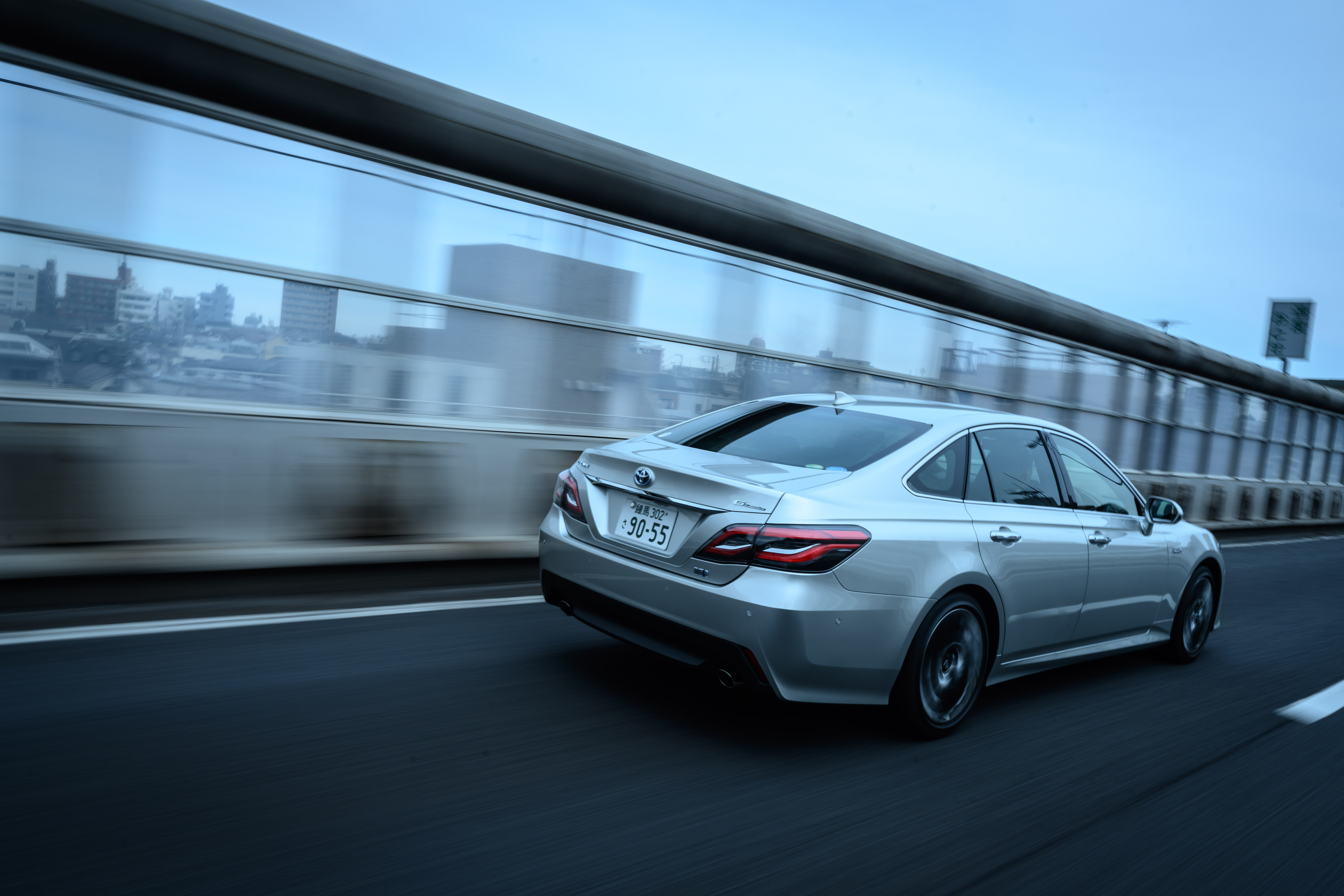
More importantly, it failed to recognize the core trend of the market: consumers' demands for vehicles have fundamentally changed. Simply making sedans sportier cannot reverse the decline of the sedan market or compete for the market share already dominated by SUVs and crossovers.
The 16th-Generation TNGA-L (2022 - present): A Crown built to survive
The failure of the 15th-generation Crown has made Toyota fully understand that a single sedan form can no longer sustain the Crown brand's continued survival.
Thus, the Crown, launched in 2022 with the 16th generation, underwent the most thorough transformation in its history. It is no longer just a single model but has been reshaped into a complete brand lineup.
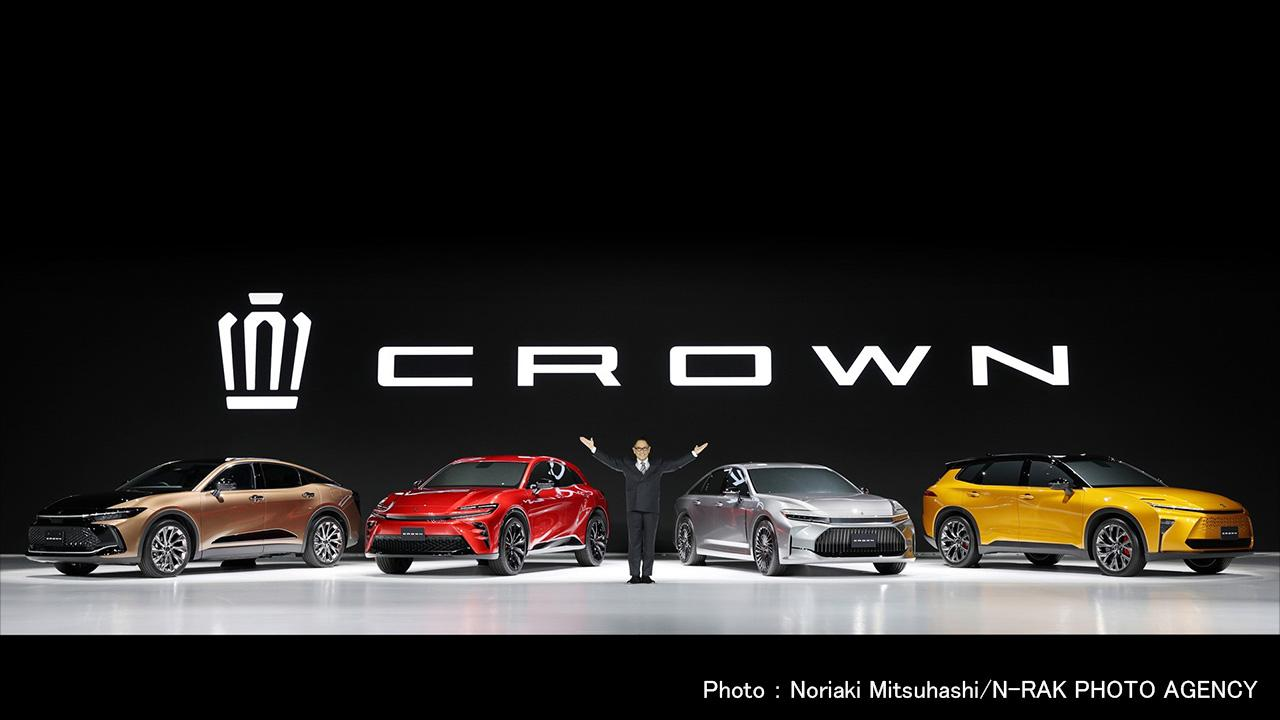
Launching Crown derivative models is to keep Crown alive
Akio Toyoda uses this transformation to provide an answer for Crown's survival, extending Crown's spirit through the SUV version of Crown.
First, Toyota has launched three crossover/SUV models based on the TNGA-K platform:
Crossover
Sport
Estate
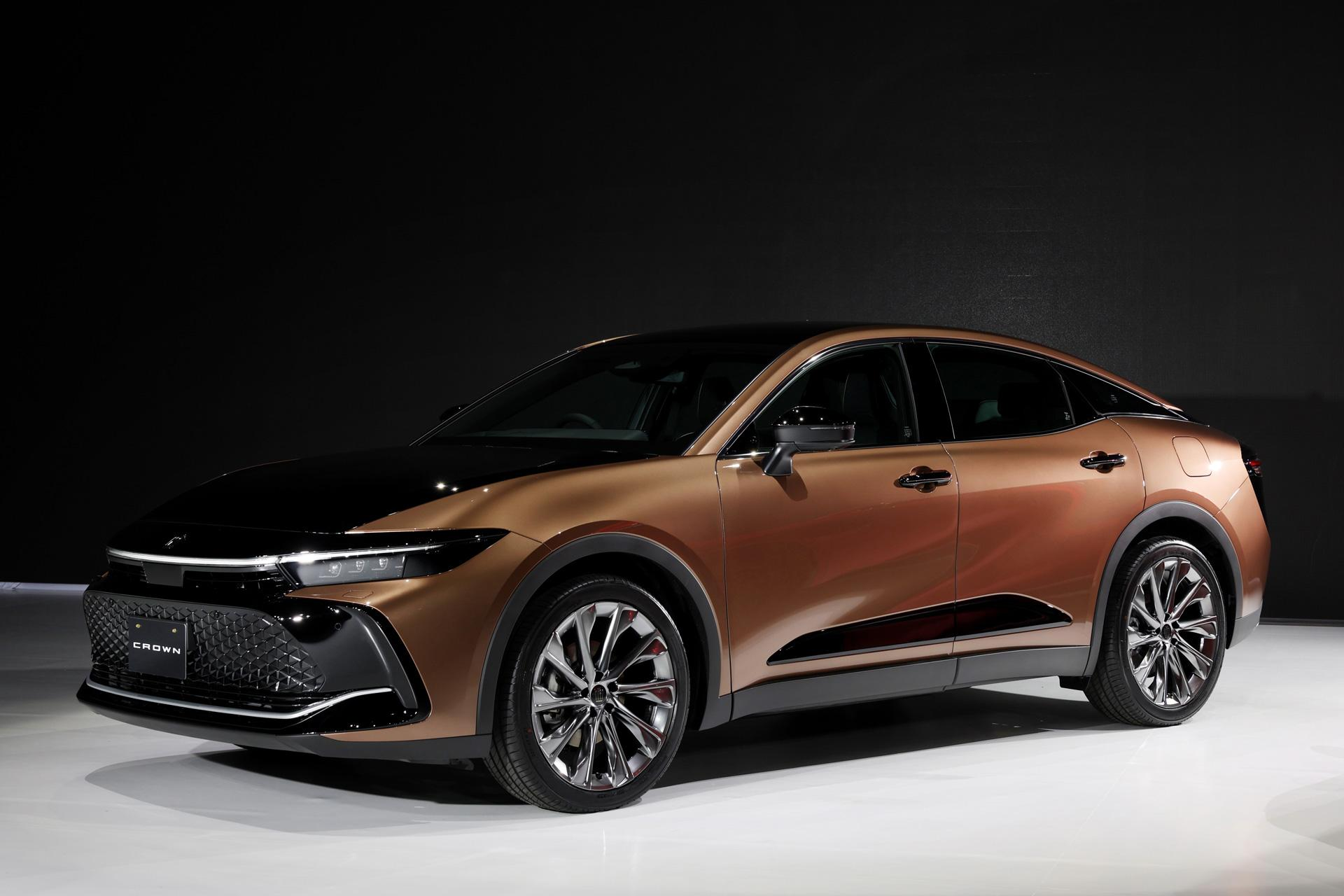
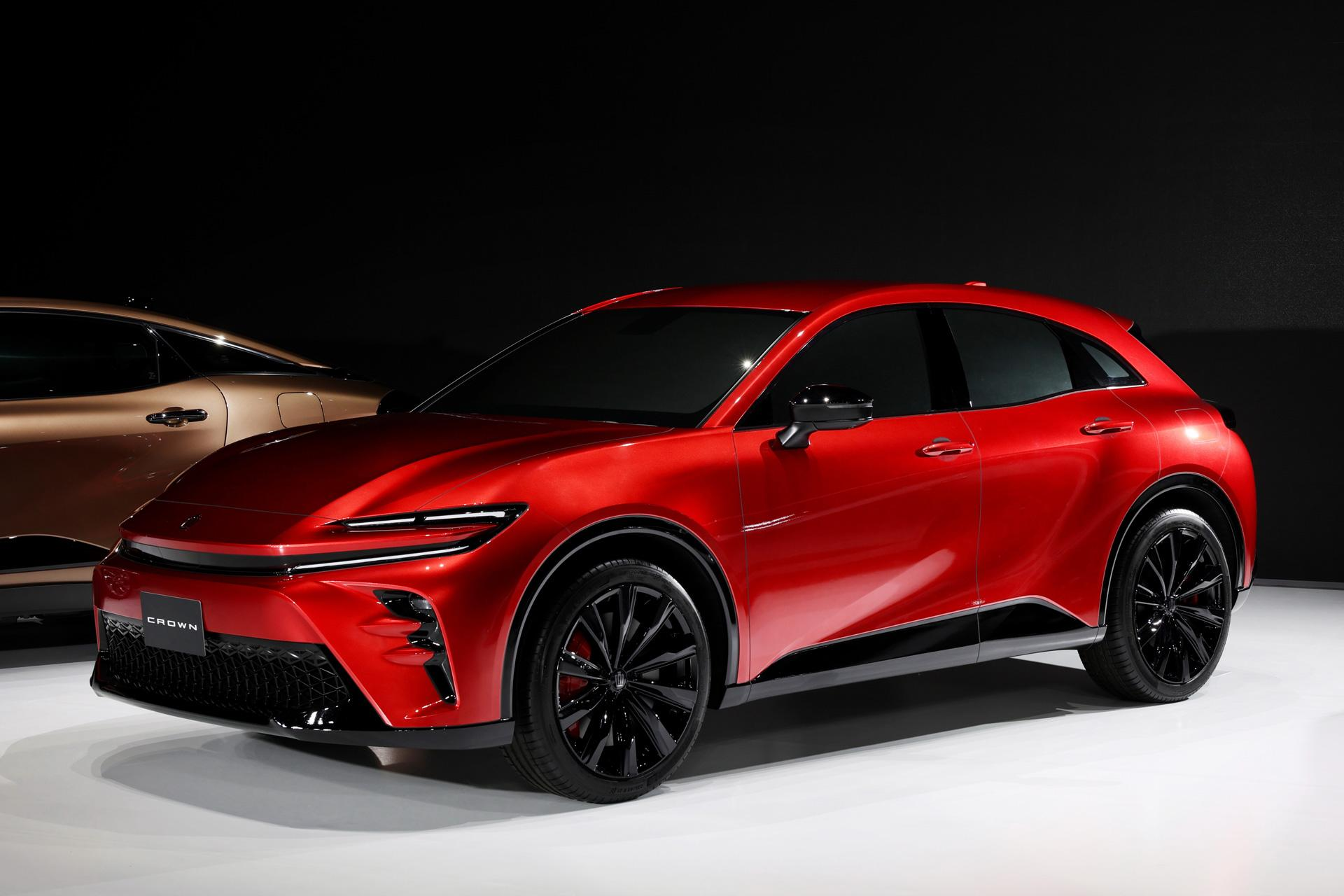
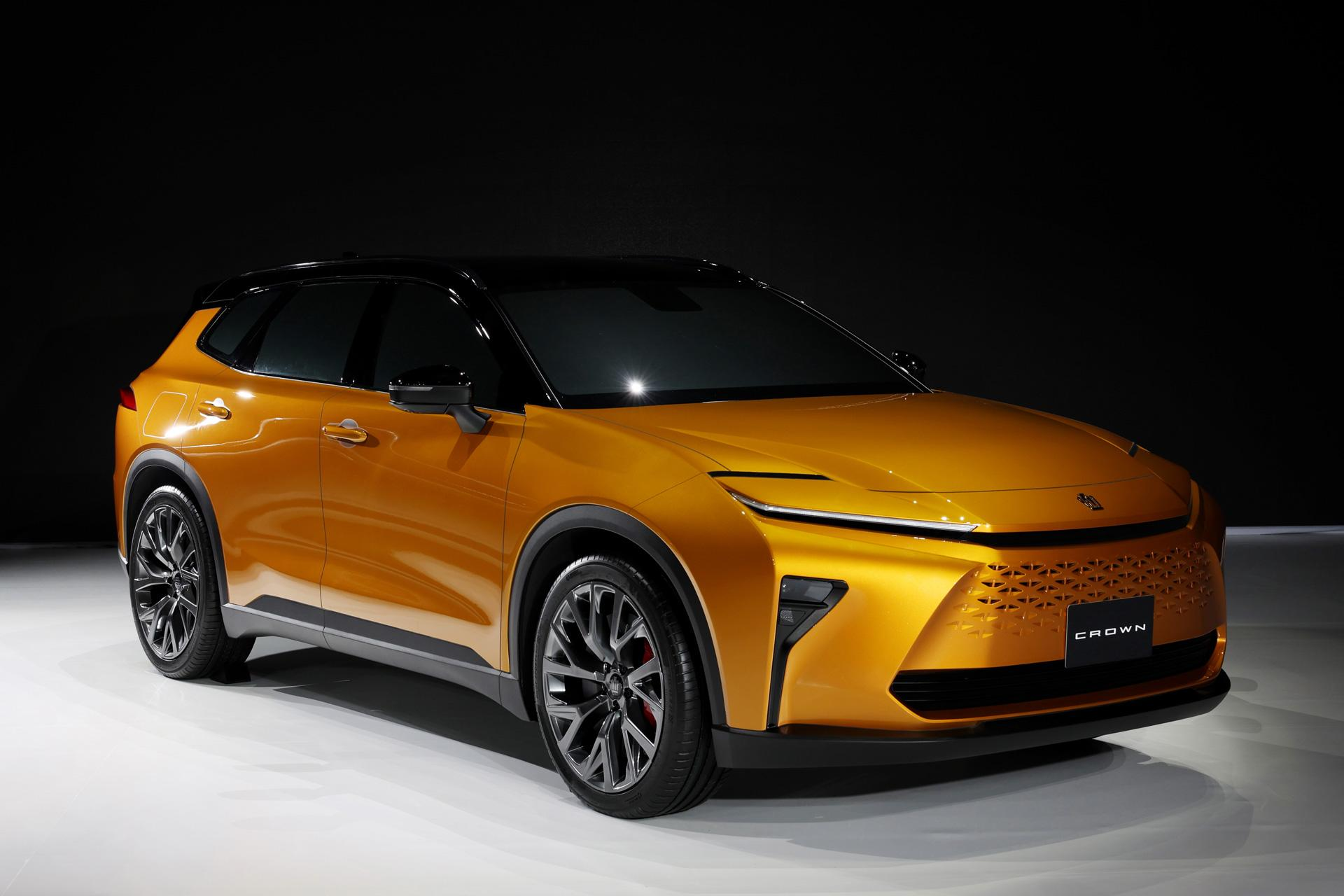
The TNGA-K platform, as part of Toyota's global architecture, has the advantages of controllable cost and strong adaptability. Models built on this platform have a lower entry threshold and broader audience, enabling higher sales volume.
Toyota aims to use these mass-market models to capture the mainstream, build sales volume and revenue—letting its volume carriers keep the "Crown" name alive in the fiercely competitive market. This "Crown" refers to the Crown Sedan built on the TNGA-L platform.
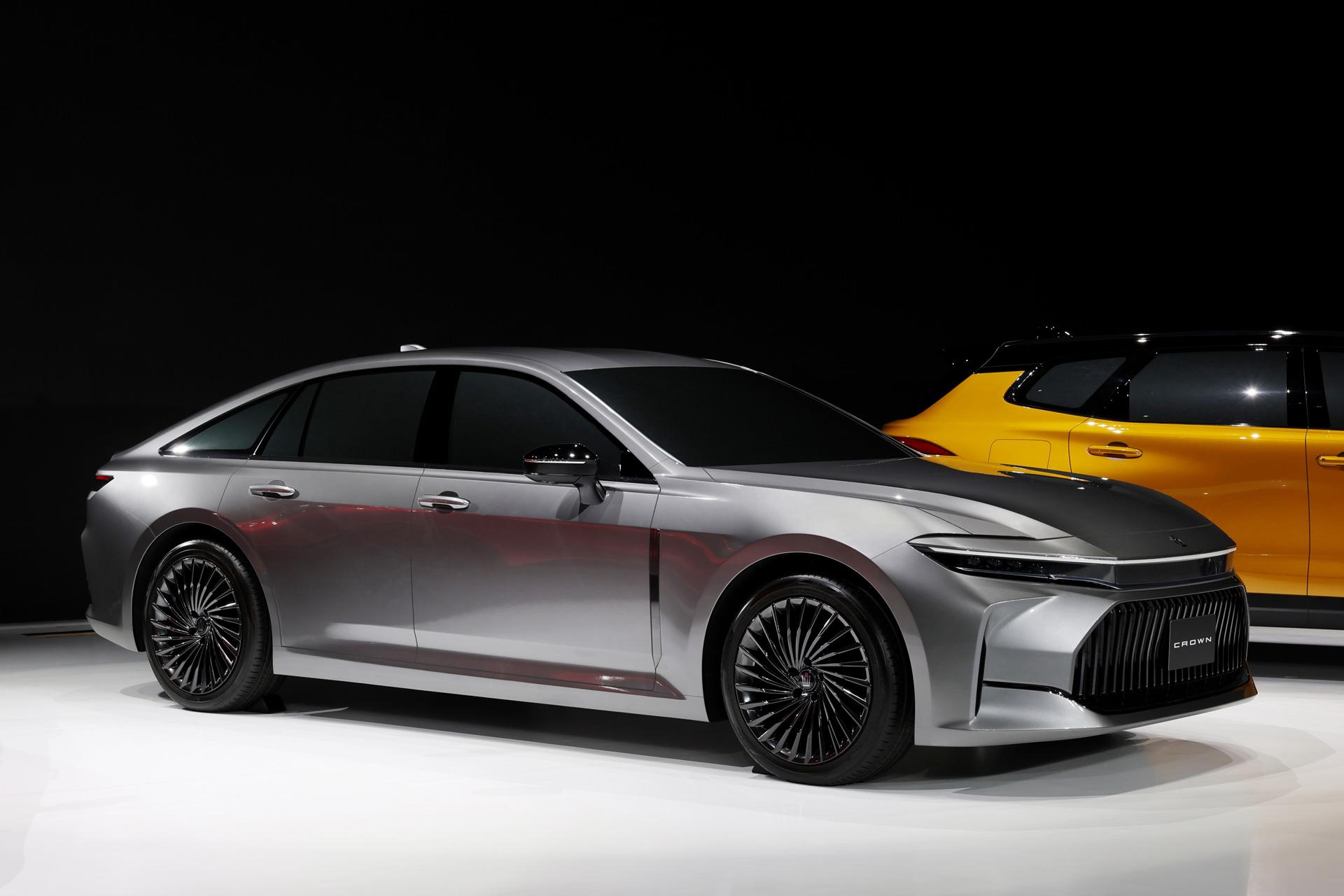
The Crown Sedan born on the TNGA-L platform is the real Crown
Why insist on a traditional sedan while promoting mass-market expansion? The answer is simple: this Sedan is the real Crown.
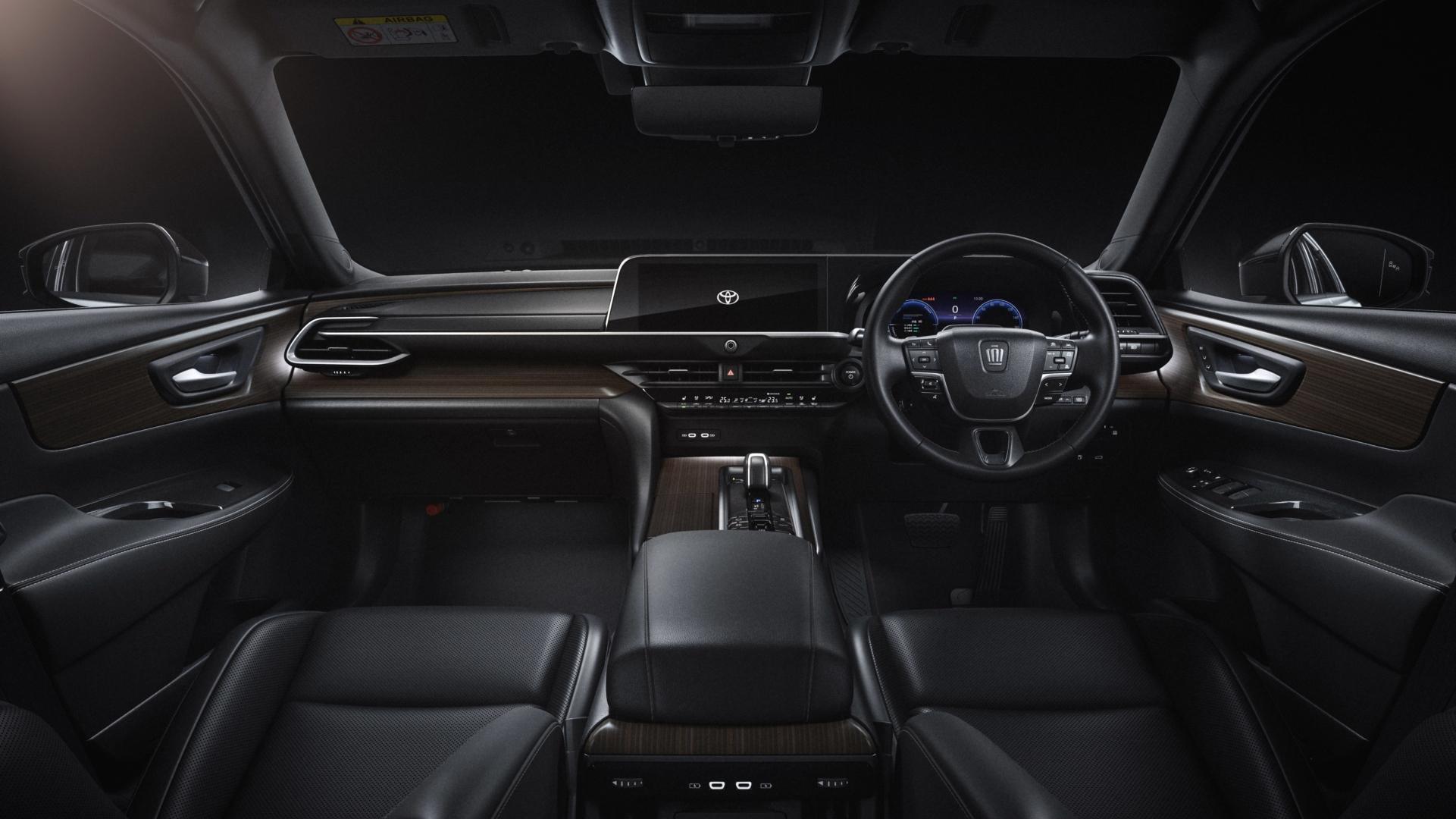
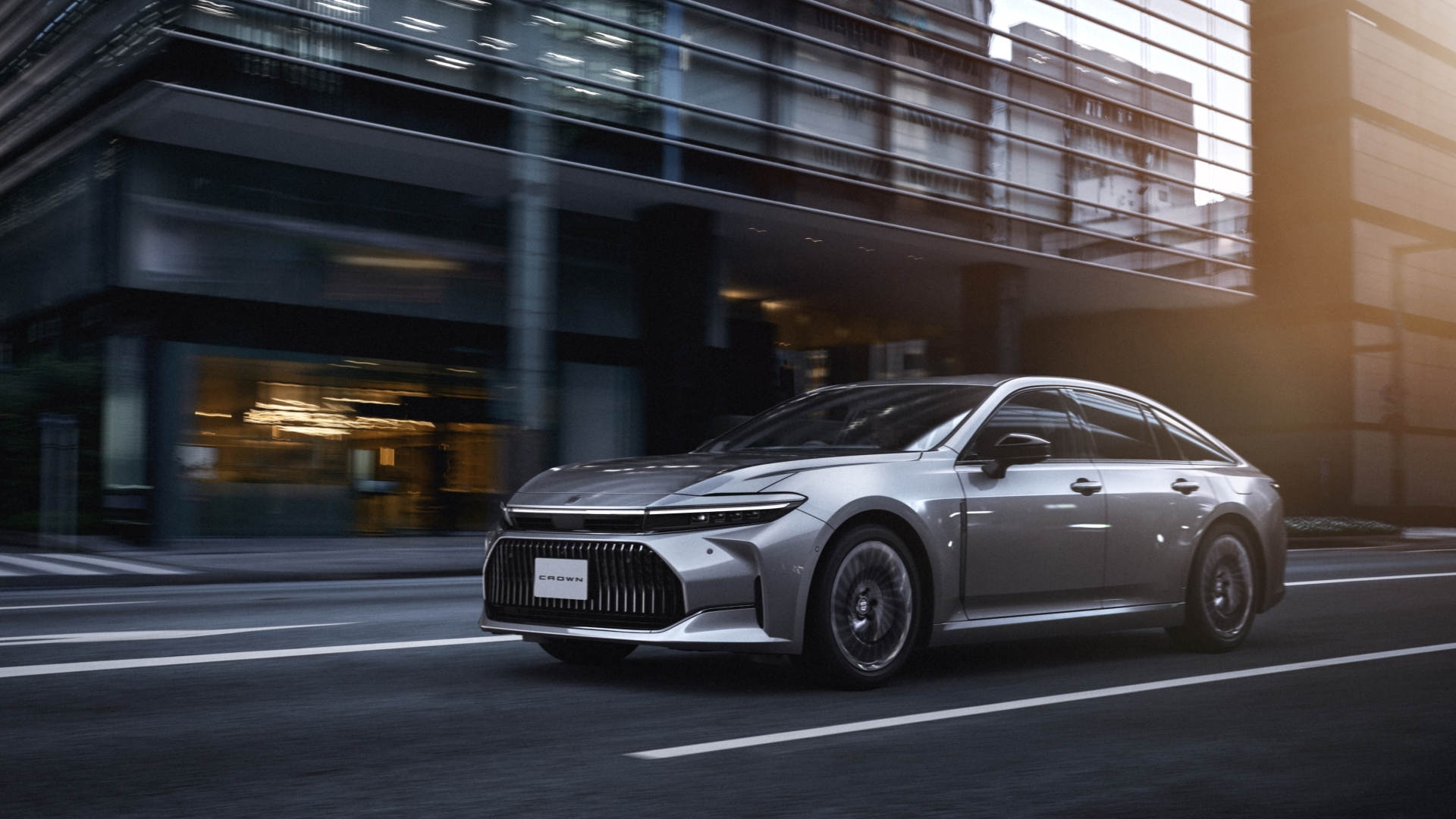
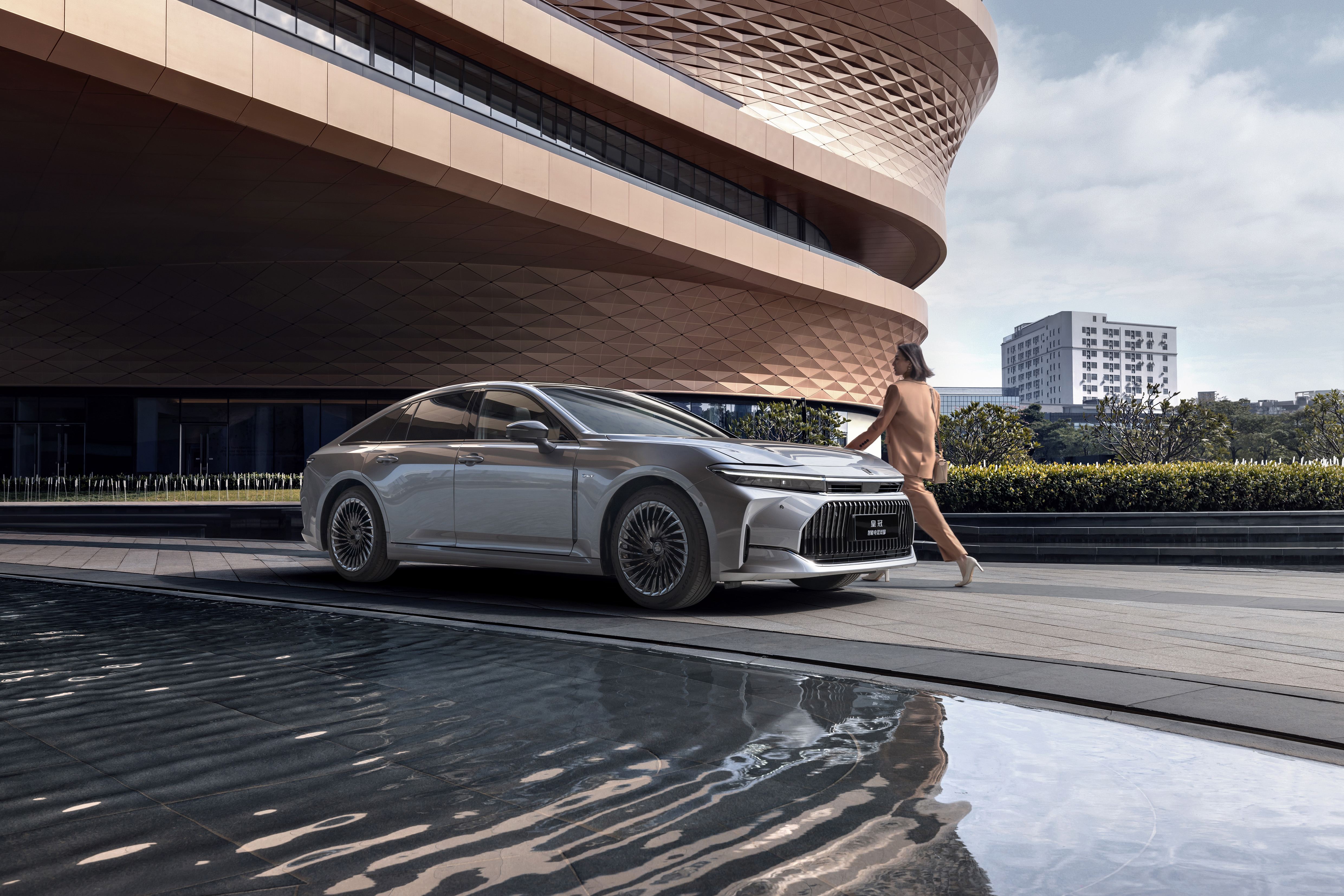
The Crown Sedan continues the classic layout of longitudinal rear-wheel drive, even offering a hydrogen fuel cell version in the Japanese market. The body dimensions reach 5030 mm×1890 mm×1470 mm, with a wheelbase of 3000 mm, surpassing sedan specifications from BBA.
It is the true sole successor inheriting the administrative lineage of Toyota Crown JZS175 and Toyota Crown S180, carrying the spirit of the Crown over its 70-year history.
Equipped with the A25 series engine, which shares origins with Camry
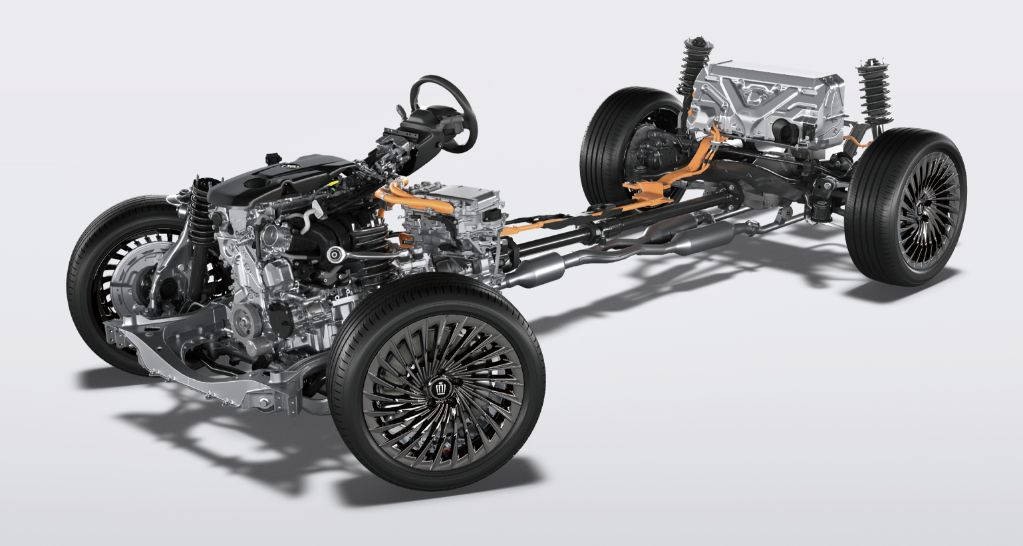
The sixteenth-generation Crown Sedan is equipped with Toyota's innovative Multi-Stage HEV multi-stage hybrid system, which is specially designed for the TNGA-L longitudinal rear-wheel drive platform.
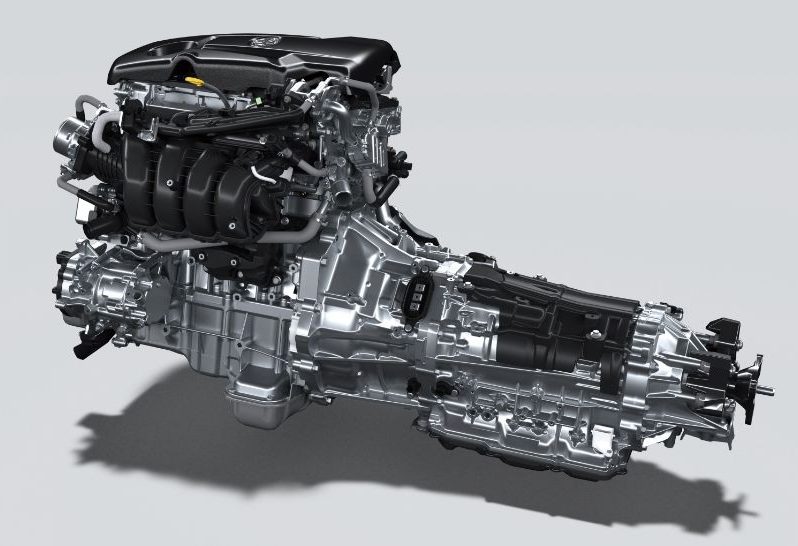
The system consists of a 2.5 L A25B-FXS inline four-cylinder engine and two electric motors, forming a highly efficient collaborative power output system.
The 2.5 L engine itself has the advantage of high thermal efficiency, with a maximum power of 136kW and a maximum torque of 225 N·m, responsible for providing stable power support in medium and high-speed conditions.
The two electric motors are respectively responsible for auxiliary drive and energy recovery functions, with a maximum power of 131 kW and maximum torque of 300 N·m. They can drive the vehicle independently during startup and low-speed driving, achieving a serene experience with no jerks and zero noise, perfectly matching the smoothness required for executive sedans.
The system has a combined output of up to 180 kW (245 horsepower). Even though the Crown Sedan is nearly 400 kg heavier than the Camry, the 0-100km/h acceleration time remains under 8.6 seconds.
What’s especially noteworthy is that this system is paired with a ten-speed shifting control. Unlike the THS equipped in the Camry, it simulates the shifting sensation of fuel-powered cars to enhance driving pleasure while precisely optimizing gear shifts to improve power output efficiency, ultimately achieving low fuel consumption of 6.21 L/100 km under WLTC conditions.
Become "My Crown"
Some say that the 16th generation Crown is no longer Crown because it has lost the form of a single sedan. Some models even adopt a transverse front-wheel-drive layout, and more importantly, with the Crown Sedan, its appearance has completely lost the sense of prestige expected from Crown.
In response to such criticism, Toyota addressed this early during the 16th generation Crown’s release:
In the past, the impression Crown gave me was that of a high-end and stylish car, one that belonged to the older generation.
If a woman drove a Crown, it would give people the impression of 'Oh, she’s driving her husband’s car,’ and if a young person drove one, people would think, 'Oh, he’s driving his father’s car.’
But this time, the new Crown, regardless of which model is driven or the identity of the driver, gives people a feeling of "My car," "My Crown."
If any infringement occurs, please contact us for deletion






Popular Cars
Model Year
Car Compare
Car Photo