
Q
How much horsepower does 2006 Toyota Mark X produce?
 MoonlitPathMay 14, 2025, 02:42 PM
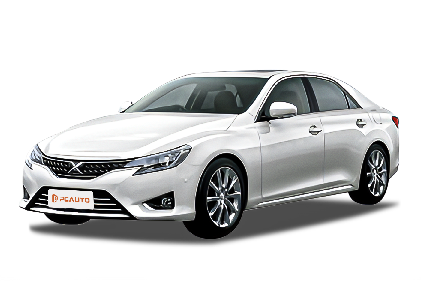
The 2006 Toyota Mark X has different powertrain options, each offering different horsepower outputs. The version equipped with a 2.5L V6 engine typically delivers a maximum power of 211 horsepower, while the 3.0L V6 variant produces approximately 231 horsepower.
As a mid-size sports sedan, the rear-wheel-drive Mark X, combined with different engine configurations, provides drivers with distinct driving experiences and performance characteristics. The higher-powered 3.0L version performs well in acceleration and overtaking, whereas the 2.5L model strikes a better balance between everyday usability and fuel efficiency - meeting different consumers' needs for performance and costs.
Special Disclaimer: This content is published by users and does not represent the views or position of PCauto.
Related Q&A
Q
How much horsepower does a 2005 Toyota Mark X have?
Back in 2005, the Toyota Mark X entered the Malaysian market with two engine options that drew attention from car enthusiasts: the 2.5 - liter 4GR - FSE V6 and the 3.0 - liter 3GR - FSE V6. Where the 2.5L produces around 215 hp, the 3.0L delivers roughly 256 hp – both packing Toyota's advanced direct - injection tech that delivered solid performance with decent fuel economy.
What made the Mark X stand out, though, was that it was a proper rear - wheel - drive sedan from Toyota – a classic, if you will. Car enthusiasts loved it for its smooth driving feel and stable handling, which were well - suited to Malaysia's road conditions and driving demands here.
Styling - wise, it struck a nice balance between sporty and comfortable. Inside, the build quality felt solid, and it came loaded with features: think multi - function steering wheel, a decent sound system – all the little things that make driving more enjoyable.
If you're into this kind of car, it is advisable for you to track one down for a test drive. You should experience that power and how it handles firsthand. And hey, keep an eye on Malaysia’s used car market too – a well - maintained Mark X can be a cost - effective purchase these days.
 SunnyRadianceOct 20, 2025
Q
What is the price of Mark X 2005?
The 2005 Toyota Mark X typically fetches between RM30,000 to RM50,000 on Malaysia's used car market. Of course, the actual price hinges on condition, mileage, modifications, and location. What makes this a standout? That classic FR (front-engine, rear-wheel drive) setup paired with either a 2.5L or 3.0L naturally aspirated V6 engine. Power delivery is smooth, maintenance costs are reasonable, and it's a certified favorite among local car enthusiasts – a true Japanese classic.
Now, considering its age, there are key things to watch for when buying. Give extra attention to the chassis rubber components, check the transmission's condition thoroughly, and make sure there's no history of flood damage. On the plus side, parts for the Mark X are pretty readily available in Malaysia, though some genuine OEM bits might require ordering through specific channels.
If your budget's tight but you still want driver engagement, the same-era Toyota Crown or Nissan Teana are worth a look. However, the Mark X holds its ground with superior modification potential and a sportier aesthetic. For peace of mind, source it through reputable used car platforms or professional dealers, and always insist on a comprehensive inspection report to keep the transaction transparent.
 FixerToolOct 20, 2025
Q
Is the 2005 Toyota Mark X reliable?
In the Malaysian market, the 2005 Toyota Mark X has built a solid reputation for reliability. Under the hood, you'll find either a 2.5-liter or 3.0-liter V6 engine – smooth operators that deliver power in a refined, durable manner. Maintenance costs are pretty reasonable, and spare parts are generally easy to come by, making it a practical choice for local folks looking for a long-term daily driver.
What really sets this car apart is its rear-wheel-drive setup, which translates to a genuinely engaging driving experience. The interior feels well-put-together, with that typical Toyota solidity. Sure, it's not the newest kid on the block, but with proper care, these Mark Xs still hold up and offer a consistently dependable ride.
Now, considering its age, there are a few things to watch out for if you're in the market. When checking one out, pay close attention to the condition of the chassis rubber components, the suspension system, and obviously, the engine. Age-related wear and tear on these parts can definitely put a damper on your daily commute if not addressed.
For Malaysian buyers watching their wallets but still craving that V6, rear-wheel-drive sedan experience, the 2005 Mark X represents some serious bang for your buck. Toyota's strong local presence means there's no shortage of mechanics familiar with these cars, making after-sales service that much smoother. Prices on the used market are pretty approachable too, though – and this is crucial – the actual condition of individual cars can vary wildly. Do yourself a favor and insist on a professional inspection before handing over any cash.
 DriverRouteTravelOct 20, 2025
Q
Does Mark X consume lots of fuel?
The fuel consumption of the Mark X cannot be generalized, as it is influenced by various factors. Regarding the vehicle's condition, proper engine maintenance—such as timely spark plug replacement and keeping the intake system clean—typically results in normal fuel efficiency. Conversely, issues like carbon buildup in the engine or underinflated tires may increase consumption.
Driving habits also significantly impact fuel usage. Smooth acceleration, avoiding sudden braking, and maintaining steady speeds help reduce consumption, while aggressive throttle input or high-speed driving will increase the consumption. Road condition is also an important factor, frequent stop-and-go traffic inevitably increases the fuel consumption compared to highway or smooth-road driving.
Therefore, the Mark X may don't consume lots of fuel. With proper maintenance, good driving habits, and appropriate route selection, its fuel consumption can be effectively managed.
 BuddyzzMay 14, 2025
Q
What's the transmission fluid capacity of the Toyota Mark X
Sorry, there is no exact information regarding the specific transmission fluid capacity of the Toyota Mark X. The required amount can vary depending on factors such as the vehicle model, transmission type, and design. Generally speaking, there are two common methods for changing transmission fluid: the gravity drain method, which typically requires less fluid, and the exchange machine method, which enables a more thorough fluid replacement but uses more fluid.
For accurate transmission fluid capacity details, I recommend consulting your vehicle's owner's manual, which should contain comprehensive specifications. Alternatively, you could contact an official Toyota dealership - their technicians can provide precise data based on your specific vehicle configuration.
Please note that regular transmission fluid changes are crucial for maintaining optimal transmission performance and longevity. Always follow the manufacturer's recommended service intervals and use the specified fluid grade.
 HealerzzMay 14, 2025
Q
What type of oil does the Toyota Mark X use?
It's recommended to use Toyota Genuine Oil for Toyota Mark X, with specifications including 0W-20, 5W-20, and 5W-30. The 0W-20 is a full synthetic oil that offers excellent low-temperature fluidity, ensuring smoother cold start in frigid climates while improving fuel efficiency. The 5W-20, is also a good choice as the full synthetic oil, providing reliable low-temperature performance and engine protection suitable for most driving conditions. Meanwhile, the 5W-30 is a semi-synthetic oil that performs well across broader climate ranges, delivering stable lubrication and protection under high temperatures.
When selecting engine oil, consider your driving environment and usage purpose. For colder regions, 0W-20 is ideal, while 5W-20 or 5W-30 may be preferable in moderate climates or for high-mileage vehicles. Additionally, high-quality third-party oils that meet the engine's requirements can also serve as viable alternatives.
 RubyRedFlamePassionMay 14, 2025
Q
How many airbags is Mark X equipped with?
Sorry, there is no specific information about the number of airbags equipped by the Mark X. Airbags are one of the important safety features in vehicles,which can pop out quickly during a collision, providing cushioning protection for occupants and reducing the risk of injury. The number of airbags varies across models of different years, versions, and trim levels. Generally, common automotive airbags include front airbags for the driver and front passenger, side airbags to mitigate injury during side impacts, and some models feature curtain airbags to protect front and rear occupants' heads. For precise information about the number of the Mark X's airbag, please refer to the vehicle's owner's manual or consult a Toyota dealer.
 SolverzzMay 14, 2025
Q
Is Mark X equipped with V6 engine?
The Mark X is equipped with V6 engine. Some versions of the Toyota Mark X are equipped with V6 engine, such as those featuring the 5GR-FE, 3GR-FE, and 4GR-FSE engine codes. The V6 engine delivers robust power, enhancing the driving experience. Its structural design ensures smoother operation compared to some four-cylinder engines, showing more smooth power delivery. Additionally, V6 engine offers strong performance reserves, making it well-suited for both city driving and highway overtaking.
Different V6 engines vary in power and torque specifications, so it's recommended that buyers should choose the Mark X model that meets their performance needs and preferences.
 InventorMay 14, 2025
Q
Is Mark X equipped with the turbocharger?
The fuel type of the 2005 Toyota Mark X 250 is gasoline, without clear mention of the equipment of turbocharger. Generally, Mark X models are equipped with naturally aspirated engines to deliver smooth power output and enjoyable driving experience. However, as the automotive market evolves, variations exist across different model years and versions. Certain special editions or later upgraded models may employ turbocharging technology to enhance performance such as power and torque, catering to diverse consumer demands. To confirm whether a specific Mark X model is equipped with turbocharger, it's advisable to check the vehicle's detailed technical specifications or consult a Toyota dealership.
 StarryDreamsMay 14, 2025
Q
What's the fuel tank capacity of the Mark X?
There is no exact data about the fuel tank capacity of the Mark X. The fuel tank capacity may vary across different model years and versions. Generally, a vehicle's fuel tank capacity is clearly specified in the owner's manual or technical specifications. You may consult the owner's manual for your specific model to obtain precise figures. Understanding fuel tank capacity is crucial as it directly impacts the vehicle's driving range, enabling owners to better plan journeys and schedule refueling. Furthermore, factors such as driving habits and vehicle load conditions can also influence the actual distance achievable on a full tank.
 SunnyGlimmerMay 14, 2025
Popular Cars
Model Year
Car Compare
Car Photo
Related Models
 Cars
CarsLatest Q&A
Q
Is AMT similar to automatic?
There are significant differences between AMT transmissions and automatic transmissions (AT) in terms of core structure and driving experience. AMT is essentially an electronically automated version of a manual transmission, simulating manual clutch operation and gear shifting through a computerized control system while retaining the gear set structure of manual transmissions. As a result, it offers higher transmission efficiency, with fuel consumption approximately 8%-12% lower than AT, making it particularly suitable for highway or long-distance driving. However, it may exhibit jerking similar to manual transmissions during low-speed gear shifts, especially noticeable in congested traffic conditions.
AT transmissions rely on torque converters for power transfer, delivering smooth and seamless gear shifts that appeal to comfort-oriented users. However, their complex structure (incorporating planetary gear sets, hydraulic systems, etc.) results in higher maintenance costs. A single service may cost between 800 to 1,500 ringgit, whereas AMT only requires gear oil replacement at approximately 400 ringgit.
From a market perspective, AMT is predominantly used in budget vehicles or commercial models priced below 80,000 ringgit, while AT is typically featured in mid-to-high-end vehicles. Consumers should select based on actual needs: AMT suits those prioritizing fuel efficiency and low maintenance costs, while AT better serves those valuing comfort. Notably, recent advancements in AMT electronic control technology have significantly mitigated jerking issues, though test drives should still emphasize low-speed performance evaluation.
 AriaMar 26, 2026
Q
Which is better, DCT or AT?
DCT (Dual-Clutch Transmission) and AT (Automatic Transmission) each have their own advantages and disadvantages, and the choice should be based on personal driving needs. AT transmissions transfer power through a torque converter, offering excellent shift smoothness, making them suitable for urban commuting or novice drivers. However, they tend to have higher fuel consumption, and vehicles equipped with them are usually more expensive. DCT transmissions utilize a dual-clutch structure, featuring fast shift speeds and high power transmission efficiency, which provides a more direct driving experience—particularly suitable for users seeking a sporty feel. However, they may exhibit jerking at low speeds and have relatively high maintenance costs. If durability and comfort are priorities, AT is the more reliable choice; if power responsiveness and driving pleasure are preferred, wet DCT (such as Volkswagen DSG) performs better, though dry DCT models should be avoided in prolonged stop-and-go traffic conditions. Additionally, CVT transmissions excel in smoothness and fuel efficiency, making them ideal for daily commuting, but they lack driving excitement. It is recommended to test-drive before purchasing, as tuning varies significantly across brands, and real-world experience is more important than theoretical specifications.
 FlutteringMar 26, 2026
Q
Is Amt good or bad?
AMT gearboxes have a significant cost advantage in the local market, typically being around 5,000 Ringgit cheaper than models equipped with conventional automatic transmissions. Their fuel efficiency is comparable to manual transmissions, resulting in long-term fuel savings. Featuring a straightforward design, they achieve transmission efficiency exceeding 90% with relatively low maintenance costs, making them ideal for practicality-oriented consumers. However, their shifting logic contains inherent limitations: gear changes between 1st and 2nd cause 0.3-0.5 second power interruptions, while unintended upshifts on inclines may reduce engine speed by 15%-20%, compromising driving smoothness. For urban commuters or budget-conscious buyers, AMT offers excellent value, though those prioritizing premium driving dynamics should consider alternative transmission types. Some domestic models like the Perodua Axia employ enhanced AMT systems, where optimized shift programming has reduced gearshift shock by approximately 30%.
 RainbowsMar 26, 2026
Q
Which gives better mileage, CVT or AMT?
From the perspective of fuel economy, CVT transmissions generally perform better under urban driving conditions. Their continuously variable design allows the engine to consistently operate within the optimal speed range, significantly reducing fuel consumption during frequent starts and stops. Test data shows that their fuel consumption in urban driving conditions is 10% to 15% lower than that of comparable models. AMT transmissions, on the other hand, inherit the high transmission efficiency of manual transmissions, delivering fuel efficiency close to manual transmissions during high-speed cruising. This makes them particularly suitable for long-distance driving in large-displacement vehicles. However, due to power interruption during gear shifts, their overall fuel consumption may be 5% to 8% higher than CVTs.
The difference in fuel-saving characteristics between the two transmissions stems from their technical principles: CVTs achieve continuous variability through steel belts and pulleys, eliminating the fixed gear ratio limitations of traditional transmissions; AMTs simulate manual gear changes via electronic control systems while maintaining the mechanical efficiency of gear transmission. Notably, actual fuel consumption is also influenced by driving habits. Smooth acceleration and anticipatory deceleration can maximize the transmissions' fuel-saving potential. If the vehicle budget permits and urban commuting is the primary use, CVTs offer a more economical choice. For frequent highway driving with an emphasis on cost-effectiveness, AMTs are equally worth considering.
 RubyBlazeMar 26, 2026
Q
Which is cheaper, AMT or CVT?
In terms of gearbox cost, AMT is usually more economical than CVT. Essentially, AMT is a manual transmission equipped with an electronic control unit, featuring a simple structure and low maintenance costs. The unit price ranges from approximately 5,000 to 8,000 ringgit, making it suitable for budget-conscious consumers or those who prioritize long-term operating costs. CVT incurs higher manufacturing costs due to its precision steel belt transmission system and continuous variable transmission technology, with a unit price of about 7,000 to 10,000 ringgit. However, it delivers a smoother driving experience and superior fuel efficiency. The primary differences between the two lie in technical complexity: AMT retains the gear-shifting mechanism, resulting in noticeable shift shock; CVT achieves linear power output through stepless speed variation but requires periodic belt inspection and incurs higher maintenance expenses. For those prioritizing initial cost and basic transportation needs, AMT offers better value; if comfort and long-term fuel economy are priorities, CVT represents a more worthwhile investment. Note that actual prices may vary based on vehicle model, brand, and local supply chain factors.
 ShadowProwlMar 26, 2026
Related News

Toyota may launch the Tundra TRD Hammer high-performance off-road pickup in the future
RobertMar 23, 2026

Toyota Land Cruiser Buying Guide: From LC300 to LC70, which versions are worth buying? Are the maintenance costs for used ones high?
JohnMar 17, 2026

Toyota Crown Sedan and Lexus ES price difference? What are their differences?
WilliamMar 13, 2026

Toyota Land Cruiser FJ confirmed to launch in Thailand on March 21, expected to start from RM137k
WilliamMar 12, 2026

Toyota Crown's evolution history from jzs175 to TNGA-L
LienMar 6, 2026
View More
Pros
Cons