
Q
how much is proton x50
 DanceDivaPerformerSep 25, 2025, 11:09 AM
The Proton X50 stands as one of Proton's most sought-after B-segment SUVs in Malaysia, with prices ranging from approximately RM86,000 to RM113,000 depending on the variant and specs. Keep in mind that these figures can shift slightly due to promotional offers or added options, so your best bet is to hit up a Proton authorized dealer for the latest numbers. Under the hood, the X50 comes with a 1.5L turbocharged engine paired with a 7-speed dual-clutch transmission across all four variants, and it's packed with advanced ADAS driver assistance tech. Being locally assembled (CKD) also gives it a leg up in terms of value for money. If you're looking to buy, don't forget to factor in extra costs like road tax, insurance, and loan interest rates. On the flip side, Proton's 5-year unlimited mileage warranty adds some long-term peace of mind. If your budget's in this ballpark, it's worth cross-shopping against rivals like the Perodua Ativa or Honda HR-V, but the X50 still holds strong as a top pick in Malaysia thanks to its generous tech and homegrown appeal.
Special Disclaimer: This content is published by users and does not represent the views or position of PCauto.
Related Q&A
Q
How much horsepower does the X50 Turbo have?
The Proton X50 Turbo is powered by a 1.5-liter three-cylinder turbocharged engine that cranks out 177 horsepower and a peak torque of 255 Nm. This engine features direct fuel injection and is mated to a 7-speed dual-clutch transmission, delivering pretty impressive performance—especially suited for Malaysian city driving and highway overtaking needs. What's worth noting is that the X50 Turbo's engine is tuned to emphasize low-end torque, so you get that nice, punchy power response in everyday driving, and it's relatively fuel-efficient too. For Malaysian buyers, the X50 Turbo's powertrain setup is pretty competitive in its SUV class, and with local assembly, the price becomes even more appealing. If you're craving more performance, keep an eye on the X50 Flagship variant, which bumps the horsepower up to 181 and comes with a fancier suite of driver assistance systems. Malaysia's hilly terrain and hot climate really put a car's powertrain to the test, but the X50 Turbo's cooling system and transmission tuning have been optimized for these conditions, ensuring reliable long-term use.
 CrystalFangNov 4, 2025
Q
How much is Proton X50 in Singapore?
The Proton X50 retails for around SGD 100,000 to SGD 120,000 in Singapore, with the exact price depending on the trim level and dealer promotions. Thanks to Singapore's high car import taxes and Certificate of Entitlement (COE) costs, it's significantly pricier than in Malaysia. For Malaysian buyers, the X50 goes for about MYR 80,000 to MYR 110,000 locally, offering much better value for money.
Under the hood, it's packing a 1.5-liter turbocharged engine that delivers solid power and fuel efficiency—perfect for city driving. If you're planning to buy one in Singapore, make sure to look into the local COE policies and loan options first, since these can really impact the total cost.
Plus, the Proton X50 has a solid reputation in Southeast Asia, especially when it comes to safety features and tech. Definitely worth checking out.
 LaserBeamNov 4, 2025
Q
What is the engine of Proton X50?
The Proton X50 is powered by a 1.5-liter turbocharged direct-injection (TGDI) three-cylinder engine, co-developed by Proton and Geely. This engine comes in two tuning versions: the standard variant delivers 150 horsepower and 225 Nm of torque, while the Flagship trim ups the ante to 177 horsepower and 255 Nm. It's mated to a 7-speed dual-clutch transmission (DCT), striking a balance between performance and fuel efficiency.
Under the hood, the engine borrows technology from Geely's BMA modular platform, featuring lightweight construction and direct fuel injection. These advancements help keep fuel consumption in check and ensure compliance with Malaysia's stringent EURO 4 emission standards. A notable point is that Proton has tweaked the engine specifically for local conditions – think a cooling system and ECU calibration optimized to handle our hot and humid weather. Plus, owners can run it on RON 95 petrol, which helps keep day-to-day running costs down.
For Malaysian buyers, small-displacement turbo engines like this have been gaining traction as the market favorite in recent years. Compared to traditional naturally aspirated engines, they deliver more torque at lower revs, making them well-suited for city driving. While three-cylinder setups do involve a slight trade-off in terms of smoothness, the use of a balance shaft has significantly reduced vibration issues. What's more, maintenance costs are on par with those of four-cylinder engines.
 ShadowSneakNov 4, 2025
Q
Will the X50 facelift have a new engine?
As for whether the facelifted X50 will get a new engine, there's no official word yet. But looking at Proton's usual update strategy, facelifts typically focus more on tweaks to the exterior, interior, and features. The engine is likely to stay the same: the existing 1.5T three-cylinder turbo setup. It's proven itself reliable in the Malaysian market, and with its fuel efficiency plus 147hp/226Nm output, it fits the B-segment SUV bill. If you're craving more power, keep an eye out—Proton might roll out a high-performance variant or a hybrid model down the line. After all, the global trend is going electric, and local brands are also ramping up their new energy tech game. Best bet is to check Proton's official website or local Malaysian auto media for the latest scoop. And a quick tip for car buyers: beyond just power figures, factor in real-world stuff like maintenance costs and after-sales network. At the end of the day, the long-term ownership experience is what really matters.
 MercurySwiftNov 4, 2025
Q
Which country made Proton X50?
The Proton X50 is a compact SUV co-developed and produced by Malaysian national automaker Proton and China's Geely. Its manufacturing base is located in Tanjung Malim, Perak, Malaysia. Based on Geely's Binyue platform, the model has undergone several localized adaptations for the Malaysian market, including right-hand drive configuration, safety features compliant with local regulations, and an air conditioning system tailored for tropical climates. The Proton X50 is powered by a 1.5-liter turbocharged engine and offers multiple driving modes, balancing performance with fuel efficiency. As a key strategic model for the Proton brand, the X50 has gained popularity among Malaysian consumers thanks to its high value for money and rich technological configuration, such as the advanced driver assistance system (ADAS) and smart connectivity features, further solidifying Proton's competitiveness in the local market. Notably, the collaboration between Proton and Geely has not only enhanced the technical content of the X50 but also driven the upgrading of Malaysia's automotive industry chain, with increasing local production ratios creating more job opportunities and facilitating technology transfer locally.
 FlameWingNov 4, 2025
Q
Is the Proton X50 engine a VOLVO?
The Proton X50's engine isn't directly sourced from Volvo. Instead, it's built based on the modular architecture technology co-developed by Geely and Volvo. Its 1.5-liter three-cylinder turbocharged engine is part of the "Drive-E" powertrain family jointly developed by Geely and Volvo, but Geely took the lead in tuning it to suit Malaysian market needs. This engine incorporates some of Volvo's technical patents, such as direct fuel injection and lightweight design, though the production line and supply chain are independently managed by Geely's system. It's worth adding that the X50's powertrain has undergone local adaptation, including cooling system optimizations for tropical climates and adjustments for RON95 gasoline compatibility, which differ from the calibration of Volvo's original engines. Malaysian owners will notice Geely badges in the X50's engine bay rather than Volvo logos, but the technical origins do reflect the synergy following Geely's acquisition of Volvo. This kind of technology-sharing model is common in the automotive industry – for example, multiple brands under the Volkswagen Group also share engine platforms, which helps reduce R&D costs while ensuring core performance.
 SabertoothNov 4, 2025
Q
Is the X50 a good car to buy?
The Proton X50 is an SUV that Malaysian consumers should definitely consider. It offers solid value for money and competitiveness in the local market. Under the hood, it's powered by a 1.5-liter turbocharged engine, available in two power tunes: the standard variant puts out 150PS, while the performance version cranks it up to 177PS. Both are mated to a 7-speed dual-clutch transmission, delivering smooth power delivery and decent fuel efficiency—perfect for city commutes and long drives alike.
The X50 doesn't skimp on features either. It comes loaded with goodies like Advanced Driver Assistance Systems (ADAS), a panoramic sunroof, a digital instrument cluster, and smart connectivity functions, which really shows Proton's commitment compared to its rivals. Plus, as a homegrown brand, Proton has an edge with its after-sales service network and parts availability, keeping maintenance costs relatively low—something Malaysian buyers definitely care about.
Of course, before making a purchase, it's always a good idea to take it for a test drive to see if the suspension setup and noise insulation meet your personal taste. You might also want to check out competitors like the Honda HR-V or Toyota Corolla Cross, then pick the one that best fits your budget and needs. All in all, the X50 strikes a nice balance between performance, features, and price, making it especially appealing to young families looking for a tech-savvy and practical ride.
 IronFistNov 4, 2025
Q
What are the common Proton X50 problems?
The Proton X50, a popular B-segment SUV in the Malaysian market, delivers a well-rounded performance overall, though some owners have reported a few common issues. For instance, certain models may exhibit slight jerking from the dual-clutch transmission (DCT) during low-speed driving – a characteristic typical of this transmission type. It’s advisable to stick to regular maintenance and avoid prolonged low-speed creeping to optimize the experience. Additionally, a small number of users have mentioned occasional lag or freezing with the infotainment system, which can be resolved through software updates at official service centers. When it comes to noise insulation, there’s still room for improvement at highway speeds, with tire noise being particularly noticeable; upgrading to quieter tires later might help mitigate this. Notably, the 1.5T three-cylinder engine in the Proton X50 performs better than expected in terms of vibration control, though it’s recommended to keep an eye on engine mount aging after long-term use. The standard Advanced Driver Assistance System (ADAS) has also seen continuous optimization through OTA updates for better local adaptation, so owners should ensure their systems are up to date. Overall, most of these issues are common across the segment, and Proton’s extensive after-sales network – with 140 service centers nationwide – means owners can get support when needed. Regular maintenance and timely software updates go a long way in enhancing the driving experience.
ShadowedNov 4, 2025Q
How much is the Proton X50 2024?
The 2024 Proton X50's prices in Malaysia vary by trim level. The entry-level Standard variant starts at around RM86,300, while the top-spec Flagship model goes for approximately RM113,300. Exact pricing may fluctuate slightly depending on optional configurations or promotional offers. As a best-selling SUV from Malaysia's homegrown brand, the Proton X50 is powered by a 1.5-liter turbocharged engine available in two tunes, delivering 150PS and 177PS respectively. It comes packed with advanced driver assistance systems like adaptive cruise control and lane keeping assist, making it a hit among young families and urban commuters for its strong value proposition. It's worth noting that the X50 shares its technical platform with the Geely Binyue but has been localized for Malaysian roads and consumer preferences – the suspension setup, for instance, prioritizes comfort while still maintaining decent fuel efficiency. The warranty package, offering 5 years with unlimited mileage, is another plus for buyers mindful of long-term ownership costs. If you're in the market for a compact SUV, head to an authorized dealer for a test drive. It's also a good idea to compare it with segment rivals like the Perodua Ativa or Honda HR-V to pick the one that best fits your budget and needs.
 SkaterNov 4, 2025
Q
What is the fuel consumption of the X50 2025?
Let's talk about the 2025 Proton X50's fuel efficiency. Official figures tell us the 1.5T Standard variant sips around 6.4 liters per 100km in mixed driving, while the 1.5T Flagship nudges up slightly to about 6.7L/100km. Of course, real-world numbers can vary a bit depending on how you drive, the roads you take, and how much you're carrying.
Under the hood, that 1.5-liter turbo engine paired with the 7-speed dual-clutch gearbox does a solid job on fuel economy – it's well-suited for both Malaysian city commutes and highway stretches. If you're keen to squeeze even more km out of each liter, stick to smooth driving habits: avoid jackrabbit starts and sudden stops. Regular maintenance helps too – keeping an eye on tire pressure and swapping out the air filter when needed are simple tweaks that can really boost efficiency.
What's impressive is how this B-segment SUV strikes a nice balance between fuel sipping and performance. It's no wonder the X50 remains a top pick for Malaysian buyers who want something that's easy on the wallet and practical for daily use.
 HikerTrailNatureOct 20, 2025
Popular Cars
Model Year
Car Compare
Car Photo
Related Models
 Cars
CarsLatest Q&A
Q
Is AMT similar to automatic?
There are significant differences between AMT transmissions and automatic transmissions (AT) in terms of core structure and driving experience. AMT is essentially an electronically automated version of a manual transmission, simulating manual clutch operation and gear shifting through a computerized control system while retaining the gear set structure of manual transmissions. As a result, it offers higher transmission efficiency, with fuel consumption approximately 8%-12% lower than AT, making it particularly suitable for highway or long-distance driving. However, it may exhibit jerking similar to manual transmissions during low-speed gear shifts, especially noticeable in congested traffic conditions.
AT transmissions rely on torque converters for power transfer, delivering smooth and seamless gear shifts that appeal to comfort-oriented users. However, their complex structure (incorporating planetary gear sets, hydraulic systems, etc.) results in higher maintenance costs. A single service may cost between 800 to 1,500 ringgit, whereas AMT only requires gear oil replacement at approximately 400 ringgit.
From a market perspective, AMT is predominantly used in budget vehicles or commercial models priced below 80,000 ringgit, while AT is typically featured in mid-to-high-end vehicles. Consumers should select based on actual needs: AMT suits those prioritizing fuel efficiency and low maintenance costs, while AT better serves those valuing comfort. Notably, recent advancements in AMT electronic control technology have significantly mitigated jerking issues, though test drives should still emphasize low-speed performance evaluation.
 AriaMar 26, 2026
Q
Which is better, DCT or AT?
DCT (Dual-Clutch Transmission) and AT (Automatic Transmission) each have their own advantages and disadvantages, and the choice should be based on personal driving needs. AT transmissions transfer power through a torque converter, offering excellent shift smoothness, making them suitable for urban commuting or novice drivers. However, they tend to have higher fuel consumption, and vehicles equipped with them are usually more expensive. DCT transmissions utilize a dual-clutch structure, featuring fast shift speeds and high power transmission efficiency, which provides a more direct driving experience—particularly suitable for users seeking a sporty feel. However, they may exhibit jerking at low speeds and have relatively high maintenance costs. If durability and comfort are priorities, AT is the more reliable choice; if power responsiveness and driving pleasure are preferred, wet DCT (such as Volkswagen DSG) performs better, though dry DCT models should be avoided in prolonged stop-and-go traffic conditions. Additionally, CVT transmissions excel in smoothness and fuel efficiency, making them ideal for daily commuting, but they lack driving excitement. It is recommended to test-drive before purchasing, as tuning varies significantly across brands, and real-world experience is more important than theoretical specifications.
FlutteringMar 26, 2026Q
Is Amt good or bad?
AMT gearboxes have a significant cost advantage in the local market, typically being around 5,000 Ringgit cheaper than models equipped with conventional automatic transmissions. Their fuel efficiency is comparable to manual transmissions, resulting in long-term fuel savings. Featuring a straightforward design, they achieve transmission efficiency exceeding 90% with relatively low maintenance costs, making them ideal for practicality-oriented consumers. However, their shifting logic contains inherent limitations: gear changes between 1st and 2nd cause 0.3-0.5 second power interruptions, while unintended upshifts on inclines may reduce engine speed by 15%-20%, compromising driving smoothness. For urban commuters or budget-conscious buyers, AMT offers excellent value, though those prioritizing premium driving dynamics should consider alternative transmission types. Some domestic models like the Perodua Axia employ enhanced AMT systems, where optimized shift programming has reduced gearshift shock by approximately 30%.
 RainbowsMar 26, 2026
Q
Which gives better mileage, CVT or AMT?
From the perspective of fuel economy, CVT transmissions generally perform better under urban driving conditions. Their continuously variable design allows the engine to consistently operate within the optimal speed range, significantly reducing fuel consumption during frequent starts and stops. Test data shows that their fuel consumption in urban driving conditions is 10% to 15% lower than that of comparable models. AMT transmissions, on the other hand, inherit the high transmission efficiency of manual transmissions, delivering fuel efficiency close to manual transmissions during high-speed cruising. This makes them particularly suitable for long-distance driving in large-displacement vehicles. However, due to power interruption during gear shifts, their overall fuel consumption may be 5% to 8% higher than CVTs.
The difference in fuel-saving characteristics between the two transmissions stems from their technical principles: CVTs achieve continuous variability through steel belts and pulleys, eliminating the fixed gear ratio limitations of traditional transmissions; AMTs simulate manual gear changes via electronic control systems while maintaining the mechanical efficiency of gear transmission. Notably, actual fuel consumption is also influenced by driving habits. Smooth acceleration and anticipatory deceleration can maximize the transmissions' fuel-saving potential. If the vehicle budget permits and urban commuting is the primary use, CVTs offer a more economical choice. For frequent highway driving with an emphasis on cost-effectiveness, AMTs are equally worth considering.
 RubyBlazeMar 26, 2026
Q
Which is cheaper, AMT or CVT?
In terms of gearbox cost, AMT is usually more economical than CVT. Essentially, AMT is a manual transmission equipped with an electronic control unit, featuring a simple structure and low maintenance costs. The unit price ranges from approximately 5,000 to 8,000 ringgit, making it suitable for budget-conscious consumers or those who prioritize long-term operating costs. CVT incurs higher manufacturing costs due to its precision steel belt transmission system and continuous variable transmission technology, with a unit price of about 7,000 to 10,000 ringgit. However, it delivers a smoother driving experience and superior fuel efficiency. The primary differences between the two lie in technical complexity: AMT retains the gear-shifting mechanism, resulting in noticeable shift shock; CVT achieves linear power output through stepless speed variation but requires periodic belt inspection and incurs higher maintenance expenses. For those prioritizing initial cost and basic transportation needs, AMT offers better value; if comfort and long-term fuel economy are priorities, CVT represents a more worthwhile investment. Note that actual prices may vary based on vehicle model, brand, and local supply chain factors.
 ShadowProwlMar 26, 2026
Related News

In 2026, Should I Buy a Proton X50 or a Perodua Traz? Can the RM 6,000 Rebate Offset the Traz's Space Advantage?
MichaelFeb 2, 2026

Proton X50 meets its true competitor? A comprehensive comparison with Chery Omoda 5
AshleyDec 24, 2025

The all-new Proton X50 has sold over 6,000 units in a month and a half since its launch, becoming the champion in its segment.
RobertSep 18, 2025

2025 Proton X50 launched for 5 days and has received 8,000 orders, with 999 units delivered
RobertAug 1, 2025
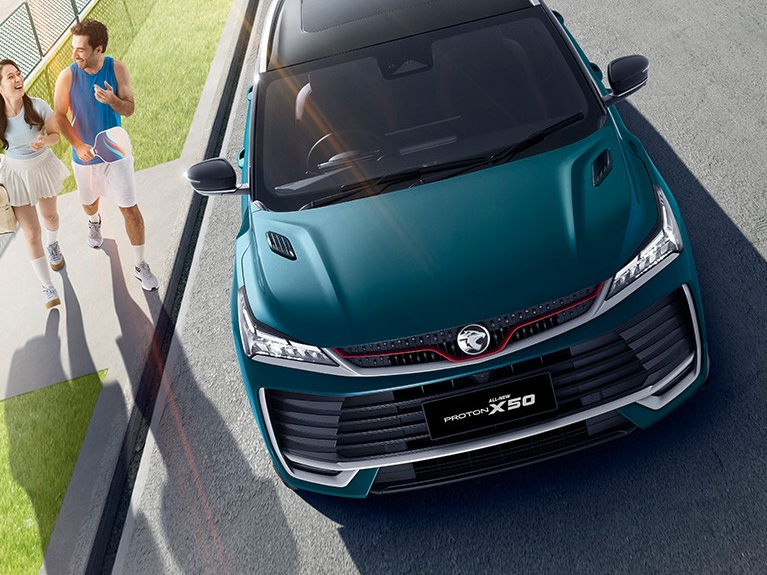
2025 Proton X50 Facelift Debuts with New 1.5L Four-Cylinder, Priced from RM89,800
AshleyJul 28, 2025
View More
Pros
Cons