
Q
How much is the cheapest Mercedes 2024?
 StarNov 06, 2025, 05:45 PM
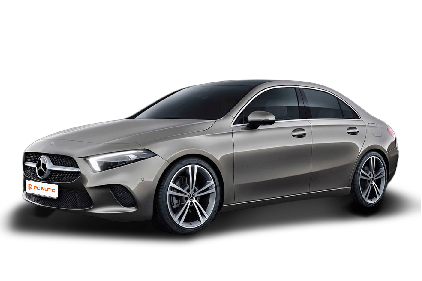
The cheapest Mercedes-Benz model in Malaysia for 2024 is expected to be the A-Class Sedan, with a starting price of around RM220,000 (exact pricing may vary based on configuration, taxes, or promotional offers). This compact luxury sedan is powered by a 1.3-liter turbocharged engine, available in different tunes producing 136 hp to 163 hp, making it ideal for consumers seeking brand value and urban driving agility. If your budget is tight but you still want to experience Mercedes technology, keep an eye on their Certified Pre-Owned (CPO) program, which typically offers 15%-30% savings. It's worth noting that Mercedes-Benz locally assembles (CKD) some models in Malaysia to reduce costs, such as the C-Class and GLC, but the A-Class is currently still sold as a fully imported (CBU) unit, hence the higher price. German rivals in the same segment like the BMW 2 Series Gran Coupe or Audi A3 are similarly priced but focus on different features, so it's advisable for consumers to test drive and compare based on their needs. Additionally, Mercedes-Benz Malaysia often provides low-interest financing or free service packages, so be sure to check with authorized dealers for the latest promotions before purchasing.
Special Disclaimer: This content is published by users and does not represent the views or position of PCauto.
Related Q&A
Q
Is the A-Class a family car?
To some extent, the A-Class can be considered a family vehicle. It features a four-door, five-seat layout that provides ample space for small families. The 60:40 split-folding rear seats offer flexibility for accommodating both passengers and cargo. With a fuel tank capacity of 51 liters, it allows for long-distance travel without frequent refueling stops.
Safety is prioritized with multiple airbags, an Anti-lock Braking System (ABS), and Electronic Stability Control, ensuring the safety of the entire family during trips. Inside, the car is equipped with a fully digital instrument cluster, a touchscreen central display, and a premium sound system featuring 10 speakers, providing a comfortable driving experience and entertainment enjoyment.
However, as a compact car, the interior space may not be as roomy as some larger family vehicles. Overall, it combines practicality, safety, and comfort, making it suitable for family use.
 LavenderFieldMay 13, 2025
Q
Which model of A-Class is the fastest?
Among the models offered, the 2023 Mercedes-Benz A-Class Sedan A250 4MATIC AMG Line is the fastest, boasting a top speed of 250 km/h and an official 0-100 km/h acceleration time of 6.3 seconds. This vehicle features a displacement of 1991 mL and utilizes a turbocharged intake system, with a maximum power output of 224 PS.
Generally speaking, a vehicle's top speed and acceleration times are influenced by various factors, including engine performance, vehicle weight, and the transmission system. The A250 4MATIC AMG Line benefits from a relatively large displacement and a powerful turbocharged engine, giving it a significant advantage in power delivery and enabling faster speed performance. In comparison to other A-Class models, it stands out in terms of dynamic capabilities.
 WalkerPathMay 13, 2025
Q
Where is Mercedes A-Class made?
The Mercedes-Benz A-Class is manufactured in Rastatt, Germany. The Rastatt plant is located more than 100 kilometers west of Stuttgart. It primarily produces compact cars, including the new A-Class, the updated B-Class luxury sports tourer, and the compact SUV – GLA. Currently, the plant’s annual production exceeds 200,000 units.
This facility plays a significant role in the production of Mercedes-Benz’s compact car lineup, ensuring that models like the A-Class can meet global market demand. The manufacturing process here adheres to Mercedes-Benz’s high standards of quality and precision, utilizing advanced technology and implementing stringent quality control measures to ensure that the A-Class vehicles that roll off the assembly line meet exceptional performance and quality standards.
 PetalSoftMay 13, 2025
Q
What is the top speed of Mercedes A-Class?
The top speeds of different models in the Mercedes A-Class vary, with the A200 model achieving a maximum speed of 230 km/h, while the A250 can reach up to 250 km/h. In addition to engine power and torque, several other factors, including aerodynamic drag coefficient, tire specifications, and suspension tuning influence a vehicle's top speed.
For instance, a powerful engine combined with a low drag coefficient results in reduced air resistance, which is beneficial for achieving higher speeds. Additionally, good tire grip and stable suspension tuning ensure the vehicle’s safety and stability at high speeds, further supporting its ability to reach elevated top speeds.
 DiverDepthMay 13, 2025
Q
What is the lifespan of Mercedes engine oil ?
The lifespan of Mercedes engine oil can vary based on several factors. Generally speaking, when using fully synthetic oil, the typical replacement interval is around 10,000 kilometers or one year. For example, the 5W-40 fully synthetic oil used in the Mercedes A-Class follows this replacement schedule. However, this is not an absolute standard, as actual usage should be adjusted according to the vehicle's specific condition and operating environment.
For instance, if a vehicle is frequently driven in high-temperature, high-load, or dusty conditions, the oil may degrade more quickly, necessitating an earlier change. Additionally, if you notice changes in oil viscosity, unusual odors, or significant discoloration, you should consider replacing the oil even if the specified time or mileage has not yet been reached.
Furthermore, the shelf life of unopened leftover oil after servicing is typically one year. Once opened and sealed properly, it’s best to use the oil within six months under ideal storage conditions. The oil that has been poured into the engine has an effective lifespan of about six months.
 ArtistBrushMay 13, 2025
Q
What is the average fuel consumption of Mercedes A Class?
The Mercedes A-Class offers various models with different fuel efficiency figures. The models equipped with a 1.3T engine have an official combined fuel consumption of 5.4L/100km, while those featuring a 2.0T engine report an official combined fuel consumption of 6.3L/100km. However, real-world fuel consumption can be influenced by driving habits, road conditions, vehicle load, and other factors, which often leads to discrepancies from the official figures.
For instance, some real-world tests and owner feedback indicate that actual fuel consumption might be higher than those official numbers. Understanding these variations can assist potential buyers in making informed decisions by considering their own needs and factoring in fuel economy when selecting a vehicle.
 ExplorerPathMay 13, 2025
Q
Does a Mercedes A Class have a service book?
The Mercedes A-Class typically comes with a service manual (maintenance handbook). This manual contains essential information regarding vehicle maintenance, including service items, maintenance intervals, and mileage recommendations. It helps owners understand when and what type of servicing their vehicle requires, ensuring that it remains in excellent condition. Vehicle owners can obtain a printed version of the service manual from the dealership where they purchased their car. Additionally, some electronic PDF versions are available for free download to mobile devices, making it convenient for owners to access the information at any time, often obtainable through relevant website links. Familiarizing themselves with this information enables vehicle owners to effectively schedule maintenance, thus prolong the lifespan of their cars.
 HappyLobsterMay 14, 2025
Q
Is Mercedes A-Class expensive to fix?
The maintenance costs for the Mercedes A-Class are relatively high, positioning it at a medium level among luxury brands. As a luxury brand, Mercedes vehicles feature high standards in design, materials, and manufacturing processes, which contributes to higher prices for certain parts and repair services. A basic service, including oil and filter changes, costs approximately 900 Malaysian Ringgit, while a three-year, 60,000-kilometer maintenance service amounts to around 8,831 Malaysian Ringgit (excluding labor fees).
Maintenance services are divided into A service and B service. The A service mainly involves an oil change and oil filter replacement, costing between 858 and 1,008 Malaysian Ringgit, whereas the B service is priced at around 1,200 Malaysian Ringgit. The cost of maintenance varies depending on driving mileage, with services at 10,000 kilometers and 50,000 kilometers being less expensive, while the service at 60,000 kilometers is the most costly. However, repair costs can differ based on the specific service, scope of repair, and regions. Furthermore, Mercedes has a comprehensive after-sales service network and offers various service plans, which can help vehicle owners reduce maintenance costs to some extent.
 ShadowHunterMay 14, 2025
Q
Which model of Mercedes A-Class is the best?
Each variant of the Mercedes A-Class has its unique advantages, making it difficult to determine which model is the "best." The A200 Progressive Line is priced at RM 238,888, featuring a 1.3L engine with an official 0-100 km/h acceleration time of 8.1 seconds and a combined fuel consumption of 5.4L/100km, making it suitable for those who value a smooth driving experience and low fuel consumption.
On the other hand, the A250 4MATIC AMG Line is priced at RM 263,888 and boasts a 2.0L engine with a maximum output of 224 PS and a 0-100 km/h acceleration of just 6.3 seconds. This model offers robust performance, appealing to those with high demands for power and a desire for a thrilling driving experience.
If your budget is limited, consider the older model, such as the 2021 A200 Progressive Line, which is available at a more affordable price of RM 220,458. Conversely, if your budget allows and you seek high performance, the new A250 4MATIC AMG Line would be an excellent choice. Ultimately, the best model depends on individual factors such as budget, performance requirements, and fuel consumption preferences.
 CascadingMay 14, 2025
Q
How much oil does a Mercedes A-Class take?
The fuel consumption of different Mercedes A-Class models varies. For the official combined fuel consumption, the model equipped with a 1.3L turbocharged engine has a fuel consumption of 5.4L per 100 kilometers, while the variant with a 2.0L turbocharged engine records a fuel consumption of 6.3L per 100 kilometers.
However, real-world fuel efficiency can differ from official figures due to various factors such as driving habits and road conditions. For instance, frequent aggressive acceleration, harsh braking, repeated starts and stops, or driving in congested traffic typically result in higher fuel consumption. Conversely, maintaining a smooth driving style, shifting gears appropriately, and driving on good roads can help achieve fuel efficiency closer to the official figures.
Additionally, factors such as vehicle load and tire pressure can also impact fuel consumption. Understanding these influencing factors can assist owners in better managing their fuel efficiency.
 DreamyEscapeMay 14, 2025
Popular Cars
Model Year
Car Compare
Car Photo
Related Models
 Cars
CarsLatest Q&A
Q
Is AMT similar to automatic?
There are significant differences between AMT transmissions and automatic transmissions (AT) in terms of core structure and driving experience. AMT is essentially an electronically automated version of a manual transmission, simulating manual clutch operation and gear shifting through a computerized control system while retaining the gear set structure of manual transmissions. As a result, it offers higher transmission efficiency, with fuel consumption approximately 8%-12% lower than AT, making it particularly suitable for highway or long-distance driving. However, it may exhibit jerking similar to manual transmissions during low-speed gear shifts, especially noticeable in congested traffic conditions.
AT transmissions rely on torque converters for power transfer, delivering smooth and seamless gear shifts that appeal to comfort-oriented users. However, their complex structure (incorporating planetary gear sets, hydraulic systems, etc.) results in higher maintenance costs. A single service may cost between 800 to 1,500 ringgit, whereas AMT only requires gear oil replacement at approximately 400 ringgit.
From a market perspective, AMT is predominantly used in budget vehicles or commercial models priced below 80,000 ringgit, while AT is typically featured in mid-to-high-end vehicles. Consumers should select based on actual needs: AMT suits those prioritizing fuel efficiency and low maintenance costs, while AT better serves those valuing comfort. Notably, recent advancements in AMT electronic control technology have significantly mitigated jerking issues, though test drives should still emphasize low-speed performance evaluation.
 AriaMar 26, 2026
Q
Which is better, DCT or AT?
DCT (Dual-Clutch Transmission) and AT (Automatic Transmission) each have their own advantages and disadvantages, and the choice should be based on personal driving needs. AT transmissions transfer power through a torque converter, offering excellent shift smoothness, making them suitable for urban commuting or novice drivers. However, they tend to have higher fuel consumption, and vehicles equipped with them are usually more expensive. DCT transmissions utilize a dual-clutch structure, featuring fast shift speeds and high power transmission efficiency, which provides a more direct driving experience—particularly suitable for users seeking a sporty feel. However, they may exhibit jerking at low speeds and have relatively high maintenance costs. If durability and comfort are priorities, AT is the more reliable choice; if power responsiveness and driving pleasure are preferred, wet DCT (such as Volkswagen DSG) performs better, though dry DCT models should be avoided in prolonged stop-and-go traffic conditions. Additionally, CVT transmissions excel in smoothness and fuel efficiency, making them ideal for daily commuting, but they lack driving excitement. It is recommended to test-drive before purchasing, as tuning varies significantly across brands, and real-world experience is more important than theoretical specifications.
FlutteringMar 26, 2026Q
Is Amt good or bad?
AMT gearboxes have a significant cost advantage in the local market, typically being around 5,000 Ringgit cheaper than models equipped with conventional automatic transmissions. Their fuel efficiency is comparable to manual transmissions, resulting in long-term fuel savings. Featuring a straightforward design, they achieve transmission efficiency exceeding 90% with relatively low maintenance costs, making them ideal for practicality-oriented consumers. However, their shifting logic contains inherent limitations: gear changes between 1st and 2nd cause 0.3-0.5 second power interruptions, while unintended upshifts on inclines may reduce engine speed by 15%-20%, compromising driving smoothness. For urban commuters or budget-conscious buyers, AMT offers excellent value, though those prioritizing premium driving dynamics should consider alternative transmission types. Some domestic models like the Perodua Axia employ enhanced AMT systems, where optimized shift programming has reduced gearshift shock by approximately 30%.
 RainbowsMar 26, 2026
Q
Which gives better mileage, CVT or AMT?
From the perspective of fuel economy, CVT transmissions generally perform better under urban driving conditions. Their continuously variable design allows the engine to consistently operate within the optimal speed range, significantly reducing fuel consumption during frequent starts and stops. Test data shows that their fuel consumption in urban driving conditions is 10% to 15% lower than that of comparable models. AMT transmissions, on the other hand, inherit the high transmission efficiency of manual transmissions, delivering fuel efficiency close to manual transmissions during high-speed cruising. This makes them particularly suitable for long-distance driving in large-displacement vehicles. However, due to power interruption during gear shifts, their overall fuel consumption may be 5% to 8% higher than CVTs.
The difference in fuel-saving characteristics between the two transmissions stems from their technical principles: CVTs achieve continuous variability through steel belts and pulleys, eliminating the fixed gear ratio limitations of traditional transmissions; AMTs simulate manual gear changes via electronic control systems while maintaining the mechanical efficiency of gear transmission. Notably, actual fuel consumption is also influenced by driving habits. Smooth acceleration and anticipatory deceleration can maximize the transmissions' fuel-saving potential. If the vehicle budget permits and urban commuting is the primary use, CVTs offer a more economical choice. For frequent highway driving with an emphasis on cost-effectiveness, AMTs are equally worth considering.
 RubyBlazeMar 26, 2026
Q
Which is cheaper, AMT or CVT?
In terms of gearbox cost, AMT is usually more economical than CVT. Essentially, AMT is a manual transmission equipped with an electronic control unit, featuring a simple structure and low maintenance costs. The unit price ranges from approximately 5,000 to 8,000 ringgit, making it suitable for budget-conscious consumers or those who prioritize long-term operating costs. CVT incurs higher manufacturing costs due to its precision steel belt transmission system and continuous variable transmission technology, with a unit price of about 7,000 to 10,000 ringgit. However, it delivers a smoother driving experience and superior fuel efficiency. The primary differences between the two lie in technical complexity: AMT retains the gear-shifting mechanism, resulting in noticeable shift shock; CVT achieves linear power output through stepless speed variation but requires periodic belt inspection and incurs higher maintenance expenses. For those prioritizing initial cost and basic transportation needs, AMT offers better value; if comfort and long-term fuel economy are priorities, CVT represents a more worthwhile investment. Note that actual prices may vary based on vehicle model, brand, and local supply chain factors.
 ShadowProwlMar 26, 2026
Related News

What is the difference between the Mercedes-Benz E300 and E350?
MichaelMar 24, 2026

Mercedes-Benz halts the launch of L3-level autonomous driving, reverting to L2+ level
LienJan 16, 2026

Nvidia Announces Mercedes-Benz CLA as the First Vehicle with DRIVE AV Autonomous Driving Technology
MichaelJan 12, 2026

Brand New Mercedes-Benz GLC with EQ Technology Coming Soon: A Larger, Faster, and More Efficient Luxury All-Electric SUV
LienDec 11, 2025

Mercedes-Benz GLC200 4Matic debuts, offering a more accessible entry price at RM329,888
LienDec 11, 2025
View More
Pros
Cons