
Nvidia Announces Mercedes-Benz CLA as the First Vehicle with DRIVE AV Autonomous Driving Technology
 MichaelJan 12, 2026, 11:34 AM
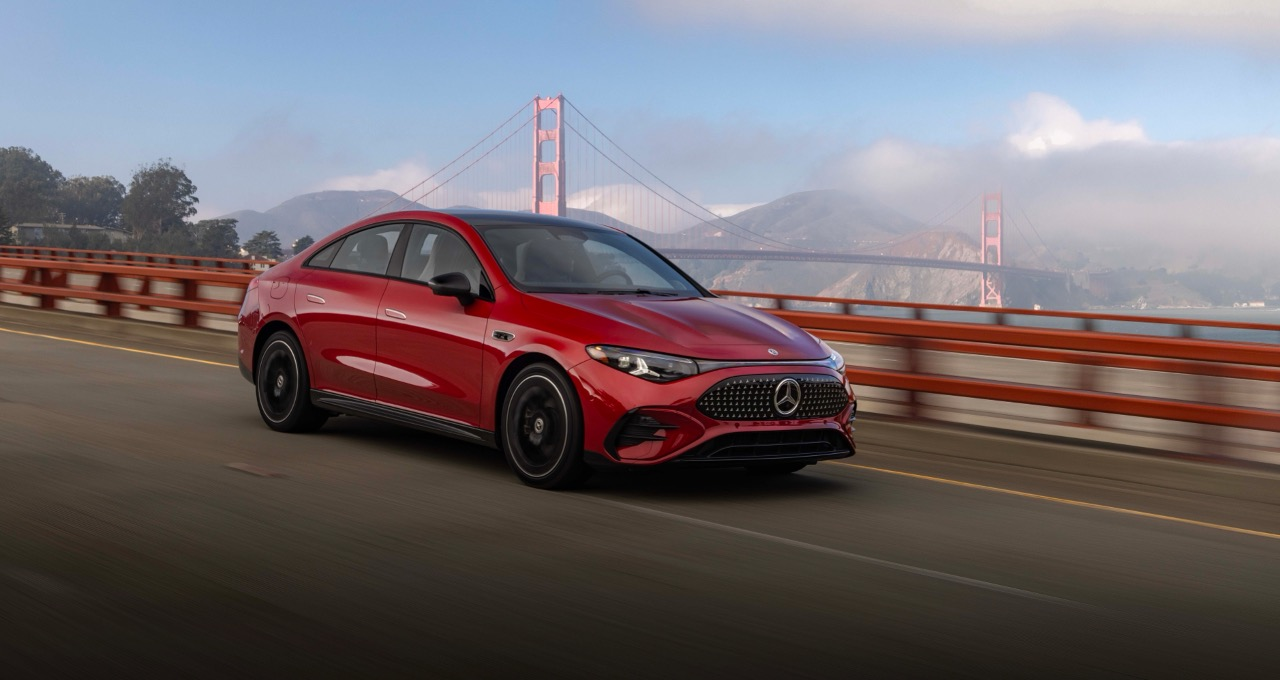
[PCauto] Autonomous driving technology is evolving beyond mere environmental perception toward more advanced logical reasoning. The key to this leap lies in NVIDIA's newly launched Alpamayo open-source AI model family.
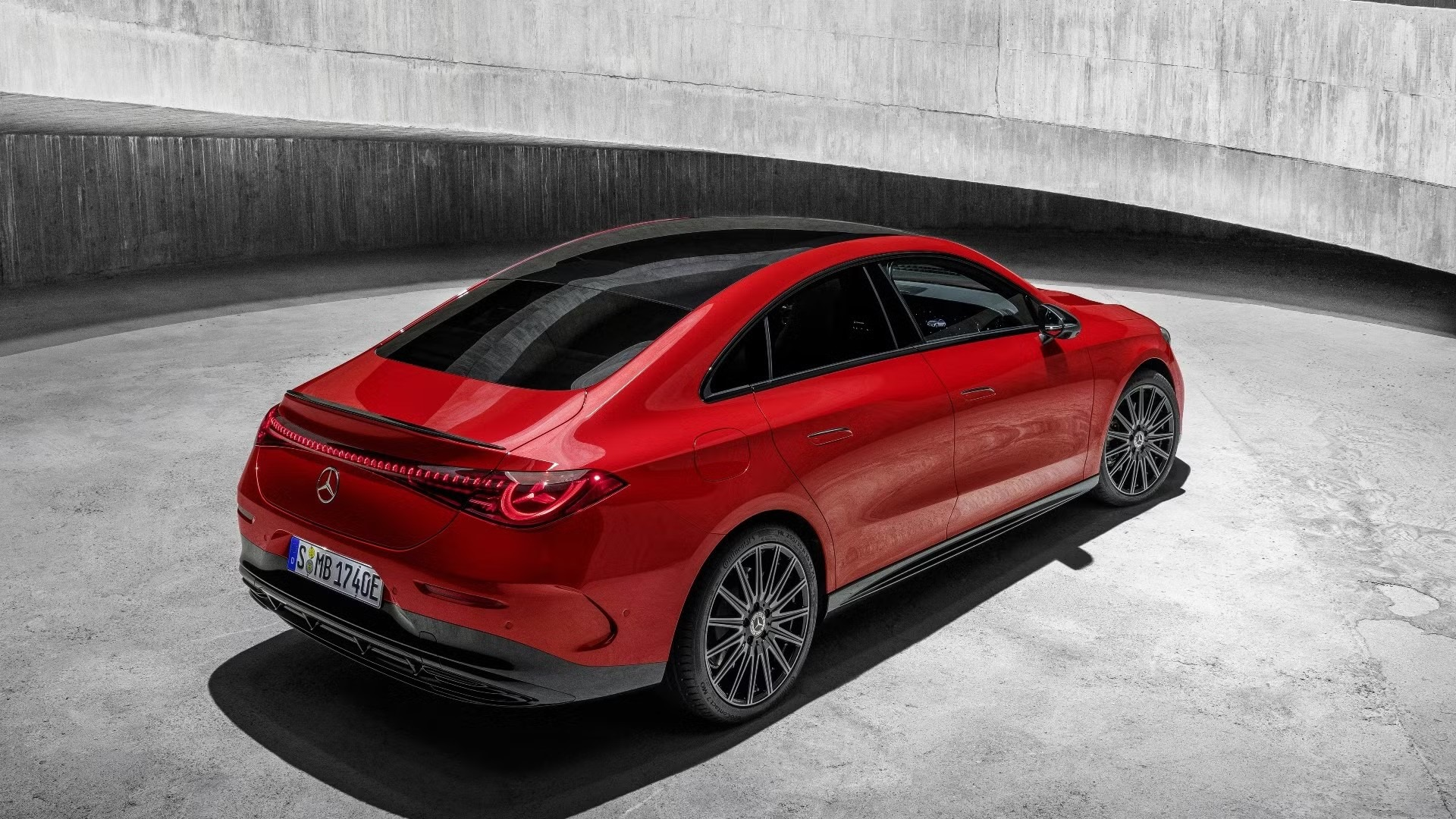
The first vehicle to be equipped with this technology will be the new CLA model from Mercedes-Benz, NVIDIA's long-time collaborator. This car will be launched in March 2025 and has attracted market attention due to its impressive range of 800 km.
Alpamayo 1: ChatGPT moment for physical AI
NVIDIA's Alpamayo open-source AI model has been described by the industry as the "ChatGPT moment for physical AI." Its primary goal is to address the most challenging long-tail problems in autonomous driving—those rare but high-risk edge cases, such as sudden road obstacles or unconventional behaviors by traffic participants, which typically cause autonomous driving systems to disengage or fail.
As the flagship model, Alpamayo 1 is a Vision-Language-Action (VLA) model with 10 billion parameters. It moves beyond the limitations of traditional autonomous driving systems, which rely on a segregated three-stage architecture: perception, planning, and action.
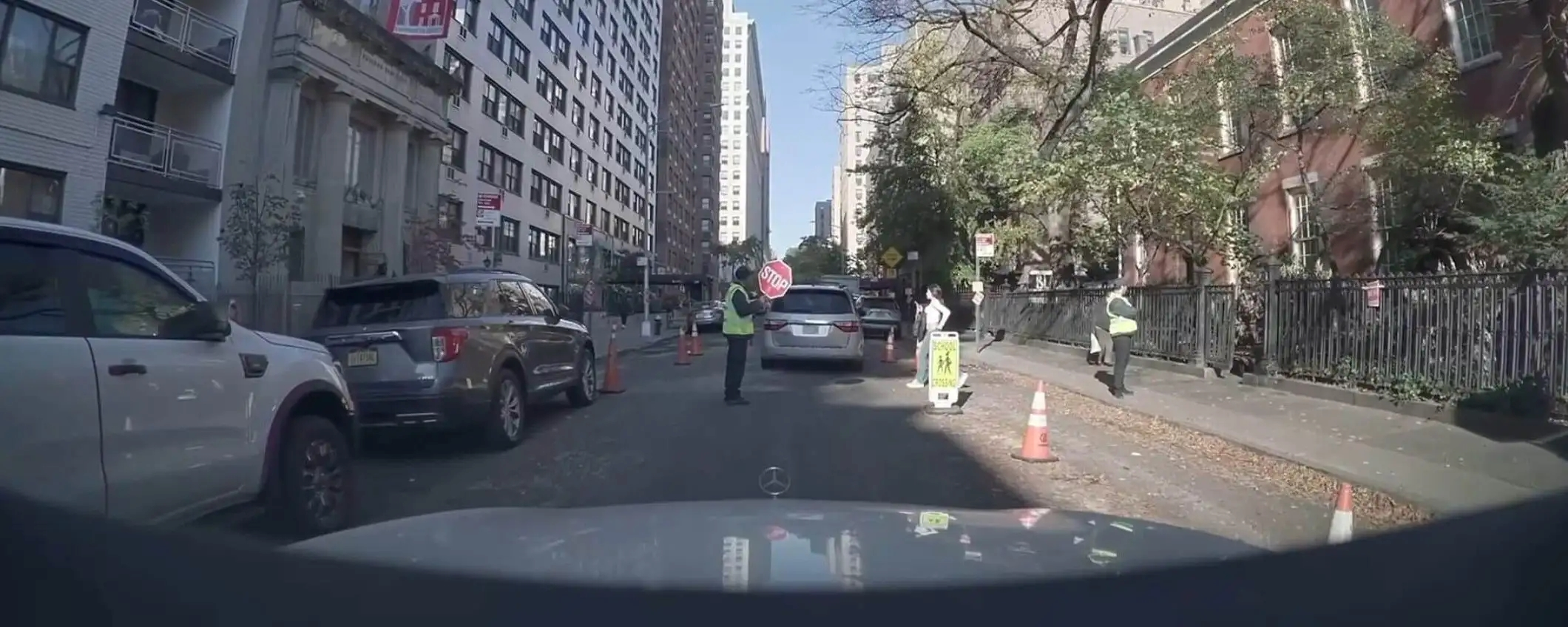
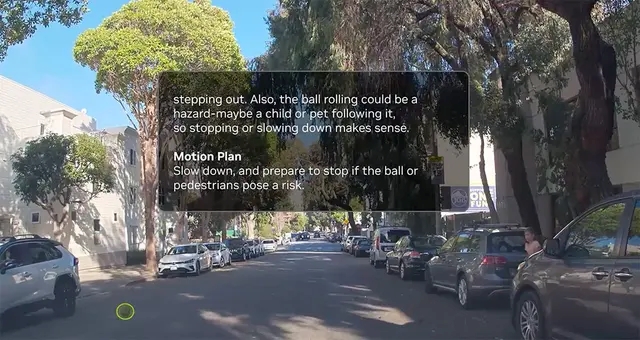
Alpamayo 1 employs an end-to-end "chain-of-thought" reasoning model, allowing the system to directly process video streams captured by cameras as input. Using deep learning algorithms, it simultaneously handles the entire process: environment recognition (e.g., pedestrians, vehicles, traffic signs), scene analysis (e.g., identifying traffic congestion or intersections), logical reasoning (e.g., 'pedestrian crossing ahead, need to slow down and yield'), and trajectory generation.
More importantly, Alpamayo 1 synchronously outputs the logical chain behind its decisions, essentially providing an instruction manual for the thought process of the autonomous driving system. This transparency makes it possible for outsiders to understand and trace "why it drives this way."
Alpamayo will be open-sourced
To accelerate the adoption of this core technology, NVIDIA has opted for an open-source approach to lower industry barriers and build an ecosystem advantage.
NVIDIA has released the Alpamayo 1 model on the Hugging Face platform under an open-source license. This allows developers to fine-tune the model for different vehicle types rather than starting from scratch.
In addition, NVIDIA has introduced the open-source AlpaSim end-to-end simulation framework and the Physical AI Open Datasets, which include over 1,700 hours of complex scene data.
The core value of this simulation framework is its ability to address the high costs of real road testing and the difficulty in replicating edge scenarios. It uses digital twin technology to create virtual road environments that align perfectly with real-world physical laws. Developers can simulate extreme scenarios—such as heavy rain, snowstorms, or sudden emergencies—countless times to rapidly validate model reliability.
Mercedes-Benz CLA: First Vehicle with NVIDIA DRIVE AV Autonomous System
According to the announced plan, the new Mercedes-Benz CLA, equipped with NVIDIA's full AV system (including Alpamayo inference), will launch in the U.S. market in Q1 2026, enter the European market in Q2, and arrive in Asian markets thereafter.
Mercedes-Benz positions this system as a "Level 2+" driver-assistance system, analogous to Tesla's Full Self-Driving (FSD). While it requires continuous driver attention, its long-term goal is to achieve Level 4 autonomous driving capability.
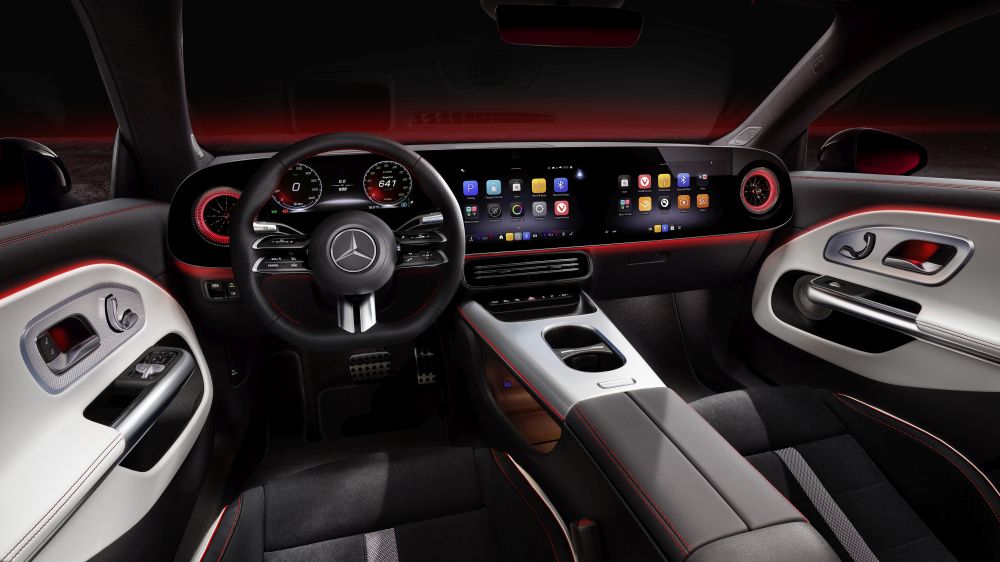
Mercedes-Benz has named the system MB.DRIVE ASSIST PRO, which provides full-process city road navigation assistance, from parking lots to destinations. It supports driver intervention at any time through a collaborative steering function. The sensor suite includes 30 components, including 10 cameras, 5 radar sensors, and 12 ultrasonic sensors, providing the hardware foundation for precise perception.
NVIDIA DRIVE AV’s Dual-Stack Architecture for Safety
Within NVIDIA DRIVE AV's dual-stack architecture, the Alpamayo model constitutes the AI-driven stack responsible for core driving tasks. It handles routine driving decisions and intelligent responses to complex scenarios.
The parallel safety stack, built on the NVIDIA Halos safety system, operates via preset physical rules and safety thresholds—such as issuing automatic warnings upon speed limit violations or enforcing deceleration if the following distance becomes unsafe. This establishes a fundamental safety baseline.
In the event of anomalies in the AI-driven stack, the traditional safety stack can immediately take over core safety functions to prevent system failure. This architecture is analogous to the dual-engine design in aircraft, ensuring that a single system failure does not lead to a complete loss of function.
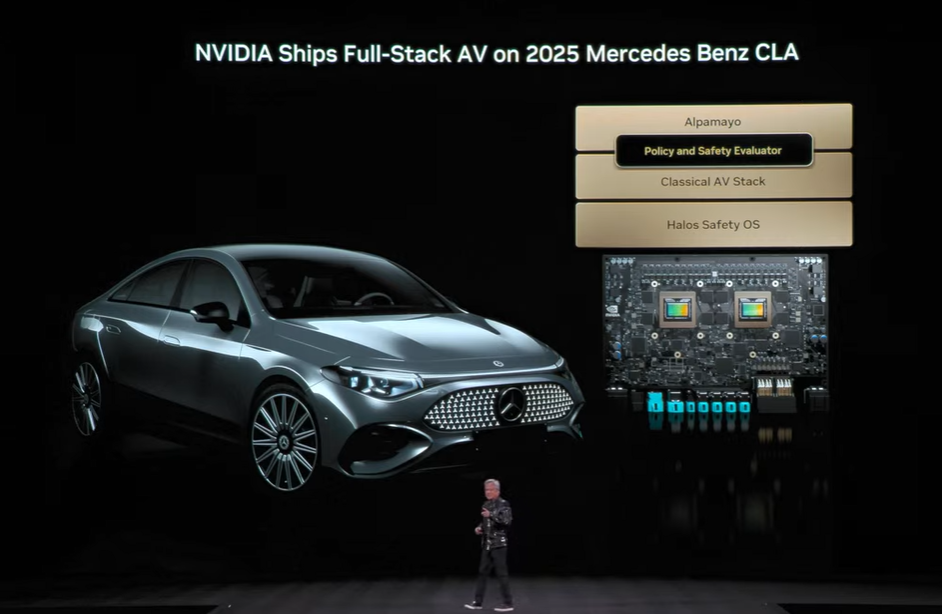
This architecture supports not only basic driving assistance but also enables advanced features such as point-to-point navigation in complex urban environments and active collision avoidance.
The integrated Orin system-on-chip is a critical computing node, capable of performing 254 trillion calculations per second. It can simultaneously process real-time data from the 30 sensors (10 cameras, 5 radars, 12 ultrasonic sensors), distinguishing between static obstacles and dynamic hazards, and handling complex scenarios such as harsh weather conditions.
PCauto’s Review
Before NVIDIA DRIVE AV, most autonomous driving systems, apart from Tesla’s FSD, relied on predefined rules and fixed response patterns—essentially acting according to a script. When confronted with unknown complex situations, these systems lacked flexibility. For example, in unexpected incidents such as an animal darting across the road or a vehicle ahead making an illegal lane change, the system often fails and may disengage entirely.
However, NVIDIA DRIVE AV is different. Thanks to the reasoning capabilities of the Alpamayo model combined with the safety assurance of the dual-stack architecture, it breaks the limitations of being program-driven. It does not rely on preset rules. Instead, it "thinks" more like a human driver—first comprehending the current road situation and then determining the appropriate course of action. Even in the face of unfamiliar and complex situations, it can adapt and make flexible judgments.
If any infringement occurs, please contact us for deletion










Popular Cars
Model Year
Car Compare
Car Photo