
Q
proton persona berapa cc
 HelperHandSep 24, 2025, 10:17 AM
The Jaecoo J7, a new player in the SUV scene, packs a 1.6-liter turbocharged engine with an actual displacement of 1598cc. This four-cylinder powerplant churns out around 197 horsepower and 290 Nm of torque, paired with a 7-speed dual-clutch transmission. Its performance strikes a balance between daily commuting and light off-road adventures. What's really interesting is how the turbo tech boosts efficiency by compressing intake air – this small-displacement, high-output setup works great for Malaysia's hilly roads, keeping fuel consumption in check while still delivering the grunt needed for climbs. It's a solid fit for local buyers who want both economy and practicality.
You see this trend across the segment too – rivals like the Proton X70 and Honda CR-V are also rocking smaller turbo engines. It's all part of the industry-wide "downsizing" movement, where stricter emissions regulations are pushing brands to squeeze more power out of smaller engines through smart tech. If you end up with one of these, remember to stick to regular oil changes with quality stuff to keep that turbo in good shape. And here in Malaysia's hot weather? Don't skimp on checking the engine cooling system either – it's extra important.
Special Disclaimer: This content is published by users and does not represent the views or position of PCauto.
Related Q&A
Q
What is the fuel consumption of Persona 2019?
The fuel economy of the 2019 Proton Persona varies depending on driving conditions and transmission type. Official figures show that the 1.6L naturally aspirated engine paired with the CVT gearbox returns around 7.5L/100km in the city, drops to 5.8L/100km on the highway, and averages about 6.6L/100km combined – pretty efficient for a B-segment sedan. Real-world consumption can fluctuate based on driving habits, road conditions, and vehicle maintenance. Keeping tire pressure and engine condition in check through regular servicing helps optimize fuel efficiency. The Persona's Eco Drive assist system also gives dashboard prompts to help drivers develop fuel-saving habits. For even better mileage, avoid aggressive acceleration and maintain a steady speed. In Malaysia's hot weather, using the air conditioning appropriately will increase fuel use but is a necessary expense. It's also worth checking fuel economy numbers for rivals like the Honda City or Toyota Vios to make a well-rounded comparison when car shopping.
 SolarFlareNov 4, 2025
Q
What transmission is in the Proton Persona 2019?
The 2019 Proton Persona comes with a CVT gearbox built by Punch, model VT3. This transmission is known for its smooth shifting and fuel efficiency, making it perfect for city driving. Proton has done some local tuning on it to better suit Malaysian road conditions and driving styles. CVT tech delivers a more linear power delivery by using stepless gear changes, cutting down on the power interruptions you get with conventional autos and boosting overall drive comfort. You'll also find this same gearbox in other Proton models like the Iriz, showing the brand's strategy for powertrain commonality. For Malaysian buyers, the CVT's low maintenance costs and reliability make it a practical pick for daily use. Proton even backs the Persona's gearbox with a 5-year or 150,000 km warranty, which really helps build customer confidence. If you're after a more engaging drive, there's a 5-speed manual version too, but the CVT is still the top seller—especially handy in those stop-and-go city jams.
 LunarWolfNov 4, 2025
Q
What is the spec of the Proton Persona 2019?
The 2019 Proton Persona is a B-segment sedan that emphasizes practicality and value for money. It comes with a 1.6L naturally aspirated engine paired with either a 5-speed manual or CVT transmission, delivering a maximum output of 107 horsepower and a peak torque of 150 Nm. Fuel economy is decent, with around 7.5L/100km in urban driving. Measuring 4,383mm × 1,722mm × 1,554mm with a 2,555mm wheelbase, it offers reasonable rear legroom and a 436-liter trunk. Standard features include LED daytime running lights, a touchscreen infotainment system (with Bluetooth and USB connectivity), a reverse camera, and dual airbags (upgraded to six in higher trims). The Executive CVT variant adds extras like automatic air conditioning, leather seats, and Electronic Stability Control (ESC). Notably, the 2019 Persona borrows chassis tuning tech from the X70 platform, enhancing ride stability—handy for Malaysia's twisty roads. Local production also ensures easy access to parts and after-sales service, making it a solid pick for budget-conscious buyers seeking a reliable family car.
 HappyCentipedeNov 4, 2025
Q
What is the engine of Proton Persona 2023?
The 2023 Proton Persona is powered by a 1.6-liter naturally aspirated four-cylinder engine, codenamed 4AT. It cranks out 107 horsepower (80 kilowatts) and a peak torque of 150 Newton-meters, paired with a CVT automatic transmission that delivers smooth driving and decent fuel economy. This engine features dual overhead camshafts (DOHC) and a variable valve timing system (VVT), which optimize power delivery and fuel efficiency—perfect for city commuting and daily drives. As a top-selling model from Malaysia's homegrown brand, the Persona's engine is built with reliability and practicality in mind, tailored to local drivers' needs. While naturally aspirated engines might not match turbos in raw power, they shine with lower maintenance costs, making them a solid pick for budget-conscious buyers. In the Malaysian market, the Persona's engine setup offers strong value for the money compared to rivals in its price bracket, easily handling most families' driving requirements.
 FunnyguyOct 14, 2025
Q
What is the fuel consumption of Persona 2023?
The 2023 Proton Persona's fuel efficiency, according to official figures, comes in at around 6.0 liters per 100 kilometers on the combined cycle for models powered by the 1.6-liter naturally aspirated engine. Of course, real-world numbers can vary a bit depending on how you drive, the roads you take, and the specific specs of the car – generally, the manual transmission version tends to sip a little less fuel than the CVT-equipped one. As a popular sedan from Malaysia's homegrown brand, the Persona offers solid, well-rounded fuel economy for its class, making it a solid pick for daily city commutes and family use. It's worth keeping in mind that fuel efficiency isn't just about engine tech, though. Things like tire pressure, how often you blast the AC, and regular maintenance all play a big role too. So, if you want to get the best out of your Persona at the pumps, keeping up with good driving habits and sticking to scheduled servicing is key. And if fuel economy is a top priority for you, checking out Malaysia's Energy Efficiency Vehicle (EEV) certification is a smart move – it helps you quickly compare how efficient different models really are.
 BraveoneOct 14, 2025
Q
What is the new Persona game 2023?
Regarding the question "What is the new Persona game 2023?", it's crucial to clarify first that "Persona" isn't a car - related product. Instead, it's the English name for the well - known video game series Persona. In 2023, the series released new titles like Persona 5 Tactica.
If you're looking for new car info in the Malaysian market, though, 2023 saw popular local models like the updated Proton Persona (not the game). This B - segment sedan gained popularity for its strong value - for - money and localized design, equipped with a 1.6L engine and upgraded safety features such as the ASA 3.0 system.
For car enthusiasts, Malaysia's market has recently focused on developing Energy Efficient Vehicles (EEVs), with models like the Perodua Myvi and Proton X50 offering hybrid options or small - displacement engines. The government has also rolled out tax exemption policies to encourage eco - friendly car purchases. We recommend keeping an eye on industry updates from the Malaysian Automotive Institute (MAI) or checking Proton and Perodua's official websites for new car test drive opportunities.
 CuteypieOct 14, 2025
Q
What Segment is Proton Persona?
The Proton Persona belongs to the B-Segment category. B-Segment usually includes some compact-sized family sedans suitable for daily urban commuting. These types of vehicles generally have a moderate length and width, which makes it easy for them to maneuver through congested city traffic and park relatively easily. The Proton Persona has a length of 4366mm, a width of 1722mm, and a wheelbase of 2555mm. Such dimensional design conforms to the characteristics of B-Segment models. In Malaysia, there is a large market demand for B-Segment vehicles because they are economical and practical, meeting the travel needs of most families. Relying on the features of this segment of models, the Proton Persona holds a certain share in the Malaysian family sedan market, offering consumers an affordable and practical travel option.
 PrettyPictureJul 24, 2025
Q
What is the Reslae Value of Proton Persona?
As a best - selling model of a Malaysian local brand, the Proton Persona shows a stable used - car resale value in the B - class sedan market. Depending on the vehicle age, condition, and configuration, the residual value of a 3 - year - old Proton Persona usually stays around 50% - 60%, while that of a 5 - year - old one is about 40%. This is closely related to its reliable powertrain (such as the 1.6L CamPro engine paired with a CVT gearbox), low maintenance costs, and extensive original - factory service network.
The key factors affecting its resale value include regular original - factory maintenance records, accident - free vehicle conditions, and popular configurations (such as HLA hill - start assist and a 7 - inch touchscreen). Moreover, the high market share also ensures good liquidity.
It's worth noting that Proton models have always been known for their cost - effectiveness. The demand for the Persona in the used - car market is mainly focused on the post - 2019 facelift versions, as they have optimized sound insulation and suspension comfort.
 GentleGraceJul 24, 2025
Q
How Many CC is Proton Persona?
The Proton Persona has a displacement of 1597 cc. CC (Cubic Centimeter) is equivalent to a cubic centimeter and is the same as a milliliter (mL). In the automotive field, it is used to represent the engine's displacement. All models of the Proton Persona are equipped with a 1.6 - liter displacement engine. The intake form is natural aspiration (NA), and the cylinder arrangement is an in - line 4 - cylinder. The engine's maximum horsepower is 109 PS, the maximum power is 80 kW, the maximum power speed is 5750 rpm, the maximum torque is 150 N·m, and the maximum torque speed is 4000 rpm. Such a power configuration can meet the needs of daily urban commuting and general road driving. Different versions of the models vary in terms of configuration, comfort, etc., but the core engine displacement remains the same.
 GracefulStepJul 24, 2025
Q
What is the Engine in Proton Persona?
Currently, the Proton Persona is equipped with a 1.6-liter naturally aspirated four-cylinder gasoline engine, codenamed CamPro IAFM+. This engine is independently developed by Proton. It has a maximum output power of 107 horsepower (about 80 kilowatts) and a torque of 150 Newton-meters. It is paired with either a 5-speed manual transmission or a CVT continuously variable transmission. The overall performance is smooth, and its fuel economy is suitable for daily driving.
The CamPro series of engines is one of Proton's signature technologies. The IAFM+ (Intelligent Air-Fuel Module with Variable Length Intake Manifold) technology enhances the low-speed torque performance by optimizing the intake efficiency, which meets the driving needs of the multi-urban road conditions in Malaysia. It's worth mentioning that since Proton collaborated with Geely in recent years, some new models have started to adopt turbocharging technology. However, as an economy car, the Persona still continues with the mature and stable naturally aspirated configuration. This setup is more attractive to local consumers in terms of maintenance cost and reliability.
If you have higher requirements for power, you can pay attention to Proton's models equipped with the 1.5TGDI turbocharged engine. Nevertheless, the Persona is more positioned towards practicality and cost-effectiveness, making it suitable for family users who focus on daily commuting.
 BuddyTimeJul 24, 2025
Popular Cars
Model Year
Car Compare
Car Photo
Related Models
 Cars
CarsLatest Q&A
Q
Is AMT similar to automatic?
There are significant differences between AMT transmissions and automatic transmissions (AT) in terms of core structure and driving experience. AMT is essentially an electronically automated version of a manual transmission, simulating manual clutch operation and gear shifting through a computerized control system while retaining the gear set structure of manual transmissions. As a result, it offers higher transmission efficiency, with fuel consumption approximately 8%-12% lower than AT, making it particularly suitable for highway or long-distance driving. However, it may exhibit jerking similar to manual transmissions during low-speed gear shifts, especially noticeable in congested traffic conditions.
AT transmissions rely on torque converters for power transfer, delivering smooth and seamless gear shifts that appeal to comfort-oriented users. However, their complex structure (incorporating planetary gear sets, hydraulic systems, etc.) results in higher maintenance costs. A single service may cost between 800 to 1,500 ringgit, whereas AMT only requires gear oil replacement at approximately 400 ringgit.
From a market perspective, AMT is predominantly used in budget vehicles or commercial models priced below 80,000 ringgit, while AT is typically featured in mid-to-high-end vehicles. Consumers should select based on actual needs: AMT suits those prioritizing fuel efficiency and low maintenance costs, while AT better serves those valuing comfort. Notably, recent advancements in AMT electronic control technology have significantly mitigated jerking issues, though test drives should still emphasize low-speed performance evaluation.
 AriaMar 26, 2026
Q
Which is better, DCT or AT?
DCT (Dual-Clutch Transmission) and AT (Automatic Transmission) each have their own advantages and disadvantages, and the choice should be based on personal driving needs. AT transmissions transfer power through a torque converter, offering excellent shift smoothness, making them suitable for urban commuting or novice drivers. However, they tend to have higher fuel consumption, and vehicles equipped with them are usually more expensive. DCT transmissions utilize a dual-clutch structure, featuring fast shift speeds and high power transmission efficiency, which provides a more direct driving experience—particularly suitable for users seeking a sporty feel. However, they may exhibit jerking at low speeds and have relatively high maintenance costs. If durability and comfort are priorities, AT is the more reliable choice; if power responsiveness and driving pleasure are preferred, wet DCT (such as Volkswagen DSG) performs better, though dry DCT models should be avoided in prolonged stop-and-go traffic conditions. Additionally, CVT transmissions excel in smoothness and fuel efficiency, making them ideal for daily commuting, but they lack driving excitement. It is recommended to test-drive before purchasing, as tuning varies significantly across brands, and real-world experience is more important than theoretical specifications.
 FlutteringMar 26, 2026
Q
Is Amt good or bad?
AMT gearboxes have a significant cost advantage in the local market, typically being around 5,000 Ringgit cheaper than models equipped with conventional automatic transmissions. Their fuel efficiency is comparable to manual transmissions, resulting in long-term fuel savings. Featuring a straightforward design, they achieve transmission efficiency exceeding 90% with relatively low maintenance costs, making them ideal for practicality-oriented consumers. However, their shifting logic contains inherent limitations: gear changes between 1st and 2nd cause 0.3-0.5 second power interruptions, while unintended upshifts on inclines may reduce engine speed by 15%-20%, compromising driving smoothness. For urban commuters or budget-conscious buyers, AMT offers excellent value, though those prioritizing premium driving dynamics should consider alternative transmission types. Some domestic models like the Perodua Axia employ enhanced AMT systems, where optimized shift programming has reduced gearshift shock by approximately 30%.
 RainbowsMar 26, 2026
Q
Which gives better mileage, CVT or AMT?
From the perspective of fuel economy, CVT transmissions generally perform better under urban driving conditions. Their continuously variable design allows the engine to consistently operate within the optimal speed range, significantly reducing fuel consumption during frequent starts and stops. Test data shows that their fuel consumption in urban driving conditions is 10% to 15% lower than that of comparable models. AMT transmissions, on the other hand, inherit the high transmission efficiency of manual transmissions, delivering fuel efficiency close to manual transmissions during high-speed cruising. This makes them particularly suitable for long-distance driving in large-displacement vehicles. However, due to power interruption during gear shifts, their overall fuel consumption may be 5% to 8% higher than CVTs.
The difference in fuel-saving characteristics between the two transmissions stems from their technical principles: CVTs achieve continuous variability through steel belts and pulleys, eliminating the fixed gear ratio limitations of traditional transmissions; AMTs simulate manual gear changes via electronic control systems while maintaining the mechanical efficiency of gear transmission. Notably, actual fuel consumption is also influenced by driving habits. Smooth acceleration and anticipatory deceleration can maximize the transmissions' fuel-saving potential. If the vehicle budget permits and urban commuting is the primary use, CVTs offer a more economical choice. For frequent highway driving with an emphasis on cost-effectiveness, AMTs are equally worth considering.
 RubyBlazeMar 26, 2026
Q
Which is cheaper, AMT or CVT?
In terms of gearbox cost, AMT is usually more economical than CVT. Essentially, AMT is a manual transmission equipped with an electronic control unit, featuring a simple structure and low maintenance costs. The unit price ranges from approximately 5,000 to 8,000 ringgit, making it suitable for budget-conscious consumers or those who prioritize long-term operating costs. CVT incurs higher manufacturing costs due to its precision steel belt transmission system and continuous variable transmission technology, with a unit price of about 7,000 to 10,000 ringgit. However, it delivers a smoother driving experience and superior fuel efficiency. The primary differences between the two lie in technical complexity: AMT retains the gear-shifting mechanism, resulting in noticeable shift shock; CVT achieves linear power output through stepless speed variation but requires periodic belt inspection and incurs higher maintenance expenses. For those prioritizing initial cost and basic transportation needs, AMT offers better value; if comfort and long-term fuel economy are priorities, CVT represents a more worthwhile investment. Note that actual prices may vary based on vehicle model, brand, and local supply chain factors.
 ShadowProwlMar 26, 2026
Related News

Proton Persona will be discontinued in 2026, with total sales exceeding 450,000 units
RobertDec 10, 2025
Proton Persona Interior Design Revealed: A High-Value B-Segment Sedan Interior Analysis
MichaelJul 21, 2025
Proton Xchange: Get RM2000 Extra for Your Old Vehicle!
JamesMay 21, 2025
Proton Persona Review: Fuel-Efficient, Spacious City Sedan
JamesApr 8, 2025
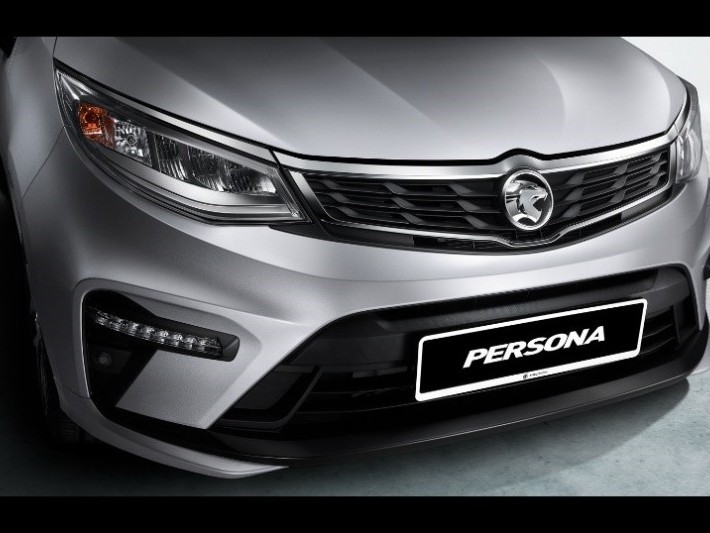
Considering buying a Proton Persona? Don't miss this fuel consumption guide!
LienOct 17, 2024
View More
Pros
Cons