
Q
What is the price of Mercedes GLS 2022?
 IkeOct 23, 2025, 04:29 PM
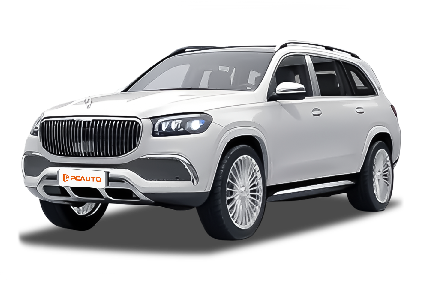
The 2022 Mercedes-Benz GLS in Malaysia comes with a price tag that typically ranges from around RM899,888 to RM1,299,888, depending on the chosen configuration. That figure can creep up, though, if you start adding extras like the AMG Line package, rear-seat entertainment, or swankier interior materials.
Under the hood, this full-size luxury SUV packs either a 3.0L inline-six or a 4.0L V8 biturbo engine. It comes standard with 4MATIC all-wheel drive and air suspension, offering a seven-seat layout and the MBUX infotainment system – making it a solid pick for families who want both space and the latest tech.
It’s worth keeping in mind that imported car prices in Malaysia can swing quite a bit based on exchange rates, tariffs, and local certification costs. So, it’s always a good move to hit up your nearest authorized dealer for the most current pricing and any ongoing promotions.
Rivals like the BMW X7 or Range Rover are also worth checking out; each brings its own strengths to the table in terms of luxury kit and performance. But the GLS tends to stand out for its well-rounded mix of on-road comfort and that genuinely usable third row – a big plus for family hauling.
If your budget is a bit tighter, gray import options might be tempting, but just make sure to double-check that the warranty terms stack up to what you’d get through official channels.
Special Disclaimer: This content is published by users and does not represent the views or position of PCauto.
Related Q&A
Q
What engine does the 2022 GLS 450 have?
The 2022 Mercedes-Benz GLS 450 packs a 3.0-liter inline-six turbocharged petrol engine paired with the EQ Boost mild-hybrid system. This powertrain kicks out 367 horsepower and 500 Newton-meters of torque, mated to a 9-speed automatic transmission (9G-Tronic) that delivers a smooth, efficient drive – perfect for Malaysian roads, whether you're navigating city traffic or hitting the highway for a long trip.
That 48V mild-hybrid tech isn't just for show; it actually helps with fuel efficiency and gives a little extra torque boost at low speeds, making those stop-start city drives feel more responsive. What's really struck a chord with Malaysian buyers, though, is how the GLS 450 nails that luxury large SUV brief. It's got the power and premium kit to satisfy high-end customers, plus Mercedes' solid after-sales network here gives owners peace of mind.
If you're shopping this segment, you'll want to check out rivals like the BMW X7 or Lexus LX too – each has its strengths – but the GLS 450 still holds its own when it comes to comfort and tech.
 XoeOct 23, 2025
Q
How much is a 2022 Mercedes-Benz?
If you're eyeing a 2022 Mercedes-Benz in Malaysia, prices can vary pretty wildly depending on the model and how you spec it out. The entry point, like the A-Class, starts around RM220k, but if you're going for the top-dog S-Class, you could be looking at over RM700k. Of course, the final number depends on extras you tick, taxes, and whatever dealer discounts might be on the table.
In Malaysia, Mercs are sold either as fully imported (CBU) units or locally assembled (CKD). The CKD models usually come with a friendlier price tag thanks to some tax breaks. And let's not forget, when you buy a luxury ride, you've got to factor in insurance, road tax, and maintenance costs too. Mercedes-Benz offers a solid 4-year or unlimited mileage warranty here, plus they've got a pretty extensive after-sales network, so you can count on decent support as an owner.
If a specific model has caught your eye, your best bet is to hit up the official website or swing by an authorized dealer to get the latest pricing and maybe even book a test drive. Oh, and it's worth checking out used models from different years too – you might just stumble on a better value for money deal that way.
 KayOct 23, 2025
Q
How much horsepower does the Mercedes GLS 2022 have?
The 2022 Mercedes-Benz GLS offers Malaysian buyers a choice of powertrains to suit their needs. The GLS 450 4MATIC comes equipped with a 3.0-liter inline-six turbo engine paired with a 48V mild-hybrid system, churning out 367 horsepower and 500 Nm of torque. For those craving more muscle, the high-performance GLS 580 4MATIC steps things up with a 4.0-liter V8 biturbo, also featuring the 48V mild hybrid setup, which unleashes a robust 489 horsepower and 700 Nm of torque. Both variants are mated to a smooth-shifting 9-speed automatic transmission and Mercedes' proven 4MATIC all-wheel-drive system, making them equally at home on the highway or tackling light off-road adventures.
For Malaysian consumers, the GLS range delivers more than enough grunt to handle the country's diverse road conditions. Whether you're navigating city traffic or embarking on a long-distance journey, there's ample power on tap. The EQ Boost mild-hybrid tech also does its part to keep fuel consumption in check – a nice bonus. It's worth highlighting that Mercedes has always excelled at tuning engines for both refinement and responsiveness, and the V8 version, in particular, will appeal to drivers who enjoy that extra surge of acceleration when they put their foot down.
Additionally, all GLS models come standard with air suspension and multiple drive modes, further enhancing the driving experience by allowing you to tailor the ride and handling to your preferences and the road ahead.
 MayOct 23, 2025
Q
How much is a Maybach in 2022?
In the Malaysian market for 2022, Mercedes-Maybach prices varied pretty widely depending on the specific model and how you spec'd it out. The entry point, the Maybach S 450, started at around RM 1.2 million, while the top-dog S 680 could easily push past RM 2 million. The big price differences mainly came down to engine displacement – like the S 680's beastly 6.0L V12 – bespoke customization options such as the rear-seat luxury package or hand-stitched interiors, and those extra add-ons like advanced driver assistance systems or exclusive paint finishes.
It's worth keeping in mind that Maybach, as Mercedes' ultra-luxury sub-brand, is sold in Malaysia as a fully imported (CBU) product. That means the sticker price includes import duties and luxury taxes. On the upside, every Maybach came standard with comfort-boosting tech like air suspension and acoustic glass. For local buyers, beyond the initial purchase cost, there's the ongoing stuff too – think maintenance expenses (like an oil change, which would set you back around RM 3,000) and those exclusive perks, such as the ability to book door to door car pickup for servicing.
If your budget's a bit tighter but you still crave that luxury feel, the regular Mercedes S-Class (starting around RM 700,000 as a locally assembled model) or rivals like the BMW 7 Series are solid alternatives. They might sit a notch below in terms of outright opulence, but they still pack plenty of high-end features.
 PamOct 23, 2025
Q
What size engine is the GLS 600 2022?
Powering the 2022 Mercedes-Benz GLS 600 is a 4.0-liter V8 biturbo engine paired with the EQ Boost mild hybrid system. This setup cranks out an impressive 557 horsepower and 730 Nm of torque, delivering not just brute force but also a decent level of fuel efficiency. For Malaysian drivers, this engine is a solid fit for our diverse road conditions – whether you're navigating city traffic or hitting the highway for a long road trip, it handles it all with ease.
What's cool about Mercedes' EQ Boost tech is how the 48-volt mild hybrid system kicks in extra power when you're starting off or accelerating. It also enables features like coasting with the engine off, which helps keep fuel consumption in check. As Mercedes' flagship SUV, the GLS 600's powertrain really nails that balance between luxury and performance – perfect for Malaysian folks who want that premium driving experience. Plus, the engine tech shows Mercedes is serious about going green, meeting those stricter global emissions standards. All in all, it's a luxury SUV that brings both power and eco-friendliness to the table.
 GusOct 23, 2025
Q
How big is the Mercedes GLS 2022?
The 2022 Mercedes-Benz GLS, the brand's full-size luxury SUV, cuts a seriously imposing figure on the road. Let's talk dimensions: it stretches 5207mm in length, 1956mm in width, and stands 1823mm tall, with a generous wheelbase of 3135mm. These numbers translate to a supremely spacious three-row cabin, making it a top pick for Malaysian families or business needs. Local buyers really value interior room and comfort, and the GLS delivers big time – it can easily fit seven adults without anyone feeling cramped. Practicality is another strong suit: boot space comes in at 355 litres as standard, and fold those rear seats down, and you're looking at a massive 2400 litres.
Beyond just size, the GLS's design strikes a nice balance between luxury appeal and aerodynamic efficiency, boasting a drag coefficient of just 0.32. That's not just a fancy number; it helps keep fuel consumption in check, which is always a plus, especially for those long highway drives or cross-state trips we Malaysians love.
Underpinning all this is Mercedes' MHA modular platform, which uses a clever mix of high-strength steel and aluminium components. This isn't just about keeping weight in check – it's crucial for maintaining the structural rigidity needed for a vehicle of this size and capability. Then there's the AIRMATIC air suspension system, which automatically adjusts the ride height to tackle different road surfaces. Whether you're navigating some of our twistier mountain roads or encountering those occasional stretches of less-than-perfect tarmac, this system is a definite advantage, ensuring a smooth and composed ride.
For those who want to dial up the exclusivity, there's the option of the AMG Line package for a sportier look, or you can go all out with the Maybach GLS. The Maybach takes things to another level, with the wheelbase (still 3135mm, interestingly) translating into rear passenger space that's nothing short of opulent.
 HueOct 23, 2025
Q
What is the difference between a GLS & Maybach GLS?
The key difference between the Mercedes-Benz GLS and the Maybach GLS lies in their luxury positioning and equipment levels. The Maybach GLS, as the flagship variant of the GLS lineup, is purpose-built for consumers seeking the ultimate luxury experience. Externally, it gets exclusive touches like the signature chrome grille, two-tone paint options, and Maybach badging. Inside, the opulence steps up with premium Nappa leather, real wood trim, and those rear executive seats that basically turn the back into a first-class suite—think leg rests, massage functions, and a rear entertainment system.
Under the hood, the Maybach GLS typically packs a more powerful V8 or even V12 engine, paired with an enhanced air suspension setup to dial up the ride comfort. The regular GLS, on the other hand, leans more towards family practicality and well-rounded performance.
In the Malaysian market, the Maybach GLS’s prestigious vibe makes it a natural fit for high-end business scenarios, though that exclusivity comes with a significantly higher price tag than the standard GLS. The latter tends to suit family buyers who want a good balance of space and brand cachet. It’s worth noting that Mercedes has been beefing up its ultra-luxury offerings through the Maybach subbrand lately—a differentiation strategy we’ve also seen play out with models like the S-Class. At the end of the day, it all comes down to budget and what kind of luxury experience you’re after.
 FayOct 23, 2025
Q
How much is the Maybach GLS 2022?
The 2022 Mercedes-Maybach GLS starts at approximately RM 1.5 million in the Malaysian market, with the exact price varying depending on optional configurations and dealer promotions. This ultra-luxury SUV is powered by a 4.0-liter V8 biturbo engine, churning out 558 horsepower and 730 Nm of torque. It comes standard with a 9-speed automatic transmission and the 4MATIC all-wheel drive system. Step inside, and you're greeted by a sumptuous interior featuring Nappa leather, real wood trim, and exclusive Maybach design touches. The rear cabin doesn't skimp on luxury either, boasting executive seats and even a refrigerated compartment. Notably, the Maybach GLS stretches 200mm longer than the standard GLS, translating to even more generous rear legroom. In Malaysia, this vehicle targets discerning high-end buyers seeking the pinnacle of comfort and prestige. It goes head-to-head with rivals like the Bentley Bentayga and Rolls-Royce Cullinan, though each caters to a distinct clientele thanks to differing brand positioning and pricing strategies. For the latest quotes and personalized customization options, it's best to reach out directly to authorized dealers.
 HappySmileOct 23, 2025
Popular Cars
Model Year
Car Compare
Car Photo
Related Models
 Cars
CarsLatest Q&A
Q
Is AMT similar to automatic?
There are significant differences between AMT transmissions and automatic transmissions (AT) in terms of core structure and driving experience. AMT is essentially an electronically automated version of a manual transmission, simulating manual clutch operation and gear shifting through a computerized control system while retaining the gear set structure of manual transmissions. As a result, it offers higher transmission efficiency, with fuel consumption approximately 8%-12% lower than AT, making it particularly suitable for highway or long-distance driving. However, it may exhibit jerking similar to manual transmissions during low-speed gear shifts, especially noticeable in congested traffic conditions.
AT transmissions rely on torque converters for power transfer, delivering smooth and seamless gear shifts that appeal to comfort-oriented users. However, their complex structure (incorporating planetary gear sets, hydraulic systems, etc.) results in higher maintenance costs. A single service may cost between 800 to 1,500 ringgit, whereas AMT only requires gear oil replacement at approximately 400 ringgit.
From a market perspective, AMT is predominantly used in budget vehicles or commercial models priced below 80,000 ringgit, while AT is typically featured in mid-to-high-end vehicles. Consumers should select based on actual needs: AMT suits those prioritizing fuel efficiency and low maintenance costs, while AT better serves those valuing comfort. Notably, recent advancements in AMT electronic control technology have significantly mitigated jerking issues, though test drives should still emphasize low-speed performance evaluation.
 AriaMar 26, 2026
Q
Which is better, DCT or AT?
DCT (Dual-Clutch Transmission) and AT (Automatic Transmission) each have their own advantages and disadvantages, and the choice should be based on personal driving needs. AT transmissions transfer power through a torque converter, offering excellent shift smoothness, making them suitable for urban commuting or novice drivers. However, they tend to have higher fuel consumption, and vehicles equipped with them are usually more expensive. DCT transmissions utilize a dual-clutch structure, featuring fast shift speeds and high power transmission efficiency, which provides a more direct driving experience—particularly suitable for users seeking a sporty feel. However, they may exhibit jerking at low speeds and have relatively high maintenance costs. If durability and comfort are priorities, AT is the more reliable choice; if power responsiveness and driving pleasure are preferred, wet DCT (such as Volkswagen DSG) performs better, though dry DCT models should be avoided in prolonged stop-and-go traffic conditions. Additionally, CVT transmissions excel in smoothness and fuel efficiency, making them ideal for daily commuting, but they lack driving excitement. It is recommended to test-drive before purchasing, as tuning varies significantly across brands, and real-world experience is more important than theoretical specifications.
 FlutteringMar 26, 2026
Q
Is Amt good or bad?
AMT gearboxes have a significant cost advantage in the local market, typically being around 5,000 Ringgit cheaper than models equipped with conventional automatic transmissions. Their fuel efficiency is comparable to manual transmissions, resulting in long-term fuel savings. Featuring a straightforward design, they achieve transmission efficiency exceeding 90% with relatively low maintenance costs, making them ideal for practicality-oriented consumers. However, their shifting logic contains inherent limitations: gear changes between 1st and 2nd cause 0.3-0.5 second power interruptions, while unintended upshifts on inclines may reduce engine speed by 15%-20%, compromising driving smoothness. For urban commuters or budget-conscious buyers, AMT offers excellent value, though those prioritizing premium driving dynamics should consider alternative transmission types. Some domestic models like the Perodua Axia employ enhanced AMT systems, where optimized shift programming has reduced gearshift shock by approximately 30%.
 RainbowsMar 26, 2026
Q
Which gives better mileage, CVT or AMT?
From the perspective of fuel economy, CVT transmissions generally perform better under urban driving conditions. Their continuously variable design allows the engine to consistently operate within the optimal speed range, significantly reducing fuel consumption during frequent starts and stops. Test data shows that their fuel consumption in urban driving conditions is 10% to 15% lower than that of comparable models. AMT transmissions, on the other hand, inherit the high transmission efficiency of manual transmissions, delivering fuel efficiency close to manual transmissions during high-speed cruising. This makes them particularly suitable for long-distance driving in large-displacement vehicles. However, due to power interruption during gear shifts, their overall fuel consumption may be 5% to 8% higher than CVTs.
The difference in fuel-saving characteristics between the two transmissions stems from their technical principles: CVTs achieve continuous variability through steel belts and pulleys, eliminating the fixed gear ratio limitations of traditional transmissions; AMTs simulate manual gear changes via electronic control systems while maintaining the mechanical efficiency of gear transmission. Notably, actual fuel consumption is also influenced by driving habits. Smooth acceleration and anticipatory deceleration can maximize the transmissions' fuel-saving potential. If the vehicle budget permits and urban commuting is the primary use, CVTs offer a more economical choice. For frequent highway driving with an emphasis on cost-effectiveness, AMTs are equally worth considering.
 RubyBlazeMar 26, 2026
Q
Which is cheaper, AMT or CVT?
In terms of gearbox cost, AMT is usually more economical than CVT. Essentially, AMT is a manual transmission equipped with an electronic control unit, featuring a simple structure and low maintenance costs. The unit price ranges from approximately 5,000 to 8,000 ringgit, making it suitable for budget-conscious consumers or those who prioritize long-term operating costs. CVT incurs higher manufacturing costs due to its precision steel belt transmission system and continuous variable transmission technology, with a unit price of about 7,000 to 10,000 ringgit. However, it delivers a smoother driving experience and superior fuel efficiency. The primary differences between the two lie in technical complexity: AMT retains the gear-shifting mechanism, resulting in noticeable shift shock; CVT achieves linear power output through stepless speed variation but requires periodic belt inspection and incurs higher maintenance expenses. For those prioritizing initial cost and basic transportation needs, AMT offers better value; if comfort and long-term fuel economy are priorities, CVT represents a more worthwhile investment. Note that actual prices may vary based on vehicle model, brand, and local supply chain factors.
 ShadowProwlMar 26, 2026
Related News

What is the difference between the Mercedes-Benz E300 and E350?
MichaelMar 24, 2026

Mercedes-Benz halts the launch of L3-level autonomous driving, reverting to L2+ level
LienJan 16, 2026

Nvidia Announces Mercedes-Benz CLA as the First Vehicle with DRIVE AV Autonomous Driving Technology
MichaelJan 12, 2026

Brand New Mercedes-Benz GLC with EQ Technology Coming Soon: A Larger, Faster, and More Efficient Luxury All-Electric SUV
LienDec 11, 2025

Mercedes-Benz GLC200 4Matic debuts, offering a more accessible entry price at RM329,888
LienDec 11, 2025
View More
Pros
Cons