
Q
What is the price range of the Perodua Nexis?
 HonSep 28, 2025, 10:37 AM
The highly anticipated all-new Perodua Nexis SUV is expected to hit the market with a price tag ranging from RM60,000 to RM80,000, with specific pricing varying across different trim levels. For instance, the base Standard variant will likely be positioned at the more affordable end of the spectrum, while higher-spec models will come loaded with advanced features like Advanced Driver Assistance Systems (ADAS) and smart connectivity tech.
Slotting in as a B-segment SUV, the Nexis is targeted squarely at young families and urban dwellers. Its mid-sized dimensions and strong fuel efficiency should strike a chord with Malaysian buyers who prioritize both practicality and value for money. True to Perodua form, the Nexis is also expected to carry forward the brand's reputation for low maintenance costs and solid reliability. Under the hood, we're looking at a fuel-sipping 1.5L Dual VVT-i engine paired with a D-CVT gearbox, promising a smooth drive with impressive fuel economy.
If you're in the market for an affordable SUV, keep an eye out for Perodua's official launch event to get the final specs and pricing. It's also worth cross-shopping with segment rivals like the Proton X50 or Honda HR-V, but make sure to weigh up the differences in features and after-sales service packages to find the best fit for your needs.
Special Disclaimer: This content is published by users and does not represent the views or position of PCauto.
Related Q&A
Q
Which Segment Does Perodua Nexis Belong to?
The Perodua Nexis falls into the B-Segment SUV category. This vehicle is positioned slightly higher than the Axia and Bezza in Perodua's product line. It mainly targets young family users who pursue space practicality and stylish design. The body size of the Perodua Nexis is expected to be similar to that of the Proton X50, but its price will be more affordable, continuing Perodua's characteristic of high cost - effectiveness.
B - Segment SUVs are very popular in the Malaysian market. Vehicles in this category usually have a relatively high ground clearance and flexible cabin space, which are suitable for the diverse local driving environments, including urban commuting and occasional countryside trips.
The Perodua Nexis is expected to be equipped with an energy - efficient 1.5L Dual VVT - i engine and may come with advanced safety systems such as ASA 3.0, continuing the brand's tradition of emphasizing fuel economy and safety.
For Malaysian consumers, B - Segment SUVs are a popular choice that combines practicality and a sense of trend. With its mature local production and a well - established after - sales service network, Perodua can often provide solutions that better meet local needs.hts.
 VicJul 31, 2025
Q
How much engine displacement of Perodua Nexis?
The Perodua Nexis has not been officially launched yet, so the official has not announced its specific engine displacement (CC) data. However, according to industry speculation, this upcoming B-segment SUV might be equipped with the same 1.0-liter three-cylinder turbocharged engine as the Perodua Ativa. The engine has a displacement of 998cc, a maximum power of 98 horsepower, and a peak torque of 140 N·m, and is paired with a D-CVT gearbox. If the final configuration turns out to be true, this small-displacement turbocharged engine can balance fuel economy and power performance, making it very suitable for the urban road conditions in Malaysia. Meanwhile, Perodua models generally adopt a lightweight design, which further optimizes fuel consumption. It is recommended that consumers keep an eye on the latest news from the official Perodua website or authorized dealers to get accurate information. When making a purchase, Malaysian car owners can also make a horizontal comparison with engines of similar models, such as the 1.5TGDI engine (1477cc) of the Proton X50 or the 1.5L naturally aspirated engine (1498cc) of the Honda HR-V. However, they need to pay attention to the differences in road tax, insurance, and maintenance costs among engines with different displacements.
 HikerJul 31, 2025
Q
What Engine is used in Perodua Nexis?
The Perodua Nexis is expected to be equipped with a 1.5-liter Dual VVT-i naturally aspirated engine. This engine shares the technical platform with models like the Perodua Ativa and Toyota Rush. It has a maximum output power of about 106 horsepower and a peak torque of 138 Nm. It is paired with a D-CVT transmission, focusing on fuel economy and smoothness in daily driving. The engine adopts a dual variable valve timing system, which can optimize the intake and exhaust efficiency at both low and high speeds and meets the EURO 4 emission standards in the Malaysian market. For Malaysian users who value practicality, this kind of small-displacement engine can balance the fuel consumption during city commuting and the occasional long-distance needs, and the maintenance cost is relatively low. It's worth mentioning that Perodua has gradually upgraded its power technology in recent years. For example, a more efficient 1.0-liter turbocharged option has been applied to models like the Bezza. In the future, it may also offer a hybrid version for the Nexis to adapt to the market trend, but the specific details shall be subject to the official release. The engine design of this kind of compact SUV usually gives priority to durability in tropical climates. It is recommended that car owners conduct regular maintenance to ensure long-term performance.
 WandererJul 31, 2025
Q
What is the Gearbox Type of Perodua Nexis?
As an upcoming all-new SUV model, the official details about the transmission type of the Perodua Nexis haven't been released yet. However, based on Perodua's consistent technical approach and market positioning, it's expected to be equipped with a proven D-CVT continuously variable transmission or a 4-speed automatic transmission. These two types of transmissions have been widely used in Perodua's existing models like the Aruz and Bezza. They are particularly suitable for the urban road conditions in Malaysia, balancing fuel economy and a smooth driving experience.
It's worth noting that the D-CVT transmission offers a more direct power response by simulating gear shifts, while the traditional automatic transmission is known for its durability and low maintenance costs. Consumers can choose according to their own driving habits. If the Nexis is positioned as a youthful SUV, more advanced transmission technologies may be introduced to enhance its competitiveness. It is recommended to follow Perodua's official press conference for the final configuration information.
Malaysian consumers can refer to the actual test - drive experience when making a purchase. The transmission tuning has a significant impact on the daily driving comfort. Meanwhile, the transmissions of all Perodua models have been locally adapted to suit the tropical climate and diverse road conditions.
 LeeJul 31, 2025
Q
Does Perodua Nexis Support Apple Carplay?
As a newly launched model, it hasn't been officially confirmed whether the Perodua Nexis is equipped with Apple CarPlay. It is recommended that interested consumers directly contact Perodua dealers or check the official website for the latest configuration information. Apple CarPlay is a very practical in - vehicle connectivity technology. It allows iPhone users to directly use common functions such as navigation, music, and calls through the car's infotainment screen, enhancing driving convenience and safety. In the Malaysian market, more and more new cars are starting to be equipped with this feature, especially models from Japanese and local brands. If the Nexis gets this configuration in the future, its market competitiveness will be greatly enhanced. Apart from Apple CarPlay, Android Auto is also a similar in-vehicle connectivity system, which enables Android phone users to achieve the same convenient operations. For Malaysian consumers who value the technological experience, they can pay more attention to these smart connectivity configurations when buying a new car, as they can significantly improve the daily driving experience.
 JaxAug 1, 2025
Q
What is the Tyre Brand of Perodua Nexis?
As the only part of the vehicle that contacts the ground, tires are crucial for driving safety, fuel consumption performance, and noise control. It is recommended that car owners give priority to products that match the original factory specifications (such as size 195/55 R16 or similar parameters) when replacing tires in the future. Also, pay attention to the tread wear indicator lines to ensure safety. If you're after better performance, you can consider upgrading to silent or energy-saving tires after the warranty period. But be aware that modifications may affect the original factory warranty terms, so it's advisable to consult an authorized service center.
In Malaysia's rainy climate, it's particularly important to choose tire treads with strong wet-grip performance. Regularly checking tire pressure and the aging condition of the tires is also basic maintenance knowledge.
 NedAug 1, 2025
Q
Is Perodua Nexis a Good Car? Learn the Pros and Cons Here
As an upcoming all-new SUV model, the currently official information reveals that the Perodua Nexis is positioned as a B-segment urban SUV. It is expected to be powered by a combination of a 1.5L Dual VVT-i engine and a D-CVT gearbox. This market-proven powertrain has advantages in terms of fuel economy and maintenance costs, making it particularly suitable for the urban road conditions in Malaysia and consumers' demand for practicality. Judging from the released teaser images, the Nexis adopts Perodua's latest family design language. The body lines are more sporty. The interior is expected to continue the brand's layout style that emphasizes functionality and may be equipped with an advanced ASA active safety system, which is quite attractive to Malaysian family users who value safety. Although the specific configuration and price have not been announced yet, referring to Perodua's consistent market strategy, the Nexis is likely to follow the high-cost-performance route, competing differently with the Proton X50 and providing consumers with a more affordable SUV option. It is recommended that potential buyers pay attention to the upcoming detailed specifications and take a test drive to experience its space performance and handling feel. At the same time, compare the after-sales warranty policies of models in the same class. After all, a 5-year warranty period has become the mainstream standard in the Malaysian market, and Perodua's nationwide service center network is a remarkable advantage for its after-sales service.
 FunnyJokeAug 1, 2025
Q
What is the Second Hand Price of Perodua Nexis? Check Used Price Here
Normally, used - car prices are affected by multiple factors such as the vehicle's age, mileage, condition, maintenance records, and market demand. Take other popular Perodua models like the Myvi or Axia as an example. The used - car prices of vehicles with a 1 - 3 - year age are approximately 60% - 80% of the original price, but the specific price depends on the configuration and market supply and demand.
If you're considering buying a used car, it is advisable to check vehicles that have undergone professional inspections through authorized dealers or certified platforms. At the same time, pay attention to checking the Service Book to confirm the maintenance history, and it is recommended to take a test drive to confirm the mechanical condition.
For models about to be launched, you can also refer to the depreciation curves of similar - positioned models of the same brand as a future reference. However, note that the application of new technologies or differences in configurations may cause price fluctuations.
 CharmingPersonalityAug 1, 2025
Q
What is the Fuel Consumption of Perodua Nexis?
As an upcoming all-new SUV model, the official fuel consumption data of the Perodua Nexis has not been officially released yet. But referring to Perodua's consistent use of energy-saving technologies such as the DVVT dual variable valve timing system and lightweight body design, it is expected that its fuel economy will continue the brand's advantage, possibly ranging from 5.0 to 6.5 liters per 100 kilometers. The specific performance depends on the actual power configuration (such as a 1.5L naturally aspirated engine or a hybrid system) and driving conditions.
For Malaysian consumers, in the daily use scenarios of urban commuting combined with highway sections, this kind of compact SUV can usually balance power and fuel consumption. It is recommended to pay attention to the actual test data released by the subsequent PUSPAKOM certification or the Energy Efficiency Label (EEV).
It is worth mentioning that fuel consumption is significantly affected by driving habits, road conditions, and maintenance status. Regularly maintaining tire pressure and avoiding rapid acceleration and deceleration can improve fuel efficiency. And the reasonable use of air conditioning in Malaysia's hot climate is also a key factor in optimizing energy consumption.
If you have higher requirements for energy efficiency, you can compare it with models in the same class, such as the 1.5TGDI engine of the Proton X50, or wait for the technical details of Perodua's potential hybrid version.
 NatureBeautyAug 1, 2025
Q
Is Perodua Nexis Worth Buying? Check out Its Features Here!
The Perodua Nexis, as an upcoming all-new SUV model, is truly worth the attention of Malaysian consumers. It is expected to be equipped with a 1.5L Dual VVT-i engine, paired with a D-CVT transmission, offering a smooth driving experience and good fuel economy, which is suitable for daily commuting and family use. Based on the known information, the Nexis might be equipped with advanced safety systems such as ASA 3.0 (Advanced Safety Assist) and six airbags, which are quite competitive among models in the same class. The interior space is expected to continue Perodua's consistent practicality. The rear seats can be folded down to increase the luggage capacity, meeting the multi - purpose needs of Malaysian families. Although the official has not yet announced the full configuration and price, referring to Perodua's high - cost - performance strategy for previous models like the Ativa and Aruz, the Nexis is very likely to continue this advantage. For consumers with a budget of around 100,000 ringgit who are looking for reliability and practicality, they might as well wait for more official information before making a decision. Given Malaysia's rainy and hot climate, it is recommended that consumers pay extra attention to the vehicle's air - conditioning cooling effect and anti - rust process when buying a car. These details can often enhance the long - term driving experience.
 HappyThoughtsAug 1, 2025
Popular Cars
Model Year
Car Compare
Car Photo
Related Models
 Cars
CarsLatest Q&A
Q
Is AMT similar to automatic?
There are significant differences between AMT transmissions and automatic transmissions (AT) in terms of core structure and driving experience. AMT is essentially an electronically automated version of a manual transmission, simulating manual clutch operation and gear shifting through a computerized control system while retaining the gear set structure of manual transmissions. As a result, it offers higher transmission efficiency, with fuel consumption approximately 8%-12% lower than AT, making it particularly suitable for highway or long-distance driving. However, it may exhibit jerking similar to manual transmissions during low-speed gear shifts, especially noticeable in congested traffic conditions.
AT transmissions rely on torque converters for power transfer, delivering smooth and seamless gear shifts that appeal to comfort-oriented users. However, their complex structure (incorporating planetary gear sets, hydraulic systems, etc.) results in higher maintenance costs. A single service may cost between 800 to 1,500 ringgit, whereas AMT only requires gear oil replacement at approximately 400 ringgit.
From a market perspective, AMT is predominantly used in budget vehicles or commercial models priced below 80,000 ringgit, while AT is typically featured in mid-to-high-end vehicles. Consumers should select based on actual needs: AMT suits those prioritizing fuel efficiency and low maintenance costs, while AT better serves those valuing comfort. Notably, recent advancements in AMT electronic control technology have significantly mitigated jerking issues, though test drives should still emphasize low-speed performance evaluation.
 AriaMar 26, 2026
Q
Which is better, DCT or AT?
DCT (Dual-Clutch Transmission) and AT (Automatic Transmission) each have their own advantages and disadvantages, and the choice should be based on personal driving needs. AT transmissions transfer power through a torque converter, offering excellent shift smoothness, making them suitable for urban commuting or novice drivers. However, they tend to have higher fuel consumption, and vehicles equipped with them are usually more expensive. DCT transmissions utilize a dual-clutch structure, featuring fast shift speeds and high power transmission efficiency, which provides a more direct driving experience—particularly suitable for users seeking a sporty feel. However, they may exhibit jerking at low speeds and have relatively high maintenance costs. If durability and comfort are priorities, AT is the more reliable choice; if power responsiveness and driving pleasure are preferred, wet DCT (such as Volkswagen DSG) performs better, though dry DCT models should be avoided in prolonged stop-and-go traffic conditions. Additionally, CVT transmissions excel in smoothness and fuel efficiency, making them ideal for daily commuting, but they lack driving excitement. It is recommended to test-drive before purchasing, as tuning varies significantly across brands, and real-world experience is more important than theoretical specifications.
FlutteringMar 26, 2026Q
Is Amt good or bad?
AMT gearboxes have a significant cost advantage in the local market, typically being around 5,000 Ringgit cheaper than models equipped with conventional automatic transmissions. Their fuel efficiency is comparable to manual transmissions, resulting in long-term fuel savings. Featuring a straightforward design, they achieve transmission efficiency exceeding 90% with relatively low maintenance costs, making them ideal for practicality-oriented consumers. However, their shifting logic contains inherent limitations: gear changes between 1st and 2nd cause 0.3-0.5 second power interruptions, while unintended upshifts on inclines may reduce engine speed by 15%-20%, compromising driving smoothness. For urban commuters or budget-conscious buyers, AMT offers excellent value, though those prioritizing premium driving dynamics should consider alternative transmission types. Some domestic models like the Perodua Axia employ enhanced AMT systems, where optimized shift programming has reduced gearshift shock by approximately 30%.
 RainbowsMar 26, 2026
Q
Which gives better mileage, CVT or AMT?
From the perspective of fuel economy, CVT transmissions generally perform better under urban driving conditions. Their continuously variable design allows the engine to consistently operate within the optimal speed range, significantly reducing fuel consumption during frequent starts and stops. Test data shows that their fuel consumption in urban driving conditions is 10% to 15% lower than that of comparable models. AMT transmissions, on the other hand, inherit the high transmission efficiency of manual transmissions, delivering fuel efficiency close to manual transmissions during high-speed cruising. This makes them particularly suitable for long-distance driving in large-displacement vehicles. However, due to power interruption during gear shifts, their overall fuel consumption may be 5% to 8% higher than CVTs.
The difference in fuel-saving characteristics between the two transmissions stems from their technical principles: CVTs achieve continuous variability through steel belts and pulleys, eliminating the fixed gear ratio limitations of traditional transmissions; AMTs simulate manual gear changes via electronic control systems while maintaining the mechanical efficiency of gear transmission. Notably, actual fuel consumption is also influenced by driving habits. Smooth acceleration and anticipatory deceleration can maximize the transmissions' fuel-saving potential. If the vehicle budget permits and urban commuting is the primary use, CVTs offer a more economical choice. For frequent highway driving with an emphasis on cost-effectiveness, AMTs are equally worth considering.
 RubyBlazeMar 26, 2026
Q
Which is cheaper, AMT or CVT?
In terms of gearbox cost, AMT is usually more economical than CVT. Essentially, AMT is a manual transmission equipped with an electronic control unit, featuring a simple structure and low maintenance costs. The unit price ranges from approximately 5,000 to 8,000 ringgit, making it suitable for budget-conscious consumers or those who prioritize long-term operating costs. CVT incurs higher manufacturing costs due to its precision steel belt transmission system and continuous variable transmission technology, with a unit price of about 7,000 to 10,000 ringgit. However, it delivers a smoother driving experience and superior fuel efficiency. The primary differences between the two lie in technical complexity: AMT retains the gear-shifting mechanism, resulting in noticeable shift shock; CVT achieves linear power output through stepless speed variation but requires periodic belt inspection and incurs higher maintenance expenses. For those prioritizing initial cost and basic transportation needs, AMT offers better value; if comfort and long-term fuel economy are priorities, CVT represents a more worthwhile investment. Note that actual prices may vary based on vehicle model, brand, and local supply chain factors.
 ShadowProwlMar 26, 2026
Related News

Perodua Nexis / Traz (D66B) how much will it sell for?
RobertDec 17, 2025

Perodua D66B teaser revealed, a new B-segment SUV based on the Yaris Cross is coming soon
WilliamDec 10, 2025
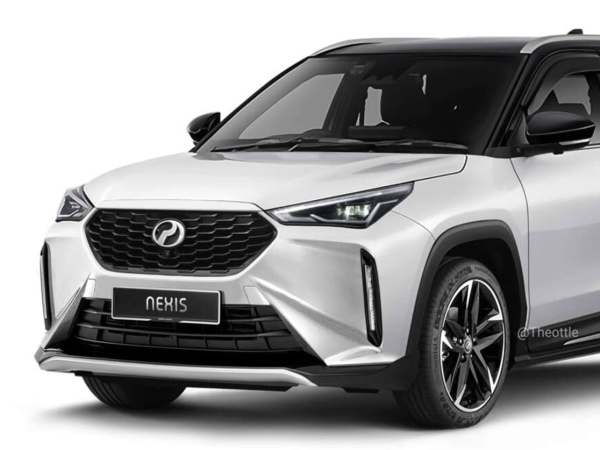
Should I choose Proton X50, or continue waiting for the repeatedly disappointing Perodua Nexis?
JohnNov 22, 2024

1.5L Naturally Aspirated vs 1.0L Turbocharged: Is Traz's 4-cylinder engine really smoother than Ativa?
JohnFeb 21, 2026

Toyota Raize vs Perodua Ativa: Why is the Raize not available in Malaysia?
WilliamFeb 20, 2026
View More
Pros
Cons