
Q
What is the top speed of the Mercedes R-Class AMG?
 DriverRouteTravelMay 20, 2025, 11:09 AM
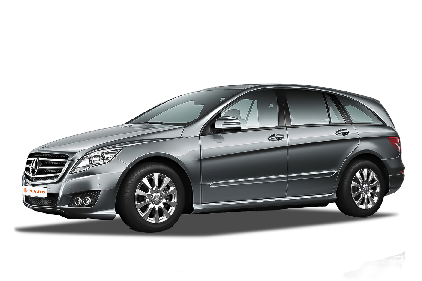
The Mercedes-Benz R 63 AMG (W251) has an electronically limited top speed of 250 km/h, a traditional speed restriction for AMG models, though its powertrain potential could theoretically achieve higher velocities. This high-performance MPV is powered by a 6.2L V8 naturally aspirated engine (M156) producing 510 horsepower and 630 Nm of torque, paired with an AMG SpeedShift 7-speed automatic transmission that enables a 0-100 km/h sprint in just 4.6 seconds - remarkable performance for a 7-seat luxury tourer.
Under Malaysian road conditions, such capability far exceeds practical requirements while significantly increasing fuel consumption (combined cycle approximately 6-7 km/L). Notably, the R 63 AMG maintains stability even at high speeds, supported by its AMG sport suspension, large brake systems, and refined aerodynamic design.
Although now the Mercedes-Benz R 63 AMG is discontinued, this model is still a popular collector's item for those seeking both performance and practicality in the used vehicle market. However, as one of AMG's more special creations, the R 63 AMG is rare in Malaysia.
Special Disclaimer: This content is published by users and does not represent the views or position of PCauto.
Related Q&A
Q
What is the idle mode of the Mercedes R-Class?
The idle mode of the Mercedes R-Class typically refers to the state where the engine maintains a low rotational speed (approximately 600-800 rpm) while stationary, allowing electrical systems like air conditioning and audio to continue operating. Equipped with either M272 or M273 engines featuring electronic throttle control, the vehicle automatically adjusts idle speed to ensure smooth operation and minimize vibrations.
For variants with the ECO Start/Stop system (available in certain international models), the engine automatically shuts off under specific conditions (such as when braking or stationary) to conserve fuel, restarting upon brake release. While idling with air conditioning is common in Malaysia's hot climate, prolonged idling may increase carbon buildup risk - occasional brief operation at 2000 rpm is recommended to help clear deposits.
Mercedes' sophisticated idle control technology generally prevents noticeable vibrations or unstable rpm, though abnormal symptoms (excessive rpm fluctuation) may indicate throttle body contamination or sensor malfunction requiring dealership inspection. As a premium family vehicle, the R-Class performs well in idle refinement with superior noise suppression and smoothness compared to conventional models, complemented by smooth power delivery when stationary thanks to its 7G-Tronic transmission.
 DaisyMeadowMay 19, 2025
Q
What's the size of the trunk of Mercedes R-Class?
The Mercedes R-Class offers a standard trunk capacity of 470 liters with a relatively flat floor, and split-folding rear seats to expand cargo space. Some differences may exist across different models or configurations.
Typically, family sedans provide around 450 liters of trunk space, with conventional sedans ranging between 350 to 500 liters. SUV models generally offer 300 to 600 liters of cargo capacity, expandable to 1,300-1,800 liters with rear seats folded down.
The R-Class performs well in the trunk capacity, comfortably meeting daily cargo needs while offering flexible space adjustment through its foldable rear seats for larger item transportation.
 ClimberPeakChallengeMay 19, 2025
Q
What is the length of the Mercedes R-Class?
The Mercedes R-Class measures 5,159 mm in length, providing ample interior space, offering spacious legroom for passengers and abundant luggage capacity - making it particularly suitable for family trips or business use.
With a width of nearly 2 meters, the vehicle ensures driving stability while enhancing shoulder comfort for occupants. The remarkable 3,215 mm wheelbase not only delivers exceptional driving stability and spatial flexibility but also creates additional comfort space for rear passengers.
Whether for comfortable business travel or convenient family journeys, the R-Class's dimensional design perfectly balances luxury and practicality. Its spacious and comfortable interior delivers an enjoyable driving experience for all occupants.
 JoggerPaceEnduranceMay 19, 2025
Q
How much horsepower does Mercedes-AMG R deliver?
The Mercedes-AMG R typically refers to the AMG version of the Mercedes-Benz R-Class, equipped with a 6.2-liter naturally aspirated V8 engine (codenamed M156) that delivers 510 horsepower and 630 Nm of torque. This vehicle accelerates from 0 to 100 km/h in just around 5 seconds, and while its top speed is electronically limited to 250 km/h, its acceleration performance is outstanding.
The Mercedes R-Class AMG features a seven-speed automatic transmission with multiple driving modes including Sport, Eco, and Manual, allowing drivers to adjust transmission responsiveness according to their needs for optimized power delivery. It also incorporates Mercedes' proprietary 4Matic all-wheel-drive system with a 40:60 front-to-rear power distribution ratio, ensuring stability and handling across various road conditions while delivering an exceptional driving experience.
 BoarderWaveRideMay 20, 2025
Q
Is Mercedes R-Class equipped with air suspension system?
The Mercedes R-Class is equipped with an air suspension system. As an advanced suspension technology, it significantly enhances both ride comfort and handling performance. The R-Class's air suspension not only automatically adjusts the vehicle height based on load and speed, but also maintains optimal stability and comfort across various driving conditions.
When cornering, the suspension stiffens to provide better support, while during normal driving, it softens to filter out unnecessary vibrations. Additionally, the R-Class automatically lowers its ride height at speeds exceeding 120 km/h to reduce aerodynamic drag and improve fuel efficiency.
This air suspension system is available through an optional driving assistance package and can be adjusted via controls on the center console.
 MoonlightNightMay 20, 2025
Q
Is the Mercedes R-Class a good choice?
The Mercedes-Benz R-Class is an excellent vehicle with numerous advantages. It combines the best features of various vehicles - offering sedan-like comfort, practicality of MPV/SUV , and versatility of station wagon. Its interior shows luxury with premium materials, equipped with power-adjustable seats with heating and ventilation functions, complemented by an advanced entertainment system. The meticulously quiet cabin and finely-tuned audio system further enhance the driving experience.
Space is one of its advantages. Available in 5 to 7-seat configurations with flexible layouts, it accommodates diverse family needs. Whether for daily commutes or long journeys, passengers enjoy spacious headroom and legroom.
In performance, it has powerful and smooth-running engines paired with superb chassis tuning that delivers remarkable stability and handling. Safety features are also comprehensive, including multiple airbags and active braking systems.
Like any vehicle, it may have some potential drawbacks. Maintenance costs for older models can be relatively high, and fuel consumption may be more than average. However, for those seeking a luxurious, spacious, and comfortable family or personal vehicle and who can manage the ownership costs, the Mercedes R-Class is a good choice.
 StarryVoyagerMay 20, 2025
Q
What are the body dimensions of Mercedes R-Class?
The dimensions of the Mercedes R-Class vary slightly depending on the specific model. Taking a 2017 model as an example, its exterior measures 5,159mm in length, 1,922mm in width, and 1,663mm in height, with a wheelbase of 3,215mm. Such dimensions create a spacious interior where both front and rear passengers enjoy ample headroom and legroom, easily accommodating family trips or business transportation needs.
The spacious wheelbase also helps enhance driving stability. The vehicle offers sufficient trunk capacity for luggage storage. As a luxury MPV, the Mercedes R-Class successfully balances comfortable riding experiences with practical dimensions, providing convenience for both daily use and travel.
 AdventureSeekThrillMay 20, 2025
Popular Cars
Model Year
Car Compare
Car Photo
Related Models
 Cars
CarsLatest Q&A
Q
Is AMT similar to automatic?
There are significant differences between AMT transmissions and automatic transmissions (AT) in terms of core structure and driving experience. AMT is essentially an electronically automated version of a manual transmission, simulating manual clutch operation and gear shifting through a computerized control system while retaining the gear set structure of manual transmissions. As a result, it offers higher transmission efficiency, with fuel consumption approximately 8%-12% lower than AT, making it particularly suitable for highway or long-distance driving. However, it may exhibit jerking similar to manual transmissions during low-speed gear shifts, especially noticeable in congested traffic conditions.
AT transmissions rely on torque converters for power transfer, delivering smooth and seamless gear shifts that appeal to comfort-oriented users. However, their complex structure (incorporating planetary gear sets, hydraulic systems, etc.) results in higher maintenance costs. A single service may cost between 800 to 1,500 ringgit, whereas AMT only requires gear oil replacement at approximately 400 ringgit.
From a market perspective, AMT is predominantly used in budget vehicles or commercial models priced below 80,000 ringgit, while AT is typically featured in mid-to-high-end vehicles. Consumers should select based on actual needs: AMT suits those prioritizing fuel efficiency and low maintenance costs, while AT better serves those valuing comfort. Notably, recent advancements in AMT electronic control technology have significantly mitigated jerking issues, though test drives should still emphasize low-speed performance evaluation.
 AriaMar 26, 2026
Q
Which is better, DCT or AT?
DCT (Dual-Clutch Transmission) and AT (Automatic Transmission) each have their own advantages and disadvantages, and the choice should be based on personal driving needs. AT transmissions transfer power through a torque converter, offering excellent shift smoothness, making them suitable for urban commuting or novice drivers. However, they tend to have higher fuel consumption, and vehicles equipped with them are usually more expensive. DCT transmissions utilize a dual-clutch structure, featuring fast shift speeds and high power transmission efficiency, which provides a more direct driving experience—particularly suitable for users seeking a sporty feel. However, they may exhibit jerking at low speeds and have relatively high maintenance costs. If durability and comfort are priorities, AT is the more reliable choice; if power responsiveness and driving pleasure are preferred, wet DCT (such as Volkswagen DSG) performs better, though dry DCT models should be avoided in prolonged stop-and-go traffic conditions. Additionally, CVT transmissions excel in smoothness and fuel efficiency, making them ideal for daily commuting, but they lack driving excitement. It is recommended to test-drive before purchasing, as tuning varies significantly across brands, and real-world experience is more important than theoretical specifications.
 FlutteringMar 26, 2026
Q
Is Amt good or bad?
AMT gearboxes have a significant cost advantage in the local market, typically being around 5,000 Ringgit cheaper than models equipped with conventional automatic transmissions. Their fuel efficiency is comparable to manual transmissions, resulting in long-term fuel savings. Featuring a straightforward design, they achieve transmission efficiency exceeding 90% with relatively low maintenance costs, making them ideal for practicality-oriented consumers. However, their shifting logic contains inherent limitations: gear changes between 1st and 2nd cause 0.3-0.5 second power interruptions, while unintended upshifts on inclines may reduce engine speed by 15%-20%, compromising driving smoothness. For urban commuters or budget-conscious buyers, AMT offers excellent value, though those prioritizing premium driving dynamics should consider alternative transmission types. Some domestic models like the Perodua Axia employ enhanced AMT systems, where optimized shift programming has reduced gearshift shock by approximately 30%.
 RainbowsMar 26, 2026
Q
Which gives better mileage, CVT or AMT?
From the perspective of fuel economy, CVT transmissions generally perform better under urban driving conditions. Their continuously variable design allows the engine to consistently operate within the optimal speed range, significantly reducing fuel consumption during frequent starts and stops. Test data shows that their fuel consumption in urban driving conditions is 10% to 15% lower than that of comparable models. AMT transmissions, on the other hand, inherit the high transmission efficiency of manual transmissions, delivering fuel efficiency close to manual transmissions during high-speed cruising. This makes them particularly suitable for long-distance driving in large-displacement vehicles. However, due to power interruption during gear shifts, their overall fuel consumption may be 5% to 8% higher than CVTs.
The difference in fuel-saving characteristics between the two transmissions stems from their technical principles: CVTs achieve continuous variability through steel belts and pulleys, eliminating the fixed gear ratio limitations of traditional transmissions; AMTs simulate manual gear changes via electronic control systems while maintaining the mechanical efficiency of gear transmission. Notably, actual fuel consumption is also influenced by driving habits. Smooth acceleration and anticipatory deceleration can maximize the transmissions' fuel-saving potential. If the vehicle budget permits and urban commuting is the primary use, CVTs offer a more economical choice. For frequent highway driving with an emphasis on cost-effectiveness, AMTs are equally worth considering.
 RubyBlazeMar 26, 2026
Q
Which is cheaper, AMT or CVT?
In terms of gearbox cost, AMT is usually more economical than CVT. Essentially, AMT is a manual transmission equipped with an electronic control unit, featuring a simple structure and low maintenance costs. The unit price ranges from approximately 5,000 to 8,000 ringgit, making it suitable for budget-conscious consumers or those who prioritize long-term operating costs. CVT incurs higher manufacturing costs due to its precision steel belt transmission system and continuous variable transmission technology, with a unit price of about 7,000 to 10,000 ringgit. However, it delivers a smoother driving experience and superior fuel efficiency. The primary differences between the two lie in technical complexity: AMT retains the gear-shifting mechanism, resulting in noticeable shift shock; CVT achieves linear power output through stepless speed variation but requires periodic belt inspection and incurs higher maintenance expenses. For those prioritizing initial cost and basic transportation needs, AMT offers better value; if comfort and long-term fuel economy are priorities, CVT represents a more worthwhile investment. Note that actual prices may vary based on vehicle model, brand, and local supply chain factors.
 ShadowProwlMar 26, 2026
Related News

What is the difference between the Mercedes-Benz E300 and E350?
MichaelMar 24, 2026

Mercedes-Benz halts the launch of L3-level autonomous driving, reverting to L2+ level
LienJan 16, 2026

Nvidia Announces Mercedes-Benz CLA as the First Vehicle with DRIVE AV Autonomous Driving Technology
MichaelJan 12, 2026

Brand New Mercedes-Benz GLC with EQ Technology Coming Soon: A Larger, Faster, and More Efficient Luxury All-Electric SUV
LienDec 11, 2025

Mercedes-Benz GLC200 4Matic debuts, offering a more accessible entry price at RM329,888
LienDec 11, 2025
View More
Pros
Cons