
Q
What is the top speed of the Monza SP2?
 SingerOct 24, 2025, 05:18 PM
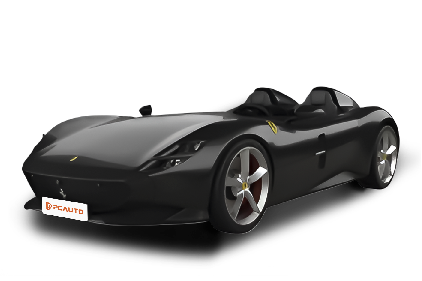
The Ferrari Monza SP2, a limited-edition supercar, tops out at around 340 km/h. Under the hood sits a 6.5-liter naturally aspirated V12 engine cranking out 810 horsepower, rocketing it from 0-100 km/h in just 2.9 seconds. Part of Ferrari's Icona series, this beast is built for enthusiasts chasing the ultimate driving rush. It features an open-top, single-seat layout, with carbon fiber extensively used throughout the body to slash weight.
Driving in Malaysia's scorching heat? Keep an eye on those high-performance tires—they need proper heat management. These supercars usually come kitted with advanced aerodynamic packages and carbon-ceramic brake systems to keep things stable at blistering speeds. Now, since Malaysia's road speed limits are pretty tight, we’d recommend hitting a pro track like Sepang International Circuit to really uncage its full potential. And let’s not forget maintenance—this baby needs certified techs using genuine parts to keep it running in peak form.
Special Disclaimer: This content is published by users and does not represent the views or position of PCauto.
Related Q&A
Q
Is the Monza SP2 a comfortable car to drive?
The Ferrari Monza SP2 is a limited-edition speedster built purely for the ultimate driving rush. Its design philosophy leans hard into track performance and unfiltered driving thrills rather than coddling you in traditional comfort. It features that open-top Targa-style setup – no roof, no side windows. Sure, that design cranks up the connection with the elements, but here in Malaysia's hot and rainy climate, you're definitely going to feel the sun beating down and the wind noise cranking up on longer drives. Then there's the suspension – it's on the firm side, tuned more for smooth racetracks than some of Malaysia's less-than-perfect city roads.
But hey, those carbon fiber seats? They hug you tight and offer awesome support. For die-hard performance fans, that "raw" driving feedback is exactly where the magic is. If daily comfort is high on your list, though, you might want to check out Ferrari's GT models like the Roma or Portofino. They still pack that iconic Ferrari sportiness but add creature comforts like power-adjustable seats, sound-insulating glass, and adaptive suspension – all of which make them better suited for Malaysia's varied road conditions.
Bottom line: with high-performance exotics, you usually have to sacrifice some comfort. So, before you take the plunge, make sure to schedule a test drive to see if the car's personality matches what you're looking for.
 ActorOct 24, 2025
Q
Is the Monza SP2 a hypercar?
The Ferrari Monza SP2 is definitely a hypercar through and through. This limited-edition beast, based on the 812 Superfast, rocks that head-turning barchetta roofless design. Under the hood? A screaming 6.5-liter naturally aspirated V12 pumping out a whopping 810 horsepower, slinging it from 0-100km/h in just 2.9 seconds. Those numbers? Total hypercar territory. Ferrari didn't stop there – they've slathered the SP2 in carbon fiber to keep weight in check and kitted it out with some seriously advanced aerodynamics, really showing off their mastery when it comes to building ultimate performance machines.
For Malaysian petrolheads, yeah, spotting one locally is like finding a needle in a haystack, but the Monza SP2's mere existence is a showcase of what the supercar world's top tier is capable of. And hey, Malaysia's got its own scene too – there are some solid specialist tuning shops and high-end car clubs around that can hook up supercar enthusiasts with the services and support they need.
Hypercars like the Monza SP2 are basically the pinnacle of automotive engineering. Think of icons like the Bugatti Chiron or Koenigsegg Jesko – they're in the same league. It's not just about mind-blowing speed; these things are usually built in tiny numbers, making them the holy grail for collectors.
 ArtistOct 24, 2025
Q
Who owns a Ferrari Monza SP2?
The Ferrari Monza SP2 is an ultra-exclusive limited-edition supercar, part of Ferrari's Icona series, with only 499 units produced worldwide. It's squarely aimed at Ferrari's top-tier collectors and VIP clientele. While the exact list of owners is kept under wraps, you can bet it includes international tycoons, A-listers, and long-standing loyal Ferrari enthusiasts. Over in Malaysia, given its eye-watering price tag (starting around $2 million) and Ferrari's rigorous vetting process, potential owners are likely prominent local entrepreneurs or supercar collectors – think family members from conglomerates like YTL Corporation or Berjaya Group, who've been known to own rare Ferraris in the past.
The Monza SP2 rocks that retro Barchetta roofless design, packing a 6.5-liter naturally aspirated V12 engine cranking out 810 horsepower, rocketting from 0-100km/h in just 2.9 seconds. Its carbon fiber monocoque chassis and classic motorsport touches pay homage to legendary 1950s Ferraris like the 750 Monza. It's worth noting that in Malaysia, these limited-edition machines need to comply with JPJ regulations to hit the road; some owners might keep them strictly for track days or private display.
The Ferrari Icona series also includes the single-seat SP1 and the 2023-released SP3, all embodying the brand's blend of heritage and innovation. These models often command massive premiums on the used market, making them hot property in the automotive collecting world.
 WriterOct 24, 2025
Q
Is the Ferrari Monza SP2 a good investment?
The Ferrari Monza SP2, as a limited-production halo supercar, does hold solid investment potential, especially for high-end automotive collectors in Malaysia. Part of Ferrari's exclusive Icona series, with just 499 units crafted worldwide, its scarcity immediately boosts its value retention. Pair that with the thunderous V12 naturally aspirated engine and that stunning retro Barchetta design, and you're looking at a machine that blends blistering performance with serious collectible appeal.
In the Malaysian market, demand for these rare exotics stays pretty consistent. Particularly for high-end models imported under tax exemptions, their long-term value could very well climb alongside the global classic car market's upward trajectory. That said, investing in one isn't all sunshine and red carpets. You've got to factor in maintenance costs, proper storage facilities, and how our local climate might play havoc with a roofless ride like this. My advice? Stick to official channels when buying to ensure complete authentication and service records.
What's more, Malaysia's car culture is really coming into its own these days. Local events inspired by the likes of the Pebble Beach Concours d'Elegance are stoking the collection craze even further. But hey, market swings are real, so always make sure it aligns with your financial situation and, let's be honest, your passion before taking the plunge.
 ReaderOct 24, 2025
Q
How much horsepower does a Monza SP2 have?
The Ferrari Monza SP2 is an ultra-exclusive limited-edition supercar that's all about raw driving pleasure. Under that sculpted hood lies a 6.5-liter naturally aspirated V12 engine, cranking out a whopping 810 horsepower and 719 Nm of torque. That translates to a blistering 0-100 km/h sprint in just 2.9 seconds and a top speed north of 300 km/h. Part of Ferrari's Icona series, this beast is built for enthusiasts who crave the ultimate behind-the-wheel experience. It rocks that head-turning single-seat open-top layout, drawing heavy inspiration from the legendary race cars of the 1950s. Now, in tropical spots like Malaysia, that open design might not be the most practical for daily commutes—let's just say you'll feel every ray of sunshine and drop of rain. But for collectors or track day junkies? This thing is pure automotive fantasy. A quick heads-up though: high-performance machines like this demand serious driving skills. Potential owners should definitely do their homework to understand its quirks before taking the plunge. And hey, don't forget to factor in how local road conditions and weather might play with such a high-strung beauty.
 BoarderOct 24, 2025
Q
How much is the Monza SP2 worth?
The Ferrari Monza SP2 is an ultra-exclusive limited-edition model part of the Ferrari Icona series, with only 499 units produced worldwide. Its value fluctuates based on market supply and demand as well as collector appeal, currently fetching around $1.5 to $2 million on the international used car market. The actual transaction price depends on factors like condition, mileage, and service history.
For Malaysian enthusiasts, this car is likely even rarer. Its left-hand drive configuration and limited-production status mean local ownership numbers are probably extremely low. Importing one would also require factoring in additional costs such as tariffs, insurance, and maintenance expenses.
The Monza SP2 features the classic Barchetta roofless design and is powered by a 6.5-liter naturally aspirated V12 engine pumping out 810 horsepower, delivering blistering performance. More than just a supercar, it's a rolling tribute to Ferrari's legendary racing heritage—an automotive work of art perfect for enthusiasts seeking the ultimate driving experience combined with investment-grade collectibility.
It's worth noting that such limited-edition supercars are few and far between in the Malaysian market. Prospective buyers should definitely go through official channels or specialized dealers to verify detailed vehicle sourcing information and compliance procedures. Additionally, consider how local road conditions and climate might impact a high-performance machine like this.
 SkaterOct 24, 2025
Q
How many Monza SP2 were made?
The Ferrari Monza SP2 is an ultra-exclusive limited-edition supercar, with only 499 units ever built worldwide. Part of Ferrari's Icona series, it's crafted specifically for collectors who crave the ultimate driving experience. Drawing inspiration from Ferrari's legendary 1950s Barchetta models, it features an open-top, single-seat layout, ditching the windshield and roof entirely to deliver the purest, most raw driving feel imaginable. Under the hood, you'll find a thunderous 6.5-liter naturally aspirated V12 engine, cranking out a massive 810 horsepower and rocketing from 0-100 km/h in just 2.9 seconds—this thing is an absolute beast.
For Malaysian car enthusiasts, catching a glimpse of a Monza SP2 is a rare treat. Its astronomical price tag (around $2 million) and extreme exclusivity mean there are barely any on local roads. That said, Malaysia does have a handful of seriously deep-pocketed Ferrari collectors who might just have one stashed away. And here's the kicker: Monza SP2 owners also score bespoke racing suits and helmets, a unique perk Ferrari throws in for this special ride. So, if you ever spot one rolling around Malaysia, consider yourself incredibly lucky.
 CleOct 24, 2025
Q
How much is the Ferrari Monza SP2 2019?
The 2019 Ferrari Monza SP2 is a ultra-exclusive limited-production supercar, part of Ferrari's Icona series, crafted specifically for collectors and die-hard enthusiasts. With only 499 units slated for production worldwide, pricing can vary based on market fluctuations and individual specifications, but expect a starting price tag in the region of $1.6 to $1.8 million USD (approximately RM 6.7 to 7.5 million). Of course, the final figure will hinge on local taxes, optional extras, and dealer policies.
This beast features an open-top, single-seat layout and is powered by a thunderous 6.5-liter naturally aspirated V12 engine, cranking out a whopping 810 horsepower. It rockets from 0-100 km/h in a scant 2.9 seconds, showcasing Ferrari's unrelenting pursuit of lightweight engineering and blistering performance.
For Malaysian petrolheads, the Monza SP2's rarity and collectible allure make it the stuff of automotive dreams. However, its limited production run and left-hand-drive configuration mean getting it road-legal on Malaysian streets would likely require some special arrangements.
The Ferrari Icona series is all about paying homage to the brand's legendary racing heritage, and the Monza SP2 draws heavy inspiration from the iconic 750 Monza and 860 Monza race cars of the 1950s. Its carbon fiber bodywork and retro-infused styling beautifully bridge the gap between Ferrari's rich tradition and cutting-edge modern technology.
 BleOct 24, 2025
Popular Cars
Model Year
Car Compare
Car Photo
Related Models
 Cars
CarsLatest Q&A
Q
Is AMT similar to automatic?
There are significant differences between AMT transmissions and automatic transmissions (AT) in terms of core structure and driving experience. AMT is essentially an electronically automated version of a manual transmission, simulating manual clutch operation and gear shifting through a computerized control system while retaining the gear set structure of manual transmissions. As a result, it offers higher transmission efficiency, with fuel consumption approximately 8%-12% lower than AT, making it particularly suitable for highway or long-distance driving. However, it may exhibit jerking similar to manual transmissions during low-speed gear shifts, especially noticeable in congested traffic conditions.
AT transmissions rely on torque converters for power transfer, delivering smooth and seamless gear shifts that appeal to comfort-oriented users. However, their complex structure (incorporating planetary gear sets, hydraulic systems, etc.) results in higher maintenance costs. A single service may cost between 800 to 1,500 ringgit, whereas AMT only requires gear oil replacement at approximately 400 ringgit.
From a market perspective, AMT is predominantly used in budget vehicles or commercial models priced below 80,000 ringgit, while AT is typically featured in mid-to-high-end vehicles. Consumers should select based on actual needs: AMT suits those prioritizing fuel efficiency and low maintenance costs, while AT better serves those valuing comfort. Notably, recent advancements in AMT electronic control technology have significantly mitigated jerking issues, though test drives should still emphasize low-speed performance evaluation.
 AriaMar 26, 2026
Q
Which is better, DCT or AT?
DCT (Dual-Clutch Transmission) and AT (Automatic Transmission) each have their own advantages and disadvantages, and the choice should be based on personal driving needs. AT transmissions transfer power through a torque converter, offering excellent shift smoothness, making them suitable for urban commuting or novice drivers. However, they tend to have higher fuel consumption, and vehicles equipped with them are usually more expensive. DCT transmissions utilize a dual-clutch structure, featuring fast shift speeds and high power transmission efficiency, which provides a more direct driving experience—particularly suitable for users seeking a sporty feel. However, they may exhibit jerking at low speeds and have relatively high maintenance costs. If durability and comfort are priorities, AT is the more reliable choice; if power responsiveness and driving pleasure are preferred, wet DCT (such as Volkswagen DSG) performs better, though dry DCT models should be avoided in prolonged stop-and-go traffic conditions. Additionally, CVT transmissions excel in smoothness and fuel efficiency, making them ideal for daily commuting, but they lack driving excitement. It is recommended to test-drive before purchasing, as tuning varies significantly across brands, and real-world experience is more important than theoretical specifications.
FlutteringMar 26, 2026Q
Is Amt good or bad?
AMT gearboxes have a significant cost advantage in the local market, typically being around 5,000 Ringgit cheaper than models equipped with conventional automatic transmissions. Their fuel efficiency is comparable to manual transmissions, resulting in long-term fuel savings. Featuring a straightforward design, they achieve transmission efficiency exceeding 90% with relatively low maintenance costs, making them ideal for practicality-oriented consumers. However, their shifting logic contains inherent limitations: gear changes between 1st and 2nd cause 0.3-0.5 second power interruptions, while unintended upshifts on inclines may reduce engine speed by 15%-20%, compromising driving smoothness. For urban commuters or budget-conscious buyers, AMT offers excellent value, though those prioritizing premium driving dynamics should consider alternative transmission types. Some domestic models like the Perodua Axia employ enhanced AMT systems, where optimized shift programming has reduced gearshift shock by approximately 30%.
 RainbowsMar 26, 2026
Q
Which gives better mileage, CVT or AMT?
From the perspective of fuel economy, CVT transmissions generally perform better under urban driving conditions. Their continuously variable design allows the engine to consistently operate within the optimal speed range, significantly reducing fuel consumption during frequent starts and stops. Test data shows that their fuel consumption in urban driving conditions is 10% to 15% lower than that of comparable models. AMT transmissions, on the other hand, inherit the high transmission efficiency of manual transmissions, delivering fuel efficiency close to manual transmissions during high-speed cruising. This makes them particularly suitable for long-distance driving in large-displacement vehicles. However, due to power interruption during gear shifts, their overall fuel consumption may be 5% to 8% higher than CVTs.
The difference in fuel-saving characteristics between the two transmissions stems from their technical principles: CVTs achieve continuous variability through steel belts and pulleys, eliminating the fixed gear ratio limitations of traditional transmissions; AMTs simulate manual gear changes via electronic control systems while maintaining the mechanical efficiency of gear transmission. Notably, actual fuel consumption is also influenced by driving habits. Smooth acceleration and anticipatory deceleration can maximize the transmissions' fuel-saving potential. If the vehicle budget permits and urban commuting is the primary use, CVTs offer a more economical choice. For frequent highway driving with an emphasis on cost-effectiveness, AMTs are equally worth considering.
 RubyBlazeMar 26, 2026
Q
Which is cheaper, AMT or CVT?
In terms of gearbox cost, AMT is usually more economical than CVT. Essentially, AMT is a manual transmission equipped with an electronic control unit, featuring a simple structure and low maintenance costs. The unit price ranges from approximately 5,000 to 8,000 ringgit, making it suitable for budget-conscious consumers or those who prioritize long-term operating costs. CVT incurs higher manufacturing costs due to its precision steel belt transmission system and continuous variable transmission technology, with a unit price of about 7,000 to 10,000 ringgit. However, it delivers a smoother driving experience and superior fuel efficiency. The primary differences between the two lie in technical complexity: AMT retains the gear-shifting mechanism, resulting in noticeable shift shock; CVT achieves linear power output through stepless speed variation but requires periodic belt inspection and incurs higher maintenance expenses. For those prioritizing initial cost and basic transportation needs, AMT offers better value; if comfort and long-term fuel economy are priorities, CVT represents a more worthwhile investment. Note that actual prices may vary based on vehicle model, brand, and local supply chain factors.
 ShadowProwlMar 26, 2026
Related News

Ferrari unveils the chassis and core components of its first all-electric model, Elettrica
LienOct 10, 2025

Ferrari 849 Testarossa officially released, succeeding the SF90 Stradale with more powerful performance
RobertSep 12, 2025
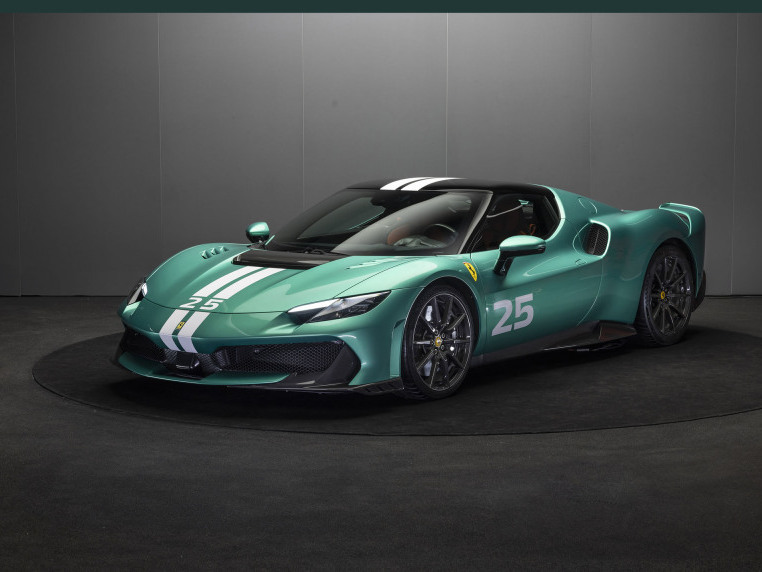
Ferrari Unveils 296 Speciale Plug-in Hybrid Supercar, Accelerating from 0-100 km/h in Just 2.8s
JohnApr 30, 2025
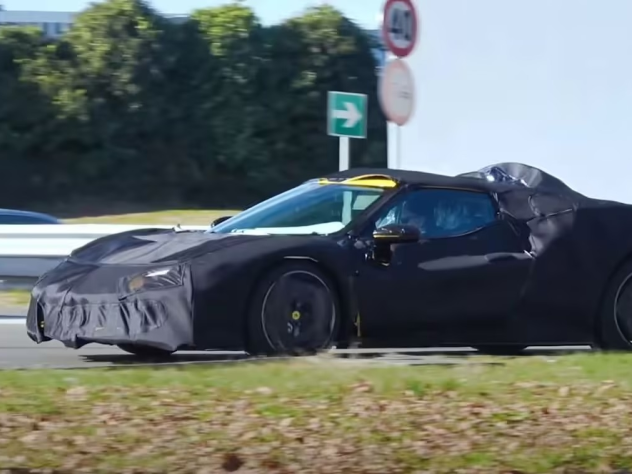
Meet Ferrari's New Track Beast: 296 VS Debuts on April 29
RobertApr 3, 2025
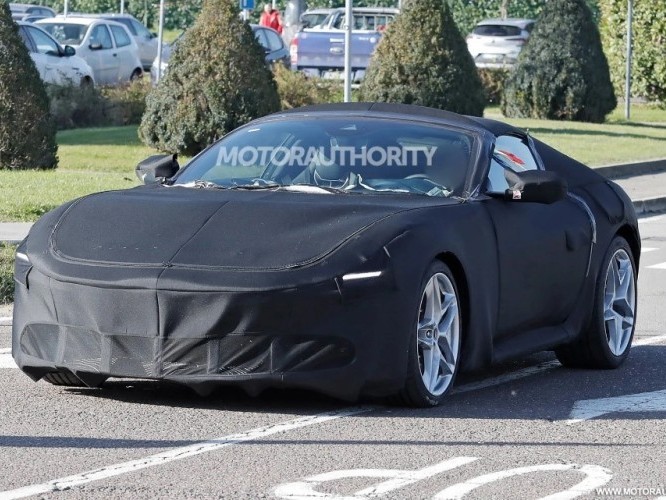
Spy shots of the Ferrari Roma successor revealed! May be released by the end of 2025, Hybrid system could be the highlight
WilliamNov 19, 2024
View More
Pros
Cons