
Q
Where is the GLC Coupe made?
 JoggerPaceMay 13, 2025, 10:41 AM
The Mercedes-Benz GLC Coupe SUV is an imported model, manufactured at the Mercedes-Benz production facility in Germany. The German automotive industry is renowned for its precision engineering, advanced technology, and high-quality production standards. The GLC Coupe SUV benefits from this tradition, with its components and assembly processes adhering to strict quality control measures. This ensures that vehicles like the GLC Coupe SUV can meet the high standards expected of Mercedes products, offering reliability, outstanding performance, and luxurious features.
Additionally, production in Germany contributes to the integration of the latest automotive technologies and innovations into the GLC Coupe SUV, enhancing its overall appeal and competitiveness in the automotive market.
Special Disclaimer: This content is published by users and does not represent the views or position of PCauto.
Related Q&A
Q
How much horsepower does the GLC Coupe AMG have?
The horsepower of different models of GLC Coupe AMG varies. For example, the 2022 Mercedes-Benz AMG GLC Coupe 43 4MATIC Coupe (CKD) has a maximum engine horsepower of 390 PS. It is equipped with a 3.0-liter twin-turbocharged V6 engine, delivering robust power and providing an exceptional driving experience. It demonstrates strong performance in scenarios such as acceleration and overtaking. The compact turbocharged four-cylinder engine of the 2025 Mercedes-AMG GLC43 Coupe generates 416 horsepower. If you wish to know the horsepower of a specific year or model of the GLC Coupe AMG, please provide more detailed information for a precise response. Additionally, engine horsepower is one of the key metrics for evaluating a vehicle's power performance. Higher horsepower typically indicates superior acceleration and greater power reserve.
 ButterflyMay 13, 2025
Q
Is GLC Coupe a SUV?
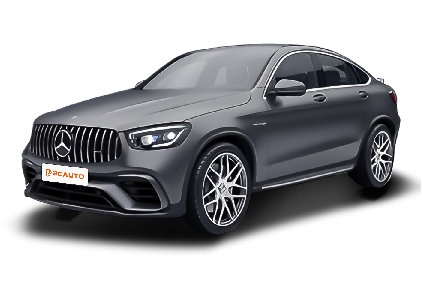
Strictly speaking, the GLC Coupe belongs to the category of coupe SUVs rather than traditional SUVs. It retains some SUV characteristics, featuring a relatively high ground clearance and off-road capability, enabling it to handle moderately complex road conditions and instilling greater driving confidence. The predominant drivetrain configuration is front-engine, all-wheel drive, which ensures optimal power distribution and stability. However, the GLC Coupe distinguishes itself with distinctive coupe styling. Its signature fastback rear design incorporates fluid lines that sweep elegantly from the roofline to the rear, not only creating a dynamic silhouette but also achieving an impressively low drag coefficient of 0.27cd for superior aerodynamic efficiency. Compared to conventional SUVs, its profile is noticeably lower and more aerodynamic. While maintaining practical SUV attributes, it delivers enhanced sportiness and contemporary styling, catering to drivers seeking both individuality and an engaging driving experience.
 OceanBreezeMay 13, 2025
Q
Does GLC Coupe have massage seats?
No, the GLC Coupe does not come with massage seats. These models are equipped with a variety of standard features, including power-adjustable seats with memory function, heated and ventilated front seats, as well as rear seats that can be split in a 40:20:40 arrangement. However, massage seats are not included in the listed specifications. While massage seats can add an extra level of comfort during long drives, the GLC Coupe still offers a luxurious and comfortable driving experience with its existing seat configurations.
Additionally, these models come with other high-end amenities, such as the Burmester sound system, dual-zone automatic climate control, and an array of advanced safety features, including multiple airbags and electronic stability control systems, ensuring an outstanding driving experience.
 RunnerSpeedMay 13, 2025
Q
What colors are the Mercedes GLC Coupe available in?
The Mercedes GLC Coupe offers a variety of color options, including Obsidian Black, Crystal Brown, Polar White, Iridium Silver, as well as unique shades like Gemstone Blue, Calcite Blue, Titan Silver, Moonstone Grey, Zircon Red, and Carbon Gray. Obsidian Black presents a classic and understated look, exuding an aura of luxury and staidness, perfect for those who prefer a more discreet style. Polar White offers a clean and simple aesthetic that conveys elegance and freshness, making it relatively easy to maintain on a daily basis.
Gemstone Blue possesses a mysterious depth, shimmering with captivating luster under sunlight and showing off its noble qualities under nighttime lighting, setting off the owner's personality. Moonstone Grey is unique and modern, displaying a range of rich color variations under different lighting conditions. Each of these colors has its own charm, allowing buyers to select based on personal preference, daily usage environment, and aesthetic inclination, enabling the vehicle to reflect their unique taste.
 SwimmerStrokeMay 13, 2025
Q
Does Mercedes GLC Coupe have air suspension?
The Mercedes GLC Coupe does not come standard with air suspension. The standard suspension setup for the GLC Coupe is a multi-link independent suspension system for both the front and rear. This setup provides a balance between handling and ride comfort. However, some models may offer air suspension as an optional extra at an additional cost. Air suspension has its advantages, allowing for adjustments to the suspension's firmness and height. In comfort mode, it can soften the ride to better absorb road bumps, while in sport mode, it can stiffen up to provide stronger support during cornering. This can enhance both the comfort and performance aspects of driving, but it's important to note that not all GLC Coupe models will have this option available, and it will add to the overall cost of the car if chosen.
 SpiritMay 13, 2025
Q
Does GLC Coupe have sunroof?
Yes, the GLC Coupe is equipped with a sunroof. This feature is standard on the GLC Coupe, enhancing the vehicle's overall sense of luxury and comfort. With the sunroof, passengers can enjoy natural light and fresh air during their journeys.
The sunroof not only elevates the driving experience but also makes the interior feel more spacious and open. It allows more light to enter the cabin, creating a pleasant and expansive atmosphere. Whether on sunny days or scenic drives, the sunroof adds an extra layer of enjoyment. Additionally, it can be opened or adjusted to let a gentle breeze into the cabin, providing a refreshing change of air. This feature is particularly useful in warm weather or when passengers want to feel the outdoor ambiance in the comfort of the car.
Overall, the sunroof is an ideal feature favored by many buyers of the GLC Coupe.
 SkaterRinkMay 13, 2025
Q
What type of engine is in GLC Coupe?
The GLC Coupe comes in a variety of models, each featuring different engine options. For instance, the 2022 Mercedes-Benz AMG GLC Coupe 43 4MATIC Coupe (CKD) has a displacement of 2996 mL, commonly referred to as a 3.0L engine. It is equipped with a Turbo (turbocharged) intake system and has six cylinders, delivering a maximum power output of 390 PS.
Another example is the 2018 Mercedes-Benz AMG GLC 63 S 4MATIC+, which boasts a displacement of 3982 mL, or 4.0L. This model features a naturally aspirated (NA) engine with eight cylinders, yielding a powerful 517 PS.
As the core component of any vehicle, the engine's performance significantly impacts the car's dynamic capabilities. Higher displacement and power engines deliver a more robust acceleration experience, while turbocharged intake systems enhance engine power and torque output. This variety allows the GLC Coupe to cater to diverse consumer preferences, whether one is seeking smooth everyday driving or thrilling speed and handling, making it easy to find the right model for individual needs.
 SailorAdventMay 13, 2025
Q
What is the difference between GLC and GLC Coupe?
There are several differences between the GLC and the GLC Coupe. In terms of appearance, the GLC Coupe exudes a sportier vibe with its lower body, smooth roofline, and sloping hatch design, resulting in more streamlined lines and potentially lower drag coefficient. In contrast, the GLC maintains a more traditional and boxy look, preserving the rugged aesthetic typical of SUVs.
When it comes to space, the GLC offers more generous headroom in the rear due to its conventional shape, while the GLC Coupe's sloping design may make rear headroom feel a bit tighter.
In terms of performance, there are variations among the different versions, but overall, the GLC Coupe is likely tuned more towards sportiness, providing a more responsive driving experience.
As for features, both models are similarly equipped with a range of premium options; however, the GLC Coupe may include more sport-themed enhancements due to its positioning.
Regarding pricing, the GLC Coupe might be priced slightly higher due to its distinct positioning and design. Ultimately, consumers can choose based on their preferences for appearance, space, performance, and budget.
 CharmMay 13, 2025
Q
Is GLC Coupe more expensive?
It depends on what you are comparing the Mercedes-Benz GLC Coupe against. The price of the GLC Coupe can vary based on the model year and specific variant. For example, among the models listed, the 2022 Mercedes-Benz AMG GLC 43 4MATIC Coupe (locally assembled) is priced at 538,888 Malaysian Ringgit. In contrast, older models such as the 2017 Mercedes-Benz AMG GLC 43 4MATIC Coupe are priced at 580,888 Malaysian Ringgit, while the 2018 Mercedes-Benz AMG GLC 63 S 4MATIC+ is listed at 915,888 Malaysian Ringgit.
If you compare it to more entry-level models within the Mercedes lineup or budget-friendly cars from other brands, then yes, the GLC Coupe does come with a higher price tag. However, when juxtaposed with some high-end limited edition models from the Mercedes series or supercars from other brands, it may not be the more expensive option.
The GLC Coupe features advanced safety systems, a luxurious interior, and a powerful engine—factors that collectively justify its pricing.
 JourneyHomeMay 13, 2025
Q
Is the GLC Coupe hybrid?
No, the listed GLC Coupe models are not hybrid vehicles. They all run on gasoline. These models are equipped with a variety of gasoline engine specifications, including different displacement, power outputs, and performance. For example, some variants feature a 3.0-liter or 4.0-liter engine, providing substantial horsepower and torque to drive the vehicle. However, none of them utilize hybrid technology that combines a gasoline engine with an electric motor.
In certain driving scenarios, hybrid vehicles typically achieve better fuel efficiency due to the assistance offered by an electric power source. If you are interested in more fuel-efficient options or want to explore hybrid technology, you may need to consider other models or product lines specifically designed as hybrids.
 WriterPageMay 13, 2025
Popular Cars
Model Year
Car Compare
Car Photo
Related Models
 Cars
CarsLatest Q&A
Q
Is AMT similar to automatic?
There are significant differences between AMT transmissions and automatic transmissions (AT) in terms of core structure and driving experience. AMT is essentially an electronically automated version of a manual transmission, simulating manual clutch operation and gear shifting through a computerized control system while retaining the gear set structure of manual transmissions. As a result, it offers higher transmission efficiency, with fuel consumption approximately 8%-12% lower than AT, making it particularly suitable for highway or long-distance driving. However, it may exhibit jerking similar to manual transmissions during low-speed gear shifts, especially noticeable in congested traffic conditions.
AT transmissions rely on torque converters for power transfer, delivering smooth and seamless gear shifts that appeal to comfort-oriented users. However, their complex structure (incorporating planetary gear sets, hydraulic systems, etc.) results in higher maintenance costs. A single service may cost between 800 to 1,500 ringgit, whereas AMT only requires gear oil replacement at approximately 400 ringgit.
From a market perspective, AMT is predominantly used in budget vehicles or commercial models priced below 80,000 ringgit, while AT is typically featured in mid-to-high-end vehicles. Consumers should select based on actual needs: AMT suits those prioritizing fuel efficiency and low maintenance costs, while AT better serves those valuing comfort. Notably, recent advancements in AMT electronic control technology have significantly mitigated jerking issues, though test drives should still emphasize low-speed performance evaluation.
 AriaMar 26, 2026
Q
Which is better, DCT or AT?
DCT (Dual-Clutch Transmission) and AT (Automatic Transmission) each have their own advantages and disadvantages, and the choice should be based on personal driving needs. AT transmissions transfer power through a torque converter, offering excellent shift smoothness, making them suitable for urban commuting or novice drivers. However, they tend to have higher fuel consumption, and vehicles equipped with them are usually more expensive. DCT transmissions utilize a dual-clutch structure, featuring fast shift speeds and high power transmission efficiency, which provides a more direct driving experience—particularly suitable for users seeking a sporty feel. However, they may exhibit jerking at low speeds and have relatively high maintenance costs. If durability and comfort are priorities, AT is the more reliable choice; if power responsiveness and driving pleasure are preferred, wet DCT (such as Volkswagen DSG) performs better, though dry DCT models should be avoided in prolonged stop-and-go traffic conditions. Additionally, CVT transmissions excel in smoothness and fuel efficiency, making them ideal for daily commuting, but they lack driving excitement. It is recommended to test-drive before purchasing, as tuning varies significantly across brands, and real-world experience is more important than theoretical specifications.
 FlutteringMar 26, 2026
Q
Is Amt good or bad?
AMT gearboxes have a significant cost advantage in the local market, typically being around 5,000 Ringgit cheaper than models equipped with conventional automatic transmissions. Their fuel efficiency is comparable to manual transmissions, resulting in long-term fuel savings. Featuring a straightforward design, they achieve transmission efficiency exceeding 90% with relatively low maintenance costs, making them ideal for practicality-oriented consumers. However, their shifting logic contains inherent limitations: gear changes between 1st and 2nd cause 0.3-0.5 second power interruptions, while unintended upshifts on inclines may reduce engine speed by 15%-20%, compromising driving smoothness. For urban commuters or budget-conscious buyers, AMT offers excellent value, though those prioritizing premium driving dynamics should consider alternative transmission types. Some domestic models like the Perodua Axia employ enhanced AMT systems, where optimized shift programming has reduced gearshift shock by approximately 30%.
 RainbowsMar 26, 2026
Q
Which gives better mileage, CVT or AMT?
From the perspective of fuel economy, CVT transmissions generally perform better under urban driving conditions. Their continuously variable design allows the engine to consistently operate within the optimal speed range, significantly reducing fuel consumption during frequent starts and stops. Test data shows that their fuel consumption in urban driving conditions is 10% to 15% lower than that of comparable models. AMT transmissions, on the other hand, inherit the high transmission efficiency of manual transmissions, delivering fuel efficiency close to manual transmissions during high-speed cruising. This makes them particularly suitable for long-distance driving in large-displacement vehicles. However, due to power interruption during gear shifts, their overall fuel consumption may be 5% to 8% higher than CVTs.
The difference in fuel-saving characteristics between the two transmissions stems from their technical principles: CVTs achieve continuous variability through steel belts and pulleys, eliminating the fixed gear ratio limitations of traditional transmissions; AMTs simulate manual gear changes via electronic control systems while maintaining the mechanical efficiency of gear transmission. Notably, actual fuel consumption is also influenced by driving habits. Smooth acceleration and anticipatory deceleration can maximize the transmissions' fuel-saving potential. If the vehicle budget permits and urban commuting is the primary use, CVTs offer a more economical choice. For frequent highway driving with an emphasis on cost-effectiveness, AMTs are equally worth considering.
 RubyBlazeMar 26, 2026
Q
Which is cheaper, AMT or CVT?
In terms of gearbox cost, AMT is usually more economical than CVT. Essentially, AMT is a manual transmission equipped with an electronic control unit, featuring a simple structure and low maintenance costs. The unit price ranges from approximately 5,000 to 8,000 ringgit, making it suitable for budget-conscious consumers or those who prioritize long-term operating costs. CVT incurs higher manufacturing costs due to its precision steel belt transmission system and continuous variable transmission technology, with a unit price of about 7,000 to 10,000 ringgit. However, it delivers a smoother driving experience and superior fuel efficiency. The primary differences between the two lie in technical complexity: AMT retains the gear-shifting mechanism, resulting in noticeable shift shock; CVT achieves linear power output through stepless speed variation but requires periodic belt inspection and incurs higher maintenance expenses. For those prioritizing initial cost and basic transportation needs, AMT offers better value; if comfort and long-term fuel economy are priorities, CVT represents a more worthwhile investment. Note that actual prices may vary based on vehicle model, brand, and local supply chain factors.
 ShadowProwlMar 26, 2026
Related News

What is the difference between the Mercedes-Benz E300 and E350?
MichaelMar 24, 2026

Mercedes-Benz halts the launch of L3-level autonomous driving, reverting to L2+ level
LienJan 16, 2026

Nvidia Announces Mercedes-Benz CLA as the First Vehicle with DRIVE AV Autonomous Driving Technology
MichaelJan 12, 2026

Brand New Mercedes-Benz GLC with EQ Technology Coming Soon: A Larger, Faster, and More Efficient Luxury All-Electric SUV
LienDec 11, 2025

Mercedes-Benz GLC200 4Matic debuts, offering a more accessible entry price at RM329,888
LienDec 11, 2025
View More
Pros
Cons