
Q
Which is bigger? Lexus UX or NX?
 HealerHeartComfortOct 17, 2025, 02:00 PM
In the Malaysian market, both the Lexus UX and NX are popular luxury SUV choices, but the NX is noticeably larger, slotting into the midsize SUV category compared to the UX's compact SUV positioning. The NX stretches longer, wider, and rides on a longer wheelbase than the UX, translating to significantly more interior room. Rear passengers will appreciate the extra legroom, and there's a clear advantage in boot space too – definitely the pick if you need to haul more gear or regularly ferry the family around. The UX, though, is the urban dweller's friend; its smaller footprint makes zipping through tight city streets and squeezing into parking spots a whole lot easier.
Both models come loaded with Lexus's trademark high-quality interiors and cutting-edge tech features. The NX ups the practicality ante further by offering a third-row seating option (depending on the specific variant). Under the hood, the NX typically gets more potent engine choices, including hybrid powertrains, while the UX prioritizes fuel efficiency. So, it really boils down to your space requirements and driving style when choosing between the two. And to top it off, Lexus has a solid after-sales service network in Malaysia, giving owners that added peace of mind.
Special Disclaimer: This content is published by users and does not represent the views or position of PCauto.
Related Q&A
Q
What is the Toyota counterpart to the Lexus UX?
Lexus, Toyota's luxury arm, positions the UX as its entry-level crossover, and its Toyota-badged counterpart is none other than the C-HR. Both ride on the versatile TNGA-C platform, sharing core powertrains and chassis tech, but they're tuned to appeal to different crowds. The UX leans hard into that Lexus luxury vibe – think plusher materials, a more exquisite cabin, and a longer list of standard driver-assistance goodies. The C-HR, on the other hand, goes for a bold, youthful design and a friendlier price tag, making it a solid pick for style-conscious buyers watching their wallets.
Over in Malaysia, both crossovers offer hybrid options, which plays right into the local demand for fuel-efficient rides. But Lexus typically sweetens the deal with more comprehensive after-sales service and warranty packages for the UX. Here's the thing though – even with the same platform, the UX gets upgraded sound deadening and suspension tuning that prioritizes a smooth, comfortable ride, perfect if you value that premium driving feel. The C-HR, by contrast, is all about nimble handling, making it a zippy companion for city streets.
These two are a great example of how Toyota Group targets different niches. At the end of the day, it all comes down to your budget and what you prioritize in a ride.
 GraceOct 17, 2025
Q
When will the Lexus UX be released?
The Lexus UX has officially hit the Malaysian market, and this luxury compact SUV is turning heads with its hybrid tech and sleek design. Local Lexus dealers usually have units in stock, though exact delivery times might vary depending on trim and color choices—your best bet is to reach out to your nearest authorized Lexus dealer for the latest inventory and wait times. As the brand's entry-level SUV, the UX packs an efficient 2.0L hybrid system that really shines when it comes to fuel economy and smooth driving, making it perfect for Malaysia's urban roads. It also comes loaded with Lexus' latest safety tech, including pre-collision systems and lane-keeping assist. In Malaysia, the UX goes up against German and Japanese rivals in the same luxury segment, but its unique Japanese luxury vibe and reliable hybrid know-how have earned it plenty of fans. Lexus Malaysia backs it up with a solid after-sales network too, including a 5-year unlimited mileage warranty and a 10-year warranty for the hybrid battery, so owners can drive with peace of mind.
 ThinkerThoughtReflectionOct 17, 2025
Q
What is the difference between Lexus UX NX and RX?
The Lexus UX, NX, and RX are the three main SUV models that Toyota's luxury brand Lexus is pushing in the Malaysian market, with the key differences lying in their positioning, size, and powertrain options. The UX is the compact one – the smallest in the lineup – perfect for zipping around the city. It comes in the UX 200 with a naturally aspirated engine and the UX 250h hybrid, targeting younger buyers and those who value fuel efficiency.
Moving up, the NX slots in as the mid-size SUV, sitting between the UX and RX in terms of dimensions. It offers the NX 250, NX 350h hybrid, and the NX 450h+ plug-in hybrid. The NX prioritizes practical space and a more loaded tech suite.
Then there's the RX, the flagship midsize-to-large SUV with the most commanding presence. It's available as the RX 350, RX 350h hybrid, and the sporty RX 500h performance hybrid. The RX really leans into luxury and ride comfort, making it a solid pick for families.
All three sport Lexus' latest family design language, but the RX takes the cake when it comes to interior materials and sound insulation. Malaysian buyers can pick based on their needs: the UX for singles or small families, the NX for a balance of space and versatility, and the RX for that extra roomy, premium experience.
Lexus has a strong after-sales network in Malaysia too. All models come with a 5-year unlimited mileage warranty, and hybrid models get an even better 10-year warranty on the battery, giving customers plenty of peace of mind.
 LivelyOct 17, 2025
Q
Where is Lexus UX made?
The Lexus UX is a globally sold luxury compact SUV, primarily built at the brand's Kyushu factory in Japan – a facility renowned for its precision manufacturing and strict quality control, ensuring every vehicle meets Lexus's global standards. For the Malaysian market, the UX comes in through official import channels, fully compliant with local regulations and tailored to meet consumer needs here. Under the hood, it packs Lexus's advanced hybrid tech, delivering impressive fuel efficiency without skimping on performance. Step inside, and you're greeted with premium materials, where attention to detail and comfort take center stage – perfect for both zipping around the city and longer road trips. In Malaysia, Lexus has built a strong reputation, backed by a solid after-sales service network that offers comprehensive support, including warranties and regular maintenance, so owners can enjoy peace of mind. Plus, the UX's compact size and nimble handling make it a great fit for Malaysia's urban roads, striking a nice balance between luxury feel and everyday practicality in an SUV package.
 CheeryOct 17, 2025
Q
How much is Lexus UX?
The Lexus UX carries varying price tags in Malaysia depending on the trim and specs, generally ranging from RM243,888 to RM289,888. Keep in mind, though, that these figures can shift a bit with dealer promotions or if you opt for extra features. As a luxury compact SUV, the UX gives you two powertrain choices: the UX 200 with a 2.0-liter naturally aspirated engine, and the UX 250h hybrid which puts a bigger focus on fuel efficiency and eco-friendliness.
It's no wonder this model is a hit in Malaysia. The interior is nicely put together, it's packed with tech goodies, and let's not forget Lexus's solid reputation for reliability—all big draws for buyers here. For Malaysian drivers, the UX isn't just for city zipping; its slightly higher ride handles our mixed road conditions pretty well too.
Worth mentioning: Lexus backs it with a 4-year or 100,000 km warranty, plus free scheduled servicing. That sweetens the deal even more. If you're eyeing a luxury compact SUV, the UX is definitely in the mix, but it's smart to cross-shop with other brands in its class. Most importantly, take 'em for a spin yourself to get a real feel for how they drive and what they offer.
 HelperHandSupportOct 17, 2025
Q
How big is the Lexus UX?
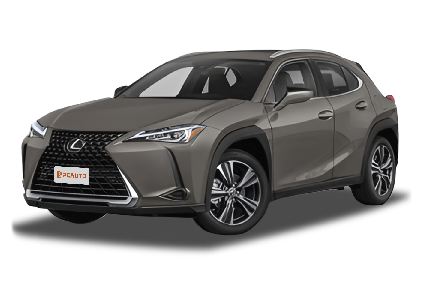
The Lexus UX is a compact luxury SUV, measuring 4,495mm in length, 1,840mm in width, and 1,520mm in height, with a wheelbase of 2,640mm. These dimensions make it super maneuverable for Malaysian city driving – perfect for squeezing through tight backroads and navigating those cramped parking lots – while still offering enough interior space for your daily grind.
Design-wise, the UX leans into sportiness and modern style, rocking Lexus' signature spindle grille and those sharp, angular lines we know from the family. Inside, it's all about that premium feel mixed with tech, packing in a solid suite of smart driver-assist features and user-friendly infotainment.
Under the hood, you've got options: petrol or hybrid. The UX 250h, in particular, pairs a 2.0-liter four-cylinder engine with an electric motor, striking a nice balance between fuel efficiency and peppy performance – right up Malaysia's alley for folks wanting both savings at the pump and a bit of zip.
Plus, the UX sits higher off the ground, so it can handle Malaysia's mixed bag of road conditions, from smooth highways to the occasional rough patch. And let's not forget Lexus' solid after-sales network here – it gives owners peace of mind knowing support is reliable.
All in all, the UX is a strong contender in the compact SUV segment. It's ideal for young families or urban professionals who want that luxury touch without skimping on practicality.
 StarryVoyagerOct 17, 2025
Q
Is Lexus better than Porsche?
Lexus and Porsche are both globally renowned luxury car brands, but their product positioning and driving experiences set them apart. So, it's tough to simply say which is "better"—it really boils down to what the customer is looking for. Lexus built its reputation on top-notch reliability, super comfortable rides, and meticulous craftsmanship. That makes it a solid pick for Malaysian drivers who value day-to-day practicality and long-term durability, especially since their hybrid models are absolute stars when it comes to fuel efficiency.
Porsche, on the other hand, is all about that legendary sports performance and driving thrills. Whether it's their iconic sports cars or their SUVs, they really shine when it comes to handling and raw power—perfect for folks who live for that adrenaline rush behind the wheel. Plus, Porsche's got serious pedigree in track tech and high-performance machines; the 911, for instance, has long been the benchmark in the sports car world.
In the Malaysian market, both brands have pretty well-established after-sales service networks. But generally, Lexus tends to offer more generous warranty packages, while Porsche gives you way more options to personalize your ride. So, if comfort and keeping maintenance costs low are your top priorities, Lexus might just be your best bet. But if you're chasing driving excitement and that rich brand heritage, Porsche is probably more your speed.
My advice? Any potential buyer should definitely take both for a spin themselves, considering their own driving needs and budget. At the end of the day, how a car feels to drive is totally subjective.
 NiaOct 17, 2025
Q
Should I buy BMW or Lexus?
Choosing between a BMW and a Lexus in Malaysia really comes down to your personal needs and what you value most in a car. BMWs are all about that driving thrill—sharp handling, punchy performance—perfect if you’re someone who loves a sporty ride. Models like the 3 Series or 5 Series are pretty common on local roads, so their service network is solid, though you’ll pay a bit more for maintenance.
Lexus, on the other hand, nails luxury comfort and reliability. Their hybrid tech is top-notch, which means great fuel economy—ideal if you prioritize a quiet cabin and long-term durability. Plus, Lexus offers a longer warranty here in Malaysia, so you won’t stress as much about future repairs.
Thinking about Malaysia’s hot, rainy weather? Both brands have tweaked their cars to handle the heat and humidity, but the Lexus hybrids really shine in stop-and-go traffic, saving you more at the pump.
So, if your budget allows and you crave that dynamic driving feel, go BMW. If you want something hassle-free and comfy for the long haul, Lexus is the way to go. Either way, test-driving both is a must before you decide.
 SpiritOct 17, 2025
Q
Which country purchases the most Lexus?
Looking at recent sales figures, the U.S. remains Lexus' biggest global market by a significant margin, consistently leading the pack year after year. A big part of that success? The brand's strong SUV lineup – think RX and NX – and the widespread popularity of its hybrid technology. Let's not forget American consumers' enduring love for luxury badges, which certainly doesn't hurt.
China isn't far behind. Lexus has carved out a solid niche there thanks to its stubborn commitment to keeping models imported and its rock-solid reputation for quality. It's especially big in southern China. Over in Southeast Asia, Thailand takes the regional crown, and that's largely down to local production giving it a leg up on pricing and tariffs.
In Malaysia, Lexus leans more into the "niche luxury" category, but it still draws in a dedicated crowd. What's the appeal? Reliable hybrid systems and, compared to those German rivals, generally lower maintenance costs – a big plus for buyers who value long-term ownership and practicality.
Interestingly, Lexus' global bestsellers, the RX and ES, both come in right-hand drive, which obviously suits Malaysia's roads. And with newer, smaller SUVs like the UX, the brand is clearly aiming to hook a younger audience. It'll be interesting to see how Lexus tweaks its Southeast Asia strategy moving forward.
If you're a Malaysian considering a Lexus, keep an eye on that 5-year free maintenance package – that's a pretty competitive after-sales perk in the luxury car space.
 CharmOct 17, 2025
Q
Who sells more? BMW or Lexus?
Globally, BMW typically outsells Lexus. That's largely down to BMW's deeper heritage as a German luxury marque and its broader global footprint – the brand performs particularly strongly in Europe and China. Lexus, Toyota's premium arm, has a solid following in North America and select Asian markets like Malaysia, but its overall sales volume still can't match BMW's.
Here in Malaysia, BMW continues to hold a bigger slice of the pie, thanks to its sporty-luxury image and well-established dealer network. Lexus, on the other hand, draws in buyers who prioritize comfort and eco-friendliness, with its reputation for bulletproof reliability and strong hybrid tech lineup being major selling points.
It's worth keeping in mind that luxury car sales are heavily influenced by economic conditions, model refresh cycles, and local policies – Malaysia's national car program, for instance, can indirectly impact the market share of imported luxury brands.
At the end of the day, it boils down to what you're after. BMW is the go-to for those chasing driving thrills, while Lexus caters better to folks who value a quiet cabin and lower long-term running costs.
 MaxOct 17, 2025
Popular Cars
Model Year
Car Compare
Car Photo
Related Models
 Cars
CarsLatest Q&A
Q
Is AMT similar to automatic?
There are significant differences between AMT transmissions and automatic transmissions (AT) in terms of core structure and driving experience. AMT is essentially an electronically automated version of a manual transmission, simulating manual clutch operation and gear shifting through a computerized control system while retaining the gear set structure of manual transmissions. As a result, it offers higher transmission efficiency, with fuel consumption approximately 8%-12% lower than AT, making it particularly suitable for highway or long-distance driving. However, it may exhibit jerking similar to manual transmissions during low-speed gear shifts, especially noticeable in congested traffic conditions.
AT transmissions rely on torque converters for power transfer, delivering smooth and seamless gear shifts that appeal to comfort-oriented users. However, their complex structure (incorporating planetary gear sets, hydraulic systems, etc.) results in higher maintenance costs. A single service may cost between 800 to 1,500 ringgit, whereas AMT only requires gear oil replacement at approximately 400 ringgit.
From a market perspective, AMT is predominantly used in budget vehicles or commercial models priced below 80,000 ringgit, while AT is typically featured in mid-to-high-end vehicles. Consumers should select based on actual needs: AMT suits those prioritizing fuel efficiency and low maintenance costs, while AT better serves those valuing comfort. Notably, recent advancements in AMT electronic control technology have significantly mitigated jerking issues, though test drives should still emphasize low-speed performance evaluation.
 AriaMar 26, 2026
Q
Which is better, DCT or AT?
DCT (Dual-Clutch Transmission) and AT (Automatic Transmission) each have their own advantages and disadvantages, and the choice should be based on personal driving needs. AT transmissions transfer power through a torque converter, offering excellent shift smoothness, making them suitable for urban commuting or novice drivers. However, they tend to have higher fuel consumption, and vehicles equipped with them are usually more expensive. DCT transmissions utilize a dual-clutch structure, featuring fast shift speeds and high power transmission efficiency, which provides a more direct driving experience—particularly suitable for users seeking a sporty feel. However, they may exhibit jerking at low speeds and have relatively high maintenance costs. If durability and comfort are priorities, AT is the more reliable choice; if power responsiveness and driving pleasure are preferred, wet DCT (such as Volkswagen DSG) performs better, though dry DCT models should be avoided in prolonged stop-and-go traffic conditions. Additionally, CVT transmissions excel in smoothness and fuel efficiency, making them ideal for daily commuting, but they lack driving excitement. It is recommended to test-drive before purchasing, as tuning varies significantly across brands, and real-world experience is more important than theoretical specifications.
 FlutteringMar 26, 2026
Q
Is Amt good or bad?
AMT gearboxes have a significant cost advantage in the local market, typically being around 5,000 Ringgit cheaper than models equipped with conventional automatic transmissions. Their fuel efficiency is comparable to manual transmissions, resulting in long-term fuel savings. Featuring a straightforward design, they achieve transmission efficiency exceeding 90% with relatively low maintenance costs, making them ideal for practicality-oriented consumers. However, their shifting logic contains inherent limitations: gear changes between 1st and 2nd cause 0.3-0.5 second power interruptions, while unintended upshifts on inclines may reduce engine speed by 15%-20%, compromising driving smoothness. For urban commuters or budget-conscious buyers, AMT offers excellent value, though those prioritizing premium driving dynamics should consider alternative transmission types. Some domestic models like the Perodua Axia employ enhanced AMT systems, where optimized shift programming has reduced gearshift shock by approximately 30%.
 RainbowsMar 26, 2026
Q
Which gives better mileage, CVT or AMT?
From the perspective of fuel economy, CVT transmissions generally perform better under urban driving conditions. Their continuously variable design allows the engine to consistently operate within the optimal speed range, significantly reducing fuel consumption during frequent starts and stops. Test data shows that their fuel consumption in urban driving conditions is 10% to 15% lower than that of comparable models. AMT transmissions, on the other hand, inherit the high transmission efficiency of manual transmissions, delivering fuel efficiency close to manual transmissions during high-speed cruising. This makes them particularly suitable for long-distance driving in large-displacement vehicles. However, due to power interruption during gear shifts, their overall fuel consumption may be 5% to 8% higher than CVTs.
The difference in fuel-saving characteristics between the two transmissions stems from their technical principles: CVTs achieve continuous variability through steel belts and pulleys, eliminating the fixed gear ratio limitations of traditional transmissions; AMTs simulate manual gear changes via electronic control systems while maintaining the mechanical efficiency of gear transmission. Notably, actual fuel consumption is also influenced by driving habits. Smooth acceleration and anticipatory deceleration can maximize the transmissions' fuel-saving potential. If the vehicle budget permits and urban commuting is the primary use, CVTs offer a more economical choice. For frequent highway driving with an emphasis on cost-effectiveness, AMTs are equally worth considering.
 RubyBlazeMar 26, 2026
Q
Which is cheaper, AMT or CVT?
In terms of gearbox cost, AMT is usually more economical than CVT. Essentially, AMT is a manual transmission equipped with an electronic control unit, featuring a simple structure and low maintenance costs. The unit price ranges from approximately 5,000 to 8,000 ringgit, making it suitable for budget-conscious consumers or those who prioritize long-term operating costs. CVT incurs higher manufacturing costs due to its precision steel belt transmission system and continuous variable transmission technology, with a unit price of about 7,000 to 10,000 ringgit. However, it delivers a smoother driving experience and superior fuel efficiency. The primary differences between the two lie in technical complexity: AMT retains the gear-shifting mechanism, resulting in noticeable shift shock; CVT achieves linear power output through stepless speed variation but requires periodic belt inspection and incurs higher maintenance expenses. For those prioritizing initial cost and basic transportation needs, AMT offers better value; if comfort and long-term fuel economy are priorities, CVT represents a more worthwhile investment. Note that actual prices may vary based on vehicle model, brand, and local supply chain factors.
 ShadowProwlMar 26, 2026
Related News

The Lexus ES 200: Laughed Out of Existence
MichaelMar 23, 2026

Toyota Crown Sedan and Lexus ES price difference? What are their differences?
WilliamMar 13, 2026

Aerodynamic kit + Optimized V8 engine! Tom's Racing modified Lexus LC is so stunning?
MichaelJan 14, 2026

Lexus releases RZ 600e F SPORT Performance, 0–100 km/h acceleration takes only 4.4 seconds
JamesDec 26, 2025

Lexus GX550 is here, a luxury version of the Toyota Land Cruiser Prado, priced from RM 780,000
RobertDec 8, 2025
View More
Pros
Cons