
World's First Gas-Electric Tesla: Would You Try It?
 WilliamMay 20, 2025, 12:07 PM
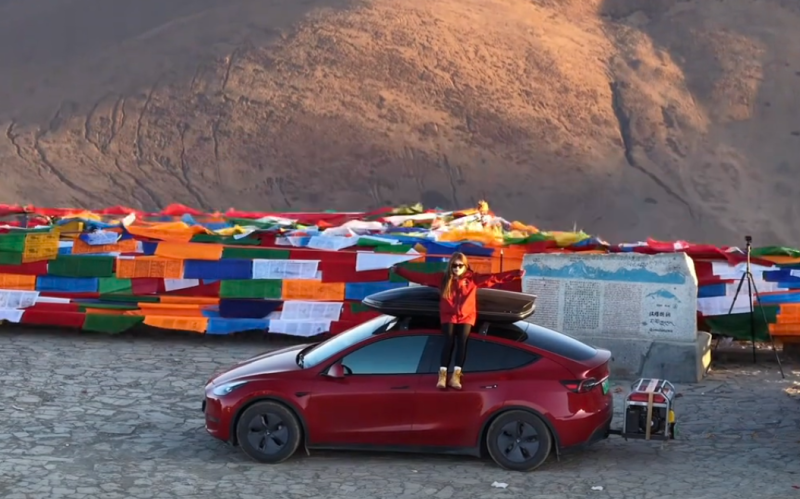
【PCauto】A Tesla Model Y owner in China attempted an unconventional solution for long-distance range by installing an 8 kW gasoline generator at the rear of the vehicle, effectively converting it into a makeshift "range-extended" version for high-altitude, remote areas like Tibet where charging infrastructure is scarce.
The generator was installed externally on the trunk with vibration-damping brackets, while the fuel tank was separately installed to minimize safety risks. The energy conversion process involves the generator producing AC power that connects to Tesla's original charger through an adapter, which then converts it to DC power for battery charging.
However, at 5,300 meters above sea level, the generator's performance significantly declined due to oxygen deprivation, with actual output dropping to just 3 kW, providing only about 19 km of additional range per hour, requiring approximately 9.5 hours to fully recharge a depleted battery.
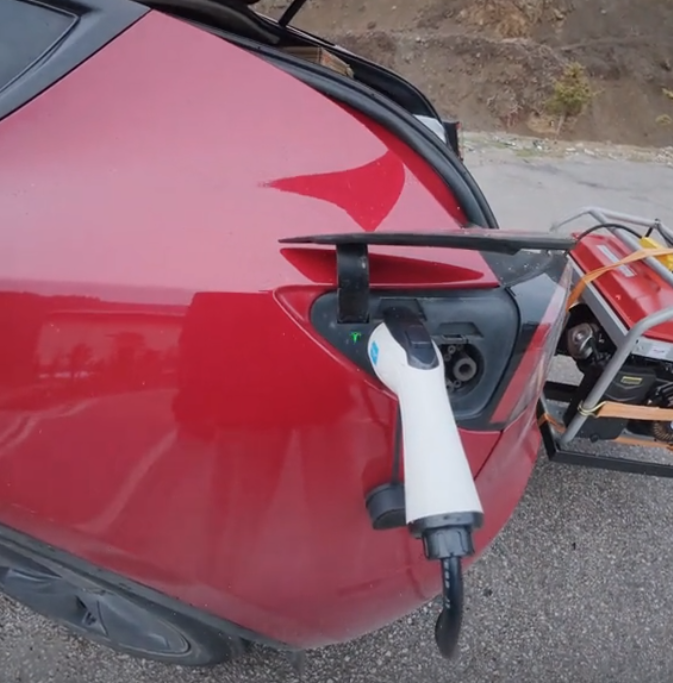
In terms of cost, refuelling with gasoline cost about RM 0.59 per kilometer, which was significantly higher than the regular charging cost of RM 0.18 per kilometer. The owner also clearly pointed out that this modification is only an emergency power solution, with daily use still relying on charging stations, and didn't recommend ordinary users to do this.
This range-extended Model Y has garnered widespread attention due to its uncommon concept of "electric vehicle running on gasoline". Notably, the owner successfully charged his vehicle at Everest Base Camp, establishing the highest-altitude EV charging point reachable by vehicle.
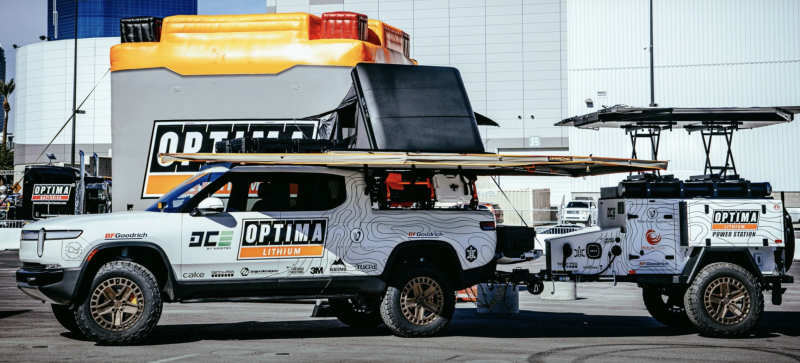
Similar modification attempts exist globally. In the U.S., an owner created a towable diesel generator system for an electric pickup, avoiding interior safety hazards but impairing driving flexibility, with the investment in trailer and high-power generator exceeding RM85,720.
In Australia, some vehicle owners have chosen to install foldable solar panels on their vehicles' rooftops for emergency power replenishment. With a peak power output of 1.5 kW, this setup can typically add 50-80 km of range per day in arid and remote areas, but highly relies on sunlight conditions and delivers relatively low power output.
Commercial range extender accessories are also available on the automobile market, such as Germany's EFOY system, which adopts methanol fuel cells, and a single unit of the system costs over RM29,670.

However, these practices have also raised safety issues. Tesla officially prohibits the use of unauthorized power supply equipment, as unauthorized modifications may lead to vehicle fires or electrical system failures. As for the cost, approximately 60% of the generator's energy is lost during conversion to electricity, casuing higher overall energy costs compared to simply driving a conventional gasoline-powered vehicle.
In summary, the Chinese Model Y owner mentioned at the beginning of the article did a challenging attempt to improve the usage of electrical vehicle under extreme condition. Although this unconventional method offers an alternative power solution for high-altitude and remote area expeditions, it clearly demonstrates that such an approach is not cost-effective.
If any infringement occurs, please contact us for deletion










Popular Cars
Model Year
Car Compare
Car Photo