
Tesla applies for a new technology patent that can reduce the occurrence of Phantom Braking
 Kevin WongDec 25, 2025, 03:56 PM

【PCauto】Users of autonomous driving systems may encounter the issue of phantom braking, where the vehicle abruptly brakes for no apparent reason, even though there are no obvious obstacles ahead. This may even result in disengaging the autonomous driving mode, forcing the driver to take over control of the vehicle.
In reality, phantom braking is not an issue limited to specific models or software versions. It often occurs during sunrise, sunset, intense backlight, or environments with large reflective surfaces ahead.
When the autonomous driving system cannot confirm whether the path ahead is safe, the most reasonable response is to slow down, brake, or prompt the driver to take control.
To address the potential issue of Phantom Braking, Tesla has recently applied for a new patent for a camera housing technology.
This time, Tesla did not tackle the issue through algorithms but attempted to reduce the interference caused by strong glare on the camera at the source.
According to the recently disclosed patent details, Tesla aims to block troublesome light outside the camera even before the image enters the algorithm. Structurally, this solution is primarily composed of three parts.
Micro-cone structure design added to the interior of the camera housing
The core of Tesla's patent is a design incorporating a micro-cone structure within the camera housing.
The inner side of the camera housing is not a flat surface but is covered with a large number of tiny cone structures. These cones are almost indistinguishable to the naked eye (with heights ranging from 0.65 to 2 millimeters), but they completely change the behavior of light on an optical level.

When stray light enters the interior of the housing, it does not encounter a smooth surface but enters a three-dimensional space composed of cones. The light continuously changes direction among the cones, undergoing multiple reflections rather than bouncing back in a single reflection toward the lens.
The principle behind this structural design lies in the fact that the more light is reflected, the more its energy is diminished. With each reflection, the light is further absorbed by the surface material, resulting in reduced brightness. Ultimately, stray light that could interfere with imaging is trapped within the shell, minimizing its impact on the lens.
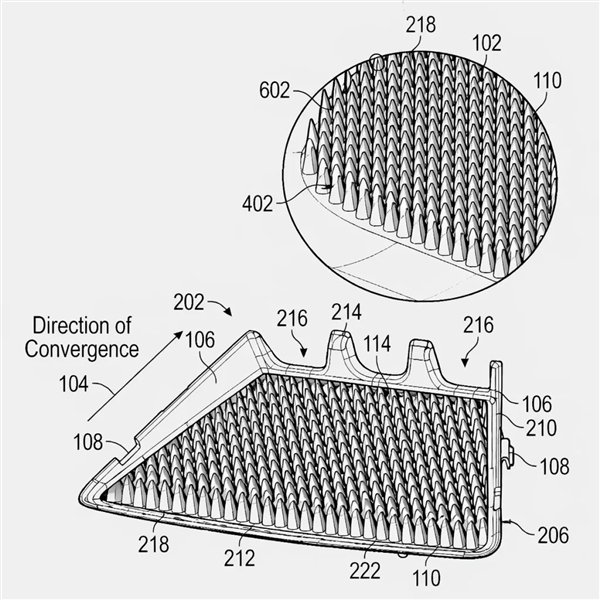 Compared with traditional smooth lens hoods, this micro-cone structure doesn’t merely block light but actively manages the light path. Instead of attempting to completely prevent light from entering, it ensures that the incoming light cannot return to the lens in an effective form.
The shell uses ultra-low reflectivity black material
After the micro-cone structure successfully traps most of the reflected light, Tesla's second innovation lies in the material itself.
It is commonly assumed that coating the camera housing with ordinary black or matte paint can block stray light, but the actual effectiveness is limited.
Ordinary black surfaces will still have slight reflections under strong light, and even minimal light can be captured by the lens, resulting in overexposure or glare in images and triggering the safety mechanisms of the autonomous driving system.
To solve this, Tesla has chosen an ultra-low reflectivity black material for the surface of the micro-cone structure. This material can absorb nearly all the light that comes into contact with the surface, preventing the light from being effectively reflected again.
Adding actively adjustable shading components
While the first two layers of defense significantly reduce stray light, static shading still has inherent limitations. The position of the sun or reflective sources continues to change, especially during sunrise, sunset, or when driving under backlight conditions. Fixed-angle lens hoods are unable to cover all incoming light, leaving the lens susceptible to interference.
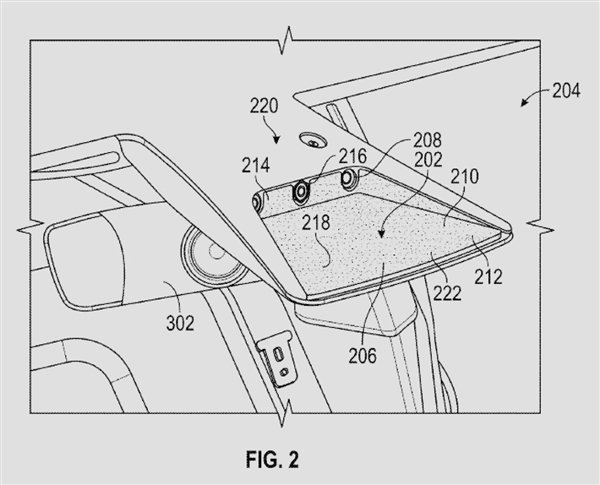 To address this, Tesla’s patented design incorporates actively adjustable shading components.
This component adjusts the position of the shading element in real time in response to changes in the angle of light, ensuring the camera lens is always in a relatively shaded area.
Simply put, it can adjust the shading angle according to the sunrise, sunset, or vehicle turning.
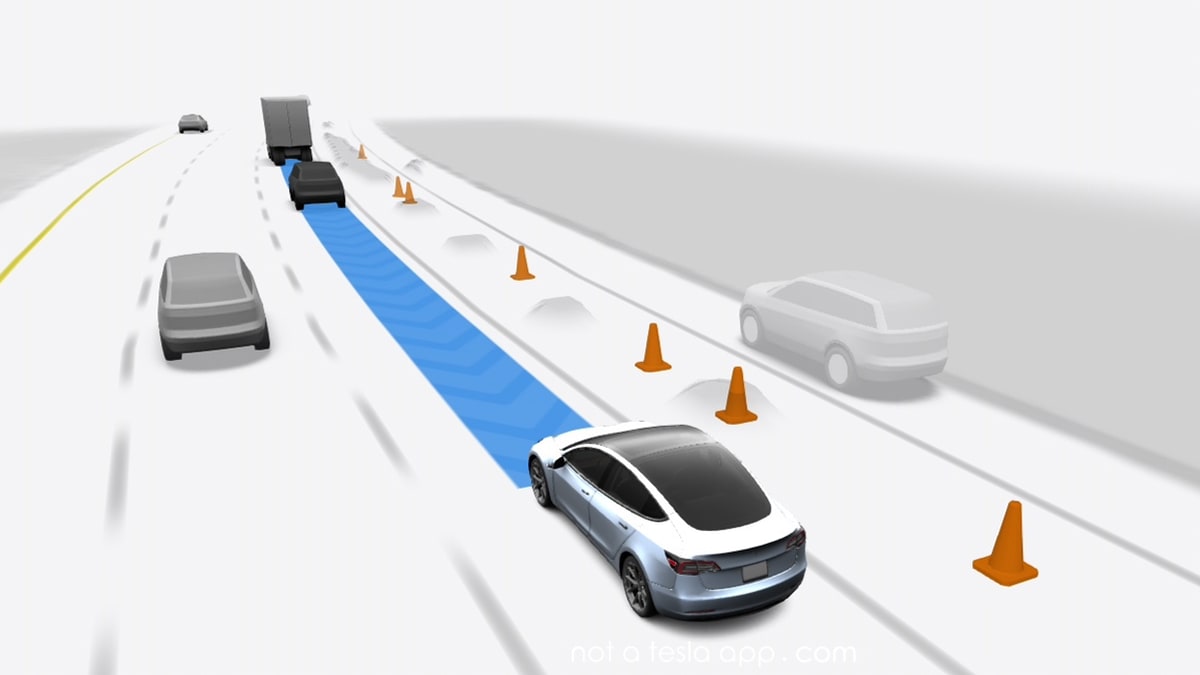
With this third layer of design, Tesla has elevated the anti-glare system from passive defense to active protection, providing a better imaging environment for the cameras and reducing the probability of Phantom Braking.
If any infringement occurs, please contact us for deletion






Popular Cars
Model Year
Car Compare
Car Photo