
Tesla's Supercharger Stations Have a Mere 4% Failure Rate, Outpacing U.S. Competitors in Reliability
 AshleyMar 24, 2025, 04:37 PM
【PCauto】According to a study released last week by Consumer Reports, Tesla's Supercharger stations excel in reliability, boasting an impressively low failure rate of just 4%.
In stark contrast, Rivian's Adventure Network (RAN) has a failure rate of 5%, while Shell Recharge sees a staggering 48% failure rate. Meanwhile, EVgo and Blink report failure rates of 43% and 41%, respectively. This research, based on feedback from 1,230 pure electric and plug-in hybrid vehicle owners with approximately 5,700 charging experiences, highlights Tesla's prominent position in the charging infrastructure sector.

During the usage of charging stations, a variety of common malfunctions can occur. Hardware issues top the list, with 76% of respondents reporting problems such as screen damage, unresponsiveness, or incorrect information displays. Charging speed irregularities are also a frequent concern, possibly caused by unstable voltage, poor connection of charging cables, or internal circuit issues, leading to slower-than-normal charging rates.
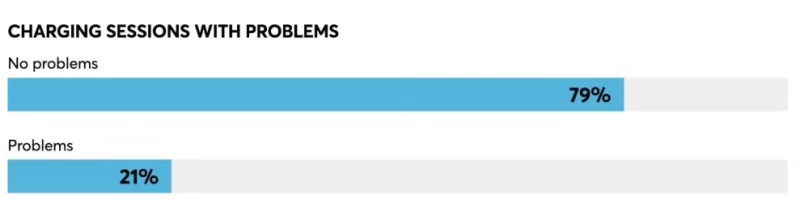
Payment problems can also frustrate users. Failures in electronic payment systems, poor device connections, or network issues can prevent charging stations from initiating charging processes. Furthermore, leakage issues pose serious safety hazards, often stemming from cable aging, insulation damage, or circuit design flaws.
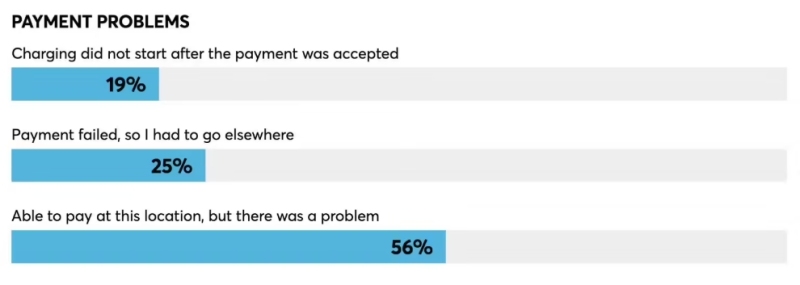
To address these common failures, Tesla's Supercharger stations have implemented several effective measures. In terms of hardware maintenance, Tesla employs dedicated teams responsible for daily inspections and routine maintenance. Their real-time monitoring system allows for quick detection and resolution of issues like screen damage and internal circuit failures, ensuring that hardware remains in optimal operating condition.
To ensure consistent charging speeds, Tesla's Supercharger stations are supported by advanced electrical systems. The V3 Supercharger delivers peak power of up to 250 kW, while the V4 not only supports 250 kW but also reserves capacity for future higher power and new feature updates. Additionally, the battery preconditioning feature helps accelerate charging speed and maintains stability throughout the charging process.
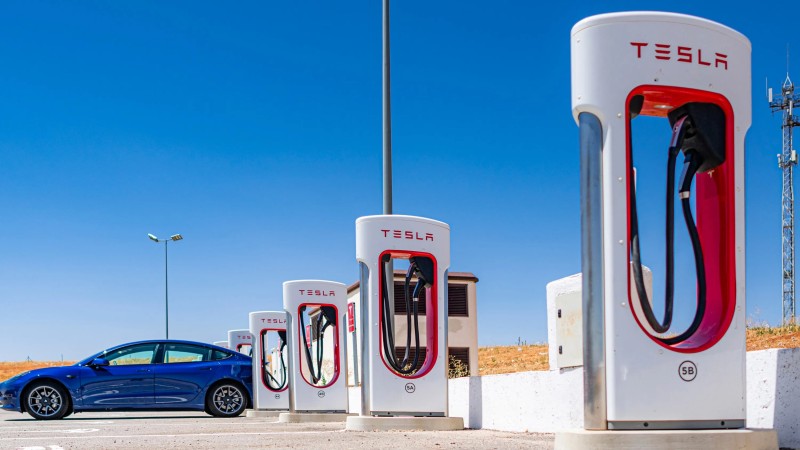
For the payment process, Tesla owners can set up password-free payments via a mobile app in advance, allowing for a simple plug-and-play charging experience that greatly simplifies the process and reduces failures associated with payment issues. Regarding safety measures, Tesla's Supercharger connectors can automatically detect battery status and environmental conditions during charging to prevent overheating and overcharging. They are also equipped with surge protection and fire safety systems, with a lightweight liquid-cooled cable design that enhances operability while improving safety.
If any infringement occurs, please contact us for deletion







Popular Cars
Model Year
Car Compare
Car Photo