

2020 Renault Koleos Standard Review

 Share
Share
 Segment
 Body Type
 Capacity(L)
 Engine Power(PS)
 Transmission
 Driven Wheels
In the Malaysian C-Segment SUV market, consumers' demands for space, features, and reliability have become increasingly clear. Most models are either equipped with excessive features but overpriced or have sufficient space but lack detailed refinements. The 2020 Renault Koleos Standard enters the market at a price of RM 173,201, featuring six airbags, a fully digital instrument cluster, and an 8.7-inch touchscreen as standard. It also comes with a 5-year unlimited mileage warranty. This "entry-level high configuration" setup makes it a strong candidate for many family users. In this test drive, we will focus on whether its static experience aligns with daily usage, whether its dynamic performance meets the demands of various road conditions, and whether its feature advantages truly translate into practical value.
In terms of appearance, the Koleos Standard maintains the steady design style of the Renault family. The front features a large trapezoidal grille with chrome accents treated in a matte black finish, while the LED headlights on both sides are linked to the grille, creating an illusion of increased visual width. The car's side profile has smooth lines, with a muscular beltline stretching from the fender to the rear. The 225/60 R18 tire specifications are proportionate with the wheel arch gaps, ensuring off-road capability without looking out of place. At the rear, the LED taillights adopt a semi-continuous design, providing high recognizability when lit. The dual chrome exhaust trims at the bottom add a touch of sportiness to the otherwise steady rear design. On closer inspection, both the front and rear fog lights are standard, while the rain-sensing wipers and electrically folding side mirrors are in line with what is expected at this price point.
Upon stepping inside, the first impression is of a simple and organized interior layout. The center console tilts slightly toward the driver, with an 8.7-inch touchscreen placed centrally. Its interface is intuitive, and response speed is moderate. Regarding materials, the upper part of the dashboard is covered with soft-touch plastic, accented by silver trims. While not exactly luxurious, it offers a more upscale feel compared to hard plastics found in some other models in this price range. The fully digital instrument cluster is adequately sized, displaying core information like RPM, speed, and fuel consumption, with smooth interface transitions. In terms of features, keyless entry/start, dual-zone automatic air conditioning, and rear air vents all come standard. The front row offers a 220V/230V power outlet suitable for external devices, and the 8-speaker Arkamys sound system is tuned for mid-range frequencies, making it sufficiently clear for daily music playback. As for the seats, the driver's seat is manually adjustable. While less convenient than power-adjustable seats, its adjustment range is broad enough to accommodate users of various heights. The rear seats support a 60:40 split configuration and are equipped with one-touch folding, making it easy to use without the effort of pulling a lever, maximizing practicality.
One of Koleos Standard's key strengths is its spacious interior. With a length of 4672mm and a wheelbase of 2705mm, it provides ample legroom for both front and rear passengers. A passenger with a height of 175cm sitting in the front row still has a headroom of one fist and two fingers' width. Moving to the rear, they would enjoy two fists of legroom and one fist of headroom, ensuring that even with three passengers seated, it does not feel crowded. In terms of storage, the trunk offers a standard capacity of 542 liters, which can be further expanded by folding the rear seats—easily accommodating strollers or suitcases. The front door pockets can hold two 500ml bottles of water, the center armrest box is deep enough to store a wallet and phone, and thoughtful details like cup holders and card slots cater to daily usage needs.
Powertrain wise, the Koleos Standard is equipped with a 2.5L naturally aspirated engine, delivering a maximum power of 171PS at 6000rpm and a maximum torque of 245Nm at 4400rpm, paired with a CVT transmission. During startup, the power output is smooth, without the abruptness found in turbocharged models. Upon pressing the accelerator, the RPM rises linearly, allowing brisk acceleration from 0 to 60km/h which is sufficient for city commuting. While mid-to-high range acceleration lacks strong pushback, pressing the accelerator more deeply prompts the transmission to simulate gear-shifting logic, keeping the RPM above 4000 and providing adequate power reserves for overtaking. As for driving modes, although there isn’t a sports mode, the tuning in the regular D mode strikes a good balance between power and smoothness.
Handling and chassis performance align well with the positioning of a family SUV. The combination of MacPherson front suspension and multi-link rear suspension (Note: rear suspension type inferred based on the same platform vehicle as the configuration table does not explicitly state this) adequately filters out road bumps. When driving on Malaysia's common bumpy roads, the suspension quickly absorbs minor vibrations, avoiding excessive jolts being transmitted into the cabin; when passing speed bumps, the car's body doesn't bounce much, ensuring comfort for rear passengers. The steering wheel is light in turning effort, with a reasonable amount of play, making it easy to operate during parking or lane changes. Steering becomes slightly heavier at high speeds, enhancing stability. In terms of braking, the ventilated disc brakes at both the front and rear provide linear braking force; when pressing the brake pedal, the feedback is clear with no noticeable play, and the car maintains a stable posture during emergency braking.
In the fuel consumption test, we drove 50km each in congested urban roads (speed 20-40km/h) and highways (speed 80-110km/h), with the final combined fuel consumption recorded at 8.3L/100km, slightly higher than the official 8.1L/100km figure. Considering the frequent acceleration and the air conditioning being on throughout the test, this result is slightly above average among 2.5L naturally aspirated SUVs. In terms of noise control, at speeds under 60km/h, the main cabin noise comes from the tires, while at speeds above 80km/h, wind noise gradually becomes noticeable but does not affect normal conversation. The Arkamys speakers can effectively mask some of the noise at high speeds, and the overall performance is in line with expectations for this price range.
In summary, the core advantage of the 2020 Renault Koleos Standard lies in its "balance" – it has no significant shortcomings and exceeds the average level of its price class in terms of configuration and space. Compared with the entry-level Honda CR-V 2.0L, the Koleos Standard offers additional features such as a fully digital instrument panel, 8.7-inch touchscreen, and rear air conditioning vents, yet is approximately RM 5,000 cheaper. When compared to the Nissan X-Trail 2.0L, it has a longer wheelbase, more spacious rear seating, and comes standard with an 8-speaker sound system. However, it does have some drawbacks, such as a manually adjustable driver seat and power output that prioritizes smoothness over sportiness.
This car is more suitable for family users who value practicality—a 5-year unlimited mileage warranty solves concerns about later maintenance, the spacious rear space and flexible trunk can accommodate daily shopping, weekend outings, and other scenarios; at the same time, configurations such as the full LCD instrument panel and LED headlights can also meet young people's basic demands for a sense of technology. If you don't need extreme power performance but want a "worry-free, sufficient, and well-equipped" family SUV, the 2020 Renault Koleos Standard will be a worthwhile choice to consider. It may not be the most stunning one, but it is definitely a representative of "comfort in use" in the same price range.
Renault Koleos Car Compare


Renault Koleos Loan Calculator
More Renault Reviews

Cars With Similar Price And Features
8
Rank in SUV

2026 Proton X70 1.5 TGDi Executive focuses on upgrading to a four-cylinder engine, practical configurations, and affordable pricing. It balances family commute practicality with value for money, making it a sensible choice among similarly priced C-segment SUVs.
10
Rank in SUV

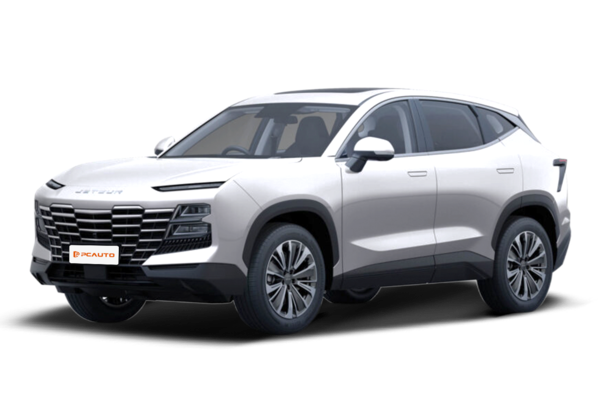
Jetour Dashing 1.5 TCI Comfort 2025 features a 2720mm long wheelbase and a 10.25-inch dual screen as its core, focusing on balanced cost performance to meet family practical needs.

The 2021 Subaru XV 2.0i is a model targeting the C-segment crossover market, equipped with standard all-wheel drive and high safety features, balancing off-road capability and handling, with practical space.

2021 Hyundai Kona 2.0 Standard, as a high-value entry-level compact SUV, retains essential safety and practical features with an affordable price, meeting the daily commuting and loading needs of families.