

Jaecoo J7 Review

 Share
Share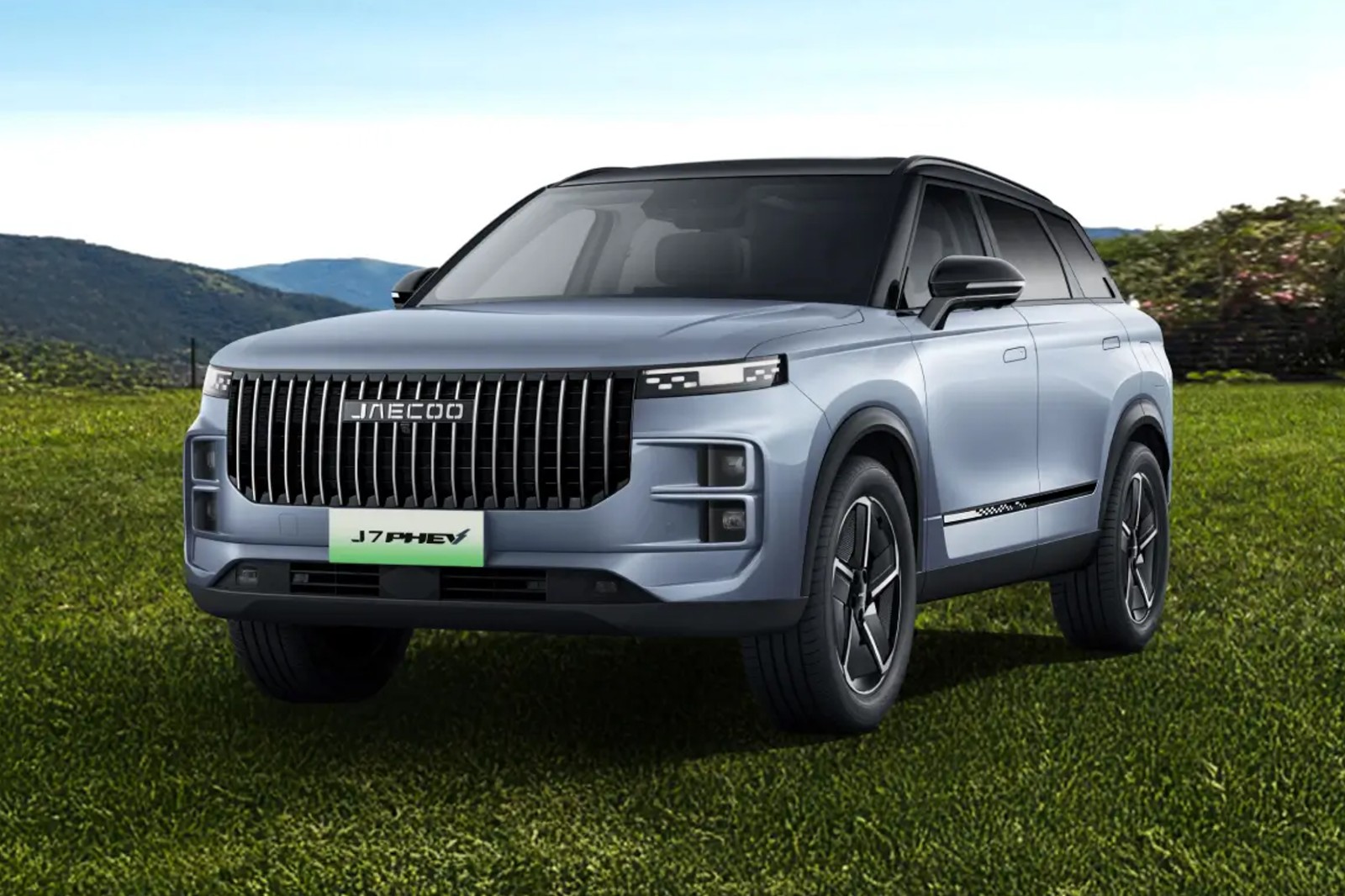

 Segment
 Body Type
 Capacity(L)
 Combined System Output(PS)
 EV Range(km)
 Driven Wheels
The C-segment SUV market has been quite popular recently, with many brands complementing their traditional fuel versions with new energy models. Consumers are paying more attention to "the balance between energy efficiency and features" when choosing a car. The 2025 Jaecoo J7 PHEV 2WD, as an upgraded version of the fuel model, has locked its core selling points at "347PS combined horsepower + 106km pure electric range"—achieving these specifications at a price point of around 150,000 RMB certainly piques curiosity about its actual performance. In this test drive, we focused on its power response, space practicality, and feature experience to see if it truly qualifies as an "all-round choice" for family users.
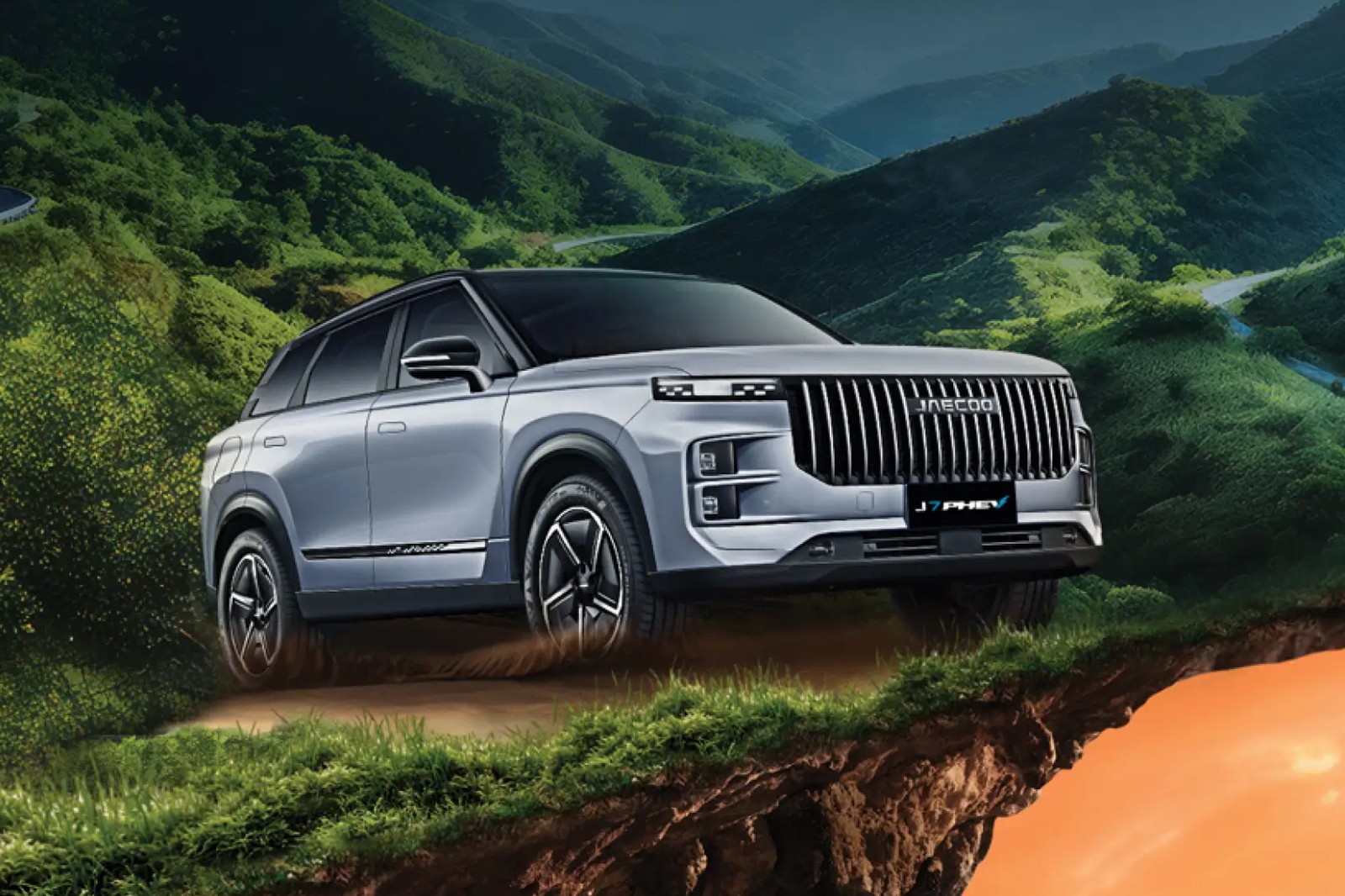
In terms of appearance, this car maintains the rugged design of the fuel version but now looks more refined in detail. The front features a large vertical grille, paired with sharp LED headlights on both sides. The L-shaped daytime running lights are highly recognizable when illuminated. The side profile of the vehicle is smooth, and the 4500mm length paired with the 235/50 R19 large wheels achieves a balanced proportion. The slight protrusion of the wheel arches retains the powerful feel of an SUV. At the rear, the standout feature is the through-type LED tail lights, with dotted designs inside that emit a high-tech vibe when lit. The chrome trim below enhances the overall refinement. Overall, its design is neither overly dramatic nor dull, making it appealing to the aesthetic preferences of most family users.
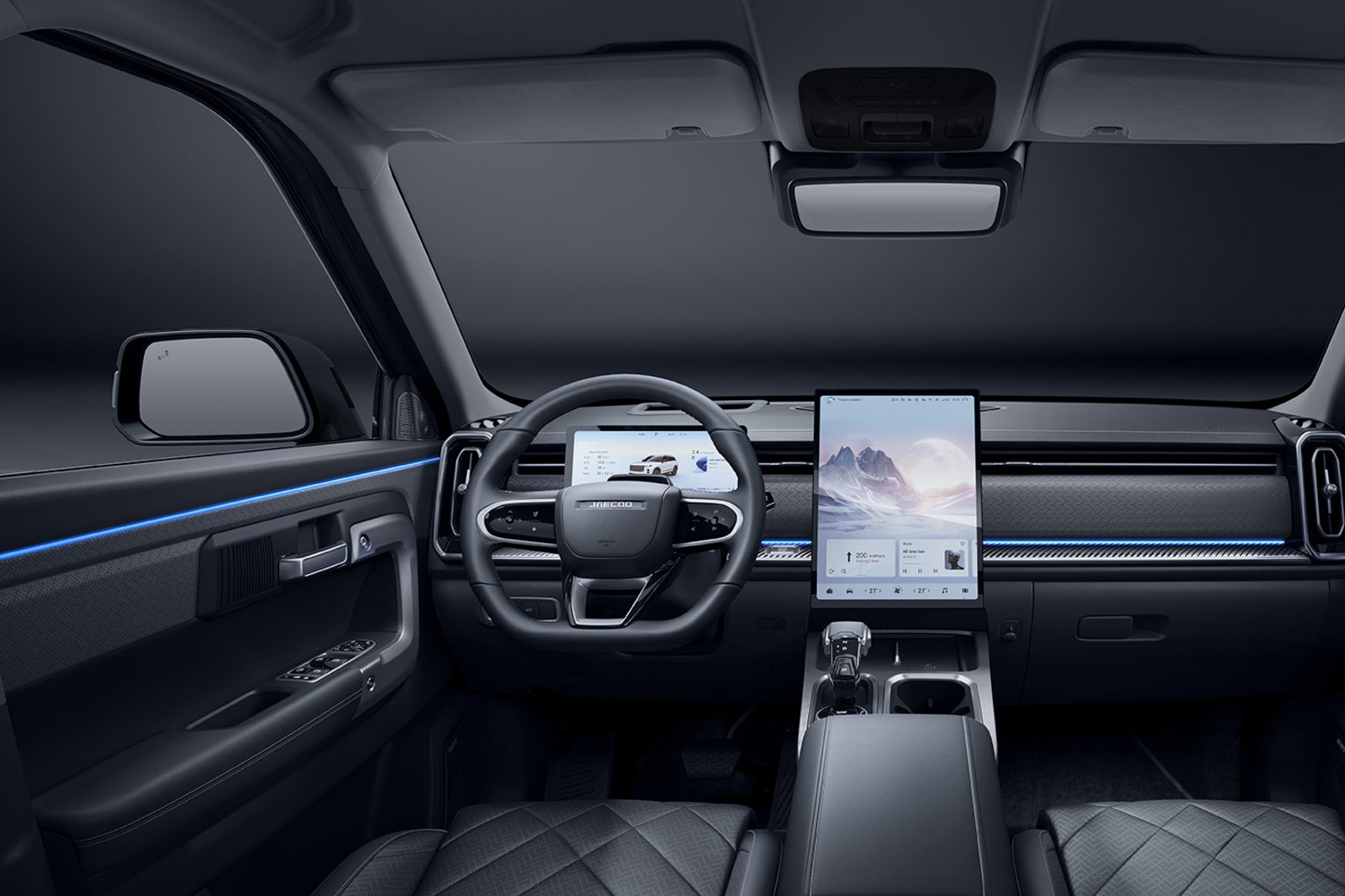
Stepping inside the car, the first impression is that the interior materials are solid. Most of the central control panel is wrapped in soft-touch materials, and the inner sides of the door panels are covered in leather, offering a pleasant tactile feel. A 10.25-inch full LCD instrument panel and a 14.8-inch central control screen are seamlessly integrated. The screens boast high resolution and smooth operation, supporting CarPlay and Android Auto, with functions like navigation and music being straightforward to access. The configuration is generous: HUD head-up display, Sony 8-speaker sound system, dual-zone automatic air conditioning, rear air vents are all included. The front seats support 6-way electric adjustment (driver's seat) and 4-way electric adjustment (passenger seat), while the rear seats can be folded down in a 60:40 split for greater flexibility. As for space, the 2672mm wheelbase ensures decent rear legroom, with passengers at 175cm finding two fists' worth of gap between their knees and the front seats, and there’s ample headroom too. The trunk offers a standard capacity of 500L, which can be expanded by folding down the rear seats, making it convenient for storing strollers, suitcases, and more.
The car's performance is the most surprising element. It features a combination of a 1.5L naturally aspirated engine and a permanent magnet synchronous motor, delivering a system total of 347PS horsepower and 525N·m torque. The official 0-100km/h acceleration time is 8.5 seconds. In practice, the car feels very nimble when starting in pure electric mode, with a responsive throttle that's more than sufficient for daily urban commuting. Switching to hybrid mode adds even more confidence to its acceleration. Stepping on the gas for overtaking triggers simultaneous power from the engine and motor, resulting in smooth and robust performance without noticeable jolts. In terms of the chassis, it uses a MacPherson strut front suspension and a multi-link independent rear suspension, with a comfort-oriented tuning setup. When driving over speed bumps or bumpy roads, the suspension effectively absorbs most vibrations, keeping the car body stable without significant jolts. On highways, the chassis maintains good stability, the steering wheel is precise without any looseness, and body roll is well-controlled during cornering.
In the special testing phase, we focused on fuel consumption and range. The official pure electric range is rated at 106km, and it actually drove 98km in urban conditions, achieving about 93% of the target—a decent performance. In hybrid mode, the combined fuel consumption is 4.8L/100km, which is almost identical to the official figure of 4.7L, showing significant fuel efficiency. As for charging, fast charging can charge from 30% to 80% in 30 minutes, while slow charging takes 8 hours to fully charge, which completely meets the needs of daily use with home charging stations. Additionally, its noise control is quite good; at a high speed of 120km/h, wind and tire noise are not noticeable, and there’s no need to raise your voice for conversations inside the car.
To summarize, the core advantages of the 2025 Jaecoo J7 PHEV 2WD are prominent: strong power, low fuel consumption, rich configurations, and space that meets family needs. Compared to fuel-powered vehicles in the same price range, it offers higher overall horsepower while reducing fuel consumption by nearly 3L. Compared to PHEV models from other brands, it provides more comprehensive configurations (for example, 8 airbags, HUD, and Sony sound system are all standard), making it highly cost-effective.
Who is this car for? Its pure electric range covers daily commutes, while the hybrid mode satisfies long-distance travel. With spacious interiors and complete features, it is well-suited for families emphasizing fuel efficiency and practicality. At the same time, with its powerful performance and refined design, it also meets the needs of young people seeking a good driving experience and a sense of technology. If your budget is around 150,000 yuan and you want an SUV that "balances family use and driving enjoyment," this car is worth considering.
Overall, the 2025 Jaecoo J7 PHEV 2WD is a model with "no obvious shortcomings"—it scores highly in power, space, configuration, and fuel consumption. It’s not the ultimate performance vehicle, nor is it the cheapest commuter car, but its balanced performance precisely hits the core needs of family users. For most people, such an "all-around" SUV is the best choice.
Jaecoo J7 Car Compare
Jaecoo J7 Loan Calculator
More Jaecoo Reviews
Cars With Similar Price And Features

9
Rank in SUV
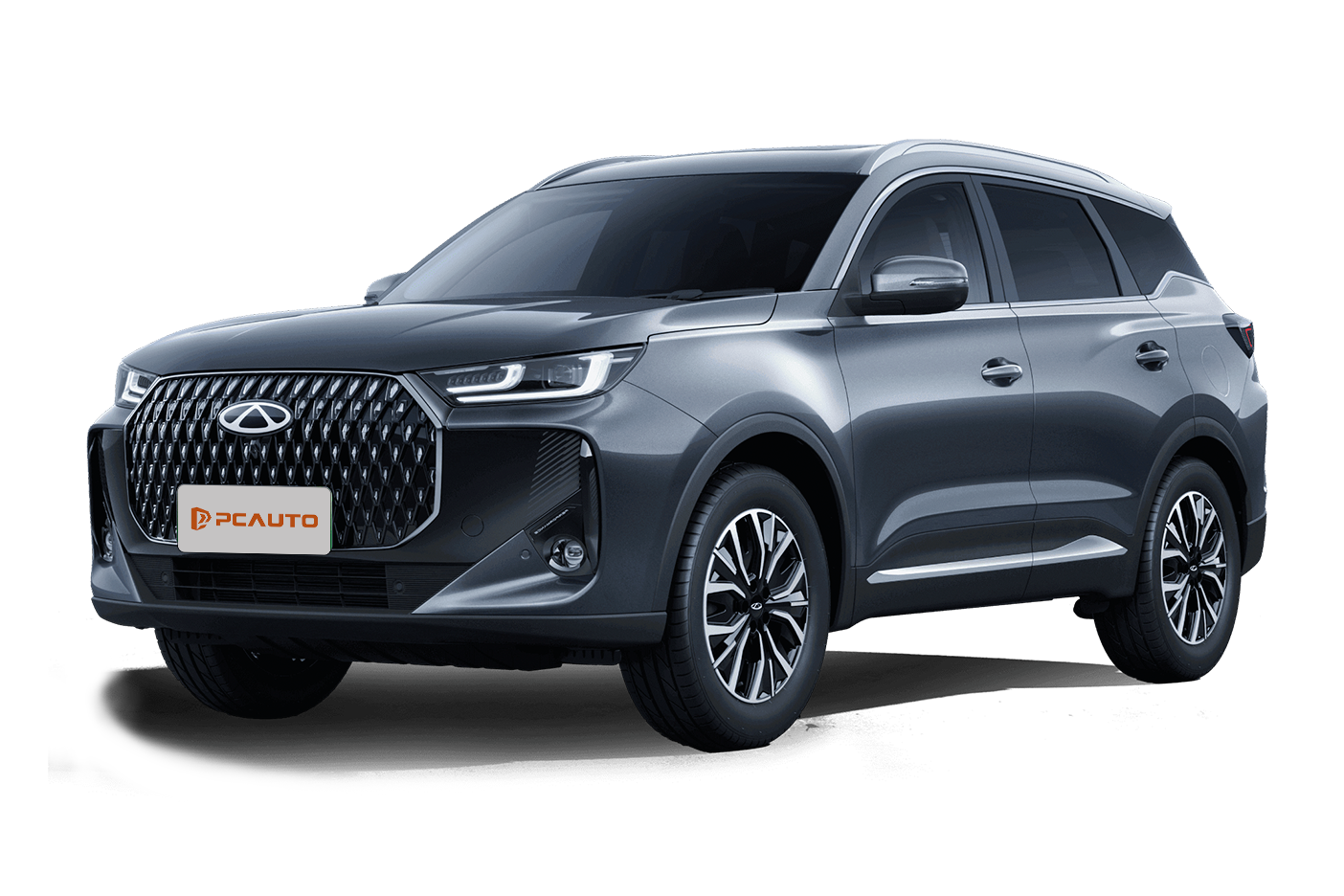
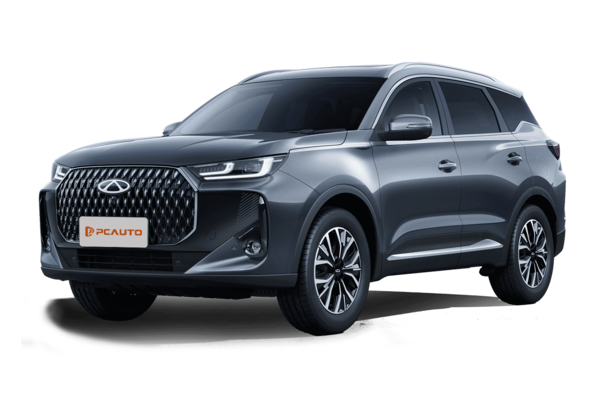
2025 Chery Tiggo 7 PHEV is a C-segment plug-in hybrid SUV designed for family use, combining 90 kilometers of pure electric range, low operating costs, and high configuration balance with outstanding value for money.
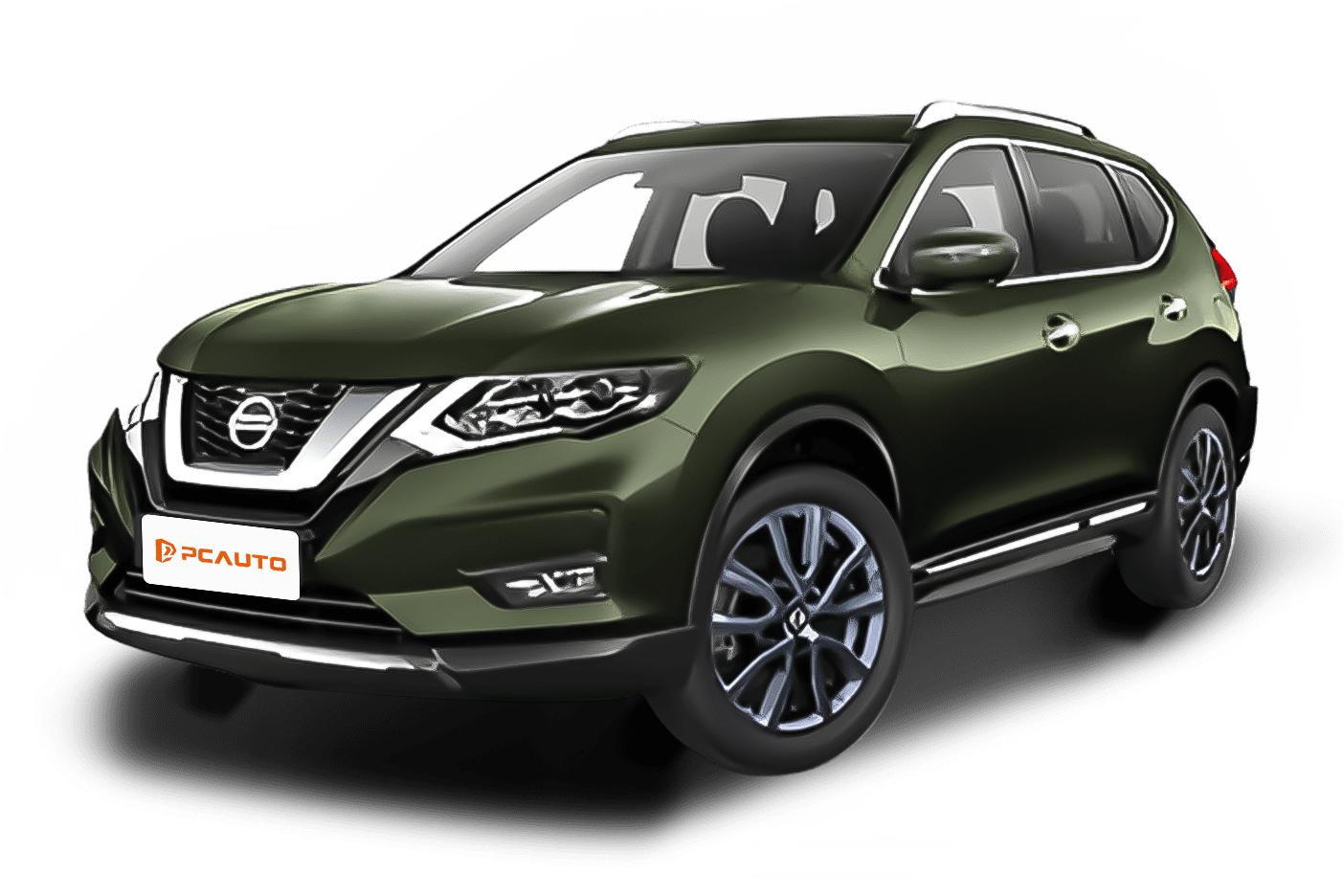
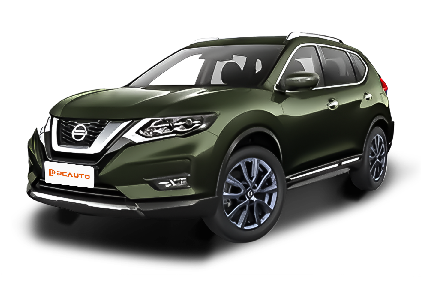
2023 Nissan X-Trail public is a 7-seater C-Segment SUV designed primarily for family use, focusing on flexible space, balanced configurations, and comfortable tuning to meet the needs of family users.
5
Rank in SUV
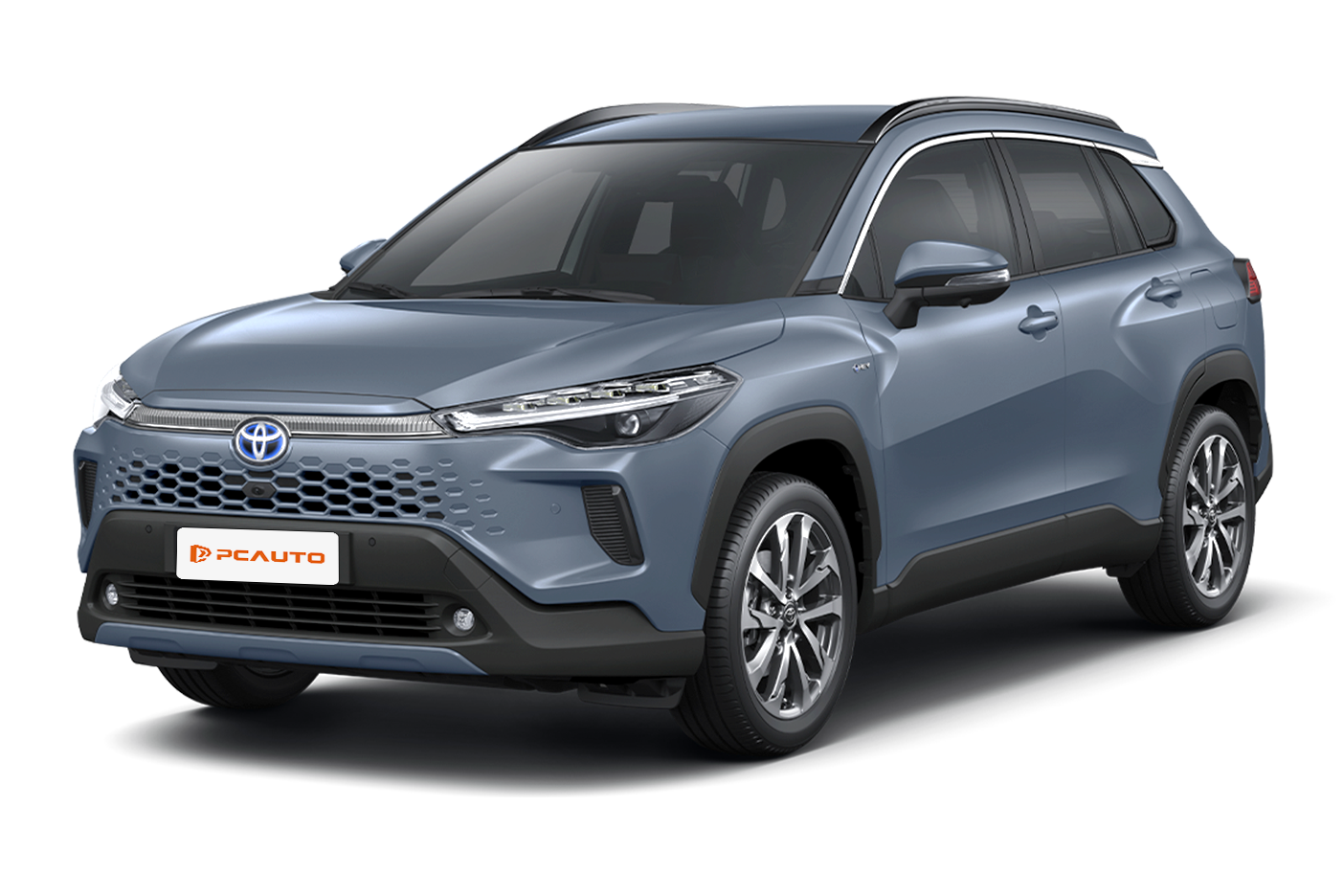
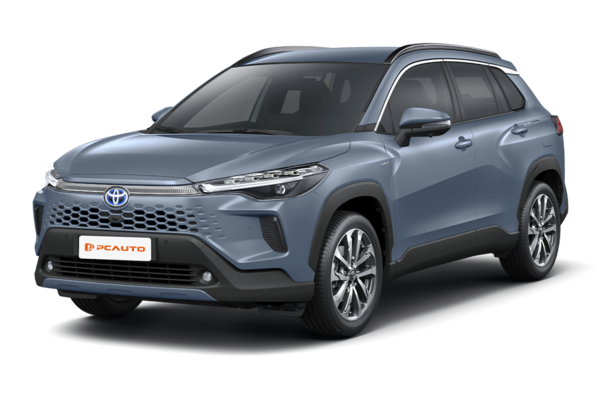
2025 Toyota Corolla Cross 1.8 V, as a mid-cycle facelift compact SUV for family use, balances durability and cost-effectiveness, with practical space and rich configurations, making it suitable for daily family commuting.
17
Rank in SUV
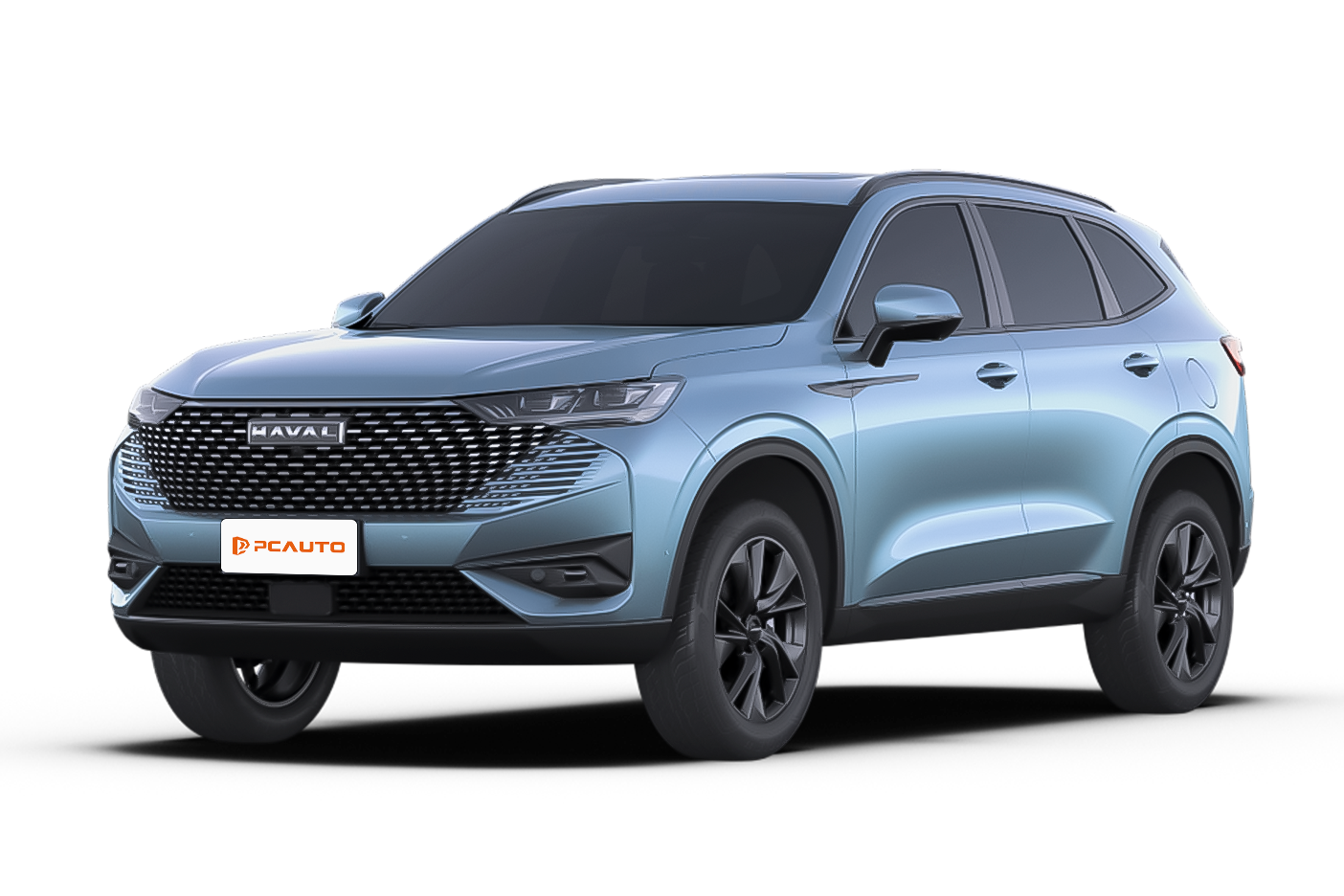
2024 HAVAL H6 HEV is a C-segment SUV, the preferred choice for Malaysian families, combining 243PS strong performance with 5.8L low fuel consumption, spacious interior, and full-featured intelligent safety.