
Q
What is the BHP of the Proton Satria?
 QonAug 14, 2025, 11:21 AM
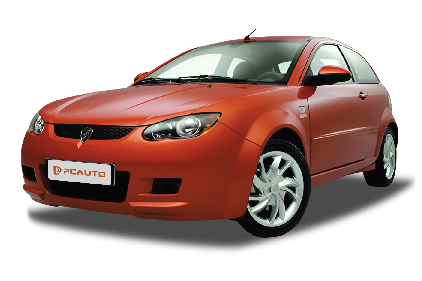
As a classic hatchback model of Proton, Malaysia's national brand, the BHP (brake horsepower) figures of the Proton Satria vary depending on different years and engine configurations. For example, the Satria Neo launched in 2006 was equipped with a CamPro 1.6L engine that could output 110 BHP, while the high-performance version of the Satria Neo R3 achieved 145 BHP through tuning. As for the early 1990s Satria GTI (with a 1.8L 4G93 engine), it had an output of 140 BHP.
BHP, as a key indicator for measuring engine performance, directly affects a vehicle's acceleration and top-speed performance. However, the actual driving experience also needs to take into account factors such as torque, vehicle weight, and transmission matching. For instance, although the Satria Neo CPS version only has 125 BHP, thanks to the CamPro CPS technology that optimizes mid-range torque, it is more flexible in city driving.
It's worth noting that the hot climate and road conditions in Malaysia can have a certain impact on engine heat dissipation and power sustainability. It is recommended that car owners regularly maintain the cooling system and replace high-quality engine oil to maintain optimal performance. At the same time, if modification enthusiasts want to increase BHP, they need to pay attention to the JPJ regulations regarding power modifications and avoid using uncertified ECU tuning kits.
Special Disclaimer: This content is published by users and does not represent the views or position of PCauto.
Related Q&A
Q
How much horsepower does a Satria have?
As a classic hatchback model in the Malaysian market, the horsepower output of the Satria varies depending on the specific model and year. For example, the 1.8L naturally aspirated engine in the Satria GTI can provide around 140 horsepower. The later-launched Satria Neo R3 track version can reach about 145 horsepower through tuning, while the 1.6L engine of the regular Satria Neo produces approximately 110 horsepower. It's worth noting that the horsepower data is affected by the iteration of engine technology. For instance, the early Satria used Mitsubishi's 4G series engines, and the CamPro engine independently developed by Proton later improved fuel economy and power balance.
For Malaysian consumers, when choosing a used car, they need to pay attention to the engine's maintenance status. High-mileage vehicles lacking regular maintenance may experience a decrease in horsepower. Moreover, horsepower is not the only criterion for measuring a vehicle's performance. Torque output, vehicle body lightweighting (such as the Satria's curb weight of only about 1 ton), and chassis tuning are also crucial. These factors together determine the flexible performance of this classic hot-hatch on Malaysian mountain roads or city streets.
If you want to further enhance the vehicle's power, common solutions in the local modification market include upgrading the intake and exhaust systems or reprogramming the ECU. However, these modifications must comply with JPJ regulations.
 CreateAug 14, 2025
Q
How big is the Proton Satria?
The Proton Satria belongs to the B-segment cars. It has a body length of 3,898 mm, a width of 1,745 mm, a height of 1,434 mm, and a wheelbase of 2,440 mm. With such a dimensional design, the interior space is quite reasonable for a five-seat layout. The relatively short body length makes it easier to maneuver on narrow city streets and when parking. The relatively wide body provides ample lateral space for the passengers inside the car, so they won't feel too cramped during the ride. The wheelbase ensures sufficient legroom for both front and rear passengers, especially the rear-seat passengers can also enjoy a decent riding experience. The fuel tank has a capacity of 50 liters, which can meet a certain range requirement. The trunk volume is 286 liters, which can meet the basic needs of storing items for daily shopping and trips.
 FleAug 14, 2025
Q
What is the capacity of Satria ?
The Satria is a classic model under Proton, a Malaysian automaker. Its capacity varies depending on the specific model and version. Early Satria models like the Satria 1.3L and 1.6L were equipped with engines with displacements of 1.3 liters and 1.6 liters respectively. The high-performance version, the Satria GTI, was fitted with a 1.8-liter engine, offering more powerful output. As for the fuel tank capacity, the Satria usually holds around 45 liters, with the exact figure potentially varying slightly based on the year and configuration.
The Satria is well-loved by Malaysian consumers for its compact body and agile handling, making it particularly suitable for city driving. As one of Proton's classic models, the Satria holds an important position in the Malaysian automotive market. Although it's currently out of production, it still has a place in the local automotive culture.
For car owners who love modifications, the Satria has great potential. Many enthusiasts enhance its performance by upgrading the engine or suspension system. If you're considering buying a used Satria, it's advisable to check the vehicle's condition and maintenance records to ensure it's in good shape.
 WonAug 14, 2025
Q
What is the fuel consumption of Satria?
As a classic hatchback model in the Malaysian market, the fuel consumption of the Satria varies depending on the specific model and engine configuration. For example, the version equipped with a 1.3L engine has an average fuel consumption of about 6-7L per 100km in urban conditions, and it can drop to around 5L per 100km during highway cruising. The 1.6L version, however, consumes about 10%-15% more fuel.
Actual fuel consumption is affected by driving habits, road conditions, and maintenance status. It is recommended to regularly maintain tire pressure and air filters to optimize fuel efficiency. Malaysian car owners should pay attention to the choice between local fuels RON95 and RON97. The original-factory recommendation is to use RON95, which can meet the vehicle's requirements, and there's no need to deliberately pursue high-octane fuel.
If you're considering a used Satria, be aware that engine carbon buildup or aging oxygen sensors may lead to increased fuel consumption. Such issues can be improved through professional cleaning or component replacement. Similar models in the same class, like the Myvi or Jazz, have comparable fuel consumption. However, the Satria has an advantage in maintenance costs thanks to its lighter body and simpler mechanical structure, making it a suitable choice for young car owners on a budget.
 AweAug 14, 2025
Q
What engine is in the Proton Satria?
As a classic hatchback model of Proton, the national brand of Malaysia, the Proton Satria has been equipped with various engine configurations to meet the needs of different markets. Early models like the Satria 1.3L (1994 - 2005) were powered by a 4G13P single overhead camshaft (SOHC) 1.3-liter four-cylinder engine, with a maximum horsepower of 82 hp. The Satria 1.6L, on the other hand, used a 4G92P SOHC 1.6-liter engine, outputting 103 hp, which was suitable for daily driving needs.
In 2006, the Satria Neo was launched with an upgrade to the CamPro series of engines. The base version was equipped with a 1.3L CamPro IAFM (outputting 94 hp/120 Nm), and the performance-oriented 1.6L CamPro IAFM (110 hp/148 Nm) optimized fuel economy. It's particularly worth mentioning that the limited-edition Satria Neo R3 used a 1.6L CamPro CPS (143 hp/165 Nm), which enhanced power performance through variable valve technology.
In addition, during Proton's cooperation with Mitsubishi, the Satria GTI was introduced, equipped with a 4G93T 1.8-liter turbocharged engine (140 hp/191 Nm), becoming the performance benchmark at that time.
Regarding engine technology, the CamPro series uses an aluminum alloy cylinder block to reduce weight, and the IAFM (Intelligent Air-Fuel Management System) can automatically adjust the intake efficiency according to the engine speed. This kind of technology is particularly important for engine heat dissipation and fuel adaptability in Malaysia's hot climate. Car owners should pay attention to regularly replacing the coolant and using engine oil with the appropriate viscosity to maintain engine performance.
 VonAug 14, 2025
Popular Cars
Model Year
Car Compare
Car Photo
Related Models
 Cars
CarsLatest Q&A
Q
Is AMT similar to automatic?
There are significant differences between AMT transmissions and automatic transmissions (AT) in terms of core structure and driving experience. AMT is essentially an electronically automated version of a manual transmission, simulating manual clutch operation and gear shifting through a computerized control system while retaining the gear set structure of manual transmissions. As a result, it offers higher transmission efficiency, with fuel consumption approximately 8%-12% lower than AT, making it particularly suitable for highway or long-distance driving. However, it may exhibit jerking similar to manual transmissions during low-speed gear shifts, especially noticeable in congested traffic conditions.
AT transmissions rely on torque converters for power transfer, delivering smooth and seamless gear shifts that appeal to comfort-oriented users. However, their complex structure (incorporating planetary gear sets, hydraulic systems, etc.) results in higher maintenance costs. A single service may cost between 800 to 1,500 ringgit, whereas AMT only requires gear oil replacement at approximately 400 ringgit.
From a market perspective, AMT is predominantly used in budget vehicles or commercial models priced below 80,000 ringgit, while AT is typically featured in mid-to-high-end vehicles. Consumers should select based on actual needs: AMT suits those prioritizing fuel efficiency and low maintenance costs, while AT better serves those valuing comfort. Notably, recent advancements in AMT electronic control technology have significantly mitigated jerking issues, though test drives should still emphasize low-speed performance evaluation.
 AriaMar 26, 2026
Q
Which is better, DCT or AT?
DCT (Dual-Clutch Transmission) and AT (Automatic Transmission) each have their own advantages and disadvantages, and the choice should be based on personal driving needs. AT transmissions transfer power through a torque converter, offering excellent shift smoothness, making them suitable for urban commuting or novice drivers. However, they tend to have higher fuel consumption, and vehicles equipped with them are usually more expensive. DCT transmissions utilize a dual-clutch structure, featuring fast shift speeds and high power transmission efficiency, which provides a more direct driving experience—particularly suitable for users seeking a sporty feel. However, they may exhibit jerking at low speeds and have relatively high maintenance costs. If durability and comfort are priorities, AT is the more reliable choice; if power responsiveness and driving pleasure are preferred, wet DCT (such as Volkswagen DSG) performs better, though dry DCT models should be avoided in prolonged stop-and-go traffic conditions. Additionally, CVT transmissions excel in smoothness and fuel efficiency, making them ideal for daily commuting, but they lack driving excitement. It is recommended to test-drive before purchasing, as tuning varies significantly across brands, and real-world experience is more important than theoretical specifications.
 FlutteringMar 26, 2026
Q
Is Amt good or bad?
AMT gearboxes have a significant cost advantage in the local market, typically being around 5,000 Ringgit cheaper than models equipped with conventional automatic transmissions. Their fuel efficiency is comparable to manual transmissions, resulting in long-term fuel savings. Featuring a straightforward design, they achieve transmission efficiency exceeding 90% with relatively low maintenance costs, making them ideal for practicality-oriented consumers. However, their shifting logic contains inherent limitations: gear changes between 1st and 2nd cause 0.3-0.5 second power interruptions, while unintended upshifts on inclines may reduce engine speed by 15%-20%, compromising driving smoothness. For urban commuters or budget-conscious buyers, AMT offers excellent value, though those prioritizing premium driving dynamics should consider alternative transmission types. Some domestic models like the Perodua Axia employ enhanced AMT systems, where optimized shift programming has reduced gearshift shock by approximately 30%.
 RainbowsMar 26, 2026
Q
Which gives better mileage, CVT or AMT?
From the perspective of fuel economy, CVT transmissions generally perform better under urban driving conditions. Their continuously variable design allows the engine to consistently operate within the optimal speed range, significantly reducing fuel consumption during frequent starts and stops. Test data shows that their fuel consumption in urban driving conditions is 10% to 15% lower than that of comparable models. AMT transmissions, on the other hand, inherit the high transmission efficiency of manual transmissions, delivering fuel efficiency close to manual transmissions during high-speed cruising. This makes them particularly suitable for long-distance driving in large-displacement vehicles. However, due to power interruption during gear shifts, their overall fuel consumption may be 5% to 8% higher than CVTs.
The difference in fuel-saving characteristics between the two transmissions stems from their technical principles: CVTs achieve continuous variability through steel belts and pulleys, eliminating the fixed gear ratio limitations of traditional transmissions; AMTs simulate manual gear changes via electronic control systems while maintaining the mechanical efficiency of gear transmission. Notably, actual fuel consumption is also influenced by driving habits. Smooth acceleration and anticipatory deceleration can maximize the transmissions' fuel-saving potential. If the vehicle budget permits and urban commuting is the primary use, CVTs offer a more economical choice. For frequent highway driving with an emphasis on cost-effectiveness, AMTs are equally worth considering.
 RubyBlazeMar 26, 2026
Q
Which is cheaper, AMT or CVT?
In terms of gearbox cost, AMT is usually more economical than CVT. Essentially, AMT is a manual transmission equipped with an electronic control unit, featuring a simple structure and low maintenance costs. The unit price ranges from approximately 5,000 to 8,000 ringgit, making it suitable for budget-conscious consumers or those who prioritize long-term operating costs. CVT incurs higher manufacturing costs due to its precision steel belt transmission system and continuous variable transmission technology, with a unit price of about 7,000 to 10,000 ringgit. However, it delivers a smoother driving experience and superior fuel efficiency. The primary differences between the two lie in technical complexity: AMT retains the gear-shifting mechanism, resulting in noticeable shift shock; CVT achieves linear power output through stepless speed variation but requires periodic belt inspection and incurs higher maintenance expenses. For those prioritizing initial cost and basic transportation needs, AMT offers better value; if comfort and long-term fuel economy are priorities, CVT represents a more worthwhile investment. Note that actual prices may vary based on vehicle model, brand, and local supply chain factors.
 ShadowProwlMar 26, 2026
Related News

2026 Proton X90 MC Leaked: Equipped with four-cylinder engine, offers Carplay
Kevin WongMar 10, 2026

2026 Proton e.MAS 7 PHEV Officially Launched in Malaysia, Entering the Household C-segment PHEV Market at a Lower Price
RobertFeb 5, 2026

In 2026, Should I Buy a Proton X50 or a Perodua Traz? Can the RM 6,000 Rebate Offset the Traz's Space Advantage?
MichaelFeb 2, 2026

Proton announces future model plans for the AMA platform, the new car price will not exceed RM80,000
RobertJan 28, 2026

Decided on the e.MAS 7 PHEV but still unsure? Then take a look at its Chinese prototype.
LienJan 15, 2026
View More
Pros
Cons