
2026 Proton e.MAS 7 PHEV Officially Launched in Malaysia, Entering the Household C-segment PHEV Market at a Lower Price
 RobertFeb 05, 2026, 11:39 AM
Proton 2026 e.MAS 7 PHEV Officially Launched in Malaysia
Three Configurations Available Starting from RM 105,800 (after discount)
Focus on Upgrades in Design, Interior, and Performance, Positioned as a Family C-Class Plug-in Hybrid SUV
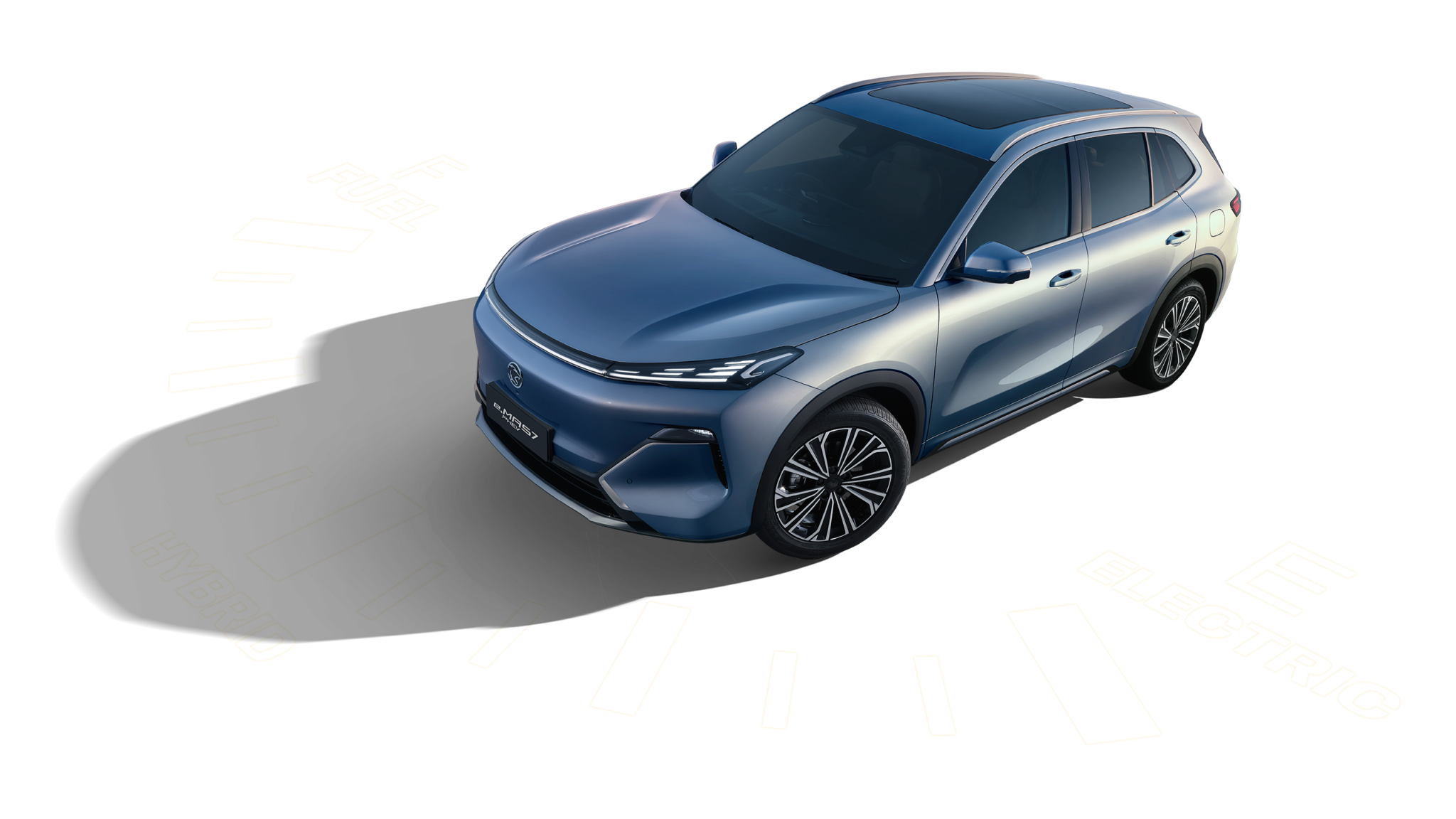
[PCauto] Proton officially launched the 2026 e.MAS 7 PHEV in Malaysia. As a local car manufacturer in Malaysia, Proton continues to highlight its high cost-performance ratio by introducing three configurations: Prime, Premium, and Premium Plus, aiming to break the current market trend of high-priced models in the same class.
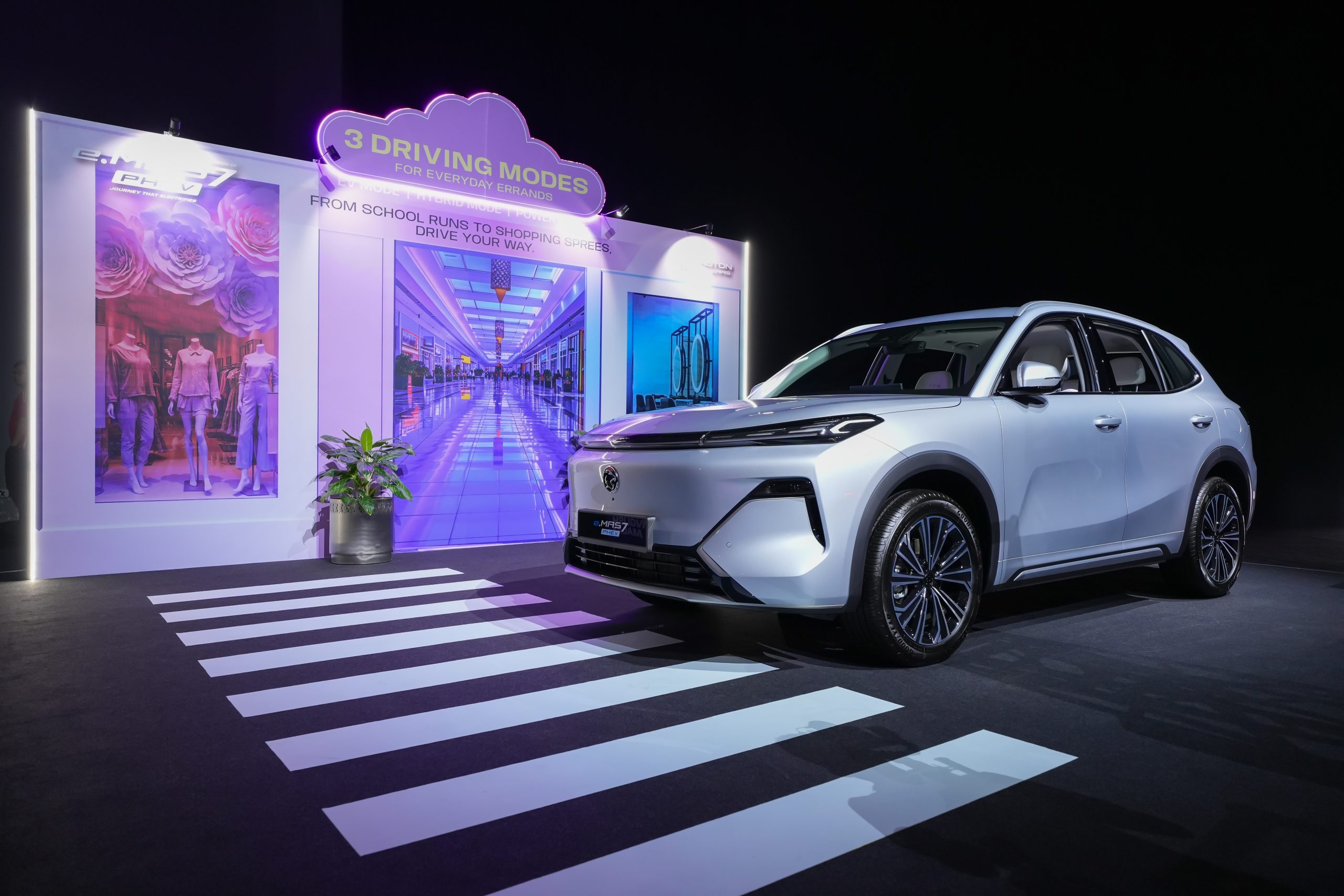
First of all, this e.MAS 7 PHEV offers three versions.
- Prime (Basic): RM109,800
- Premium (Medium Configuration): RM123,800
- Premium Plus (Top Configuration): RM129,800
Proton has also launched new car promotions. The first 5000 bookings can enjoy a RM4000 discount.
| Model Configuration | Official Price (RM) | Discounted Price for the First 5000 (RM) |
|---|---|---|
| Prime | 109,800 | 105,800 |
| Premium | 123,800 | 119,800 |
| Premium Plus | 129,800 | 125,800 |
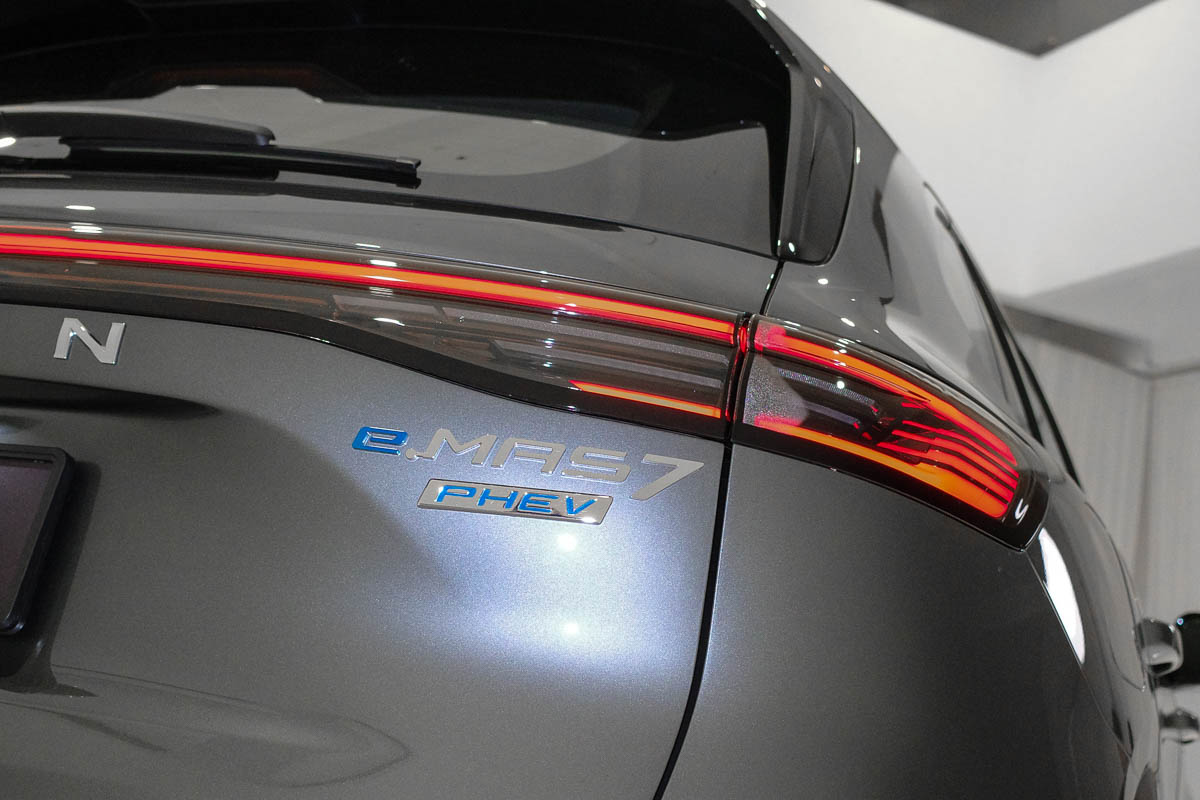
After looking at the attractive pricing and offers, let's analyze the highlights of this new car in terms of exterior design, interior features, performance, and more.
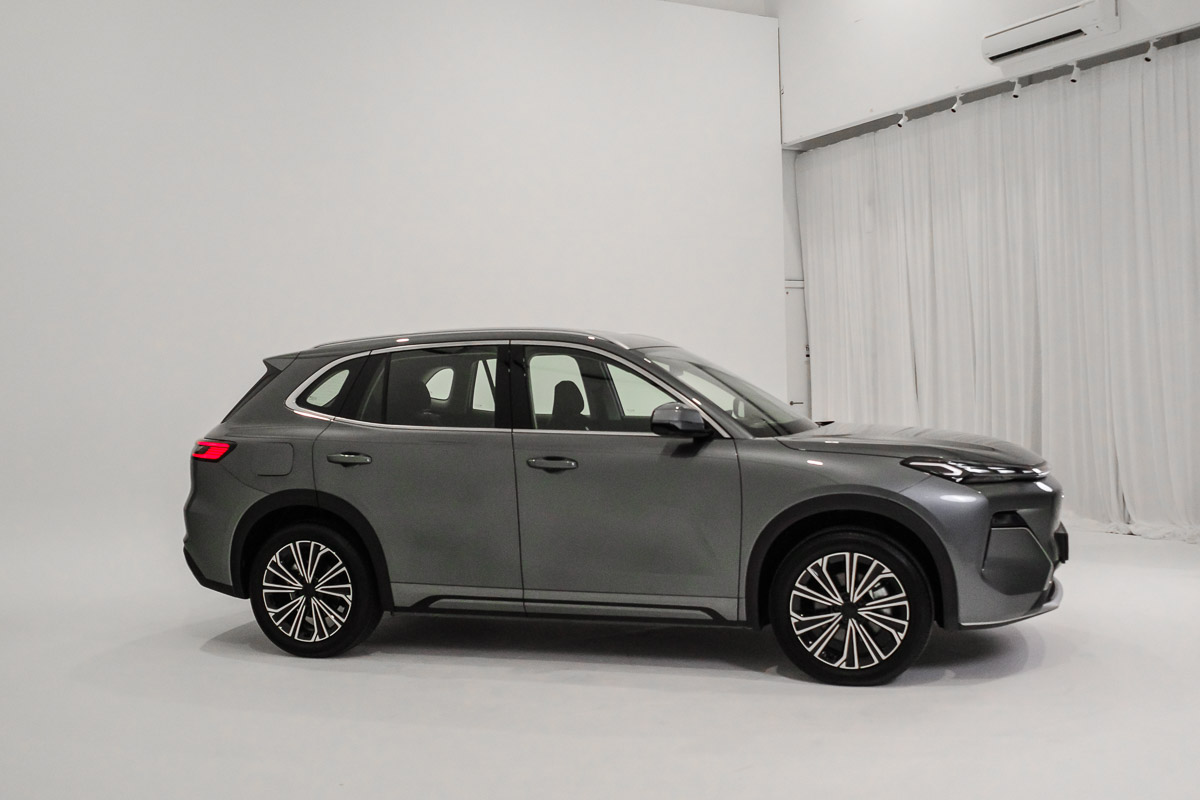
As for the exterior and interior, the new car does not deliberately pursue radical designs but continues the e.MAS family design language, incorporating design techniques shared with Geely.
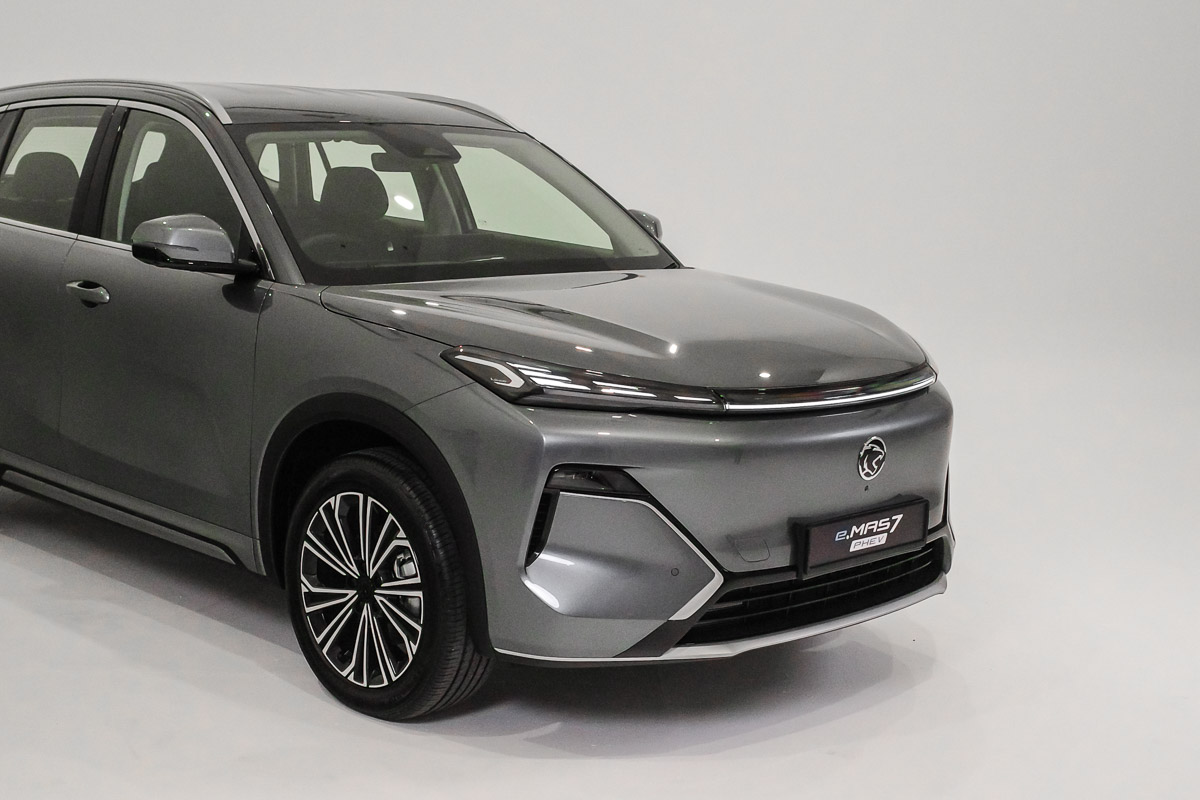
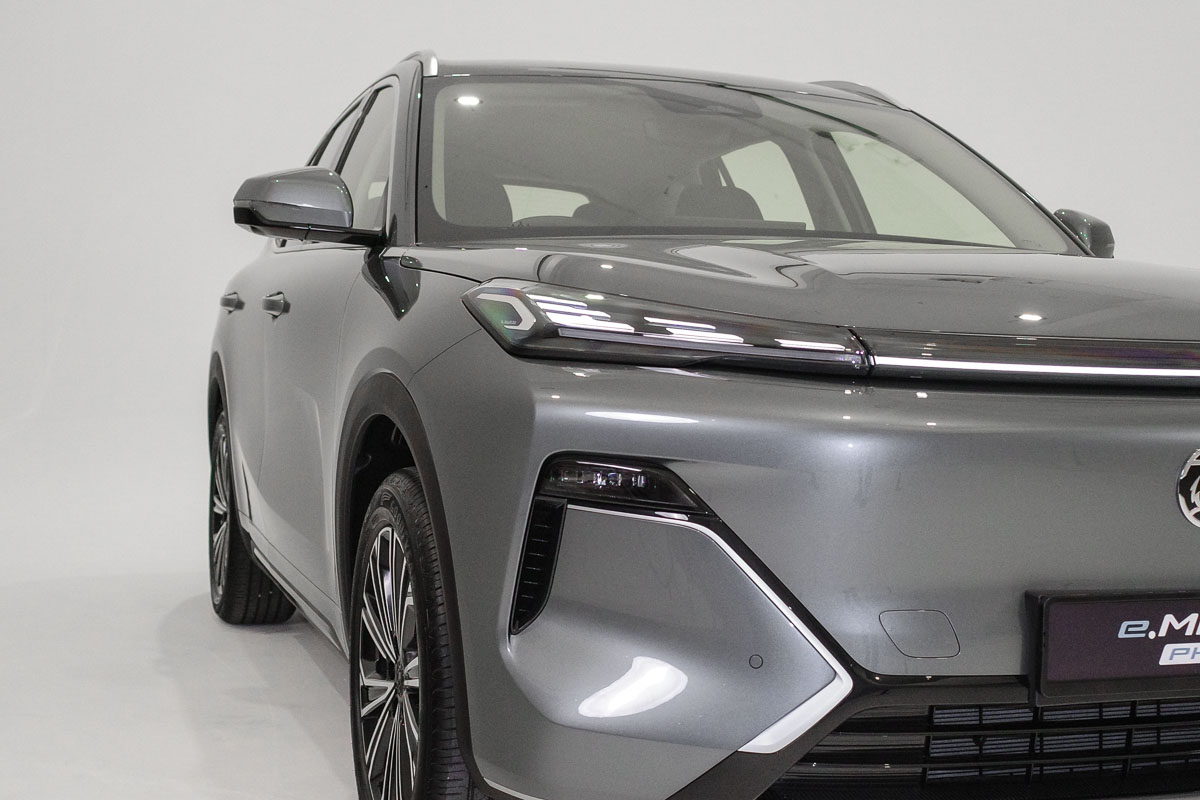
On the exterior, the front adopts a semi-closed grille design, paired with sharp LED headlights and through-type daytime running lights, creating a visually broader body proportion. The lower part of the front bumper retains practical heat dissipation openings, combining functionality with style, and the overall design does not appear monotonous.
The side profile features a regular SUV proportion, with a flat roof design ensuring effective rear headroom, complemented by aerodynamically designed wheels. The rear of the car is equipped with through-type LED taillights, paired with a minimalist rear bumper, giving the overall style a timeless appeal.
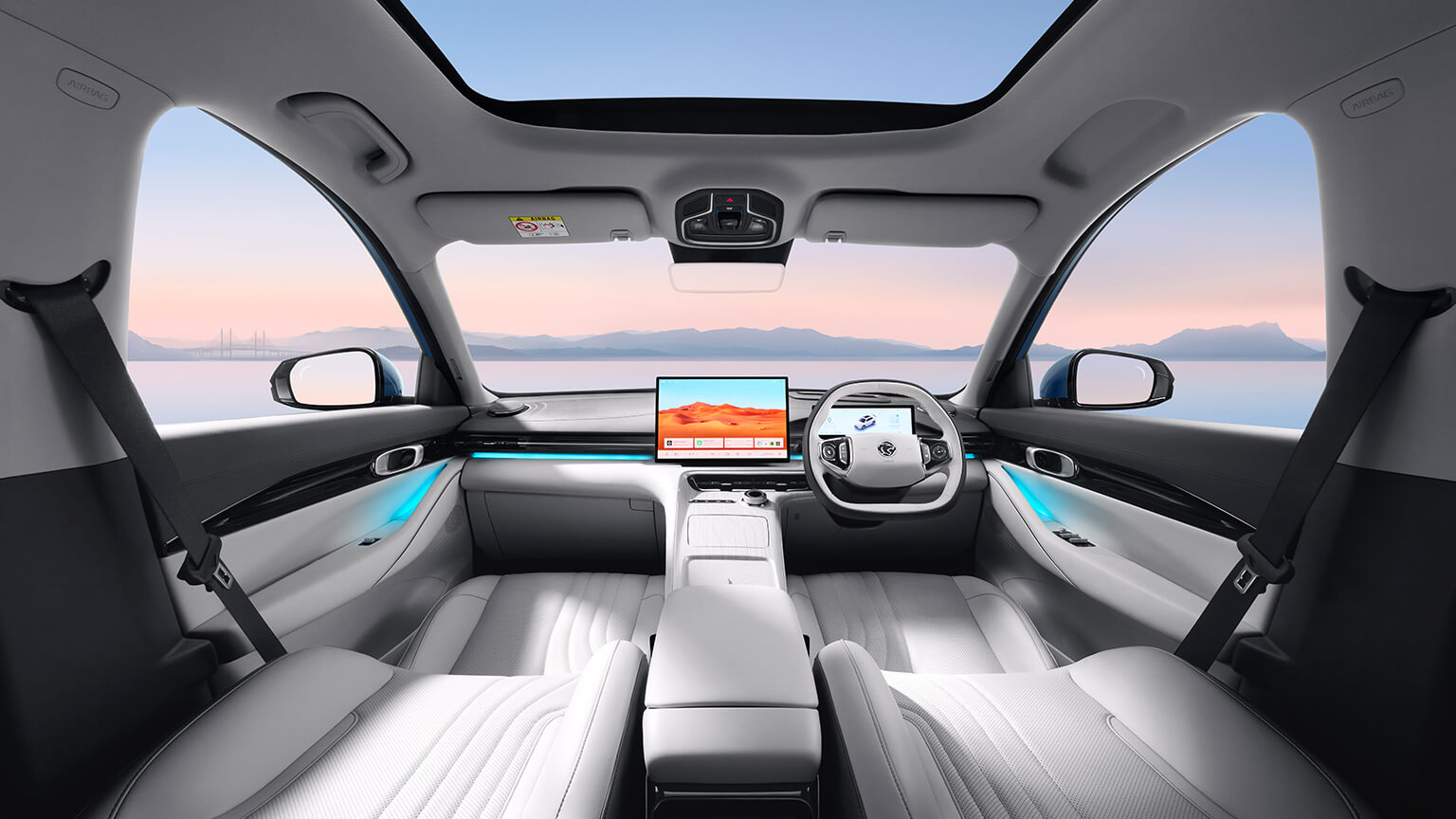
 The interior design follows the same style as the exterior, focusing on being user-friendly and easy to operate without excessive features. The dashboard adopts a horizontal layout, paired with a fully digital instrument cluster and a large central control screen, offering clear display and intuitive operating logic.
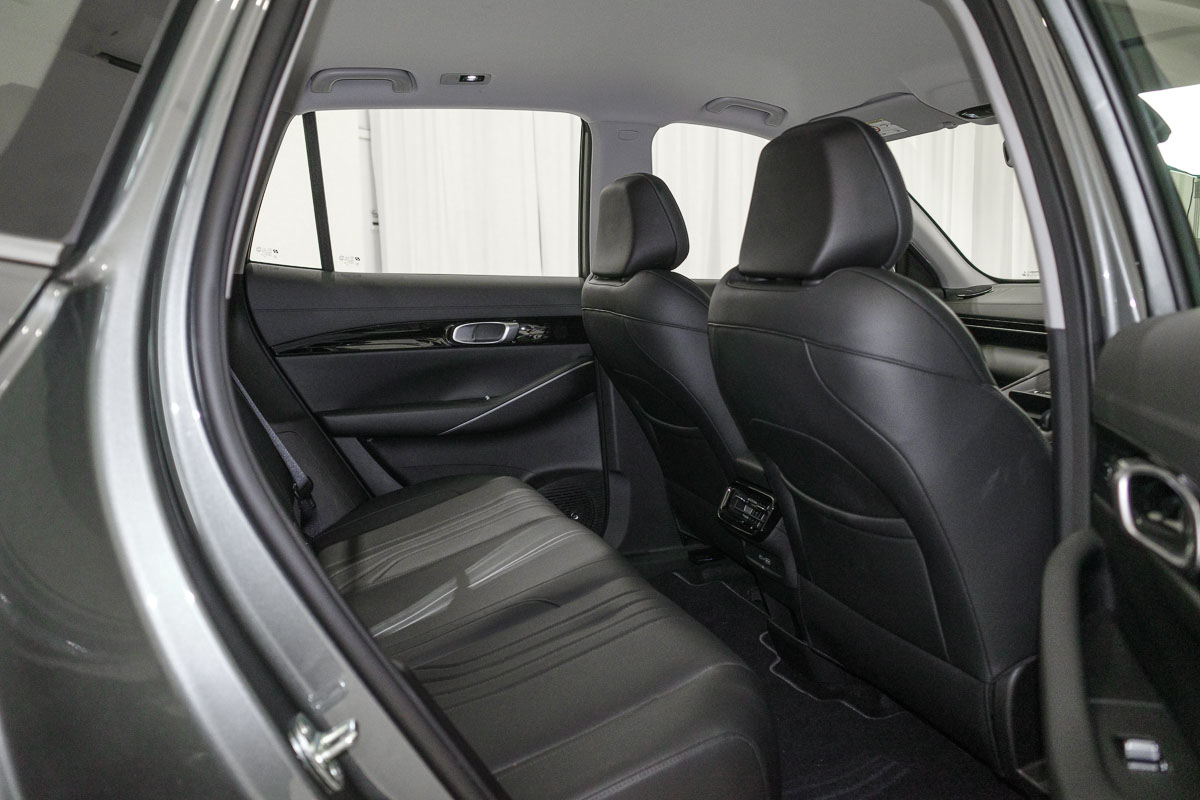
The overall materials are mainly soft-wrapped, and the touch and visual feel are at a reasonable level for the same class; the difference between different configurations is mainly reflected in the interior materials and details, with higher configurations slightly upgraded in commonly touched surfaces. Combined with the C-class SUV positioning of the new car, the interior space is relatively spacious.
 After looking at the face of the new car, let’s check out its core performance. The 2026 e.MAS 7 PHEV is equipped with a mature and stable plug-in hybrid powertrain, which not only retains the practicality advantage but also provides upgrades for different configurations.
It is worth mentioning that the new car is equipped with a 1.5-liter four-cylinder gasoline engine specially designed for hybrid use, combined with a motor and battery system, paired with an 11-in-1 hybrid transmission. The combined output reaches 193kW with a torque of 262Nm, adopting a front-wheel drive system. The power output is smooth, fully meeting commuting and travel needs.
| Model Configuration | Battery Specification | Pure Electric Range (km) | Combined Range (km) | Fuel Consumption (L/100km) | DC Fast Charging Power | 30%-80% Charging Time |
|---|---|---|---|---|---|---|
| Prime | 18.4kWh LFP Battery | 105 | 1000 | 4.3 | Up to 30kW | Less than 20 minutes |
| Premium | 18.4kWh LFP Battery | 105 | 1000 | 4.3 | Up to 30kW | Less than 20 minutes |
| Premium Plus | 29.8kWh LFP Battery | 170 | 1065 | 4.4 | 60kW | Less than 16 minutes |
It should be noted that all models come standard with 6.6kW AC charging, compatible with home and public AC charging stations.
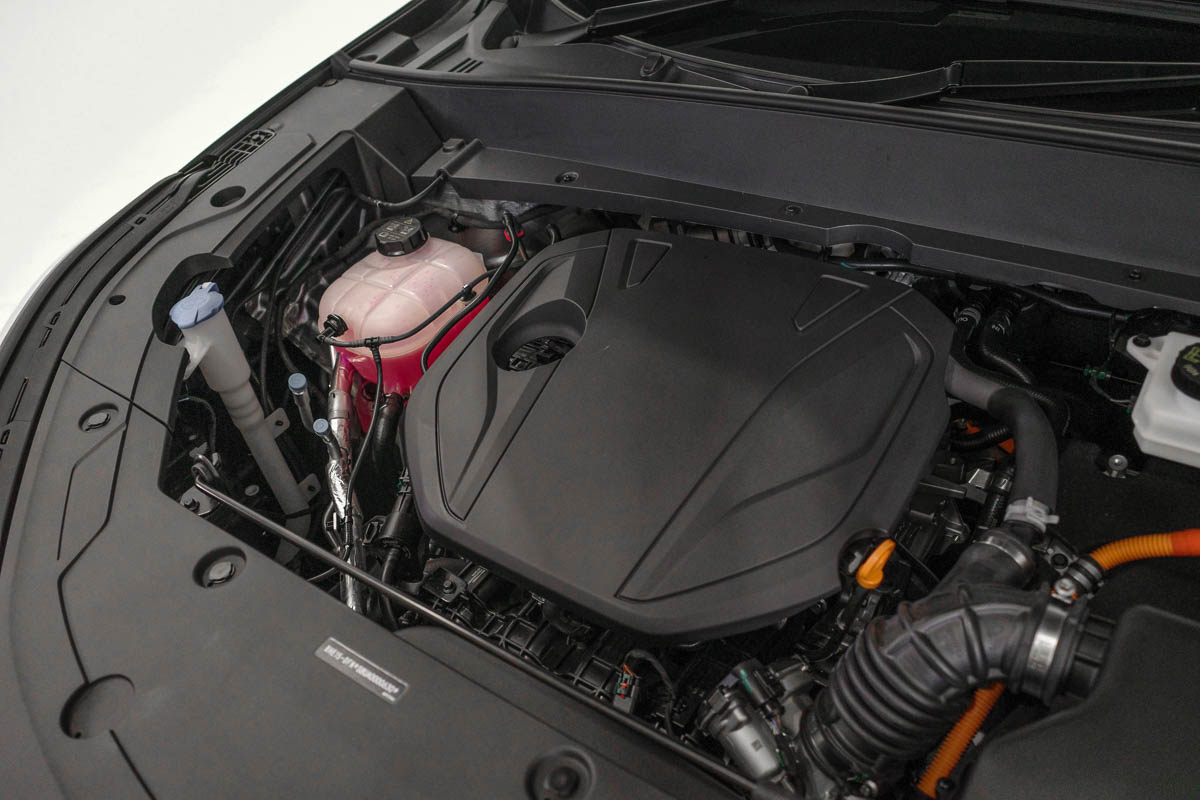
In addition to the product's own upgrade highlights, Proton has also demonstrated a strong localized production approach with this model.
Initially, the new car will be supplied through imports from China, but it plans to achieve full localization at the Tanjung Malim base within 10 months. This advancement is significantly faster than the previous localization (CKD) production of the e.MAS 7 all-electric version.
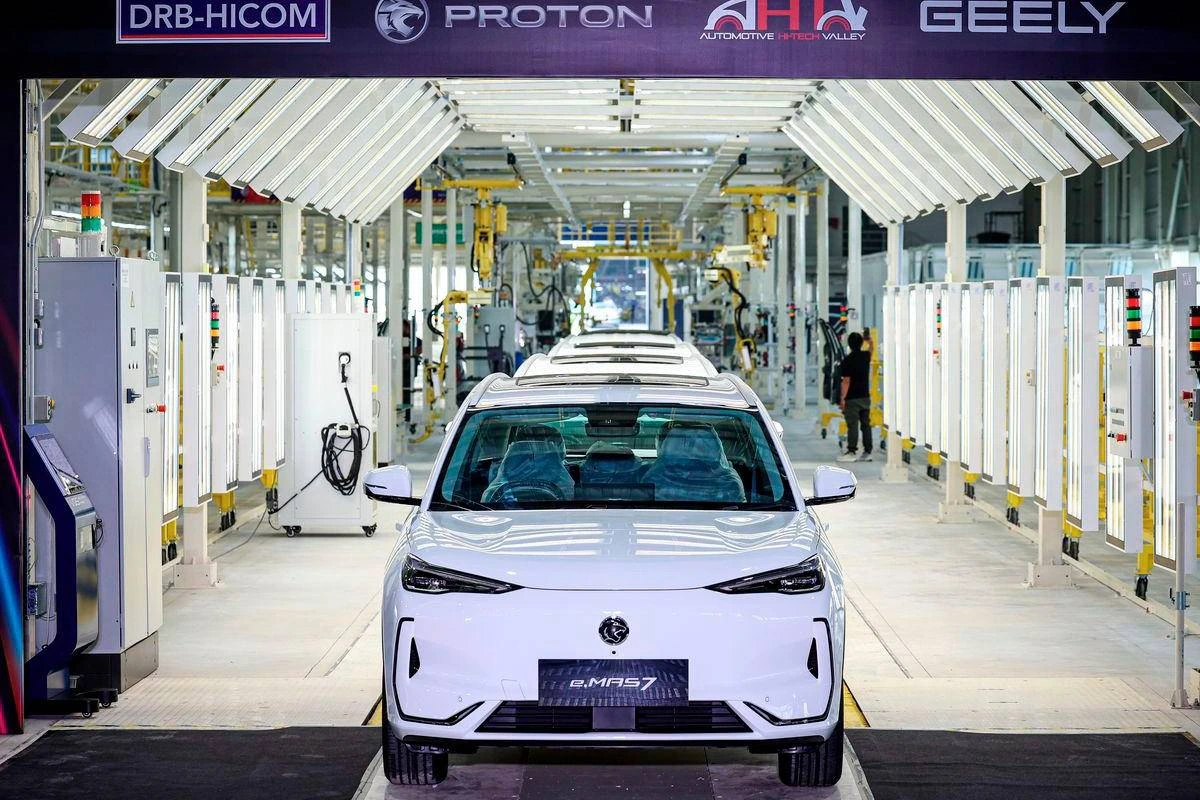
Pictured is the Tanjung Malim factory base.
Currently, prices for PHEV models in the same class are generally higher than RM 130,000, while the Proton e.MAS 7 PHEV starts at a discounted price of RM 105,800, showing a clear price advantage.
In Malaysia's C-segment plug-in hybrid SUV market, the mainstream competitors are priced in a higher range. Among them, the similarly positioned Chery Tiggo 7 PHEV has an official price of RM 129,800, which is the same as the official price of the Premium Plus version of the e.MAS 7 PHEV. However, Proton currently offers purchase discounts that lower the price to RM 125,800, making it RM 4,000 cheaper than the Chery Tiggo 7 PHEV. Moreover, it also offers a version with longer range configurations.
Another competitor, the Jaecoo J7 PHEV, is priced higher at RM 158,800, which is RM 33,000 more expensive than the discounted top version of the e.MAS 7 PHEV. Even without considering the discount, its starting price is nearly RM 49,000 higher than the official base price of the e.MAS 7 PHEV.
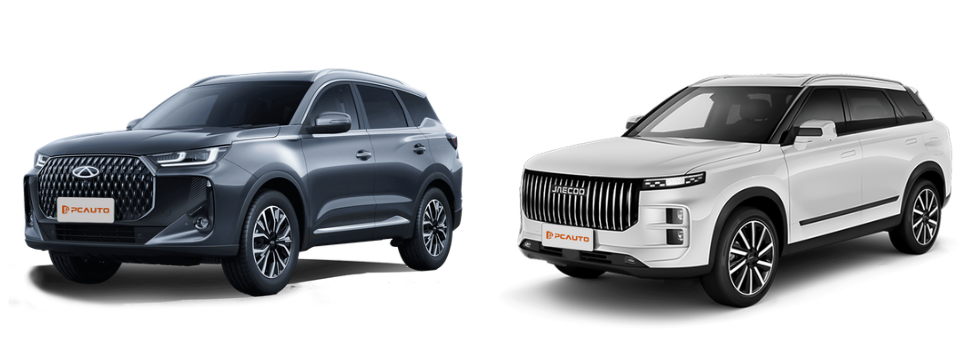
In addition to these directly competing models, even hybrid or plug-in hybrid models from certain other brands are priced higher than the e.MAS 7 PHEV. For example, the Haval H6 HEV is priced at RM 139,800. It is only a hybrid vehicle, not a plug-in hybrid, yet its price is RM 34,000 higher than the discounted starting price of the e.MAS 7 PHEV.
As for PHEV models in the same class from luxury brands, the price gap is even more significant. The BMW X5 xDrive50e M Sport PHEV, priced at RM 486,800 in 2026, is nearly 4.7 times the discounted starting price of the e.MAS 7 PHEV. Its target consumer group is entirely different from that of the e.MAS 7 PHEV, and it cannot form direct competition.
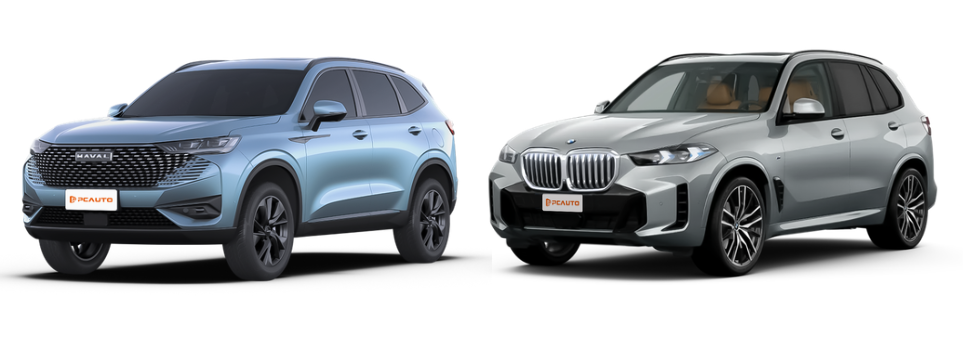
It is not difficult to see that whether compared with mainstream plug-in hybrid competitors of the same level or non-plug-in hybrid models with similar prices, the new e.MAS 7 PHEV fills the low-price gap in Malaysia's C-segment plug-in hybrid SUV market with its lower pricing.
If any infringement occurs, please contact us for deletion









Popular Cars
Model Year
Car Compare
Car Photo