
Benz to Bring Solid-State Battery EVs by 2030
 WilliamJul 25, 2025, 04:07 PM
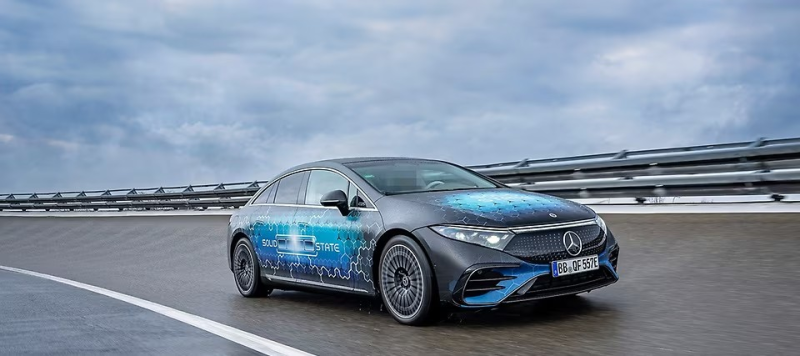
【PCauto】Earlier this year, Mercedes-Benz started road testing a prototype EV powered by lithium-metal solid-state batteries in the UK. The test car has already logged over 30,000 kilometers on public roads, pushing the potential range of production EVs to an impressive 620 miles (around 1,000 kilometers).
Now, R&D chief Markus Schäfer has confirmed at the Copenhagen Tech Summit that Mercedes plans to bring solid-state battery EVs to market before 2030.
Partnering with Factorial on Solid-State Tech
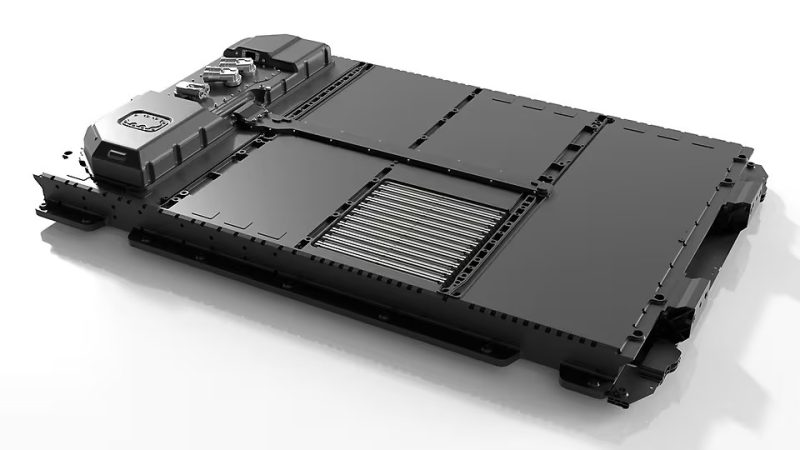
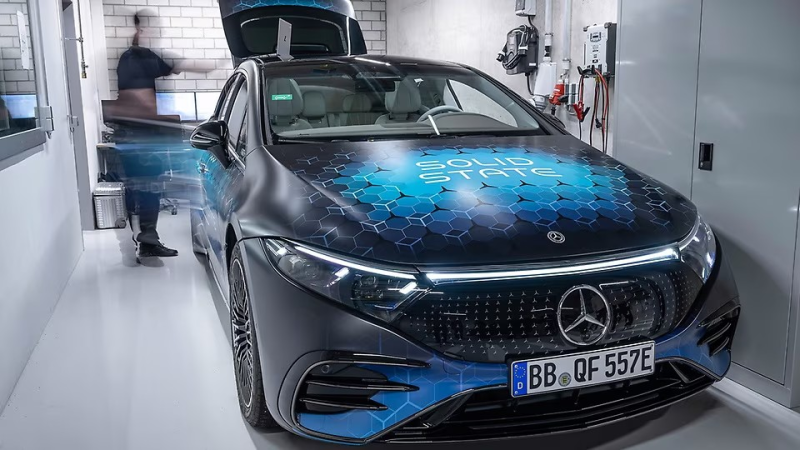
The prototype is a reworked version of the current EQS 450+. At its heart is a sulfide-based solid-state battery jointly developed by Mercedes-Benz’s High-Performance Powertrain division and US-based Factorial Energy. This new pack delivers an energy density of 450 Wh/kg, which is about 40% higher than a typical lithium-ion battery. It also cuts 210 kilograms from the overall battery weight.
More importantly, it eliminates the risk of liquid electrolyte leaks. It also raises the thermal runaway threshold to over 150°C. Schäfer says the prototype has boosted range by 25% under WLTP testing. That means the current EQS 450+’s 511-mile (822 km) range could climb into four-digit territory.
Factorial delivered its B-sample cells to Mercedes in Q2 2025, signaling a final push toward commercial production. The same FEST® solid-state tech is also being shared with Stellantis and Hyundai.
To handle the 15% volume expansion of electrode materials during charge and discharge, the team designed a floating battery rack that prevents cracking. On top of that, Mercedes engineers tuned the thermal management system. As a result, fast charging got a 30% speed bump, and battery temperature stayed within ±2°C during heavy-duty testing at the Nürburgring.
Cost Remains the Biggest Roadblock
Even with strong technical advantages, cost is still a major hurdle. Schäfer admitted that solid-state batteries currently cost three times as much to produce as lithium-ion ones. Mercedes is trying to cut costs with a modular design and hopes to bring the price gap down to 20 percent by 2029.
If that happens, the price premium for a solid-state EQS could be kept under £8,000, or roughly 348,800 baht or 46,000 ringgit.
What’s encouraging is that the prototype held on to 98 percent of its range in minus 30°C conditions during winter testing in the Scottish Highlands. That result gave the engineering team real confidence in bringing the tech to market.
Carmakers Race to Bring Solid-State Batteries to Market Sooner
Mercedes-Benz’s progress has kicked off a wave of moves across the industry. Toyota now plans to start mass-producing solid-state batteries as early as 2027, moving up its original 2030 timeline.
BMW is also speeding up its sulfide battery project with Solid Power.
In China, CATL’s semi-solid-state battery has already made its way into the MG4.
But for now, Mercedes is ahead. It has full-scale test data from extreme environments, including sustained 200 km/h runs on the German Autobahn and 50°C heat testing in the Sahara Desert. The latest batch of test vehicles is now in Spain’s Guadarrama Mountains for high-altitude trials, marking another step toward production.
What was once dismissed as lab-only tech is quickly becoming real. With over 2,000 kilometers of road testing added every month, Mercedes is closing in on the finish line.
If any infringement occurs, please contact us for deletion










Popular Cars
Model Year
Car Compare
Car Photo