
Euro NCAP releases final batch of 2025 crash test results: Four models, including the facelifted Mazda CX-5, receive five-star ratings
 Kevin WongDec 19, 2025, 06:28 PM
[PCauto] The European New Car Assessment Programme (Euro NCAP) has recently announced the results of the final crash tests for 2025. This authoritative report provides valuable vehicle safety performance references for consumers in the Southeast Asian market.
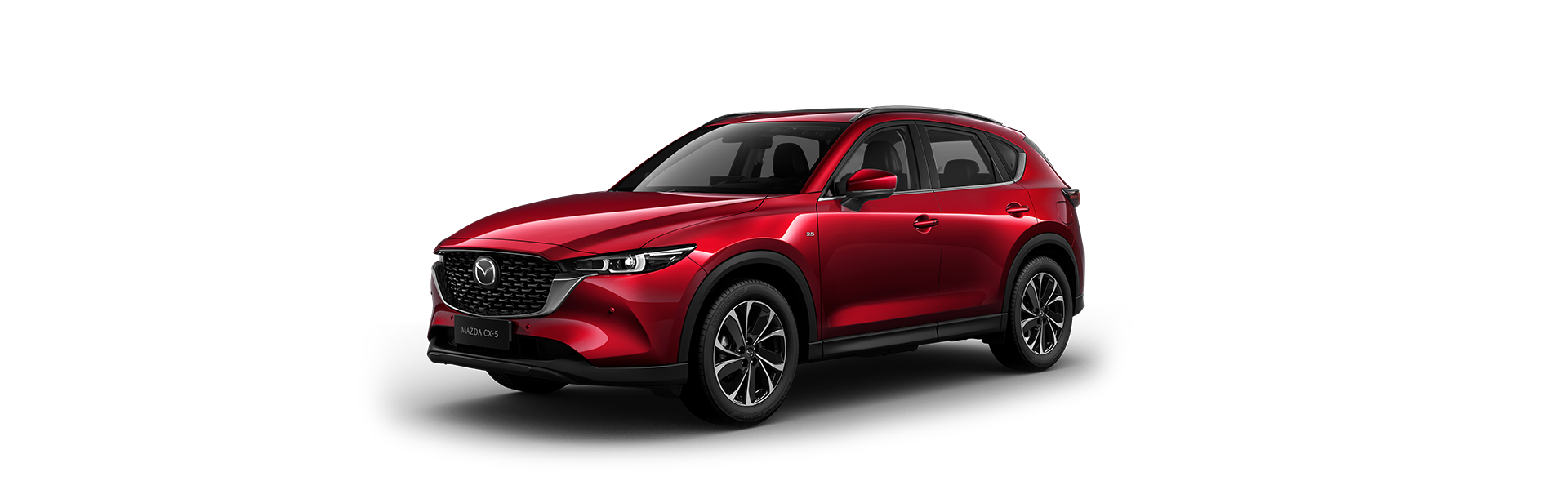
Among the 19 models tested in this round, the Mazda CX-5 (major facelift), Mercedes-Benz CLA, Volkswagen T-ROC, and Porsche Cayenne showed remarkable performance, all successfully achieving a five-star safety rating.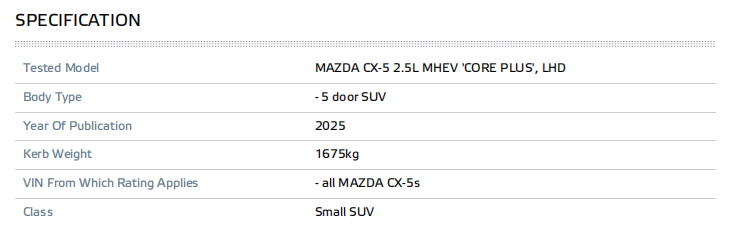 As one of the focus models in this test, the facelifted Mazda CX-5 has maintained the brand's consistently high standards in terms of safety performance.
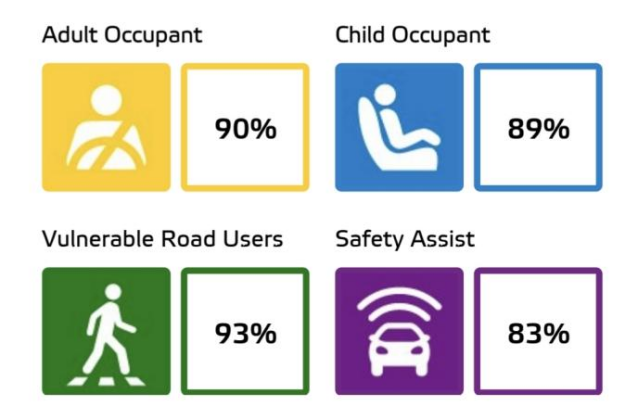
According to the test data, it scored 90% in Adult Occupant Protection, 89% in Child Occupant Protection, an impressive 93% in Vulnerable Road User Protection, and 83% in Safety Assist.
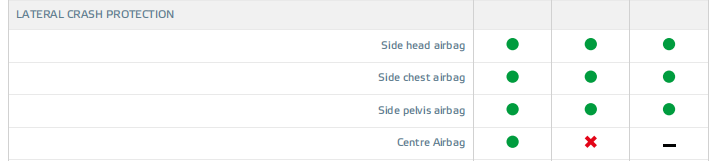
From the specific test performance, in the Frontal Impact test, the passenger compartment of the Mazda CX-5 remained stable, providing good protection for the knees and femurs of both the driver and the front passenger. Occupants of different body types and seating positions can receive a similar level of protection. Only the chest compression protection rating for the driver was marginal, while protection for other areas was rated as GOOD or ADEQUATE.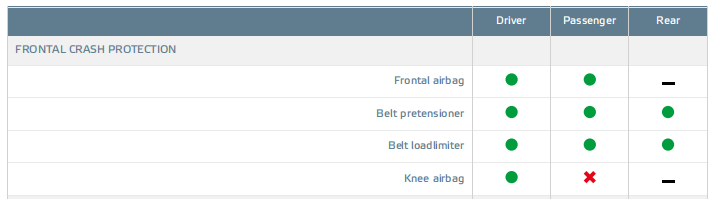 In the Lateral Impact test, whether it was the side-moving barrier collision or the stricter side pole collision, protection for all critical body regions was rated at least as ADEQUATE. Additionally, the vehicle achieved full marks in the side barrier impact test.
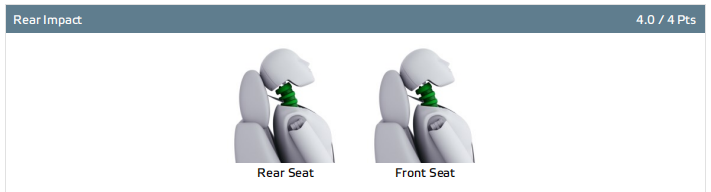
In the Rear Impact test, the front and rear seats and headrests provide excellent protection against whiplash injuries, and the geometric analysis of the rear seats also demonstrates good whiplash protection capabilities.
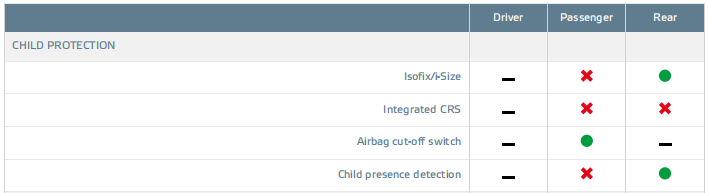
In terms of child occupant protection, during tests with 6-year-old and 10-year-old child dummies, the Mazda CX-5 demonstrated good protection for all key body areas of the children in both the frontal offset collision and side barrier impact tests, achieving full marks in this category. The vehicle is equipped with a system that detects the installation of a Child Restraint System (CRS) on the front passenger seat and automatically deactivates the airbag for that position, providing solid safety assurance for children.
In the vulnerable road user protection category, the Mazda CX-5 provides overall good or adequate head protection for pedestrians or cyclists in collisions, with only the rigid windshield pillars showing room for improvement. The pelvis, femur, knee, and tibia protection performed excellently across all tested areas, achieving full marks in this category.
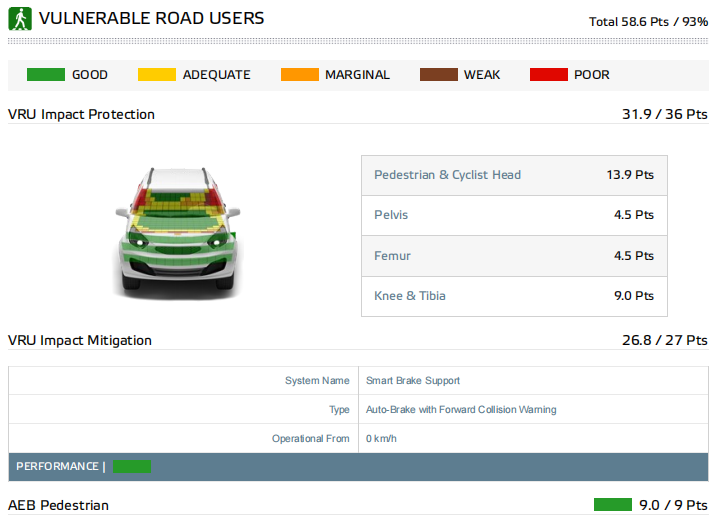
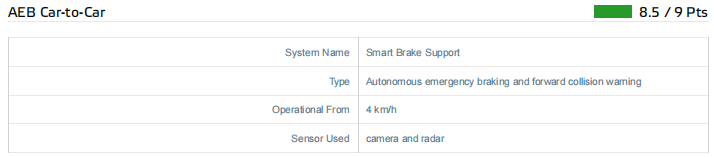
The Autonomous Emergency Braking (AEB) system equipped on the vehicle provides protection coverage for motor vehicles traveling in the same or opposite directions. It accurately identifies pedestrians, cyclists, and other vulnerable road users, ensuring safety for travel in complex road conditions.
Therefore, in the actual performance of the driving assistance system, the car-to-car Autonomous Emergency Braking (AEB) system of the Mazda CX-5 performs remarkably. The system integrates Forward Collision Warning (FCW) function and relies on the collaborative detection technology of cameras and radar. It can automatically activate when the vehicle speed reaches 4km/h or above, achieving excellent test results in addressing vehicle collision risks.
Similarly, its protection performance in pedestrian tests is stable, ensuring the safety of pedestrians even behind the vehicle. In scenarios involving cyclists, including the potential collision risk caused by opening the car door when cyclists approach from behind, the system intervenes promptly to prevent accidents. In tests specifically targeting motorcycle riders, the vehicle has received a perfect score.
In addition, the Speed Assistance System can recognize local speed limit signs, and the driver can choose to let the system automatically set the speed limit.

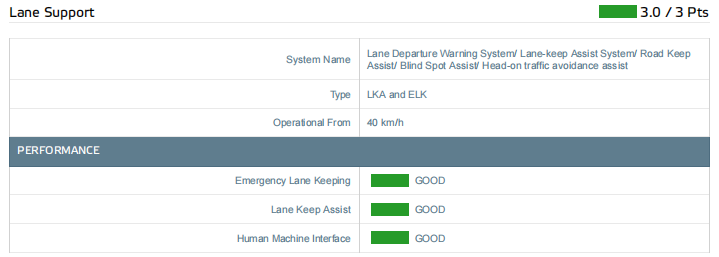
The Lane Support System includes multiple functions such as Lane Departure Warning System and Lane Keep Assist System, which can operate normally at speeds of 40km/h or above. Emergency Lane Keeping, Lane Keep Assist, and human-machine interaction performance are all rated as good. It can softly correct the driving trajectory when the vehicle deviates from the lane and can intervene promptly in critical scenarios.
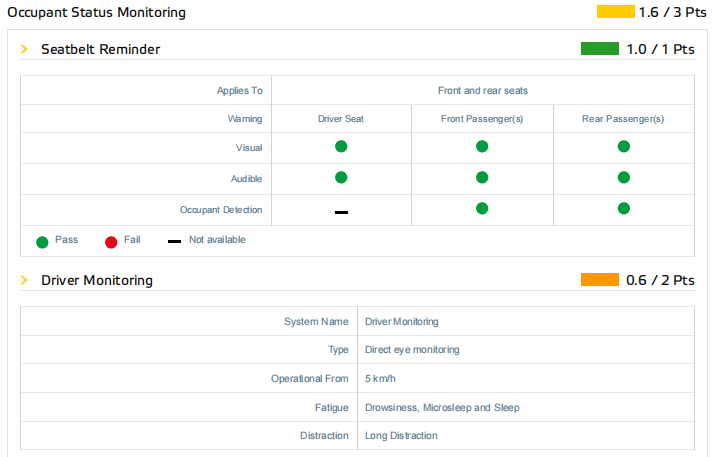
The vehicle's standard Seatbelt Reminder System covers both front and rear seats and meets performance standards. The equipped direct Driver Monitoring System can detect driver fatigue and some distraction conditions, but its score in related tests is relatively limited.
Euro NCAP specifically mentioned that the upgraded Advanced Driver Assistance Systems (ADAS) of the Mazda CX-5, including the Smart Brake System with low-speed assist functionality, the improved Blind Spot Monitoring System, and the Emergency Lane Keeping Assist System, performed stably in actual tests, providing drivers with a smooth and controllable driving experience.
It is worth noting that Euro NCAP emphasizes that with stricter safety standards set to be implemented in 2026, active safety technologies have become a key factor in determining five-star ratings. The fact that most of the 19 tested models achieved five-star ratings reflects automobile manufacturers' positive response to enhanced safety standards and indicates that future market demands for vehicle safety performance will increase further. 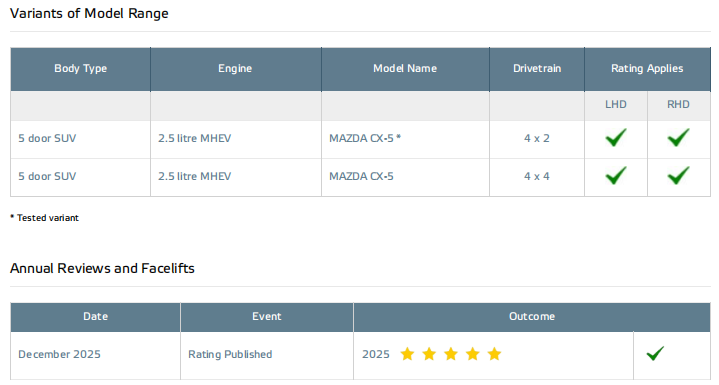
For Southeast Asia, these results offer consumers a critical tool for evaluating imported vehicles, while simultaneously setting a clear, internationally recognized target for the advancement of the region's own automotive safety regulations.
If any infringement occurs, please contact us for deletion









Popular Cars
Model Year
Car Compare
Car Photo