
Proton unveils e.MAS 7 PHEV, with a combined range of up to 1000km
 MichaelJan 12, 2026, 04:59 PM
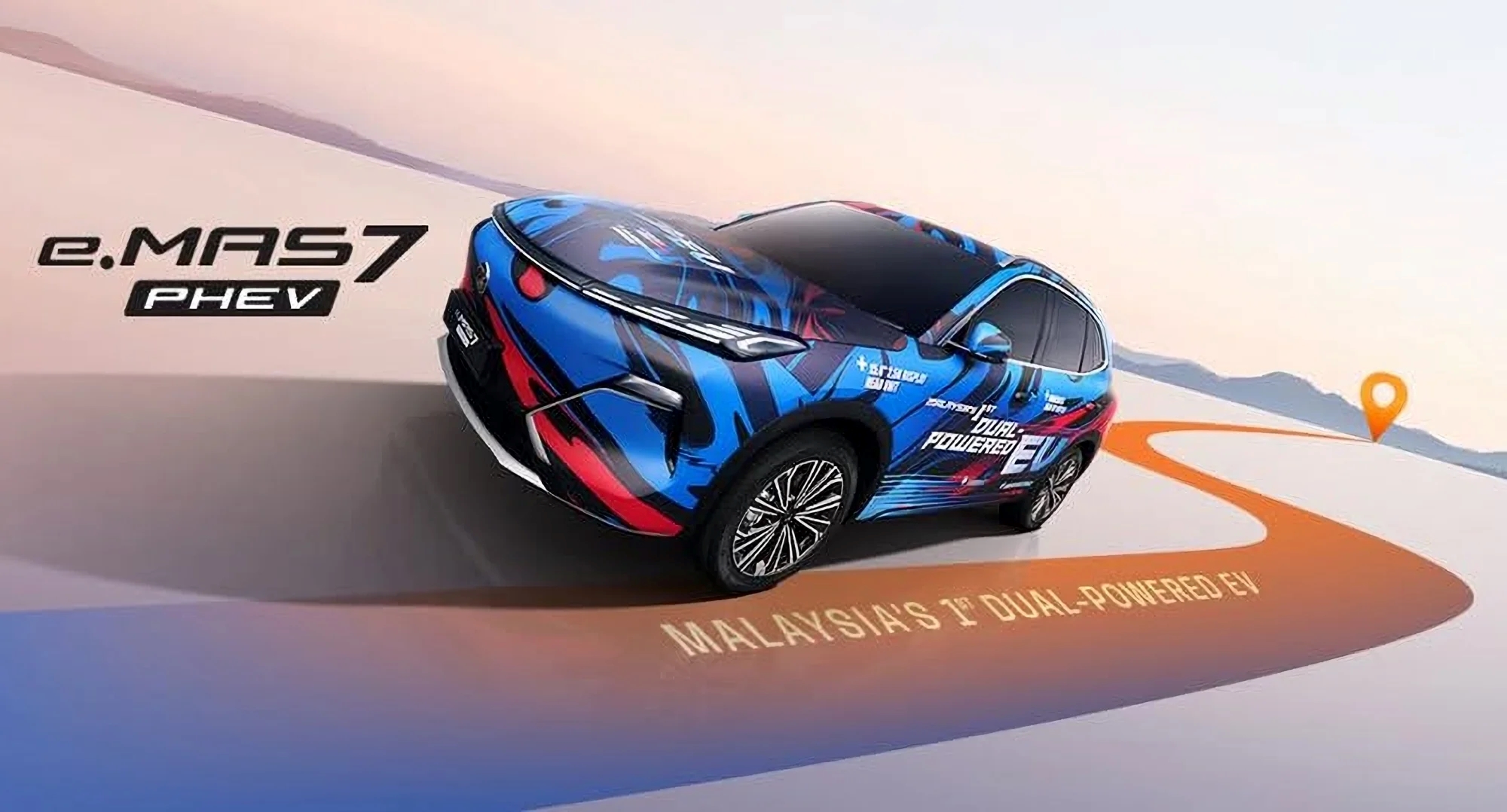
[PCauto] The e.MAS 7 EV has firmly established itself in the market, and Proton, with just this one electric vehicle, is now closely following BYD in sales rankings. Don't forget, BYD is a brand that boasts multiple models in Malaysia.
However, Proton is not in a rush to expand its lineup of fully electric vehicles. Instead, it has chosen the e.MAS 7 PHEV as the next step in its electric vehicle strategy.
The e.MAS 7 PHEV, like its EV counterpart, is built on the Geely Modular Architecture (GMA) platform. By adding a fuel system, it aims to strike a balance between the electric driving experience and the convenience of long-distance travel.
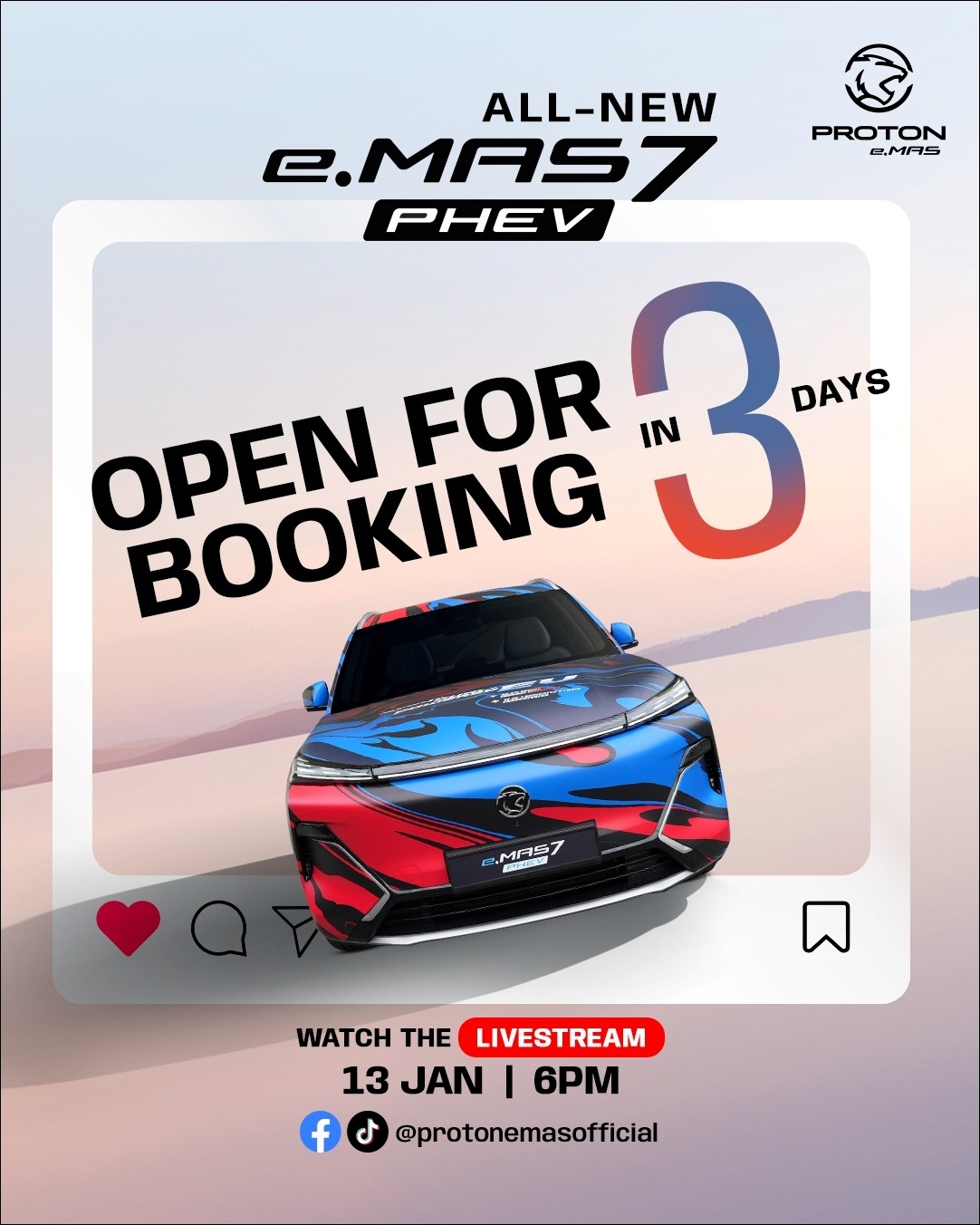
The powertrain is undoubtedly the highlight of the e.MAS 7 PHEV. The car is equipped with a BHE15PFI 1.5L naturally aspirated four-cylinder hybrid-dedicated engine, delivering a maximum output of 99 hp and 125 Nm, paired with an 11-in-1 Dedicated Hybrid Transmission (DHT).
The electric motor integrated within the transmission system generates 218 hp and 262 Nm, bringing the total system power output to 262 hp.
Proton states that the thermal efficiency of this powertrain can reach up to 46.5%, which is an impressive figure among SUVs in the plug-in hybrid segment.
In terms of battery configuration, the e.MAS 7 PHEV offers different battery capacity options depending on the version. Naturally, this results in varying pure electric ranges.
Prime and Premium versions are equipped with an 18.4 kWh CATL LFP battery, providing a WLTP pure electric range of 83 km and a combined range of up to 943 km.
The Premium Plus version, however, is upgraded to a 29.8 kWh LFP battery featuring Aegis Short Blade technology, with the pure electric range increased to 146 km and the WLTP combined range reaching 996 km.
For most daily commutes, the pure electric mode is adequate, while the fuel system serves as a backup for outstation or cross-state travel.
Performance has not been significantly compromised despite its energy-saving focus. The 0-100 km/h acceleration for the Prime and Premium versions is 8.0 seconds, while the Premium Plus, due to the larger battery, slightly increases to 8.2 seconds. The top speed is uniformly set at 170 km/h. While not performance-oriented, this level is quite reasonable for a family SUV.
Charging capabilities also reflect a practical focus. Prime and Premium versions support 30 kW DC fast charging, which can complete 30–80% charging in 20 minutes.
The Premium Plus version is upgraded to 60 kW DC fast charging, reducing the charging time (from 30 to 80%) to within 16 minutes. All models come standard with 6.6 kW AC charging and support Vehicle-to-Load (V2L) and Vehicle-to-Vehicle (V2V), offering added value for camping or emergency power supply scenarios.
In terms of size and space, the e.MAS 7 PHEV has a length of 4,740 mm and a wheelbase of 2,755 mm, which is slightly larger than the EV version. It is positioned as a larger C-segment SUV. The boot offers a standard capacity of 528 litres, expandable to 2,065 litres with the rear seats folded, clearly optimized for family and long-distance travel needs.
The exterior design continues the minimalist style of the e.MAS series, but features such as split headlights, different tail light designs, and a redesigned tailgate create a clear distinction from the EV version. A drag coefficient of 0.28 Cd further underscores its focus on energy efficiency.
While full cabin details have not been disclosed, it has been confirmed to feature a 10.2-inch digital instrument cluster and a 15.4-inch central control screen running Flyme Auto OS, supporting English and Malay languages, wireless Android Auto and Apple CarPlay, and OTA updates.
The high-end models further include a 13.8-inch HUD, a 16-speaker audio system, ventilated and memory electric seats, 256-color ambient lighting, and a 360-degree surround view system, bringing its overall specification level in line with mainstream mid-to-high-end SUVs.
Safety is another key area emphasized by Proton. The entire lineup is equipped with seven airbags and Level 2 ADAS as standard, while the Premium and Premium Plus models further include features like Blind Spot Detection, Rear Cross Traffic Alert & Braking, and Emergency Lane Keep Assist, addressing common risk scenarios in daily driving.
Compared to Perodua's electrification progress, Proton's advantage is becoming increasingly evident. With the addition of the e.MAS 7 PHEV, Proton now offers three electrified models, all showcasing very strong product competitiveness. In contrast, the market response to Perodua's QV-E suggests that the brand is facing notable competitive pressure.
If any infringement occurs, please contact us for deletion








Popular Cars
Model Year
Car Compare
Car Photo