
Tank 300 Off-Road Performance Review: These 4 Off-Road Capabilities Deserve Your Attention
 JohnMar 17, 2026, 05:24 PM

[PCauto] The Tank 300 has garnered widespread attention because, while maintaining professional off-road performance, it has broken the stereotype that traditional off-road vehicles are expensive and have a high barrier to entry—thanks to its intelligent configurations and high-standard manufacturing techniques.
It is not only a hardcore machine built on a body-on-frame construction, but also directly competes with other off-road vehicles in the market (such as Toyota's LC 250 series), thanks to its 33° approach angle, 34° departure angle, 23.1° ramp breakover angle, and a 224 mm minimum ground clearance.
To validate the real-world performance behind these specifications, we placed the Tank 300 into four of the most realistic scenarios: muddy terrain recovery, narrow path navigation, water crossing, and long-distance reliability testing.
By testing the triple differential locks, torque amplification logic, and intelligent assistance systems, we uncover the true capabilities of this vehicle under extreme road conditions.
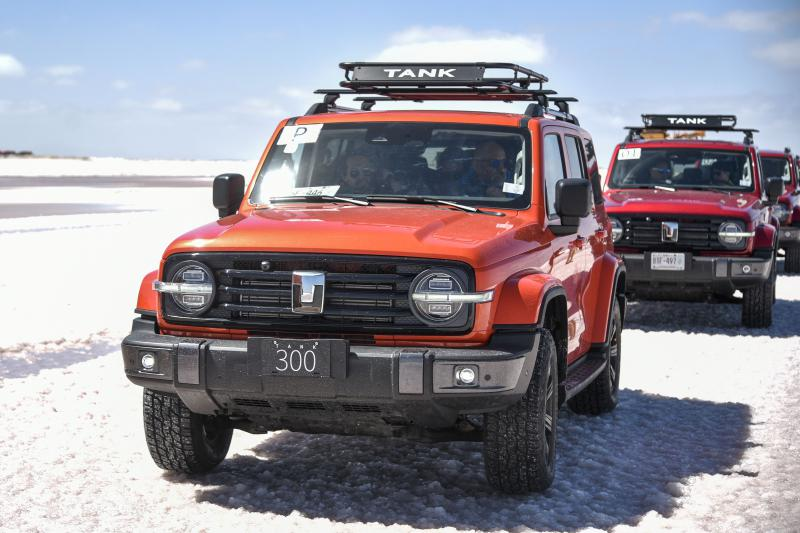
Adopting a Non-Unibody Design
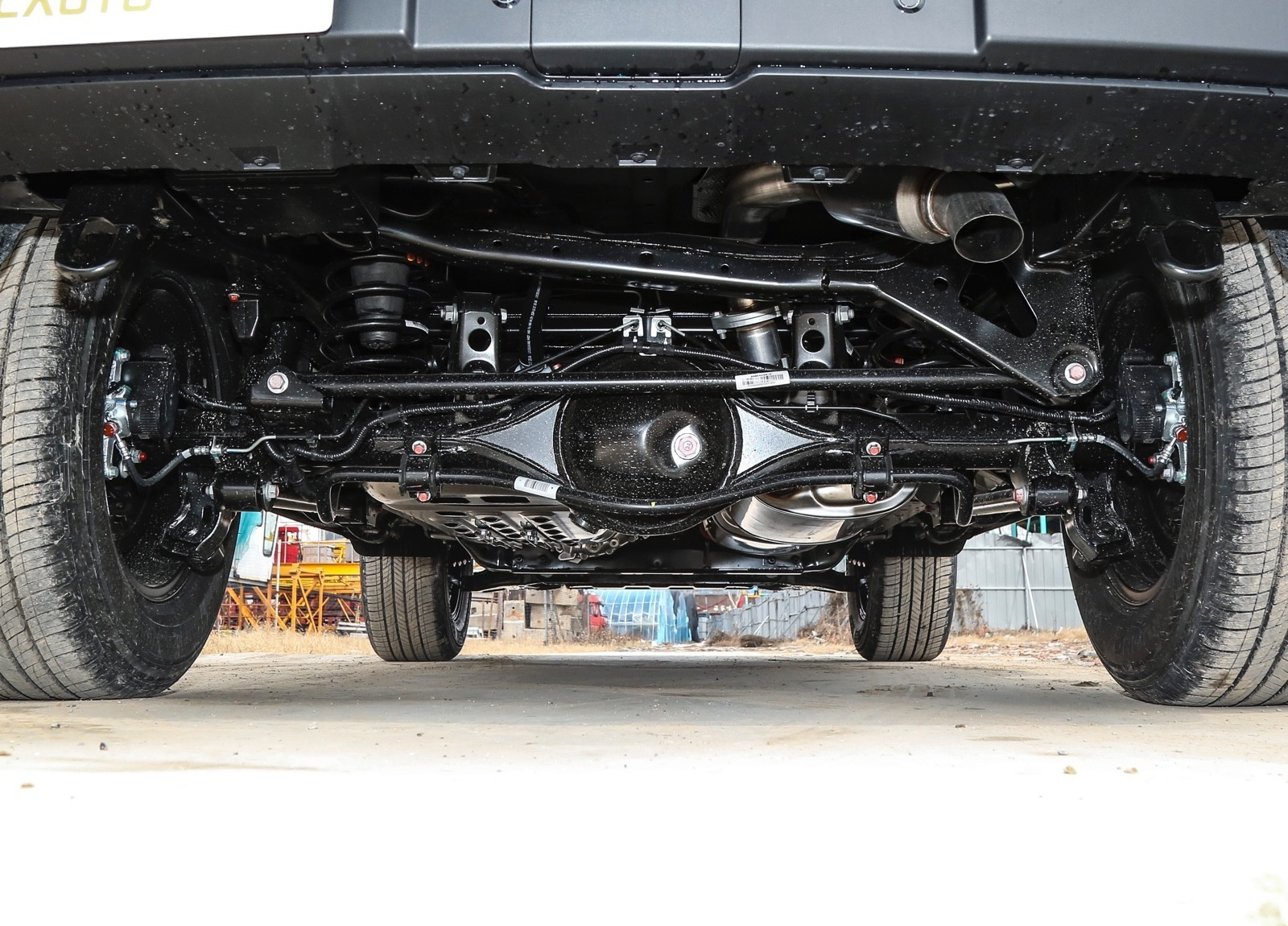
The off-road capability of an off-road vehicle in the wild essentially depends on the ladder frame. One of the core reasons for the high popularity of Tank 300 is that it offers an incredibly robust hardware chassis solution at a price of 248,873 MYR:
· The section of the longitudinal beam reaches 160x130 mm,
· The proportion of high-strength steel in the full frame is as high as 99%
These specifications mean that it is not an off-road SUV based on a city SUV platform, but one with authentic off-road foundations.
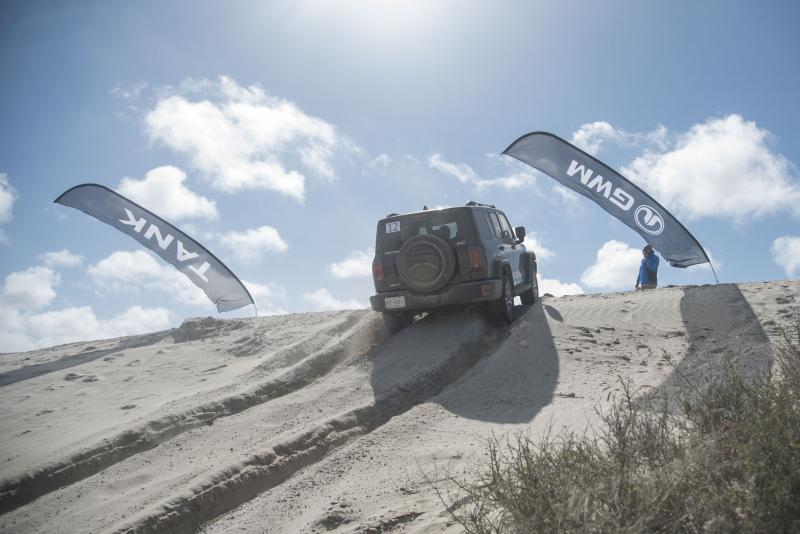
1. What does a torsional stiffness of 284.5 kN·m/rad mean?
When encountering continuous deep pits or cross-axle conditions, the frame undergoes intense torsion. If the rigidity is insufficient, there will not only be various squeaking noises, but also irreversible deformation of the body over long-term use.
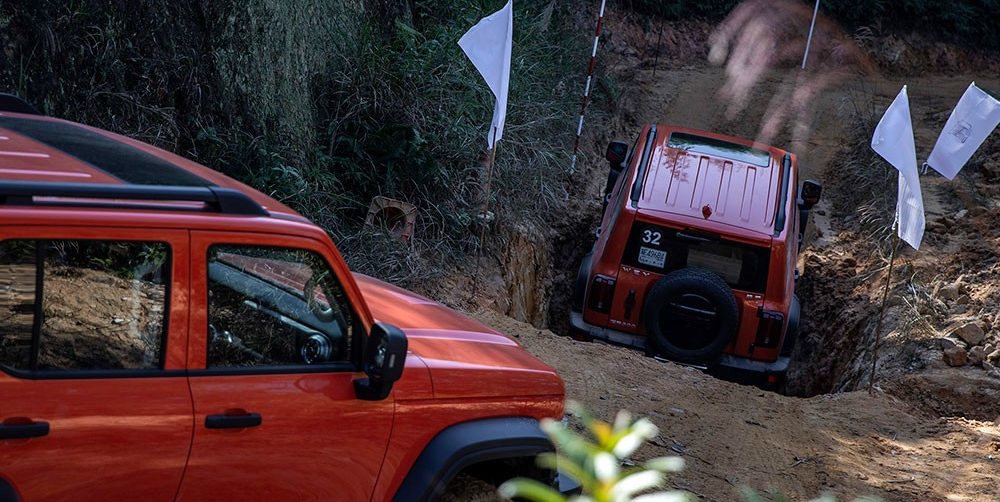
- Practical feedback: During a simulated plantation road section with continuous cross-axle testing, even when the vehicle is in an extreme single-wheel suspension state, you can get out of the car and open and close the four doors and the trunk. The damping feel and smoothness are completely consistent with being on flat ground.
This indicates that the chassis bears the majority of the torsional stress without transmitting it to the body shell.
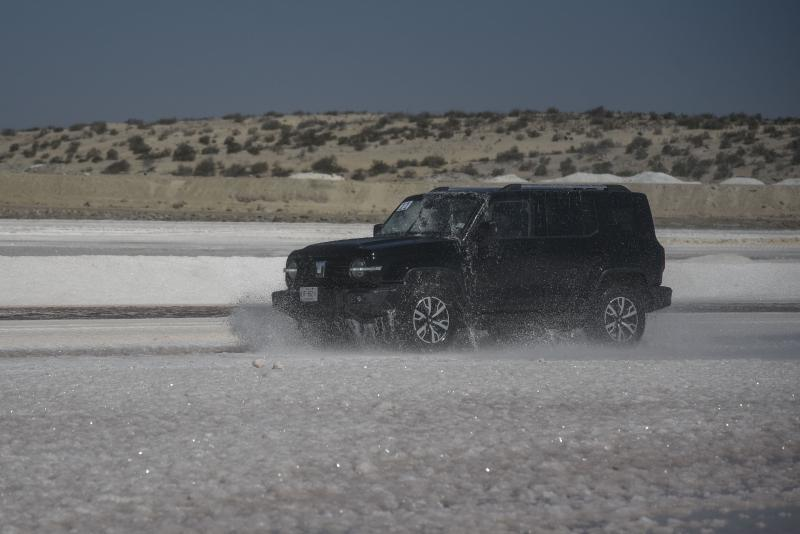
2. Off-road capability based on design considerations
When entering steep slopes or crossing deep ditches in the wild, it relies not on electronic systems but on design considerations.
- Tank 300 features a 33° approach angle, 34° departure angle, and 224mm of ground clearance, forming a physical defense line.
- Real-world performance: When crossing a nearly 40° steep valley incline, you can calmly control the vehicle speed without worrying about the bumper touching the ground first. This margin is very friendly for stock vehicles (non-modified), which means it can handle most natural obstacles in its factory state.
3. Built for the wild, refined for the road
Many hardcore off-road vehicles are “heroes” in the mountains but turn into a "torture" on highways. The Tank 300 has successfully bridged this gap.
- Data Comparison: In a 120 km/h cruising test, its cabin noise level performance even surpassed many joint-venture urban SUVs. With the help of laminated glass for the windshield and an active noise cancellation system, its noise level is 3 decibels lower than many classic hardcore off-road models of the same category.
- Actual Experience: During the hundreds of kilometers on highways heading to the off-road site, you don't need to raise your voice to talk with the passenger seat. This sense of "quietness" makes it not just a mere utility vehicle but also a daily commuter and a vehicle that you can use for social events with pride.
Muddy Terrain and Extreme Recovery
In slippery and loose terrain, the key to recovery is not blindly increasing the throttle, but achieving accurate power distribution.
Many off-road beginners get stuck in mud because overly high tire speeds dig holes on the spot. The Tank 300's powertrain and four-wheel-drive logic are specifically designed to address this issue.
1. Torque Output in 4 L Mode
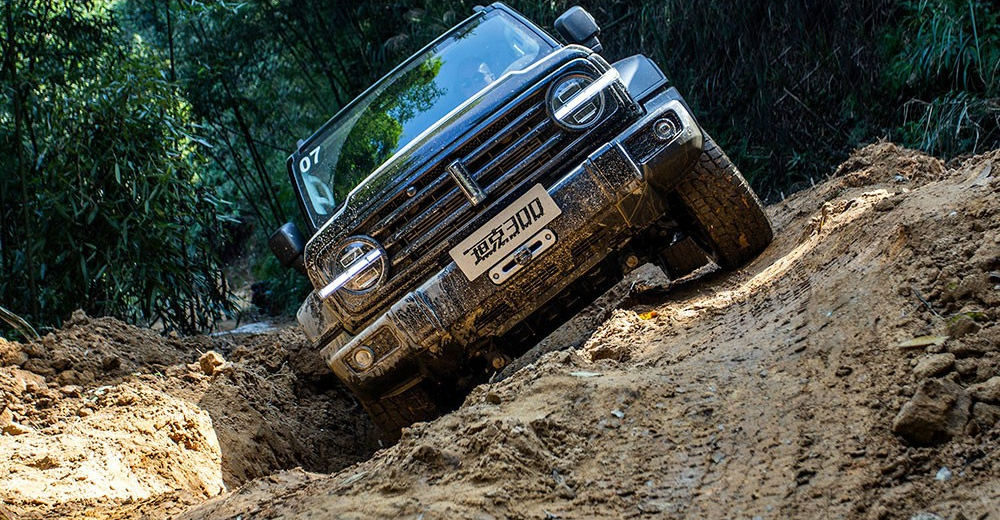
When dealing with a 30% slope on slippery muddy roads, the vehicle requires consistent and stable thrust.
· Technical Specifications: The 2.0T engine paired with an 8AT transmission can amplify torque 2.64 times in low-speed four-wheel-drive (4 L) mode, delivering a maximum torque of 26,000 N·m at the wheel end.
· Real Driving Experience: In actual tests, the power output was very linear. The driver only needs to slightly press the accelerator, and the system can provide enough climbing force without a sudden burst of power.
This tuning ensures better traction on muddy surfaces, allowing for stable climbing and reducing the risk of slipping.
2. Differential Lock Efficiency
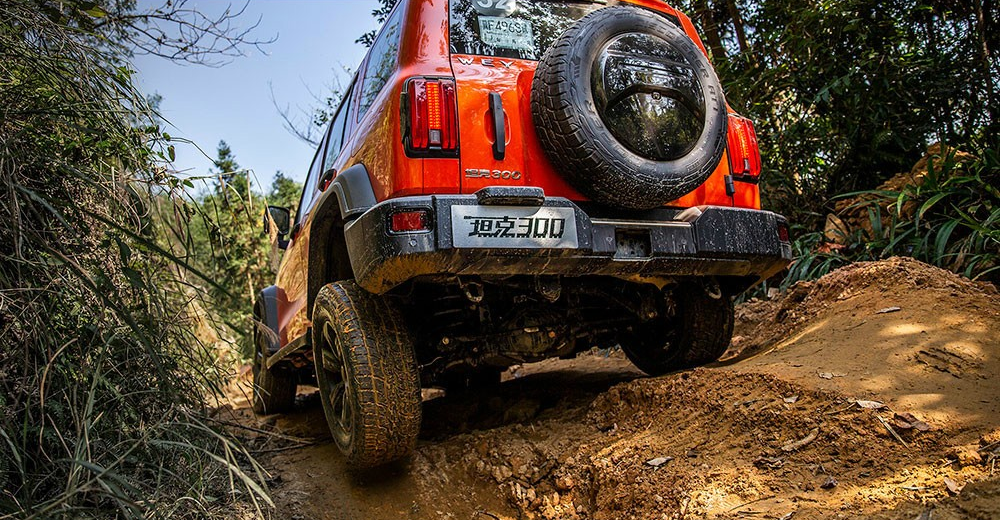
On cross-axle or deep pit roads, there are often situations where two or even three wheels lose traction, and at this point, power loss is critical.
· Locking Speed: The vehicle's electronic differential lock can complete locking within 200 milliseconds.
· Practical Conclusion: When the front and rear differential locks are activated, 100% of the power will be forcibly transferred to the wheels that still have traction. Tests show that even when the vehicle is in an extreme situation where three wheels lose traction, as long as one wheel can grip the ground, the vehicle can get out of trouble instantly.
The certainty provided by this physical locking mechanism is unmatched by electronic limited-slip systems.
3. Tuning Logic of All-Terrain Control System
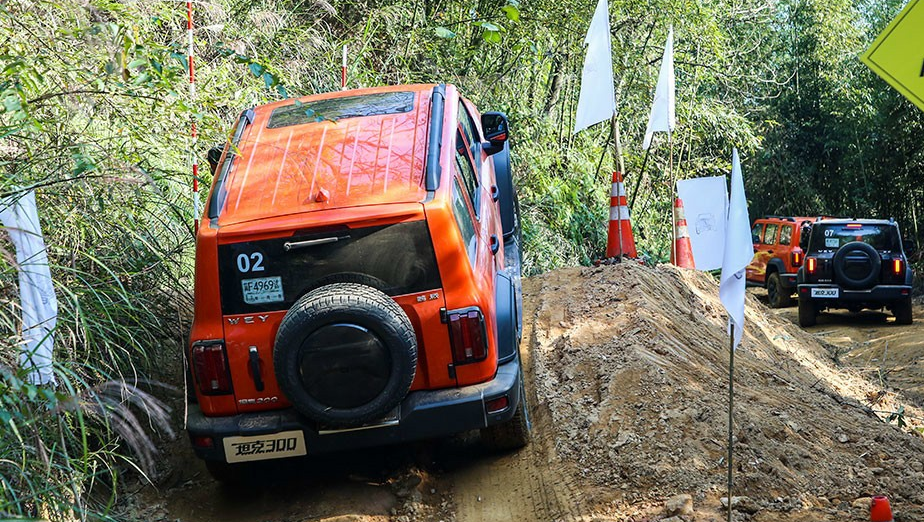
The ATS system provides Sand Mode and Mountain Mode, which essentially reorganizes engine response and traction control logic.
· Ease of Use: During a test on a 30° muddy slope, this system demonstrated extremely high tolerance. Drivers do not need to precisely control the throttle opening, as the system automatically suppresses meaningless wheel spin. For non-professional players, this means that with a stock vehicle, they can tackle over 90% of unpaved road scenarios, significantly lowering the professional threshold for off-road driving.
3. Real-World Flexibility: Narrow Path Obstacle Avoidance and Vision Management
In forest trails or narrow urban streets, the large size of hardcore off-road vehicles often becomes a burden.
Tank 300 attempts to address the maneuverability challenges of medium-to-large off-road vehicles in confined spaces through hardware assistance and imaging technology.
1. Practical Value of Tank Turn
When facing U-shaped bends or single-lane dead ends, frequent reversing and turning around are not only inefficient but also increase the risk of slope sliding or collision in complex terrains.
· Core Data: After activating the Tank Turn function, the system applies braking to the inside rear wheel, reducing the turning radius to 1.2 meters (it must be activated in 4 L low-speed four-wheel drive mode, vehicle speed ≤30km/h, and with the steering wheel turned to its limit).
· Driving Feedback: Testing on narrow roads with only single lane width, the vehicle can perform a 180-degree turn like a compass rotating around the inside wheel. This level of maneuverability can significantly reduce the number of back-and-forth corrections when avoiding obstacles in dense forests or making U-turns in narrow urban roads, thus improving passage efficiency.
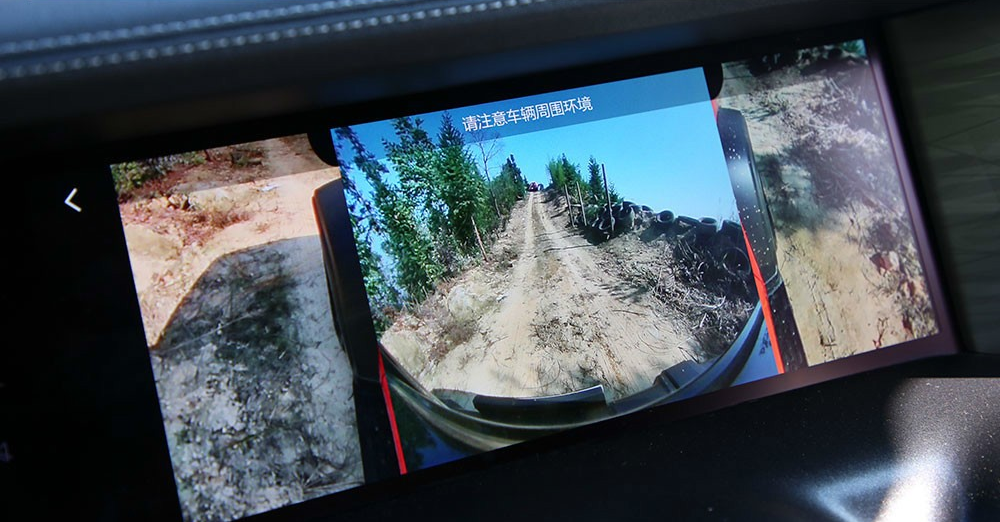
2. 540° Transparent Chassis
Due to the high engine hood design of the Tank 300, there is a significant blind spot right at the front and below the vehicle when facing a steep hilltop or a pile of rocks.
· Technical Performance: The 360° panoramic view system, combined with the chassis transparency function, enables real-time visualization of the front wheel position and obstacles underneath the vehicle on the central control screen.
· Auxiliary Effect: During the test on rocky roads, the driver was able to accurately avoid sharp rocks that could potentially damage the differential housing or side steps. This kind of visual assistance has a very high accuracy rate, effectively alleviating the psychological pressure caused by not being able to see the road surface.
3. CCO Creeping Mode Speed Control Logic
On downhill gravel or extremely slippery steep slopes, frequent brake pedal application is likely to cause tire lockup and slipping.
· Tuning Details: Creeping mode allows the driver to set a constant speed within a range of 4-12 km/h .
· Practical Significance: The system automatically takes over power and braking distribution, leaving the driver to focus only on steering corrections. During the test, on loose surfaces with steep slopes, the vehicle was able to maintain a very stable pace while descending slowly, avoiding brake overheating or loss of control caused by human error. This significantly enhances safety for novice drivers.
Water Wading Capability and High Load Stability
Off-road performance is not only reflected in instantaneous escape capability but also in system stability under long-term high-load conditions.
In regions where temperatures remain above 30°C year-round and rainfall is frequent during the wet season, cooling and sealing reliability of the vehicle are core metrics.
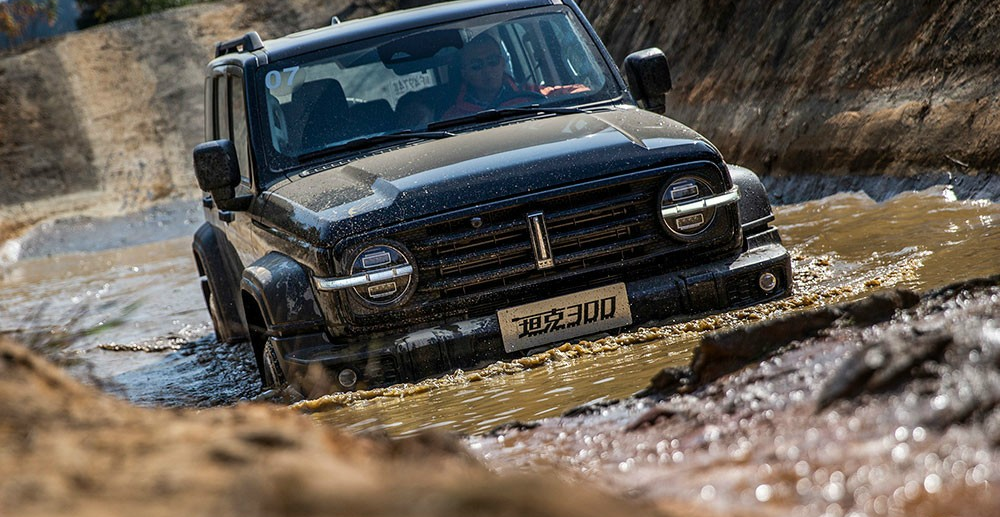
1. Practical Performance at 700 mm Wading Depth
When facing submerged road sections or wild streams, wading depth directly determines the upper limit of passage.
· Hardware Specifications: The maximum wading depth designed for this vehicle is 700 mm.
· Test Results: In simulated heavy water accumulation depth tests, the water level exceeded most of the wheels. Thanks to the high positioning of the intake and excellent sealing of the electrical circuits, the vehicle continued to drive in water without experiencing engine intake blockage or electrical circuit alarms.
For road conditions often subject to seasonal heavy rainfall, this is not only off-road performance but also a guarantee for commuting under extreme weather.
2. Heat Dissipation Stability in High-Temperature Environments
Low-speed heavy-load off-roading in high-temperature environments poses a significant challenge to the heat dissipation of the transmission and four-wheel-drive system.
· Test Conditions: Conduct continuous 3 hours of high-intensity off-road testing outdoors in temperatures exceeding 30°C, including sustained hill-climbing and low-speed crawling.
· Data Feedback: Test results show that engine coolant temperature and 8AT transmission oil temperature consistently remained within normal operating ranges, with no overheating protection or power limitation triggered.
This demonstrates that the cooling circulation system was designed with sufficient redundancy during development to handle sustained heavy-load operations.
3. Long-Term Reliability
The durability of the chassis components determines the vehicle's long-term maintenance cost.
· Long-Term Test Conclusion: Based on comprehensive road condition data from a cumulative 50,000 kilometers of testing, key chassis components such as half axles, control arms, and differential housings showed no structural deformation.
· Chassis Protection: The factory-equipped chassis guards demonstrated excellent cushioning performance in multiple collision tests. For players with deep cross-country needs, although the stock vehicle guards can handle most rock impacts, adding thicker manganese steel guards later for extreme environments still has room for improvement.
Tank 300 Lowers the Off-Roading Barrier
Based on the evaluations of the four practical scenarios above, it is evident that the core competitiveness of the Tank 300 lies in its balance between professional-grade hardware performance and everyday usability.
In its stock configuration, it offers 2.64x torque amplification, a high-strength frame, and intelligent assistance systems, providing off-road capability that used to only be available in expensive luxury models.
More importantly, it completely breaks the price barrier in the traditional off-road vehicle market. In many regions, consumers who wish to obtain comparable hardcore off-road specifications often can only choose expensive classic Japanese off-road vehicles or heavy-duty American pickup trucks.
These traditional competitors not only have high entry thresholds, but also tend to exhibit significant shortcomings in highway NVH performance, cabin digitalization, and intelligent driving assistance.
The arrival of the Tank 300 allows consumers to own a genuine off-road vehicle at a more reasonable cost. It not only enables experienced players to navigate jungles and wilderness with ease but also allows beginners who have never tried off-roading to explore the unknown.
If any infringement occurs, please contact us for deletion










Popular Cars
Model Year
Car Compare
Car Photo