
Q
What is the range of the Mercedes EQB 2022?
 YogaGuruMasterOct 23, 2025, 12:25 PM
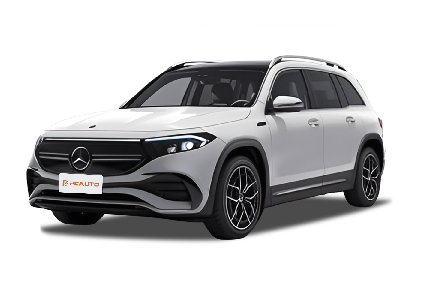
The 2022 Mercedes-Benz EQB offers an approximate all-electric range of 419 kilometers in the Malaysian market, based on the WLTP standard. Of course, your actual mileage may vary depending on driving habits, road conditions, and weather. Powering the EQB is a 66.5 kWh lithium-ion battery pack, which supports 100 kW DC fast charging. This means you can get from 10% to 80% charge in around 30 minutes – perfect for those daily commutes around Malaysian cities or even a quick weekend getaway.
As part of the Mercedes-EQ family, the EQB carries forward that signature Mercedes-Benz luxury feel. One standout feature is the availability of a 7-seat configuration, which is pretty rare in this segment of electric SUVs. Good news for folks here: the EQB handles Malaysia's tropical climate surprisingly well, with minimal impact on battery performance. So, you won't have to lose sleep over excessive battery degradation due to the heat.
It also comes with an intelligent energy recovery system, which helps squeeze out even more range by recapturing kinetic energy. If you're a Malaysian consumer thinking about making the switch to electric, besides just looking at the range figures, it's worth checking out the local charging infrastructure. The good news is that major cities in Malaysia are steadily improving their charging networks, and Mercedes has also rolled out exclusive charging services at some of their dealerships.
Special Disclaimer: This content is published by users and does not represent the views or position of PCauto.
Related Q&A
Q
What is the range of the EQB 2022?
The 2022 Mercedes-Benz EQB offers an electric range of approximately 419 kilometers in the Malaysian market, based on the WLTP standard. Of course, your actual mileage may vary depending on driving habits, road conditions, and weather. Under the hood, it's packing a 66.5kWh battery pack that supports 100kW fast charging – you can juice it up from 10% to 80% in about 32 minutes, making it a solid choice for both city commutes around Malaysia or even those occasional interstate jaunts.
For folks considering making the switch to electric, range is definitely a key factor, but don't sleep on charging convenience. Malaysia's major cities are steadily ramping up their charging infrastructure, and that includes Mercedes' own Mercedes me Charge network, which hooks you up with access to multiple charging brands.
As a 7-seater electric SUV, the EQB strikes a nice balance between practicality and eco-friendliness. It sips electricity at a rate of around 18.5kWh per 100km, which translates to significantly lower running costs compared to a petrol-powered equivalent. Plus, EVs in Malaysia still benefit from incentives like import tax exemptions, making them a more economical choice in the long run.
If you're someone who frequently hits the highway for longer trips, a little pre-planning goes a long way – there are now more fast-charging stations popping up along major routes like the North-South Expressway. And let's not forget we're in the tropics – keeping an eye on battery health means avoiding leaving it baking in the scorching sun for extended periods.
 AdventureSeekerExplorerOct 23, 2025
Q
What are the trim levels for the EQB 2022?
The 2022 Mercedes-Benz EQB is available in Malaysia with two primary trim options: the EQB 250+ and the EQB 350 4MATIC. The EQB 250+ serves as the entry point, packing a single front-mounted electric motor that delivers 190 horsepower. It offers a claimed WLTP range of 423 kilometers. Standard kit here includes the 10.25-inch dual-screen setup, MBUX infotainment system, panoramic sunroof, and a suite of active safety features.
Stepping up to the EQB 350 4MATIC brings a dual-motor all-wheel-drive configuration, bumping power output to a healthy 292 horsepower. Range takes a slight hit, coming in at 419 km WLTP, but you gain the sportier AMG Line package, adaptive suspension, and other upgrades, making it the pick for those who value performance.
Both variants support 110kW DC fast charging, which can take the battery from 10% to 80% in around 32 minutes. Positioned as a compact electric SUV in Mercedes' EQ lineup, the EQB's main rivals in Malaysia include the BMW iX1 and Volvo XC40 Recharge. A key advantage for the EQB is its availability with an optional third row, offering seven seats and adding a practical family-friendly dimension.
It's worth highlighting that electric vehicles in Malaysia benefit from import duty and sales tax exemptions, which significantly boost the EQB's value proposition. However, real-world range might dip slightly below the claimed figures due to Malaysia's hot climate. If you're considering one, we'd strongly recommend a test drive to experience both charging convenience and how the air conditioning affects overall energy consumption.
 TravelJunkieWandererOct 23, 2025
Q
How big is the EQB 2022?
The 2022 Mercedes-Benz EQB is a compact seven-seater electric SUV, measuring 4684mm in length, 1834mm in width, and 1706mm in height, with a wheelbase stretching to 2829mm. This size strikes a nice balance—nimble enough to navigate Malaysia's city streets while still offering plenty of room for passengers, making it a solid pick for families. Cargo space is practical too: 495 liters with the rear seats up, and a generous 1710 liters when you fold them down, which handles everything from daily grocery runs to weekend getaways with ease.
For Malaysian buyers, the EQB's electric powertrain isn't just eco-friendly; it also fits well with the country's growing charging infrastructure. With an NEDC range of around 419km, it's more than capable of handling longer trips, say from Kuala Lumpur to Penang, without range anxiety kicking in.
And true to Mercedes form, the EQB doesn't skimp on luxury. The interior uses high-quality materials, and those twin 10.25-inch displays add a tech-forward vibe. Little touches like the inclusion of Type-C charging ports (super common here) and wireless CarPlay show that Mercedes really thought about what Malaysian drivers actually need day-to-day.
 NatureEnthusiastExplorerOct 23, 2025
Q
How much is the Mercedes EQB 2022?
The 2022 Mercedes-Benz EQB starts at approximately RM278,888 in the Malaysian market, with the exact price varying depending on the chosen trim level and optional extras. As a pure electric SUV under Mercedes' EQ lineup, the EQB is offered in two variants: the EQB 250 and the EQB 350 4MATIC, each equipped with electric motors of different power outputs. It boasts a driving range of around 423 kilometers based on the WLTP cycle, making it a solid pick for consumers who want to blend luxury with eco-friendliness.
The Malaysian government offers certain tax incentives for electric vehicles, such as exemptions on import duties and sales tax, which help to bring down the overall purchase cost of the EQB somewhat. Beyond that, the EQB comes loaded with features like the MBUX intelligent infotainment system, a panoramic sunroof, and advanced driver assistance functions, really showcasing Mercedes' technological prowess in the electric mobility space.
For those considering an EV, besides price, the convenience of charging infrastructure is another key factor. Major cities in Malaysia already have a decent number of charging stations, and Mercedes also provides installation services for home wallboxes, further enhancing the overall ownership experience.
 PetLoverCaretakerOct 23, 2025
Popular Cars
Model Year
Car Compare
Car Photo
Related Models
 Cars
CarsLatest Q&A
Q
Is AMT similar to automatic?
There are significant differences between AMT transmissions and automatic transmissions (AT) in terms of core structure and driving experience. AMT is essentially an electronically automated version of a manual transmission, simulating manual clutch operation and gear shifting through a computerized control system while retaining the gear set structure of manual transmissions. As a result, it offers higher transmission efficiency, with fuel consumption approximately 8%-12% lower than AT, making it particularly suitable for highway or long-distance driving. However, it may exhibit jerking similar to manual transmissions during low-speed gear shifts, especially noticeable in congested traffic conditions.
AT transmissions rely on torque converters for power transfer, delivering smooth and seamless gear shifts that appeal to comfort-oriented users. However, their complex structure (incorporating planetary gear sets, hydraulic systems, etc.) results in higher maintenance costs. A single service may cost between 800 to 1,500 ringgit, whereas AMT only requires gear oil replacement at approximately 400 ringgit.
From a market perspective, AMT is predominantly used in budget vehicles or commercial models priced below 80,000 ringgit, while AT is typically featured in mid-to-high-end vehicles. Consumers should select based on actual needs: AMT suits those prioritizing fuel efficiency and low maintenance costs, while AT better serves those valuing comfort. Notably, recent advancements in AMT electronic control technology have significantly mitigated jerking issues, though test drives should still emphasize low-speed performance evaluation.
 AriaMar 26, 2026
Q
Which is better, DCT or AT?
DCT (Dual-Clutch Transmission) and AT (Automatic Transmission) each have their own advantages and disadvantages, and the choice should be based on personal driving needs. AT transmissions transfer power through a torque converter, offering excellent shift smoothness, making them suitable for urban commuting or novice drivers. However, they tend to have higher fuel consumption, and vehicles equipped with them are usually more expensive. DCT transmissions utilize a dual-clutch structure, featuring fast shift speeds and high power transmission efficiency, which provides a more direct driving experience—particularly suitable for users seeking a sporty feel. However, they may exhibit jerking at low speeds and have relatively high maintenance costs. If durability and comfort are priorities, AT is the more reliable choice; if power responsiveness and driving pleasure are preferred, wet DCT (such as Volkswagen DSG) performs better, though dry DCT models should be avoided in prolonged stop-and-go traffic conditions. Additionally, CVT transmissions excel in smoothness and fuel efficiency, making them ideal for daily commuting, but they lack driving excitement. It is recommended to test-drive before purchasing, as tuning varies significantly across brands, and real-world experience is more important than theoretical specifications.
FlutteringMar 26, 2026Q
Is Amt good or bad?
AMT gearboxes have a significant cost advantage in the local market, typically being around 5,000 Ringgit cheaper than models equipped with conventional automatic transmissions. Their fuel efficiency is comparable to manual transmissions, resulting in long-term fuel savings. Featuring a straightforward design, they achieve transmission efficiency exceeding 90% with relatively low maintenance costs, making them ideal for practicality-oriented consumers. However, their shifting logic contains inherent limitations: gear changes between 1st and 2nd cause 0.3-0.5 second power interruptions, while unintended upshifts on inclines may reduce engine speed by 15%-20%, compromising driving smoothness. For urban commuters or budget-conscious buyers, AMT offers excellent value, though those prioritizing premium driving dynamics should consider alternative transmission types. Some domestic models like the Perodua Axia employ enhanced AMT systems, where optimized shift programming has reduced gearshift shock by approximately 30%.
 RainbowsMar 26, 2026
Q
Which gives better mileage, CVT or AMT?
From the perspective of fuel economy, CVT transmissions generally perform better under urban driving conditions. Their continuously variable design allows the engine to consistently operate within the optimal speed range, significantly reducing fuel consumption during frequent starts and stops. Test data shows that their fuel consumption in urban driving conditions is 10% to 15% lower than that of comparable models. AMT transmissions, on the other hand, inherit the high transmission efficiency of manual transmissions, delivering fuel efficiency close to manual transmissions during high-speed cruising. This makes them particularly suitable for long-distance driving in large-displacement vehicles. However, due to power interruption during gear shifts, their overall fuel consumption may be 5% to 8% higher than CVTs.
The difference in fuel-saving characteristics between the two transmissions stems from their technical principles: CVTs achieve continuous variability through steel belts and pulleys, eliminating the fixed gear ratio limitations of traditional transmissions; AMTs simulate manual gear changes via electronic control systems while maintaining the mechanical efficiency of gear transmission. Notably, actual fuel consumption is also influenced by driving habits. Smooth acceleration and anticipatory deceleration can maximize the transmissions' fuel-saving potential. If the vehicle budget permits and urban commuting is the primary use, CVTs offer a more economical choice. For frequent highway driving with an emphasis on cost-effectiveness, AMTs are equally worth considering.
 RubyBlazeMar 26, 2026
Q
Which is cheaper, AMT or CVT?
In terms of gearbox cost, AMT is usually more economical than CVT. Essentially, AMT is a manual transmission equipped with an electronic control unit, featuring a simple structure and low maintenance costs. The unit price ranges from approximately 5,000 to 8,000 ringgit, making it suitable for budget-conscious consumers or those who prioritize long-term operating costs. CVT incurs higher manufacturing costs due to its precision steel belt transmission system and continuous variable transmission technology, with a unit price of about 7,000 to 10,000 ringgit. However, it delivers a smoother driving experience and superior fuel efficiency. The primary differences between the two lie in technical complexity: AMT retains the gear-shifting mechanism, resulting in noticeable shift shock; CVT achieves linear power output through stepless speed variation but requires periodic belt inspection and incurs higher maintenance expenses. For those prioritizing initial cost and basic transportation needs, AMT offers better value; if comfort and long-term fuel economy are priorities, CVT represents a more worthwhile investment. Note that actual prices may vary based on vehicle model, brand, and local supply chain factors.
 ShadowProwlMar 26, 2026
Related News

What is the difference between the Mercedes-Benz E300 and E350?
MichaelMar 24, 2026

Mercedes-Benz halts the launch of L3-level autonomous driving, reverting to L2+ level
LienJan 16, 2026

Nvidia Announces Mercedes-Benz CLA as the First Vehicle with DRIVE AV Autonomous Driving Technology
MichaelJan 12, 2026

Brand New Mercedes-Benz GLC with EQ Technology Coming Soon: A Larger, Faster, and More Efficient Luxury All-Electric SUV
LienDec 11, 2025

Mercedes-Benz GLC200 4Matic debuts, offering a more accessible entry price at RM329,888
LienDec 11, 2025
View More
Pros
Cons