
BYD lowers its 2025 sales target from 5.5 million to 4.6 million vehicles, with growth slowing down
 LienSep 05, 2025, 03:48 PM
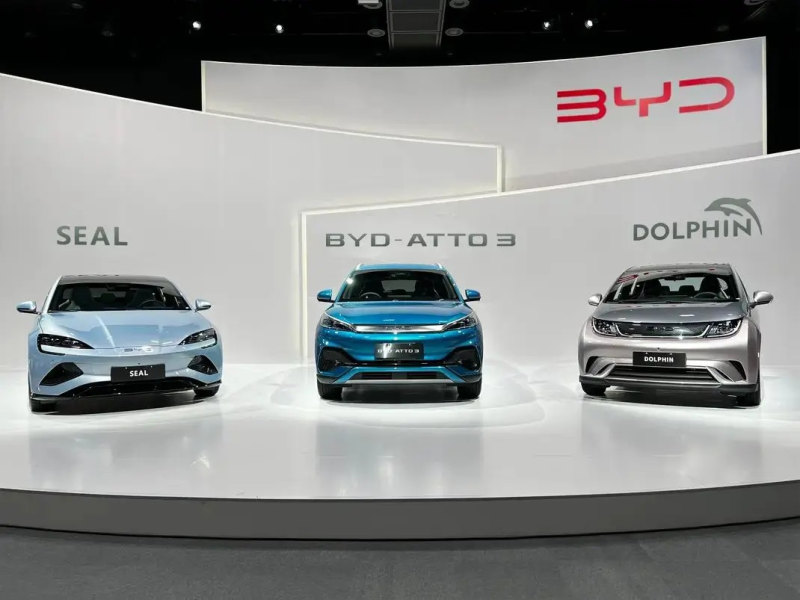
[PCauto] Recently, BYD lowered its sales target for this year from 5.5 million vehicles to 4.6 million, a reduction of 16%. This adjustment signals the end of BYD's rapid growth over the past five years. Interestingly, Geely has raised its annual target to 3 million vehicles.
Reasons for BYD's Sales Target Reduction
According to insiders, the new target was communicated to core suppliers in August to coordinate production plans.
The reduction stems from multiple pressures:
- The oversaturation of China's electric vehicle market has led to a price war, further compressing profit margins. Net profit in Q2 fell by 30% year-on-year, marking the first negative growth in three years.
- Deliveries in July and August showed zero year-on-year growth, with sales of economic models priced below 150,000 yuan down by 9.6%.
- Xiaomi has quickly risen with high-value models like the SU7/YU7, while Leapmotor is capturing the young consumer market with a low-price, high-feature strategy.
- The Chinese government has started regulating market pricing behavior, restricting significant price cuts, which has weakened BYD's ability to maintain market share through promotional discounts.
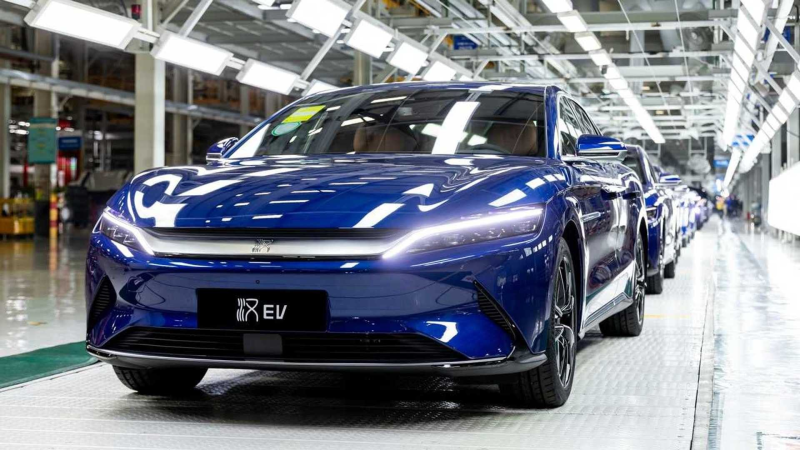
Despite Facing Challenges in the Domestic Market, BYD Maintains Growth in Global Markets
BYD exported a total of 630,000 vehicles in the first eight months of the year, an increase of 157% year-on-year, with annual overseas sales likely to exceed 1 million units.
It retains its position as the electric vehicle sales champion in the Brazilian market, boasts a 35% market share in Thailand's pure electric segment, and has seen sales increases of over 500% in several European countries. These achievements are attributed to its global production capacity layout, with factories in Thailand, Hungary, and Brazil going into operation, as well as the establishment of its own roll-on/roll-off ship fleet to resolve logistical bottlenecks.

BYD's Competitor Geely Raises Its Target
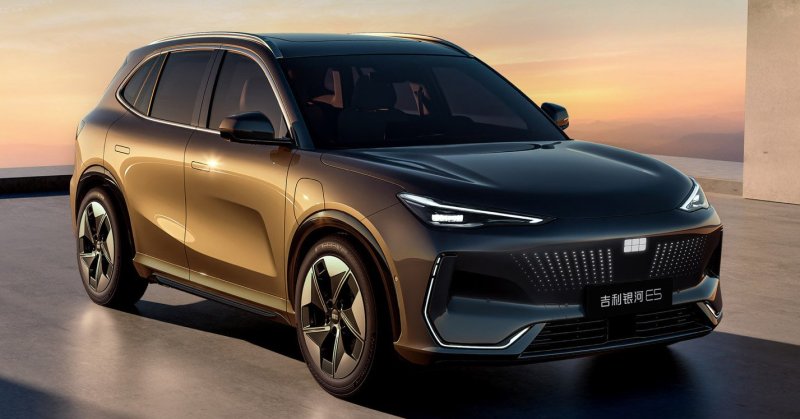
In contrast, Geely is showing a different development trend. Based on its performance of 1.409 million units in the first half of the year, a 47% year-on-year increase, the company has raised its annual target from 2.71 million units to 3 million units.
Its success is attributed to a multi-brand synergy strategy: the Geely Galaxy series captures the mid-range market, the Zeekr brand focuses on high-end electrification, and the Lynk & Co brand expands its global presence.
Earlier this year, Geely effectively reduced internal friction and improved supply chain efficiency through the brand integration initiative outlined in the "Taizhou Declaration."
The Growth Rate of China's Electric Vehicle Market Is Slowing Down
In the first eight months of 2025, the overall growth rate of China's auto industry slowed to 15%, a decrease of 12 percentage points compared to the same period in 2024.
The price war caused the industry's average gross profit margin to drop to 13.7%, down 2.3 percentage points from the same period last year. This environment has prompted Chinese automakers to accelerate global expansion and technological innovation to seek new growth opportunities.
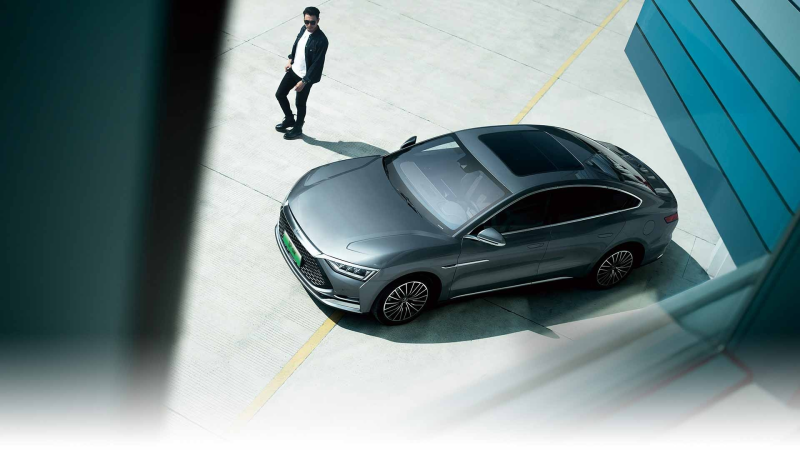
For the remaining four months of 2025, BYD needs to achieve an average monthly sales target of 435,000 units to meet its revised annual target of 4.6 million units, which remains a challenging task.
If any infringement occurs, please contact us for deletion









Popular Cars
Model Year
Car Compare
Car Photo