
Perodua Ativa Hybrid may be launched, a fuel-efficient small car that doesn't require charging
 MichaelDec 26, 2025, 03:00 PM
[PCauto] It is reported that Perodua Ativa may be preparing to launch a hybrid version. The new car is expected to use an Extended Range Electric Vehicle (EREV) system, for two main reasons: first, it is more fuel-efficient, and second, it allows users to hardly notice any difference compared to conventional fuel vehicles. It is clear that the automaker wants to gradually introduce consumers to the era of electric vehicles in a very practical way.

The power changes, but the driving habits do not
The currently available Perodua Ativa is equipped with a 1.0-liter three-cylinder turbocharged engine, with a maximum output of 98 horsepower and a peak torque of 140 Nm, paired with a D-CVT transmission. Its driving experience focuses on low RPM response, and the officially announced fuel consumption is approximately 18.9 km/liter. In the Malaysian market, it is a popular compact SUV for daily commuting.
 The hybrid version will achieve a fundamental change in the powertrain architecture. The new car will be equipped with a 1.2-liter three-cylinder naturally aspirated engine, which will not directly drive the vehicle but will act as a dedicated high-efficiency generator. The actual drive of the vehicle will be handled by a front-mounted electric motor, which is expected to produce about 106 horsepower and 170 Nm of torque. However, there is no official confirmation regarding the specific capacity of the battery pack at the moment, but its design purpose will be sufficient to support a certain range of pure electric driving and efficient energy management of the system.

According to Malaysia's local testing standards, the estimated fuel consumption of this hybrid version can reach approximately 31.3 kilometers per liter, significantly improving fuel efficiency compared to the fuel-powered version.
Drives like an electric car, uses fuel like a gas car
Unlike the hybrid systems of Toyota and Honda, the Ativa hybrid version uses a range-extended configuration, so the driving experience is more like that of a pure electric car. The start is smooth and steady without the jerkiness of a turbo engine. When driving at low to medium speeds, since the engine does not directly drive the car, the cabin is also quieter.
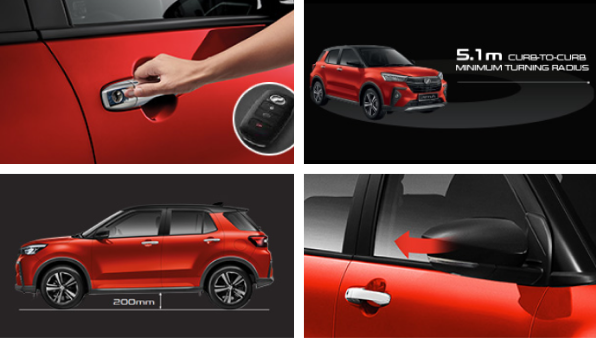 However, it should be noted that during high-speed cruising, when the engine needs to start generating electricity, passengers may still perceive the sound and vibration of the engine running, but its overall NVH performance is still expected to be better than that of the fuel-powered version. This technical route provides an electric driving experience while bringing new system calibration challenges.
 The most important point is that users do not need to worry about charging. The Ativa can still go to a gas station for refueling, and maintenance is not much different from that of a regular car. For those used to driving fuel-powered cars, there’s almost nothing new to adapt to.
Who is the Perodua Ativa Hybrid Targeting?
In the Southeast Asian market, where charging infrastructure is still under development, the hybrid system of the Perodua Ativa Hybrid, which does not require external charging, represents a solid market strategy. It can help automakers address tightening emission regulations while also offering users a realistic option to enjoy lower travel costs without needing to change current usage habits.
This move aligns with the electrification strategy of Perodua's parent company, Daihatsu (DAIHATSU). DAIHATSU is actively promoting its “e-Smart Hybrid” technology in Southeast Asia, and the hybrid version of the Ativa can be seen as an important product launched under this strategy.
 If the price of the hybrid Ativa can maintain the brand's usual affordability and make users feel it offers a good value for money, its appeal in the small SUV market will be even greater. For many Southeast Asian users still driving fuel-powered cars, a vehicle that allows them to enjoy smoother, quieter, and more cost-effective driving without changing their driving habits might be the ideal starting point for trying a new powertrain.
If any infringement occurs, please contact us for deletion







Popular Cars
Model Year
Car Compare
Car Photo