
Xiaomi SU7 Ultra debuts in Japan, and will continue to adopt the same sales model as in the Chinese market in the future.
 WilliamSep 29, 2025, 12:00 PM
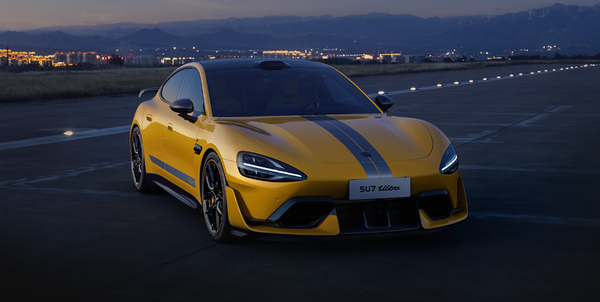
【PCauto】Xiaomi SU7 Ultra recently made its debut at the "Xiaomi EXPO 2025" held in Akihabara, Tokyo, Japan. This signifies the Xiaomi EV's foray into the Japanese market, also representing its first official unveiling outside of China.
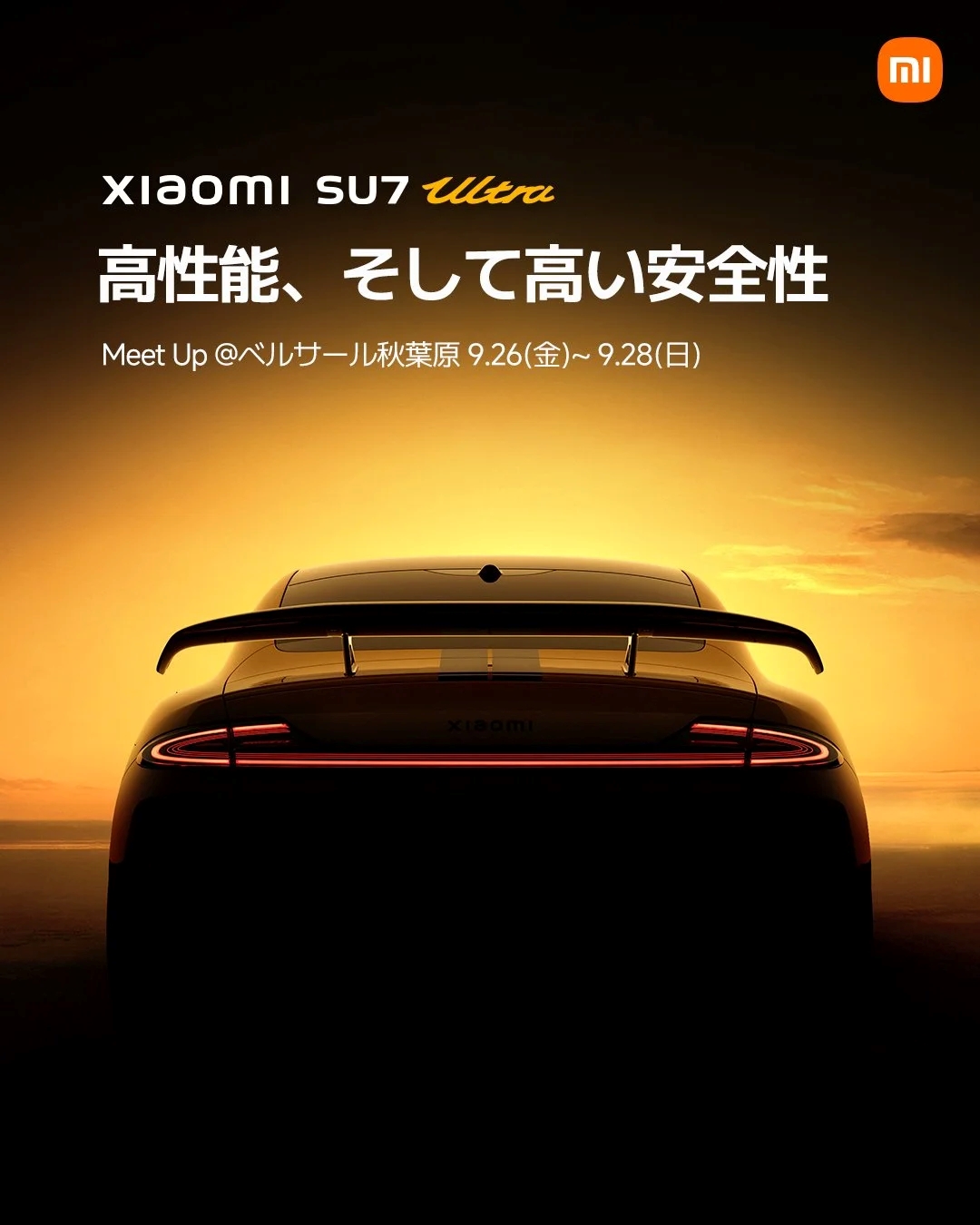
Xiaomi SU7 Ultra will be available for sale in Japan in the future
In terms of sales and operations, Xiaomi plans to adopt a sales model consistent with that of the Chinese market, and fans will also be able to get their hands on the EVs at Xiaomi Fans Club stores in the future.
Currently, Xiaomi has 2 stores in Saitama Prefecture and plans to open 3 new stores in the metropolitan area, including Chiba, by the end of 2025.
With its sights set on nationwide coverage, Xiaomi plans to expand into Osaka and Nagoya by 2026, aiming to open 5 to 10 Xiaomi Fans Club stores in Japan by 2025.
However, the specific launch date of the SU7 Ultra in Japan has not yet been confirmed. This replication of the retail model is based on Xiaomi's existing brand awareness and product foundation in Japan, which contributes to lowering market entry barriers and enhances user retention.

Xiaomi SU7 Ultra Boasts Incredible Power Output
The Xiaomi SU7 Ultra features a tri-motor all-wheel-drive system with a setup of dual V8S and single V6S motors. It delivers a maximum output of 1,548 horsepower, accelerates from 0 to 100 km/h in just 1.98 seconds, and offers a CLTC range of 630 km. Its performance rivals that of supercars like the Porsche Taycan Turbo GT.
The V8S motor achieves a rotational speed of 27,200 rpm, with a power density of 10.14 kW/kg and efficiency of 98.11%, making it a motor with an exceptionally high rotational speed.
As for the battery, it features a CATL battery pack supporting a maximum discharge power of 1330 kW and a 16C discharge rate. Even with the battery at 20%, it maintains an 800 kW power output to guarantee consistent high performance on the racetrack.
The battery supports a 5.2C charging rate, allowing it to charge from 10% to 80% in just 11-12 minutes, surpassing the industry average by a wide margin.
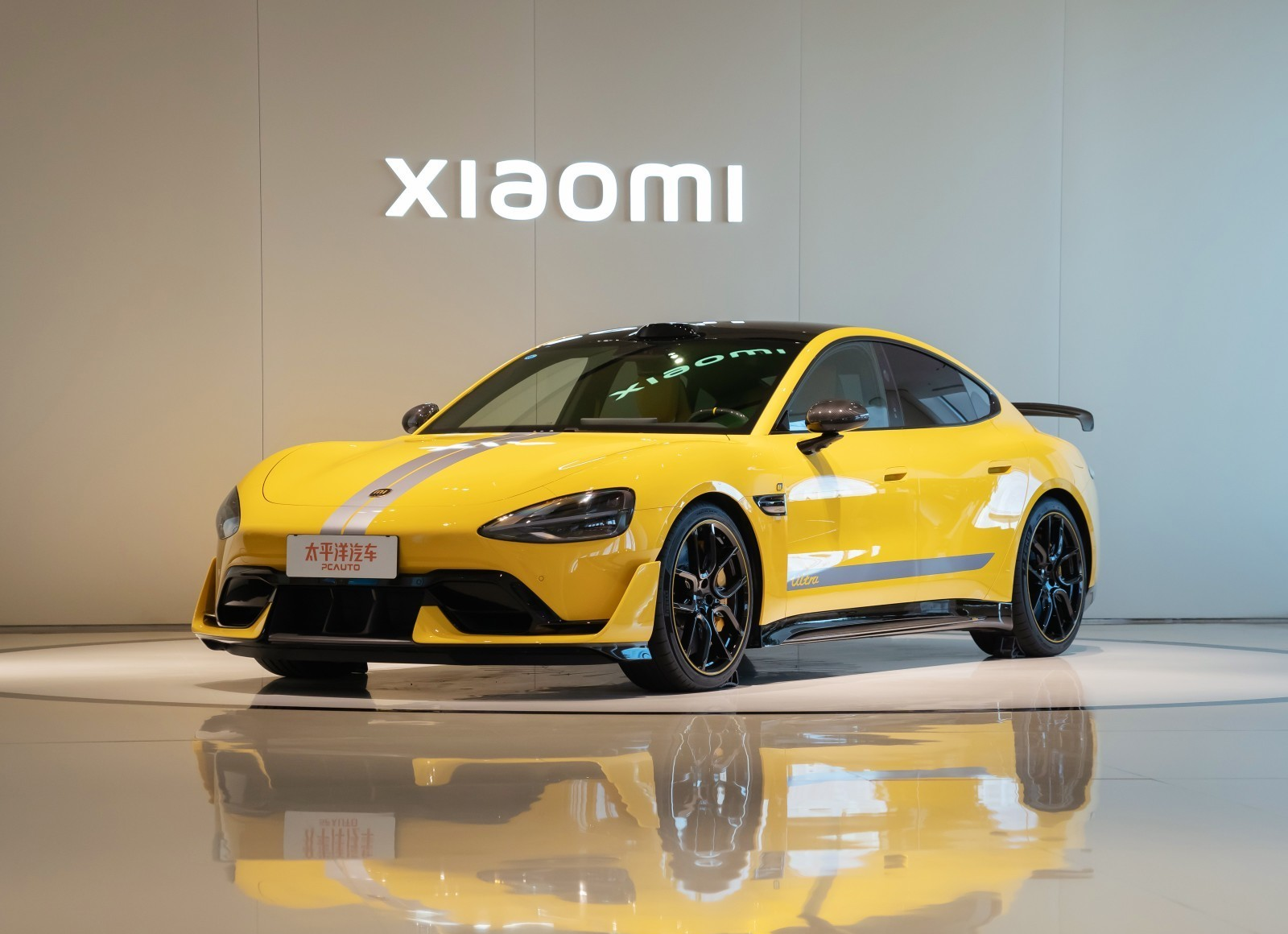
Lightweight Design is Another Highlight of the Xiaomi SU7 Ultra
The Xiaomi SU7 Ultra's body dimensions are 5115mm×1970mm×1465mm, with a wheelbase of 3000mm.The vehicle is equipped with an air suspension and carbon-ceramic brake discs, sporting an interior trimmed in carbon fiber and Alcantara.
The system teams a dual-chamber air suspension with adaptive dampers, offering two-stage stiffness adjustment to deliver precise control in Track Mode.The carbon-ceramic braking system includes 430mm front and 410mm rear brake discs, paired with Akebono six-piston calipers. The braking distance from 100km/h to 0 is 30.8 meters, with no fade after 10 consecutive hard brakes.
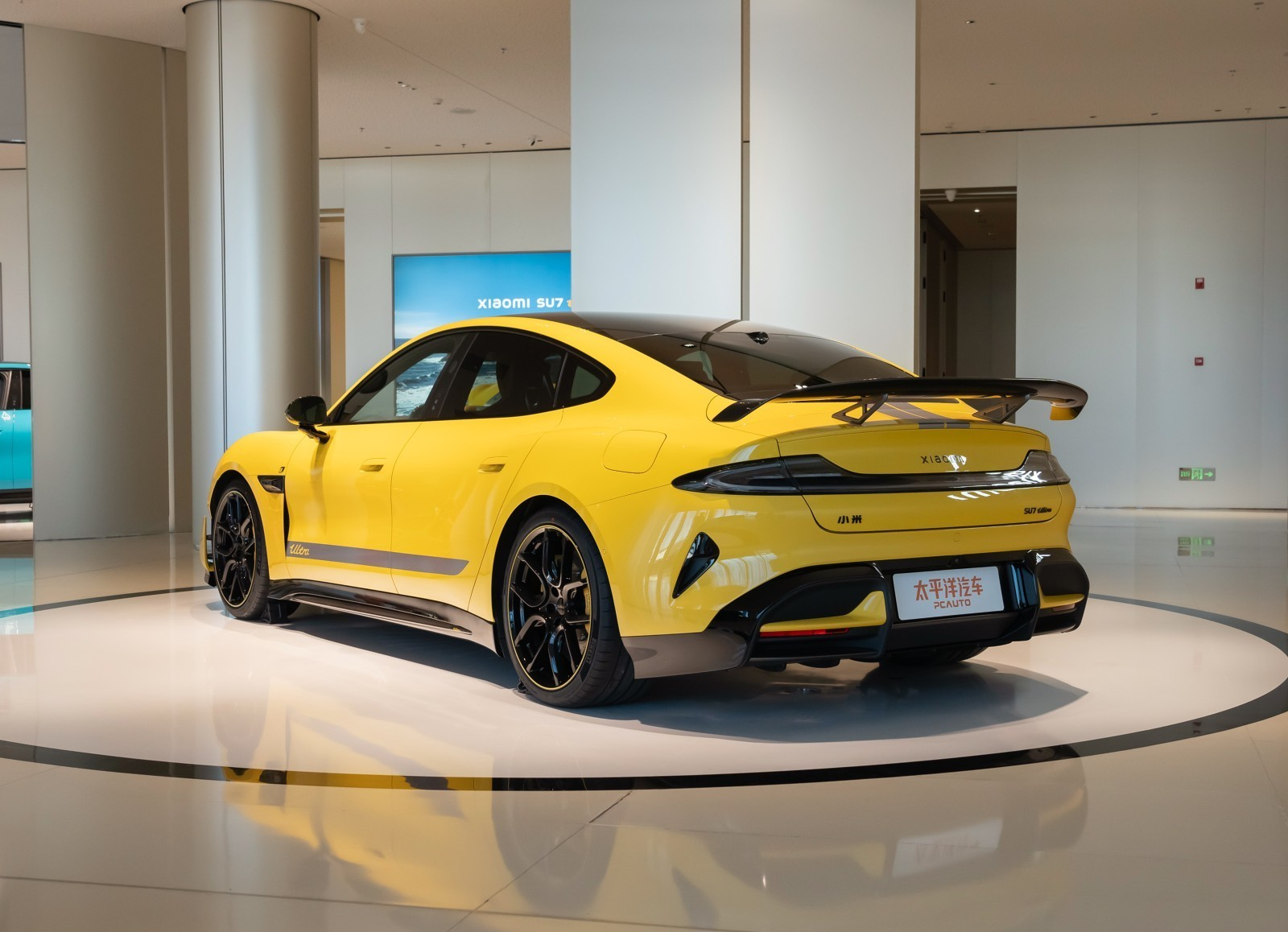
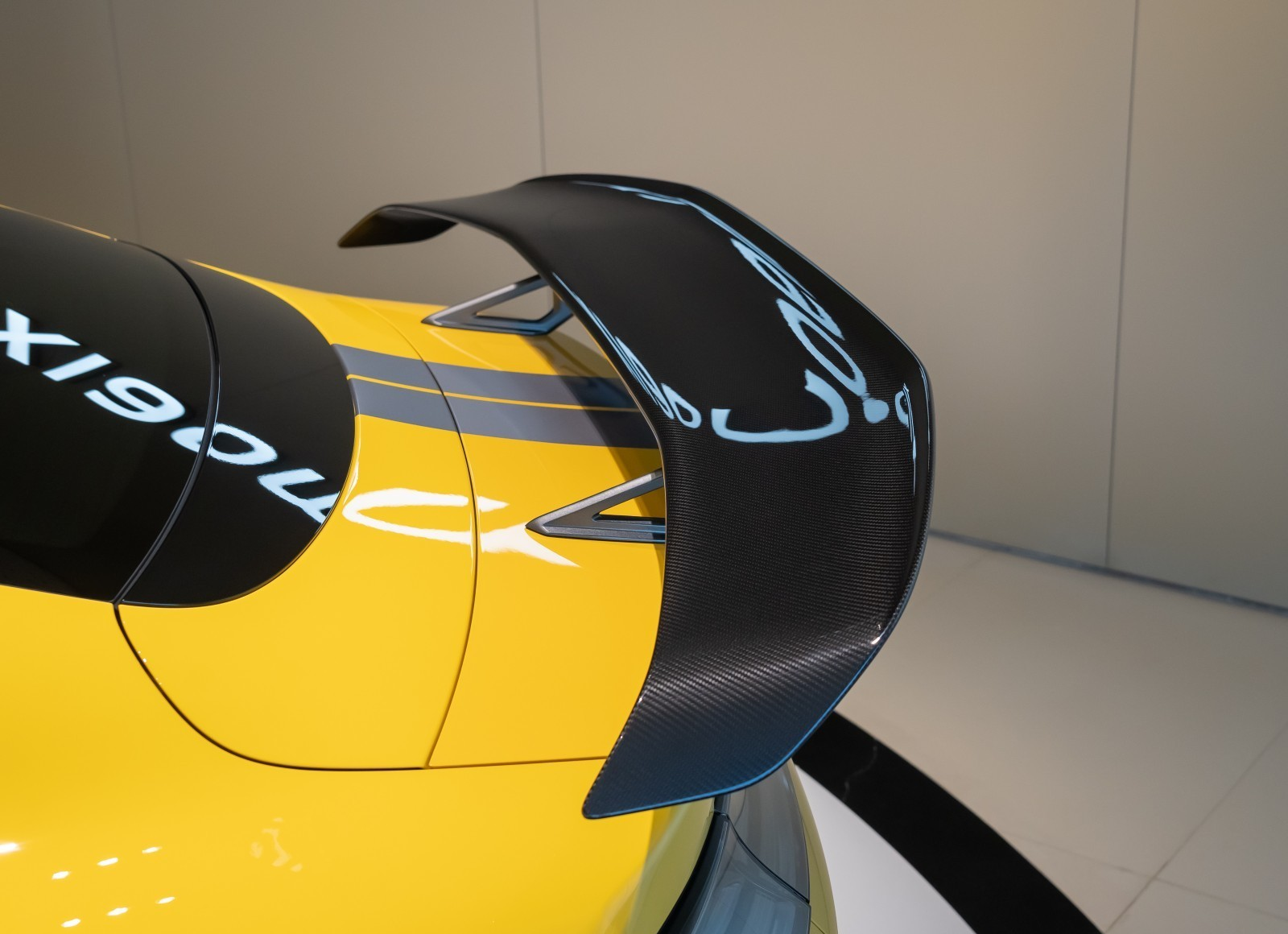
The production version utilizes 17 carbon fiber components throughout the car, such as the roof, rear spoiler, and seat back panels. The total vehicle weight is only 1900kg, which is 220kg lighter than the Porsche Taycan Turbo GT.
The aerodynamic package—including U-shaped air curtains, an active rear spoiler, and open wheel arches—generates a maximum downforce of 285 kg (at 350 km/h), while achieving a drag coefficient (Cd) of 0.195, one of the lowest among production vehicles. The active diffuser offers an adjustable range from 0° to 16°, adapting to different driving conditions.
Despite its hefty price, the Xiaomi SU7 Ultra secured over 10,000 orders in just two hours after its Chinese launch. Founder Lei Jun admitted, "The success caught us a bit off guard."
Xiaomi SU7 Ultra Surpasses Porsche Taycan at Nürburgring
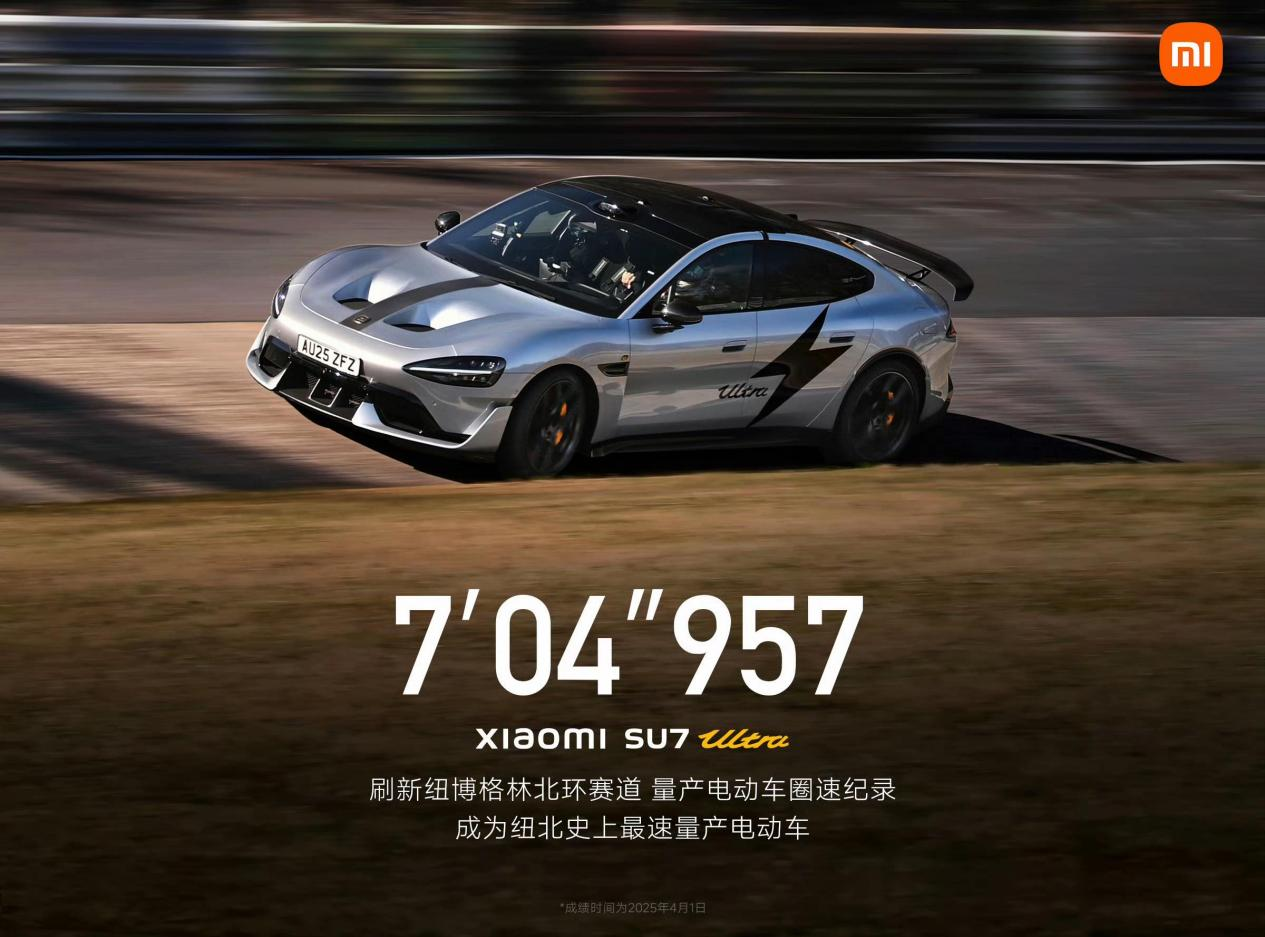
The Xiaomi SU7 Ultra demonstrated exceptional performance at the Nürburgring. In April 2025, the production version with an optional track package set a new record of 7 minutes 04.957 seconds for the fastest production electric vehicle at Nürburgring, surpassing the Porsche Taycan Turbo GT's 7 minutes 07.55 seconds.
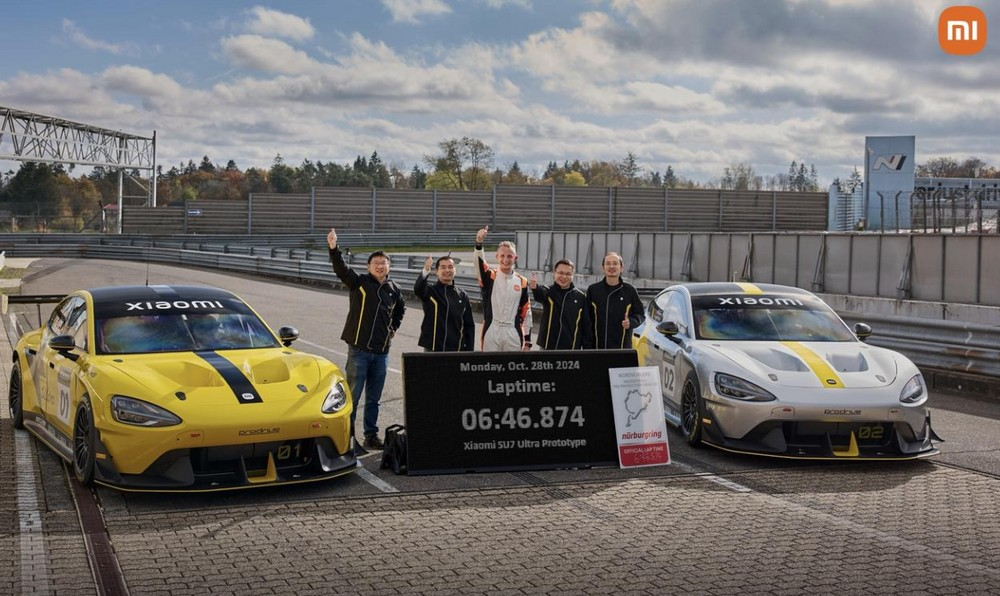
The prototype set a record of 6:46.874 in October 2024, making it the fastest four-door car on the Nürburgring. It then broke its own record with a time of 6:22.091 in June 2025, ranking it third overall in Nürburgring history, behind only the Porsche 919 Hybrid Evo and Volkswagen ID.R.
Why did Xiaomi choose Japan for its debut?
In its global strategy, Xiaomi has previously announced plans to enter the European electric vehicle market in 2027, but has now surprisingly chosen Japan as its first overseas market for both display and sales.
The main reason is that Japanese consumers have a high level of acceptance for high-tech products and smart ecosystems. Xiaomi has already established brand awareness in Japan through its smartphones and other products.
Xiaomi aims to replicate its successful retail model from China in Japan, leveraging its existing store network to build a differentiated competitive advantage.
As a mature automobile market and the birthplace of JDM culture,Japan acts as a testing ground where Xiaomi can gain crucial experience and build the foundation for its future entry into Western markets.
For localization, Xiaomi has established a subsidiary in Japan and built an initial retail and service network to enable the rollout of its automotive business.
If any infringement occurs, please contact us for deletion










Popular Cars
Model Year
Car Compare
Car Photo