
China will ban fully hidden door handles starting from 2027! Must be equipped with mechanical unlocking devices.
 JamesFeb 04, 2026, 04:19 PM
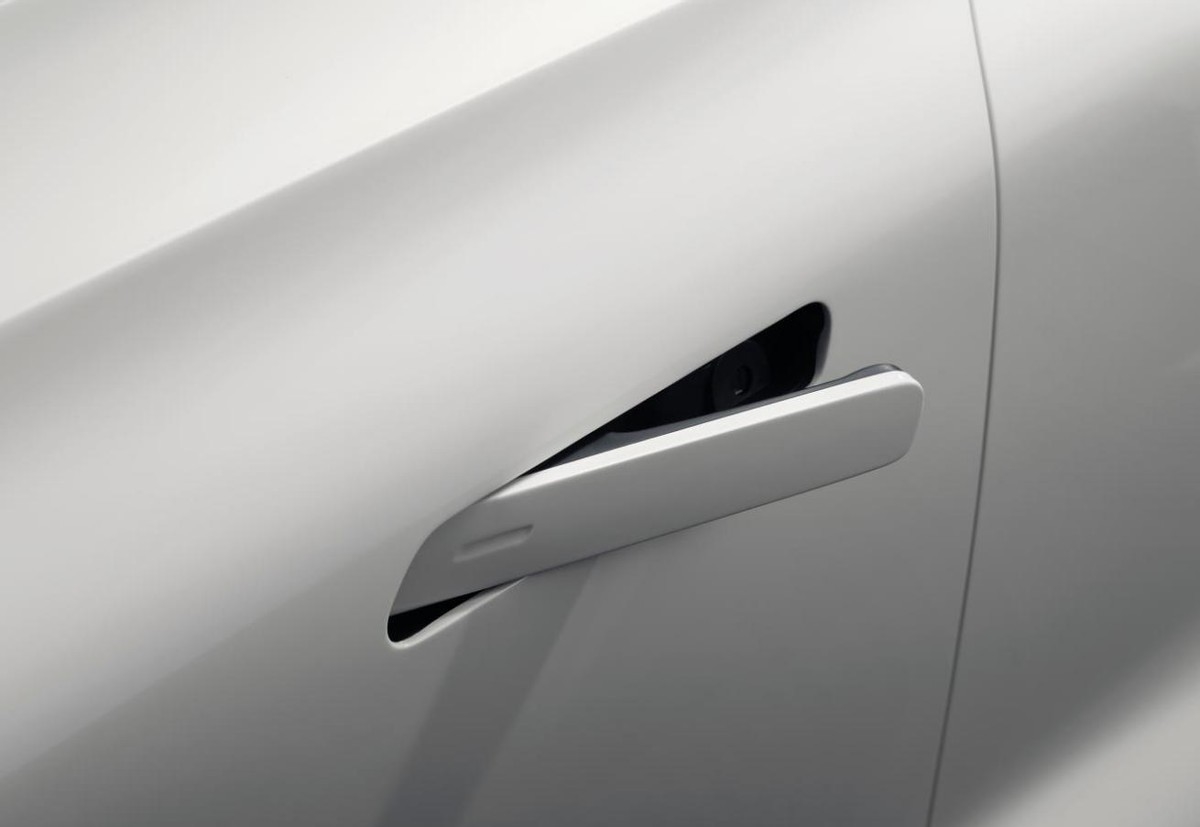
【PCauto】Recently, the Ministry of Industry and Information Technology (MIIT) of China introduced an automobile safety regulation. This mandatory standard for door systems explicitly stipulates that, from 1 January 2027, new vehicles sold in China will be prohibited from using completely flush door handles. All models must feature an external mechanical override that operates without electrical power, while interior door panels must retain a visible and operable mechanical release mechanism.

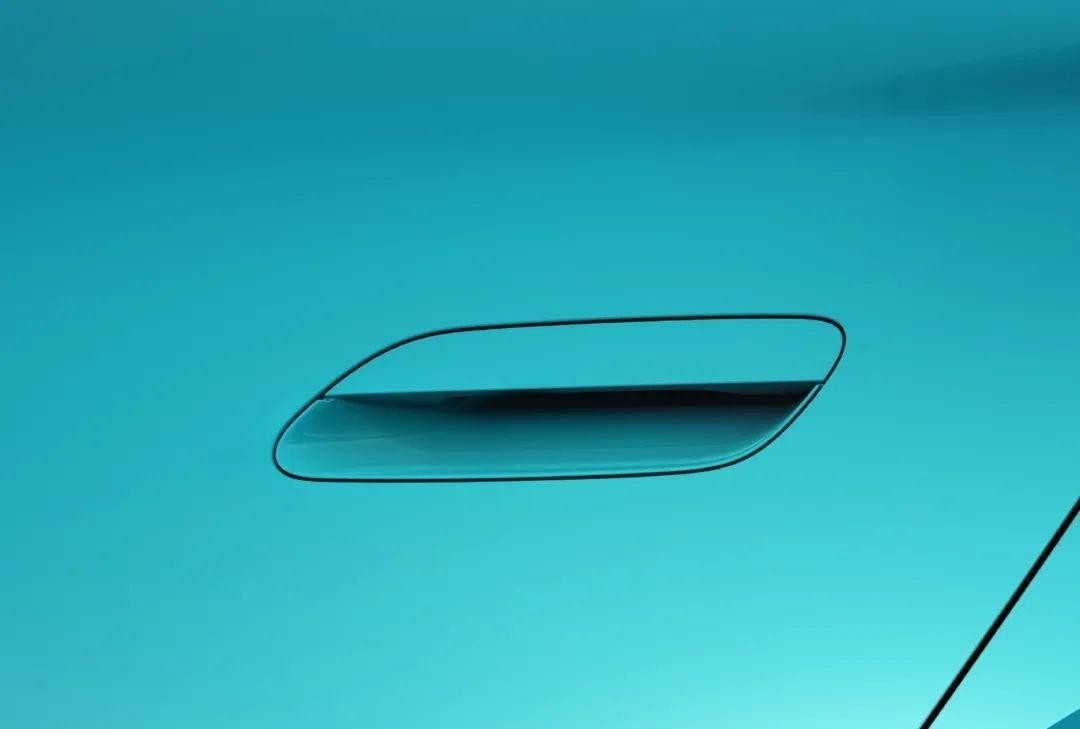
The popularity of concealed door handles largely stems from the sleek, minimalist aesthetic popularised by Tesla. This design embeds the handles flush within the body panels to achieve a streamlined, seamless look—a feature once regarded as a hallmark of premium electric vehicles. Chinese brands like Xiaomi and AION have also followed suit, incorporating this design into many of their models.
However, the safety risks behind this aesthetic choice have gradually come to light. Incidents globally have demonstrated that in a collision or electrical system failure, concealed handles may fail to deploy, hindering first responders from gaining rapid access to the vehicle. There have also been incidents where children were trapped inside locked vehicles due to system failures, unable to open the doors from the inside.

The requirements set forth in China's new regulations are highly targeted. Externally, vehicles must be equipped with mechanical lock levers that can be pulled from any angle. Inside the cabin, a physical, manually operated release must remain present and accessible; reliance on concealed electronic switches alone is no longer permitted.
This ensures that even in extreme scenarios—such as a total power loss, sub-zero temperatures, or heavy rain jamming the retraction mechanism—occupants can still exit the vehicle manually, and rescue from outside remains possible.
It is worth noting that while some manufacturers highlight the aerodynamic benefits of concealed handles, technical analyses indicate their actual reduction in drag coefficient (Cd) is typically only 0.005 to 0.01, offering a negligible improvement to overall driving range. In comparison, the assurance of safety is clearly the greater priority.
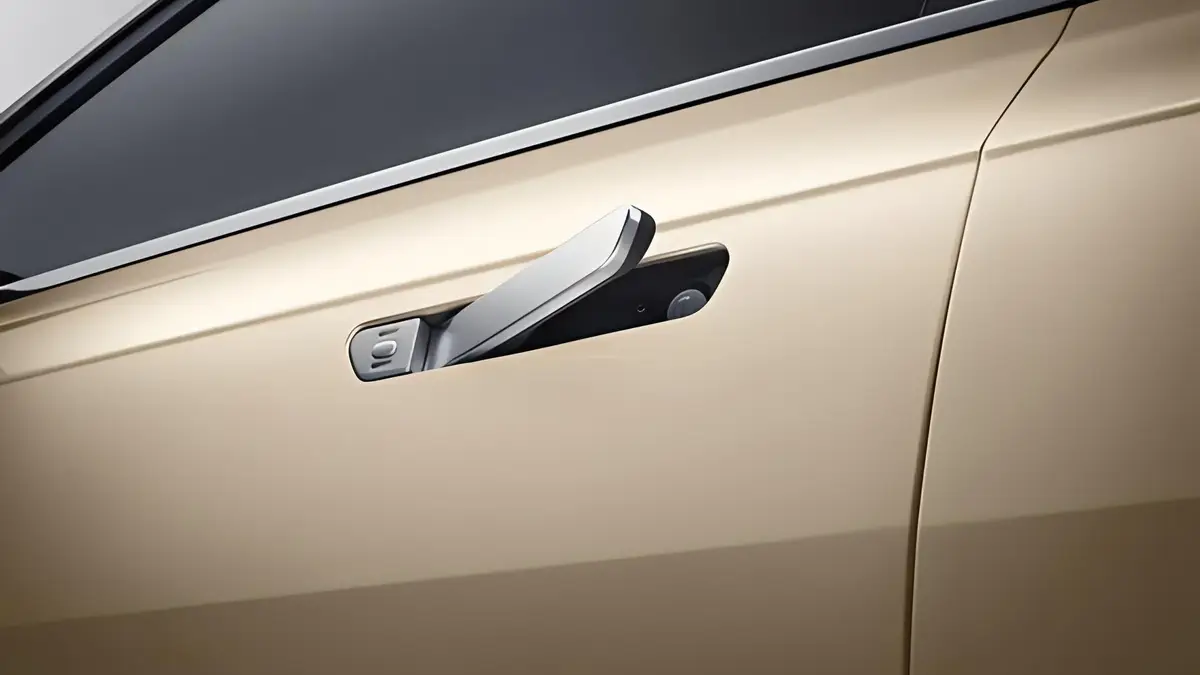
The new regulation presents a fresh challenge for automakers: how to preserve a clean, streamlined body design while incorporating the mandated mechanical backup.
We may therefore see more “semi-concealed” solutions emerge—handles that sit flush with the bodywork normally but can be mechanically popped out or pulled in an emergency, or override levers discreetly integrated into body panel seams, maintaining aesthetics without sacrificing critical function. This adjustment period extends until July 2027, giving manufacturers ample time to optimize their design solutions.
As the world’s largest automotive market, mandatory regulations introduced by China carry considerable influence in potentially shaping global industry trends.
Although the new regulation currently only applies to the Chinese market and does not directly involve Malaysia and Thailand, considering the close ties of the automotive supply chain between these countries and China, many models sold in Southeast Asia are based on Chinese technical platforms or are directly introduced by Chinese brands. Whether similar safety standards gain traction regionally is therefore a trend worth watching.
If any infringement occurs, please contact us for deletion
Trending News

The all-new Lexus ES announces pre-sale on March 20: Say goodbye to pure gasoline engines and launch a pure electric version
Lexus's bestseller sedan, the ES, ushers in a major overhaul, officially confirmed to start pre-sales on March 20. The new car has not only undergone significant size extensions based on the GA-K platform but has also made a complete transformation in its powertrain logic — abandoning purely fuel-powered engines in favor of the ES 300h hybrid and the brand-new ES 350e/500e fully electric versions, officially joining the luxury electric sedan market competition.

Before buying the Chery Omoda 5, you must know some issues
Chery Omoda 5, as a key model for the Chinese brand Chery to enter Malaysia's B-Segment SUV market, has attracted considerable attention since its launch with its impressive features, enticing warranty policies, and market promotions. However, despite the hype, various issues reported by real owners are gradually emerging.

Toyota Land Cruiser FJ confirmed to launch in Thailand on March 21, expected to start from RM137k
For those obsessed with the rugged DNA of the Land Cruiser but deterred by the high price tags of the 300 Series or 250 Series, this compact off-road vehicle built on the IMV 0 platform is undoubtedly the most anticipated surprise of the year.

BYD to unveil new technologies on March 5, 2026 – pure EV range to exceed 1,000 km
This isn’t about a new model debut. Instead, BYD is preparing to showcase a suite of near-production core technologies – including a pure EV boasting a CLTC range of over 1,000 km, an upgraded Megawatt Flash Charging 2.0 system, and the next-generation DM 6.0 Super Hybrid platform.

The Lexus ES 200: Laughed Out of Existence
With the official debut of the eighth-generation Lexus ES in the global market, we quickly realized that the once entry-level model ES 200 has completely disappeared. Now only the ES 350h, ES 350e, and ES 500e remain, and for this reason, the Lexus ES 200 was launched with a two-tone body in the Chinese market as a commemorative edition.










Popular Cars
Model Year
Car Compare
Car Photo